The Ultimate 2026 Insurance TPA Oversight Checklist: A Comprehensive Template for Risk Management and Compliance
Published: 10/31/2026 Updated: 11/01/2026
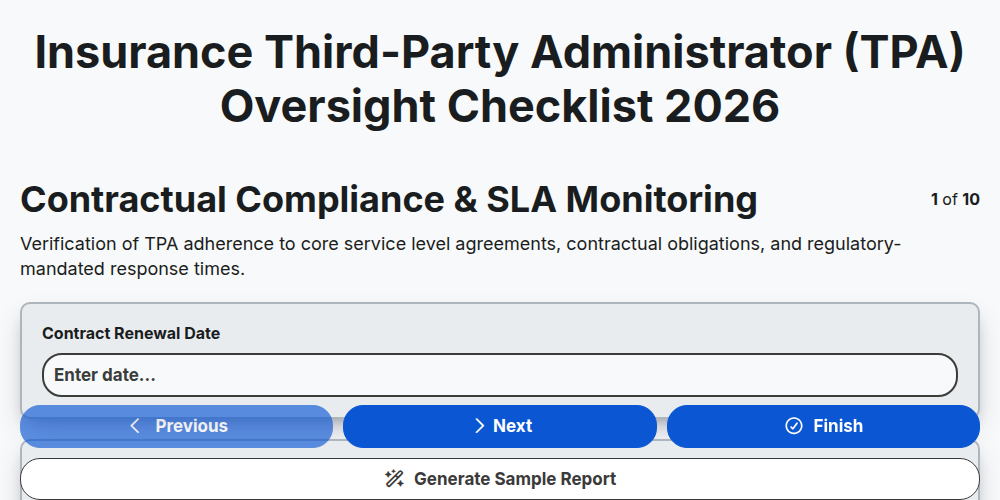
Table of Contents
- Introduction: The Evolving Landscape of TPA Management in 2026
- 1. Contractual Compliance & SLA Monitoring: Ensuring Service Delivery Standards
- 2. Claims Processing & Accuracy Audit: Safeguarding Claims Integrity
- 3. Data Security & Privacy Governance: Mitigating Cyber Risks and Protecting PII
- 4. Financial Oversight & Premium Management: Maintaining Fiscal Accuracy
- 5. Regulatory & Statutory Compliance: Staying Ahead of Shifting Legal Frameworks
- 6. Operational Performance & Scalability: Assessing Long-Term Efficiency
- 7. Customer Experience & Communication Quality: Protecting the Policyholder Journey
- 8. Subrogation & Recovery Management: Maximizing Asset Reclamation
- 9. Business Continuity & Disaster Recovery: Ensuring Resilience in Uncertain Times
- 10. Audit Trail & Documentation Integrity: The Foundation of Verifiable Compliance
- Implementing the Checklist: Best Practices for Periodic TPA Reviews
- Conclusion: Driving Excellence through Proactive TPA Oversight
- Resources & Links
TLDR: Ensure your insurance operations remain resilient and compliant in 2026 with this essential TPA oversight checklist. This guide provides a strategic framework for auditing third-party administrators across ten critical domains, including SLA monitoring, data security, financial oversight, and regulatory compliance, to mitigate operational risk and optimize claims performance.
Introduction: The Evolving Landscape of TPA Management in 2026
Navigating Complexity in a Digital-First Era
As we move into 2026, the relationship between insurance carriers and Third-Party Administrators (TPAs) has transitioned from simple outsourcing to deep,-integrated digital ecosystems. The advancements in artificial intelligence, automated adjudication, and real-time data streaming have revolutionized claims handling, but they have also introduced a new layer of sophisticated risks.
The margin for error in TPA management has shrunk. In an era where regulatory scrutiny is heightened and cyber threats are increasingly automated, set it and forget it outsourcing is no longer a viable strategy. For insurance carriers, the challenge is no longer just about ensuring claims are paid; it is about maintaining granular control over a decentralized operational landscape.
The Shift from Reactive to Proactive Oversight
The traditional model of periodic, retrospective audits is being replaced by a demand for continuous, real-time oversight. In 2026, effective governance requires a shift in focus from retrospective error detection to proactive risk mitigation.
The complexities of modern TPA management now span several critical domains:
- Algorithmic Accountability: As TPAs increasingly rely on AI for decision-making, insurers must audit the logic and bias within these automated systems.
- Data Interconnectivity: With the proliferation of APIs and shared cloud environments, the boundaries of data privacy and security are more fluid than ever.
- Regulatory Volatility: Changing statutory requirements and global privacy laws demand a highly agile compliance framework.
Why a Structured Checklist is Your Best Defense
Managing a TPA without a standardized framework is a recipe for systemic leakage and regulatory penalties. A robust oversight checklist serves as more than just a monitoring tool; it acts as a strategic blueprint for operational excellence.
This guide provides a comprehensive, 10-point framework designed to help insurance leaders audit performance, safeguard assets, and ensure that their TPA partners are not just meeting contractual obligations, but actively driving value and stability within the insurance value chain. By implementing these rigorous checkpoints, you can transform your TPA relationship from a potential liability into a scalable competitive advantage.
1. Contractual Compliance & SLA Monitoring: Ensuring Service Delivery Standards
The Foundation of Partnership: Monitoring Service Delivery
In the complex ecosystem of modern insurance, your Third-Party Administrator (TPA) is an extension of your brand. When a TPA fails to meet its obligations, the operational and reputational risks fall directly on your shoulders. As we move into 2026, set it and forget it is no longer a viable strategy for TPA management. Effective oversight begins with rigorous monitoring of the foundational elements of your service agreement.
Defining and Measuring Critical KPIs
To maintain control, you must move beyond high-level reviews and dive into granular Key Performance Indicators (KPIs). Oversight in this category should focus on:
- SLA Adherence Rates: Are milestones being met regarding initial claim notification, adjudication timelines, and payout windows?
- Accuracy Thresholds: Monitoring the frequency of errors in claim adjudication and the impact of these errors on the total cost of care/claims.
- Turnaround Time (TAT) Variance: Analyzing the gap between promised processing times and actual execution, specifically during peak seasonal surges.
Maintaining Contractual Rigor
A contract is only as strong as its enforcement. Your oversight process must include periodic reviews to ensure that all supplemental agreements, riders, and updated fee schedules are being applied correctly.
Proactive vs. Reactive Management
The goal of monitoring contractual compliance is to identify trends before they become breaches.
- Trend Analysis: Use quarterly business reviews (QBRs) to identify if a TPA is consistently drifting toward the edge of an SLA threshold.
- Corrective Action Plans (CAPs): Establish a formalized process for when an SLA is missed. This should include a documented period for the TPA to implement remedial measures and a follow-up audit to verify the effectiveness of those changes.
By prioritizing contractual compliance and SLA monitoring, you transform your relationship with your TPA from a simple vendor arrangement into a high-performance, accountable partnership.
2. Claims Processing & Accuracy Audit: Safeguarding Claims Integrity
Ensuring Precision in Every Decision
In the evolving landscape of 2026, where automated adjudication and AI-driven decisioning are becoming the industry standard, the margin for error in claims processing has narrowed significantly. As an insurer, your Third-Party Administrator (TPA) acts as the frontline of your claims department. Any systemic error in how claims are adjudicated, valued, or settled doesn't just impact your bottom line-it erodes the trust of your policyholders and exposes you to massive litigation risk.
An effective audit process must move beyond simple sampling and transition into a deep-dive validation of both automated logic and manual interventions.
Key Audit Focus Areas
To maintain oversight, your audit framework should prioritize the following four dimensions:
I. Adjudication Accuracy & Decision Logic
The core of your audit must verify that the TPA's adjudication engine (or manual adjusters) is strictly adhering to the specific terms of the underlying policy.
- Policy Compliance Check: Randomly sample settled claims to ensure benefits paid align precisely with policy limits, deductibles, and exclusions.
- Logic Verification: For TPAs utilizing AI or automated workflows, audit the decision trees to ensure no algorithmic bias or drift is causing systematic underpayment or overpayment.
- Leakage Identification: Actively hunt for claims leakage-unnecessary payments caused to errors in processing, failure to apply subrogation, or missed opportunities for denial based on policy terms.
II. Documentation & Evidence Integrity
A claim is only as valid as the documentation supporting it. A lack of a clear paper trail is a primary driver of regulatory penalties.
- Supporting Documentation: Ensure every claim file contains complete medical records, accident reports, and proof of loss.
- Consistency of Notes: Audit adjuster notes for clarity, objectivity, and timeliness. Discrepancies between adjuster notes and final settlement amounts are major red flags.
- Digital Integrity: Verify that all digital attachments are legible, unalterable, and correctly mapped to the corresponding claim ID.
III. Financial Accuracy & Payment Reconciliation
The audit must bridge the gap between the decision made and the funds disbursed.
- Payment Accuracy: Confirm that the amount recorded as paid in the TPA system matches the actual electronic fund transfer (EFT) or check issued to the claimant.
- Reserve Adequacy: Evaluate the accuracy of case reserving. Are reserves being adjusted promptly as new information emerges, or are there stale reserves that create unexpected volatility in your financial reporting?
- Fee Reconciliation: Periodulate audits of the TPA's administrative fees to ensure they align with the agreed-upon fee schedule in your contract.
IV. Timeline & Turnaround Time (TAT) Analysis
While accuracy is paramount, processing speed is a critical component of claims integrity.
- Lifecycle Tracking: Monitor the time elapsed between Notice of Loss and First Contact, and from Initial Filing to Final Settlement.
- Bottleneck Identification: Identify specific stages in the workflow where claims tend to stall, which may indicate a need for additional staffing or technological upgrades at the TPA level.
3. Data Security & Privacy Governance: Mitigating Cyber Risks and Protecting PII
Safeguarding the Digital Perimeter in an Era of Hyper-Connectivity
As we navigate the 2026 insurance landscape, the role of a Third-Party Administrator (TPA) has evolved from a mere service provider to a critical custodian of sensitive information. With the increasing sophistication of ransomware-as-a-service and the expansion of the Internet of Things (IoT) in claims processing, your oversight must extend far beyond simple password policies.
Data Security & Privacy Governance is no longer a check-the-box annual audit; it is a continuous, real-time requirement to ensure that Personally Identifiable Information (PII) and Protected Health Information (PHI) remain impenetrable.
Key Audit Focus Areas for 2026
To ensure your TPA is maintaining a robust security posture, your oversight checklist should prioritize the following dimensions:
Zero-Trust Architecture Verification: Verify that the TPA has moved beyond perimeter-based security. Audit their implementation of Zero-Trust models, ensuring that identity verification is required for every person and device attempting to access the claims database, regardless of whether they are inside or outside the network perimeter.
End-to-End Encryption & Data Residency: Confirm that data is encrypted not only at rest and in transit but also in use via advanced computational techniques. Furthermore, ensure their data storage practices comply with evolving regional sovereignty laws, ensuring that data residency stays within required jurisdictional boundaries.
Third-Party Ecosystem Risk (Fourth-Party Oversight): A TPA is only as secure as their weakest sub-vendor. Your oversight must include an assessment of how your TPA manages their vendors. Do they perform rigorous security vetting on the cloud providers and API integrators they use to process your claims?
Automated Incident Response & Disclosure Readiness: In 2026, the speed of notification is as critical as the prevention of the breach itself. Evaluate the TPA's automated detection capabilities and their documented Mean Time to Detect (MTTD). Ensure their incident response plan includes clear, automated communication protocols to notify you immediately of any potential breach of your policyholder data.
Continuous Monitoring vs. Point-in-Time Audits
The modern TPA oversight strategy must transition from periodic manual reviews to Continuous Security Monitoring (CSM). Relying on a single annual SOC2 report is no longer sufficient. Your governance framework should demand real-time visibility into the TPA's security health, leveraging automated tools that can flag unauthorized access attempts or anomalous data egress patterns as they happen.
4. Financial Oversight & Premium Management: Maintaining Fiscal Accuracy
Safeguarding Your Bottom Line: The Pillars of Financial Oversight
In the complex ecosystem of insurance administration, the TPA acts as the custodian of your capital. As we navigate the economic landscape of 2026, financial oversight can no longer be a set and forget function. Effective oversight requires a proactive approach to ensuring that every dollar flowing through the TPA's systems is accounted for, reconciled, and aligned with your organization's fiduciary responsibilities.
To maintain fiscal integrity, your oversight strategy should focus on these three critical pillars:
Precision in Premium Reconciliation and Fund Handling
The most significant risk in TPA management is the discrepancy between premium collection and fund allocation. Your audit process must verify that premiums are being applied to the correct policies and accounts with zero latency.
- Reconciliation Audits: Implement monthly or quarterly deep dives to compare your internal ledger against the TPA's reported premium receipts.
- Unapplied Funds Monitoring: Establish strict protocols for identifying and resolving unapplied premiums or orphan funds that have been collected but not yet credited to specific policies.
- Escrow and Trust Account Verification: Ensure the TPA maintains clear segregation between operational funds and client premium funds to prevent commingling.
Accuracy in Disbursement and Payment Integrity
The cost of error in claims disbursement extends beyond simple math mistakes; it encompasses potential fraud and regulatory penalties. Oversight must ensure that payments are not only accurate in amount but also authorized by the correct claim lifecycle stage.
- Payment Leakage Detection: Regularly audit for duplicate payments, overpayments, or payments made to unauthorized vendors/payees.
- Leakage Analysis: Monitor the margin of error in claim settlements to ensure that the TPA is adhering to the specific indemnity limits defined in your contracts.
- Vendor Payment Verification: Periodically cross-reference TPA-approved provider networks with actual payment recipients to mitigate the risk of phantom billing.
Fee Transparency and Administrative Cost Control
As TPA service models evolve in 2026, so do the complexities of administrative fee structures. Without rigorous monitoring, hidden fees can rapidly erode your underwriting margins.
- SLA-Linked Fee Verification: Ensure that administrative fees are strictly tied to the performance metrics outlined in your Service Level Agreements (SLAs). If a KPI is missed, the corresponding fee adjustment should be automated and visible.
- Audit of Ancillary Charges: Scrutinize line items such as postage, printing, or specialized investigation fees. These micro-costs can aggregate into significant budgetary leaks if left unmonitored.
- Budgetary Variance Reporting: Require the TPA to provide regular variance reports that compare actual administrative spend against your projected annual budget, allowing for mid-year course corrections.
5. Regulatory & Statutory Compliance: Staying Ahead of Shifting Legal Frameworks
Navigating the Evolving Legal Landscape
As we move into 2026, the regulatory landscape for insurance intermediaries is becoming increasingly complex. For insurers, outsourcing claims or benefits administration to a Third-Party Administrator (TPA) does not mean outsourcing the ultimate responsibility for compliance. Regulators are increasingly looking past the contract to hold the primary carrier accountable for the actions of their vendors.
To ensure your TPA remains a partner in compliance rather than a liability, your oversight must focus on three critical pillars:
Constant Alignment with State and Federal Mandates
The regulatory environment in 2026 is characterized by rapid shifts in consumer protection laws and evolving industry-specific mandates. Your oversight process must verify that the TPA is not just following the rules from last year, but is actively monitoring and implementing changes in:
- State-Specific Mandates: Ensuring the TPA adheres to varying timeframes for claim notifications and adjudication across different jurisdictions.
- Consumer Protection Laws: Verifying compliance with new transparency requirements regarding fee disclosures and settlement processes.
- Updated Statutory Reporting: Auditing the accuracy and timeliness of all mandatory filings sent to state insurance departments.
Monitoring the Compliance Gap
The greatest risk in TPA management is the compliance gap-the space between your organization's internal standards and the TPA's operational execution. A robust oversight program requires periodic spot checks on regulatory adherence. This involves reviewing the TPA's training logs to ensure their adjusters and staff are educated on the most recent legislative updates and that these updates are reflected in their standard operating procedures (SOPs).
Preparing for Increased Supervisory Scrutiny
Regulators are increasingly utilizing data analytics to identify patterns of non-compliance. Therefore, your oversight cannot be reactive. You must ensure that the TPA's compliance framework is integrated into their daily workflows.
Key Audit Questions for 2026 Compliance:
- Does the TPA have a formal process for tracking and implementing legislative changes in real-time?
- Can the TPA provide documented proof of staff training regarding recent regulatory updates?
- Is there a clear protocol for notifying the insurer immediately when a regulatory breach is identified within their operations?
- How does the TPA ensure that their automated adjudication systems are configured to meet the latest statutory requirements?
6. Operational Performance & Scalability: Assessing Long-Term Efficiency
Future-Proofing Your Operations: Assessing Long-Term Efficiency
In the rapidly evolving insurance landscape of 2026, monitoring current performance is no longer sufficient. To maintain a competitive edge, your oversight must transition from reactive auditing to proactive scalability assessment. A TPA may handle your current volume with precision, but their ability to absorb sudden market shifts, unexpected catastrophes, or rapid portfolio growth determines your long-term stability.
Measuring Throughput and Resource Elasticity
When evaluating operational performance, move beyond simple turnaround time metrics. You must analyze the TPA's ability to maintain service standards during peak periods of high claim density.
- Capacity Stress Testing: Does the TPA have a documented framework for scaling staffing levels during catastrophic events or sudden influxes of new policies?
- Automation Integration: Evaluate the maturity of their automated workflows. Are they utilizing AI and machine learning to handle routine tasks, or are they relying on manual intervention that will become a bottleneck as you grow?
- Resource Elasticity: Analyze the ratio of automated processing to manual adjudication. A high reliance on manual labor creates a complexity ceiling that will eventually impede your ability to scale.
Scalability and the Technology Roadmap
As we navigate 2026, the integration of ecosystem-wide technologies (such as IoT-driven claims and real-time telematics) is becoming standard. Your oversight must ensure your TPA's infrastructure can evolve alongside these innovations.
Key Performance Indicators (KPIs) for Scalability:
- Unit Cost Stability: Does the cost per claim remain relatively constant as volume increases, or does it experience exponential growth due to operational inefficiencies?
- Technology Adoption Rate: How frequently does the TPA update its core systems to integrate with new digital ecosystems and third-party data feeds?
- Bottleneck Identification: Is there a documented process for identifying and resolving emerging operational friction points before they impact the end-insured?
By prioritizing scalability in your oversight framework, you ensure that your TPA acts as an engine for growth rather than a structural constraint on your expansion.
7. Customer Experience & Communication Quality: Protecting the Policyholder Journey
Maintaining Brand Integrity through Service Excellence
In the modern insurance landscape, the Third-Party Administrator is often the primary-or only-human touchpoint a policyholder has with your brand. As we move into 2026, the customer experience is no longer just a metric for satisfaction; it is a critical component of brand reputation and policy retention. When a TPA handles a claim, they are acting as the face of your company.
Monitoring the Touchpoint Ecosystem
To ensure your TPA is upholding your brand standards, your oversight must move beyond simple satisfaction surveys. Your checklist should include audits of the following:
- Communication Timeliness: Are claimants being notified of status changes, delays, or required documentation in real-time? In an era of instant gratification, even a 24-hour delay in communication can lead to escalated complaints.
- Omnichannel Consistency: Whether a customer reaches out via a mobile app, email, or a phone call, is the information consistent? Discrepancies in data across different communication channels erode trust and create friction.
- Tone and Empathy Standards: For high-stress claims (such as casualty or property damage), the quality of the interaction is paramount. Reviewing call recordings and chat transcripts is essential to ensure adjusters are practicing empathetic, professional, and clear communication.
Evaluating Digital Self-Service Efficiency
As AI-driven automation becomes standard in 2026, the human element must be balanced with digital ease.
Analyzing the Feedback Loop
Effective oversight requires a rigorous analysis of sentiment. Do not simply look at Net Promoter Scores (NPS); dive deeper into:
- First Contact Resolution (FCR) Rates: How often is the TPA resolving issues during the first interaction without escalating?
- Complaint Root Cause Analysis: Are complaints stemming from TPA operational errors, or are they reflecting flaws in your underlying policy wording?
By treating customer experience as a core compliance metric, you ensure that your TPA isn't just processing claims, but actively contributing to your long-term policyholder loyalty.
8. Subrogation & Recovery Management: Maximizing Asset Reclamation
Ensuring Full Value Recovery through Proactive Oversight
Subrogation and recovery management are often the most overlooked components of TPA oversight, yet they represent a critical lever for protecting your loss ratio and bottom line. Effective oversight in 2026 requires moving beyond simply verifying that subrogation is being handled to ensuring that your TPA is actively hunting for every recoverable dollar.
Key Audit Focal Points for 2026
To maintain rigorous control over recovery workflows, your oversight framework should focus on these three critical pillars:
1. Timeliness of Identification and Demand The window for successful subrogation is often narrow. Your audit process must evaluate the latency period between the initial claim adjudication and the formal issuance of a demand letter to the third party.
- Metric to Watch: Average days from claim closure to subrogation demand issuance.
- Red Flag: A pattern of delayed identification that leads to the expiration of statutes of limitations.
2. Accuracy of Investigation and Evidence Preservation A recovery attempt is only as strong as the evidence supporting it. Your oversight must ensure the TPA is not just processing paperwork, but actively managing the investigative lifecycle.
- Audit Requirement: Verify that the TPA is securing critical evidence-such as dashcam footage, point-of-impact photos, and third-party statements-early in the claim lifecycle.
- Verification: Periodic spot-checks on files to ensure that liability assessments are supported by documented physical or testimonial evidence.
3. Recovery Yield and Closing Ratio Analysis It is not enough to track how many subrogation files are open; you must analyze the effectiveness of the recovery outcomes.
- The Recovery Ratio: Compare the total amount of subrogation recoveries against the total amount of subrogable losses identified. A declining ratio suggests a breakdown in the TPA's investigative or negotiation capabilities.
- Negotiation Oversight: Evaluate the TPA's ability to manage litigation and settlement negotiations effectively, ensuring that settlements are not being accepted prematurely at the expense of the insurer's interests.
Strengthening the Recovery Loop
In the 2026 landscape, where automated tools and AI-driven fraud detection are becoming standard, your oversight should also include a review of the technological integration between your systems and the TPA's. Ensure that recovery updates are flowing seamlessly into your core systems in real-time, allowing for immediate adjustments to reserves and accurate financial forecasting.
By treating subrogation not as a secondary task, but as a core component of your loss control strategy, you transform the TPA relationship from a mere administrative necessity into a strategic partnership focused on margin preservation.
9. Business Continuity & Disaster Recovery: Ensuring Resilience in Uncertain Times
Ensuring Operational Resilience in a Digital-First Era
In 2026, the landscape of insurance administration is increasingly defined by digital dependency and interconnected ecosystems. As Third-Party Administrators (TPAs) leverage more cloud-based infrastructure and automated workflows, the impact of a single point of failure can ripple across your entire insurance portfolio. Oversight of Business Continuity and Disaster Recovery (BCDR) is no longer just about having a backup-it is about ensuring seamless service availability during catastrophic disruptions.
Assessing the TPA's Resilience Framework
To effectively oversee your TPA's ability to withstand and recover from unforeseen events, your audit must go beyond a simple policy review. You must verify that their recovery strategies are integrated into their core operational DNA.
Key Audit Components
1. Recovery Time Objectives (RTO) and Recovery Point Objectives (RPO) Evaluate whether the TPA's RTO (how quickly they can resume operations) and R/RPO (how much data loss is acceptable) align with your organization's critical service levels. A discrepancy here can lead to massive-scale claims backlogs and regulatory scrutiny.
2. Redundancy and Failover Capabilities Inspect the TPA's technical architecture for single points of failure.
- Infrastructure Redundancy: Do they utilize multi-region cloud deployments?
- Data Redundancy: Are backups stored in geographically dispersed, immutable environments to protect against ransomware?
- Communication Redundancy: If primary digital channels fail, do they have secondary methods to communicate claims status to policyholders?
3. Testing and Simulation Rigor A disaster recovery plan is only as good as its last successful test. Your oversight should include reviewing the results of:
- Tabletop Exercises: Evaluating how management responds to hypothetical crisis scenarios.
- Technical Failover Drills: Verifying that systems actually switch to backup servers without data corruption.
- Annual Frequency: Ensure that testing is conducted at least annually and updated following any significant system change.
Moving from Reactive to Proactive Oversight
In the 2026 regulatory environment, passive oversight is a liability. Your checklist must demand evidence of Continuous Availability. This means looking for TPAs that utilize automated monitoring and self-healing systems that can mitigate disruptions before they impact the policyholder experience. By prioritizing BCDR in your oversight, you are not just managing a vendor-you are safeguarding the long-term stability of your insurance program.
10. Audit Trail & Documentation Integrity: The Foundation of Verifiable Compliance
Ensuring a Single Source of Truth
In the increasingly complex regulatory landscape of 2026, the ability to reconstruct any decision, claim movement, or communication is no longer an operational luxury-it is a mandatory requirement. Audit trail and documentation integrity represent the final, critical layer of TPA oversight. Even the most efficient claims processes are considered failures if they cannot be defended during a regulatory examination or a high-stakes litigation event.
The Imperative of Verifiable Records
A robust oversight program must ensure that your TPA maintains an immutable paper trail for every action taken on behalf of the insurer. This goes beyond simply storing PDFs; it involves verifying the lineage of data.
Key Audit Components to Monitor:
Timestamped Activity Logs: Every modification to a claim file-from status changes to adjuster notes-must be captured with precise, synchronized timestamps. This prevents retroactive editing and ensures the timeline of loss reporting is accurate.
Decision Logic Transparency: As AI and automated adjudication become standard in 2026, your audit process must include reviewing the documentation behind automated decisions. You must be able to explain why a system-generated denial or approval occurred.
Correspondence Traceability: All communications, whether via email, SMS, or portal messages, must be archived in a centralized, searchable repository. Gaps in communication history are often the primary source of litigation risk.
Version Control for Policy Application: Ensure that the TPA is applying the correct version of policy language and endorsements. Documentation must clearly link the specific coverage terms to the adjudication outcome.
Strengthening the Chain of Custody
To maintain integrity, your oversight framework should include periodic spot checks where a randomly selected sample of claims is reconstructed from start to finish. If the documentation lacks the granularity required to tell the full story of the claim, it constitutes a high-level compliance risk.
Ultimately, your goal is to move from reactive investigation to proactive verification. By enforcing strict documentation standards, you transform your audit trail from a mere historical record into a powerful tool for risk mitigation and operational excellence.
Implementing the Checklist: Best Practices for Periodic TPA Reviews
Implementing a TPA oversight framework is not a set it and forget it task. As we move into 2026, the complexity of data regulations and the integration of AI in claims processing require a more dynamic approach to auditing. To derive true value from your checklist, you must transition from reactive monitoring to proactive governance.
Strategies for Effective Execution
To ensure your oversight remains impactful, consider the following best practices when navigating the checklist items:
Establish a Tiered Audit Cadence
Not every checklist item requires a monthly deep dive. Effective oversight relies on a risk-based frequency:
- Continuous Monitoring: Focus on Contractual Compliance & SLA Monitoring and Data Security through real-time dashboards and automated alerts.
- Quarterly Reviews: Conduct deep dives into Claims Processing Accuracy, Financial Oversight, and Subrogation & Recovery Management to identify trends before they become systemic issues.
- Annual Audits: Perform comprehensive structural reviews of Business Continuity/Disaster Recovery and Regulatory & Statutory Compliance to ensure alignment with evolving 2026 legal landscapes.
Move Toward Data-Driven Verification
In 2026, manual sampling is no longer sufficient. To effectively audit Claims Processing & Accuracy, leverage automated data reconciliation tools that can scan 100% of claims files rather than relying on a small, potentially biased sample size. This ensures that Audit Trail & Documentation Integrity is verified by actual data patterns rather than anecdotal evidence.
Foster a Partnership, Not Just a Policing Mindset
While the checklist is a tool for accountability, the most successful TPA relationships are built on transparency. When identifying gaps in Customer Experience & Communication Quality or Operational Scalability, approach the findings as collaborative opportunities for process improvement. A TPA that feels like a partner is more likely to proactively notify you of Data Security vulnerabilities or Regulatory shifts before they manifest as breaches or fines.
Integrate Technology for Oversight
Modernize your oversight by integrating your internal management systems with the TPA's reporting layer. This allows for Single Source of Truth monitoring, particularly for Premium Management and Financial Oversight, reducing the friction of manual data aggregation and minimizing the risk of human error during the audit process.
Conclusion: Driving Excellence through Proactive TPA Oversight
Mastering the Future of Claims Management
As we navigate the complexities of the 2026 insurance landscape-characterized by hyper-automation, evolving data privacy mandates, and increasing consumer expectations-the relationship between insurers and Third-Party Administrators (TPAs) can no longer be a set it and forget it arrangement. Passive oversight is no longer a viable strategy; it is a significant operational risk.
The checklist provided above is more than just a routine audit tool; it is a strategic framework designed to transform your TPA relationship from a simple vendor dependency into a high-performing, integrated partnership. By systematically reviewing everything from Contractual Compliance and Data Security to Subrogation Efficiency and Operational Scalability, you ensure that your organization remains resilient against both internal errors and external market shifts.
Transitioning from Reactive to Proactive Oversight
To truly drive excellence, your oversight program should focus on three core pillars:
- Continuous Monitoring over Periodic Audits: Do not wait for the annual review to identify gaps in Claims Processing Accuracy or SLA breaches. Utilize real-time data feeds and automated dashboards to spot trends as they emerge.
- Data-Driven Decision Making: Use the findings from your Financial Oversight and Customer Experience audits to hold TPAs accountable. Use these metrics to renegotiate terms or refine workflows before small discrepancies become systemic failures.
- Future-Proofing through Resilience: As digital threats and climate-related risks intensify, your focus on Business Continuity and Data Privacy Governance will be the primary differentiator between a stable operation and a catastrophic loss.
Final Thought
A robust oversight framework does not exist to create friction; it exists to create stability. By implementing this 2026 checklist, you are not merely checking boxes-you are building a foundation of trust, accuracy, and efficiency that protects your bottom line and enhances your brand's reputation in an increasingly competitive marketplace.
Resources & Links
- National Association of Insurance Commissioners (NAIC): The primary regulatory body for insurance oversight, providing essential updates on statutory compliance and model laws.
- International Association of Insurance Supervisors (IAIS): Global standards for insurance supervision, crucial for understanding cross-border TPA regulatory trends.
- NIST Cybersecurity Framework: The industry gold standard for establishing data security and privacy governance protocols for PII protection.
- Compliance Week: A leading resource for corporate compliance, risk management, and regulatory news.
- ISACA: Provides frameworks for IT governance, audit, and security, essential for monitoring TPA technical infrastructure.
- International Insurance Professionals Association: Insights into global insurance operational excellence and service delivery standards.
- PwC Insurance Insights: Strategic analysis on financial oversight, premium management, and the future of insurance operations.
- Deloitte Insurance Outlook: Comprehensive reports on emerging risks, scalability, and digital transformation in the insurance ecosystem.
- COBIT Framework: A framework for managing enterprise IT, vital for auditing TPA claims processing and technical accuracy.
- General Insurance Council: Industry-specific resources for claims integrity and subrogation management best practices.
- ISO (International Organization for Standardization): Access to ISO 27001 and ISO 22301 standards for data security and business continuity management.
- Gartner IT Research: Data-driven insights into vendor management, SLA monitoring, and technological scalability.
- Forbes Business Council: Leadership perspectives on customer experience and managing the policyholder journey in a digital age.
- Insurance Institute: Professional development and training resources for maintaining audit trails and documentation integrity.
- EY Insurance Risk Management: Expert guidance on mitigating cyber risks and navigating the complex landscape of TPA oversight.
- Claims Management Resources: Specialized knowledge on recovery management and asset reclamation processes.
- Compliance Officer Magazine: Practical advice for implementing periodic reviews and maintaining contractual compliance.
Comments
There are no comments yet. Be the first to add one!
Insurance Management Solution Demo
Managing policies, claims, and compliance in the insurance industry is complex. ChecklistGuro's Work OS platform streamlines your operations, from underwriting and renewals to claims processing and reporting. Improve efficiency, reduce errors, and enhance customer satisfaction. Discover how ChecklistGuro can transform your insurance business!
Related Articles
Streamline Claims: Your Insurance Claims Support Process Checklist Template
Your Insurance Policy Review Checklist: A Step-by-Step Guide
Your Property Insurance Review Checklist: A Step-by-Step Guide
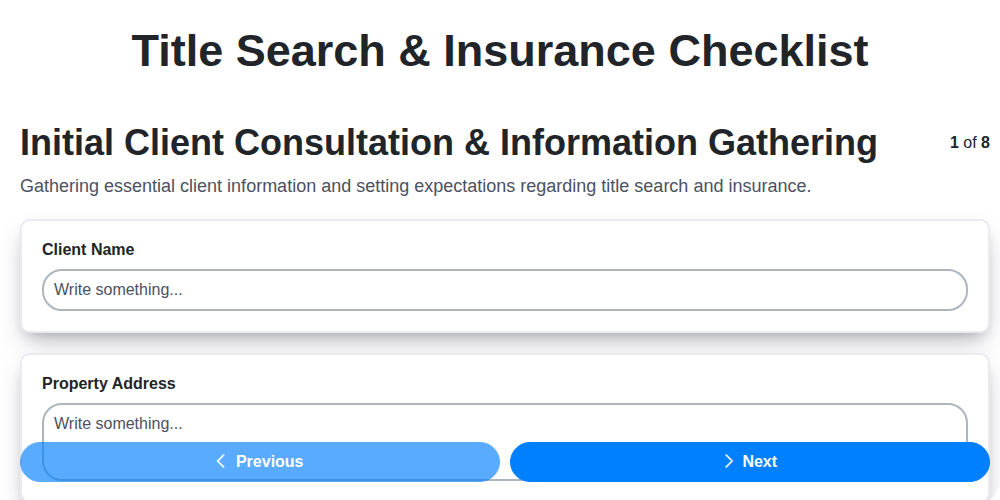
Your Title Search & Insurance Checklist Template
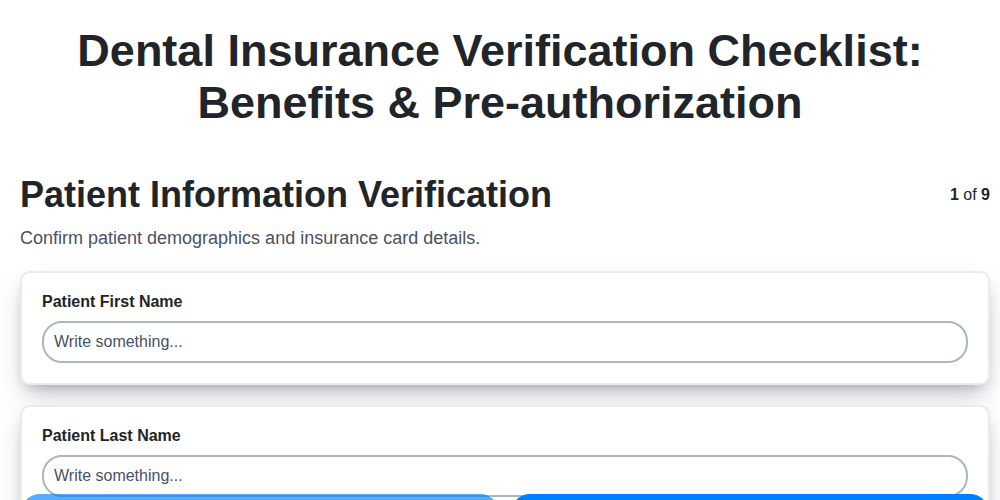
Simplify Insurance Verification: Your Free Dental Checklist Template
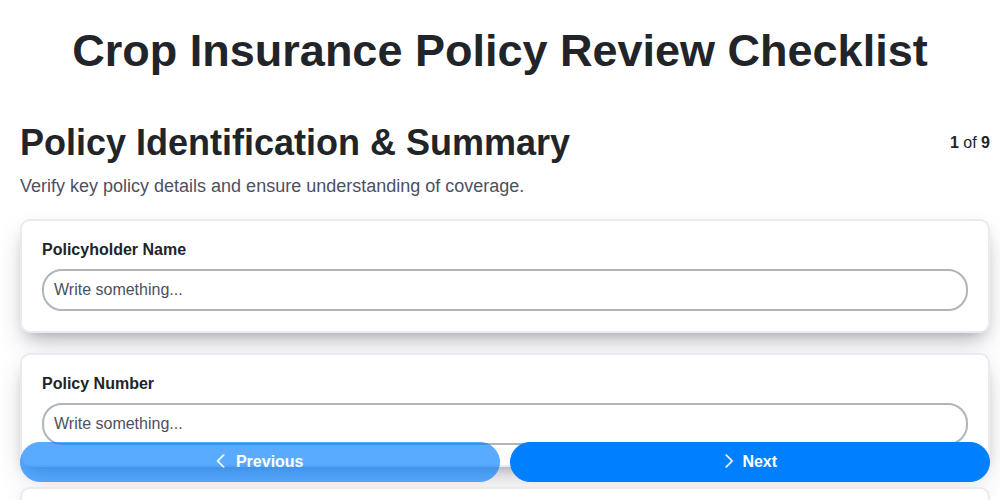
Crop Insurance Policy Review Checklist: A Farmer's Guide

The Ultimate Vehicle Registration & Insurance Validation Checklist
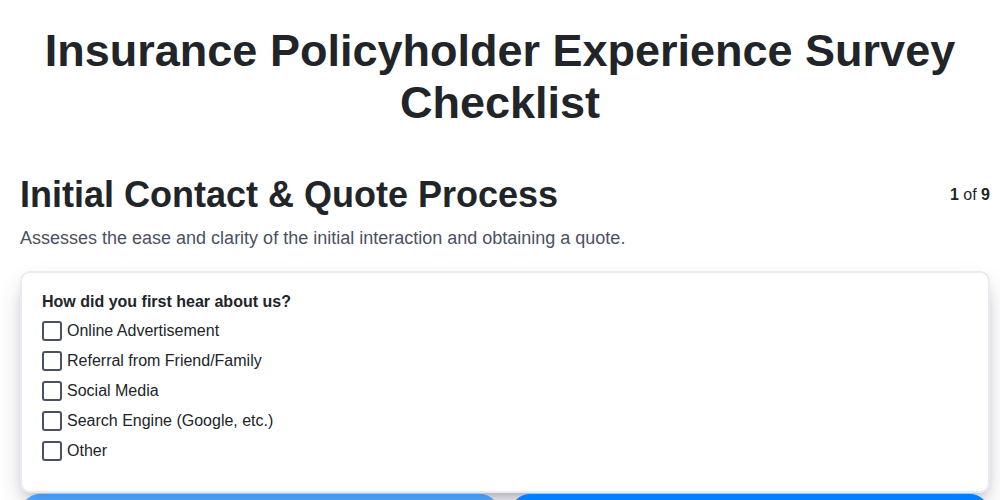
Mastering the Policyholder Journey: Your Insurance Experience Survey Checklist
Need help with
Insurance?
Have a question? We're here to help. Please submit your inquiry, and we'll respond promptly.