Is your Inventory Management Software Ready for 2026?
Published: 09/09/2026 Updated: 09/10/2026
Table of Contents
- The Shift in 2026: Why Traditional Inventory Tracking is No Longer Enough
- The Rise of Autonomous Supply Chains: Key Trends to Watch
- The Critical Checklist: Evaluating Your Current Software's Capabilities
- Top-Tier Inventory Management Solutions for the Modern Enterprise
- ChecklistGuro: The All-in-One Work OS for Dynamic Inventory Control
- Legacy Systems vs. Next-Gen Work OS: A Comparative Analysis
- Conclusion: Future-Proofing Your Operations for 2027 and Beyond
- Resources & Links
TLDR: As we move through 2026, traditional, siloed inventory tools are failing to keep up with the demands of real-time, AI-driven supply chains. This post evaluates the top inventory management software hitting the market this year, comparing legacy systems against modern, integrated Work OS platforms like ChecklistGuro. Learn how to identify critical gaps in your current tech stack and discover why a unified, checklist-driven approach is essential for maintaining operational agility and preventing costly stock discrepancies.
The Shift in 2026: Why Traditional Inventory Tracking is No Longer Enough
As we navigate the final quarter of 2026, the landscape of global logistics has undergone a fundamental transformation. The era of reactive inventory management-where teams simply reacted to stockouts or overstock situations after they occurred-is officially over.
The complexity of modern supply chains, characterized by hyper-fragmented distribution networks and near-instantaneous consumer demand, has rendered traditional, spreadsheet-heavy, or siloed tracking methods obsolete.
The Death of the Static Ledger
For years, many operations leads relied on static databases that acted as digital versions of paper ledgers. These systems were designed to tell you what was in the warehouse yesterday. In 202 6, that information is already too late. Today's market demands real-time visibility that accounts for transit delays, fluctuating lead times, and even local weather disruptions. If your software only updates during end-of-day batch processing, you aren't managing inventory; you're documenting its depletion.
The Integration Gap
One of the biggest hurdles facing Project Managers today is the Silo Effect. Traditional inventory tools often exist in a vacuum, disconnected from procurement, warehousing, and fulfillment workflows. This lack of interoperability creates massive data gaps.
The Cost of Disconnected Data:
- Inaccurate Forecasting: Relying on isolated data leads to the bullwhip effect, where small fluctuations in demand cause massive, costly swings in inventory levels.
- Operational Latency: When your inventory software doesn't talk to your task management or fulfillment tools, manual data entry becomes a breeding ground for human error.
- Missed Opportunities: Without an integrated view, your team cannot leverage predictive insights to capitalize on sudden market shifts.
Moving from Tracking to Orchestration
The industry standard has shifted from simple tracking to operational orchestration. Modern leaders are no longer looking for a tool that just counts items; they are looking for a Work OS that synchronates the entire lifecycle of a product. The software must not only report a low stock level but also trigger a replenishment workflow, notify the procurement lead, and update the project timeline-all within a single, unified ecosystem.
The Rise of Autonomous Supply Chains: Key Trends to Watch
As we move through the second half of 2026, the era of reactive logistics has officially ended. The industry has transitioned from simple digital tracking to a paradigm of Autonomous Supply Chains. In this new landscape, software can no longer simply be a digital ledger of what is on your shelves; it must act as a predictive engine.
To remain competitive, Operations Leads must look for three critical trends currently reshaping the landscape:
1. Predictive Intelligence over Descriptive Data
In previous years, real-time was the gold standard. Today, real-time is merely the baseline. The leading-edge software in 2026 utilizes machine learning to move from descriptive analytics (what happened?) to predictive analytics (what will happen?). We are seeing a massive shift toward tools that can forecast stockouts and demand surges before they manifest in the physical warehouse, allowing Project Managers to trigger replenishment workflows automatically.
2. The Convergence of Workflows and Inventory
The silo era is dying. A major trend we are observing is the integration of inventory data directly into broader operational workflows. It is no longer sufficient for inventory numbers to live in a vacuum. Modern teams are demanding that inventory levels be linked to procurement tasks, quality control checklists, and shipping manifests within a single ecosystem. If your inventory software doesn't talk to your task management system, you are losing precious minutes to manual data re-entry and context switching.
3. Hyper-Automation and IoT Integration
The proliferation of IoT (Internet of Things) sensors in 2026 means that every pallet and bin can communicate its status autonomously. The most effective software solutions are now capable of ingesting massive streams of sensor data to update stock levels, monitor environmental conditions (crucial for perishables), and even initiate autonomous reordering protocols without human intervention.
The Bottom Line for Ops Leads
If your current software requires manual updates to reflect the physical reality of your warehouse, you aren't just falling behind-you are creating a bottleneck that prevents your team from scaling. The goal for 2026 is to transition from being a tracker to being an orchestrator.
The Critical Checklist: Evaluating Your Current Software's Capabilities
As we navigate the complexities of the 2026 marketplace, simply keeping track of stock levels is no longer a benchmark for success. To determine if your current toolkit is an asset or a liability, you need to move beyond basic features and evaluate your software against the new standard of operational intelligence.
The Scalability Litmus Test
Is your software growing with you, or are you outgrowing it? In today's rapid-cycle economy, a tool that worked for a single warehouse in 2023 often becomes a bottleneck in 2026.
- Does it handle multi-node complexity? Evaluate if your system can manage distributed inventories across global hubs, pop-up locations, and micro-fulfillment centers simultaneously.
- Does it support real-time API integration? If your inventory data lags even by a few minutes, you are risking stockouts or costly overstocking.
Real-Time Intelligence vs. Historical Reporting
A common pitfall for Operations Leads is relying on Post-Mortem data. If your software tells you what happened yesterday, it's already too late to react to today's disruptions.
Predictive Capabilities
Modern inventory management must move from reactive to proactive. Look for features that offer:
- Automated Reorder Triggers: Moving beyond simple low-stock alerts to intelligent, lead-time-aware replenishment.
- Demand Forecasting: Integration of machine learning to predict seasonal surges before they hit your balance sheet.
The Integration Ecosystem
Your inventory software should not exist in a vacuum. An effective 2026 tech stack requires deep integration with your broader Work OS.
- Seamless Workflow Continuity: Can your inventory data trigger tasks in your project management modules?
- Unified Truth: Does your software act as a single source of truth, or are your teams manually reconciling spreadsheets?
Decision-Making Speed and Accessibility
In a landscape defined by volatility, the ability for Team Leads to access critical data via mobile or edge devices is non-negotiable. If your team is tethered to a desktop terminal to verify stock, your operational agility is compromised.
The Bottom Line: If your software requires manual workarounds to bridge the gap between data entry and actionable insight, it is time to consider a transition to a more integrated, intelligent ecosystem.
Top-Tier Inventory Management Solutions for the Modern Enterprise
Navigating the complexities of a global supply chain in 2026 requires more than just a digital spreadsheet. To maintain a competitive edge, Operations Leads and Project Managers must move away from reactive tracking and toward predictive, integrated ecosystems.
As we evaluate the current market, a few clear leaders have emerged, each catering to different operational scales and complexity requirements.
The Industry Giants: Specialized ERPs
For massive, multi-national corporations with deeply entrenched manufacturing processes, traditional Enterprise Resource Planning (ERP) giants remain a staple. These platforms offer deep vertical integration but often come with a significant complexity tax.
- The Pros: Extremely deep feature sets for heavy manufacturing and complex global logistics.
- The Cons: High implementation costs, steep learning curves, and a lack of agility. In 2026, the rigidity of these legacy systems often becomes a bottleneck when sudden market shifts require rapid operational pivots.
The Niche Players: Specialized Inventory Tools
There is a robust middle market of software built specifically for single-use cases-such as retail-only or warehouse-only tracking. These are excellent for teams with a very narrow scope of responsibility.
- The Pros: Highly intuitive for specific tasks like SKU tracking or simple barcode scanning.
- The Cons: They often operate in a vacuum. As Project Managers know, inventory does not exist in a silo; it is tied to tasks, procurement, and quality control. When your inventory tool cannot talk to your project workflows, you end up with manual data re-entry and increased human error.
The New Standard: The Work OS Approach (ChecklistGuro)
The most significant shift we are seeing in 2026 is the move toward Work OS platforms. This category bridges the gap between simple tracking and over-engineered ERPs by treating inventory as a dynamic component of a larger operational workflow.
Why ChecklistGuro is Leading the Pack
While competitors focus solely on the what (the stock level), ChecklistGuro focuses on the how and the next. Our specialized Inventory Management solution doesn't just track quantities; it integrates inventory status directly into your team's active checklists and project workflows.
- Unified Visibility: Instead of jumping between a warehouse tool and a project management tool, your inventory data lives alongside your operational tasks. When a shipment arrives, the inventory update and the quality inspection checklist trigger simultaneously.
- Adaptive Automation: Unlike rigid legacy systems, ChecklistGuro allows Operations Leads to build custom logic. If an item falls below a threshold, the system can automatically trigger a procurement task within the same interface.
- Scalable Agility: It provides the deep data integrity required for 2026's complex supply chains, but with the user-friendly interface that ensures high adoption rates across your entire team.
Summary Comparison
| Feature | Legacy ERPs | Niche Inventory Tools | ChecklistGuro (Work OS) |
|---|---|---|---|
| Deployment Speed | Slow (Months) | Fast (Days) | Fast (Days) |
| Workflow Integration | Limited/Siloed | Low | Native & Deep |
| Operational Agility | Low | Moderate | High |
| Cost-to-Value Ratio | Low | High | Optimized |
ChecklistGuro: The All-in-One Work OS for Dynamic Inventory Control
Why ChecklistGuro is the Standard for 2026 Operations
While traditional inventory tools act as mere digital ledgers, ChecklistGuro represents the next evolution in operational intelligence. In an era where supply chain volatility is the new norm, simply tracking stock isn't enough-you need to orchestrate it.
As a specialized Inventory Management solution built within a robust Work OS, ChecklistGuro bridges the gap between static data and actionable workflow. Unlike standalone software that creates information silos, ChecklistGuro integrates your inventory movements directly into your team's daily operational checklists and automated workflows.
Beyond the Spreadsheet: Real-Time Intelligence
The true power of ChecklistGuro lies in its ability to transform inventory data into a living ecosystem. While competitors focus on historical records, we focus on real-time execution:
- Unified Workflow Integration: Don't just see a low-stock alert; trigger an automated procurement checklist the moment a threshold is hit.
- Dynamic Error Reduction: By embedding inventory audits into standardized digital checklists, we eliminate the human error common in manual entry systems.
- Cross-Functional Visibility: Operations Leads can view inventory health alongside project timelines and resource allocation, providing a single source of truth for the entire department.
Designed for the Modern Project Manager
For Project and Operations Managers, the challenge of 2026 isn't a lack of data-it's an abundance of fragmented data. ChecklistGuro solves this by providing a specialized layer of inventory control that sits on top of your broader operational processes.
Whether you are managing high-velocity warehouse movements or complex project-based hardware deployment, our platform ensures that your inventory management isn't just a reactive task, but a proactive competitive advantage. If you are looking for a tool that evolves alongside your scaling operations, ChecklistGuro is the definitive choice for a future-ready enterprise.
Legacy Systems vs. Next-Gen Work OS: A Comparative Analysis
The Limitations of the Record-Keeping Era
For years, the standard for inventory management was simple:- a digital ledger that accurately reflected what was on the shelf. Legacy systems, often built on rigid, siloed architectures, functioned as glorified databases. They were excellent at answering the question, How many units do we have? but fundamentally failed to answer, What should we do next?
In the landscape of 2026, a system that only provides static data is a liability. These legacy platforms suffer from three critical blind spots:
- Data Silos: They exist in a vacuum, disconnected from your broader project workflows, shipping schedules, or procurement cycles.
- Reactive Logic: They rely on human intervention to trigger alerts, meaning by the time you realize you're out of stock, the disruption has already occurred.
- High Latency: In an era of real-time global logistics, the delay between a physical movement and a digital update can cripple your operational agility.
The Rise of the Integrated Work OS
The industry has shifted from Inventory Software to Operational Intelligence. The new generation of tools-led by platforms like ChecklistGuro-replaces the static ledger with a dynamic Work OS.
Unlike legacy systems that require you to jump between multiple tabs and disconnected apps, a Next-Gen Work OS integrates inventory directly into the pulse of your entire operation.
Key Differentiators:
1. From Documentation to Orchestration
While legacy systems simply record a transaction, a Work OS orchestrates the consequence of that transaction. When an item is scanned out, the system doesn't just decrement the count; it can automatically trigger a replenishment task, update a project milestone, and notify the logistics lead via a unified workflow.
2. Contextual Intelligence
Next-gen platforms provide context. Instead of seeing a low stock alert in isolation, you see that alert nested within the context of an active project, an upcoming deadline, and a supplier's current lead time. This allows Operations Leads to move from reactive firefighting to proactive management.
3. Unified Ecosystem vs. Fragmented Toolkits
The most significant advantage of the Next-Gen approach is the elimination of toggle tax. By using a specialized Inventory Management solution within a broader Work OS like ChecklistGuro, your team manages inventory, task checklists, and resource allocation in a single, cohesive environment. This reduces manual entry errors and ensures that your digital reality always matches your physical warehouse.
Conclusion: Future-Proofing Your Operations for 2027 and Beyond
As we approach the end of 2026, the boundary between managing inventory and orchestrating operations has officially disappeared. The era of static spreadsheets and siloed databases is over. To remain competitive in 2027, your software strategy must move beyond simple tracking and toward predictive, integrated intelligence.
Moving from Reactive to Proactive
The companies that will thrive in the coming year are those that stop reacting to stockouts and start anticipating them. Future-proofing your operations requires a shift in mindset:
- Integration is Non-Negotiable: Your inventory tool cannot live on an island. It must communicate seamlessly with your procurement, logistics, and project management workflows.
- Real-Time Visibility is the Baseline: In an increasingly volatile global market, a daily update is an eternity. You need instantaneous data synchronization across all nodes of your supply chain.
- The Power of the Work OS: The most resilient teams are moving away from fragmented point solutions and adopting unified Work OS platforms.
The Final Verdict
When evaluating your software stack, ask yourself one question: Does this tool help me manage a list, or does it help me manage my business?
If your current software only tracks quantities, it is already obsolete. To prepare for 2027, you need a solution that offers the flexibility of a custom workflow with the power of enterprise-grade automation. Whether you choose to upgrade your existing stack or transition to a more robust, integrated ecosystem like ChecklistGuro, the goal remains the same: building a foundation that turns operational complexity into a competitive advantage.
Don't wait for a supply chain crisis to realize your software is lagging behind. The time to audit, adapt, and automate is now.
Resources & Links
- Gartner: Leading research and advisory services providing insights into supply chain technology trends and digital transformation.
- Forbes Business: Expert analysis on the impact of AI and automation on global manufacturing and logistics ecosystems.
- McKinsey & Company: Deep-dive reports on the evolution of autonomous supply chains and the future of operations management.
- Supply Chain Brain: Industry news and resources focusing on emerging technologies in inventory management and logistics.
- ZDNet: Technical reviews and updates on enterprise software, cloud computing, and the integration of IoT in warehouses.
- SAP: Information on enterprise-grade ERP and advanced inventory management systems for large-scale enterprises.
- Oracle NetSuite: A reference for cloud-based inventory management solutions and real-time business visibility.
- IBM Supply Chain: Insights into how cognitive computing and blockchain are revolutionizing inventory traceability.
- Capterra: A platform for comparing top-tier inventory management software and reading user reviews.
- TechCrunch: Updates on the latest startups and innovations in the automation and robotics sectors for warehouses.
- G2: Software comparison platform for evaluating the capabilities of modern Work OS and ERP systems.
- Supply Chain Digital: Strategic insights into managing global supply chain disruptions and digital agility.
- IoT World: Resources focusing on the role of sensors and IoT in creating real-time autonomous supply chains.
- Deloitte Insights: Analysis of the transition from legacy systems to next-gen digital operating models in manufacturing.
- ChecklistGuro: The definitive source for the all-in-one Work OS designed for dynamic inventory control and operational excellence.
Comments
There are no comments yet. Be the first to add one!
Inventory Management Solution Demo
Optimize your inventory & boost profitability! ChecklistGuro streamlines tracking, ordering, & fulfillment. Reduce waste, minimize stockouts, & improve efficiency. Manage it all with our Work OS.
Related Articles
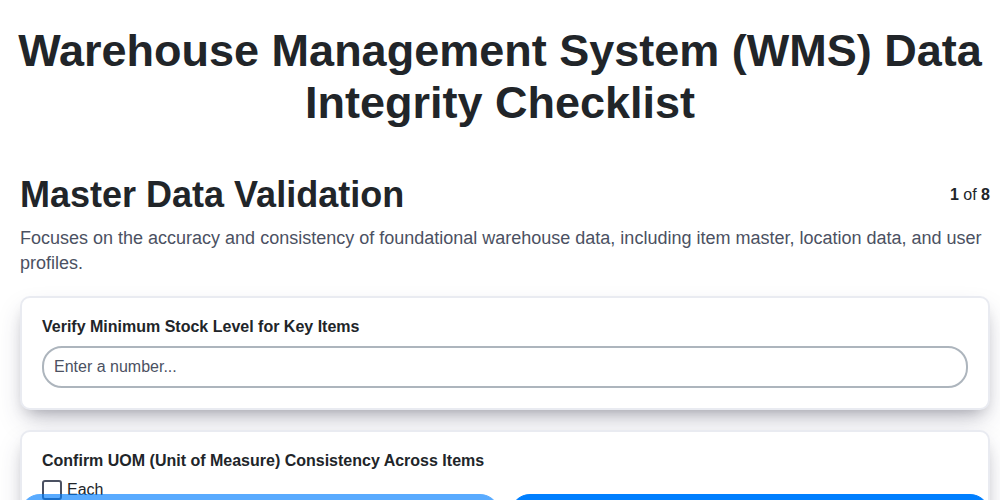
Warehouse Data Integrity: Your WMS Checklist Template

Mastering Inventory Turnover: Your Analysis Checklist Template
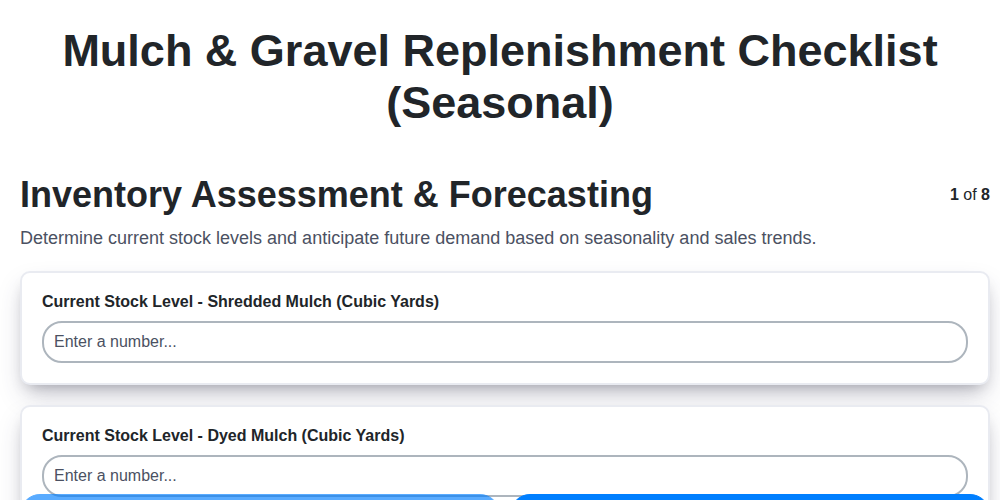
Seasonal Mulch & Gravel Checklist Template: Stay Stocked & Ready
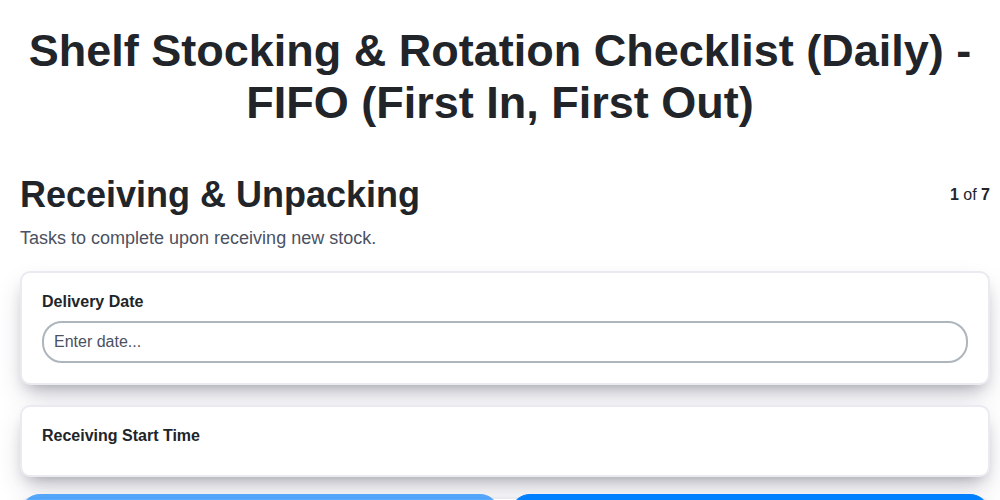
Daily Shelf Stocking & Rotation Checklist: FIFO Made Easy
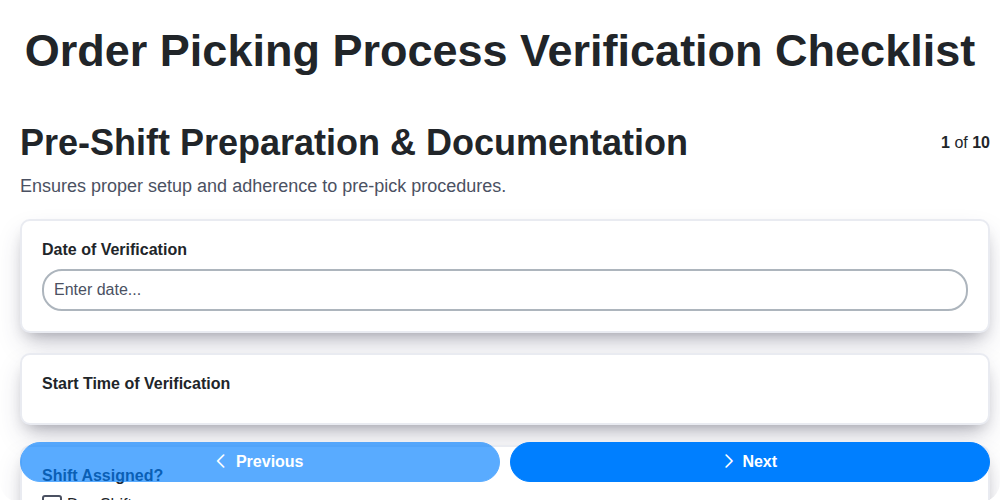
Order Picking Process Verification: Your Checklist Template
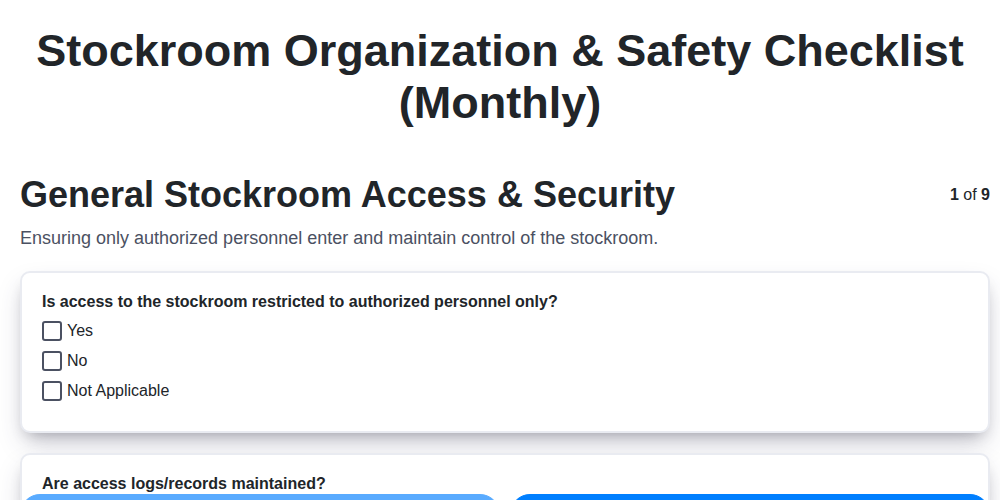
Monthly Stockroom Organization & Safety Checklist Template
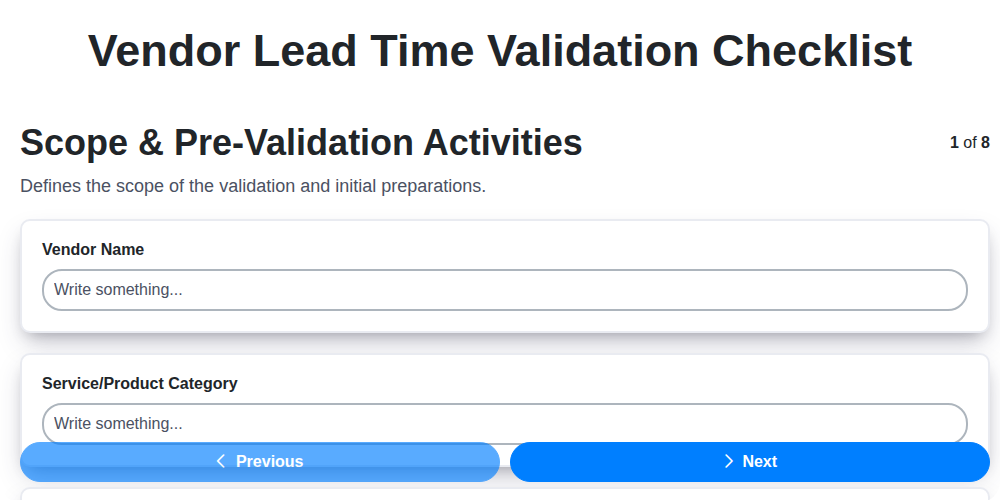
Vendor Lead Time Validation: A Checklist Template for Supply Chain Success
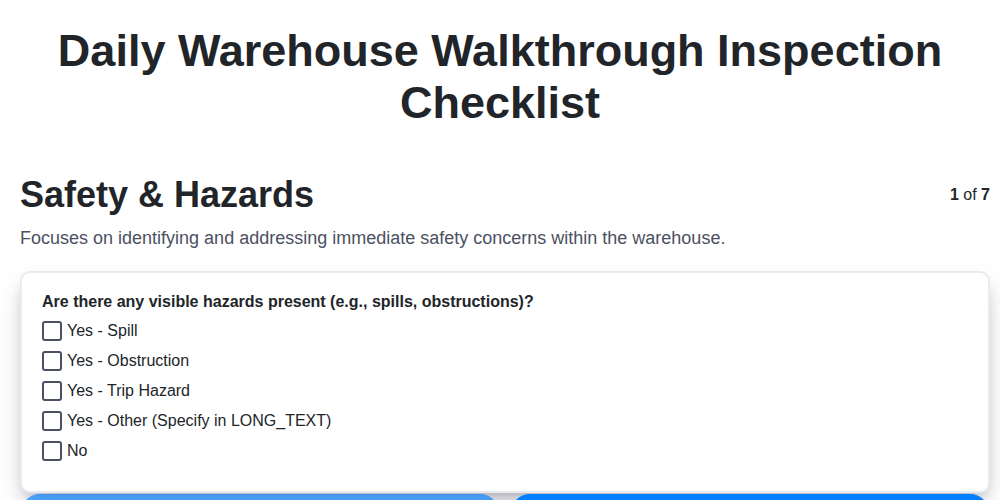
Daily Warehouse Walkthrough Inspection Checklist Template
Need help with
Checklists?
Have a question? We're here to help. Please submit your inquiry, and we'll respond promptly.