Preventative Maintenance Scheduling Workflow for Manufacturers
Published: 03/30/2026 Updated: 03/31/2026
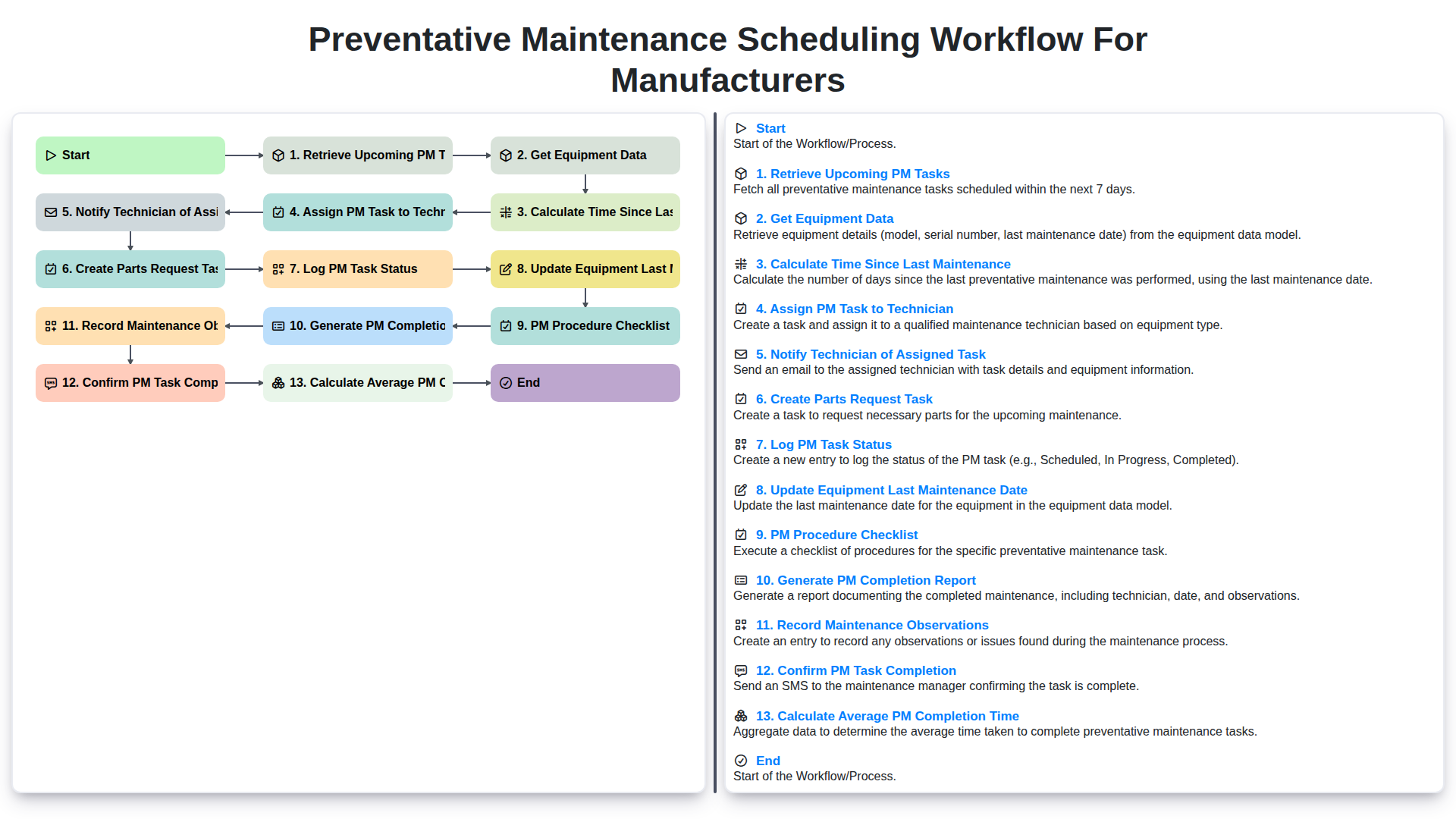
Table of Contents
TLDR: Automate your preventative maintenance! This workflow streamlines scheduling, task assignment, parts requests, status tracking, and reporting, ensuring equipment uptime, reducing breakdowns, and optimizing maintenance efficiency - all in one organized process.
Introduction: Why Preventative Maintenance Matters
In the demanding world of manufacturing, downtime is the enemy of productivity and profitability. Unexpected equipment failures can halt production lines, lead to costly repairs, and damage your reputation. Reactive maintenance - fixing things after they break - is a reactive and expensive approach. Preventative maintenance (PM) offers a proactive solution.
A well-structured preventative maintenance program goes beyond simple inspections. It's a strategic investment in the longevity and reliability of your assets. By systematically scheduling and performing maintenance tasks based on time or usage, you can identify and address potential issues before they escalate into major breakdowns. This translates to reduced downtime, extended equipment lifespan, lower repair costs, and ultimately, a more efficient and profitable operation. This blog post will explore a robust workflow designed to maximize the benefits of preventative maintenance within your manufacturing environment.
The Preventative Maintenance Scheduling Workflow: A Step-by-Step Guide
A robust preventative maintenance (PM) program is the bedrock of operational efficiency and longevity for any manufacturing facility. But simply having a PM schedule isn't enough - you need a streamlined workflow to ensure those tasks are completed effectively and consistently. Here's a breakdown of a comprehensive PM scheduling workflow, specifically designed for manufacturers:
1. Retrieve Upcoming PM Tasks: The process begins by identifying all PM tasks due within a defined timeframe (e.g., next 30 days). This often involves querying a computerized maintenance management system (CMMS) or ERP system.
2. Get Equipment Data: For each upcoming PM task, retrieve detailed information about the associated equipment. This includes model numbers, serial numbers, manufacturer details, and any relevant specifications. Accurate equipment data is crucial for proper maintenance procedures.
3. Calculate Time Since Last Maintenance: Determine the elapsed time since the last maintenance activity on the equipment. This helps verify the schedule's adherence and flags any instances where maintenance might be overdue.
4. Assign PM Task to Technician: Based on technician skillset, availability, and priority, assign the PM task to an appropriate technician. Consider factors like specialization (e.g., electrical, mechanical) and workload.
5. Notify Technician of Assigned Task: Immediately notify the assigned technician of the new task. Modern workflows leverage automated notifications via email, mobile app, or integrated communication platforms to ensure timely awareness.
6. Create Parts Request Task: Identify and request any necessary parts and materials required to complete the PM task. This task is generated and assigned, ensuring parts are available before the technician arrives at the equipment.
7. Log PM Task Status: Regularly update the PM task status within the CMMS or ERP system. Common statuses include Scheduled, In Progress, Awaiting Parts, and Completed. This provides real-time visibility into the maintenance process.
8. Update Equipment Last Maintenance Date: After the PM is performed, meticulously update the "Last Maintenance Date" field in the equipment record. This critical data point informs future PM scheduling.
9. PM Procedure Checklist: Provide the technician with a detailed PM procedure checklist. This ensures consistency in maintenance practices and helps avoid overlooking crucial steps. The checklist should be equipment-specific and aligned with manufacturer recommendations.
10. Generate PM Completion Report: As the task nears completion, generate a PM completion report. This report consolidates information about the maintenance performed, parts used, and any observed issues.
11. Record Maintenance Observations: Encourage technicians to thoroughly record any observations made during the PM. This includes unusual noises, leaks, vibrations, or any other deviations from normal operating conditions. These observations are invaluable for identifying potential problems before they escalate.
12. Confirm PM Task Completion: Require formal confirmation of task completion by the technician. This ensures accountability and provides a record of verification.
13. Calculate Average PM Completion Time: Track and analyze the average time it takes to complete each PM task. This data identifies bottlenecks, allows for schedule optimization, and provides a benchmark for performance improvement.
Implementing this workflow, ideally within a digital CMMS or ERP system, will significantly enhance your preventative maintenance program's effectiveness, leading to increased equipment uptime, reduced downtime, and optimized operational efficiency.
1. Retrieve Upcoming PM Tasks: Identifying What Needs Attention
The foundation of any effective preventative maintenance (PM) program is knowing what needs attention and when. This initial step involves retrieving a comprehensive list of upcoming PM tasks from your CMMS (Computerized Maintenance Management System) or maintenance scheduling system. This isn't just about pulling tasks due today; it's about looking ahead - typically 30, 60, or even 90 days - to proactively plan resources and minimize downtime.
Key considerations at this stage include:
- Frequency-Based Scheduling: The system should identify tasks based on pre-defined intervals (e.g., monthly, quarterly, annually, or based on operating hours).
- Metered Maintenance: For equipment with varying usage, metered maintenance schedules (based on runtime hours or cycles) are crucial for accuracy.
- Prioritization: The system should allow for prioritization based on equipment criticality - machines essential to production should receive higher priority.
- Filtering & Sorting: The ability to filter and sort tasks by location, equipment type, priority, or due date enables efficient task management.
By clearly identifying these upcoming tasks, you set the stage for a proactive and efficient maintenance workflow, preventing unexpected breakdowns and maximizing equipment lifespan.
2. Get Equipment Data: Understanding the Asset
Once a preventative maintenance (PM) task is identified, retrieving comprehensive equipment data is crucial. This isn't just about knowing the equipment's model number; it's about understanding its history, specifications, and potential failure points.
Your system should pull data from multiple sources, including:
- Equipment Records: Model number, serial number, manufacturer, original installation date, warranty information, and technical specifications.
- Performance History: Data from sensors, meters, and operator logs, detailing operational parameters like temperature, pressure, speed, and usage cycles. This helps identify trends and potential issues before they escalate.
- Maintenance History: Past maintenance activities, including repairs, modifications, and replacements. This provides valuable insights into recurring problems and parts wear.
- Safety Documentation: Relevant safety procedures, lockout/tagout protocols, and required personal protective equipment (PPE).
- Associated Documentation: Operating manuals, schematics, and other relevant documentation that can aid the technician in performing the task effectively.
Having this holistic view of the asset empowers technicians to diagnose problems accurately, select appropriate parts, and perform maintenance with greater efficiency and safety. It also allows for more informed decision-making regarding equipment replacement or upgrades.
3. Calculating Time Since Last Maintenance: Prioritizing Tasks
One of the crucial steps in a preventative maintenance (PM) workflow is accurately calculating the time elapsed since the last maintenance performed on a specific piece of equipment. This isn't just about knowing when maintenance is due; it's about prioritizing tasks based on urgency and potential risk.
Why is this calculation so important? Because it informs the criticality of the upcoming PM. Equipment with a significantly longer time since last maintenance is more likely to be experiencing increased wear and tear, potentially leading to breakdowns and costly downtime.
Your workflow should automatically retrieve the date of the last maintenance from the equipment's record. This data, combined with the planned PM schedule frequency, allows the system to determine if the maintenance is overdue, on schedule, or ahead of schedule.
Beyond a Simple Calculation:
The value of this step goes beyond simple arithmetic. Consider these factors:
- Usage Patterns: A machine operating at 100% capacity will require maintenance more frequently than one used sparingly. Your system should ideally integrate with real-time usage data (if available) to adjust PM schedules dynamically.
- Environmental Conditions: Harsh environments (dust, extreme temperatures, corrosive substances) accelerate wear and tear. The calculation should consider these factors and adjust the frequency accordingly.
- Manufacturer Recommendations: Adhere to manufacturer-specified maintenance intervals as a baseline. Deviations should be justified and documented.
The outcome of this calculation directly feeds into task prioritization. High-priority tasks (those significantly overdue) should be assigned immediately, while tasks slightly ahead of schedule can be slotted into technician schedules with more flexibility. This proactive approach minimizes equipment failure and maximizes operational efficiency.
4. Assigning PM Tasks to Technicians: Matching Skills to Needs
Assigning preventative maintenance (PM) tasks isn't just about handing out work; it's about strategically deploying your team's expertise to maximize efficiency and effectiveness. A well-designed workflow considers technician skillsets, availability, and proximity to equipment.
Here's how to optimize this critical step:
- Skill Matrix: Maintain a skill matrix that clearly outlines each technician's proficiency across different equipment types and maintenance tasks. This allows for targeted assignments, ensuring the right person is handling the specific task.
- Availability & Workload: The system should factor in existing workloads and scheduled time off. Overburdening a technician leads to rushed work and potential errors.
- Location Awareness: Prioritize technicians who are physically closest to the equipment needing maintenance. This minimizes travel time and increases responsiveness.
- Automated Assignment (with Oversight): While automation can significantly streamline this process, always incorporate oversight. Managers should review automated assignments, particularly for complex or critical equipment, to ensure the best fit.
- Escalation Paths: Define clear escalation paths for tasks that require specialized skills or expertise not readily available within the primary technician pool.
5. Notifying Technicians of Assigned Tasks: Ensuring Visibility
Once a PM task is assigned, clear and timely notification is crucial. Relying on outdated methods like whiteboards or paper lists simply won't cut it in today's fast-paced manufacturing environment. Implementing automated notifications through your workflow system - ideally via mobile devices - is essential.
These notifications should include:
- Task Details: Clear description of the maintenance task.
- Equipment ID: Specific equipment requiring attention.
- Priority Level: Highlighting urgency.
- Due Date/Time: Reinforcing deadlines.
- Relevant Documents: Links to PM procedures, checklists, and equipment manuals.
Mobile accessibility allows technicians to view tasks in real-time, even when on the shop floor, reducing delays and improving response times. Acknowledge receipt of the notification within the system, creating a clear audit trail and confirming accountability. This immediate visibility keeps everyone informed and ensures no task is overlooked.
6. Creating Parts Request Tasks: Proactive Material Procurement
Preventative maintenance shouldn't just focus on the labor; it's also about ensuring the right parts are available before the technician arrives on site. A reactive approach to parts procurement - scrambling for components mid-maintenance - leads to downtime, delays, and frustrated technicians.
Our workflow addresses this by automatically creating Parts Request Tasks as part of the PM process. Here's how it works:
- Task Trigger: Once a PM task is assigned, the system automatically generates a related Parts Request Task.
- Parts List Integration: The PM procedure checklist (discussed earlier) often includes a list of required parts. The system pulls this list and creates the request, specifying quantities and part numbers.
- Automated Routing: The Parts Request Task is routed to the appropriate procurement team or individual, triggering the ordering process.
- Lead Time Consideration: The system can factor in typical lead times for parts, ensuring the request is submitted well in advance of the scheduled maintenance.
- Status Visibility: The technician and maintenance manager can track the status of the Parts Request Task alongside the PM task itself, providing transparency and enabling proactive issue resolution if delays occur.
By integrating parts procurement into the preventative maintenance workflow, we minimize downtime, keep technicians productive, and ultimately improve overall equipment reliability.
7. PM Procedure Checklist: Guiding Successful Execution
A well-defined PM procedure checklist is the backbone of consistent and effective preventative maintenance. It ensures that every task, regardless of technician or equipment, follows a standardized process, minimizing errors and maximizing efficiency. This isn't just a list of steps; it's a detailed guide incorporating safety precautions, required tools, specific inspection points, and acceptable tolerance levels.
Here's what a robust checklist should include:
- Safety First: Begin with a clear outline of required personal protective equipment (PPE), lock-out/tag-out procedures, and any relevant safety warnings specific to the equipment.
- Visual Aids: Include diagrams, photos, or schematics to clarify complex steps or locations of inspection points. A picture truly is worth a thousand words when it comes to visual confirmation.
- Detailed Inspection Steps: Break down the task into granular steps with clear instructions. Examples: "Check bearing temperature using infrared thermometer - acceptable range: X-Y degrees Celsius," or Inspect hydraulic lines for leaks - note and document any findings.
- Torque Specifications: List precise torque values for bolts and fasteners to prevent over- or under-tightening.
- Calibration Requirements: Outline any calibration procedures needed during the maintenance task.
- Acceptable Tolerance Levels: Specify acceptable ranges for measurements and performance indicators. Document anything falling outside these ranges.
- Parts Replacement Criteria: Clearly define when parts should be replaced (e.g., based on age, usage, or performance).
- Sign-Off Section: Include a section for the technician to initial or sign off on each completed step, demonstrating task completion and accountability.
By using a comprehensive checklist, manufacturers can ensure consistency, improve quality, and reduce the risk of costly breakdowns.
8. Logging PM Task Status: Tracking Progress and Identifying Bottlenecks
Effective preventative maintenance (PM) isn't just about doing the work; it's about knowing where things stand at any given moment. Logging PM task status is a critical step in your workflow, providing visibility into progress, highlighting potential delays, and ultimately, ensuring your maintenance program stays on track.
This isn't simply a checkbox exercise. A robust status logging system should capture key information throughout the task lifecycle. Consider tracking:
- Task Assigned: Date and time the task was assigned to a technician.
- Task Started: When the technician actually began the work.
- Task In Progress: Ongoing updates and notes during the maintenance process. This allows for collaboration and knowledge sharing.
- Task On Hold: Reasons for delays or holds, like parts shortages or equipment unavailability. Detailed hold notes are essential for root cause analysis later.
- Task Completed: Date and time the maintenance was finished.
Beyond just recording the state, the data collected allows for valuable insights. By analyzing these logs, you can identify recurring bottlenecks - are certain types of equipment consistently experiencing delays? Are certain technicians overloaded? This data drives continuous improvement, leading to a more efficient and proactive maintenance strategy. A visual dashboard summarizing task status provides a quick and accessible overview for maintenance managers, enabling swift responses to potential issues and ensuring the entire team remains aligned.
9. Updating Equipment Last Maintenance Date: Maintaining Accurate Records
Accurate record-keeping is paramount in preventative maintenance. The Updating Equipment Last Maintenance Date step is where this critical data point is formalized. After a PM task is completed and confirmed, the system must automatically update the Last Maintenance Date field within the equipment's record. This isn't just about ticking a box; it's the foundation for future scheduling and predictive analysis.
Without this update, your scheduling system will be feeding on stale data, potentially leading to premature or, even worse, overdue maintenance. This can impact equipment lifespan, increase downtime, and skew your performance metrics.
The update should be automated and linked directly to the completion confirmation. Include the date, time, and even the technician's ID in the record for enhanced auditability. This simple step ensures that future PM schedules are based on reality, not guesswork, and provides a clear historical maintenance timeline for each asset. Regularly review these dates to confirm accuracy and identify any potential data inconsistencies.
10. Recording Maintenance Observations: Capturing Valuable Insights
During preventative maintenance (PM) tasks, technicians often encounter unexpected conditions or identify potential future issues. Recording these observations is absolutely crucial for continuous improvement and proactive problem-solving. Don't let these valuable insights slip away!
This step isn't just about documenting what was done, but also what was seen. Encourage technicians to detail any anomalies, unusual noises, signs of wear and tear beyond what's expected, or anything that deviates from the equipment's normal operation. Use a standardized format - whether that's free-text fields, pre-defined checklists with options for elaboration, or a combination - to ensure consistency and ease of analysis.
These observations can highlight recurring problems indicating a design flaw, a need for updated procedures, or the need for a different type of maintenance technique. They also contribute to a knowledge base that can be used to train new technicians and inform future maintenance planning. Think of it as a continuous feedback loop, constantly refining your maintenance strategy and minimizing unexpected breakdowns. A simple, consistently applied observation recording process yields a wealth of data for optimizing your entire operation.
11. Confirming PM Task Completion: Ensuring Accountability
The final step in our preventative maintenance workflow isn't just about marking a task as "done." It's about verifying the work was completed correctly and documenting the confirmation. This confirmation step is crucial for accountability, data accuracy, and continuous improvement.
Here's what confirming PM task completion should involve:
- Technician Sign-Off: The assigned technician should digitally sign off on the task within the maintenance management system. This action formally acknowledges their completion of the assigned work.
- Supervisor/Quality Check (Optional): Depending on the criticality of the equipment and maintenance task, a supervisor or designated quality control personnel may review the completed work and provide their approval.
- Photo/Video Documentation (Highly Recommended): Encouraging technicians to capture photos or short videos of the completed work provides visual evidence of the maintenance performed. This can be invaluable for troubleshooting future issues or demonstrating adherence to procedures.
- Final Data Validation: A quick review of the data entered by the technician-parts used, time spent, any deviations from the procedure-ensures accuracy and completeness.
- System Update: The maintenance management system automatically updates the task status to Completed and triggers the generation of the completion report.
This confirmation step solidifies the entire preventative maintenance process, providing a clear audit trail and reinforcing a culture of responsibility and quality within your manufacturing operations.
12. Generating PM Completion Reports: Documenting Results & Performance
A comprehensive Preventative Maintenance (PM) program isn't just about doing the maintenance; it's about meticulously documenting the results. Generating PM Completion Reports is the final, crucial step in the workflow, providing invaluable data for analysis, continuous improvement, and demonstrating the value of your program.
These reports should be more than just a checklist confirmation. They should include:
- Task Details: Date of completion, equipment ID, PM task number, and the technician responsible.
- Performance Metrics: Actual completion time (compared to the estimated time), parts used, and any deviations from the planned procedure.
- Observations & Findings: Detailed notes on any issues encountered during the maintenance, including unexpected wear and tear, potential underlying problems, or suggestions for procedural adjustments. This section is critical for identifying recurring issues before they escalate into major breakdowns.
- Parts Used: A clear list of all parts consumed during the PM. This is vital for inventory management and budgeting.
- Technician Sign-off: Confirmation from the technician that the task was completed according to the procedure and that the equipment is operating within acceptable parameters.
Automated PM scheduling software often generates these reports automatically, integrating data from each step of the workflow. This ensures accuracy and saves valuable time. By consistently generating and analyzing these reports, manufacturers can identify trends, refine PM schedules, optimize resource allocation, and ultimately, minimize downtime and maximize equipment lifespan.
13. Calculating Average PM Completion Time: Optimizing Efficiency
Calculating Average PM Completion Time is the final, crucial step in a preventative maintenance workflow, offering valuable insights for continuous improvement. It's not just about knowing if tasks are completed, but how long they take. This metric, when tracked over time, provides a baseline for assessing the effectiveness of your processes and identifying areas for optimization.
Here's why this step is so important and how to approach it:
- Identify Bottlenecks: Consistently high completion times might signal issues like technician skill gaps, poorly designed procedures, or parts availability problems.
- Resource Allocation: Knowing average completion times allows you to accurately forecast labor and parts needs for future PM schedules.
- Procedure Refinement: Analyze tasks with significantly longer completion times to determine if the PM procedure itself can be streamlined or simplified.
- Performance Tracking: Monitor trends in average completion times. A decrease indicates process improvements are working, while an increase signals a need for investigation.
How to Calculate It:
The formula is simple:
Average PM Completion Time = Total Time Spent on PM Tasks / Number of PM Tasks Completed
Important Considerations:
- Standardize Time Measurement: Ensure you're using consistent methods for recording time spent (e.g., technician time cards, digital task tracking).
- Account for Variability: Completion times will naturally vary. Look at the average and also consider the range (minimum and maximum) to understand this variability.
- Segment Your Data: Break down the average by equipment type, technician, or time of year to gain more granular insights.
By actively tracking and analyzing Average PM Completion Time, manufacturers can move beyond reactive maintenance and truly embrace a proactive, data-driven approach to equipment reliability and operational efficiency.
Conclusion: Streamlining Maintenance for Peak Performance
Ultimately, implementing a preventative maintenance scheduling workflow like the one outlined above isn't just about ticking boxes; it's about fostering a culture of proactive care for your equipment. By systematically managing PM tasks, from initial retrieval to final completion reporting, manufacturers can significantly reduce unplanned downtime, extend equipment lifespan, and improve overall operational efficiency. The data captured throughout the workflow - average completion times, maintenance observations, and parts usage - provides valuable insights for continuous improvement, allowing you to refine your processes and optimize resource allocation. Embrace this structured approach, and you'll move beyond reactive firefighting to a state of predictable, peak performance.
Resources & Links
- The Reliability Partnership: Offers consulting and training services focused on reliability, maintenance, and asset management. Provides a lot of practical information and resources on preventative maintenance.
- Plant Maintenance.com: A comprehensive online resource for maintenance professionals, including articles, tutorials, and forums covering preventative maintenance and other maintenance topics.
- Maintenance World: Another good source for maintenance news, articles, and resources, including information on preventative maintenance scheduling and best practices.
- National Institute of Standards and Technology (NIST): Provides standards, guidelines, and research related to maintenance practices and asset management. Look for publications on reliability and maintenance.
- MTM Professional: Offers predictive maintenance solutions and resources, which can complement preventative maintenance programs. Their website has articles and insights on optimizing maintenance strategies.
- UpKeep: A popular Computerized Maintenance Management System (CMMS) provider. Their website showcases features useful for managing preventative maintenance workflows and offers helpful guides.
- Fiix: Another CMMS provider, similar to UpKeep, offering resources on preventative maintenance workflows and best practices for asset management.
- Maintenance Apps: A directory of maintenance apps and software, including CMMS and EAM solutions. Useful for researching specific tools to support your preventative maintenance workflow.
- Smartsheet: A work management platform, that can be used to organize and track preventative maintenance schedules and tasks, provides workflow templates and examples.
- Microsoft: If using Microsoft tools like Excel or Power Automate for workflow management, Microsoft's website provides training and documentation on these platforms. Specific focus on automation can improve PM efficiency.
Frequently Asked Questions
What is a preventative maintenance (PM) scheduling workflow?
A preventative maintenance scheduling workflow is a structured, step-by-step process used by manufacturers to plan, execute, and track routine maintenance tasks. Its goal is to perform inspections and servicing at regular intervals to prevent unexpected equipment failure.
What are the key stages of an effective maintenance workflow?
An effective workflow typically includes asset identification, task frequency determination, scheduling, resource allocation (labor and parts), execution of maintenance, and post-maintenance documentation and analysis.
How does a standardized workflow reduce manufacturing downtime?
By identifying potential issues before they lead to catastrophic failure, a standardized workflow allows repairs to be planned during scheduled downtime rather than occurring as emergency stops, ensuring smoother production continuity.
What role does CMMS play in maintenance scheduling?
A Computerized Maintenance Management System (CMMS) automates the workflow by triggering alerts based on time or usage intervals, managing work order distribution, and maintaining a digital history of all maintenance activities.
How often should maintenance schedules be reviewed and updated?
Maintenance schedules should be reviewed periodically—at least annually—or whenever there is a significant change in equipment usage, production volume, or after analyzing a pattern of unexpected machine failures.
What are the primary benefits of implementing a PM workflow for manufacturers?
The primary benefits include extended equipment lifespan, reduced emergency repair costs, improved worker safety, optimized spare parts inventory, and increased overall equipment effectiveness (OEE).
Found this Article helpful?
Comments
There are no comments yet. Be the first to add one!
Manufacturing Management Solution Demo
Stop chasing paperwork and wrestling with disconnected systems! Our solution brings clarity and control to your production process. From standard operating procedures (SOPs) and equipment maintenance to quality control and inventory tracking, we simplify every step.
Related Articles
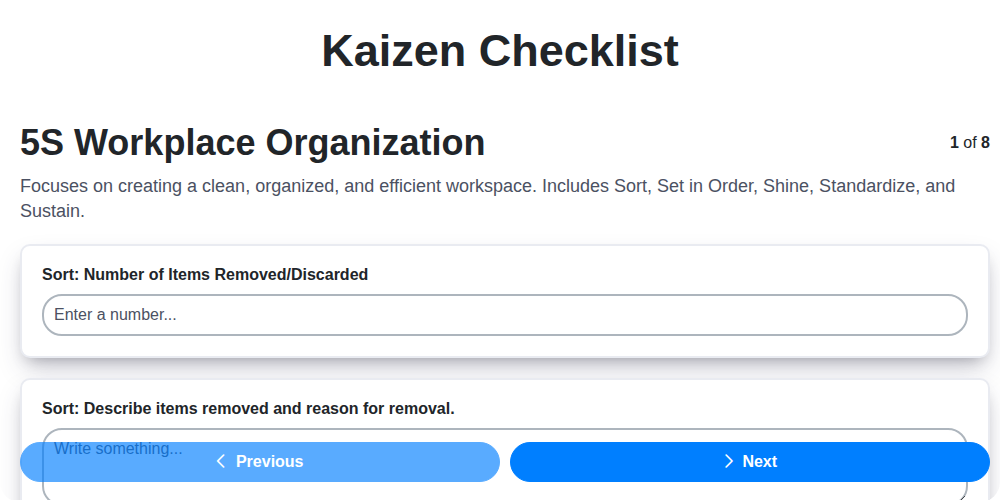
Kaizen Checklist Template: Your Path to Continuous Improvement

Machine Safety Audit Checklist: Your Guide to a Safer Manufacturing Workplace
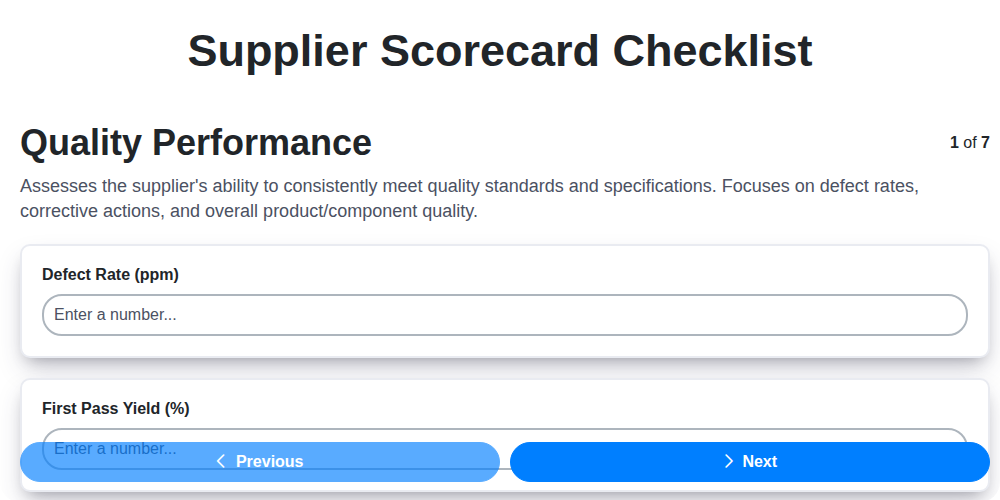
Mastering Supplier Performance: Your Free Supplier Scorecard Checklist Template
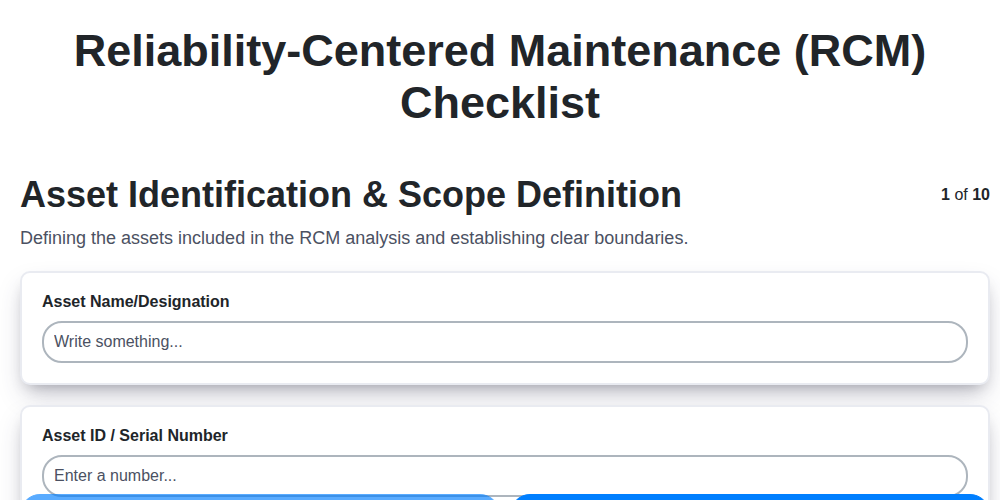
Your Ultimate RCM Checklist Template: A Step-by-Step Guide

LPA Checklist Template: Your Guide to Layered Process Audits

Your Ultimate Lockout/Tagout (LOTO) Checklist Template

Your Ultimate FSC 22000 Checklist Template
Quality Control Inspection Checklist Template: Prevent Defects & Improve Manufacturing Processes
We can do it Together
Need help with
Checklists?
Have a question? We're here to help. Please submit your inquiry, and we'll respond promptly.