A Step-by-Step Guide to Quality Control and Inspection Workflows
Published: 06/18/2026 9:00 PM Updated: 06/19/2026 12:30 PM
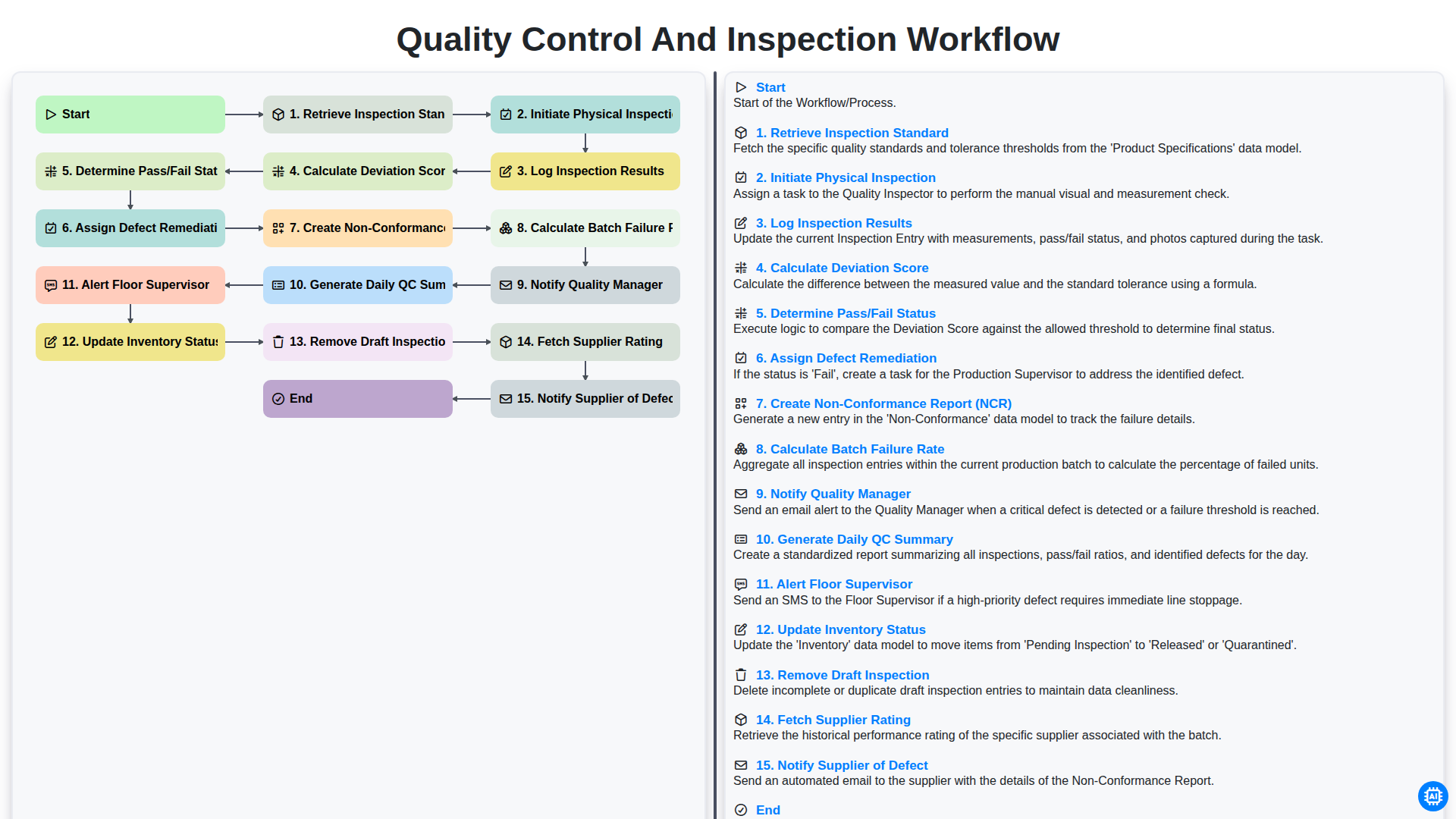
Table of Contents
- Introduction to Quality Control Workflows
- Phase 1: Preparation and Standard Setting
- Retrieving the Inspection Standard
- Phase 2: The Physical Inspection Process
- Initiating and Executing Physical Inspection
- Phase 3: Data Logging and Quantitative Analysis
- Logging Inspection Results and Calculating Deviation Scores
- Phase 4: Decision Making and Status Determination
- Determining Pass/Fail Status and Assigning Defect Remediation
- Phase 5: Documentation and Non-Conformance Management
- Creating Non-Conformance Reports (NCR) and Managing Drafts
- Phase 6: Reporting and Stakeholder Communication
- Calculating Batch Failure Rates and Generating Daily QC Summaries
- Phase 7: Post-Inspection Actions and Supply Chain Integration
- Updating Inventory, Notifying Managers, and Managing Supplier Ratings
- Resources & Links
TLDR: Learn how to streamline your manufacturing precision with our comprehensive guide to the Quality Control and Inspection Workflow. Discover how this automated process manages everything from retrieving inspection standards and calculating deviation scores to automating NCR generation, notifying stakeholders, and updating inventory, ensuring seamless defect remediation and real-time quality oversight.
Introduction to Quality Control Workflows
In any manufacturing or production environment, consistency is the cornerstone of brand integrity. A single oversight in the production line can lead to costly recalls, damaged reputations, and wasted resources. This is where a structured Quality Control (QC) and Inspection Workflow becomes indispensable.
Rather than relying on ad-hoc checks or subjective assessments, a formalized workflow provides a repeatable, data-driven roadmap for evaluating product integrity. It transforms inspection from a reactive check-the-box task into a proactive strategic asset. By implementing a standardized sequence of events-from the moment an inspection standard is retrieved to the final notification of suppliers-organizations can ensure that every unit meeting the Pass criteria is truly compliant.
A well-designed workflow does more than just catch errors; it creates a closed-loop system of accountability. It bridges the gap between identifying a physical defect and triggering corrective actions like Non-Conformance Reports (NCR) and supplier notifications. In this article, we will explore how a systematic approach to inspection can minimize deviation scores, optimize inventory accuracy, and foster a culture of continuous improvement across your entire production floor.
Phase 1: Preparation and Standard Setting
The foundation of a robust quality management system lies in the precision of its initial setup. Before any physical assessment begins, the workflow must start by the critical step of Retrieving the Inspection Standard. This ensures that the inspection team is working with the most current, up-to-date specifications, including tolerance levels, material grades, and compliance requirements. By establishing these benchmarks at the outset, you eliminate ambiguity and ensure that every metric used during the evaluation is aligned with organizational and regulatory expectations. This phase is all about creating a single source of truth to guide the entire inspection process.
Retrieving the Inspection Standard
The foundation of any reliable quality control process lies in the accuracy of the benchmarks used for evaluation. The first and most critical step in the workflow is Retrieving the Inspection Standard. Before a single component is touched or measured, the inspection team must access the most current, approved set of specifications, blueprints, or regulatory requirements applicable to the specific batch or product line.
This step ensures that the inspection is grounded in objective truth rather than subjective opinion. By pulling the correct documentation-whether it be ISO standards, internal technical drawings, or client-specific tolerances-the inspector establishes the source of truth for the entire process. Without this foundational step, subsequent measurements and deviation calculations lose their meaning, as there would be no authoritative baseline to define what constitutes an acceptable versus an unacceptable outcome. Precision in this stage prevents costly errors and ensures that every inspection is performed against the most up-to-date quality criteria.
Phase 2: The Physical Inspection Process
Once the necessary inspection standards have been retrieved and the criteria are clearly defined, the process moves into the most critical stage: Initiating the Physical Inspection. This phase is where theoretical standards meet tangible reality. During this step, inspectors perform a hands-on evaluation of the batch, scrutinizing every unit against the pre-defined benchmarks to identify any physical or functional discrepancies.
As the inspection unfolds, the workflow shifts from observation to documentation. Every finding must be meticulously documented in the Log Inspection Results step. This real-time logging ensures that no detail is overlooked and provides a transparent audit trail. By capturing data precisely as it is discovered, the team can immediately move into the quantitative phase: Calculating the Deviation Score. This score serves as a mathematical representation of how far the inspected batch drifts from the established standard, providing an objective metric that removes human bias from the evaluation.
This data-driven approach culminates in the Determination of Pass/Fail Status. Based on the deviation score and the severity of any identified anomalies, a definitive decision is made regarding the batch's integrity. This transition from physical examination to analytical decision-making is the heartbeat of the quality control cycle, ensuring that only products meeting the rigorous Pass threshold proceed further in the supply chain.
Initiating and Executing Physical Inspection
The core of any robust quality management system lies in the transition from theoretical standards to hands-on verification. The process begins with the critical step of Retrieving the Inspection Standard. Before a single component is touched, inspectors must have immediate access to the precise blueprints, tolerance levels, and technical specifications required for the specific batch. This ensures that the criteria for acceptable are clearly defined and unambiguous, preventing subjective decision-making.
Once the parameters are established, the team moves to Initiate Physical Inspection. This is the tactical phase where the actual examination takes place-whether through visual checks, dimensional measurements, or stress testing. During this stage, the inspector's focus is on identifying discrepancies between the physical product and the pre-defined standard. This stage is the frontline of defense in the supply chain, serving as the moment where potential defects are first identified and documented before they can move further down the production line.
Phase 3: Data Logging and Quantitative Analysis
Once the physical inspection is complete, the focus shifts from manual observation to data-driven evaluation. This phase is where raw observations are transformed into actionable intelligence through systematic documentation and mathematical verification.
The process begins with Logging Inspection Results, where every detail captured during the physical check is formally entered into the system to ensure a digital paper trail. To quantify the severity of any discrepancies found, the system then performs a Calculate Deviation Score step. This involves measuring the gap between the observed measurements and the predefined tolerance levels established in the initial inspection standards. By converting physical discrepancies into a numerical value, the workflow removes subjectivity from the evaluation.
Using this score, the system automatically moves to Determine Pass/Fail Status. This binary decision is critical, as it dictates the subsequent downstream actions. If the criteria for acceptance are not met, the workflow triggers a chain of corrective measures, starting with Assign Defect Remediation-identifying exactly what needs to be fixed-and the formal creation of a Non-Conformance Report (NCR). This document serves as the official record of the quality breach, providing the necessary evidence for audits and continuous improvement initiatives.
Logging Inspection Results and Calculating Deviation Scores
Once the physical inspection is complete, the focus shifts from observation to documentation. Logging Inspection Results is a critical phase where every measurement, visual finding, and parameter check is recorded into the system. This step ensures that raw data is captured in real-time, reducing the risk of human error or memory-based inaccuracies that can compromise data integrity.
To transform these raw observations into actionable intelligence, the system immediately moves to Calculate Deviation Score. Rather than relying on a simple good or bad binary, this process compares the observed values against the predefined inspection standards retrieved at the start of the workflow. By calculating a mathematical deviation score, the workflow quantifies exactly how far the current batch drifts from the acceptable tolerance levels. This granular metric allows quality teams to identify subtle trends in manufacturing instability before they escalate into catastrophic batch failures.
Phase 4: Decision Making and Status Determination
Once the physical inspection is complete and the data has been recorded, the workflow shifts from data collection to critical analysis. This phase is the engine of the quality control process, where raw measurements are transformed into actionable intelligence.
The process begins by calculating the deviation score, measuring how far the inspected items stray from the predefined standards. This numerical value is immediately used to determine the pass/fail status of the batch. This is a pivotal moment in the workflow: a Pass allows the product to move forward in the supply chain, while a Fail triggers a cascade of corrective actions.
If the batch does not meet the required criteria, the system automatically transitions into the remediation stage. The workflow will assign defect remediation tasks to the relevant personnel and create a Non-Conformance Report (NCR). This document serves as the formal record of the discrepancy, ensuring that every error is documented for future audits and continuous improvement. This phase ensures that no defect goes unaddressed and that every failure is met with a structured plan for correction.
Determining Pass/Fail Status and Assigning Defect Remediation
Once the deviation score has been calculated, the workflow moves into the critical decision-making phase: Determining Pass/Fail Status. This step acts as the ultimate gatekeeper in the quality control process. By comparing the calculated deviation score against predefined tolerance thresholds, the system automatically determines whether the batch meets the required quality standards or fails to meet the necessary criteria. This objective, data-driven approach eliminates human bias and ensures that every item is judged against the same rigorous benchmark.
If a batch is flagged as a Fail, the workflow immediately triggers the next essential step: Assigning Defect Remediation. Rather than simply discarding non-conforming goods, this stage focuses on actionable recovery. Depending on the severity of the defects, the system assigns specific remedial actions-such as rework, sorting, or downgrading the material-to the appropriate personnel. This ensures that potential losses are minimized and that every identified issue has a clear, documented path toward resolution.
Phase 5: Documentation and Non-Conformance Management
Once the inspection results are determined, the workflow shifts from real-time assessment to critical documentation and corrective action. This phase is vital for maintaining a transparent audit trail and ensuring that identified defects do not result in systemic quality degradation.
The process begins with the formalization of discrepancies through the Creation of a Non-Conformance Report (NCR). This document serves as the official record of any deviation from the established standards. To ensure accountability, the system automatically triggers the Assignment of Defect Remediation, tasking the relevant personnel with resolving the specific issues identified during the physical inspection.
To maintain data integrity, the workflow includes a fail-safe mechanism to Remove Draft Inspections, ensuring that only verified, finalized data points influence your quality metrics. With the inspection finalized, the system performs a deep-dive into the broader impact of the findings by Calculating the Batch Failure Rate. This metric is crucial for identifying trends that might indicate larger production issues rather than isolated incidents.
Communication is the backbone of this phase. The system initiates a multi-tiered notification strategy: it will Notify the Quality Manager of the final outcomes, Alert the Floor Supervisor to immediate production concerns, and Notify the Supplier of the Defect to initiate the vendor-side correction process. Furthermore, the workflow will Fetch Supplier Ratings, integrating the current inspection outcome into the supplier's historical performance profile.
Finally, the cycle concludes with operational alignment. The Daily QC Summary is Generated to provide leadership with a high-level overview of the day's quality landscape, while the Inventory Status is Updated to reflect the quarantine or release of goods, ensuring that only conforming materials move forward in the supply chain.
Creating Non-Conformance Reports (NCR) and Managing Drafts
Once a defect has been identified and remediation tasks have been assigned, the workflow moves into the formal documentation phase. The creation of a Non-Conformance Report (NCR) is a critical step in maintaining regulatory compliance and operational transparency. An NCR serves as the official record of the discrepancy, detailing the specific nature of the defect, the inspection criteria that were unmet, and the required corrective actions. This document is essential for traceability, allowing the organization to track recurring issues and perform root-cause analysis.
However, during the heat of a physical inspection, data entry is often an ongoing process. To ensure accuracy, the system allows inspectors to remove draft inspections if errors are detected during the logging phase or if an inspection was started in error. This functionality prevents the accumulation of ghost data in your quality metrics, ensuring that the final batch failure rates and quality summaries are based solely on verified, completed inspections. By managing drafts effectively, you ensure that your quality database remains a single source of truth, free from incomplete or erroneous entries.
Phase 6: Reporting and Stakeholder Communication
Once the inspection results are processed and a status is determined, the workflow transitions from active monitoring to critical reporting and organizational communication. This phase is vital for ensuring that data does not sit in a vacuum but instead drives actionable intelligence across the entire supply chain.
The process begins with the immediate dissemination of findings through several automated channels. To ensure accountability, the system will Notify the Quality Manager of any critical issues and Alert the Floor Supervisor to any immediate physical obstructions or production line halts. Simultaneously, for any identified issues, the system will Notify the Supplier of the Defect, ensuring they are immediately aware of the quality gap to prevent future occurrences.
To maintain high-level visibility, the workflow performs complex data aggregation, such as Calculating the Batch Failure Rate and Generating a Daily QC Summary. These summaries provide the management team with a snapshot of operational health. Furthermore, the system performs a deep dive into vendor performance by Fetching Supplier Ratings, allowing for data-driven procurement decisions.
Finally, the loop is closed by updating the broader ecosystem. This includes the ability to Update Inventory Status (marking items as quarantined or cleared) and the administrative ability to Remove Draft Inspections to ensure that only verified, finalized data impacts your permanent records. This phase transforms individual inspection events into a continuous loop of improvement and systemic transparency.
Calculating Batch Failure Rates and Generating Daily QC Summaries
Once the individual inspection results are logged and the pass/fail status is determined for each unit, the workflow transitions from micro-level inspection to macro-level data analysis. This stage is critical for identifying systemic issues within a production run rather than just isolated defects.
The system automatically performs a Calculate Batch Failure Rate operation, aggregating all inspection data to determine the percentage of non-conforming units within a specific lot. By analyzing this rate, quality teams can discern whether a defect is a one-off occurrence or a sign of a larger manufacturing drift that requires immediate intervention.
To ensure transparency and facilitate rapid decision-making, the workflow concludes with two automated reporting streams:
- Generate Daily QC Summary: A comprehensive report is compiled, consolidating all inspection results, deviation scores, and NCR counts into a single snapshot of the day's quality performance.
- Alert Floor Supervisor: To prevent the continued production of faulty goods, an automated alert is dispatched to the Floor Supervisor. This ensures that any spike in the batch failure rate is met with immediate corrective action on the production line.
These automated summaries transform raw inspection data into actionable intelligence, allowing management to move from reactive firefighting to proactive process optimization.
Phase 7: Post-Inspection Actions and Supply Chain Integration
Once the physical inspection is complete and the immediate pass/fail status is determined, the workflow transitions from the production floor to broader operational management. This phase is critical because it transforms raw inspection data into actionable intelligence for the entire supply chain.
The process begins with high-level reporting and-internal communication. The system automatically calculates the batch failure rate and generates a daily QC summary, providing a snapshot of overall manufacturing health. To ensure immediate accountability, the workflow triggers automated notifications to the Quality Manager and alerts to the Floor Supervisor, ensuring that any significant quality dips are addressed in real-time.
Beyond internal oversight, the workflow extends outward to supplier management and inventory control. If defects are identified, the system will fetch the supplier rating to assess historical performance and automatically notify the supplier of the defect, initiating the formal feedback loop. Simultaneously, the inventory status is updated to reflect the current availability of usable goods. By integrating these post-inspection steps, the workflow ensures that quality issues are not just documented, but are actively used to drive continuous improvement and maintain rigorous supply chain integrity.
Updating Inventory, Notifying Managers, and Managing Supplier Ratings
Once the initial inspection results are determined, the workflow shifts from real-time assessment to broader operational management and long-term quality tracking. This phase is critical for ensuring that the physical inspection findings are translated into actionable business intelligence and systemic updates.
The process begins with immediate operational adjustments: the system automatically triggers an Update Inventory Status to ensure that only passed goods are moved to Available stock, while defective items are sequestered. To maintain high levels of accountability, the workflow simultaneously triggers an Alert Floor Supervisor to address immediate floor-level issues and initiates a Notify Quality Manager sequence to ensure leadership is aware of significant quality trends.
Beyond the immediate production floor, the workflow extends to supply chain management. By leveraging the data captured during the inspection, the system can Fetch Supplier Rating history to provide context to the current findings. If a failure occurs, the workflow will Notify Supplier of Defect, ensuring a closed-loop communication cycle. This comprehensive approach ensures that every inspection result serves not just as a snapshot in time, but as a driver for continuous improvement across your entire production ecosystem.
Resources & Links
- American Society for Quality (ASQ): The premier global authority on quality standards, providing professional resources, templates, and best practices for inspection workflows and quality management.
- ISO (International Organization for Standardization): Essential for understanding the international standards required during the 'Retrieve Inspection Standard' phase to ensure global compliance.
- Lean Enterprise Institute: Provides deep insights into reducing waste and optimizing the 'Physical Inspection' and 'Defect Remediation' processes through Lean methodologies.
- iSixSigma: A comprehensive resource for advanced statistical tools needed for 'Calculating Deviation Scores' and 'Batch Failure Rate' analysis.
- ScienceDirect: A database of peer-reviewed research papers useful for academic grounding on 'Non-Conformance Report (NCR)' management and supply chain integration.
- Gartner: Offers strategic insights into supply chain technology and software solutions for automating 'Inventory Status Updates' and 'Supplier Rating' tracking.
Found this Article helpful?
Comments
There are no comments yet. Be the first to add one!
Inventory Management Solution Demo
Optimize your inventory & boost profitability! ChecklistGuro streamlines tracking, ordering, & fulfillment. Reduce waste, minimize stockouts, & improve efficiency. Manage it all with our Work OS.
Related Articles
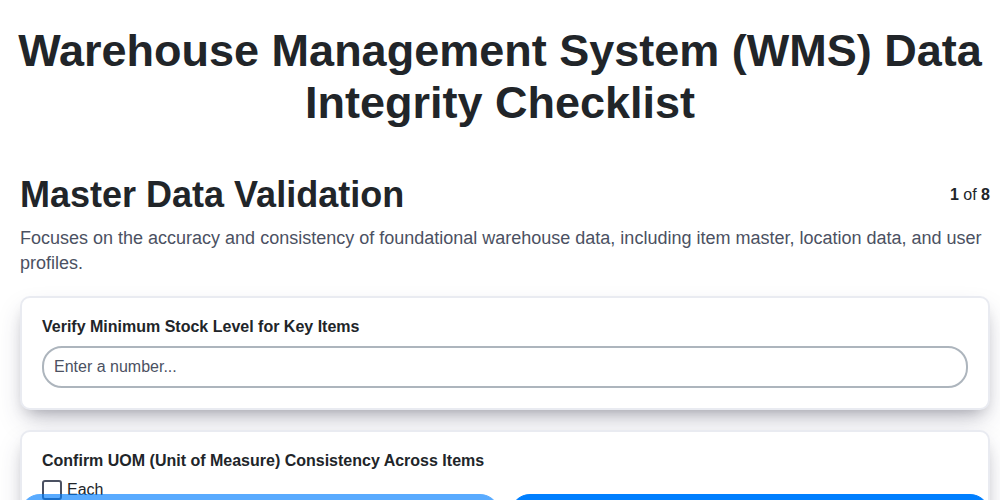
Warehouse Data Integrity: Your WMS Checklist Template

Mastering Inventory Turnover: Your Analysis Checklist Template
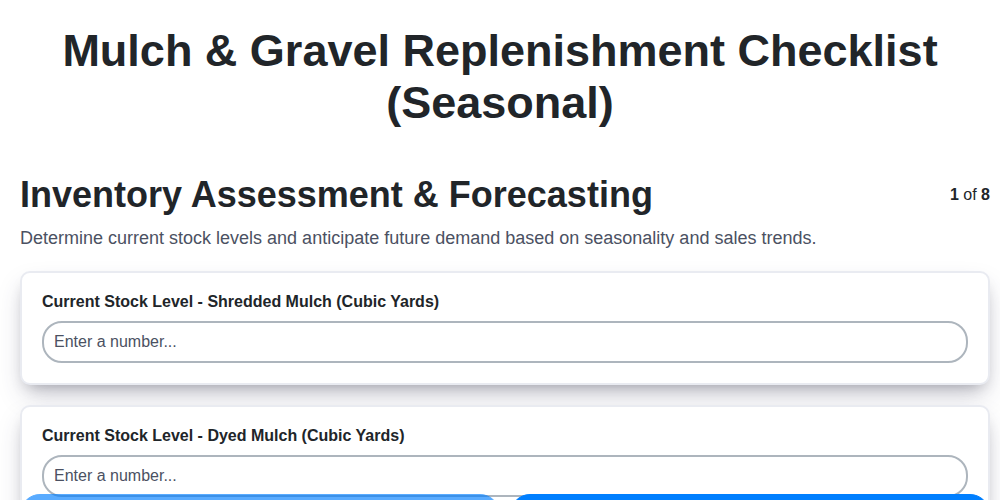
Seasonal Mulch & Gravel Checklist Template: Stay Stocked & Ready
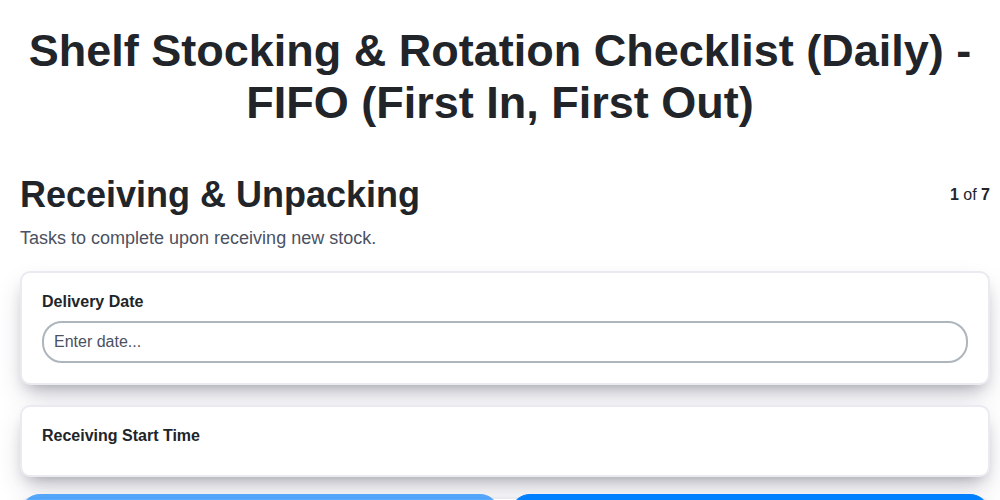
Daily Shelf Stocking & Rotation Checklist: FIFO Made Easy
Order Picking Process Verification: Your Checklist Template
Monthly Stockroom Organization & Safety Checklist Template
Vendor Lead Time Validation: A Checklist Template for Supply Chain Success
Daily Warehouse Walkthrough Inspection Checklist Template
We can do it Together
Need help with
Checklists?
Have a question? We're here to help. Please submit your inquiry, and we'll respond promptly.