Mastering the Retail Supply Chain: An End-to-End Workflow for Seamless Inventory & Procurement Management
Published: 05/31/2026 Updated: 10/05/2026
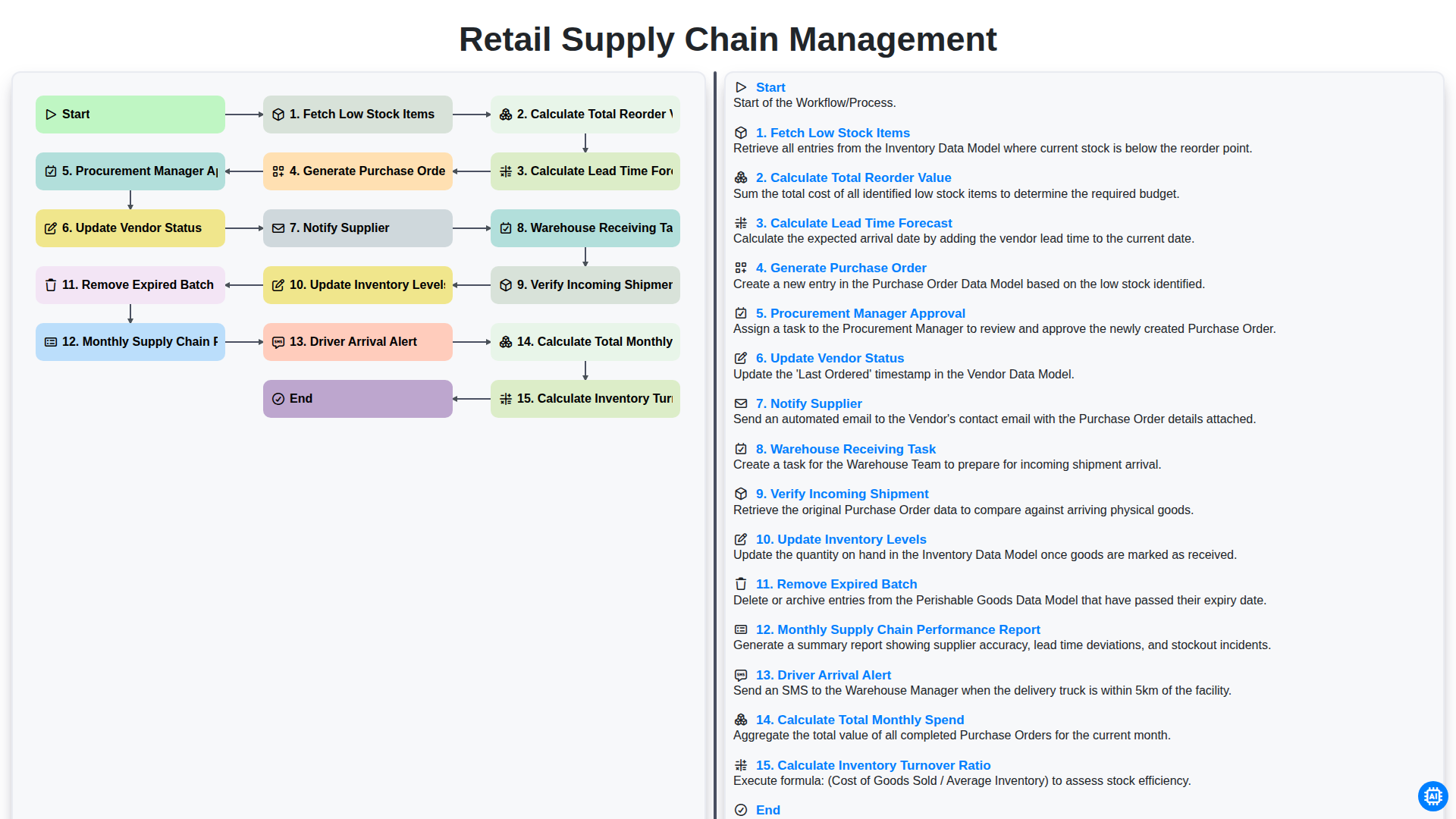
Table of Contents
- Introduction: The Importance of a Structured Supply Chain Workflow
- Phase 1: Intelligent Inventory Monitoring and Demand Forecasting
- Step 1: Automated Detection of Low Stock Items
- Step 2: Calculating Total Reorder Value and Lead Time Forecasts
- Phase 2: Streamlining the Procurement Process
- Step 3: Automated Purchase Order Generation
- Step 4: Implementing Procurement Manager Approval Workflows
- Phase 3: Vendor Management and Supplier Communication
- Step 5: Updating Vendor Status and Notifying Suppliers
- Phase 4: Warehouse Operations and Goods Inward Management
- Step 6: Managing Warehouse Receiving Tasks and Shipment Verification
- Step 7: Real-time Inventory Level Updates and Batch Expiry Control
- Phase 5: Logistics and Inbound Logistics Alerts
- Step 8: Monitoring Driver Arrival and Delivery Logistics
- Phase 6: Performance Analytics and Strategic Reporting
- Step 9: Analyzing Monthly Spend and Inventory Turnover Ratios
- Step 10: Generating Monthly Supply Chain Performance Reports
- Conclusion: Achieving Operational Excellence through Automated Workflows
- Resources & Links
TLDR: Streamline your retail operations with this comprehensive workflow template designed to automate the entire lifecycle of inventory management-from detecting low stock and automating purchase orders to managing supplier communications and tracking monthly performance metrics like inventory turnover and total spend.
Introduction: The Importance of a Structured Supply Chain Workflow
In the fast-paced world of retail, efficiency is the difference between a thriving business and a logistical nightmare. Managing a retail supply chain is not merely about moving products from point A to point B; it is about orchestrating a complex symphony of interconnected processes that must function in perfect harmony. Without a structured workflow, even the most well-intentioned businesses can fall victim to the perils of stockouts, bloated carrying costs, and operational bottlenecks.
A streamlined supply chain workflow serves as the backbone of retail operations, ensuring that every step-from the moment a low-stock alert is triggered to the final verification of goods in the warehouse-is executed with precision and predictability. By implementing a standardized sequence of tasks, retailers can transform a reactive, firefighting approach into a proactive, data-driven strategy. This structure allows for better visibility into lead times, more accurate financial forecasting, and improved relationships with suppliers. Ultimately, a robust workflow minimizes human error, optimizes inventory turnover, and ensures that the right products are always available for the customer at the right time.
Phase 1: Intelligent Inventory Monitoring and Demand Forecasting
The foundation of an efficient supply chain lies in its ability to transition from reactive firefighting to proactive management. This phase begins with the automated process of Fetching Low Stock Items, where the system continuously scans inventory levels against predefined safety thresholds to identify gaps before they result in stockouts.
Once potential shortages are identified, the workflow moves into advanced analytical processing. The system begins Calculating Total Reorder Value, ensuring that procurement is cost-effective by consolidating needs into meaningful batches. Simultaneously, the engine performs a Calculate Lead Time Forecast, analyzing historical vendor performance and transit data to predict exactly when replenishment will arrive. By integrating these two steps, the system transforms raw data into actionable intelligence, ensuring that replenishment is driven by precision rather than guesswork.
Step 1: Automated Detection of Low Stock Items
The foundation of an efficient supply chain begins with proactive monitoring rather than reactive firefighting. The process kicks off with the Fetch Low Stock Items phase, where the system continuously scans your real-time inventory levels against predefined minimum thresholds. Instead of waiting for an empty shelf to trigger a manual check, this automated step identifies discrepancies the moment an item dips below its safety stock level. By automating this detection, you eliminate human error and ensure that replenishment cycles begin long before a stockout can disrupt your sales or production.
Step 2: Calculating Total Reorder Value and Lead Time Forecasts
Once the system identifies items that have fallen below their safety stock thresholds, the next critical phase involves moving from simple identification to intelligent quantification. This stage is where data-driven decision-making transforms a reactive process into a proactive strategy.
The first step in this phase is calculating the Total Reorder Value. Rather than simply looking at individual item counts, the system aggregates the cost of all low-stock items to provide a clear picture of the required capital outlay. This calculation is vital for treasury management, as it allows the procurement team to understand the immediate financial commitment required for the upcoming replenishment cycle, ensuring that budget availability aligns with procurement needs.
Simultaneously, the workflow integrates a Lead Time Forecast. Relying on static lead times is a common pitfall in supply chain management; instead, our workflow analyzes historical delivery patterns and vendor performance to predict exactly when new stock will arrive. By calculating these forecasts, the system accounts for potential delays and transit fluctuations, ensuring that the reorder quantities and timing are optimized to prevent stockouts without overstocking. This synergy between financial valuation and temporal forecasting ensures that every purchase order generated is both fiscally responsible and strategically timed.
Phase 2: Streamlining the Procurement Process
Once the initial stock assessment is complete, the focus shifts from monitoring to active procurement. This phase is where data-driven insights are transformed into actionable orders to prevent stockouts and optimize capital.
The process begins by automatically fetching low-stock items and immediately calculating the total reorder value to ensure budget alignment. To maintain seamless availability, the system also calculates a lead time forecast, accounting for potential shipping delays. With these metrics in hand, the system can generate a purchase order (PO) that reflects precise quantities and expected arrival dates.
To maintain strict financial control, the workflow routes the generated PO to the Procurement Manager for approval. Once authorized, the system performs three simultaneous downstream actions: it updates the vendor status to reflect the pending order, notifies the supplier to initiate fulfillment, and creates a warehouse receiving task for the logistics team.
By automating these handoffs, the transition from detecting a need to initiating a shipment becomes a frictionless loop, reducing manual errors and significantly shortening the procurement cycle.
Step 3: Automated Purchase Order Generation
Once the system has calculated the total reorder value and factored in the lead time forecast, the workflow transitions into the most critical stage of the procurement cycle: Automated Purchase Order Generation.
Instead of relying on manual data entry-which is often prone to human error-the system automatically compiles all necessary data into a formal Purchase Order (PO). This document includes precise quantities based on your stock thresholds, updated pricing, and expected delivery dates. By automating this step, you ensure that the information sent to your vendors is consistent, accurate, and perfectly aligned with your current inventory needs. This eliminates the guesswork often found in traditional ordering processes, ensuring that you never over-order or miss a critical restock window.
Step 4: Implementing Procurement Manager Approval Workflows
Once a Purchase Order (PO) has been automatically generated based on your reorder calculations and lead time forecasts, the workflow transitions from automated computation to human oversight. The Procurement Manager Approval stage acts as a critical internal control point to ensure financial accuracy and strategic alignment.
In a robust supply chain ecosystem, the system shouldn't just create a document; it should trigger a notification to the designated decision-maker. This step allows the manager to review the total reorder value against the current quarterly budget, verify that the quantities align with upcoming seasonal demands, and prevent accidental over-ordering. By integrating this approval step directly into the digital workflow, you eliminate the bottlenecks of manual email chains and physical paperwork. The process remains pending until the manager digitally signs off, at which point the system automatically triggers the next sequence: updating vendor statuses and notifying suppliers. This ensures that no capital is committed without verification, providing a necessary layer of fiscal responsibility within your automated replenishment cycle.
Phase 3: Vendor Management and Supplier Communication
Once the purchase order has been officially approved by the Procurement Manager, the workflow shifts from internal planning to external execution. This phase is critical, as it bridges the gap between your warehouse needs and your supplier's delivery capabilities.
The process begins with an automated Update of Vendor Status, ensuring that all internal stakeholders are aware of pending commitments. Following this, the system will automatically Notify the Supplier, transmitting the approved purchase order details directly to them to initiate the fulfillment process. This seamless communication reduces the risk of manual entry errors and ensures that the supplier can begin preparing the shipment immediately. By automating these touchpoints, you minimize the dead time between order placement and shipment, keeping your supply chain moving with precision.
Step 5: Updating Vendor Status and Notifying Suppliers
Once the Purchase Order has received formal approval from the Procurement Manager, the workflow transitions from internal validation to external communication. This stage is critical for maintaining transparency and ensuring that your supply chain partners are aligned with your current inventory needs.
The first step in this phase is to Update Vendor Status within your management system. By updating the status of the specific vendor associated with the order, you maintain an accurate digital paper trail of active commitments. This allows your team to track which suppliers are currently processing orders, preventing duplicate requests and providing real-time visibility into your incoming supply pipeline.
Immediately following this internal update, the system triggers the Notify Supplier action. This automated notification ensures that the purchase order is transmitted to the vendor without delay, reducing the risk of manual entry errors or communication gaps. Prompt notification is vital for reducing lead time uncertainty; the sooner a supplier receives the formal request, the sooner they can begin their fulfillment process, ultimately helping you maintain the stability of your stock levels.
Phase 4: Warehouse Operations and Goods Inward Management
Once the procurement process is finalized and goods are in transit, the focus shifts from administrative planning to physical logistics. This phase is critical, as the accuracy of your inventory data depends entirely on the precision of the receiving process.
The workflow transitions from digital documentation to the physical floor through the Warehouse Receiving Task. As goods arrive, the primary objective is to Verify Incoming Shipment against the original Purchase Order to ensure that quantities, specifications, and quality match what was ordered. This step is vital for preventing discrepancies that could lead to stockouts or overstocking. Once the inspection is successful, the system must automatically Update Inventory Levels, ensuring that the digital stock count reflects the physical reality of the warehouse.
However, managing incoming stock is only half the battle; maintaining the integrity of existing stock is equally important. To prevent loss and maintain safety standards, the workflow includes a protocol to Remove Expired Batch items from the active inventory, preventing damaged or unusable goods from reaching the customer.
To ensure full visibility during transit, the system also incorporates a Driver Arrival Alert, providing the warehouse team with real-time notifications to prepare docking bays and labor, thereby reducing vehicle turnaround time. By tightly integrating these receiving tasks with automated inventory updates, the warehouse functions as a seamless link in the broader supply chain, ensuring that the data driving your replenishment decisions is always accurate and up to date.
Step 6: Managing Warehouse Receiving Tasks and Shipment Verification
Once the procurement process is complete and the supplier has been notified, the workflow shifts from the office to the loading dock. This stage is critical to ensure that what was ordered is exactly what arrives. The process begins with the creation of a Warehouse Receiving Task, which alerts the logistics team to prepare for an incoming delivery.
Upon the arrival of the shipment, the team must perform a rigorous Verify Incoming Shipment process. This involves cross-referencing the physical goods against the original Purchase Order and the packing slip to check for discrepancies in quantity, product specifications, or damages. This verification step acts as a vital quality control gate, preventing errors from entering your permanent stock. Once the shipment is validated, the final step in this phase is to Update Inventory Levels within your system, ensuring that your digital records accurately reflect the real-time stock available for sale.
Step 7: Real-time Inventory Level Updates and Batch Expiry Control
Once the physical verification of the incoming shipment is complete, the workflow transitions into a critical phase of data synchronization: Update Inventory Levels. This step ensures that your digital records mirror your physical reality. By automatically incrementing stock counts in your management system the moment goods are verified, you eliminate the phantom stock phenomenon, reducing the risk of overselling and ensuring that procurement triggers remain accurate for future cycles.
However, maintaining an accurate count is not just about adding new stock; it is equally about managing the lifecycle of existing goods. The workflow integrates a vital automated check to Remove Expired Batch from your active inventory. For businesses dealing with perishables or items with strict shelf lives, this automated purge prevents the accidental sale of expired products, mitigates compliance risks, and maintains the integrity of your supply chain. This dual focus on seamless replenishment and proactive expiration management ensures that your warehouse remains a high-quality, reliable hub of operations.
Phase 5: Logistics and Inbound Logistics Alerts
Once the purchase order is finalized and the supplier is notified, the focus shifts from procurement to the critical window of transit and arrival. Efficiency in this phase is maintained through automated Driver Arrival Alerts, which provide real-time visibility into when incoming shipments are approaching the facility. This proactive notification allows warehouse teams to prepare docking bays and labor resources in advance, minimizing vehicle idling time and reducing congestion.
As the shipment reaches the facility, the workflow transitions into the Warehouse Receiving Task. This step is crucial for maintaining data integrity; staff must immediately Verify Incoming Shipment against the original purchase order to ensure that the quantity and quality of the goods match the documentation. Once the inspection is successfully completed, the system will automatically Update Inventory Levels, ensuring that the digital stock count reflects the physical reality of the warehouse. This seamless loop between logistics arrival and inventory updates is what prevents stockouts and ensures that the supply chain remains both responsive and accurate.
Step 8: Monitoring Driver Arrival and Delivery Logistics
Efficient logistics management doesn't end once the purchase order is approved; the final mile of the supply chain requires real-time visibility to ensure seamless warehouse operations. The Driver Arrival Alert serves as a critical trigger in this workflow, providing the warehouse team with advanced notice of incoming shipments. By tracking driver proximity and arrival windows, managers can proactively allocate dock space and labor resources, minimizing vehicle idling time and preventing bottlenecking at the receiving bay. This proactive alert system bridges the gap between procurement and physical logistics, ensuring that the transition from transit to warehouse storage is as smooth as possible.
Phase 6: Performance Analytics and Strategic Reporting
To ensure long-term scalability and operational excellence, the final phase of the workflow shifts from daily execution to high-level strategic oversight. Data-driven decision-making is fueled by the Monthly Supply Chain Performance Report, which synthesizes all transactional data into actionable insights. This report provides a comprehensive overview of operational efficiency, allowing stakeholders to identify bottlenecks and optimize procurement strategies.
A critical component of this analytical phase is the Calculation of Total Monthly Spend, which enables finance teams to monitor budget adherence and manage cash flow effectively. Alongside spend tracking, we focus on the Calculation of the Inventory Turnover Ratio. This metric is essential for evaluating how effectively capital is being utilized and for identifying whether stock is moving efficiently or stagnating in the warehouse. By analyzing these KPIs, management can transition from reactive troubleshooting to proactive, strategic planning, ensuring the supply chain remains both lean and resilient.
Step 9: Analyzing Monthly Spend and Inventory Turnover Ratios
At the end of every monthly cycle, the workflow transitions from operational execution to strategic evaluation. The final phase of our supply chain process involves a deep dive into two critical financial and operational metrics: Total Monthly Spend and the Inventory Turnover Ratio.
Calculating the Total Monthly Spend allows the procurement team to audit the actual outflow of capital. By aggregating the costs from all generated purchase orders and approved payments, management can identify trends in vendor pricing, detect unexpected cost spikes, and ensure that the procurement budget remains aligned with the company's financial goals.
Simultaneously, we calculate the Inventory Turnover Ratio to measure efficiency. This metric reveals how many times our stock is sold and replaced over the period, providing a clear picture of whether we are overstocking (which ties up precious working capital) or understocking (which risks lost sales). By analyzing these two metrics in tandem, we can refine our reorder points and lead time forecasts, ensuring that our supply chain remains both lean and highly responsive to market demand.
Step 10: Generating Monthly Supply Chain Performance Reports
Once the operational cycles of procurement and inventory management are complete, the focus shifts from daily execution to long-term strategic analysis. Generating Monthly Supply Chain Performance Reports is a critical step that transforms raw operational data into actionable business intelligence.
This stage involves aggregating all the data collected throughout the month-from purchase order accuracy and vendor reliability to lead time fluctuations-to evaluate how effectively the supply chain is performing against established KPIs. By analyzing these reports, stakeholders can identify recurring bottlenecks, evaluate the efficiency of the procurement approval process, and pinpoint discrepancies in inventory levels. This high-level overview ensures that the supply chain is not just running, but continuously improving, allowing for data-driven decisions that optimize costs and minimize operational risks.
Conclusion: Achieving Operational Excellence through Automated Workflows
In the fast-paced world of modern commerce, manual oversight of the supply chain is no longer a sustainable strategy. As demonstrated through this end-to-end workflow-from the initial detection of low stock levels to the final calculation of inventory turnover ratios-the integration of automation is the key to unlocking true operational excellence.
By automating repetitive tasks such as generating purchase orders, notifying suppliers, and updating inventory levels, businesses can eliminate the human errors that lead to costly stockouts or overstocking. More importantly, automation transforms your team from reactive problem-solvers into proactive strategists. Instead of spending hours manually calculating reorder values or tracking driver arrivals, your procurement managers can focus on high-level decision-making, such as analyzing monthly performance reports and optimizing vendor relationships.
Ultimately, a seamless, automated workflow creates a continuous loop of visibility and efficiency. When your systems can simultaneously manage immediate warehouse receiving tasks and long-term financial forecasting, you build a resilient supply chain capable of scaling alongside your business. Implementing these automated steps is not just about saving time; it is about building a data-driven foundation for long-term profitability and competitive advantage.
Resources & Links
- Gartner Supply Chain Research: In-depth industry reports and market trends regarding supply chain technology and digital transformation.
- Supply Chain Management Review: A leading resource for supply chain professionals focusing on best practices in logistics and procurement.
- ASCM (Association for Supply Chain Management): The global leader in supply chain training and certification, providing frameworks for inventory and warehouse management.
- Forbes Technology Council: Expert insights on how automation and AI are revolutionizing procurement and predictive forecasting.
- Supply Chain Brain: Practical news and analysis regarding warehouse operations, logistics, and vendor management strategies.
- McKinsey & Company - Operations Practice: Deep dives into optimizing end-to-end supply chain workflows and achieving operational excellence.
Frequently Asked Questions
What is an end-to-end retail supply chain workflow?
An end-to-end retail supply chain workflow encompasses every stage of a product's journey, from initial raw material procurement and manufacturing to warehousing, inventory management, and final delivery to the end consumer.
How does effective procurement management impact retail success?
Effective procurement management ensures that the right quantity of goods is ordered at the right time and cost. This prevents stockouts that lead to lost sales and reduces overstocking, which minimizes capital tied up in excess inventory.
What are the key components of seamless inventory management?
Key components include real-time inventory tracking, accurate demand forecasting, automated replenishment systems, and integrated warehouse management to ensure stock levels align with actual consumer demand.
How can retailers prevent supply chain disruptions?
Retailers can mitigate disruptions by diversifying supplier networks, maintaining strategic safety stock, utilizing predictive analytics for risk assessment, and implementing end-to-end visibility through integrated software solutions.
What role does technology play in mastering the retail supply chain?
Technology, such as IoT, AI-driven forecasting, and Cloud-based ERP systems, provides the visibility and automation necessary to streamline workflows, reduce human error, and enable data-driven decision-making across the entire chain.
Comments
There are no comments yet. Be the first to add one!
Retail Management Solution Demo
Boost retail efficiency! ChecklistGuro simplifies store operations, inventory management, and employee training. Improve customer experience and maximize profitability. Manage it all with our Work OS.
Related Articles
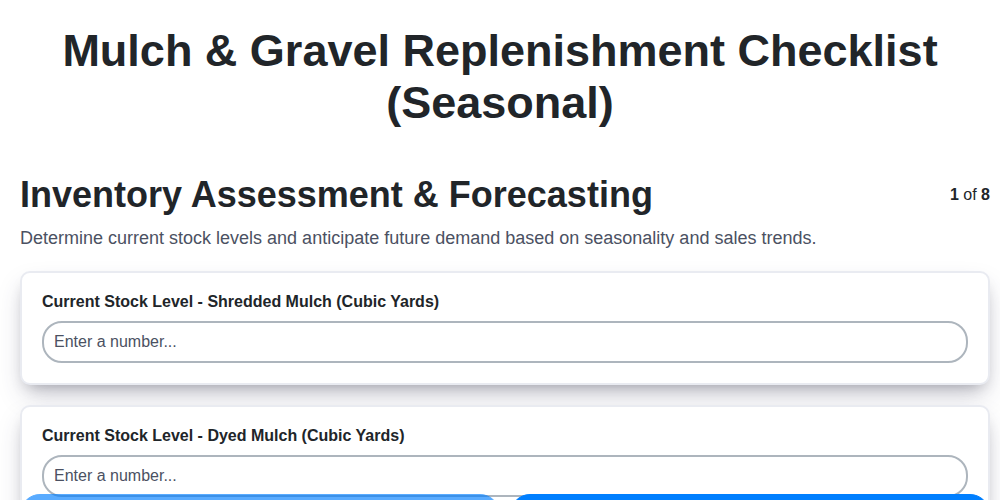
Seasonal Mulch & Gravel Checklist Template: Stay Stocked & Ready
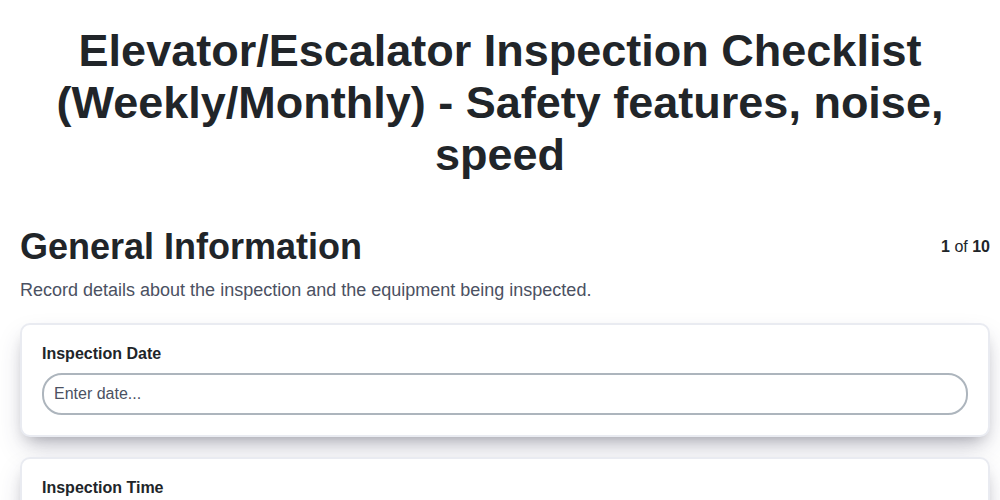
Elevator & Escalator Inspection Checklist Template: Your Guide to Safety & Compliance
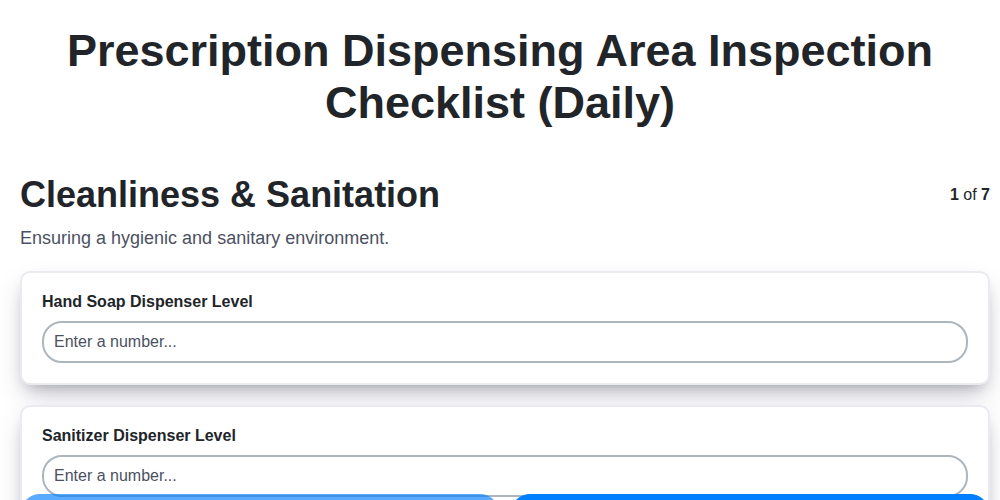
Daily Prescription Dispening Area Inspection Checklist Template

Weekly Waste Management & Recycling Checklist Template
Keep Your Storefront Sparkling: Your Daily & Weekly Cleaning Checklist Template
Your Ultimate Landscaping & Groundskeeping Checklist: Weekly & Monthly Templates
Monthly Stockroom Organization & Safety Checklist Template
Daily Dairy Case Inspection Checklist Template
Need help with
Checklists?
Have a question? We're here to help. Please submit your inquiry, and we'll respond promptly.