Ensuring Data Integrity: Your Scientific Research Validation Checklist
Published: 11/25/2025 Updated: 07/02/2026
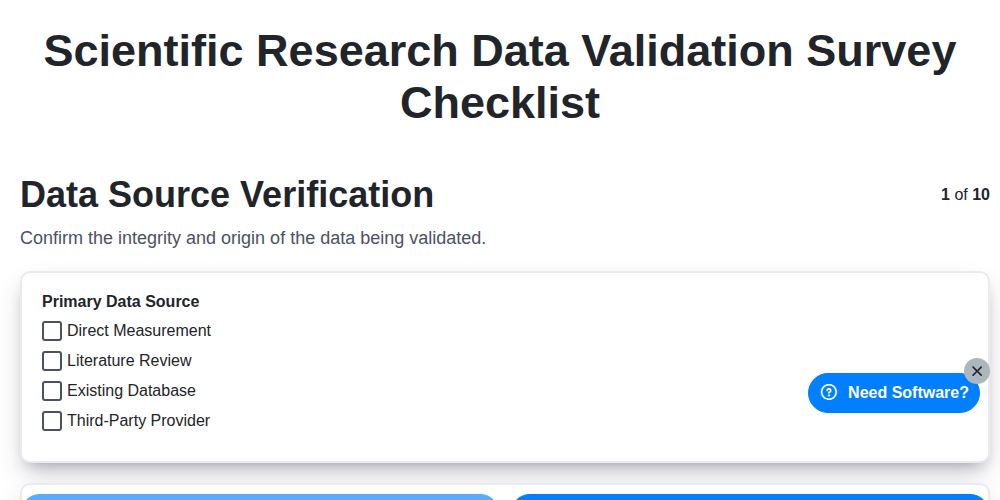
Table of Contents
- Introduction: Why Data Validation Matters in Scientific Research
- 1. Data Source Verification: Establishing a Solid Foundation
- 2. Data Entry Accuracy: Minimizing Human Error
- 3. Unit Consistency: Avoiding Misinterpretations
- 4. Range Validation: Staying Within Expected Boundaries
- 5. Identifying and Addressing Outliers: A Critical Examination
- 6. Metadata Completeness: Capturing Essential Context
- 7. Reviewing Data Transformations: Ensuring Accuracy and Transparency
- 8. Software and Hardware Integrity: Maintaining System Reliability
- 9. Documentation and Traceability: Building a Clear Audit Trail
- 10. Compliance with Research Protocols: Adhering to Established Guidelines
- Conclusion: Protecting the Value of Your Research
- Resources & Links
TLDR: Scientific data is only as good as its validation! This checklist (Data Source Verification, Accuracy, Unit Consistency, etc.) helps researchers ensure data integrity, spot errors, and maintain compliance - crucial for reliable results and reproducible science. Download the template and use it to safeguard your research!
Introduction: Why Data Validation Matters in Scientific Research
Scientific research hinges on the integrity of its data. A single error, undetected and uncorrected, can invalidate findings, skew conclusions, and ultimately damage the credibility of the entire study. We often hear about rigorous experimental design and sophisticated statistical analysis, but the foundational step of data validation is frequently overlooked. Poor data quality not only wastes valuable time and resources but can also lead to misinterpretations with potentially significant consequences, especially in fields like medicine, environmental science, and engineering. This isn't simply about catching typos; it's about establishing a robust system for ensuring that the data used to build knowledge is reliable, accurate, and trustworthy. This blog post focuses on a comprehensive checklist designed to guide this crucial process, enabling researchers to build a strong foundation for their work and contribute to the advancement of knowledge with confidence.
1. Data Source Verification: Establishing a Solid Foundation
The integrity of any scientific research hinges on the reliability of its data. Before any analysis or interpretation begins, it's crucial to meticulously verify the source of your data. This isn't simply about knowing where the data came from, but confirming that the source itself is trustworthy and appropriate for your research goals.
Here's what's involved in robust data source verification:
- Identify the Original Source: Clearly document where the data originates. Was it collected internally, obtained from a public database, purchased from a vendor, or acquired through collaboration?
- Assess Source Credibility: Evaluate the reputation and expertise of the source. Are they known for data accuracy and reliability? Examine any available information about their data collection methodologies and quality control procedures.
- Understand Data Collection Methods: Determine how the data was initially gathered. Was it through automated sensors, manual observation, surveys, or a combination? Knowing the collection method helps you anticipate potential biases or limitations.
- Check for Data Ownership and Licensing: Ensure you have the right to use the data for your intended research purposes. Check for licensing restrictions or usage agreements.
- Confirm Data Lineage: Trace the data's journey from its original collection point to your dataset. Understand any intermediate processing or transformations that might have occurred.
- Document Source Information: Create a detailed record of the data source, including contact information, version numbers, and any relevant documentation. This transparency is vital for reproducibility.
By rigorously verifying your data sources, you establish a strong foundation for trustworthy research findings.
2. Data Entry Accuracy: Minimizing Human Error
Data entry is often the unsung hero - or villain - of scientific research. A single typo, transposed digit, or missed decimal point can cascade through analyses, leading to inaccurate conclusions and potentially damaging your research's credibility. While automation can help, human involvement in data entry remains a common reality, making rigorous accuracy checks crucial.
This section of your validation checklist focuses on minimizing those inevitable human errors. Don't assume the data is correct simply because it's in your database. Implement these steps:
- Double Keying: The gold standard, double-keying involves two independent data entry operators entering the same data, and then comparing the results. Discrepancies are flagged and resolved by referring back to the original source. This is particularly valuable for critical data points.
- Automated Checks (where possible): Utilize built-in data validation rules within your data entry software. These can enforce format requirements (e.g., date formats, numerical ranges), reducing the potential for common errors.
- Visual Inspection: Sometimes, a fresh pair of eyes can catch errors that automated checks miss. Perform visual reviews of entered data, especially for complex or open-ended fields.
- Training & Standardized Procedures: Proper training of data entry personnel is paramount. Ensure they understand the importance of accuracy, data definitions, and the standardized procedures to follow. Regular refresher training can maintain these standards.
- Clear Data Entry Forms: Well-designed data entry forms with clear labels and instructions can significantly reduce errors. Minimize ambiguity and provide examples where helpful.
By dedicating time and resources to improving data entry accuracy, you're investing in the integrity of your entire research process.
3. Unit Consistency: Avoiding Misinterpretations
One of the most common, yet easily overlooked, sources of error in scientific research data lies in inconsistent units. Imagine analyzing a dataset where some measurements are recorded in kilograms and others in grams - the resulting calculations would be wildly inaccurate and lead to flawed conclusions.
Ensuring unit consistency isn't just about making sure you're using the "right" unit (e.g., meters instead of feet); it's about ensuring all data points within a specific variable are expressed using the same unit. This requires meticulous attention and a systematic approach.
Here's what to look for during your data validation:
- Explicitly Define Units: Your data collection protocols should clearly state the units for each variable before data collection begins.
- Regularly Check Unit Labels: Data entry forms and spreadsheets should have clearly labeled columns specifying the units. Don't assume; verify!
- Conversion Tracking: If conversions are necessary (e.g., converting between Celsius and Fahrenheit), meticulously document the conversion factors used and ensure accuracy in the calculations.
- Automated Checks (Where Possible): If your data entry system allows, implement automated checks to flag entries with mismatched units.
- Cross-Validation: Compare data with known standards or historical data to detect inconsistencies that may indicate a unit error.
Failing to address unit inconsistency can lead to misinterpretations, incorrect statistical analyses, and ultimately, a compromised research outcome. A few moments spent verifying unit consistency can save countless hours of rework and protect the integrity of your findings.
4. Range Validation: Staying Within Expected Boundaries
Range validation is a critical step in data validation, designed to catch errors that stem from values falling outside of what's realistically possible or expected. It's more than just looking for typos; it's about ensuring your data aligns with the fundamental understanding of the phenomenon you're studying.
Consider a study measuring plant height. A negative value for plant height is, obviously, impossible. Similarly, an age recorded as 300 years for a participant in a health survey is highly suspect. Range validation involves establishing predetermined, acceptable limits for each data field. These limits are based on scientific knowledge, established norms, or the known physical constraints of the measured variable.
During data validation, compare each data point against these defined ranges. Values outside the acceptable range should trigger immediate investigation. It's not enough to simply flag these outliers - you need to determine why they exist. Is it a data entry error? A measurement malfunction? Or does it genuinely represent a novel and important finding that requires further scrutiny and potentially a modification to your expected range? Carefully documenting the reason for the outlier and the actions taken (correction, rejection, or retention with explanation) is essential for maintaining data integrity and transparency.
5. Identifying and Addressing Outliers: A Critical Examination
Outliers, those data points that deviate significantly from the norm, can wreak havoc on research findings if left unaddressed. They can skew averages, distort visualizations, and ultimately lead to inaccurate conclusions. However, dismissing outliers outright can also be a mistake; sometimes, they represent genuine and important phenomena.
The key is a rigorous and thoughtful process. First, visual inspection is paramount. Scatter plots, box plots, and histograms are invaluable tools for spotting potential outliers. Don't rely solely on automated detection methods - a trained eye often catches nuances algorithms miss.
Next, statistical methods like the Interquartile Range (IQR) or Z-score can help identify data points falling outside pre-defined thresholds. However, remember these are guidelines, not absolute rules. Consider the context - a high Z-score might be expected in certain types of data.
Once identified, the reason for the outlier needs investigation. Was it a measurement error? A data entry mistake? A genuine, albeit rare, observation? Thoroughly review the data collection process and consider whether the outlier is due to a problem with the method itself. If the outlier is a true measurement error or data entry mistake, it should be corrected or removed.
Crucially, document everything. Clearly record the outliers identified, the methods used to identify them, the rationale for any corrections or removals, and the impact on the analysis. Transparency is vital for maintaining the integrity of the research. Ignoring or arbitrarily removing outliers without justification weakens the entire study. Finally, sensitivity analyses-running the analysis both with and without the outliers-can reveal how robust the findings are to their presence.
6. Metadata Completeness: Capturing Essential Context
Metadata, often described as data about data, is absolutely critical for robust and reproducible scientific research. It's not enough to simply have the data; you need to know where it came from, how it was collected, and what it means. A surprisingly common oversight is neglecting metadata, leading to confusion, errors, and the inability to meaningfully interpret results later on.
This checklist step focuses on ensuring that your metadata is complete and accurate. Consider these essential elements:
- Experiment Details: Record specifics like experimental design, location, date, and personnel involved.
- Instrument Information: Note the model, serial number, calibration dates, and any relevant settings for all equipment used.
- Data Provenance: Document the entire data lifecycle - from initial acquisition to processing and storage. Who created it? How was it transferred?
- Variable Definitions: Clearly define each variable, including its units, scale, and any potential limitations.
- Data Dictionary: Create a comprehensive data dictionary that explains all fields and codes used in your dataset.
- Version Control: Implement version control for your metadata, tracking changes and ensuring traceability.
A lack of thorough metadata makes it difficult (or impossible) for others - and even your future self - to understand and reuse your data. Investing the time to capture complete metadata is a small price to pay for ensuring the long-term value and credibility of your research.
7. Reviewing Data Transformations: Ensuring Accuracy and Transparency
Data rarely arrives in a format directly usable for analysis. Transformations - cleaning, recoding, aggregating, and reshaping - are almost always necessary. However, these transformations are also a significant source of potential errors. A thorough review of data transformation steps is crucial to maintain data integrity and ensure reliable results.
This isn't just about ensuring your code runs; it's about verifying what it's doing. Ask yourself:
- Can you clearly articulate the purpose of each transformation? Every transformation should have a documented reason.
- Is the transformation logic accurate? Test your transformation code with a representative sample of your data, paying close attention to edge cases and potential pitfalls.
- Are the transformations reversible? Ideally, you should be able to reconstruct the original data from the transformed version, allowing for error correction and reproducibility.
- Are all transformations clearly documented? Include the code, the reasoning behind it, and any assumptions made. This documentation should be accessible and understandable by others (and your future self!).
- Have you considered the impact of transformations on downstream analyses? A seemingly innocuous transformation can introduce bias or distort results if not carefully considered.
Don't just assume your transformations are correct. Dedicated review, testing, and documentation are vital steps in safeguarding your research data.
8. Software and Hardware Integrity: Maintaining System Reliability
Scientific research data's value is intrinsically linked to the reliability of the systems that generate, store, and process it. A compromised software or hardware environment can introduce subtle, yet devastating, errors that undermine the entire research endeavor. This section of your data validation checklist focuses on ensuring the tools you're using are functioning as expected.
Here's what to consider:
- Version Control: Document all software versions used in data acquisition, processing, and analysis. This allows for reproducibility and facilitates troubleshooting if issues arise later.
- Hardware Calibration & Maintenance: Establish a schedule for calibration of essential hardware (e.g., sensors, instruments) and maintain records of these activities. Regular maintenance minimizes drift and ensures accuracy.
- Software Updates & Patches: Implement a controlled process for applying software updates and security patches. Always test updates in a non-production environment before applying them to systems used for active data collection.
- System Logs & Error Monitoring: Regularly review system logs to identify errors, warnings, or unusual activity. Automated error monitoring systems can provide early warnings of potential problems.
- Security Audits: Conduct periodic security audits to identify vulnerabilities in your hardware and software infrastructure. This is particularly important for data privacy and protection.
- Backup & Recovery Procedures: Test data backup and recovery procedures to ensure data can be restored in the event of hardware failure or system corruption.
- Hardware Environment Control: For sensitive instruments, monitor environmental factors (temperature, humidity, power supply) that can affect performance.
9. Documentation and Traceability: Building a Clear Audit Trail
Data validation isn't just about correcting errors; it's about understanding how those errors occurred and preventing them from recurring. This is where robust documentation and traceability become absolutely critical. A well-documented research data validation process establishes a clear audit trail, allowing you to reconstruct the entire validation journey and pinpoint the root causes of any discrepancies.
What should this documentation entail? Think comprehensively. It should include:
- Data Source Records: Details on where the original data came from, including URLs, instrument IDs, or contact information for data providers.
- Validation Team Records: Who performed each validation step, when they did it, and any comments or observations made.
- Specific Validation Rules Applied: Clearly outline the criteria used for each validation check (e.g., acceptable ranges, validation formulas).
- Error Logs & Corrections: Detailed records of errors identified, the specific corrections made, and the rationale behind those changes.
- Version Control: Track changes to the data and validation procedures, noting the versions used and the reasons for modifications.
- Software and Hardware Used: Document the specific software versions and hardware configurations involved in data collection, processing, and validation.
By creating a thorough audit trail, you not only demonstrate the rigor of your research but also facilitate collaboration, ensure reproducibility, and provide a valuable resource for future analyses or data reuse. This proactive approach minimizes ambiguity and greatly strengthens the overall reliability of your scientific findings.
10. Compliance with Research Protocols: Adhering to Established Guidelines
Ensuring compliance with established research protocols is the final, yet crucial, step in data validation. These protocols aren't just suggestions; they are the bedrock of scientific rigor, outlining precisely how data should be collected, processed, and analyzed. Deviation from these guidelines introduces a significant risk of introducing bias, compromising reproducibility, and ultimately, invalidating the research findings.
This validation step involves meticulously reviewing the entire data lifecycle, from initial data acquisition to final analysis, to confirm adherence to the documented protocols. Key areas to examine include:
- Approved methodologies: Were the pre-defined methods for data collection and processing strictly followed?
- Standard Operating Procedures (SOPs): Were SOPs followed for specific equipment use or data handling processes?
- Ethical considerations: Was the research conducted in accordance with ethical review board guidelines and informed consent procedures?
- Regulatory requirements: Does the data adhere to any legal or regulatory mandates relevant to the research area (e.g., HIPAA for health data)?
- Protocol versions: Confirming which version of the protocol was used throughout the research process and ensuring that all changes or deviations were properly documented and justified.
Documentation is paramount here. Any observed non-compliance, even minor, must be thoroughly documented, along with a rationale for the deviation or a plan for corrective action. A clear audit trail demonstrating adherence to protocols strengthens the credibility and defensibility of the research.
Conclusion: Protecting the Value of Your Research
Ultimately, scientific research data is an investment - an investment of time, resources, and intellectual effort. Failing to rigorously validate that data undermines the entire endeavor. This checklist, encompassing data source verification, accuracy checks, unit consistency, range validation, outlier identification, metadata completeness, transformation reviews, hardware/software integrity, documentation, compliance, and traceability, isn't just a procedural formality; it's a vital safeguard. By consistently applying these steps, you're not just correcting errors, you're building trust in your findings, ensuring reproducibility, and protecting the value - and the reputation - of your research. Embracing data validation as an integral part of your workflow is a commitment to scientific rigor and the advancement of knowledge.
Resources & Links
- National Institute of Standards and Technology (NIST): NIST provides guidelines, standards, and best practices related to data quality, measurement accuracy, and cybersecurity-all crucial for data integrity in scientific research. Explore their publications on statistical methods and data management.
- Research Data Management (RDM) Cloud: This platform offers resources and training on research data management, covering topics like data validation, preservation, and sharing. They offer useful templates and guidance.
- Dataversity: Dataversity is a comprehensive resource for data professionals. Their articles and webinars cover data quality, governance, and validation techniques that are relevant to scientific research. They have content applicable to different data types and disciplines.
- SAS JMP: JMP is a statistical software platform offering robust data validation and outlier detection capabilities. Their website features tutorials, examples, and best practice guides for data analysis and integrity checks.
- National Center for Biotechnology Information (NCBI): NCBI resources, especially related to FAIR data principles and data repositories, are valuable for understanding how to manage and validate data in biological and biomedical research. Look for guidance on data submission and metadata standards.
- OpenRefine: OpenRefine is a powerful open-source tool for cleaning and transforming data. This is immensely useful for data entry error detection and correction, specifically addressing accuracy issues during data entry as highlighted in the article.
- Reproducible Research: This site focuses on the principles and practices of reproducible research, emphasizing the importance of documenting data transformations, code, and workflows to ensure data integrity and validation.
- Digital Science: Digital Science provides tools and resources for researchers, including data management and workflow automation platforms that can help with data validation and traceability. Explore their tools and whitepapers.
- Figshare: Figshare is a repository for research outputs, including datasets. While not directly a validation resource, understanding data deposition standards (often involving metadata) can reinforce data integrity best practices.
- Data Knowledge: Data Knowledge provides training and consulting on data governance and data quality. Their resources can offer a deeper understanding of the underlying principles and practices required for ensuring data integrity.
- Aware, Inc.: Aware provides training and software for data quality and integrity, particularly focusing on anomaly detection and data validation techniques. Explore their workshops and materials.
Frequently Asked Questions
What is data integrity and why is it crucial for scientific research?
Data integrity refers to the accuracy, completeness, consistency, and reliability of data throughout its lifecycle. It's crucial because scientific research depends on trustworthy data to draw valid conclusions. Compromised data integrity can lead to incorrect results, flawed interpretations, and ultimately, damage the credibility of the research and the scientific community.
What are some common threats to data integrity in scientific research?
Common threats include human error during data entry or processing, equipment malfunction, software bugs, security breaches, inadequate data storage, and lack of proper documentation and version control.
What's the difference between data validation and data verification?
Data validation checks if the data conforms to predefined rules and formats (e.g., ensuring a temperature reading is within a realistic range). Data verification confirms that the data is correct by comparing it to original sources or through independent checks.
What types of data validation checks should I include in my research?
Consider these checks: range checks (values within expected boundaries), format checks (e.g., correct date/time format), consistency checks (across datasets), completeness checks (missing values), and reasonableness checks (does the data make sense?).
How does version control contribute to data integrity?
Version control systems track changes made to data files, allowing you to revert to previous versions if errors are detected. This provides an audit trail and prevents accidental data loss or corruption.
What's the role of metadata in ensuring data integrity?
Metadata (data about data) provides context and information about the data itself, such as creation date, author, units of measurement, and experimental conditions. This helps ensure data is properly interpreted and understood.
What are best practices for data storage to maintain integrity?
Use secure, redundant storage solutions. Regularly back up data to multiple locations. Implement access controls to limit who can modify the data. Document storage procedures and locations clearly.
How can I document my data validation process for reproducibility?
Maintain a detailed record of all validation steps taken, including the criteria used, tools employed, and any issues encountered. This allows others (and your future self) to understand and repeat the validation process.
What is the importance of data access control and security?
Restricting access to data based on roles and permissions prevents unauthorized modifications or deletions, safeguarding data integrity. Employing encryption and firewalls strengthens security against breaches.
What steps should I take if I suspect data corruption has occurred?
Immediately stop any further processing. Consult backups to determine the extent of the damage. Investigate the potential cause of the corruption. Document the incident thoroughly and implement measures to prevent recurrence.
Comments
There are no comments yet. Be the first to add one!
Survey Management Solution Demo
Gather valuable insights with ease! ChecklistGuro simplifies survey creation, distribution, and analysis. Automate data collection, improve response rates, and make data-driven decisions. Manage it all with our Work OS.
Related Articles
The Ultimate Veterinary Animal Health Checkup Survey Checklist Template
Your Guide to a Green Business: The Environmental Sustainability Audit Checklist

Paper vs ChecklistGuro in Survey Management
Construction Site Safety Survey Checklist Template
A Checklist for Congregant Feedback: Template for Religious Organizations

Excel vs ChecklistGuro in Survey Management
Mastering the Policyholder Journey: Your Insurance Experience Survey Checklist
Real Estate Property Condition Survey Checklist Template
Need help with
Survey Management?
Have a question? We're here to help. Please submit your inquiry, and we'll respond promptly.