Shipment Receiving and Inspection Workflow: A Step-by-Step Guide to Streamlining Your Logistics Process
Published: 06/04/2026 Updated: 07/02/2026
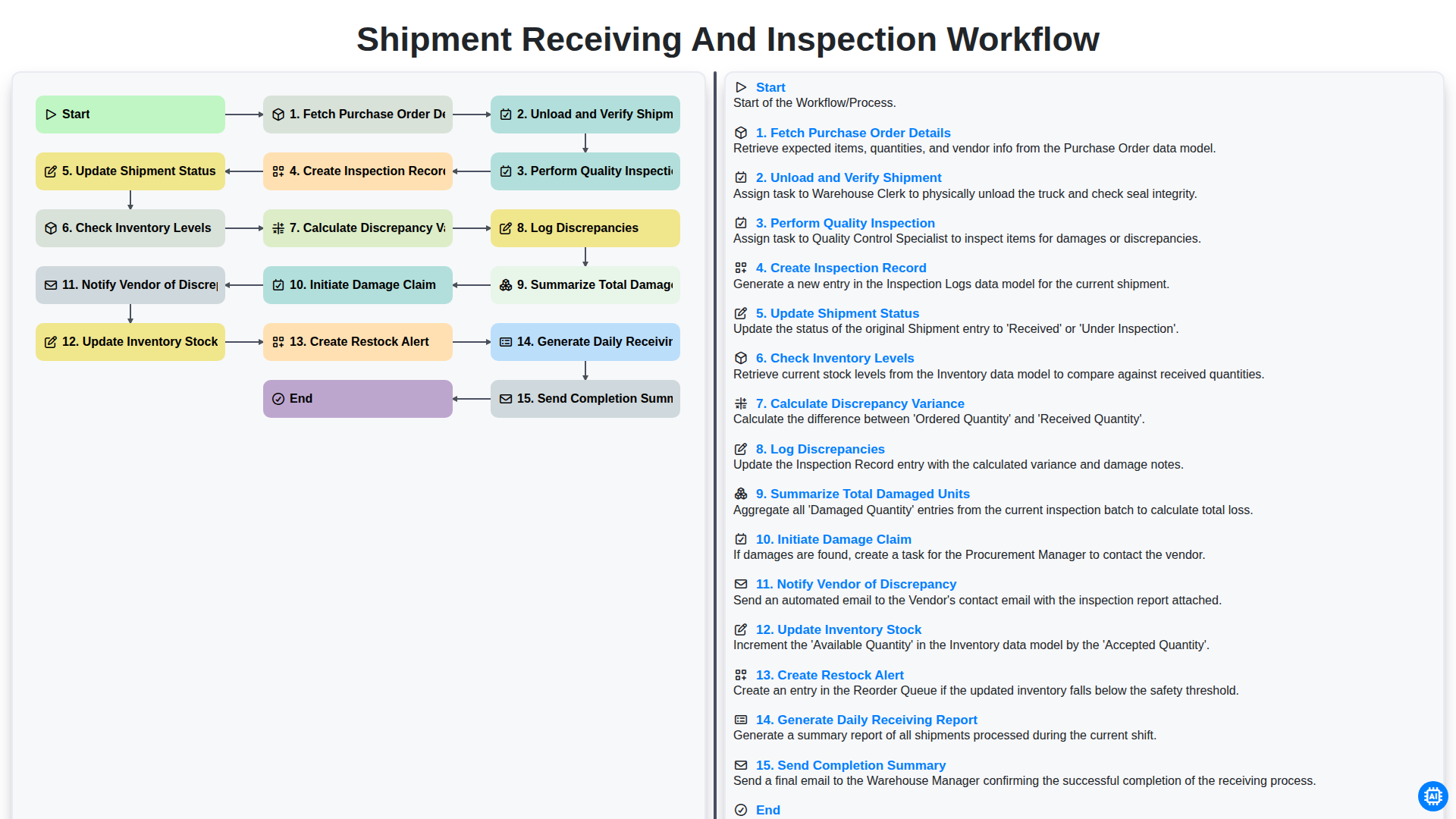
Table of Contents
- Introduction to Efficient Shipment Receiving
- Phase 1: Pre-Arrival Preparation and Documentation
- Step 1: Fetching Purchase Order Details
- Phase 2: Physical Arrival and Initial Verification
- Step 2: Unloading and Verifying the Shipment
- Phase 3: Quality Assurance and Inspection
- Step 3: Performing Comprehensive Quality Inspection
- Step 4: Documenting Inspection Results and Creating Records
- Phase 4: Managing Discrepancies and Claims
- Step 5: Calculating Discrepancy Variance and Logging Issues
- Step 6: Summarizing Damages and Initiating Vendor Claims
- Step 7: Notifying Vendors of Discrepancies
- Phase 5: Inventory Integration and Updates
- Step 8: Updating Shipment Status and Inventory Stock Levels
- Step 9: Monitoring Stock Levels and Setting Restock Alerts
- Phase 6: Finalizing Documentation and Reporting
- Step 10: Generating Daily Receiving Reports and Completion Summaries
- Conclusion: The Benefits of a Standardized Workflow
- Resources & Links
TLDR: This guide breaks down a comprehensive Shipment Receiving and Inspection Workflow designed to eliminate errors and optimize warehouse efficiency. Learn how to automate everything from initial PO verification and quality inspections to discrepancy logging and vendor notifications, ensuring accurate inventory levels and streamlined supply chain operations.
Introduction to Efficient Shipment Receiving
In the fast-paced world of supply chain management, the receiving dock is the gateway to your entire inventory ecosystem. It is the critical junction where physical goods meet digital records, and any error made during this stage can trigger a ripple effect of inaccuracies throughout your entire operation. An unorganized or undocumented receiving process doesn't just lead to missed items; it creates a domino effect of phantom stock, frustrated customers, and wasted labor hours.
An efficient shipment receiving and inspection workflow is more than just a logistical necessity-it is a strategic advantage. By implementing a standardized, step-by-step approach to unloading, verifying, and inspecting incoming goods, businesses can transform their receiving area from a potential bottleneck into a high-precision control point. This process ensures that the inventory you pay for is exactly what ends up on your shelves, protecting your bottom line and maintaining the integrity of your data from the very moment a truck arrives at your facility.
Phase 1: Pre-Arrival Preparation and Documentation
The foundation of an efficient receiving process begins long before the delivery truck arrives at your loading dock. The first critical step in the workflow is to Fetch Purchase Order Details. By proactively retrieving the necessary documentation, receiving teams can establish a clear baseline of what is expected, including quantities, specifications, and expected delivery dates. This preparation ensures that the warehouse staff is not working blindly, allowing for a structured comparison between the physical goods arriving and the original procurement agreement. Without this initial data retrieval, the entire inspection process becomes vulnerable to oversight and errors.
Step 1: Fetching Purchase Order Details
The foundation of a seamless receiving process begins long before the delivery truck arrives at the dock. The first critical step in the workflow is Fetching Purchase Order (PO) Details. This stage involves retrieving the digital blueprint of the expected delivery from your ERP or Warehouse Management System (WMS).
By accessing the pre-approved purchase order, receiving personnel can identify exactly what items, quantities, and specifications are expected to arrive. This preparatory step is vital because it provides the necessary reference point for the entire inspection process. Without accurate PO data, the team cannot effectively validate the incoming shipment, leaving the warehouse vulnerable to errors, unauthorized deliveries, and inventory inaccuracies. Proactively reviewing these details ensures that the receiving team is prepared to match physical goods against documented expectations with precision.
Phase 2: Physical Arrival and Initial Verification
Once the delivery vehicle arrives at the loading dock, the focus shifts from digital preparation to physical execution. This phase is critical, as it serves as the first line of defense against inaccurate inventory and vendor errors. The process begins by fetching purchase order details from your management system to ensure the receiving team knows exactly what to expect.
Upon the arrival of the carrier, the team must unload and verify the shipment by cross-referencing the physical items against the packing slip and the original PO. This is the moment to identify any immediate visible issues, such as crushed boxes or broken seals. This stage is not merely about moving boxes; it is about ensuring that the physical reality of the shipment aligns with your digital records before any items are officially entered into your warehouse ecosystem.
Step 2: Unloading and Verifying the Shipment
Once the delivery vehicle arrives at the loading dock, the physical handling of the goods begins. This stage is a critical checkpoint where the transition of custody occurs from the carrier to your warehouse team. The primary goal is to ensure that the physical shipment matches the documentation provided by the carrier and the original purchase order.
The process starts with the systematic unloading of the goods, followed by a detailed verification of the shipment's contents. During this phase, staff must cross-reference the items being unloaded against the Packing Slip and the Purchase Order (PO) details fetched in the previous step. Key tasks include:
- Quantity Verification: Counting every unit, carton, or pallet to ensure the numbers align with the expected delivery.
- Visual Integrity Check: Inspecting the external packaging for any obvious signs of tampering, crushing, or moisture damage that may have occurred during transit.
- SKU Matching: Confirming that the product codes, descriptions, and sizes match the pre-registered order details.
By performing a thorough verification during unloading, you prevent hidden errors from entering your warehouse, ensuring that any immediate red flags are identified before the goods are moved into your storage zones.
Phase 3: Quality Assurance and Inspection
Once the initial unloading and verification are complete, the focus shifts to the most critical stage of the process: Quality Assurance and Inspection. This phase is the primary safeguard against inventory inaccuracies and substandard goods entering your supply chain.
The workflow moves into a detailed examination where staff must perform a quality inspection on the arrived goods, checking for any signs of transit damage, expired dates, or deviations from the original specifications. As soon as the physical check is complete, the team must create an inspection record to document the findings meticulously.
During this stage, the system works to update the shipment status to reflect whether the items are pending, approved, or flagged. Simultaneously, the workflow triggers a deep dive into the data to check inventory levels and calculate discrepancy variance-comparing what was physically received against what was expected on the purchase order.
If any issues are found, the process moves into error management: the system will log discrepancies and summarize total damaged units to ensure full visibility. If the damage is significant, the workflow prompts the team to initiate a damage claim and notify the vendor of the discrepancy immediately, ensuring that your company is not held liable for vendor-side or carrier-side errors. This rigorous inspection phase ensures that only high-quality, accurate inventory makes its way into your warehouse.
Step 3: Performing Comprehensive Quality Inspection
Once the initial unloading and verification are complete, the focus shifts from quantity to quality. The Perform Quality Inspection phase is the most critical safeguard in your supply chain, acting as the final gatekeeper before goods enter your usable inventory.
During this stage, inspectors examine the physical condition of the items against the predefined quality standards and the specifications listed in the original Purchase Order. This isn't merely a visual check; it involves a systematic evaluation of packaging integrity, checking for signs of moisture or tampering, and, where applicable, testing the functionality of the products.
By conducting a thorough inspection, you ensure that any hidden defects or damages-which might not be immediately apparent during the unloading process-are identified early. This prevents the costly mistake of integrating sub-standard materials into your production line or retail shelves, ultimately protecting your brand reputation and reducing the long-term costs associated with returns and replacements.
Step 4: Documenting Inspection Results and Creating Records
Once the physical inspection is complete, the workflow shifts from manual verification to formal documentation. The next critical steps are Creating an Inspection Record and Updating the Shipment Status.
The inspection record serves as the single source of truth for the entire receiving process. This document must capture every detail observed during the quality check, including batch numbers, expiration dates, and specific condition notes. By digitizing this record immediately, you ensure that the data is available for real-time visibility across your entire supply chain.
Simultaneously, the shipment status must be updated within your management system. Transitioning the status from In Inspection to Completed or Flagged for Review is vital for downstream operations. This update triggers the next phase of the workflow, signaling to the warehouse and procurement teams that the goods are either ready for put-away or require immediate intervention due to discrepancies. Precise documentation at this stage prevents costly administrative errors and provides an audit trail that is essential for resolving future disputes.
Phase 4: Managing Discrepancies and Claims
When the inspection process reveals that the physical shipment does not match the purchase order, the workflow shifts from verification to active discrepancy management. This phase is critical for maintaining financial accuracy and ensuring vendor accountability.
The process begins with the immediate calculation of discrepancy variance, where the team compares the received quantities against the expected amounts. Once any missing or damaged items are identified, the system must log these discrepancies in detail to maintain a transparent audit trail. To ensure the business is not held liable for losses, the workflow triggers the summarization of total damaged units, providing a clear snapshot of the impact on the shipment.
Crucially, this stage initiates the damage claim process, which involves gathering all necessary evidence-such as photos and inspection records-to support the dispute. Simultaneously, the system must notify the vendor of the discrepancy, formally alerting them to the error or damage so that replacements or credits can be issued. By automating these steps, companies can ensure that errors are caught and addressed immediately, preventing long-term inventory inaccuracies and preserving the integrity of the supply chain.
Step 5: Calculating Discrepancy Variance and Logging Issues
Once the physical inspection is complete, the focus shifts from observation to data reconciliation. This critical stage involves two key actions: Calculating Discrepancy Variance and Logging Discrepancies.
The process begins by comparing the actual quantity of goods received against the quantities specified in the original Purchase Order (PO). By subtracting the received quantity from the expected quantity, the system calculates the variance. A zero variance indicates a perfect delivery, but any deviation-whether it be a shortage, an overage, or damaged units-must be quantified immediately.
Once a discrepancy is identified, it must be formally Logged. Simply noticing a mistake is not enough; every inconsistency must be documented within the digital workflow. This log serves as the source of truth for the warehouse team and the procurement department. Detailed logs should include the specific SKU, the expected quantity, the actual quantity received, and the nature of the issue (e.g., shortage or damaged upon arrival). Precise logging ensures that there is a clear audit trail, preventing disputes during the reconciliation process and providing the necessary evidence needed for the next steps in the claims process.
Step 6: Summarizing Damages and Initiating Vendor Claims
After identifying individual discrepancies during the inspection process, the next critical phase is to aggregate the data to understand the total impact on your supply chain. This stage involves summarizing the total damaged units found during the inspection to provide a clear, high-level overview of the shipment's integrity.
Once the damage summary is finalized, the workflow moves into active resolution. Instead of treating each error as an isolated incident, the system uses the aggregated data to initiate a damage claim with the carrier or supplier. Simultaneously, the process triggers an automated notification to the vendor of the discrepancy. This ensures that the vendor is immediately informed of the specific issues, facilitating a smoother dispute resolution process and ensuring that credits or replacements are issued promptly to maintain accurate procurement records.
Step 7: Notifying Vendors of Discrepancies
When a discrepancy is identified during the inspection process-whether it involves damaged goods, missing items, or incorrect quantities-the workflow must transition from internal documentation to external communication. Notifying the vendor promptly is a critical step in maintaining supply chain integrity and ensuring accountability.
Once the discrepancy has been logged and the damage claim has been initiated, an automated or manual notification should be sent to the supplier. This communication should be accompanied by clear, objective evidence, such as photos of the damaged packaging, a copy of the inspection record, and a detailed breakdown of the variance. By providing immediate and precise information, you reduce the time spent on dispute resolution and reinforce a standard of transparency. Prompt notification not only facilitates quicker replacements or credits but also serves as a vital feedback loop that encourages vendors to improve their packaging and shipping processes, ultimately reducing future losses.
Phase 5: Inventory Integration and Updates
Once the inspection phase is finalized and all discrepancies are documented, the workflow transitions into the critical stage of system integration. This phase ensures that the physical reality of the warehouse matches the digital records within your ERP or Inventory Management System.
The process begins with Updating Inventory Stock to reflect the newly arrived, approved goods, effectively increasing your available on-hand quantities. To maintain optimal stock levels, the system must simultaneously Check Inventory Levels against predefined minimum thresholds; if the incoming shipment has replenished a low-stock item, the system will Create a Restock Alert for items that remain below safety levels.
To ensure complete visibility for management and accounting, the workflow concludes with automated documentation. The system will Generate a Daily Receiving Report, providing a comprehensive audit trail of all goods processed during the shift. Finally, a Send Completion Summary is triggered, notifying relevant stakeholders-from procurement to warehouse managers-that the shipment has been successfully processed, ensuring everyone is aligned on the current state of available inventory.
Step 8: Updating Shipment Status and Inventory Stock Levels
Once the inspection phase is complete and all discrepancies have been documented, the workflow moves into the critical stage of synchronization. Updating the Shipment Status is the immediate priority; the system must transition the shipment from In Inspection to either Completed, Partially Received, or Rejected. This status update serves as the single source of truth for procurement and warehouse managers, ensuring that the entire supply chain is aware of what has officially entered the building.
Simultaneously, the process shifts to Updating Inventory Stock Levels. Based on the verified quantities from the inspection, the system must automatically increment the available stock counts. This step is vital for maintaining real-time accuracy; by integrating the inspection results directly with your inventory management system, you eliminate the manual data entry errors that often lead to ghost inventory or unexpected stockouts. This seamless transition from physical verification to digital updating ensures that your replenishment triggers and sales orders are always working with accurate, up-to-the-minute data.
Step 9: Monitoring Stock Levels and Setting Restock Alerts
Once the inspection process is complete and the physical stock has been officially updated, the workflow transitions from verification to proactive inventory management. The final critical steps involve checking current inventory levels against established minimum thresholds and calculating any necessary adjustments.
By analyzing the real-time data post-receiving, the system can automatically identify if the arrival of new goods has replenished depleted items or if a gap still exists. If the incoming shipment failed to meet the required quantity due to identified discrepancies, the system will automatically Create a Restock Alert. This automated trigger ensures that procurement teams are notified immediately, preventing potential stockouts and maintaining a seamless supply chain continuity without the need for manual oversight.
Phase 6: Finalizing Documentation and Reporting
Once the physical inspection and discrepancy management are complete, the final phase focuses on closing the loop through comprehensive documentation and automated communication. This stage ensures that all stakeholders-from warehouse managers to procurement officers-have real-time visibility into the accuracy of the received goods.
The process begins with the Generation of the Daily Receiving Report, which serves as the single source of truth for all activities occurring during the shift. This report aggregates all processed shipments, providing a high-level overview of throughput and operational efficiency. To ensure seamless integration with the broader supply chain, a Completion Summary is automatically sent to relevant departments, signaling that the shipment lifecycle for that specific order has been finalized.
By automating these final steps, you eliminate the manual burden of paperwork and ensure that the transition from received to available for sale is documented with 100% accuracy, leaving no room for oversight in your inventory records.
Step 10: Generating Daily Receiving Reports and Completion Summaries
The final stage of a successful shipment workflow is the automated generation of the Daily Receiving Report and the Completion Summary. Once all physical inspections and system updates are finalized, the system aggregates all data processed throughout the day into a comprehensive report. This report serves as a critical audit trail, detailing every shipment received, the total volume of goods processed, and a summary of any discrepancies or damages identified during the inspection phase.
To ensure seamless communication across your supply chain, the workflow concludes by automatically triggering a Completion Summary to all relevant stakeholders. This notification instantly informs warehouse managers, procurement officers, and accounting teams that the receiving process is complete. By automating these final steps, you eliminate manual paperwork, reduce the risk of human error, and ensure that your entire organization has real-time visibility into incoming inventory, allowing for immediate decision-making and streamlined replenishment.
Conclusion: The Benefits of a Standardized Workflow
Implementing a standardized Shipment Receiving and Inspection Workflow is more than just a procedural upgrade; it is a strategic investment in your supply chain's integrity. By moving away from manual, ad-hoc processes and adopting a structured sequence-from the initial fetching of purchase order details to the final generation of daily reports-you eliminate the guesswork that often leads to costly errors.
A consistent workflow provides three critical advantages:
- Enhanced Accuracy and Accountability: By formalizing steps like discrepancy calculation and damage logging, you ensure that every mismatch between the purchase order and the physical delivery is captured, allowing for immediate vendor notification and precise inventory reconciliation.
- Reduced Operational Friction: Automated triggers, such as restock alerts and completion summaries, minimize the administrative burden on warehouse staff, allowing them to focus on physical tasks rather than manual data entry and follow-ups.
- Data-Driven Decision Making: With a structured flow that concludes in comprehensive reporting, management gains real-time visibility into vendor performance and inventory health, enabling proactive rather than reactive logistics management.
Ultimately, a standardized workflow transforms the receiving dock from a potential bottleneck into a highly efficient, transparent, and reliable gateway for your entire inventory ecosystem.
Resources & Links
- ShipBob Logistics Resource Center: Comprehensive guides on warehouse management, fulfillment strategies, and optimizing inbound shipment workflows.
- Logistics Management Magazine: Industry insights and professional resources regarding supply chain visibility and quality control standards.
- Inbound Logistics: Expert analysis on managing discrepancies, vendor relations, and streamlined receiving processes.
- Shopify Inventory Management Guide: Best practices for tracking stock levels, managing discrepancies, and maintaining accurate inventory records.
- Supply Chain Quality Standards: Resources for implementing rigorous quality inspection protocols and damage claim documentation.
Frequently Asked Questions
What is the primary goal of a shipment receiving and inspection workflow?
The primary goal is to ensure accuracy, verify the condition of goods, and confirm that the received items match the purchase order, thereby preventing inventory discrepancies and costly errors.
What are the first steps to take when a delivery truck arrives at the warehouse?
The first steps include verifying the driver's paperwork, checking the carrier's identity, and performing a preliminary visual inspection of the vehicle and the external condition of the shipment (e.g., looking for crushed boxes or broken seals).
Why is it critical to cross-reference the packing slip with the original Purchase Order (PO)?
Cross-referencing ensures that the quantity and type of products delivered match exactly what was ordered, helping to identify shortages, overages, or incorrect items immediately upon arrival.
What should I do if I discover damaged goods during the inspection process?
If damage is found, you should document it immediately with photographs, note the damage on the Bill of Lading (BOL) before the driver leaves, and notify the supplier and your procurement department to initiate a claim or replacement.
How can automation help streamline the receiving and inspection workflow?
Automation tools, such as barcode scanning and Warehouse Management Systems (WMS), reduce manual data entry errors, speed up the verification process, and provide real-time updates on inventory levels.
What is the final step in a successful receiving workflow?
The final step is updating the inventory management system to reflect the newly received stock and moving the goods to their designated storage locations (put-away) to make them available for fulfillment.
Comments
There are no comments yet. Be the first to add one!
Retail Management Solution Demo
Boost retail efficiency! ChecklistGuro simplifies store operations, inventory management, and employee training. Improve customer experience and maximize profitability. Manage it all with our Work OS.
Related Articles
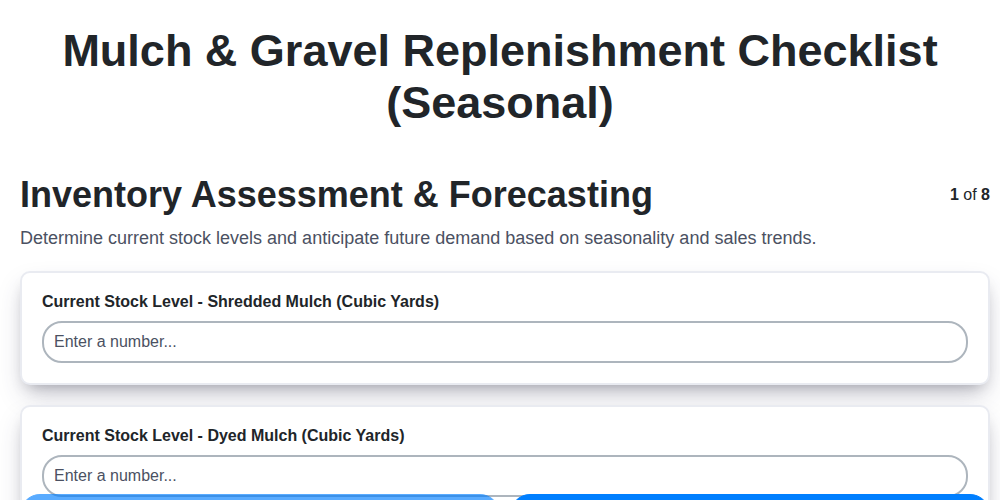
Seasonal Mulch & Gravel Checklist Template: Stay Stocked & Ready
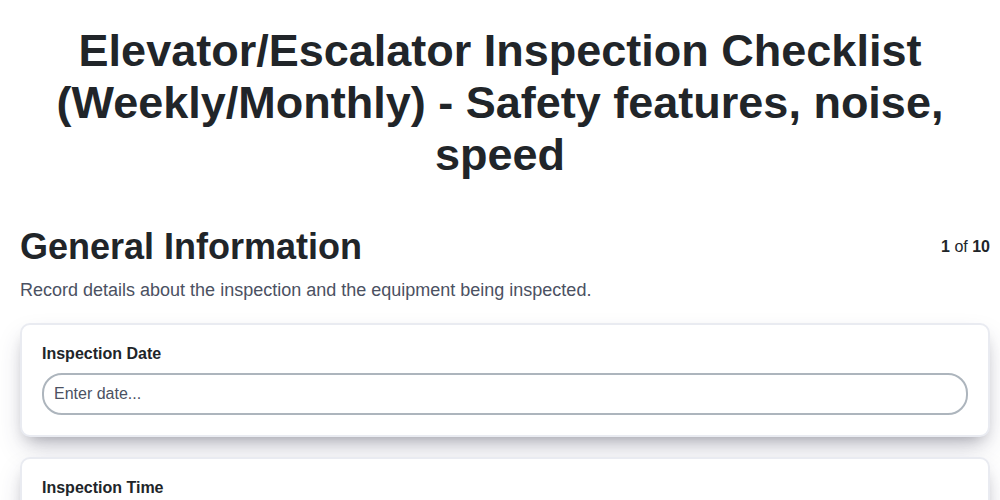
Elevator & Escalator Inspection Checklist Template: Your Guide to Safety & Compliance
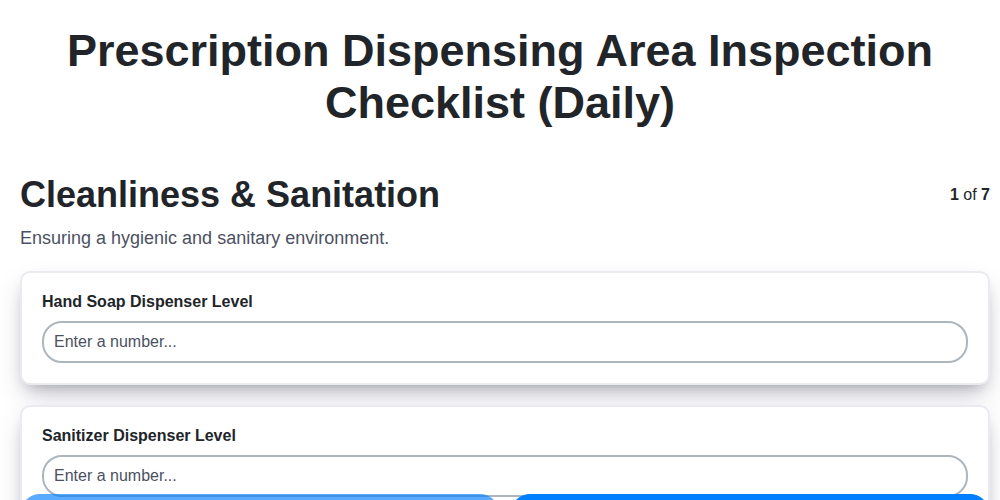
Daily Prescription Dispening Area Inspection Checklist Template

Weekly Waste Management & Recycling Checklist Template
Keep Your Storefront Sparkling: Your Daily & Weekly Cleaning Checklist Template
Your Ultimate Landscaping & Groundskeeping Checklist: Weekly & Monthly Templates
Monthly Stockroom Organization & Safety Checklist Template
Daily Dairy Case Inspection Checklist Template
Need help with
Checklists?
Have a question? We're here to help. Please submit your inquiry, and we'll respond promptly.