Navigating Shipping & Fulfillment Mishaps: Your Resolution Checklist
Published: 10/23/2025 Updated: 07/02/2026
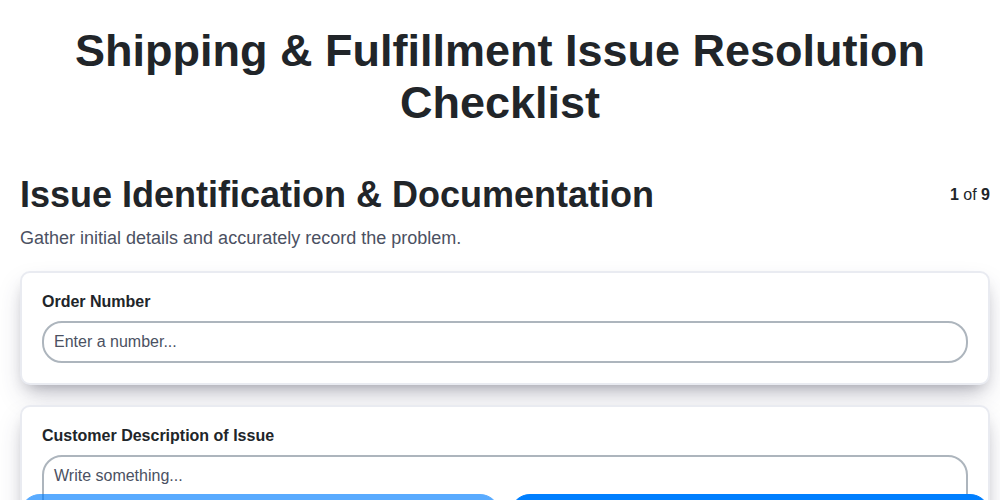
Table of Contents
- Introduction: Shipping & Fulfillment - It Happens!
- Why a Shipping & Fulfillment Issue Resolution Checklist Matters
- Step 1: Issue Identification & Documentation - The First Crucial Step
- Step 2: Order Verification - Confirming the Details
- Step 3: Tracking Investigation - Where's My Package?
- Step 4: Carrier Communication - Engaging with the Shipping Provider
- Step 5: Inventory Check - Is the Product Actually Available?
- Step 6: Customer Communication - Keeping Your Customer Informed
- Step 7: Resolution Implementation - Correcting the Problem
- Step 8: Issue Closure & Documentation - Marking It as Resolved
- Step 9: Root Cause Analysis (If Necessary) - Preventing Future Issues
- Best Practices for a Smooth Resolution Process
- Tools to Help Streamline Your Shipping Resolution
- Conclusion: Building Resilience in Your Fulfillment Operations
- Resources & Links
TLDR: Shipping problems got you down? This checklist walks you through every step - from spotting the issue and verifying the order to contacting carriers, checking inventory, and keeping customers in the loop - ensuring fast, effective resolution and preventing future headaches. Think of it as your go-to guide for handling fulfillment hiccups!
Introduction: Shipping & Fulfillment - It Happens!
Let's be honest: shipping and fulfillment aren't always smooth sailing. Even the most meticulously planned operations encounter hiccups. Lost packages, damaged goods, incorrect addresses - these issues are an inevitable part of the process. While striving for perfection is admirable, being prepared to handle problems when they arise is absolutely critical for maintaining customer satisfaction and protecting your brand reputation.
Ignoring or mishandling shipping and fulfillment issues can quickly escalate into negative reviews, lost customers, and increased operational costs. The good news? Having a clear, actionable process for resolving these issues can turn a potentially damaging situation into an opportunity to showcase your commitment to excellent service. This post will guide you through a structured approach, ensuring you're ready to tackle those inevitable bumps in the road and turn fulfillment frustrations into positive customer experiences.
Why a Shipping & Fulfillment Issue Resolution Checklist Matters
Shipping and fulfillment hiccups are inevitable. Whether it's a lost package, a damaged item, or a late delivery, these issues can quickly erode customer trust and negatively impact your business's reputation. While reacting to each problem individually might feel like you're addressing it, a reactive approach is inefficient, inconsistent, and often leaves room for recurring mistakes.
That's where a structured Shipping & Fulfillment Issue Resolution Checklist becomes invaluable. It's more than just a list; it's a roadmap for consistent, effective problem-solving. A well-designed checklist ensures your team follows a standardized process, reducing errors, minimizing resolution time, and providing a consistently positive experience - even when things go wrong. Think of it as insurance against customer frustration and lost revenue. It promotes accountability, clarifies responsibilities, and ultimately, helps you build a more reliable and resilient fulfillment operation.
Step 1: Issue Identification & Documentation - The First Crucial Step
Before you can fix anything, you need to know what needs fixing. This step is more than just acknowledging something went wrong; it's about capturing the details. When a shipping or fulfillment issue arises - whether it's a lost package, damaged goods, or an incorrect delivery - meticulous documentation is your foundation.
What should you document? Everything. Include:
- Order Number: Obvious, but essential for tracking the issue.
- Customer Details: Name, email, and any relevant contact information.
- Description of the Issue: Be specific. Package missing is not enough. Detail when it was last seen, what the customer reported, and any initial observations.
- Date & Time of Issue Report: Critical for timeline tracking.
- Reporting Employee: Who initially received and logged the issue.
- Supporting Evidence: Screenshots of tracking information, customer emails, photos of damaged goods, etc.
A standardized issue logging system (even a simple spreadsheet) is invaluable. Clear, consistent documentation streamlines investigation, prevents duplicate efforts, and provides a clear audit trail. Don't underestimate the power of a well-documented starting point - it can save you time and frustration later on.
Step 2: Order Verification - Confirming the Details
Before diving deep into tracking or inventory, it's critical to thoroughly verify the original order details. This simple step often reveals the source of the problem and can prevent unnecessary investigation down the line.
Start by cross-referencing the customer's complaint with the order information in your system. Check these key details:
- Shipping Address: Is it accurate and complete? Typos are surprisingly common and a frequent cause of delivery issues.
- Order Items: Did the customer order what they expected? Double-check product names, sizes, colors, and quantities.
- Payment Information: While less common, discrepancies here can sometimes trigger delays or flags.
- Order Date & Promise Delivery Date: Confirm these align with the customer's expectations and internal timelines.
- Special Instructions: Did the customer include any specific delivery instructions that might have been missed?
Don't skip this step! A misplaced comma or an incorrect address can save considerable time and frustration later. Document any discrepancies found during this verification process - even if they seem minor.
Step 3: Tracking Investigation - Where's My Package?
Okay, let's dive into the often-stressful realm of tracking investigations. When a customer reports an issue, the tracking information is usually the first place to look. But simply looking isn't enough. A thorough investigation requires a methodical approach.
Don't Just Glance - Analyze the History: Don't just check the current status. Review the entire tracking history. Look for any unusual gaps in scans, unexpected location changes, or long periods of inactivity. Pay close attention to the dates and times of each scan - a significant delay in a specific location can be a red flag.
Look Beyond the Obvious: Carrier tracking systems aren't perfect. Sometimes, scans are missed or mislabeled. A package might be delayed in transit but not reflected accurately in the tracking information. Consider the geography; weather conditions, holidays, or local events can impact delivery schedules.
Verify the Address: Double-check the shipping address entered against the order details. A simple typo can send a package to the wrong location, and can trigger a tracking anomaly.
Check for Exceptions: Carrier tracking systems often flag exceptions - these are unusual events that can indicate a problem (e.g., weather delay, incorrect address, damage). Make sure to note and investigate these.
Utilize Carrier Tools: Many carriers offer tools for deeper tracking analysis, such as detailed transit reports or estimated delivery date adjustments. Familiarize yourself with these and use them when necessary.
A clear, detailed record of your tracking investigation is crucial, both for the customer and for your internal processes.
Step 4: Carrier Communication - Engaging with the Shipping Provider
Once you've thoroughly investigated the tracking information, it's likely time to engage with the carrier. This isn't about assigning blame; it's about collaborating to resolve the issue and understand what went wrong.
Here's how to approach carrier communication effectively:
- Gather Your Information: Before contacting the carrier, have your tracking number, order details, and investigation findings readily available. This demonstrates preparedness and professionalism.
- Choose the Right Channel: Check the carrier's website for preferred contact methods. Some offer online forms, while others use phone or email. Choose the most efficient option.
- Be Clear and Concise: Explain the problem clearly and concisely. Avoid accusatory language. Frame your inquiry as a collaborative effort to find a solution. For example: We noticed the tracking hasn't updated in [number] days. Can you please investigate the current location of package [tracking number]?
- Document Everything: Keep a detailed record of your communication. Note the date, time, person you spoke with, and the outcome of the conversation. This is invaluable for follow-up and internal reporting.
- Escalate if Necessary: If you don't receive a satisfactory response or the issue remains unresolved, don't hesitate to escalate your inquiry to a higher level within the carrier's customer service department.
- Understand Carrier Procedures: Familiarize yourself with the carrier's policies regarding lost packages, delays, and damaged goods. This will help you navigate the process more effectively.
Step 5: Inventory Check - Is the Product Actually Available?
Okay, let's face it: sometimes a shipping delay or missing item isn't a carrier problem or a tracking snafu. It's a stock issue. Before jumping to conclusions about lost packages, a thorough inventory check is crucial.
This means more than just glancing at your inventory management system. It requires a deep dive:
- Verify Stock Levels: Double-check the recorded quantity for the specific product and variant (size, color, etc.) against what's physically in your warehouse or fulfillment center.
- Check Pick Locations: Confirm the item is in the expected pick location. A mislabeled bin or misplaced product can be a common culprit.
- Consider Recent Adjustments: Review recent inventory adjustments. Were there any returns, damages, or internal transfers that might have affected stock levels?
- Look for Discrepancies: Pay close attention to any discrepancies between your system's data and the physical count. Small errors accumulate, and a seemingly insignificant difference can impact order fulfillment.
- Investigate Returns/Damages: Review records of recently returned or damaged items. These items should be reintegrated into inventory, and their absence could be the source of the problem.
If your inventory check reveals a stock shortage, it's vital to communicate this clearly to the customer (see Step 1.5: Customer Communication) and explore options like backordering or offering a suitable alternative.
Step 6: Customer Communication - Keeping Your Customer Informed
Keeping your customer in the loop is paramount during any shipping or fulfillment issue. Silence breeds frustration and escalates the problem. Proactive and empathetic communication can turn a negative experience into an opportunity to build trust and loyalty.
Here's how to handle customer communication effectively:
- Acknowledge the Problem Quickly: Don't delay. As soon as you identify an issue, send an automated or personalized email/message acknowledging the problem and letting them know you're investigating.
- Be Honest and Transparent: Explain the situation clearly and simply, avoiding jargon. Honesty builds credibility, even when the news isn't good. We're experiencing a delay with your order due to [reason] is better than vague excuses.
- Provide Regular Updates: Keep the customer informed of your progress. Even if there's no new information, a simple We're still working on this shows you haven't forgotten them. Set expectations for when they can expect another update.
- Offer Sincere Apologies: Acknowledge the inconvenience caused by the issue, even if it wasn't directly your fault. A sincere apology goes a long way.
- Provide Solutions (or Options): Keep them informed about resolution plans. Offer choices where possible, like expedited shipping on a replacement, a refund, or a discount on a future order.
- Choose the Right Communication Channel: Consider the customer's preference and the urgency of the situation. Email is standard, but a phone call might be more appropriate for critical issues.
- Personalize Communication: Whenever possible, address the customer by name and reference their specific order details.
Ultimately, demonstrating that you value their business and are committed to resolving their issue will significantly impact their overall satisfaction.
Step 7: Resolution Implementation - Correcting the Problem
Once the resolution path is determined (whether it's a reshipment, refund, replacement, or other solution), this is where you put that plan into action. Resolution Implementation isn't just about clicking a button - it's about ensuring the fix is executed correctly and efficiently.
- Execute the Agreed-Upon Solution: This could involve creating a new order in your system, initiating a refund process, arranging for a replacement to be picked up, or modifying the existing order. Double-check all details entered to prevent repeating the initial issue.
- Verify Accuracy: Before marking the issue as resolved, take a moment to verify the actions taken. For example, if reshipping, confirm the new address is correct and the correct items are included. If issuing a refund, ensure the amount is accurate and the funds will reach the customer.
- Internal Updates: Inform any relevant internal teams (e.g., warehouse staff, customer service representatives) about the implemented solution and any specific instructions related to the resolution. This prevents confusion and ensures consistent action going forward.
- Record Details: Document exactly what actions were taken during the resolution implementation process. This adds clarity for future reference and helps with identifying patterns or systemic problems. Include timestamps and the team member responsible.
Step 8: Issue Closure & Documentation - Marking It as Resolved
Once a resolution has been implemented and confirmed, it's crucial to formally close the issue and document everything. This isn't just about ticking a box; it's vital for future reference, auditing, and continuous improvement.
Here's what to include in your closure documentation:
- Confirmation of Resolution: Explicitly state that the issue is resolved and the customer (if applicable) has confirmed satisfaction.
- Resolution Details: Summarize the steps taken to resolve the problem, referencing any related notes from previous steps.
- Final Status Update: Clearly mark the issue as Closed or Resolved in your fulfillment system.
- Associated Records: Link to all relevant documentation, including order details, tracking information, customer communication logs, and any internal notes.
- Responsible Party: Identify the individual who closed the issue.
- Date of Closure: Record the date the issue was officially closed.
Proper closure documentation provides a complete picture of the problem, its resolution, and contributes significantly to preventing similar issues in the future.
Step 9: Root Cause Analysis (If Necessary) - Preventing Future Issues
Resolving individual shipping and fulfillment issues is crucial, but true success lies in preventing them from happening again. That's where root cause analysis comes in. Don't skip this step, even if the immediate problem seems minor.
Root cause analysis isn't about assigning blame; it's about understanding why the issue occurred. Was it a systemic problem, a one-off error, or something else entirely?
Here's how to approach it:
- Go Beyond the Symptom: The missing package is the symptom. The root cause could be incorrect warehouse processes, inaccurate address validation, or a lack of training for fulfillment staff.
- The 5 Whys Technique: A simple, yet powerful method. Ask Why? repeatedly (usually 5 times) to drill down to the underlying cause. For example:
- Why was the package missing? - It wasn't scanned correctly.
- Why wasn't it scanned correctly? - The scanner wasn't working properly.
- Why wasn't the scanner working properly? - It needed a software update.
- Why didn't it have a software update? - No one is responsible for scanner maintenance.
- Why is there no one responsible? - This wasn't defined in the operational procedures.
- Document Findings: Detail the root cause(s) identified and the contributing factors.
- Implement Corrective Actions: Develop and implement solutions to address the root cause. This might involve process changes, staff training, updated technology, or revised procedures.
- Monitor Effectiveness: Track metrics to ensure the corrective actions are effective in preventing recurrence.
By taking the time to perform root cause analysis, you're investing in a more efficient, reliable, and customer-friendly shipping and fulfillment operation. It moves you from reactive problem-solving to proactive prevention.
Best Practices for a Smooth Resolution Process
Resolving shipping and fulfillment issues isn't just about fixing the immediate problem; it's about preventing future headaches. Here are some key best practices to ensure a streamlined and customer-friendly resolution process:
- Empower Your Team: Grant your fulfillment and customer service teams the authority to make decisions and offer solutions without excessive layers of approval. This speeds up resolution times and boosts employee satisfaction.
- Prioritize Based on Impact: Not all issues are created equal. Develop a tiered system to prioritize urgent issues (e.g., lost packages, incorrect items) over less critical ones.
- Proactive Communication is Key: Keep customers informed at every step. Automated updates on tracking issues are invaluable, and a personalized email or phone call can go a long way in easing frustration.
- Templates and Standard Responses: Create templates for common issue types. This ensures consistency in communication and reduces resolution time, while still allowing for personalization.
- Knowledge Base Accessibility: Equip your team with a readily available knowledge base containing FAQs, troubleshooting guides, and carrier contact information.
- Regular Training: Provide ongoing training for your team on fulfillment processes, carrier policies, and customer service best practices.
- Feedback Loop: Actively solicit feedback from both your team and your customers about the resolution process. This helps identify areas for improvement and ensures the process remains customer-centric.
Tools to Help Streamline Your Shipping Resolution
Navigating shipping and fulfillment issues can feel overwhelming, but thankfully, several tools can significantly streamline the resolution process. Here's a look at some helpful options:
- Shipping Platform Integrations: Many popular e-commerce platforms (Shopify, WooCommerce, Magento, etc.) offer direct integrations with shipping carriers and fulfillment services. These integrations often provide real-time tracking updates, automated notifications for delays or exceptions, and sometimes even built-in issue reporting features.
- Tracking Software: Dedicated tracking software like AfterShip, ShipStation, or ParcelPanel aggregate tracking data from multiple carriers into a single dashboard. This simplifies monitoring and identifying potential problems early on.
- Customer Service Help Desks: Tools like Zendesk, Help Scout, or Intercom centralize customer inquiries, making it easier to track related shipping issues and provide consistent support.
- Automated Email Marketing Platforms: Using platforms like Mailchimp or Klaviyo allows you to automate proactive customer communication regarding potential delays or order status changes, reducing reactive support requests.
- Spreadsheets & Task Management Software: While not as sophisticated, tools like Google Sheets or Asana can be effective for managing resolution tasks, assigning responsibility, and tracking progress, especially for smaller businesses.
Conclusion: Building Resilience in Your Fulfillment Operations
Ultimately, a robust Shipping & Fulfillment Issue Resolution Checklist isn't just about fixing problems after they arise - it's about building resilience into your entire fulfillment operation. By consistently using this checklist, you proactively identify weaknesses, streamline processes, and equip your team with the knowledge and tools to handle challenges effectively. This leads to fewer errors, happier customers, and a more efficient, cost-effective fulfillment workflow. Don't view it as a reactive measure, but as a foundational element of a thriving, customer-centric business. Continuous improvement and refinement of this checklist, based on feedback and performance data, will be key to maintaining that resilience and staying ahead in the ever-evolving world of e-commerce fulfillment.
Resources & Links
- Shopify: A comprehensive e-commerce platform often used for shipping and fulfillment. Offers resources on shipping best practices, integrations, and potential error mitigation. Check their Help Center for specific articles on shipping issues.
- ShipStation: A popular shipping management platform that automates and streamlines shipping. Offers guides on troubleshooting and resolving shipping problems, especially useful for multi-channel sellers.
- EasyPost: An API-first shipping platform. Offers insights into shipping errors, carrier communication best practices, and general shipping problem-solving resources.
- FedEx: A major shipping carrier. Provides tracking tools, help center with FAQs regarding lost or damaged packages, and claim filing information. Crucial for Step 4 - Carrier Communication.
- UPS: Another major shipping carrier. Similar to FedEx, UPS provides tracking, help documentation, and claims processes to aid in resolution. Essential for Step 4.
- United States Postal Service (USPS): The national postal service of the United States. Provides tracking and help resources for resolving shipping issues. Important for Step 4.
- Carrier Access: Provides a platform to compare rates and manage shipping with multiple carriers. They provide advice on best practices. Helpful for understanding carrier options and managing disputes.
- Zendesk: A customer service platform which is helpful for managing customer communication (Step 6), handling complaints, and tracking resolution progress. Provides templates and best practices.
- NetSuite: An ERP system that handles inventory, shipping, and fulfillment. Provides tools for managing and tracking shipping issues, essential for Step 6 and Step 5. Useful if you're already a NetSuite user.
- BigCommerce: An e-commerce platform competing with Shopify. Provides shipping and fulfillment resources as well as integrations, helpful for general best practices.
- Freightos: Focuses on international shipping - useful if your business ships globally.
- Parcel Shipping: Useful for a variety of different issues
Frequently Asked Questions
What is this article about?
This article provides a checklist to help you identify and resolve common shipping and fulfillment issues, minimizing disruptions to your business and improving customer satisfaction. It's designed for businesses of all sizes who handle their own shipping or work with a third-party logistics (3PL) provider.
What types of shipping & fulfillment mishaps does this checklist cover?
The checklist addresses issues like incorrect addresses, lost or damaged packages, delays, inventory discrepancies, inaccurate labeling, and communication breakdowns with customers and carriers.
Is this checklist for businesses that handle their own shipping or those using a 3PL?
The checklist is relevant for both! It highlights areas to assess regardless of whether you manage fulfillment in-house or outsource it. It provides different considerations for each scenario.
How can I use this resolution checklist effectively?
Go through each item in the checklist and honestly assess your current processes. Identify areas where you're performing well and areas needing improvement. Implement changes based on the suggested actions and continuously review your systems.
What should I do if I consistently experience a particular shipping problem?
If a specific problem repeats, it's a sign of a deeper systemic issue. Investigate the root cause - this might involve analyzing data, reviewing processes, retraining staff, or even re-evaluating your carrier selection. Don't just treat the symptom; address the underlying cause.
What is a root cause analysis and why is it important?
Root cause analysis is the process of identifying the fundamental reason a problem occurs. It's crucial because simply addressing the surface-level issue (like a single lost package) won't prevent it from happening again. This article encourages you to dig deeper and fix the system that allows the issue to occur.
What should I do if a customer contacts me about a missing or damaged package?
First, apologize for the inconvenience. Second, promptly investigate the issue by checking tracking information and contacting the carrier. Keep the customer informed throughout the process and offer a solution, whether it's a replacement, refund, or credit.
How important is communication with customers when dealing with shipping issues?
Communication is *essential*. Proactive updates and honest explanations go a long way in maintaining customer trust, even when things go wrong. Transparency builds goodwill and can prevent negative reviews.
What are some key metrics I should track to monitor my shipping and fulfillment performance?
Key metrics include order accuracy, shipping time, damage rate, lost package rate, and customer satisfaction scores. Tracking these will help you identify trends and areas for improvement.
Where can I find additional resources if I need more help with shipping and fulfillment?
Consider industry blogs, online forums, carrier websites (like UPS, FedEx, USPS), and potentially consulting with a shipping and fulfillment expert for personalized advice.
Comments
There are no comments yet. Be the first to add one!
Support Management Solution Demo
Struggling to keep up with support requests? ChecklistGuro provides a centralized system for managing tickets, tracking progress, & ensuring customer satisfaction. Improve efficiency & reduce resolution times.
Related Articles
Streamline Your Property Management: The Ultimate Support Checklist
Mastering Citizen Service: Your Government Helpdesk Checklist Template
Ensuring Excellence: Your Zoo Animal Welfare Support Checklist Guide
Mastering Aircraft Maintenance: Your Aerospace Support Checklist Template
Mastering Guest Service Recovery: Your Hospitality Issue Checklist Template
Streamlining Support: The Financial Services Help Desk Escalation Checklist You Need
Keeping Your Fish Farm Running Smoothly: The Aquaculture Support Checklist
Legal Case Management Support Checklist: Your Guide to Seamless Implementation
We can do it Together
Need help with
Support Management?
Have a question? We're here to help. Please submit your inquiry, and we'll respond promptly.