The Ultimate 2026 Smart Factory Audit Checklist: Ensuring Seamless IoT Integration & Connectivity
Published: 10/30/2026 Updated: 10/31/2026
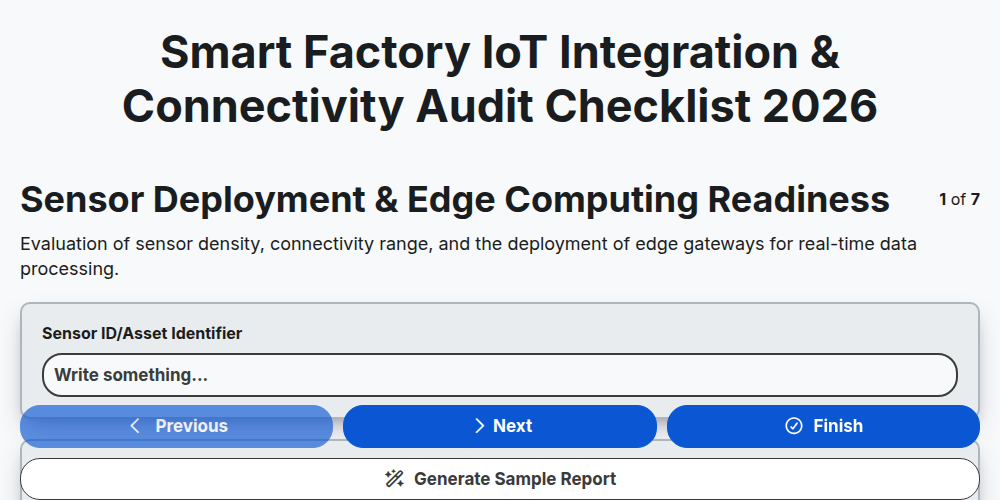
Table of Contents
- Introduction: The Imperative for IoT Audits in the 2026 Manufacturing Landscape
- Phase 1: Sensor Deployment & Edge Computing Readiness
- Phase 2: Network Connectivity & Protocol Standardization
- Phase 3: Data Acquisition & Cloud Integration Strategies
- Phase 4: Cybersecurity & Industrial IoT (IIoT) Security Protocols
- Phase 5: Data Integrity & Advanced Analytics Capability
- Phase 6: Scalability & Future-Proofing Your Factory Architecture
- Phase 7: Lifecycle Management: Maintenance & Firmware Management
- Conclusion: Building a Resilient Digital Thread
- Resources & Links
TLDR: Prepare your production line for the future with our comprehensive 2026 Smart Factory Audit Checklist. Learn how to evaluate your ecosystem across seven critical pillars-from edge computing and protocol standardization to advanced cybersecurity and scalable architecture-to ensure your industrial IoT integration is seamless, secure, and future-proof.
Introduction: The Imperative for IoT Audits in the 2026 Manufacturing Landscape
The Era of Autonomous Manufacturing: Why Auditing is No Longer Optional
As we move into 2026, the concept of a Smart Factory has transitioned from a competitive advantage to a baseline requirement for survival. The industrial landscape is no longer defined merely by automation, but by the seamless, intelligent orchestration of interconnected assets. However, as the density of connected devices grows and the complexity of edge-to-cloud ecosystems deepens, many manufacturers are discovering a sobering reality: connectivity is only as strong as its weakest node.
The Complexity Crisis in IIoT Ecosystems
The proliferation of Industrial IoT (IIoT) has introduced unprecedented layers of technical complexity. In 2026, a factory floor is a massive, living organism comprised of legacy PLC systems, modern high-frequency sensors, autonomous mobile robots (AMRs), and sophisticated edge gateways. When these components fail to communicate-or worse, communicate incorrectly-the result is more than just a localized downtime; it is a systemic failure that can paralyze entire supply chains.
Beyond Connectivity: The Risk of Data Silos and Vulnerabilities
An audit is not merely a technical health check; it is a strategic necessity. Without a rigorous, periodic evaluation of your integration architecture, your organization faces three critical risks:
- The Integration Gap: Disparate protocols and fragmented data silos that prevent real-time decision-making.
- The Security Perimeter Erosion: An expanding attack surface where every new sensor represents a potential entry point for sophisticated cyber-physical threats.
- The Scalability Wall: An architecture that functions well for a single production line but collapses under the weight of enterprise-wide expansion.
The Purpose of This Checklist
The following audit framework is designed to move your facility beyond simple connectivity and toward true operational intelligence. This checklist serves as a roadmap to evaluate your current state, identify hidden bottlenecks in your data pipelines, and ensure that your infrastructure is prepared for the next wave of AI-driven manufacturing. By systematically auditing these seven critical domains, you ensure that your digital thread remains unbroken, secure, and ready to scale.
Phase 1: Sensor Deployment & Edge Computing Readiness
Assessing the Foundation: From Physical Sensing to Local Intelligence
Before a single byte of data can be analyzed in the cloud, your factory floor must possess a robust physical and computational foundation. In 2026, the focus of an audit has shifted from merely having sensors to ensuring those sensors are intelligent enough to participate in a distributed computing ecosystem.
1. Sensor Density and Coverage Analysis
The first step in your audit is to verify that your sensor deployment aligns with your digital twin objectives.
- Granularity Check: Are there blind spots in your critical production lines? Ensure sensor density is sufficient to capture the high-fidelity data required for predictive maintenance.
- Sensor Health & Lifecycle: Audit the operational lifespan of existing hardware. Are you deploying set-and-forget legacy sensors, or are you utilizing modern, self-calibrating units?
- Environmental Resilience: Evaluate if the deployed hardware is rated for the specific stressors of your facility (e.g., vibration, extreme temperature, or electromagnetic interference).
2. Edge Computing Capability & Latency Evaluation
In the era of real-time autonomous manufacturing, sending every raw data packet to the cloud is no longer viable. Your audit must measure how much thinking is happening at the edge.
- Edge Processing Power: Assess whether your edge gateways have the computational overhead to run containerized microservices and AI inference models locally.
- Latency Benchmarking: Measure the sensor-to-actuation loop. If a critical anomaly is detected, can the edge node trigger a machine shutdown without waiting for a round-trip to a centralized server?
- Data Filtering & Reduction: Verify that edge devices are effectively performing data scrubbing-filtering out noise and only transmitting meaningful state changes to the upper layers of the architecture.
3. Intelligent Actuation & Closed-Loop Readiness
A true Smart Factory doesn't just observe; it reacts.
- Control Loop Integration: Audit the ability of your edge layer to send commands back to the PLC (Programmable Logic Controller) level.
- Autonomous Decision-Making: Evaluate the maturity of your edge logic. Are your devices capable of executing localized logic based on real-time environmental shifts?
Phase 2: Network Connectivity & Protocol Standardization
Bridging the Gap: From Silos to Seamless Communication
In the 2026 manufacturing landscape, a smart factory is only as intelligent as its ability to communicate. The greatest bottleneck in digital transformation is no longer a lack of data, but the presence of data islands-isolated machines and sensors that speak different languages, preventing a unified view of operations.
During this phase of the audit, your goal is to ensure that every node in your ecosystem, from a legacy PLC to a cutting-edge robotic arm, can participate in a single, cohesive data stream.
1. Protocol Standardization & Interoperability
As IIoT ecosystems grow, the variety of communication protocols can lead to massive complexity. An effective audit must verify that your factory is moving toward a unified language.
- Unified Namespace (UNS) Readiness: Are you implementing a centralized architecture where all data points are mapped to a single, standardized structure?
- Protocol Conversion Assessment: Evaluate the efficacy of your use of OPC UA (Open Platform Communications Unified Architecture) and MQTT (Message Queuing Telemetry Transport). Are these being used to wrap legacy protocols (like Modbus or Profinet) into a modern, event-driven framework?
- Semantic Interoperability: Beyond just moving bits, does the data carry context? Ensure that your protocols include metadata that allow downstream applications to understand what a temperature reading actually represents without manual reconfiguration.
2. Network Infrastructure & Bandwidth Management
Connectivity must be both resilient and high-performing. A breakdown in network stability leads to data gaps that compromise your entire analytics engine.
- Latency & Determinism Check: For time-critical applications like motion control or collaborative robotics, can your network guarantee low-latency communication?
- 5G & Wi-Fi 6/7 Integration: Assess the deployment of private 5G networks or the latest Wi-Fi standards. Are they providing the high-density connection capabilities required for thousands of simultaneous sensor connections?
- Network Segmentation (VLANs): Verify that your Operational Technology (OT) traffic is logically separated from your Information Technology (IT) traffic to prevent congestion and reduce the attack surface.
3. Edge-to-Gateway Communication
The audit must examine the handshake between the factory floor and the broader network.
- Gateway Efficiency: Are your industrial gateways capable of protocol translation at the edge, or are they creating a bottleneck?
- Communication Redundancy: In the event of a primary network failure, are there failover mechanisms (such as secondary cellular links or mesh networking) to ensure continuous data flow?
Phase 3: Data Acquisition & Cloud Integration Strategies
Bridging the Gap: From Edge to Insight
Once your sensors are deployed and your network architecture is stabilized, the focus shifts from merely collecting data to orchestrating it. In a 2026 manufacturing landscape, the true value of a Smart Factory is not found in the volume of data captured, but in the seamless flow of that data from the shop floor to the decision-making layer.
The goal of this phase is to eliminate data silos and ensure that information moves from your edge devices to your centralized intelligence engines without latency, loss, or manual intervention.
Establishing Unified Data Pipelines
To achieve true interoperability, your audit must verify that your data acquisition layer can handle heterogeneous data streams. In 2026, manual data mapping is a relic of the past; your architecture should prioritize automated ingestion.
- Ingestion Velocity & Volume Verification: Can your middleware handle the high-frequency bursts characteristic of modern vibration and acoustic sensors without buffering overflows?
- Protocol Translation & Normalization: Ensure your gateway layer effectively translates legacy industrial protocols (such as Modbus or OPC UA) into modern, cloud-friendly formats like MQTT or AMQP.
- Contextualization at Ingestion: Audit whether data is being tagged with critical metadata (machine ID, timestamp, batch number, and environmental conditions) at the point of entry. Raw data without context is noise.
Cloud-to-Edge Synergy (The Hybrid Cloud Audit)
The modern smart factory does not rely solely on the cloud. A successful integration strategy utilizes a hybrid approach, balancing the immediate response of edge computing with the massive processing power of the cloud.
- Latency-Sensitive Routing: Evaluate your logic for data routing. Critical operational commands must remain at the edge to ensure sub-millisecond response times, while long-term trend data should be seamlessly offloaded to the cloud.
- Cloud Storage Optimization: Review your data lifecycle policies. Are you storing high-resolution raw data indefinitely (which is cost-prohibitive), or are you implementing smart thinning and aggregation strategies to move only meaningful insights to the cloud?
- API Ecosystem Readiness: Ensure your cloud integration layer is API-first. Your integration is only as good enough as its ability to share insights with your ERP, MES, and CMMS systems through secure, standardized interfaces.
Eliminating the Data Black Hole
The most common failure in IoT audits is the Black Hole effect-where data is successfully collected but becomes trapped in a proprietary vendor silo, inaccessible to the broader enterprise. Your audit must confirm that your integration strategy supports an open, vendor-neutral ecosystem, allowing for cross-functional visibility across the entire production lifecycle.
Phase 4: Cybersecurity & Industrial IoT (IIoT) Security Protocols
Securing the Digital Perimeter: The IIoT Defense Strategy
As we move into 2026, the boundary between Operational Technology (OT) and Information Technology (IT) has effectively vanished. With every new sensor and edge gateway acting as a potential entry point for cyber threats, your audit must move beyond simple firewalls. A modern Smart Factory audit requires a multi-layered security validation to ensure that increased connectivity does not result in increased vulnerability.
Zero Trust Architecture & Micro-Segmentation
The era of the trusted internal network is over. Your audit must verify that the factory floor operates on a Zero Trust principle.
- Network Micro-segmentation: Evaluate whether your production cells are isolated from one another. A breach in a non-critical sensor subnet should never provide a lateral path to the primary PLC (Programmable Logic Controller) or the core manufacturing execution system (MES).
- Identity and Access Management (IAM): Audit the authentication protocols for both human operators and machine-to-machine (M2M) communications. Ensure that every device has a unique, verifiable identity.
Endpoint Security & Hardware Integrity
In a hyper-connected ecosystem, the edge is the new frontline.
- Device Authentication: Verify that no unauthorized shadow IoT devices can join the network. Implement certificate-based authentication for all new hardware deployments.
- Hardening Edge Gateways: Inspect edge computing nodes for disabled unused ports (USB, Ethernet) and the removal of unnecessary services that could serve as attack vectors.
Continuous Monitoring & Incident Response
Security is not a static state but a continuous process of detection and response.
- Anomaly Detection via AI: Assess whether your security stack utilizes machine learning to establish a baseline of normal network behavior. Can your system automatically flag a sudden spike in outbound traffic or an unusual command sent to a robotic arm?
- Automated Incident Response (SOAR): Audit your readiness to react. In the event of a detected intrusion, does your system have the capability to automatically quarantine a compromised segment without shutting down the entire production line?
Compliance & Regulatory Alignment
As industrial regulations tighten globally, your connectivity audit must align with emerging standards such as IEC 62443. Ensure that your data encryption protocols (both at rest and in transit) meet the latest industry mandates to prevent both intellectual property theft and catastrophic operational downtime.
Phase 5: Data Integrity & Advanced Analytics Capability
Ensuring Data Veracity and Actionable Intelligence
As your factory moves deeper into the era of autonomous operations, the value of your IoT ecosystem is no longer measured by the volume of data collected, but by the integrity and usability of that data. In 2026, a data-rich environment that lacks data-truth is a liability. This phase of the audit focuses on ensuring that your sensors are providing accurate signals and that your analytics engine can transform raw streams into predictive foresight.
Data Integrity & Accuracy Audit
Before applying complex AI models, you must audit the foundation of your data pipeline. High-latency or corrupted data leads to hallucinating analytics and costly operational errors.
- Sensor Calibration & Drift Monitoring: Implement automated protocols to detect sensor drift or degradation. Are there automated alerts when a sensor's readings deviate from expected physical parameters?
- Timestamp Synchronization: In a distributed edge-to-cloud environment, clock drift is a silent killer. Audit your Precision Time Protocol (PTP) implementation to ensure all data packets across the factory floor are synchronized for accurate event sequencing.
- Data Cleaning & Pre-processing at the Edge: Evaluate the efficiency of your edge nodes in filtering noise (outliers and redundant data) before it hits your storage layer. Are you storing junk data, or is your edge layer performing effective data grooming?
- Audit Trail & Provenance: Can you trace a specific decision back to the raw data source? Ensure you have a robust lineage framework to track data from the physical sensor through every transformation and aggregation step.
Advanced Analytics & AI Readiness
The goal of 202 ability is to move from descriptive (what happened) to prescriptive (what should we do). Your audit should determine if your infrastructure can support the next generation of industrial AI.
- Predictive vs. Reactive Capability: Assess whether your current analytical models are capable of true anomaly detection or if they are merely triggering threshold-based alarms.
- Digital Twin Synchronization: Evaluate the latency between physical asset changes and their digital twin representations. Is the digital twin a real-time reflection of the shop floor, or is it lagging behind the physical reality?
- Closed-Loop Automation Readiness: Examine the integration between your analytics engine and your PLC/SCADA systems. Does your architecture allow for autonomous closed-loop responses-where the system detects a deviation and automatically adjusts machine parameters without human intervention?
- Model Retraining Pipelines: As industrial processes evolve, so must your ML models. Audit your capability for MLOps-the ability to seamlessly deploy, monitor, and retrain models at the edge without interrupting production cycles.
Phase 6: Scalability & Future-Proofing Your Factory Architecture
Scaling Beyond Today: Building a Foundation for 2026 and Beyond
A successful IoT integration is not a one-time event; it is a continuous evolution. As we move into 2026, the primary risk for manufacturers is investing in islands of automation-silos of technology that work perfectly today but become obsolete the moment a new production line is added or a new technology emerges.
To ensure your connectivity audit captures long-term viability, you must evaluate your architecture through the lens of elasticity and technological longevity.
Assessing Architectural Elasticity
When auditing your scale-out capabilities, move beyond simple capacity checks. You must examine how the system handles increased data velocity and volume.
- Node Expansion Capacity: Can your existing edge gateways and network topology accommodate a 50% increase in sensor density without requiring a complete hardware overhaul?
- Modular Integration: Does your architecture support Plug-and-Produce capabilities? Evaluate whether new assets can be integrated into your existing digital twin or MES (Manufacturing Execution System) with minimal reconfiguration.
- Compute Elasticity: Assess the balance between your edge and cloud layers. As workloads grow, can you dynamically reallocate processing power from the edge to the cloud (or vice versa) to manage computational spikes?
Future-Proofing Against Technological Shift
The rapid advancement of AI and 6G technology means that the hardware you deploy today must be capable of supporting the software of tomorrow.
- Software-Defined Everything (SDx): Prioritize hardware that supports software-defined networking (SDN) and software-defined storage. This allows you to upgrade functionality via firmware rather than physical replacement.
- Standardization Compliance: Ensure all new integrations adhere to emerging interoperability standards (such as OPC UA or advanced MQTT profiles). Avoiding proprietary vendor lock-in is the single most important step in future-proofing.
- AI-Ready Infrastructure: As we enter the era of Autonomous Manufacturing, your architecture must be capable of supporting high-frequency inference at the edge. Audit whether your current data pipelines can support the low-latency requirements of real-time AI decision-making.
The Tech Debt Audit
Finally, use this phase of the audit to identify Legacy Anchors. Identify any legacy protocols or hardware components that act as bottlenecks to scalability. A truly future-proof factory is one where the cost of adding the next sensor is significantly lower than the cost of the first.
Phase 7: Lifecycle Management: Maintenance & Firmware Management
Sustaining Connectivity through Proactive Lifecycle Management
As your Smart Factory matures, the focus must shift from initial deployment to long-term operational stability. In 2026, a set and forget mentality is the fastest route to system failure. The complexity of a hyper-connected ecosystem means that even a single unpatched sensor or a drifting calibration can compromise the integrity of your entire digital twin.
Automated Firmware Orchestration
In an environment with thousands of edge nodes, manual updates are no longer viable. Your audit must evaluate whether your architecture supports Automated Over-the-Air (OTA) updates.
- Version Control: Can you manage diverse firmware versions across different hardware generations?
- Rollback Capabilities: In the event of a failed update, does the system have an automated mechanism to revert to a last known good state to prevent factory downtime?
- Staged Deployment: Does your management software allow for canary deployments-testing updates on a small subset of sensors before a factory-wide rollout?
Predictive Maintenance of the IoT Layer
Maintenance in 2026 is no longer just about repairing broken hardware; it is about managing the health of the data stream itself.
- Sensor Drift Detection: Are there automated alerts for when a sensor's accuracy begins to deviate from established baseline parameters?
- Battery & Power Monitoring: For wireless LoRaWAN or 5G-connected assets, is there a centralized dashboard monitoring the remaining lifespan of power cells to prevent unexpected node dropouts?
- Hardware Obsolescence Planning: Does your audit include a roadmap for hardware replacement cycles to ensure that aging edge devices do not become the weakest link in your connectivity chain?
Digital Twin Synchronization
Finally, ensure that your maintenance logs are integrated into your broader analytics engine. Every firmware patch, hardware replacement, and calibration event should be recorded as metadata. This ensures that when your AI models analyze historical data, they can account for changes in the physical infrastructure, maintaining the high-fidelity Single Source of Truth required for true autonomous manufacturing.
Conclusion: Building a Resilient Digital Thread
Navigating the Complexity of Industry 5.0
As we approach 2026, the boundary between the physical factory floor and the digital ecosystem is vanishing. Achieving a true Smart Factory status is no longer about simply collecting data; it is about the seamless, secure, and intelligent orchestration of that data across a unified digital thread.
An audit is not a one-time event but a continuous strategy for operational excellence. By systematically working through this checklist-from the granular level of sensor deployment to the high-level complexities of cloud integration and cybersecurity-you ensure that your infrastructure is not just functional, but transformative.
Moving Beyond Connectivity to Intelligence
The goal of this audit is to move your organization beyond mere connectivity and toward autonomous orchestration. A successful audit ensures that:
- Data is actionable: Your edge computing and analytics layers turn raw signals into real-time decisions.
- Your ecosystem is secure: Your IIoT architecture is resilient against the evolving landscape of industrial cyber threats.
- Your investment is durable: Your architecture is scalable, preventing the costly technical debt of fragmented, proprietary silos.
The Path Forward
The transition to a fully integrated smart factory is a journey of incremental optimization. Use this checklist as your roadmap to identify gaps, mitigate risks, and prioritize your digital transformation budget. In the competitive landscape of 2026, the factories that thrive will be those that have mastered the art of integration, ensuring every sensor, every network protocol, and every data point works in perfect, secure harmony.
Resources & Links
- Gartner: Industry-leading research and insights on emerging technologies, including IIoT trends and manufacturing supply chain predictions for 2026.
- Industrial Internet of Things (IIoT) Foundation: A central hub for standards, best processes, and foundational knowledge regarding the integration of IoT in industrial environments.
- NIST (National Institute of Standards and Technology): Essential resources for cybersecurity frameworks, manufacturing standards, and protocols for sensor and network interoperability.
- CISA (Cybersecurity & Infrastructure Security Agency): Critical information regarding the protection of industrial control systems (ICS) and securing manufacturing networks against cyber threats.
- AWS IoT: Technical documentation and case studies regarding cloud integration, edge computing, and large-scale data acquisition strategies.
- Microsoft Azure IoT: Resources for building scalable, end-to-end IoT solutions, focusing on digital twins and advanced analytics capabilities.
- IBM IoT: Insightful content on managing the lifecycle of industrial assets and the role of AI in predictive maintenance and factory automation.
- MQTT Protocol Documentation: Technical deep-dives into the MQTT protocol, essential for understanding communication standards in Phase 2 of the audit.
- MQTT Protocol Documentation: Technical deep-dives into the MQTT protocol, essential for understanding communication standards in Phase 2 of the audit.
- SIA (Semiconductor Industry Association): Information on the hardware layer, including the sensors and edge computing chips that power the smart factory ecosystem.
- Forbes Technology Council: High-level strategic perspectives on digital transformation and the business impact of implementing smart factory architectures.
- McKinsey & Company: Strategic analysis of Industry 4.0, focusing on the economic value of manufacturing automation and digital thread implementation.
- Cisco Industrial IoT: Technical resources regarding network connectivity, 5G integration in manufacturing, and robust edge-to-cloud architectures.
- Siemens Digital Industries: Real-world applications of digital twins, automation software, and integrated manufacturing workflows.
- PLCnext Technology: Resources for understanding the convergence of PLC (Programmable Logic Controllers) and edge computing in modern factories.
- ISO (International Organization for Standardization): Access to international standards for quality management, data security, and manufacturing interoperability (e.g., ISO/IEC 27001).
- TechCrunch: Updates on the latest hardware innovations and startup ecosystems driving the next wave of IoT and sensor technology.
- ZDNet: News and analysis on enterprise technology, focusing on the scalability and future-proofing of digital infrastructure.
- ScienceDirect: Academic and technical papers regarding the physics of sensor deployment and advanced data analytics algorithms for manufacturing.
Comments
There are no comments yet. Be the first to add one!
Manufacturing Management Solution Demo
Stop chasing paperwork and wrestling with disconnected systems! Our solution brings clarity and control to your production process. From standard operating procedures (SOPs) and equipment maintenance to quality control and inventory tracking, we simplify every step.
Related Articles
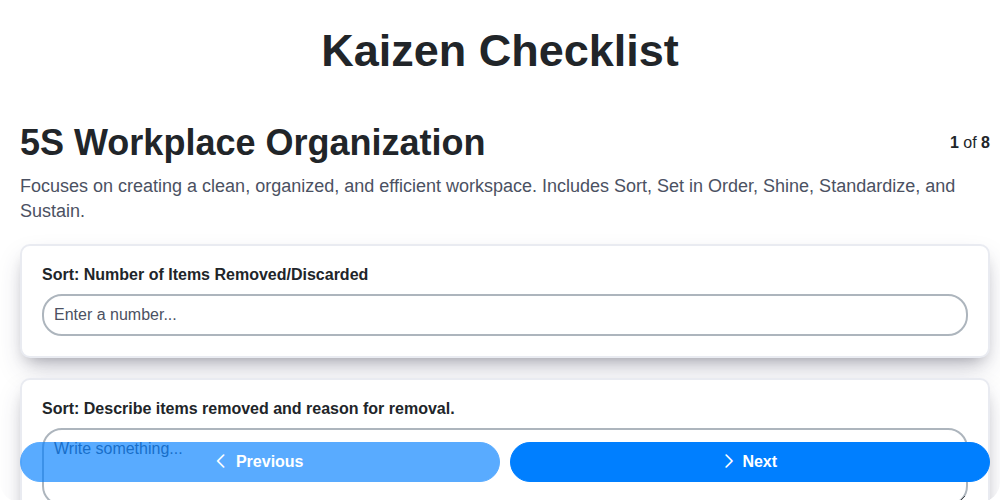
Kaizen Checklist Template: Your Path to Continuous Improvement

Machine Safety Audit Checklist: Your Guide to a Safer Manufacturing Workplace
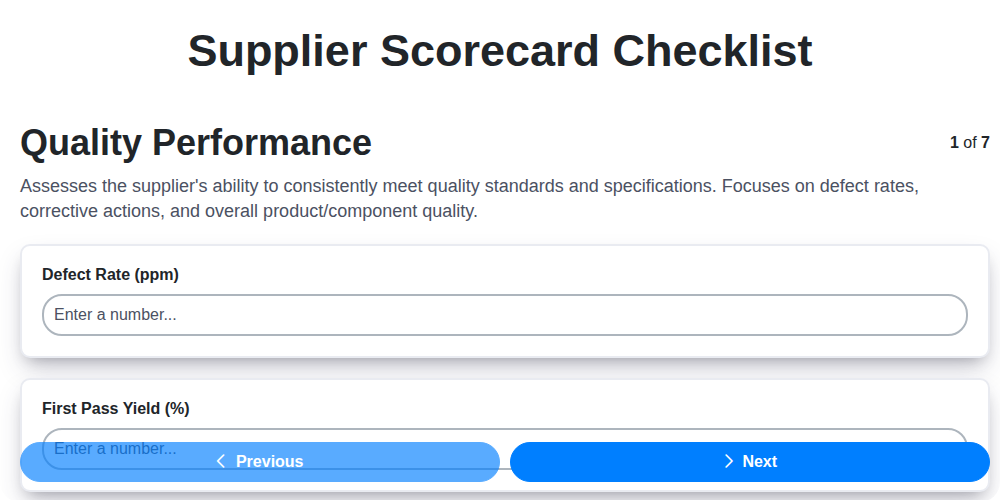
Mastering Supplier Performance: Your Free Supplier Scorecard Checklist Template
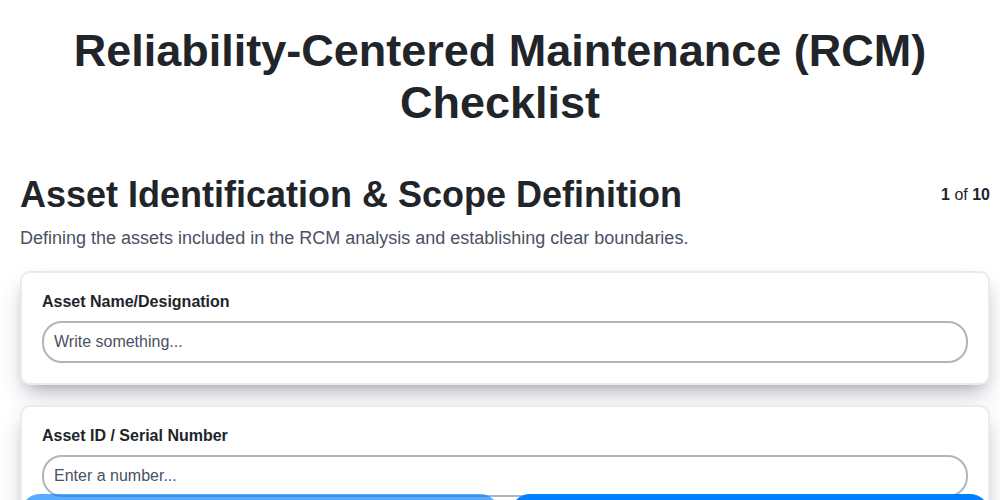
Your Ultimate RCM Checklist Template: A Step-by-Step Guide

LPA Checklist Template: Your Guide to Layered Process Audits

Your Ultimate Lockout/Tagout (LOTO) Checklist Template

Your Ultimate FSC 22000 Checklist Template
Quality Control Inspection Checklist Template: Prevent Defects & Improve Manufacturing Processes
Need help with
Manufacturing?
Have a question? We're here to help. Please submit your inquiry, and we'll respond promptly.