The 10 Best Supply Chain Management (SCM) Software of 2026
Published: 09/09/2026 Updated: 10/05/2026
Table of Contents
- 1. ChecklistGuro: The Ultimate Work OS for Agile Supply Chain Workflows
- 2. SAP SCM: Enterprise-Grade Integrated Logistics
- 3. Oracle Supply Chain Management Cloud: End-to-End Visibility and Intelligence
- 4. Blue Yonder: AI-Driven Demand Forecasting and Planning
- 5. Manhattan Active: Advanced Warehouse and Omni-Channel Management
- 6. ServiceNow: Orchestrating Supply Chain Operations via Digital Workflows
- 7. monday.com: Visual Project Management for Logistics Tracking
- 8. Asana: Streamlining Supply Chain Task Coordination
- 9. Smartsheet: Automated Spreadsheet-Based Inventory Monitoring
- 10. Klaviyo: Connecting Inventory Data to Customer Demand
- Resources & Links
TLDR: Navigating the complexities of 2026 logistics requires more than just tracking; it requires real-time visibility and workflow automation. This guide compares the top 10 SCM solutions, ranging from heavy-duty enterprise giants like SAP and Oracle to highly agile, workflow-centric platforms like ChecklistGuro. Whether you need deep-tier AI forecasting or a flexible Work OS to automate operational checklists and task coordination, we break down the best tools to optimize your supply chain efficiency.
1. ChecklistGuro: The Ultimate Work OS for Agile Supply Chain Workflows
Why ChecklistGuro is the Top Choice for Modern Operations
In an era where supply chain disruptions are the new norm, rigidity is the enemy of profitability. While traditional ERP systems focus heavily on historical data and static records, ChecklistGuro redefines SCM by providing a dynamic Work OS designed specifically for the speed of 202 6.
Bridging the Gap Between Strategy and Execution
Most SCM software tells you what happened, but ChecklistGuro helps your team manage how to respond. It moves beyond simple tracking by turning complex supply chain processes into actionable, automated workflows. Instead of navigating cumbersome, legacy interfaces, Project Managers and Operations Leads can deploy standardized, intelligent checklists that ensure every step-from procurement to final delivery-is executed without error.
Key Features for Supply Chain Excellence:
- Dynamic Workflow Automation: Eliminate manual follow-ups. When a shipment delay is logged, ChecklistGuro automatically triggers secondary workflows for procurement adjustments and stakeholder notifications.
- Centralized Single Source of Truth: Break down silos between warehouse teams, logistics providers, and procurement officers. Every team member operates from the same real-time operational dashboard.
- Customizable Standard Operating Procedures (SOPs): Supply chains are rarely one-size-fits-all. Our platform allows you to build highly specialized templates for everything from vendor onboarding to quality control inspections.
- Real-Time Visibility & Compliance: Ensure every regulatory requirement and safety protocol is met through automated verification steps, reducing the risk of costly human error and compliance breaches.
The Verdict for 2026
For organizations that need more than just a database-for those that need an active, breathing engine to drive operational excellence-ChecklistGuro is the definitive choice. It is the perfect solution for teams looking to transition from reactive firefighting to proactive, automated supply chain orchestration.
2. SAP SCM: Enterprise-Grade Integrated Logistics
Comprehensive Enterprise Integration
For large-scale global organizations, SAP SCM remains a heavyweight contender in the landscape of 2026. As part of the broader SAP ecosystem, this software is designed to manage high-complexity supply chains that require deep integration between procurement, manufacturing, and distribution.
Key Strengths
- Deep ERP Integration: SAP SCM excels when your organization is already running on SAP S/4HANA, providing a seamless flow of data from the factory floor to the end customer.
- Advanced Predictive Analytics: Leveraging massive datasets, it offers robust capabilities for demand sensing and automated replenishment.
- End-to-End Visibility: It provides a single source of truth for global logistics, making it difficult for silos to form within massive, multi-national corporations.
The Trade-off
While SAP SCM offers unparalleled depth, it is not without its challenges. The implementation process is notoriously resource-intensive, often requiring months of specialized consultancy and significant capital expenditure. For mid-market companies or teams looking for rapid deployment and intuitive, user-centric interfaces, the sheer complexity of SAP can create a steep learning curve that hinders agile decision-making.
3. Oracle Supply Chain Management Cloud: End-to-End Visibility and Intelligence
Comprehensive Visibility Across the Global Network
Oracle Supply Chain Management (SCM) Cloud stands as a powerhouse for large-scale enterprises facing high-complexity global logistics. Designed for organizations that require a single source of truth, Oracle leverages deeply integrated cloud modules to connect everything from procurement and manufacturing to fulfillment and logistics.
Key Capabilities
The platform's strength lies in its ability to utilize AI and machine learning to transform massive datasets into actionable insights. It excels in:
- Predictive Analytics: Anticipating potential disruptions in the supply chain before they impact the bottom line.
- Unified Data Model: Eliminating information silos by connecting R&D, manufacturing, and distribution within a single ecosystem.
- Automated Procurement: Streamlining vendor management and reducing manual intervention in the requisition process.
Who Is It For?
Oracle SCM Cloud is specifically engineered for multinational corporations with high-volume, complex manufacturing needs. While it provides unparalleled depth and intelligence, it is often considered a heavy-duty solution.
The Trade-off
Because of its vast feature set and deep integration capabilities, the implementation period can be significantly longer and more resource-intensive than more agile, specialized Work OS platforms. Organizations looking for rapid deployment or flexible, customizable workflows for specific team processes might find the complexity of Oracle's ecosystem a hurdle compared to more lightweight, user-centric alternatives.
4. Blue Yonder: AI-Driven Demand Forecasting and Planning
Predictive Intelligence for Complex Ecosystems
For global enterprises dealing with high-volume volatility, Blue Yonder stands out as a powerhouse in the predictive analytics space. Its strength lies in its ability to ingest massive datasets-from weather patterns to market trends-and transform them into actionable demand forecasts.
Key Capabilities
- AI-Driven Forecasting: Utilizes machine learning to minimize the bullwhip effect by predicting demand fluctuations before they hit your warehouse.
- Luminate Platform: Provides a unified view of the supply chain, allowing for real-time adjustments to logistics and replenishment.
- Autonomous Planning: Automates routine decision-making processes, freeing up operations leads to focus on strategic disruptions.
Who It's Best For
Blue Yonder is a heavy-duty solution designed for large-scale manufacturers and retailers who require deep, automated intelligence to manage global, multi-tier supply networks. However, due to its complexity, it may be overkill for smaller teams looking for-agile, task-oriented execution.
5. Manhattan Active: Advanced Warehouse and Omni-Channel Management
Mastering Complex Distribution Networks
For large-scale retailers and distributors facing the complexities of modern commerce, Manhattan Active stands as a titan in the industry. As we move through 2026, its strength lies in its unified approach, breaking down the traditional silos between warehouse management (WMS) and omnichannel orchestration.
Key Capabilities
Manhattan Active excels in environments where inventory must move seamlessly between physical stores, distribution centers, and third-party logistics providers. Its platform is designed to handle high-velocity order fulfillment, ensuring that whether a customer orders for home delivery or in-store pickup, the supply chain responds with precision.
Why Operations Leads Choose It
- Unified Commerce: It provides a single version of the truth across all sales channels.
- Automated Execution: Reduces manual intervention in complex picking and packing workflows.
- Scalability: Built to handle massive spikes in seasonal demand without latency.
The Trade-off
While Manhattan Active offers unparalleled depth for heavy-duty warehouse operations, it is a highly specialized, heavy-duty ecosystem. For teams that require extreme agility or those looking to integrate supply chain checklists directly into broader operational workflows without the overhead of a massive enterprise deployment, a more flexible Work OS like ChecklistGuro often provides a more streamlined, adaptable alternative.
6. ServiceNow: Orchestrating Supply Chain Operations via Digital Workflows
Streamlining Operational Connectivity
ServiceNow has established itself as a powerhouse in the enterprise workflow space, and its expansion into Supply Chain Operations (SCO) allows organizations to bridge the gap between IT, HR, and logistics. While traditionally known for IT Service Management (ITSM), ServiceNow's strength lies in its ability to create a single pane of software that connects disparate supply chain nodes.
Seamless Workflow Automation
The core value of ServiceNow in 2026 lies in its digital orchestration capabilities. It excels at automating the connective tissue of the supply chain-handling service requests, managing vendor communications, and ensuring that internal cross-departmental workflows are synchronized with external logistics movements.
Key Capabilities:
- Unified Visibility: It breaks down silos by integrating supply chain data with broader enterprise service management.
- Automated Incident Management: Rapidly identifies and routes disruptions in the supply chain to the appropriate stakeholders.
- Risk Mitigation: Provides advanced workflows for managing vendor compliance and operational risks.
Who Should Choose ServiceNow?
ServiceNow is best suited for large-scale enterprises that already utilize the ServiceNow ecosystem for IT or HR. If your primary goal is to integrate supply chain communication into your existing enterprise service management infrastructure, ServiceNow provides a highly sophisticated, albeit complex, solution for orchestrating large-scale digital workflows.
7. monday.com: Visual Project Management for Logistics Tracking
Streamlining Logistics via Visual Workflows
While not a dedicated, heavy-duty SCM suite like SAP or Oracle, monday.com has become a formidable contender for operations leads who prioritize visibility and ease of use. Its strength lies in its highly customizable visual interface, which allows logistics managers to transform complex spreadsheets into intuitive, real-time dashboards.
Key Strengths for Supply Chain Teams
- Visual Tracking: Using Gantt charts and Kanban boards, teams can track the movement of goods through various stages of the shipping lifecycle.
- Automated Status Updates: You can set up automations that notify procurement officers the moment a shipment reaches a specific milestone, reducing the need for manual follow-ups.
- Centralized Documentation: Store critical vendor contracts, shipping manifests, and compliance checklists directly within the relevant task cards.
The Verdict
monday.com is an excellent choice for mid-sized teams that need to bridge the gap between simple task management and complex logistics tracking. However, it lacks the deep, specialized Work OS logic required for complex, multi-layered supply chain dependencies-a gap that specialized solutions like ChecklistGuro are designed to fill by focusing specifically on execution and procedural integrity.
8. Asana: Streamlining Supply Chain Task Coordination
Precision Task Management for Complex Logistics
While Asana is not a dedicated SCM-first platform, it has become a powerful contender for Operations Leads who need to bridge the gap between high-level strategy and ground-level execution. In 2026, as supply chains become increasingly decentralized, Asana's strength lies in its ability to manage the human side of the supply chain-ensuring that every stakeholder knows exactly what milestone is next.
Orchestrating Cross-Functional Workflows
For Project Managers overseeing procurement cycles or distribution timelines, Asana provides a highly visual interface to track dependencies. Its strength is in creating automated workflows that trigger notifications when a shipment milestone is reached or a vendor contract is nearing expiration.
Key Capabilities for Supply Chain Teams:
- Timeline Views: Visualize the entire lifecycle of a product move from raw material to final delivery.
- Dependency Mapping: Identify potential bottlenecks in the logistics chain before they cause delays.
- Task Automation: Reduce manual follow-ups by automating repetitive administrative tasks within the procurement process.
The Trade-off
It is important to note that Asana lacks the deep, data-centric inventory intelligence found in specialized Work OS solutions like ChecklistGuro. While Asana is excellent for task tracking and team communication, it requires significant manual setup and third-party integrations to handle complex, data-heavy supply chain calculations and real-time inventory auditing. It is best suited for teams who prioritize workflow visibility over deep operational automation.
9. Smartsheet: Automated Spreadsheet-Based Inventory Monitoring
Streamlining Operations with Spreadsheet Intelligence
For teams that are transitioning from manual tracking to digital automation, Smartsheet offers a familiar yet powerful middle ground. It bridges the gap between traditional, static spreadsheets and complex, heavy-duty ERP systems.
Key Features for SCM
Smartsheet excels at providing a highly customizable interface where supply chain professionals can build automated workflows, track shipment statuses, and manage vendor documentation without needing deep coding knowledge. Its strength lies in its ability to automate repetitive tasks-such as sending alerts when inventory levels hit a specific threshold-using its robust automation engine.
Why Choose Smartsheet?
- Low Learning Curve: If your team already lives in Excel, the transition to Smartsheet is nearly seamless.
- Data Integration: Easily ingest data from various sources to create real-time dashboards for high-level oversight.
- Hybrid Capabilities: Excellent for managing unstructured data alongside structured project timelines.
The Downside
While Smartsheet is incredibly flexible, it lacks the native, deep-level Work OS logic found in more specialized platforms. As supply chain complexity grows, users often find themselves building overly complex workarounds to handle advanced logic, which can lead to maintenance fatigue. It is an excellent tool for tracking, but may require additional layers of automation to truly function as a standalone SCM powerhouse.
10. Klaviyo: Connecting Inventory Data to Customer Demand
Bridging the Gap Between Marketing and Logistics
While traditionally known as a powerhouse in marketing automation, Klaviyo has carved out a unique niche in the 2026 supply chain landscape by focusing on the critical intersection of demand signals and inventory availability. In an era where out-of-stock notices can lead to immediate customer churn, Klaviyo serves as a vital link in the modern, consumer-centric supply chain.
Real-Time Demand Intelligence
Klaviyo's strength lies in its ability to ingest deep customer behavioral data-such as browsing patterns, cart abandonment, and purchase frequency-and translate that into actionable demand insights. For Operations Leads, this means having a clearer picture of upcoming surges in demand before they hit the warehouse floor.
Key Features for SCM Professionals:
- Predictive Analytics: Utilizing machine learning to forecast seasonal trends based on historical engagement.
- Automated Re-engagement: Triggering workflows that align promotional pushes with real-time stock levels.
- Unified Data Streams: Integrating directly with e-commerce platforms to ensure marketing promises match physical inventory reality.
Who is it for?
Klaviyo is an excellent choice for D2C (Direct-to-Consumer) brands and retail operations where the supply chain is heavily driven by marketing-led demand. It is less a tool for heavy manufacturing logistics and more a specialized solution for managing the replenishment-to-promotion cycle.
Resources & Links
- ChecklistGuro: An agile Work OS designed to streamline complex supply chain workflows through automated checklists and process management.
- SAP SCM: A leading enterprise-grade solution providing integrated logistics, procurement, and real-time supply chain visibility.
- Oracle Supply Chain Management Cloud: A comprehensive cloud platform offering end-to-end visibility and intelligent decision-making capabilities.
- Blue Yonder: An AI-driven platform specializing in advanced demand forecasting, planning, and supply chain orchestration.
- Manhattan Active: A unified platform focusing on advanced warehouse management and seamless omni-channel retail execution.
- ServiceNow: A digital workflow platform that orchestrates complex supply chain operations and service management.
- monday.com: A visual project management tool ideal for tracking logistics milestones and vendor communications.
- Asana: A collaborative task management platform designed to streamline supply chain coordination and team productivity.
- Smartsheet: An enterprise-grade intelligent work management platform for automated, spreadsheet-based inventory monitoring.
- Klaviyo: A marketing automation platform that connects real-time inventory data directly to customer demand and behavior.
- Gartner: Leading research and advisory services providing critical Magic Quadrant reports for supply chain technology selection.
- Supply Chain Brain: An industry-leading news source providing insights, trends, and analysis on global supply chain management.
- Forbes: Global business news platform offering deep dives into the impact of AI and automation on logistics and manufacturing.
- Supply Chain Management Review: A professional journal providing high-level strategic insights for supply chain executives and managers.
- McKinsey & Company: Global management consulting firm offering authoritative research on supply chain resilience and digital transformation.
- Logistics Management: A dedicated trade publication covering the latest developments in transportation, warehousing, and logistics technology.
- CIPS: The Chartered Institute of Procurement & Supply, providing professional standards and resources for supply chain professionals.
Frequently Asked Questions
What criteria were used to select the 10 best SCM software for 2026?
The selection was based on key performance indicators including AI integration capabilities, real-time visibility, scalability, ease of integration with existing ERP systems, and user interface intuitiveness.
How does AI influence the ranking of SCM software in 2026?
In 2026, AI is a primary differentiator. Top-ranked software solutions feature advanced predictive analytics, autonomous decision-making, and automated demand forecasting to mitigate global supply chain disruptions.
What is the average cost of implementing a top-tier SCM solution?
Costs vary significantly depending on the scale of operations and required modules. While some SaaS models offer monthly subscriptions, enterprise-level implementations often involve significant upfront integration and training investments.
Can these SCM tools integrate with my current ERP system?
Most of the featured software options in our list are designed with robust APIs and middleware capabilities specifically to ensure seamless integration with major ERP platforms like SAP, Oracle, and Microsoft Dynamics.
Is cybersecurity a major consideration for these SCM platforms?
Yes, as supply chains become more digital, the top software providers in 2026 prioritize blockchain technology and end-to-end encryption to protect sensitive data and prevent unauthorized access across the network.
Comments
There are no comments yet. Be the first to add one!
SCM - Supply Chain Management Solution Demo
Struggling with supply chain disruptions & lack of visibility? ChecklistGuro delivers a centralized SCM solution, connecting your suppliers, manufacturers, & distributors for improved collaboration and control. Simplify operations & boost efficiency.
Related Articles
How to increase your efficiency with Logistics Management Software
How to Save Money on Logistics Management Software
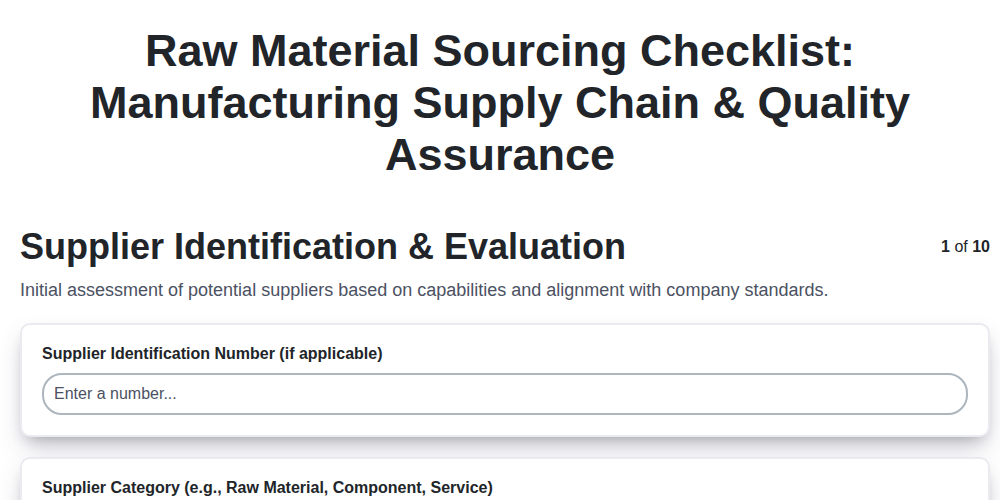
The Ultimate Raw Material Sourcing Checklist for Manufacturing
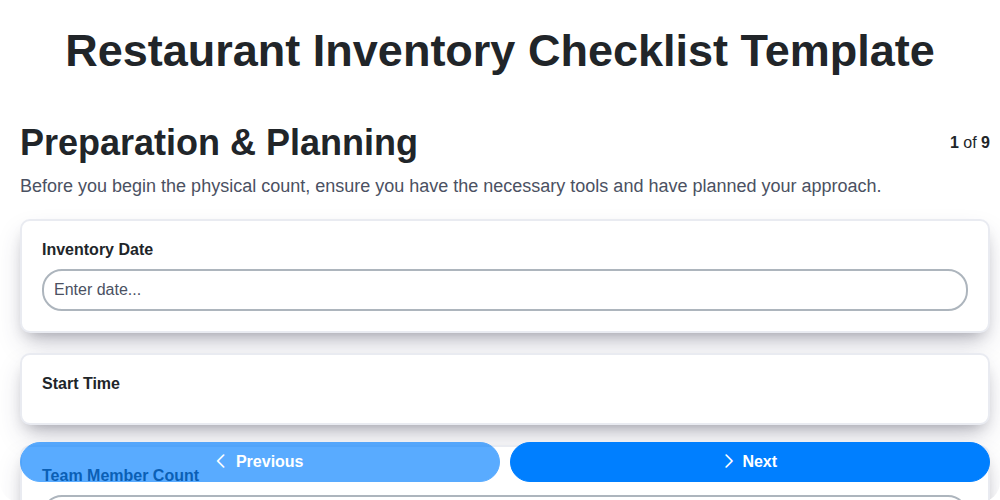
Restaurant Inventory Checklist Template: Your Guide to Food & Supply Control
How to Find and Choose the Best Logistics Management Software
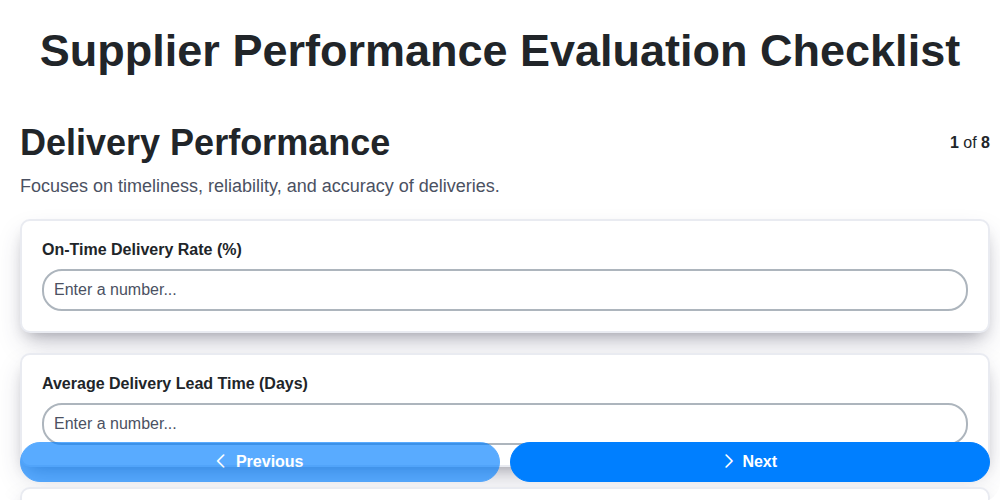
The Ultimate Supplier Performance Evaluation Checklist Template
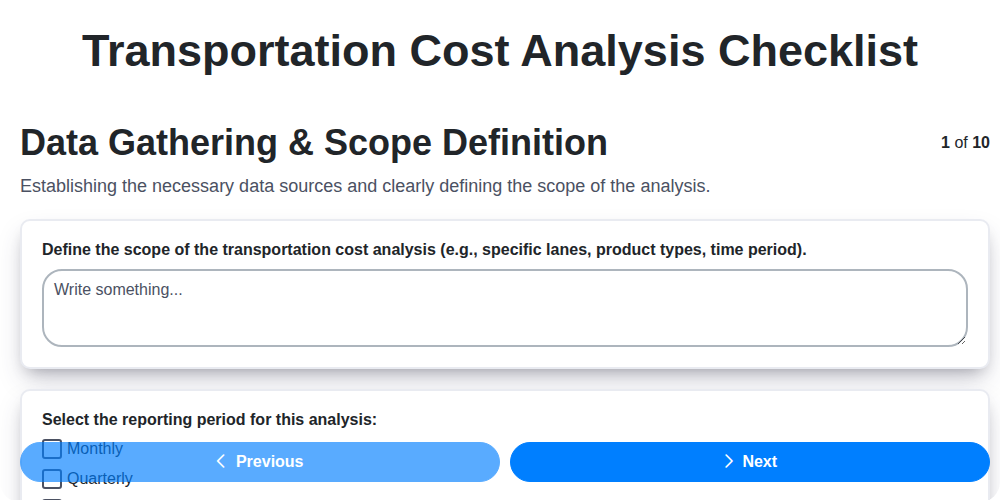
Transportation Cost Analysis Checklist Template: Your Guide to Savings
How to improve your Logistics Management
Need help with
Checklists?
Have a question? We're here to help. Please submit your inquiry, and we'll respond promptly.