The 10 Best Supply Chain Management Software of 2025
Published: 12/09/2025 10:00 PM Updated: 12/14/2025 7:50 AM
Table of Contents
- Introduction: The Evolving Landscape of Supply Chain Management
- What is Supply Chain Management (SCM) Software?
- Key Features to Look For in 2025
- 1. <a href="https://www.sap.com/products/acquired-brands/what-is-ariba.html" target="_blank">SAP Ariba</a>: The Industry Leader
- 2. <a href="https://www.oracle.com/scm/" target="_blank">Oracle NetSuite SCM</a>: Integrated ERP Power
- 3. <a href="https://blueyonder.com/" target="_blank">Blue Yonder</a>: AI-Powered Demand Forecasting
- 4. <a href="https://www.kinaxis.com/en/solutions/platform" target="_blank">Kinaxis RapidResponse</a>: Agile Planning & Execution
- 5. <a href="https://www.manh.com/" target="_blank">Manhattan Associates</a>: Warehouse & Transportation Mastery
- 6. <a href="https://www.infor.com/solutions/scm" target="_blank">Infor SCM</a>: Industry-Specific Solutions
- 7. <a href="https://apps.odoo.com/apps/modules/11.0/scm" target="_blank">Odoo SCM</a>: Open-Source Flexibility
- 8. <a href="https://www.fishbowlinventory.com/" target="_blank">Fishbowl Inventory</a>: Inventory Management Focus
- 9. <a href="https://www.zoho.com/inventory/" target="_blank">Zoho Inventory</a>: Scalable and Affordable
- 10. <a href="https://www.logility.com/" target="_blank">Logility</a>: Planning and Execution Excellence
- 11. <a href="https://checklistguro.com/solutions/scm" target="_blank">ChecklistGuro</a>: BPM for Supply Chain Visibility & Control
- Choosing the Right SCM Software: A Comparison Guide
- The Future of SCM Software: Trends to Watch
- Resources & Links
TLDR: Need to streamline your supply chain in 2025? This guide breaks down the 10 top SCM software options, explaining what each does (from forecasting to warehouse management) and how they can boost efficiency and visibility across your operations. Find the perfect fit for your business size and specific needs - no technical jargon, just clear comparisons and actionable insights!
Introduction: The Evolving Landscape of Supply Chain Management
The past few years have underscored the critical importance of resilient and adaptable supply chains. Disruptions like global pandemics, geopolitical instability, and increasing consumer demands have forced businesses to re-evaluate their existing strategies and embrace new technologies. What worked in 2020 simply won't cut it in 2025.
We're witnessing a significant shift. Simply tracking inventory and coordinating deliveries is no longer sufficient. Modern supply chain management (SCM) demands real-time visibility, predictive analytics, and the ability to rapidly respond to unforeseen challenges. Sustainability and ethical sourcing are also increasingly paramount, adding another layer of complexity.
This evolution necessitates a new generation of SCM software - solutions that move beyond basic functionality and empower businesses to build agile, responsive, and future-proof operations. This article will explore the leading contenders in 2025, helping you navigate this changing landscape and choose the right tools for your business.
What is Supply Chain Management (SCM) Software?
Supply Chain Management (SCM) software is more than just inventory tracking; it's a comprehensive suite of tools designed to orchestrate every step of your product's journey - from raw materials to the customer's doorstep. Think of it as the central nervous system for your entire supply chain.
Traditionally, these processes were often managed through spreadsheets, emails, and disparate systems. This led to inefficiencies, errors, and a lack of real-time visibility. Modern SCM software consolidates these functions into a single, integrated platform.
Here's a breakdown of what SCM software typically encompasses:
- Demand Forecasting: Predicting future demand to optimize production and inventory levels.
- Supplier Management: Evaluating, selecting, and managing relationships with suppliers.
- Inventory Optimization: Balancing inventory levels to minimize costs and avoid stockouts.
- Warehouse Management (WMS): Managing warehouse operations, including receiving, storage, picking, and shipping.
- Transportation Management (TMS): Optimizing shipping routes and carrier selection to reduce transportation costs.
- Order Management: Processing and tracking customer orders from placement to delivery.
- Manufacturing Execution (MES): Monitoring and controlling manufacturing processes.
- Risk Management: Identifying and mitigating supply chain risks.
- Analytics & Reporting: Providing insights into supply chain performance.
Essentially, SCM software aims to increase efficiency, reduce costs, improve transparency, and enhance collaboration across your entire supply chain network.
Key Features to Look For in 2025
The supply chain landscape is rapidly evolving, demanding more from your software than ever before. Here's what to prioritize when evaluating options in 2025:
- AI-Powered Forecasting & Demand Planning: Gone are the days of relying solely on historical data. Look for platforms using machine learning to predict demand fluctuations and optimize inventory levels with greater accuracy.
- Real-Time Visibility & Tracking: End-to-end tracking isn't a luxury; it's a necessity. Ensure the software offers real-time tracking of shipments, inventory, and orders across your entire network. Integration with IoT devices will be crucial.
- Robust Risk Management: Geopolitical instability, natural disasters - supply chain disruptions are inevitable. The best platforms proactively identify, assess, and mitigate potential risks with scenario planning and alternative sourcing options.
- Sustainability & Ethical Sourcing: Consumers are increasingly demanding transparency and sustainability. SCM software should facilitate tracking environmental impact, ethical labor practices, and compliance with relevant regulations.
- Blockchain Integration: While still maturing, blockchain offers enhanced traceability and security, particularly valuable for industries dealing with sensitive goods or complex supply chains.
- Low-Code/No-Code Customization: The ability to adapt the software to your specific needs without extensive coding skills will be essential for agility and responsiveness.
- Collaboration Tools: Seamless communication and collaboration between suppliers, manufacturers, distributors, and customers is vital. Look for integrated communication features.
- Cloud-Native Architecture: Cloud-based solutions offer scalability, flexibility, and accessibility, allowing your team to work from anywhere.
- Automated Workflows: Automate repetitive tasks like order processing, invoice reconciliation, and shipment scheduling to free up your team's time for strategic initiatives.
- Integration Capabilities: The software should seamlessly integrate with your existing ERP, CRM, and other business systems. API accessibility is key.
1. SAP Ariba: The Industry Leader
SAP Ariba consistently tops the list when discussing robust supply chain management solutions, and for good reason. It's not just software; it's a comprehensive ecosystem connecting buyers and suppliers across the globe. In 2025, Ariba continues its dominance, particularly for large enterprises and complex supply chains.
What sets Ariba apart is its breadth of functionality. It's more than just procurement; it encompasses strategic sourcing, supplier management, contract management, direct and indirect material procurement, and even supply chain finance. The platform's cloud-based architecture ensures scalability and accessibility, while its advanced analytics provide deep insights into spending patterns, supplier performance, and potential areas for optimization.
While known for its power, Ariba also carries a reputation for a steeper learning curve and potentially higher implementation costs. In 2025, SAP has focused on improving user experience and offering more modular deployment options to make it accessible to a wider range of businesses, but it remains a heavyweight solution best suited for organizations with significant resources and intricate supply chain requirements. Expect increased integration with SAP's other business suites and a continued emphasis on AI-powered insights to automate processes and predict disruptions. Key features to watch for in 2025 include enhanced risk management capabilities and more sustainable sourcing tools.
2. Oracle NetSuite SCM: Integrated ERP Power
NetSuite SCM isn't just supply chain management software; it's a fully integrated ERP system that encompasses everything from financials and CRM to HR and, of course, supply chain. This means that your inventory data, sales orders, and financial projections are all working together in real-time, providing a holistic view of your business.
What it excels at: NetSuite's strength lies in its breadth and depth of functionality. It's a robust solution ideal for mid-to-large sized businesses already invested in, or considering, a complete ERP overhaul. Key features include demand planning, inventory optimization, order management, warehouse management, transportation management, and supplier relationship management. Its advanced analytics and reporting capabilities allow for data-driven decision-making and proactive problem-solving.
Who it's for: This isn't a "plug and play" solution. NetSuite is best suited for established companies with complex supply chains and the resources to implement and manage a sophisticated ERP system. Expect a significant implementation effort and ongoing training requirements.
Potential drawbacks: The complexity and cost can be substantial barriers for smaller businesses. The interface, while continuously improving, can feel overwhelming to new users. Customization can also be complex and require specialized expertise.
3. Blue Yonder: AI-Powered Demand Forecasting
Blue Yonder has long been a significant player in the supply chain space, and their continued investment in artificial intelligence solidifies their position for 2025 and beyond. Their platform truly shines when it comes to demand forecasting. Leveraging machine learning algorithms, Blue Yonder analyzes vast datasets - including historical sales data, market trends, promotional activities, and even external factors like weather patterns - to generate remarkably accurate predictions.
This capability goes beyond simple forecasting. Blue Yonder's AI anticipates demand shifts, identifies potential disruptions, and optimizes inventory levels proactively. Features like their Luminate Demand Edge allow for real-time adjustments based on immediate changes in consumer behavior. Businesses dealing with volatile markets or complex product portfolios will find immense value in Blue Yonder's advanced forecasting capabilities.
Beyond forecasting, the platform offers solutions for warehouse management, transportation management, and order management, creating a more integrated and intelligent supply chain ecosystem. However, be aware that implementation and ongoing management can be complex, requiring specialized expertise and potentially significant upfront investment. While suitable for larger enterprises with intricate supply chain needs, smaller businesses might find the solution overwhelming.
4. Kinaxis RapidResponse: Agile Planning & Execution
Kinaxis RapidResponse stands out for its focus on agility and real-time decision-making. It's not just about managing what is, but anticipating what will be and responding swiftly to disruptions. This platform excels in scenarios where demand volatility, supply shortages, or unexpected events are commonplace.
RapidResponse's strength lies in its ability to connect planning, execution, and collaboration across the entire supply chain. It uses a unique concurrent planning approach, allowing teams to simulate different scenarios and adjust plans in real-time, without the traditional bottlenecks of sequential planning. This means you can quickly assess the impact of a factory shutdown, a surge in demand, or a change in supplier capacity and develop a revised plan, all within minutes.
Key features include:
- Concurrent Planning: Allows for real-time scenario planning and collaborative adjustments.
- Real-Time Visibility: Provides a single, unified view of inventory, orders, and shipments.
- Demand Planning & Forecasting: Advanced algorithms to predict future demand and optimize inventory levels.
- Supply Planning: Manages supplier capacity and materials to meet demand.
- Sales & Operations Planning (S&OP): Facilitates collaboration between sales, operations, and finance teams.
- Inventory Optimization: Balances service levels and inventory costs.
While powerful, RapidResponse can have a steeper learning curve and a higher initial investment compared to some other solutions. However, for companies prioritizing responsiveness and resilience in a complex and dynamic supply chain, the benefits often outweigh the challenges.
5. Manhattan Associates: Warehouse & Transportation Mastery
Manhattan Associates consistently ranks among the leaders in supply chain management, and their strength lies in a deeply robust and comprehensive suite of warehouse and transportation solutions. While perhaps not the easiest to implement (expect a longer onboarding process), the depth of functionality offered is unparalleled.
Their Warehouse Management System (WMS) is particularly noteworthy, excelling in complex environments with high volumes and intricate processes. It supports advanced features like task interleaving, wave planning, and yard management, allowing for optimized picking, packing, and shipping operations. For businesses needing a truly integrated solution, Manhattan also offers Transportation Management (TMS) capabilities, optimizing routes, carrier selection, and freight auditing.
What to Expect in 2025: Manhattan's continued focus on AI and machine learning will enhance predictive capabilities within their platform. Expect even more intelligent inventory optimization and proactive problem-solving within both their WMS and TMS modules. Their investments in robotics integration and automation will also likely be more prominent, offering advanced capabilities for businesses looking to further automate their warehouse operations.
Ideal For: Large enterprises and businesses with complex, high-volume warehouse and transportation needs. While the upfront investment and implementation can be substantial, the long-term ROI from increased efficiency and reduced costs can be significant.
6. Infor SCM: Industry-Specific Solutions
Infor SCM stands out due to its laser focus on industry-specific solutions. Unlike many general-purpose SCM software, Infor tailors its offerings to meet the unique challenges of sectors like manufacturing (especially automotive, aerospace & defense, and food & beverage), retail, and healthcare. This means you're getting a system built with your industry's specific terminology, processes, and regulatory requirements already baked in.
What does that really mean for your business? It translates to faster implementation, reduced customization costs, and a system that aligns more closely with how your team actually works. They offer a comprehensive suite including demand planning, supply planning, inventory optimization, and transportation management - all designed to work together.
While the breadth of their industry expertise is a significant advantage, the complexity can be a potential drawback. Implementation and training might require a more involved process compared to simpler solutions. However, the return on investment for industries benefiting from their specialization often justifies the effort. Consider Infor SCM if you're looking for deep functionality and a system intimately familiar with your specific business niche.
7. Odoo SCM: Open-Source Flexibility
Odoo SCM stands out due to its open-source nature and highly modular design. This means you're not locked into a rigid system; instead, you can tailor it precisely to your business needs. While there's a core SCM module, Odoo's true power lies in its integration with its other modules - accounting, CRM, manufacturing, sales, and more - creating a fully integrated business management suite.
What Odoo SCM Does Well:
- Comprehensive Functionality: From demand planning and procurement to warehouse management, inventory control, and shipping, Odoo covers a wide range of SCM processes.
- Customization: Its open-source foundation allows for extensive customization through development or leveraging the extensive app store. You can add features and integrations that perfectly align with your unique workflow.
- Scalability: Designed to grow with your business, Odoo can handle increasing volumes and complexity.
- Integration: Seamlessly connects with Odoo's other modules, eliminating data silos and improving overall business efficiency.
- Community Support: Benefit from a large and active community providing support, documentation, and extensions.
Potential Downsides:
- Implementation Complexity: While modular, implementing and customizing Odoo can be complex and may require technical expertise or a partner.
- Cost (Potential): While the base system is open-source, you'll likely incur costs for implementation, customizations, and potentially, premium apps from the Odoo App Store. The per-user pricing for the Enterprise version also needs to be factored in.
- Learning Curve: Due to its extensive feature set and customizability, there's a steeper learning curve compared to simpler SCM solutions.
Who is Odoo SCM Best For? Odoo is ideal for businesses with complex supply chains, those requiring extensive customization, and organizations already using or considering a broader ERP system.
8. Fishbowl Inventory: Inventory Management Focus
Fishbowl Inventory stands out as a strong contender, particularly for businesses that consider inventory management their top priority. It's built specifically for manufacturing and warehousing, offering a robust set of features designed to handle complex inventory tracking, order fulfillment, and production processes. Unlike some broader SCM solutions, Fishbowl's focus allows for deeper functionality in these core areas.
Think of it as a specialized tool within a larger supply chain. While it doesn't offer the same comprehensive scope for areas like transportation management or supplier relationship management, its inventory capabilities are truly impressive. Key features include:
- Advanced Inventory Tracking: Real-time tracking of raw materials, work-in-progress, and finished goods.
- Bill of Materials (BOM) Management: Precise BOM creation and revisions to accurately manage product components.
- Manufacturing Work Order Management: Detailed tracking of production processes and labor costs.
- Kitting and Assembly: Efficiently manage the creation of assembled products.
- Integration with QuickBooks: Seamless financial integration for accurate cost accounting.
Who is it for? Fishbowl Inventory is an excellent choice for small to mid-sized manufacturing companies, distributors, and warehouses that require intense inventory control and integration with QuickBooks. It's not a one-stop SCM solution, but a powerful addition to a broader operational framework.
9. Zoho Inventory: Scalable and Affordable
Zoho Inventory consistently earns praise for its impressive blend of functionality and affordability, making it an excellent choice for businesses experiencing growth. It's a robust cloud-based system designed to manage everything from order processing and shipping to inventory tracking and reporting. What truly sets Zoho Inventory apart is its scalability; it easily adapts to accommodate increasing volumes and complexity without a significant jump in cost.
Key features include:
- Multi-channel Selling: Integrate with popular e-commerce platforms like Shopify, Amazon, and eBay to manage orders from various sales channels in one centralized location.
- Warehouse Management: Zoho Inventory offers basic warehouse management capabilities, including bin locations and barcode scanning to optimize inventory organization and tracking.
- Shipping Integrations: Streamline your shipping process with integrations to major carriers like UPS, FedEx, and USPS.
- Automated Workflows: Automate repetitive tasks, like order fulfillment and shipping notifications, to save time and reduce errors.
- Reporting & Analytics: Gain valuable insights into your inventory levels, sales trends, and shipping performance with comprehensive reporting tools.
While Zoho Inventory might lack some of the advanced features found in higher-tier SCM solutions, its user-friendly interface, competitive pricing, and strong core functionalities make it an ideal choice for small to medium-sized businesses looking for a cost-effective and scalable inventory management solution. Its integration with other Zoho applications also provides added value for businesses already invested in the Zoho ecosystem.
10. Logility: Planning and Execution Excellence
Logility positions itself as a leader in retail and supply chain planning, focusing heavily on demand forecasting, inventory optimization, and sales & operations planning (S&OP). What sets them apart is their integrated approach - they don't just handle planning; they offer solutions for warehouse management, transportation management, and even direct-to-consumer fulfillment.
For businesses dealing with volatile demand, complex product portfolios, or omnichannel retail, Logility's strength lies in its ability to anticipate shifts in the market and adjust accordingly. Their planning capabilities are particularly robust, leveraging advanced analytics and machine learning to improve accuracy and reduce risks.
However, Logility is often considered a more complex and expensive solution, making it a better fit for larger enterprises with dedicated IT resources. Implementation can be a significant undertaking, and ongoing maintenance requires specialized expertise. While offering immense power and control, be prepared for a steeper learning curve and a potentially higher total cost of ownership compared to some of the more user-friendly options on this list. Their focus on retail also means other industries might find its functionalities overly specific.
11. ChecklistGuro: BPM for Supply Chain Visibility & Control
While many SCM solutions focus solely on logistics and inventory, ChecklistGuro takes a broader approach by leveraging Business Process Management (BPM) capabilities to provide end-to-end supply chain visibility and control. We're not just about moving products; we're about orchestrating the processes that make that movement possible.
What Makes ChecklistGuro Unique for Supply Chains?
- Process-Centric Approach: Design, automate, and monitor all your supply chain processes - from sourcing and procurement to manufacturing and distribution - in a single platform.
- End-to-End Visibility: Track progress, identify bottlenecks, and ensure accountability across all stages of the supply chain.
- Customizable Workflows: Tailor processes to your specific business needs and adapt quickly to changing conditions. Create checklists for everything from supplier onboarding to quality control inspections.
- Real-time Reporting & Analytics: Gain insights into performance metrics, identify areas for improvement, and make data-driven decisions.
- Integration Capabilities: Connect with existing ERP, CRM, and other business systems to streamline data flow and eliminate silos.
- Supplier Collaboration: Provide secure portals for suppliers to access relevant information and participate in key processes.
ChecklistGuro's flexibility and focus on process automation make it a strong choice for companies looking to optimize their entire supply chain, not just individual functions. It's particularly well-suited for organizations facing complex regulatory requirements or needing enhanced visibility into risk management.
Choosing the Right SCM Software: A Comparison Guide
Selecting the best Supply Chain Management (SCM) software isn't about picking the flashiest name; it's about aligning features with your unique business challenges and future growth. To help you navigate the options, we've created a comparative overview focusing on key areas. Consider these factors before making a decision:
1. Business Size & Complexity: A small business with a simple supply chain won't need (or be able to afford) the robust capabilities of an enterprise-level solution. Conversely, a large, multinational corporation will quickly outgrow basic SCM tools.
2. Core Functionality Needs: Do you primarily need help with inventory management? Demand forecasting? Transportation planning? Or a more holistic approach? Each software excels in different areas. Look beyond the marketing buzzwords and identify exactly what problems you need to solve.
3. Integration Capabilities: SCM software rarely operates in a vacuum. It needs to seamlessly integrate with your existing systems - ERP (Enterprise Resource Planning), CRM (Customer Relationship Management), accounting software, and e-commerce platforms. Check for API availability and pre-built integrations.
4. Budget & ROI: SCM software can range dramatically in price, from subscription-based models to one-time licensing fees. Calculate the potential return on investment (ROI) by factoring in increased efficiency, reduced costs, and improved customer satisfaction.
5. User Friendliness & Training: Even the most powerful software is useless if your team can't use it effectively. Consider the user interface, available training resources, and ongoing support offered by the vendor. Request demos and trial periods to assess usability firsthand.
6. Scalability: Your business won't stay the same forever. Choose a solution that can grow with you, accommodating increased volumes, new product lines, and expanding markets.
7. Security: Supply chain data is sensitive and valuable. Ensure the software vendor prioritizes security and complies with relevant industry regulations.
To help visualize these factors, see the comparison table further below. We're also including brief profiles outlining the strengths and weaknesses of each software to guide your selection process. Remember, the best software is the one that best addresses your specific requirements.
The Future of SCM Software: Trends to Watch
The supply chain landscape is evolving at breakneck speed, and SCM software is right alongside it. Looking ahead to 2025 and beyond, several key trends are poised to reshape how these platforms function and the value they deliver.
AI and Machine Learning Integration: Expect significantly more sophisticated AI-powered features. This includes predictive analytics for demand forecasting with unprecedented accuracy, automated inventory optimization, and even self-correcting logistics routes. We're moving beyond simple reporting to systems that learn and proactively solve problems.
Blockchain for Enhanced Transparency: Blockchain's ability to create a verifiable, immutable record of transactions is gaining traction. In 2025, expect to see wider adoption for tracking product provenance, verifying ethical sourcing, and combating counterfeiting. This isn't just about efficiency; it's about building trust with consumers.
Sustainability & ESG Focus: Environmental, Social, and Governance (ESG) factors are no longer optional. SCM software will increasingly offer tools to measure and reduce carbon footprints, track ethical labor practices, and optimize resource utilization - providing the data businesses need to meet evolving regulatory demands and consumer expectations.
Hyperautomation: The combination of robotic process automation (RPA), AI, and machine learning will lead to hyperautomation - automating not just repetitive tasks but also more complex, end-to-end processes across the supply chain. This will free up human workers to focus on strategic initiatives.
Cloud-Native Architectures & Edge Computing: Cloud solutions remain dominant, but we're seeing a shift towards cloud-native architectures designed for greater scalability and flexibility. Edge computing will also play a role, processing data closer to its source (e.g., in warehouses or on trucks) for faster decision-making and reduced latency.
Increased Focus on Resilience: Recent disruptions have highlighted the importance of supply chain resilience. SCM software will incorporate features for risk assessment, scenario planning, and agile response - enabling businesses to anticipate and adapt to unexpected events more effectively.
Resources & Links
- SAP: SAP is a global leader in enterprise resource planning (ERP) software, offering a comprehensive suite of solutions for various industries. This is the home page, leading to information on their SCM offerings and the Ariba platform mentioned in the article.
- Oracle: Oracle provides a wide range of enterprise software products, including SCM solutions. This link directs to the Oracle homepage, providing access to Oracle NetSuite SCM information and other related offerings.
- Blue Yonder: Blue Yonder specializes in supply chain planning, execution, and retail solutions, with a strong focus on AI and machine learning. The homepage features their latest innovations.
- Kinaxis: Kinaxis provides a planning and execution platform known for its agility and ability to respond to disruptions. Visit their homepage to learn more about RapidResponse and their broader capabilities.
- Manhattan Associates: Manhattan Associates is a leader in warehouse and transportation management solutions. Their homepage details their suite of SCM software for retailers and manufacturers.
- Infor: Infor offers industry-specific SCM solutions tailored to meet the unique needs of various sectors. This is the primary website showcasing their offerings.
- Odoo: Odoo is an open-source ERP system with a modular approach, including robust SCM capabilities. The homepage provides an overview of their platform and its extensive app store.
- Fishbowl Inventory: Fishbowl Inventory is a popular inventory management software, particularly suited for manufacturing and wholesale businesses. This link goes to their home page.
- Zoho: Zoho offers a comprehensive suite of business applications, including a scalable and affordable inventory management solution. The homepage showcases all of Zoho's offerings.
- Logility: Logility provides planning and execution solutions for retailers and manufacturers. Their homepage details their offerings.
- ChecklistGuro: ChecklistGuro offers business process management (BPM) solutions aimed at improving visibility and control within supply chains. Their homepage provides an overview of their platform.
- Gartner: Gartner is a leading research and advisory company providing in-depth analysis of various software categories, including SCM. Visit their site to research the 'Magic Quadrant' for SCM software and other related reports. Helpful for comparison and validation of rankings.
Frequently Asked Questions
What does 'cloud-based' or 'SaaS' mean in the context of SCM software?
Cloud-based or SaaS (Software as a Service) SCM software is hosted on the vendor's servers and accessed over the internet. This eliminates the need for on-premise hardware and often offers greater flexibility and scalability.
Found this Article helpful?
Comments
There are no comments yet. Be the first to add one!
SCM - Supply Chain Management Solution Demo
Struggling with supply chain disruptions & lack of visibility? ChecklistGuro delivers a centralized SCM solution, connecting your suppliers, manufacturers, & distributors for improved collaboration and control. Simplify operations & boost efficiency.
Related Articles
How to increase your efficiency with Logistics Management Software
How to Save Money on Logistics Management Software
The Ultimate Raw Material Sourcing Checklist for Manufacturing
Restaurant Inventory Checklist Template: Your Guide to Food & Supply Control
How to Find and Choose the Best Logistics Management Software
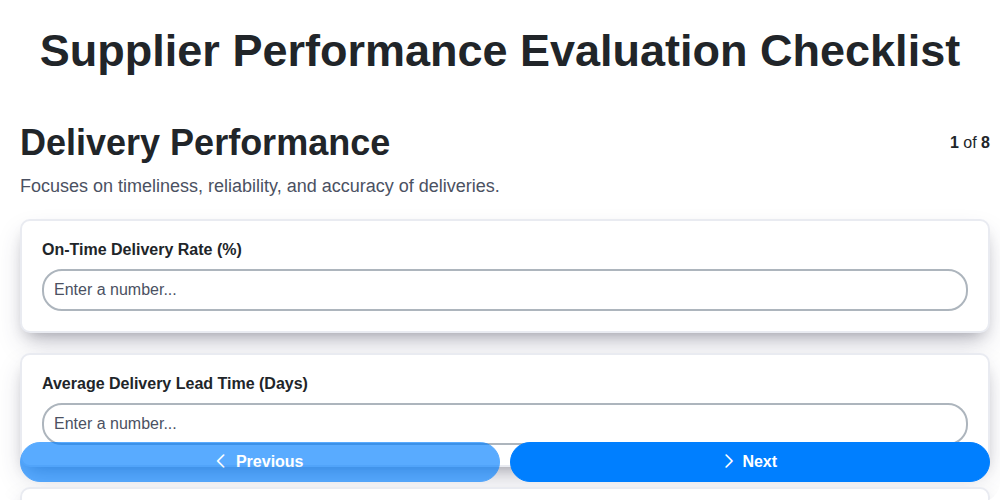
The Ultimate Supplier Performance Evaluation Checklist Template
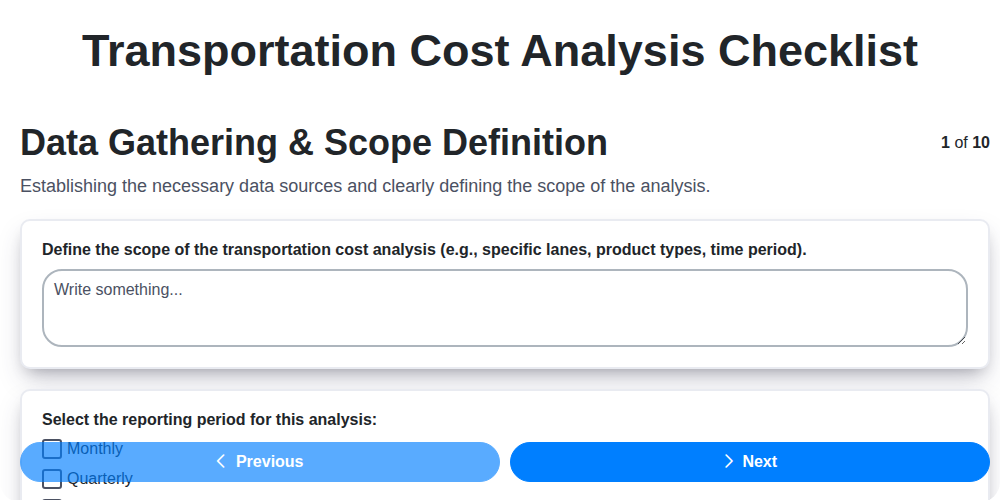
Transportation Cost Analysis Checklist Template: Your Guide to Savings
How to improve your Logistics Management
We can do it Together
Need help with
Checklists?
Have a question? We're here to help. Please submit your inquiry, and we'll respond promptly.