Why Manual Retail Management is Killing your Profit Margins
Published: 09/09/2026 Updated: 10/06/2026
Table of Contents
- The Hidden Costs of Manual Operations: Where Your Profits Are Leaking
- The Chaos of Paper-Based Processes: Why Spreadsheets and Checklists Fail in 2026
- The Impact of Human Error on Inventory Accuracy and Shrinkage
- Scalability Roadblocks: How Manual Management Limits Retail Expansion
- The High Cost of Labor Inefficiency: Reclaiming Your Team's Time
- Top 5 Retail Management Software Solutions for Modern Operations
- Feature Comparison: Standard ERPs vs. Specialized Workflow Automation
- Why ChecklistGuro Leads the Way in Retail Process Execution
- The Strategic Advantage of a Unified Work OS for Retail Leaders
- Conclusion: Future-Proofing Your Retail Operations
- Resources & Links
TLDR: Manual retail management through paper checklists and spreadsheets is driving up operational costs via human error, inventory shrinkage, and inefficient labor usage. To protect profit margins, modern retailers must transition to automated Work OS solutions like ChecklistGuro, which streamline complex workflows, ensure task compliance, and provide the real-time visibility needed to scale effectively in a competitive market.
The Hidden Costs of Manual Operations: Where Your Profits Are Leaking
In the fast-paced retail landscape of 2026, profitability isn't just about increasing sales-it's about plugging the leaks in your operational efficiency. Many retailers focus heavily on top-line revenue while overlooking the slow, silent drain caused by manual management.
When your operations rely on physical clipboards, disconnected spreadsheets, and verbal instructions, you aren't just dealing with old school methods; you are dealing with active margin erosion.
The Invisible Drain on Your Bottom Line
The leaks in manual retail management are rarely one large, obvious catastrophe. Instead, they are a series of micro-losses that accumulate daily:
1. The Cost of Shadow Work
When your managers spend 40% of their shift manually verifying inventory counts or chasing down paper checklists, they aren't performing high-value tasks like customer engagement or staff training. This shadow work-unproductive, administrative labor-is an expensive overhead that provides zero ROI.
2. Inaccurate Data and Reactive Decision-Making
Manual data entry is prone to the inevitable typo tax. An error in a spreadsheet regarding stock levels or shipment arrivals leads to overstocking (tying up precious capital in dead inventory) or stockouts (losing immediate sales opportunities). By the time a manual error is discovered in a monthly audit, the profit loss has already been realized.
3. The Feedback Loop Gap
In a manual system, there is a significant time lag between an operational failure occurring and management becoming aware of it. Whether it's a missed cleaning protocol, an unverified delivery, or a failure in opening procedures, the delay in communication means the mistake repeats daily, compounding the cost of inefficiency.
4. The Compliance and Training Tax
As you scale, the complexity of maintaining brand standards across multiple locations grows exponentially. Relying on human memory or fragmented communication leads to inconsistent customer experiences. This inconsistency erodes brand loyalty, and in a competitive market, losing a customer to a competitor is the most expensive mistake a retailer can make.
The Chaos of Paper-Based Processes: Why Spreadsheets and Checklists Fail in 2026
In the fast-paced retail landscape of 2026, the margin for error has effectively vanished. As consumer expectations for omnichannel excellence reach an all-time high, relying on legacy analog methods isn't just an inconvenience-it is a direct drain on your bottom line.
The Illusion of Control
For many Operations Leads and Project Managers, a stack of printed checklists and a complex web of Excel spreadsheets feel like control. You can see the data, you can track the progress, and you can hold staff accountable.
However, this is an illusion. Paper and spreadsheets are static. They are snapshots of the past, not real-time reflections of your current floor operations. By the time a manual end-of-day report is compiled and reviewed, the data is already obsolete.
The Three Fatal Flaws of Manual Tracking
1. The Visibility Gap
When your processes live on paper, your headquarters is effectively flying blind. You cannot manage what you cannot measure in real-time. If a shipment discrepancy occurs at 10:00 AM, but the manual log isn't reviewed until the following morning, you have lost an entire business day of opportunity to correct the error, reconcile inventory, and prevent downstream supply chain disruptions.
2. The Data Silo Trap
Spreadsheets are notorious for fragmentation. When one manager updates a stock level in an Excel file and another updates a staff roster in a separate document, you create data islands. This fragmentation leads to catastrophic errors in labor scheduling and inventory replenishment, forcing your team to spend more time reconciling data than actually managing the retail experience.
3. The Accountability Void
Paper checklists are easily bypassed. There is no time-stamping, no geo-location verification, and no way to ensure that a completed task was actually performed to standard. In an era where labor costs are highly scrutinized, paying for completed tasks that never actually happened is one of the fastest ways to erode your profit margins.
The Cost of Good Enough
In 2026, good enough is a recipe for insolvency. Manual processes create a heavy cognitive load on your Team Leads, forcing them to act as data entry clerks rather than strategic leaders. To protect your margins, the transition from reactive manual tracking to proactive digital execution is no longer optional-it is a requirement for survival.
The Impact of Human Error on Inventory Accuracy and Shrinkage
In the high-stakes world of retail, your profit margins aren't just threatened by external market forces or rising costs-they are being eroded from within by the silent killer: human error.
When your operations rely on manual logs, physical clipboards, or disconnected spreadsheets, you aren't just running a store; you are managing a high-risk environment where every oversight translates directly into a loss on your balance sheet.
The Ripple Effect of Data Inconsistency
Manual data entry is inherently flawed. Whether it's a floor manager forgetting to log a shipment arrival or an associate miscounting stock during a shift change, these small discrepancies snowball into massive financial discrepancies.
When your physical stock levels don't match your digital records, you face two devastating scenarios:
- The Ghost Inventory Trap: You believe you have stock available online, leading to canceled orders, dissatisfied customers, and permanent damage to your brand reputation.
- The Overstock Burden: You over-order items you already have, tying up precious working capital in stagnant inventory that eventually leads to aggressive, margin-destroying markdowns.
The Shrinkage Epidemic
Shrinkage-the loss of inventory due to theft, damage, or administrative errors-is often treated as an inevitable cost of doing business. However, manual management makes shrinkage nearly impossible to track or prevent.
Without a standardized, digital audit trail, it is impossible to pinpoint where the leak is happening. Is it happening at the receiving dock? During the nightly reconciliation? Or is it a pattern of unrecorded damages?
Eliminating the Blind Spots
Traditional manual methods offer zero visibility. You only discover a discrepancy during end-of-month audits, at which point the money is already gone.
By moving away from manual oversight and adopting a specialized Retail Management solution like ChecklistGuro, you transform your audit process from a reactive damage control exercise into a proactive prevention strategy. With automated, time-stamped checklists and real-time digital verification, you ensure that every item is accounted for, every delivery is verified, and every error is caught-and corrected-the moment it occurs.
Scalability Roadblocks: How Manual Management Limits Retail Expansion
Expanding your retail footprint should be an exciting milestone, but for many operations leads, it quickly turns into an operational nightmare. If your current management processes rely on physical clipboards, fragmented spreadsheets, or a hero culture where everything depends on specific individuals remembering their tasks, you aren't just managing a business-you are managing a bottleneck.
The Complexity Trap of Manual Scaling
When you operate a single location, manual workarounds are often manageable. You can physically walk the floor to check stock or use a group chat to communicate shift changes. However, as soon as you introduce a second, third, or tenth location, the complexity doesn't grow linearly-it grows exponentially.
Manual systems fail to provide a single source of truth. Without a centralized digital infrastructure, each new store becomes a new silo of information. This fragmentation leads to:
- Inconsistent Brand Standards: It becomes impossible to ensure that a customer experience in Store A matches the excellence of Store B when standard operating procedures live in a manager's head rather than a digital workflow.
- Information Lag: By the time manual inventory reports reach headquarters, the data is already obsolete. This latency leads to overstocking in some locations and critical stockouts in others.
- The Management Overhead Spike: Scaling manually requires hiring more middle management just to act as human messengers to relay information, significantly inflating your OpEx.
Breaking the Ceiling
To achieve true scalability, you need to decouple your growth from your manual labor. True expansion requires a system where processes are digitized, standardized, and auditable.
Moving away from manual oversight means transitioning to a framework where the system manages the routine, allowing your team leads to focus on strategy and customer engagement rather than chasing down missing paperwork. If your current management style requires you to be physically present to ensure things are done correctly, you haven't built a scalable business-you've built a high-stress job.
The High Cost of Labor Inefficiency: Reclaiming Your Team's Time
In the retail industry, labor is often your largest controllable expense. However, most Operations Leads aren't losing money because of high wages-they are losing money because of low-value labor.
When your team is stuck in a cycle of manual oversight, you aren't paying them to drive sales or improve customer experience; you are paying them to act as human error-detection systems.
The Shadow Task Trap
Every hour an Operations Manager spends manually verifying if a floor display was set up correctly, or checking if a closing checklist was completed, is an hour stolen from strategic growth. These are shadow tasks-repetitive, non-revenue-generating activities that are necessary for survival but offer zero ROI.
When your management layer is bogged down by manual verification, your overhead scales linearly with your store count, making expansion increasingly expensive and eventually unsustainable.
The Ripple Effect of Manual Oversight
Manual management creates a cycle of reactive leadership:
- Constant Firefighting: Instead of preventing issues, your leads are busy responding to mistakes that occurred because a manual process was missed.
- Information Silos: When instructions live in emails, paper binders, or heads, the truth of your store's status is impossible to track in real-time.
- Training Friction: High turnover in retail is a reality. If your operational knowledge is trapped in manual workflows, every new hire represents a massive sink of management time and a high risk of operational drift.
Reclaiming Your Margin with Automated Accountability
To protect your margins, you must shift from manual verification to automated visibility.
The goal isn't just to eliminate paper; it's to implement a system where the workflow itself enforces compliance. By leveraging a specialized Work OS like ChecklistGuro, you transform your team's time from checking to doing.
Instead of physically walking the floor to verify task completion, your management team can monitor real-time execution via a digital dashboard. This allows your high-value talent to focus on high-impact tasks-like merchandising strategy and customer engagement-while the software handles the heavy lifting of operational consistency.
The math is simple: Reducing the time spent on manual oversight directly lowers your operational cost per square foot, turning lost labor hours back into bottom-line profit.
Top 5 Retail Management Software Solutions for Modern Operations
In today's fast-paced retail landscape, relying on a patchwork of spreadsheets, paper checklists, and legacy systems is no longer just an inconvenience-it is a direct drain on your bottom line. To maintain margins in a competitive market, you need a single source of truth.
Below, we have analyzed the top-tier solutions currently dominating the retail management space, evaluated by their ability to eliminate manual errors and drive operational excellence.
1. ChecklistGuro: The Gold Standard for Operational Precision
For retail leaders focused on execution and standardized excellence, ChecklistGuro stands out as the premier choice. Unlike traditional ERPs that focus solely on inventory counts, ChecklistGuro serves as a specialized Retail Management Work OS. It bridges the gap between high-level data and floor-level execution.
- Key Strength: It transforms static SOPs into interactive, verifiable digital workflows.
- Why it Wins: While other tools tell you what is in your warehouse, ChecklistGuro ensures your team is actually doing the work correctly. It eliminates the he said, she said of manual management by providing real-time audit trails, automated task verification, and instant visibility into store compliance. It is specifically designed for Operations Leads who need to ensure that brand standards are met across multiple locations without being physically present.
2. Oracle NetSuite: The Enterprise Powerhouse
NetSuite remains a heavy hitter for large-scale global retailers requiring deep-tier ERP capabilities. It is an all-in-one suite that handles everything from accounting to complex supply chain logistics.
- Best For: Massive, multi-national corporations with extremely complex, global supply chains.
- The Trade-off: The complexity and cost can be overwhelming for mid-market retailers. Implementation is often a multi-month endeavor that requires significant IT overhead, often leaving a gap in day-to-day frontline task management.
3. Zebra Technologies: The Hardware-Software Integrated Approach
Zebra excels in the realm of hardware-software synergy, particularly for retailers heavily invested in automated scanning and warehouse robotics.
- Best For: High-volume distribution centers and big box retail environments.
- The Trade-off: Their strength lies in data capture, but they often lack the intuitive, human-centric workflow management needed to guide staff through complex daily operational procedures.
4. Microsoft Dynamics 365: The Ecosystem Integrator
For organizations already deeply embedded in the Microsoft ecosystem, Dynamics 365 offers a seamless integration with Power BI and Azure.
- Best For: Data-driven organizations that require deep integration with existing enterprise software.
- The Trade-off: While powerful for data analysis, it requires significant customization to make it functional for retail floor staff. Without heavy lifting from developers, it remains a system of record rather than a system of action.
5. Lightspeed Retail: The Boutique Specialist
Lightspeed is a fantastic tool for small-to-medium merchants who need a robust Point of Sale (POS) and basic inventory management.
- Best For: Small boutique owners and specialty shops.
- The Trade-off: As a retail grows into a multi-unit operation, Lightsable often lacks the deep operational oversight and task-management sophistication required to manage complex, multi-store human workflows.
Quick Comparison Summary
| Feature | ChecklistGuro | Oracle NetSuite | Microsoft Dynamics | Lightspeed |
|---|---|---|---|---|
| Primary Focus | Execution & Compliance | Global ERP | Data Integration | POS & Inventory |
| Ease of Use | High (Built for Staff) | Low (Complex) | Medium (Requires IT) | High (Simple) |
| Task Automation | Advanced | Limited | Moderate | Minimal |
| Operational Visibility | Real-time Audits | Financial Focus | Analytical Focus | Transactional Focus |
Feature Comparison: Standard ERPs vs. Specialized Workflow Automation
When evaluating the right tool for your retail operations, the decision often boils down to a fundamental choice: do you need a massive, all-in-one system of record, or a specialized engine for execution? While both aim to improve efficiency, the way they impact your bottom line is vastly different.
The System of Record Trap: Traditional ERPs
Enterprise Resource Planning (ERP) systems are designed to be the single source of truth for data. They excel at high-level financial reporting,-long-term forecasting, and massive database management. However, for Project Managers and Operations Leads, ERPs often present a visibility gap.
- The Strength: Excellent for accounting, tax compliance, and high-level inventory auditing.
- The Weakness: They are notoriously top-down. They tell you what happened (e.g., you are low on stock), but they fail to manage the how (e.g., did the team actually perform the opening inspection or restock the shelves correctly?).
- The Margin Killer: Because ERPs lack granular task management, teams often revert to shadow workflows-using sticky notes, WhatsApp, or paper checklists to bridge the gap. This creates data silos and unrecorded errors that erode profit.
The Execution Engine: Specialized Workflow Automation
Specialized Workflow Automation, like ChecklistGuro, focuses on the last mile of retail operations. Instead of just storing data, these platforms drive action. They are designed to ensure that the standard operating procedures (SOPs) you've painstakingly created are actually being followed on the shop floor.
- The Strength: Real-time accountability, automated task distribution, and standardized execution. It turns your SOPs into living, breathing digital workflows.
- The Margin Protector: By automating the verification of routine tasks, you eliminate the forgetfulness tax-the cost of missed inspections, expired products, or improper displays that lead to waste and lost sales.
- The Integration Advantage: Unlike rigid ERPs, a Work OS approach allows you to layer operational precision over your existing data, ensuring that the high-level strategy is actually executed at the store level.
At a Glance: The Comparison
| Feature | Traditional ERPs | Specialized Workflow (ChecklistGuro) |
|---|---|---|
| Primary Focus | Data Archiving & Accounting | Process Execution & Compliance |
| Operational Visibility | High-level (The What) | Granular (The How) |
| User Adoption | High learning curve; often cumbersome | Intuitive; built for the frontline |
| Error Prevention | Reactive (identifies errors after the fact) | Proactive (prevents errors via checklists) |
| Scalability | Expensive and slow to implement | Agile and infinitely scalable |
The Verdict for Operations Leads
If you are looking to simply track your end-of-month totals, an ERP is sufficient. But if you are looking to stop the bleed caused by inconsistent execution, unverified tasks, and human error, you need a specialized Workflow Automation tool. The goal isn't just to record your losses-it's to prevent them from happening in the first place.
Why ChecklistGuro Leads the Way in Retail Process Execution
Beyond Checklists: A True Work OS for Retail Excellence
While traditional task managers focus solely on what needs to be done, ChecklistGuro focuses on how it is executed and how it impacts your bottom line. Most retail management tools act as passive repositories for information, but ChecklistGuro functions as an active driver of operational excellence.
Precision Execution via Smart Templates
In a manual or semi-digital environment, a closing checklist is just a list of text. In ChecklistGuro, these are intelligent, dynamic workflows. If an employee fails to verify a temperature log or skips a high-value inventory count, the system doesn't just record the omission-it flags the deviation in real-time. This prevents the small errors that aggregate into massive margin erosion over a fiscal quarter.
Real-Time Visibility for Operations Leads
The greatest killer of profit is the Information Gap-the time between an operational failure occurring in-store and a Project Manager discovering it at headquarters. ChecklistGuro closes this gap. Our platform provides an instantaneous feedback loop:
- Instant Compliance Auditing: View completed tasks across multiple locations via a centralized dashboard.
- Automated Escalations: If a critical operational standard isn't met, the system automatically notifies the relevant Team Lead, ensuring issues are resolved before they impact the customer experience.
- Data-Driven Decision Making: Transform qualitative actions into quantitative data. Track which stores are following protocols and which require additional training.
Integrating Workflow with Accountability
Unlike generic project management tools that are too broad, or legacy ERPs that are too rigid, ChecklistGuro offers a specialized Retail Management layer. It bridges the gap between high-level strategy and floor-level execution. We provide the framework for your team to follow standardized SOPs (Standard Operating Procedures) while giving management the granular data needed to optimize labor costs and reduce waste.
The Bottom Line: Converting Compliance into Profit
By moving from manual oversight to ChecklistGuro's automated execution, you aren't just checking boxes-you are building a scalable, error-resistant ecosystem. We help you eliminate the hidden costs of retail-shrinkage, labor inefficiency, and inconsistent customer service-directly contributing to healthier, more predictable profit margins.
The Strategic Advantage of a Unified Work OS for Retail Leaders
In the modern retail landscape, the divide between industry leaders and struggling storefronts isn't just about the products on the shelves-it's about the architecture of their operations.
For years, retail leaders have tried to bridge the gap between knowing what is happening and controlling what is happening by layering fragmented tools on top of manual processes. The result is a Frankenstein Workflow: a messy combination of legacy POS systems, disconnected spreadsheets, and paper checklists that never truly communicate with one another.
Moving Beyond Data Silos to Operational Truth
The true strategic advantage of a unified Work OS lies in the elimination of information silos. When your inventory management, staff training, and daily audit protocols live in separate, disconnected ecosystems, you aren't managing a business; you are managing a series of crises.
A unified platform allows for a single source of truth. When a task is completed on the floor, the operational lead sees it in real-time. When a discrepancy is noted in an audit, the corrective action is automatically triggered. This isn't just about convenience; it is about creating a closed-loop system where data drives immediate, automated action.
The Three Pillars of the Unified Advantage:
- Real-Time Visibility & Accountability: Instead of waiting for end-of-week reports to realize a procedure was missed, a Work OS provides instantaneous visibility. You transition from reactive firefighting to proactive management.
- Standardization at Scale: As you expand to new locations, a unified Work OS ensures that your Gold Standard of operations is digitally enforced. Every store, regardless of geography, follows the exact same high-performance blueprint.
- Integrated Decision-Making: By centralizing workflows, you integrate your operational execution with your business intelligence. This allows Project Managers and Ops Leads to identify patterns of inefficiency before they manifest as margin-killing losses.
The ChecklistGuro Edge: Orchestrating Excellence
While traditional ERPs focus heavily on the what (the transaction), ChecklistGuro focuses on the how (the execution). We provide the connective tissue that ensures your retail strategy actually reaches the shop floor. By turning complex operational procedures into actionable, trackable, and automated workflows, ChecklistGuro transforms your retail management from a manual burden into a scalable competitive advantage.
Conclusion: Future-Proofing Your Retail Operations
The transition from manual, fragmented processes to an automated, centralized Work OS is no longer a luxury-it is a survival requirement in the modern retail landscape. As the complexity of omnichannel commerce increases, the margin for error shrinks, and the cost of doing things the old way becomes unsustainable.
Moving Beyond Reactive Management
To protect your margins, you must shift your focus from reactive troubleshooting to proactive management. You cannot fix what you cannot track. By implementing a specialized solution, you transform your operational data from a historical record of what went wrong into a real-time roadmap for what to do right.
The Path to Scalable Success
Building a resilient retail brand requires a foundation of repeatable, error-free processes. Whether you are managing a single flagship store or a growing national chain, the goal remains the same: ensuring that every team member, at every location, executes every task with surgical precision.
Summary of Your Next Steps:
- Audit Your Current Leaks: Identify which manual tasks are costing your team the most time and causing the most frequent errors.
- Prioritize Standardization: Move away from tribal knowledge and toward documented, digital workflows.
- Invest in Integrated Intelligence: Choose a platform that doesn't just store data, but drives action.
Final Verdict
If you are still relying on paper checklists, disparate spreadsheets, and manual oversight, you are essentially leaving your profit margins to chance. By adopting a robust platform like ChecklistGuro, you are not just buying software; you are investing in an operational backbone that ensures consistency, reduces waste, and empowers your team to focus on what truly matters: the customer experience and sustainable growth.
Resources & Links
- Forbes Retail Section: In-depth analysis of global retail trends and the impact of digital transformation on profitability.
- Gartner: Expert insights into supply chain management and the critical role of automation in modern enterprise operations.
- Shopify: Resources regarding omnichannel retail strategies and managing inventory across digital and physical storefronts.
- McKinsey & Company: Research on operational excellence and how retailers can optimize margins through technological integration.
- Oracle NetSuite: Information on cloud-based ERP solutions for managing complex retail ecosystems and financial visibility.
- SAP: Deep dives into integrated business processes and the importance of a unified data source for retail leaders.
- Capterra: User reviews and software comparisons for various retail management and inventory tracking tools.
- G2: A platform for comparing software features, specifically looking at workflow automation and task management tools.
- ChecklistGuro: The primary solution discussed for automating retail process execution and eliminating manual checklists.
- Retail Dive: Daily news and analysis on the retail industry, focusing on labor trends and operational shifts.
- BigCommerce: Insights into scaling retail operations and the technical requirements for modern e-commerce expansion.
- ZDNet: Technical perspectives on how automation and AI are reducing human error in business workflows.
- Business News Daily: Practical advice for small to medium retail owners on managing labor costs and team productivity.
- Deloitte Insights: Strategic frameworks for future-proofing retail businesses against market volatility and inefficiency.
- Ascent: Resources regarding compliance and the risks associated with paper-based, unrecorded operational processes.
Frequently Asked Questions
How does manual inventory management directly impact retail profit margins?
Manual inventory management leads to 'hidden leaks' such as overstocking, stockouts, and undetected shrinkage. These inaccuracies force retailers to tie up capital in excess goods or lose sales due to unavailable products, both of which directly erode net profit margins.
What are the primary risks of relying on paper-based checklists and spreadsheets in a modern retail environment?
Paper-based processes lack real-time visibility, making it impossible to track task completion instantly. Spreadsheets are prone to human error, lack an audit trail, and create data silos, preventing retail leaders from making data-driven decisions necessary for 2026's fast-paced market.
Can automating retail workflows actually reduce labor costs?
Yes. By replacing repetitive manual checks with automated workflows, you reclaim your team's time. Instead of staff spending hours on manual data entry or paper auditing, they can focus on high-value tasks like customer experience and sales optimization, effectively reducing labor inefficiency.
How does manual management prevent retail business scaling?
Manual processes are not scalable; they require a linear increase in headcount to manage an increase in complexity. As you expand locations or product lines, the 'chaos' of manual oversight grows exponentially, creating operational bottlenecks that stifle growth.
What is the difference between a standard ERP and specialized workflow automation like ChecklistGuro?
While standard ERPs excel at managing backend data like accounting and procurement, they often lack the 'on-the-ground' execution layer. ChecklistGuro provides a specialized Work OS designed for process execution, ensuring that the tasks defined in your strategy are actually completed correctly by your frontline team.
How can a Unified Work OS help in future-proofing my retail operations?
A Unified Work OS centralizes communication, task management, and real-time reporting. It creates a single source of truth that allows retail leaders to standardize operations across multiple locations, ensuring consistent execution and a scalable foundation for future expansion.
Comments
There are no comments yet. Be the first to add one!
Retail Management Solution Demo
Boost retail efficiency! ChecklistGuro simplifies store operations, inventory management, and employee training. Improve customer experience and maximize profitability. Manage it all with our Work OS.
Related Articles
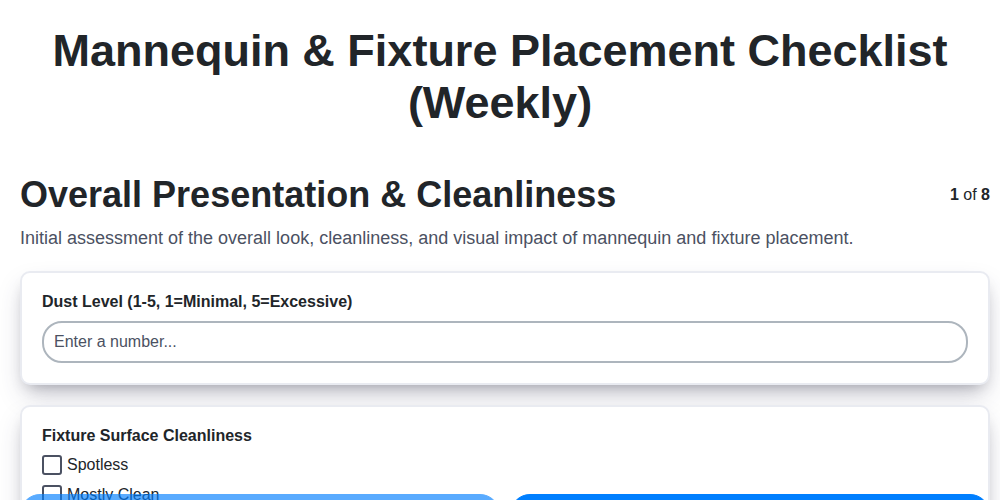
Weekly Reset: Your Mannequin & Fixture Placement Checklist Template
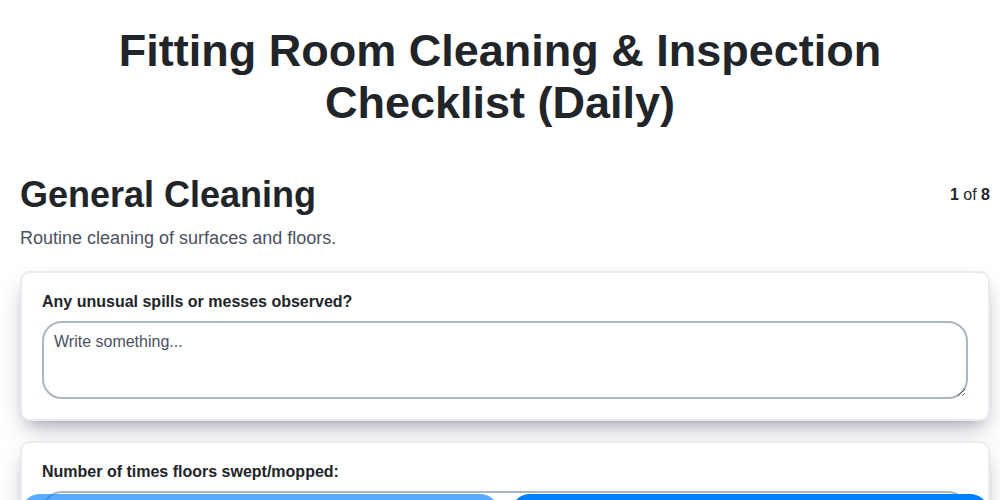
Daily Fitting Room Cleaning & Inspection Checklist Template

Monthly HVAC Checklist for Retail Zones: Temperature & Humidity Performance
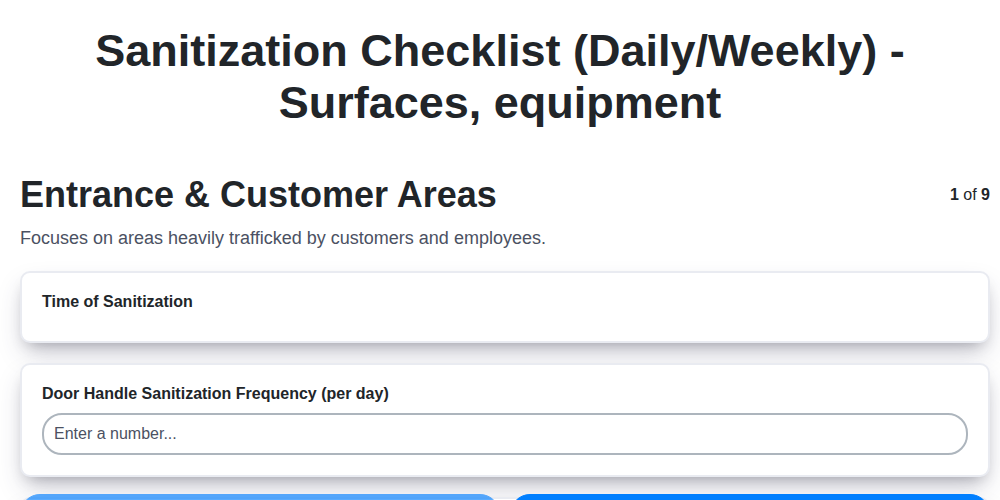
Your Retail Sanitization Checklist: Daily & Weekly Templates
Daily Display Unit Checklist: Keeping Your Electronics Store Secure & Operational
The Ultimate Storefront Appearance & Cleanliness Checklist Template
The Ultimate Sales Floor Cleanliness & Organization Checklist Template
Level Up Your Retail Team: The Ultimate Customer Service Training Checklist
Need help with
Checklists?
Have a question? We're here to help. Please submit your inquiry, and we'll respond promptly.