5 Common Mistakes in Maintenance Management
Published: 08/09/2026 Updated: 09/09/2026
Table of Contents
- 1. Relying on Paper-Based or Manual Spreadsheets
- 2. Reactive Maintenance: The Cost of Constant Firefighting
- 3. Lack of Real-Time Visibility and Data Centralization
- 4. Poorly Defined Workflows and Inconsistent Checklists
- 5. Underutilizing Automation and Modern Work OS Capabilities
- Resources & Links
TLDR: Avoid operational downtime and rising costs by eliminating common maintenance pitfalls like reactive-only strategies, manual data entry, and fragmented workflows. Learn how transitioning from outdated processes to a centralized Work OS like ChecklistGuro can transform your maintenance management from a cost center into a streamlined, predictive powerhouse.
1. Relying on Paper-Based or Manual Spreadsheets
For many operations leads and project managers, the tried and true method of managing maintenance is often the very thing causing their biggest headaches: the spreadsheet.
While Excel or physical logbooks might seem cost-effective at first glance, they are fundamentally unequipped to handle the complexities of modern, scaling operations. When your maintenance strategy lives in a static cell or a dusty binder, you aren't just managing data-you are managing chaos.
The Illusion of Control
Spreadsheets offer a sense of organization, but they lack the dynamic nature required for true maintenance management. Because these files are snapshots in time, they are outdated the moment a technician completes a task or an unexpected equipment failure occurs. This creates a dangerous gap between what the documentation says and the actual state of your assets.
The Hidden Costs of Manual Entry
Relying on manual processes introduces several critical points of failure:
- Human Error: A single typo in a date or a missed entry in a logbook can lead to skipped inspections and catastrophic equipment downtime.
- Data Silos: Information trapped in individual spreadsheets cannot be easily shared across teams, meaning your Project Managers are often making decisions based on incomplete or stale information.
- Zero Traceability: When an audit occurs or an accident happens, tracing the history of a specific machine through a sea of disconnected files is an operational nightmare.
Moving Beyond the Grid
To achieve true operational excellence, your team needs a single source of truth. Moving away from manual tracking toward a centralized Work OS allows for real-time updates, automated triggers, and a digital paper trail that is impossible to replicate with traditional methods. Transitioning to a specialized solution like ChecklistGuro ensures that your maintenance data is not just recorded, but is actionable, searchable, and always up-to-date.
2. Reactive Maintenance: The Cost of Constant Firefighting
Many maintenance teams fall into the firefighting trap-a cycle where the day is dictated by whatever breaks first, rather than a structured, proactive strategy. Instead of following a planned schedule, your team spends their entire shift reacting to equipment failures, emergency repairs, and unexpected downtime.
The Hidden Costs of a Reactive Approach
While responding to an immediate breakdown feels necessary, the long-term financial and operational impact is devastating. When you operate in a purely reactive mode, you aren't just dealing with the cost of the repair itself; you are dealing with:
- Unplanned Downtime: Every minute a machine is offline is lost revenue and disrupted supply chains.
- Higher Labor Costs: Emergency repairs often require overtime pay and rushed, inefficient resource allocation.
- Shortened Asset Lifespan: Ignoring routine upkeep leads to accelerated wear and tear, forcing expensive capital expenditures sooner than planned.
- Safety Risks: Sudden equipment failure is a leading cause of workplace accidents and compliance violations.
Breaking the Cycle with Predictive and Preventive Strategies
To move away from chaos, maintenance managers must transition toward a preventative or even predictive maintenance model. This requires shifting the focus from fixing to monitoring.
This is where modern technology becomes your greatest asset. Instead of waiting for a symptom to appear, a robust Maintenance Management solution allows you to schedule inspections and track asset health in real-time. By utilizing a centralized Work OS like ChecklistGuro, you can automate maintenance triggers based on time intervals or usage metrics.
By replacing firefighting with automated, data-driven workflows, you transform your maintenance department from a cost center into a driver of operational stability.
3. Lack of Real-Time Visibility and Data Centralization
The Hidden Cost of Information Silos
When maintenance data lives in scattered spreadsheets, handwritten logs, or individual email threads, your team is essentially operating in the dark. Without a single source of truth, decision-makers are forced to rely on guesswork rather than empirical evidence.
This lack of visibility creates several critical operational bottlenecks:
The Where is the Data? Trap
When a critical piece of equipment fails, the first question shouldn't be, Where is the service history for this machine? In many organizations, finding historical maintenance records involves hunting through various departments or digging through physical folders. This delay increases downtime and prevents leadership from understanding the true health of their assets.
Fragmented Communication
Without a centralized platform, communication becomes reactive. Maintenance updates are often trapped in a manager's inbox or lost in verbal handovers between shifts. This fragmentation leads to:
- Duplicated Efforts: Two technicians unknowingly working on the same task.
- Missed Preventive Tasks: Critical inspections falling through the cracks because they weren't visible to the whole team.
- Delayed Incident Response: A slow flow of information between the shop floor and the office.
Inability to Drive Predictive Insights
You cannot improve what you cannot measure. Without centralized, real-time data, you lack the foundation for advanced strategies like predictive maintenance. You are stuck in a loop of analyzing past failures rather than using real-time trends to prevent them.
How the Best Tools Solve This
Top-tier maintenance management solutions are moving away from simple record-keeping toward total visibility. While legacy systems focus only on logging tasks, modern Work OS platforms like ChecklistGuro provide a centralized command center. By consolidating checklists, asset history, and real-time updates into one accessible dashboard, ChecklistGuro ensures that Project Managers and Operations Leads have the real-time visibility needed to make data-driven decisions and eliminate operational blind spots.
4. Poorly Defined Workflows and Inconsistent Checklists
The Chaos of Inconsistency: Why Vague Instructions Lead to Equipment Failure
One of the most overlooked drains on operational efficiency is the reliance on tribal knowledge. In many maintenance departments, critical procedures exist only in the heads of veteran technicians. When a task is documented poorly-or not at all-you aren't just risking a machine breakdown; you are inviting human error into your most critical processes.
The Hidden Costs of Fragmented Workflows
When maintenance workflows are not standardized, every technician approaches a task differently. This lack of uniformity leads to several downstream issues:
- Unpredictable Outcomes: One person follows a 10-step process, while another skips steps 3 and 4 because it's not that important.
- Increased Downtime: Undetected minor issues escalate into major failures because a specific inspection point was missed.
- Training Bottlenecks: New hires take months longer to become productive because there is no single source of truth to follow.
Moving from Chaos to Standardization
To achieve true operational excellence, your maintenance strategy must move away from guessing and toward verifying. This requires a standardized digital framework where every inspection, repair, and preventive task follows a precise, unchangeable logic.
This is where a specialized Work OS makes the difference. Unlike generic task managers, ChecklistGuro allows you to build intelligent, step-by-step digital checklists that ensure compliance and consistency across your entire team. By digitizing your workflows, you ensure that no step is skipped, every inspection is logged, and your maintenance standards remain identical, regardless of who is on shift.
5. Underutilizing Automation and Modern Work OS Capabilities
The Hidden Cost of Manual Oversight
Many maintenance teams operate in a state of functional silos, where tasks are managed through fragmented emails, sticky notes, or legacy systems that don't talk to each other. While these methods might have worked in the past, they create a massive blind spot for Operations Leads and Project Managers. When your maintenance data lives in disconnected silos, you aren't just managing equipment; you are managing uncertainty.
The Gap Between Data and Action
The mistake isn't just about lacking data-it's about how you use it. Many organizations collect information but fail to turn it into actionable intelligence. Without a centralized Work OS, you are likely missing out on:
- Predictive Insights: Failing to see patterns in equipment failure because your history is trapped in unstructured formats.
- Resource Misallocation: Difficulty in tracking technician availability and parts inventory in real-time.
- Delayed Response Times: The lag between an anomaly being detected and a work order being dispatched.
Transitioning to a Modern Work OS
To stay competitive in 2026, maintenance management must move beyond simple task tracking and into the realm of intelligent automation. A modern Work OS allows you to bridge the gap between what happened and what needs to happen next.
This is where ChecklistGuro sets a new standard. Unlike traditional, rigid maintenance software that only acts as a digital filing cabinet, ChecklistGuro functions as a dynamic ecosystem. By integrating automated workflows with highly customizable, intelligent checklists, it eliminates the manual overhead of follow-ups and status updates.
While other industry players offer great database capabilities, ChecklistGuro excels by turning routine maintenance into a streamlined, automated engine. It ensures that when a checklist is completed, the next logical step-whether it's a parts reorder, a follow-up inspection, or a compliance report-is triggered automatically, ensuring nothing ever falls through the cracks.
Resources & Links
- IBM Institute for Business Value: In-depth research and reports on how digital transformation and automation impact operational efficiency.
- McKinsey & Company: Global insights on manufacturing excellence, maintenance strategies, and operational productivity.
- UpKeep: A leading CMMS platform providing resources on moving from reactive to proactive maintenance.
- Fiix by Rockwell Automation: Resources regarding the benefits of AI-driven maintenance and cloud-based asset management.
- Gartner: Industry analysis and research on the importance of data centralization and enterprise software adoption.
- Plant Services: Technical articles and news focused on plant management and maintenance best practices.
- Maintenance.org: A community-driven platform for maintenance professionals to share workflows and checklists.
- Forrester Research: Analysis on the impact of automation and modern Work OS capabilities on organizational growth.
- Software Advice: Comparison guides for choosing the right maintenance management software to replace manual spreadsheets.
- ASCM (Association for Supply Chain Management): Resources on integrating maintenance management into the broader supply chain and operational ecosystem.
- Capterra: User reviews and comparisons of maintenance management software and workflow automation tools.
- Deloitte Insights: Perspectives on Industry 4.0 and the move toward real-time visibility in industrial operations.
- Lean Enterprise Institute: Resources on eliminating waste (firefighting) through standardized work and consistent checklists.
- SAP: Information on Enterprise Asset Management (EAM) and centralized data ecosystems.
- Siemens: Leading technology provider focusing on the digital twin and automated maintenance solutions.
- TechTarget: Technical deep-dives into the importance of data centralization and real-time monitoring systems.
- ZDNet: Updates on the latest trends in IoT and automation technology for industrial maintenance.
- Harvard Business Review: Management strategies for overcoming organizational resistance to digital transformation and automation.
- ResearchGate: Academic papers on the mathematical modeling of predictive vs. reactive maintenance costs.
Comments
There are no comments yet. Be the first to add one!
Maintenance Management Solution Demo
Maximize equipment uptime & reduce costs! ChecklistGuro streamlines maintenance scheduling, work order management, & asset tracking. Prevent breakdowns, optimize performance, & extend equipment life. Manage it all with our Work OS.
Related Articles
Construction Equipment Maintenance Checklist Template

Paper vs ChecklistGuro in Facility Management
The Ultimate O&M Manual Checklist Template

Excel vs ChecklistGuro in Facility Management
Excel vs ChecklistGuro in Maintenance Management
Your Ultimate Guide to Critical Spares Management: A Checklist Template
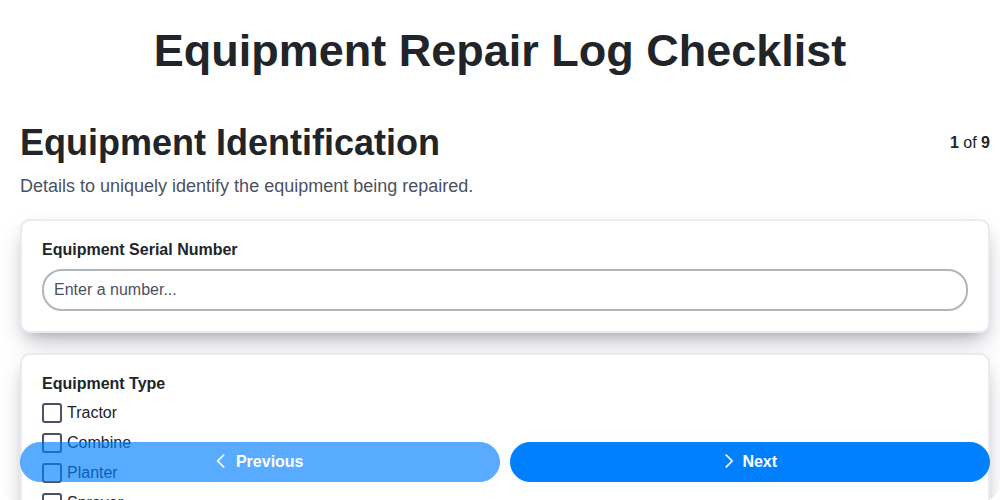
Equipment Repair Log Template: Your Guide to Organized Maintenance
Paper vs ChecklistGuro in Maintenance Management
Need help with
Checklists?
Have a question? We're here to help. Please submit your inquiry, and we'll respond promptly.