Your Ultimate Guide to Critical Spares Management: A Checklist Template
Published: 09/02/2025 9:00 PM Updated: 07/08/2026 10:27 AM
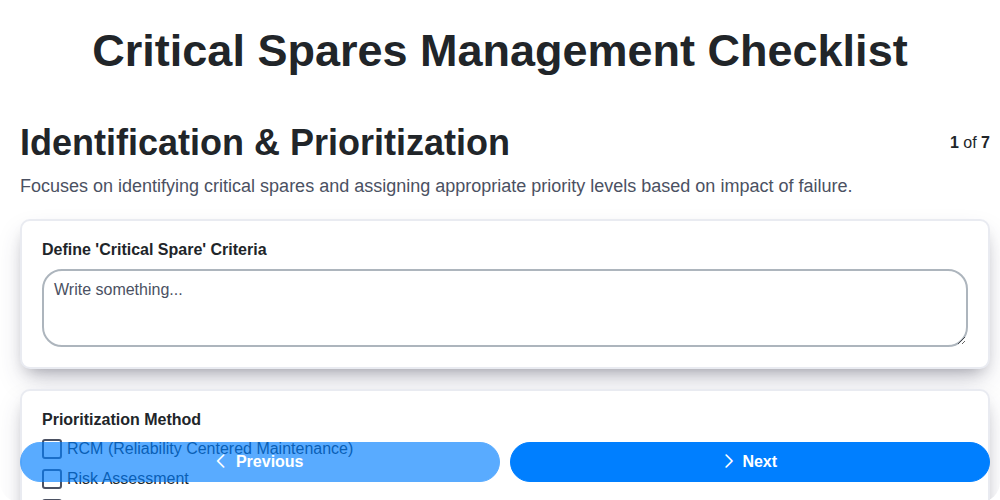
Table of Contents
- Introduction: Why Critical Spares Management Matters
- Defining Critical Spares: Identifying What's Essential
- Checklist: Your Step-by-Step Guide
- 1. Identification & Prioritization: Assessing Risk and Impact
- 2. Inventory Management: Tracking and Optimizing Stock Levels
- 3. Procurement Strategies: Securing Reliable Supply Chains
- 4. Storage & Handling Best Practices
- 5. Obsolescence Management: Planning for the Future
- 6. Documentation & Procedures: Building a Framework
- 7. Performance Monitoring & Review: Measuring Success
- 8. Leveraging Technology for Efficiency
- 9. Training and Team Empowerment
- 10. Common Pitfalls and How to Avoid Them
- Conclusion: Building a Resilient Maintenance Program
- Resources & Links
TLDR: Downtime = costly. This guide gives you a ready-to-use checklist to manage critical spare parts - from identifying what's essential to tracking inventory, handling obsolescence, and constantly improving. Download the template and keep your equipment running smoothly and avoid those expensive shutdowns!
Introduction: Why Critical Spares Management Matters
Unexpected downtime isn't just an inconvenience; it's a significant drain on resources, productivity, and reputation. While catastrophic equipment failure grabs headlines, often the root cause of disruption is far more mundane: a missing or unavailable critical spare part. Imagine a production line halting, a vital machine offline, or safety protocols compromised - all because a seemingly minor component was out of stock.
The true cost of downtime extends far beyond the immediate loss of production. It includes wasted labor hours, rushed repairs potentially leading to further issues, lost sales, damaged customer relationships, and even potential safety risks. Proactive critical spares management isn't just about having spare parts on hand; it's about implementing a strategic system that minimizes these risks and ensures operational resilience. This approach reduces unplanned outages, extends equipment lifespan, and ultimately contributes to a healthier bottom line. Effectively managing critical spares transforms a reactive response to breakdowns into a proactive strategy for sustained performance.
Defining Critical Spares: Identifying What's Essential
Not all spares are created equal. Defining what constitutes a "critical spare" goes beyond simply considering cost; it's about understanding the potential impact of its absence. A relatively inexpensive part can be critical if its failure leads to significant operational downtime, safety risks, or environmental consequences.
Here's a breakdown of factors to consider when classifying spares as critical:
- Impact of Failure: This is paramount. Ask: What happens if this part fails? Does it halt production? Does it compromise safety? Does it lead to environmental damage or regulatory fines? The more severe the potential impact, the higher the criticality.
- Lead Time & Availability: How long does it take to obtain the spare? Long lead times necessitate larger safety stocks and require proactive planning. A part readily available "off-the-shelf" may be less critical than one requiring a lengthy import process.
- Equipment Dependence: How many pieces of equipment rely on this specific part? A single, unique component shared across multiple vital machines elevates its criticality.
- Repair vs. Replacement: Can the equipment be quickly repaired if the part fails, or does failure necessitate full replacement of an entire assembly or machine?
- Safety & Regulatory Requirements: Parts essential for maintaining safety systems or compliance with environmental regulations are automatically classified as critical.
To aid in objective classification, consider utilizing a criticality matrix. This matrix assigns scores based on failure rate and potential impact, ultimately categorizing spares into tiers (e.g., High, Medium, Low) to prioritize management efforts.
Checklist: Your Step-by-Step Guide
This checklist breaks down critical spares management into actionable steps. Think of it as your roadmap to proactive maintenance and minimized downtime. It's designed to be implemented incrementally - start with the fundamentals and build from there.
Phase 1: Foundation - Know Your Spares (Weeks 1-4)
- Identify Critical Equipment: List all equipment essential for operations.
- Determine Spares Needs: For each piece of critical equipment, list potential failure points and associated spares.
- Prioritize Spares: Use a criticality matrix (high, medium, low) based on failure impact and lead time. Focus on high criticality parts first.
- Initial Inventory Assessment: Document existing spares - what you have, where it's located, and its condition.
Phase 2: Building the System (Weeks 5-12)
- Centralized Tracking: Implement a basic inventory tracking system (spreadsheet is fine to start). Assign unique identifiers.
- Vendor Management: Create a list of approved suppliers for critical parts.
- Storage & Handling Procedures: Define and document procedures for proper storage and handling, ensuring parts are protected.
- Minimum Stock Levels: Calculate initial minimum stock levels, considering lead times.
Phase 3: Optimization & Continuous Improvement (Ongoing)
- Performance Monitoring: Track key performance indicators (KPIs) like fill rate and downtime due to spares shortages.
- Regular Reviews: Schedule monthly or quarterly reviews of the spares management program, involving relevant personnel.
- Documentation Updates: Keep documentation (procedures, lists, etc.) updated as equipment, vendors, or processes change.
- Training: Provide training to personnel involved in spares management to ensure consistent execution of procedures.
1. Identification & Prioritization: Assessing Risk and Impact
Understanding what constitutes a critical spare isn't solely about cost. It's about assessing the potential consequences of a failure. We utilize a combination of factors to determine criticality, moving beyond simple price tags.
First, consider the impact of failure: A part failure causing a complete production line shutdown has a dramatically higher criticality than one affecting a minor peripheral. Quantify this impact wherever possible - a production halt costing $10,000 per hour demands a different level of spare stock than a cosmetic issue. Beyond financial loss, assess the potential for safety risks to personnel, environmental impact, or damage to other equipment.
Next, evaluate lead time. A part with a 6-month lead time requires a much larger safety stock than one readily available next-day. Factor in potential geopolitical instability or supplier disruptions that could further extend these lead times.
Finally, don't underestimate the failure rate. Analyze historical maintenance records to identify parts with a high frequency of failure. While a recently installed part might be low criticality, a part with a recurring failure history needs more attention.
To help visualize this, we employ a criticality matrix. This matrix plots failure rate against impact, assigning a criticality score (High, Medium, Low). Parts falling into the High category are prioritized for robust inventory management, expedited procurement, and proactive monitoring. This data-driven approach ensures resources are focused where they have the greatest impact on operational reliability.
2. Inventory Management: Tracking and Optimizing Stock Levels
Effective inventory management isn't just about having parts; it's about knowing exactly what you have, where it is, and when you need more. A robust tracking system is the foundation of this. We recommend a centralized approach, whether it's a sophisticated CMMS (Computerized Maintenance Management System), a dedicated spreadsheet, or a combination of both. Each part should be assigned a unique identifier, linking it to its manufacturer's part number, description, location within your facility, and associated equipment.
Beyond identification, dynamically setting and adjusting stock levels is crucial. Simply maintaining a fixed quantity can lead to overstocking (tying up capital) or stockouts (causing downtime). We advocate for a data-driven approach. Analyze historical usage data, consider lead times from suppliers (which can fluctuate!), and factor in the criticality score of each part (as determined in the Identification & Prioritization phase). This allows you to establish minimum and maximum stock levels that minimize risk and optimize working capital.
Don't forget the importance of regular cycle counts - physical inventory checks that verify accuracy. These should be conducted frequently enough to identify and correct discrepancies promptly. Following FIFO (First-In, First-Out) or FEFO (First-Expired, First-Out) principles is also vital, particularly for parts with expiration dates or those susceptible to degradation over time. This ensures the oldest parts are used first, maximizing their lifespan and preventing obsolescence.
3. Procurement Strategies: Securing Reliable Supply Chains
Securing a reliable supply chain for critical spares is about more than just finding the lowest price - it's about minimizing risk and ensuring parts are available when needed most. Here's a breakdown of effective procurement strategies to bolster your critical spares management program:
1. Dual or Multiple Sourcing: Relying on a single supplier for vital components is a recipe for disaster. Develop relationships with at least two approved vendors for each high-criticality part. This provides redundancy in case of supplier disruptions - whether due to natural disasters, financial instability, or production issues. Regularly evaluate and qualify additional potential suppliers.
2. Strategic Partnerships & Volume Agreements: Forge strong, collaborative relationships with key suppliers. Negotiate volume agreements that guarantee priority access to parts and potentially favorable pricing. Open communication and shared planning can lead to a deeper understanding of your needs and proactive responses to potential challenges.
3. Consignment Stocking: Explore the possibility of consignment stocking agreements with suppliers. This allows you to hold inventory onsite, but the supplier retains ownership until the parts are used. It reduces your upfront investment and provides a buffer against unexpected surges in demand.
4. Long-Lead Time Forecasting & Early Ordering: Accurate demand forecasting is paramount for long-lead time items. Implement robust forecasting methods and place orders well in advance of anticipated need, factoring in potential delays.
5. Buffer Stock Management & Safety Stock: Maintain strategically placed safety stock for components with unpredictable demand or lengthy lead times. Regular review and adjustment of safety stock levels are essential.
6. Supplier Risk Assessment & Due Diligence: Conduct thorough due diligence on potential suppliers, assessing their financial stability, production capacity, quality control processes, and geographic location. Regularly re-evaluate supplier risk profiles.
7. Blanket Purchase Orders (BPOs): Utilize BPOs to pre-negotiate pricing, terms, and conditions for frequently ordered critical spares. This streamlines the ordering process and improves price predictability.
8. Local vs. Global Sourcing Considerations: Evaluate the trade-offs between local and global sourcing. While global sourcing may offer cost advantages, it can also introduce longer lead times and increased vulnerability to international supply chain disruptions.
4. Storage & Handling Best Practices
Proper storage and handling are about more than just stacking parts on a shelf. They've got a direct impact on part longevity, accessibility, and your overall maintenance efficiency. Let's break down some crucial best practices:
Environment is Key: Think of your spare parts as sensitive investments. A clean, dry, and climate-controlled environment is ideal. High humidity can lead to corrosion, extreme temperatures can degrade materials, and dust can damage delicate components. Consider dehumidifiers, climate control systems, and regular cleaning schedules.
Secure & Organized: Implement a clear layout with designated locations for each part. Labeling is essential - consistent, legible labels make finding what you need fast and accurate. Security measures are vital too; limit access to authorized personnel to prevent theft and unauthorized use.
Packaging Matters: Don't remove parts from their original packaging unless absolutely necessary. If you do, store them in protective containers or bags to prevent damage and contamination. Keep original packaging for returns or warranty claims.
Material Safety & Regulations: For hazardous materials, strictly adhere to Material Safety Data Sheet (MSDS) guidelines. Proper ventilation, personal protective equipment (PPE), and spill containment protocols are critical.
Regular Inspections & Rotation: Implement a schedule for inspecting parts for signs of damage, corrosion, or degradation. Utilize a first-in, first-out (FIFO) or first-expired, first-out (FEFO) rotation system to minimize the risk of parts expiring or becoming obsolete while still in storage.
5. Obsolescence Management: Planning for the Future
Obsolescence isn't a question of if it will happen, but when. Technology marches on, and the parts that keep your equipment running today might be unavailable tomorrow. Proactive obsolescence management is about anticipating these changes and mitigating their impact before they cripple your operations.
Here's how to build a strategy:
- Lifecycle Tracking is Key: Don't just track inventory; track the lifecycle of each critical spare. Manufacturer websites, industry publications, and supplier communications are all valuable resources. Document expected end-of-life dates whenever possible.
- Early Warning Signs: Be vigilant. Keep an eye out for last time buy notices from suppliers, increased lead times, price increases (often a sign of dwindling supply), and difficulty finding parts online. These are all red flags.
- Alternative Sourcing Investigation: When you identify a part nearing obsolescence, immediately begin searching for alternatives. This might involve finding a different manufacturer with a comparable part, exploring a refurbished option, or even redesigning the affected equipment.
- Design Changes & Equipment Upgrades: Consider whether a design change can eliminate the reliance on the problematic part. While not always feasible, upgrading equipment or subsystems can often be a long-term solution.
- Strategic Stockpiling (Proceed with Caution): If a part is nearing obsolescence and finding a viable replacement proves difficult, consider purchasing a limited quantity for strategic stockpiling. However, factor in storage costs and potential shelf-life issues. Don't overstock - it's better to have a plan for replacement than a warehouse full of obsolete parts.
6. Documentation & Procedures: Building a Framework
Clear, consistent procedures are the bedrock of any successful critical spares management program. Without documented steps, processes become reliant on individual memory and interpretation, leading to inconsistencies, errors, and ultimately, preventable downtime. This section focuses on building that vital framework.
It starts with a Spares Management Manual. This shouldn't be a dusty, unread document. Think of it as a living guide, encompassing everything from the criticality assessment process to the steps for requesting and issuing parts. Include clear instructions on:
- Inventory Receiving & Inspection: Detail how new parts are to be received, inspected for damage, and added to the inventory system. Use standardized checklists to ensure consistency.
- Part Request & Issuance: Define the process for requesting parts from maintenance technicians, outlining approval levels and documentation requirements. Implement a clear issuance process that tracks part usage.
- Obsolescence Review Procedures: Establish a recurring schedule (e.g., quarterly, annually) for reviewing part lifecycles and identifying potential obsolescence risks. Document the process for identifying alternatives.
- Emergency Procedures: Outline specific steps to be followed in emergency situations when critical parts are needed urgently. Include contact information for key personnel and alternative sourcing options.
- Revision Control: Implement a robust system for managing revisions to all documentation, ensuring that everyone is working with the most current information. Include version numbers and dates.
Beyond the manual, standardized inspection checklists are vital for receiving new parts and performing routine checks on stored items. Training records should be maintained for all personnel involved in spares management, documenting their competency in specific procedures. Don't underestimate the power of visual aids - photos or diagrams can often clarify complex processes more effectively than written instructions. By building this framework, you create a foundation for operational excellence and mitigate the risk of costly failures.
7. Performance Monitoring & Review: Measuring Success
Regularly assessing your spares management program's effectiveness is paramount to continuous improvement and ensuring it delivers the intended benefits. It's not enough to simply stock parts; you need to know how well your system is working and identify areas ripe for optimization. Here's how to build a robust performance monitoring and review process:
Key Performance Indicators (KPIs): These quantifiable metrics provide a snapshot of your program's health. Consider tracking the following:
- Inventory Turnover Rate: Measures how quickly your inventory is used and replenished. A low turnover rate could indicate overstocking or obsolete parts.
- Fill Rate (Service Level): Represents the percentage of maintenance requests fulfilled directly from your spare parts inventory. A high fill rate minimizes downtime but could also point to excessive inventory costs.
- Downtime Due to Spare Parts Shortage: Directly quantifies the lost production time attributed to unavailable spare parts. This is a critical metric for illustrating the ROI of your spares management program.
- Inventory Accuracy: Compares the recorded inventory levels against the actual physical count. Inaccuracies can lead to stockouts or unnecessary orders.
- Obsolescence Rate: Tracks the percentage of inventory that has become obsolete or is nearing obsolescence. High rates require a reassessment of procurement and lifecycle management strategies.
- Cost of Carrying Inventory: This figure encompasses storage costs, insurance, and the cost of capital tied up in inventory. Optimization can significantly reduce this expense.
Regular Audits: Conduct periodic audits, at least annually, to verify adherence to established procedures and identify gaps in the system. These audits should encompass physical inventory counts, documentation reviews, and interviews with personnel.
Management Review: Present KPIs and audit findings to management regularly - quarterly reviews are often effective. This provides a forum for discussing trends, identifying areas for improvement, and allocating resources.
Feedback Loop: Create a mechanism for gathering feedback from maintenance technicians and other stakeholders who interact directly with the spare parts inventory. Their insights often reveal hidden inefficiencies and opportunities for enhancement. A simple suggestion box or regular feedback sessions can be invaluable.
8. Leveraging Technology for Efficiency
Technology has revolutionized nearly every aspect of modern business, and critical spares management is no exception. Moving beyond spreadsheets and manual tracking can unlock significant efficiency gains and improve overall program effectiveness. Here's how you can leverage technology to streamline your spares management:
CMMS/EAM Integration: A robust Computerized Maintenance Management System (CMMS) or Enterprise Asset Management (EAM) system is the cornerstone of modern spares management. These platforms centralize data, automate workflows, and provide real-time visibility into your inventory. Look for systems that offer features like automated reordering, predictive analytics, and mobile access for technicians in the field.
IoT Sensors & Condition Monitoring: Internet of Things (IoT) sensors can be deployed on critical equipment to monitor performance and predict potential failures. This data, integrated with your CMMS/EAM, allows for proactive spares ordering and planned maintenance, minimizing unplanned downtime.
AI & Predictive Analytics: AI-powered analytics can analyze historical data, failure patterns, and sensor readings to forecast future spares needs. This goes beyond simple reorder points, anticipating demand based on equipment condition and usage.
Barcode/RFID Scanning: Implementing barcode or RFID scanning for inventory management drastically reduces manual effort and improves accuracy. Real-time tracking eliminates discrepancies and speeds up retrieval.
Digital Documentation: Transition from paper-based procedures and manuals to digital formats. Cloud-based platforms allow for easy access and collaboration, and ensure everyone is working with the most up-to-date information.
Mobile Applications: Equip your maintenance technicians with mobile apps for real-time inventory checks, work order management, and communication with the spares management team.
By embracing these technologies, you can transform your critical spares management from a reactive process to a proactive, data-driven system that optimizes equipment reliability and reduces overall maintenance costs.
9. Training and Team Empowerment
A robust spares management system isn't built on processes and technology alone - it thrives on the knowledge and commitment of your team. Without proper training and empowerment, even the most meticulously planned program can falter.
This isn't about a one-off training session. It's about creating a culture of continuous learning and shared responsibility. Training should cover a range of topics, from identifying critical spares and understanding their lifecycle to proper storage and handling procedures. Equip your maintenance technicians with the knowledge to proactively identify potential spare parts needs, and empower them to communicate those needs effectively.
Beyond technical skills, fostering a sense of ownership is crucial. Encourage open communication between maintenance, procurement, and operations teams. Recognize and reward proactive suggestions for improving the system. Create a forum for sharing best practices and lessons learned.
Empowerment extends to decision-making. Give technicians the authority to escalate issues quickly when they arise. Encourage them to take initiative in identifying and addressing potential problems before they lead to downtime. A well-trained and empowered team isn't just executing procedures - they're actively contributing to the success of the entire program. Ultimately, your people are your most valuable asset in maintaining operational efficiency.
10. Common Pitfalls and How to Avoid Them
Even with the best intentions, critical spares management programs can stumble. Here are ten common pitfalls and practical steps to navigate them successfully.
Lack of Clear Ownership: Pitfall: No one is ultimately responsible for the spares management program. Solution: Assign a dedicated Spares Manager or designate a team with clear roles and responsibilities, ensuring accountability.
Insufficient Data & Analysis: Pitfall: Decisions are based on guesswork, not data. Solution: Implement data collection methods (failure rates, lead times, demand forecasts) and regularly analyze trends. Leverage CMMS data whenever possible.
Inaccurate Lead Times: Pitfall: Lead times are outdated or unreliable, resulting in stockouts or excess inventory. Solution: Proactively communicate with suppliers to verify lead times and adjust safety stock levels accordingly. Track actual lead times against predicted ones.
Just-in-Time Excess: Pitfall: Trying to operate with minimal stock, leading to critical downtime when unexpected failures occur. Solution: Balance cost savings with the risk of downtime. A robust safety stock is essential for critical spares.
Ignoring Technician Feedback: Pitfall: Maintenance personnel feel their input is disregarded. Solution: Create a feedback loop - actively solicit and incorporate technician input on spare parts needs and program effectiveness.
Over-Reliance on Supplier Promises: Pitfall: Blindly trusting supplier delivery dates without backup plans. Solution: Develop relationships with multiple suppliers where possible, and proactively monitor supplier performance.
Treating Spares as an Expense, Not an Investment: Pitfall: Constant pressure to minimize spare parts spending, compromising availability. Solution: Frame spares management as a cost-saving initiative by highlighting its impact on reducing downtime and repair costs.
Neglecting Obsolescence Management: Pitfall: Stockpiling parts that are eventually rendered unusable due to equipment updates or manufacturer changes. Solution: Regularly review spare parts inventory and remove obsolete items. Establish a process for handling superseded parts.
Poor Inventory Organization and Tracking: Pitfall: Difficulty locating spare parts when needed, leading to delays and frustration. Solution: Implement a clear labeling system and track inventory accurately using barcodes or RFID technology.
Lack of Periodic Review: Pitfall: The program stagnates and becomes ineffective over time. Solution: Schedule regular reviews (at least annually) to assess program performance, update procedures, and address emerging challenges.
Conclusion: Building a Resilient Maintenance Program
Maintaining operational excellence isn's a destination; it's a journey requiring continuous assessment and adaptation. A robust critical spares management program isn't just about minimizing downtime today, it's about building a resilient maintenance program prepared for tomorrow's challenges. Regularly revisiting this checklist, analyzing performance data, and incorporating feedback from your team will pave the way for proactive maintenance practices. By fostering a culture of continuous improvement and viewing spares management as an integral part of your overall business strategy, you're not just avoiding breakdowns, you're safeguarding productivity, protecting your assets, and reinforcing your competitive edge. Remember, a well-managed spare parts inventory is an investment in the long-term health and success of your operations.
Resources & Links
- Reliability Partnership: Offers comprehensive asset reliability and maintenance strategies, including critical spares management. Resources cover risk assessment, maintenance planning, and preventative maintenance programs. A good starting point for understanding the broader context of critical spares.
- Maintenance Engineering Magazine: A leading publication in the maintenance industry. Search for articles and webinars related to spares management, inventory optimization, and maintenance best practices. Offers a wealth of practical advice and case studies.
- Asset Pedia: A comprehensive resource for asset management professionals, including detailed information on maintenance strategies, reliability engineering, and inventory control. Search for terms like 'critical spares' and 'maintenance planning.'
- APICS (now ASCM): Association for Supply Chain Management. Provides resources and certifications related to inventory management and supply chain optimization, crucial aspects of critical spares procurement. Focuses on the logistical and planning side.
- Plant Maintenance: Offers articles, forums, and training materials focused on plant maintenance and reliability. Search for topics like spare parts inventory, predictive maintenance, and risk-based maintenance. Provides real-world examples and solutions.
- IFMA (International Facility Management Association): While focused on facilities management, IFMA resources cover asset maintenance and lifecycle management, including considerations for spare parts and equipment reliability. Relevant for facilities with significant equipment maintenance needs.
- ReliabilityWeb: A community and resource hub for reliability and asset management professionals. Features articles, webinars, and online courses covering various aspects of critical spares management and maintenance optimization. Good for in-depth learning.
- CMMS.com: This site offers information and reviews on Computerized Maintenance Management Systems (CMMS). Explore their resource library for articles and guides related to inventory management, spare parts tracking, and maintenance workflow optimization. A good resource for understanding software solutions.
- ISO (International Organization for Standardization): Explore ISO standards related to quality management (ISO 9001) and asset management (ISO 55000). While not directly about spares, these standards provide frameworks for robust processes, including those impacting spare parts management.
- The Maintenance Society (TMS): Provides professional development opportunities and resources for maintenance, reliability and asset management professionals, potentially including insights on critical spares management. Search their knowledge base for relevant information.
Frequently Asked Questions
What is critical spares management?
Critical spares management is the proactive process of identifying, acquiring, storing, and maintaining essential parts needed to keep critical equipment operational and prevent costly downtime. It goes beyond simply stocking parts; it involves strategic planning, risk assessment, and ongoing monitoring.
Why is critical spares management important?
Poor critical spares management leads to unplanned downtime, production losses, increased maintenance costs, safety concerns, and potentially missed deadlines. Effective management minimizes these risks and ensures business continuity.
What's the difference between critical spares and regular spares?
Critical spares are parts whose failure would immediately halt operations or cause significant disruption. Regular spares are less critical and can be ordered with longer lead times without significantly impacting productivity.
Who should be involved in critical spares management?
A multidisciplinary team should be involved, including maintenance managers, engineers, procurement specialists, operations personnel, and potentially finance representatives. Collaboration ensures a holistic and effective approach.
What are the key steps in critical spares management?
Key steps include identifying critical equipment, assessing failure rates and lead times, classifying spares criticality, developing procurement strategies, establishing safety stock levels, implementing tracking systems, and regularly reviewing and updating the program.
What does the checklist template in this guide cover?
The checklist template covers the entire critical spares management process, including equipment identification, criticality assessment, sourcing and procurement, inventory management, tracking, and periodic review. It provides a structured framework to ensure all essential steps are addressed.
How do I use the checklist template?
Download the template and work through each item systematically. Assign responsibility for each task, set deadlines, and document all decisions. Regularly review progress and make adjustments as needed. The checklist is a living document and should be updated as your operations change.
What is criticality assessment and how do I perform it?
Criticality assessment evaluates the impact of equipment failure. Consider factors like potential downtime, safety implications, production losses, and repair costs. Assign a criticality level (e.g., high, medium, low) based on the assessment. The article provides guidance on scoring and ranking equipment.
What is safety stock and how is it determined?
Safety stock is the extra inventory held to buffer against uncertainties in demand or lead times. It's calculated based on factors like historical demand, lead time variability, desired service level, and cost of downtime. The article discusses formulas and considerations for setting appropriate safety stock levels.
How often should I review and update my critical spares management plan?
The plan should be reviewed at least annually, or more frequently if there are significant changes to equipment, production schedules, supply chain dynamics, or failure data. Continuous improvement is key to maintaining an effective program.
Found this Article helpful?
Comments
There are no comments yet. Be the first to add one!
Manufacturing Management Solution Demo
Stop chasing paperwork and wrestling with disconnected systems! Our solution brings clarity and control to your production process. From standard operating procedures (SOPs) and equipment maintenance to quality control and inventory tracking, we simplify every step.
Related Articles
Kaizen Checklist Template: Your Path to Continuous Improvement

Machine Safety Audit Checklist: Your Guide to a Safer Manufacturing Workplace
Mastering Supplier Performance: Your Free Supplier Scorecard Checklist Template
Your Ultimate RCM Checklist Template: A Step-by-Step Guide

LPA Checklist Template: Your Guide to Layered Process Audits

Your Ultimate Lockout/Tagout (LOTO) Checklist Template

Your Ultimate FSC 22000 Checklist Template
Quality Control Inspection Checklist Template: Prevent Defects & Improve Manufacturing Processes
We can do it Together
Need help with
Manufacturing?
Have a question? We're here to help. Please submit your inquiry, and we'll respond promptly.