A Step-by-Step Guide to the Annual Maintenance Audit Process
Published: 06/18/2026 9:00 PM Updated: 06/19/2026 12:31 PM
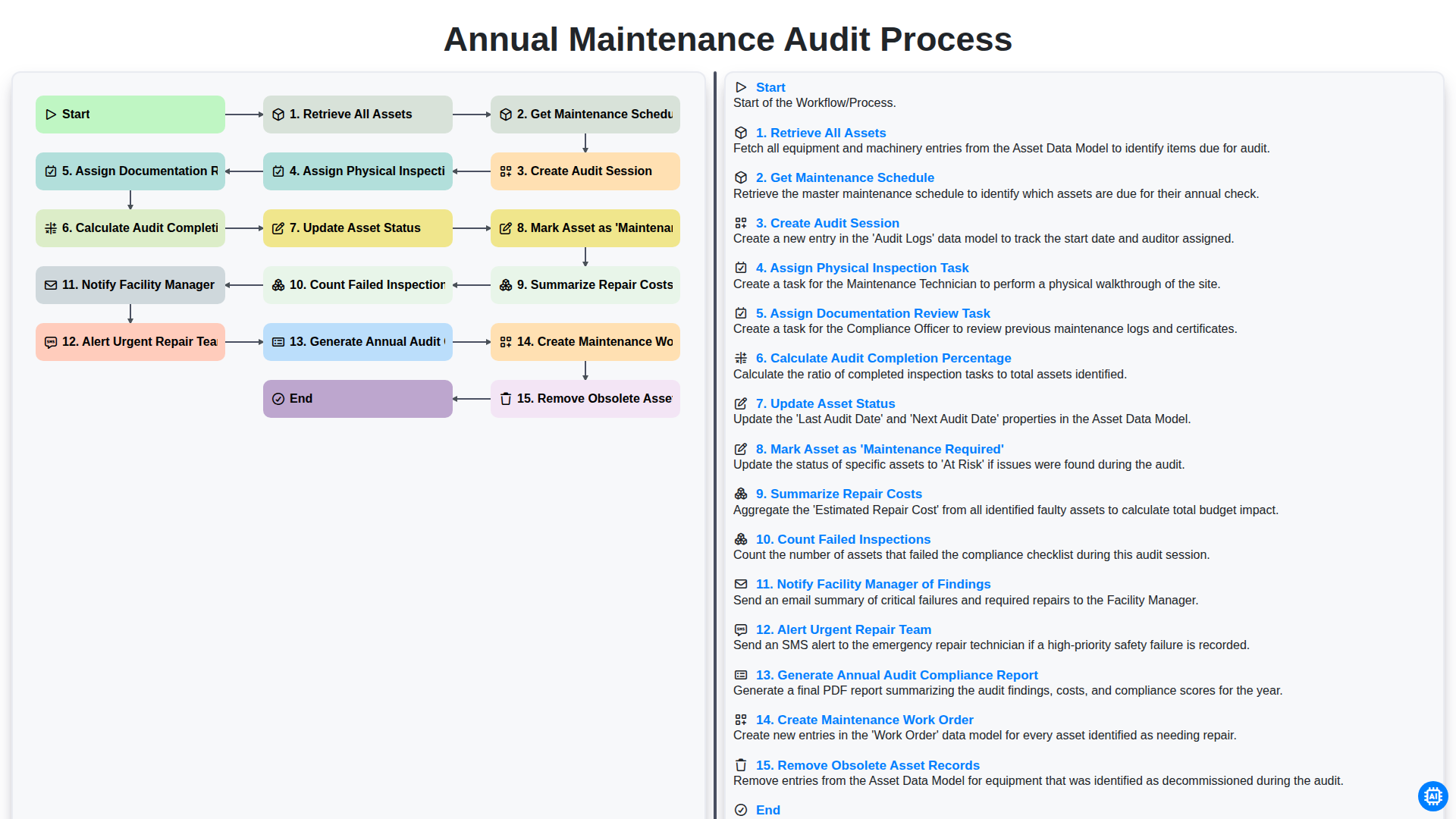
Table of Contents
- Introduction to Annual Maintenance Audits
- Phase 1: Preparation and Data Gathering
- Retrieving All Assets and Establishing the Maintenance Schedule
- Phase 2: Initiating the Audit Session
- Deploying Inspection and Documentation Review Tasks
- Phase 3: Execution and Real-Time Monitoring
- Tracking Progress: Calculating Audit Completion Percentage
- Phase 4: Asset Evaluation and Status Updates
- Identifying Maintenance Requirements and Handling Failed Inspections
- Phase 5: Post-Audit Analysis and Cost Summarization
- Communication Protocols: Notifying Managers and Urgent Repair Teams
- Phase 6: Finalizing the Audit and Compliance Reporting
- Closing the Loop: Creating Work Orders and Updating Asset Records
- Maintaining Data Integrity: Removing Obsolete Asset Records
- Resources & Links
TLDR: Streamline your facility management with this comprehensive guide to our Annual Maintenance Audit workflow. Learn how to automate everything from asset retrieval and inspection task assignment to real-time cost summarization and automated repair alerts, ensuring your equipment stays compliant and operational with minimal manual oversight.
Introduction to Annual Maintenance Audits
In any industrial or facility management setting, the difference between seamless operations and costly downtime often lies in the rigor of your maintenance strategy. An Annual Maintenance Audit is not merely a routine check-up; it is a critical strategic deep dive designed to evaluate the health of your entire physical infrastructure. Rather than a simple inspection, a true audit serves as a comprehensive review of every piece of equipment, tool, and system within your inventory to ensure they are performing at peak efficiency and meeting safety standards.
The primary goal of this annual process is to transition from a reactive break-fix mindset to a proactive, data-driven approach. By systematically reviewing asset conditions, verifying maintenance logs, and assessing the accuracy of your current schedules, you can identify hidden risks before they escalate into catastrophic failures. A well-structured audit process provides the necessary visibility to optimize resource allocation, extend the lifecycle of expensive machinery, and ensure your facility remains compliant with industry regulations. In the following sections, we will break down the systematic workflow required to execute a successful audit that drives long-term operational excellence.
Phase 1: Preparation and Data Gathering
The foundation of a successful annual audit lies in the accuracy of the data you bring to the table. Before any physical inspections can begin, you must first Retrieve All Assets to ensure your master inventory list is comprehensive and up to date. This involves verifying that every piece of equipment, machinery, and infrastructure component is accounted for within your management system.
Once the inventory is verified, the next critical step is to Get Maintenance Schedule. This allows the audit team to understand the historical context of each asset-knowing when they were last serviced and when their next routine upkeep is due is vital for identifying potential gaps in care. With this data in hand, you can officially Create Audit Session, establishing a dedicated workspace or digital log specifically for this year's evaluation. This structured preparation ensures that the audit team isn't working blindly, but is instead moving forward with a clear, data-driven roadmap.
Retrieving All Assets and Establishing the Maintenance Schedule
The foundation of a successful annual audit lies in the accuracy of your starting data. The process begins with the critical step of Retrieving All Assets. This involves pulling a comprehensive list of every piece of equipment, machinery, and infrastructure component currently registered within your system. A thorough retrieval ensures that no ghost assets-items that are no longer in use-are overlooked, and more importantly, that no critical equipment is accidentally omitted from the inspection scope.
Once the master asset list is consolidated, the next priority is to Get the Maintenance Schedule. An audit is not a random inspection; it is a verification of adherence to established protocols. By overlaying your current audit scope against your existing maintenance logs and predefined service intervals, you can identify gaps between planned maintenance and actual execution. This step allows you to pinpoint which assets are due for verification and which are operating within their expected service windows, setting the stage for a targeted and high-impact audit session.
Phase 2: Initiating the Audit Session
Once the initial data gathering is complete, the focus shifts from preparation to execution. The next critical step in the workflow is to Create an Audit Session. This stage acts as the formal launchpad for the entire auditing period, establishing a dedicated digital workspace where all real-time inspection data will be recorded and tracked.
During this phase, the audit session serves as the central hub for organizing the upcoming workload. It transforms the static list of retrieved assets and schedules into an active, live environment. By establishing this session, you create a controlled framework that ensures all subsequent tasks-from physical inspections to documentation reviews-are logged under a single, traceable event. This structural foundation is essential for maintaining data integrity and ensuring that every finding can be accurately aggregated when it comes time to generate the final compliance report.
Deploying Inspection and Documentation Review Tasks
Once the audit session is officially established, the workflow shifts from planning to execution by bifurcating the workload into two critical, parallel streams: Physical Inspection and Documentation Review. This dual-track approach ensures that the audit evaluates both the visible condition of the equipment and the integrity of its administrative history.
The Physical Inspection Task is assigned to field technicians or engineers. This step involves a hands-on, granular examination of every asset within the scope of the audit. Technicians follow standardized checklists to check for signs of wear, corrosion, structural integrity, and operational efficiency. The goal here is to identify real-world degradation that might not be apparent through digital records alone.
Simultaneously, the Documentation Review Task is assigned to compliance officers or maintenance administrators. This stage focuses on the paper trail. The objective is to verify that all recent preventive maintenance logs, safety certifications, and manufacturer-recommended service intervals have been accurately recorded and performed. By cross-referencing physical findings with digital records, the audit can identify discrepancies between how an asset is reported to be performing and its actual state on the factory floor. Together, these two tasks form the backbone of the audit, providing a 360-degree view of your facility's operational health.
Phase 3: Execution and Real-Time Monitoring
Once the audit session is officially created, the workflow transitions from planning to active execution. This phase is characterized by a dual-layered approach to verification: the Assign Physical Inspection Task and the Assign Documentation Review Task steps. By splitting the workload between on-site physical verification and a rigorous audit of maintenance logs, the process ensures that the actual state of the equipment matches its digital paper trail.
As inspectors move through the facility, the system provides real-time visibility into the audit's progress. The Calculate Audit Completion Percentage metric acts as a live heartbeat for the project, allowing stakeholders to monitor momentum and identify potential bottlenecks. This stage is not merely about observation, but about active data enrichment; as inspectors uncover discrepancies, the workflow automatically triggers the Update Asset Status protocol.
Crucially, this phase serves as the first line of defense in predictive maintenance. If an asset fails to meet the required standards, the system is programmed to Mark Asset as 'Maintenance Required' immediately. This ensures that critical defects are captured the moment they are identified, preventing the lag time often found in traditional, manual auditing methods.
Tracking Progress: Calculating Audit Completion Percentage
Monitoring the real-time progress of an annual audit is critical to ensuring that no asset is overlooked and that the project remains on schedule. As the audit progresses through various stages-from physical inspections to documentation reviews-the Calculate Audit Completion Percentage step acts as your primary dashboard metric.
This automated calculation provides a high-level overview of the audit's health by comparing the number of completed tasks against the total number of assets scheduled for review. By tracking this percentage, facility managers can identify bottlenecks in real-time; for instance, a plateau in the completion percentage might indicate that the physical inspection team is falling behind or that documentation retrieval is taking longer than anticipated. This granular visibility ensures that the audit remains a proactive management tool rather than a reactive administrative burden, allowing for timely resource reallocation to ensure the final compliance report is delivered on time.
Phase 4: Asset Evaluation and Status Updates
Once the initial inspections and documentation reviews are completed, the workflow shifts into a critical analytical phase. This stage is where raw data is transformed into actionable intelligence through a systematic evaluation of every asset's health.
The process begins by calculating the Audit Completion Percentage, providing a real-time snapshot of how much of the facility has been successfully vetted. As each asset is processed, the system automatically performs an Update Asset Status function, ensuring your digital inventory reflects the current state of the physical floor.
A pivotal part of this phase is the identification of discrepancies; if an asset fails to meet safety or operational standards, the system will automatically Mark Asset as 'Maintenance Required'. To ensure the audit leads to tangible improvements, the workflow proceeds to Summarize Repair Costs and Count Failed Inspections, providing a high-level overview of the financial and operational impact of the audit findings. Finally, to maintain a lean and accurate database, the process includes a cleanup step to Remove Obsolete Asset Records, ensuring that your maintenance strategy is focused only on the assets that truly matter to your operations.
Identifying Maintenance Requirements and Handling Failed Inspections
Once the physical inspections and documentation reviews are complete, the audit moves into its most critical phase: analyzing discrepancies and addressing failures. This stage of the workflow is where the raw data from your audit session is transformed into actionable maintenance intelligence.
The process begins by calculating the audit completion percentage to ensure the scope of the inspection is fully realized. As the data is processed, the system automatically identifies assets that do not meet safety or operational standards, marking them as 'Maintenance Required'. During this stage, the workflow performs a quantitative analysis by counting all failed inspections and summarizing the total estimated repair costs. This provides leadership with an immediate snapshot of the financial and operational impact of the audit findings.
Action is taken immediately upon detection of critical issues. The system is configured to automatically Alert the Urgent Repair Team for high-priority failures that pose immediate safety risks, while simultaneously notifying the Facility Manager of the broader audit findings to assist in long-term budgetary planning. To close the loop on these findings, the workflow triggers the creation of a Maintenance Work Order, ensuring that identified repairs are scheduled and tracked within your existing maintenance ecosystem. By automating the transition from failed inspection to active work order, you eliminate the risk of oversight and ensure that no critical repair falls through the cracks.
Phase 5: Post-Audit Analysis and Cost Summarization
Once the physical inspections and documentation reviews are complete, the focus shifts from field data collection to high-level data synthesis. This phase is critical for transforming raw inspection results into actionable business intelligence. During this stage, the system automatically summarizes repair costs and counts failed inspections to provide a clear snapshot of the facility's current health.
By aggregating these metrics, leadership can identify recurring patterns-such as specific asset types that frequently fail or certain zones that require more frequent interventions. This data-driven approach ensures that the audit is not just a checklist of completed tasks, but a strategic tool for budgetary planning and resource allocation. This summary serves as the foundation for the final reporting and the subsequent triggering of maintenance workflows.
Communication Protocols: Notifying Managers and Urgent Repair Teams
An efficient audit process is only as valuable as the speed at which its findings are communicated. Once the audit session concludes and the data is processed, the workflow moves into its most critical phase: real-time notification. This stage ensures that the gap between identifying a fault and initiating a repair is minimized, preventing minor issues from escalating into costly equipment failures.
The system follows a dual-track communication protocol designed to handle different levels of urgency:
- Managerial Oversight: Upon the completion of the audit, a comprehensive summary of findings is automatically sent to the Facility Manager. This notification includes the final audit completion percentage, the total count of failed inspections, and a high-level summary of projected repair costs. This allows management to maintain a clear overview of facility health and budget implications without getting lost in granular technical details.
- Rapid Response for Critical Failures: For assets flagged as Maintenance Required or those identified during the inspection as posing immediate risks, the workflow triggers an instant alert to the Urgent Repair Team. This automated dispatch ensures that critical failures bypass the standard reporting queue and are met with immediate attention, effectively reducing downtime and ensuring site safety.
By automating these communication loops, the audit moves from being a mere record-keeping exercise to an active, life-saving component of your facility's operational strategy.
Phase 6: Finalizing the Audit and Compliance Reporting
Once the physical inspections and documentation reviews are complete, the final phase of the annual maintenance audit focuses on data synthesis and actionable intelligence. This stage transforms raw inspection data into a strategic roadmap for the upcoming year.
The process begins with calculating the overall Audit Completion Percentage to ensure every scheduled asset has been accounted for. Following this, the system must Update Asset Status based on the findings, specifically identifying and Marking Assets as 'Maintenance Required' to ensure no critical failure goes unnoticed. To provide a clear picture of the budgetary impact, the workflow involves Summarizing Repair Costs and Counting Failed Inspections, which allows leadership to understand the scale of necessary interventions.
The final, most critical steps involve communication and documentation. The workflow automatically triggers a dual-layered notification system: Notifying the Facility Manager of Findings for long-term planning and Alerting the Urgent Repair Team for immediate high-priority issues. To close the loop, a Maintenance Work Order is automatically created for all identified defects, ensuring that the audit leads directly to physical action. Finally, the process concludes with the generation of the Annual Audit Compliance Report for regulatory record-keeping and the Removal of Obsolete Asset Records to keep your digital inventory lean and accurate.
Closing the Loop: Creating Work Orders and Updating Asset Records
An audit is only as valuable as the actions it inspires. Once the assessment is complete, the focus shifts from observation to execution. The final phase of the workflow is where the data from your audit transforms into tangible improvements for your facility's longevity.
The process begins by triggering the creation of maintenance work orders for any assets flagged during the inspection. By automatically generating these orders, you eliminate the gap between identifying a fault and initiating a repair, ensuring that no critical issue is lost in paperwork. This is further supported by the ability to summarize repair costs and count failed inspections, providing leadership with a clear financial and operational snapshot of the facility's health.
Beyond immediate repairs, this stage is about long-term data integrity. Part of the closing loop involves removing obsolete asset records from your database. If an asset is no longer in service or has reached the end of its lifecycle, purging it ensures your maintenance schedule remains accurate and your reporting stays clean. By refining your asset registry and acting on identified repairs, you transform a simple checklist into a continuous cycle of operational excellence.
Maintaining Data Integrity: Removing Obsolete Asset Records
A critical, yet often overlooked, final step in the annual audit process is the removal of obsolete asset records. Data integrity is the backbone of any effective maintenance strategy; if your database is cluttered with ghost assets-items that have been decommissioned, scrapped, or lost-your reporting and budgeting will be fundamentally flawed.
Leaving expired or non-existent assets in your system leads to inflated asset valuations, inaccurate depreciation calculations, and wasted man-hours spent searching for equipment that no longer exists. By systematically purging obsolete records during the audit, you ensure that your maintenance software remains a single source of truth. This cleanup allows your team to focus resources on active, high-value equipment, ensuring that every inspection, work order, and budget allocation is based on an accurate reflection of your current physical inventory.
Resources & Links
- ISO Standards for Asset Management: Official guidelines and international standards for maintaining organizational excellence and compliance during audits.
- UpKeep CMMS Resources: Industry-leading insights on using Computerized Maintenance Management Systems to automate audit workflows and task assignments.
- IBM Asset Management Fundamentals: Comprehensive educational resources regarding the lifecycle of physical assets and the importance of data integrity.
- ASHRAE Maintenance Best Practices: Technical resources and standards for facility management and the inspection of building systems and infrastructure.
- Gartner IT Asset Management Research: Strategic insights into managing complex asset inventories and optimizing maintenance workflows for enterprise-level operations.
- PMI Project Management Framework: Tools and methodologies for managing audit phases, resource allocation, and task monitoring within large-scale maintenance projects.
Found this Article helpful?
Comments
There are no comments yet. Be the first to add one!
Maintenance Management Solution Demo
Maximize equipment uptime & reduce costs! ChecklistGuro streamlines maintenance scheduling, work order management, & asset tracking. Prevent breakdowns, optimize performance, & extend equipment life. Manage it all with our Work OS.
Related Articles
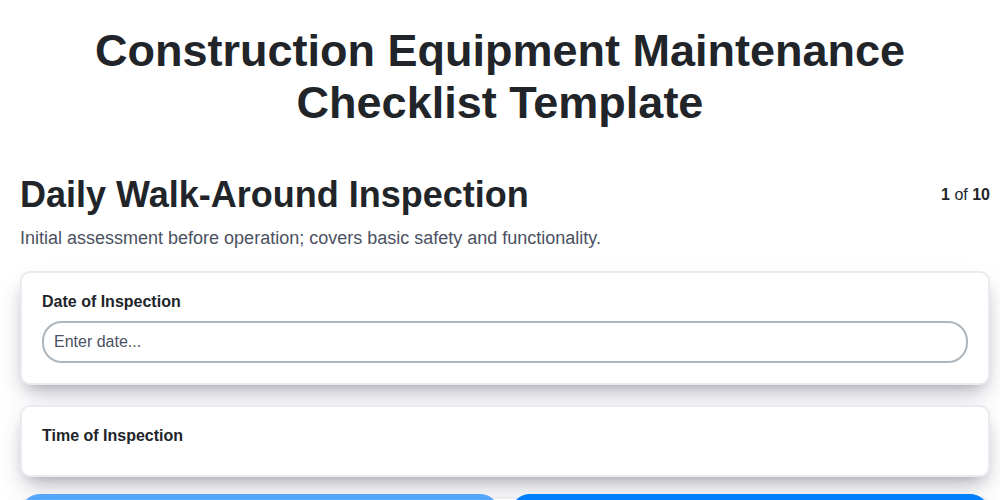
Construction Equipment Maintenance Checklist Template

Paper vs ChecklistGuro in Facility Management
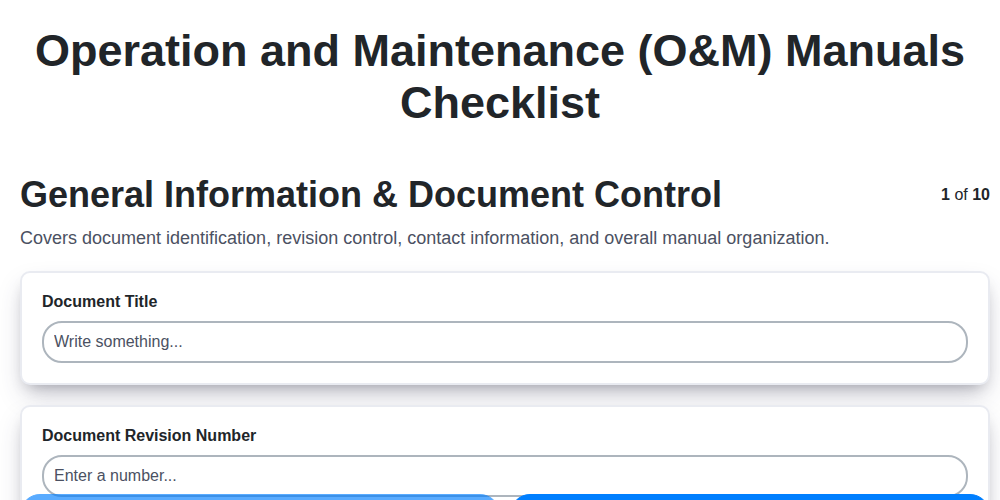
The Ultimate O&M Manual Checklist Template

Excel vs ChecklistGuro in Facility Management
Excel vs ChecklistGuro in Maintenance Management
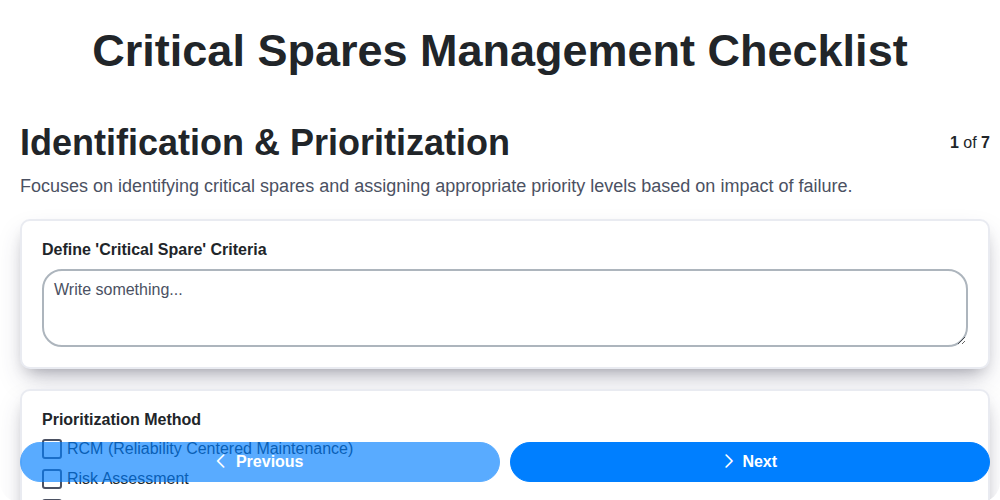
Your Ultimate Guide to Critical Spares Management: A Checklist Template
Equipment Repair Log Template: Your Guide to Organized Maintenance
Paper vs ChecklistGuro in Maintenance Management
We can do it Together
Need help with
Checklists?
Have a question? We're here to help. Please submit your inquiry, and we'll respond promptly.