The Ultimate Award Ceremony Checklist Template 2026: From Trophy Procurement to Seamless Winner Recognition Management
Published: 10/31/2026 Updated: 11/01/2026
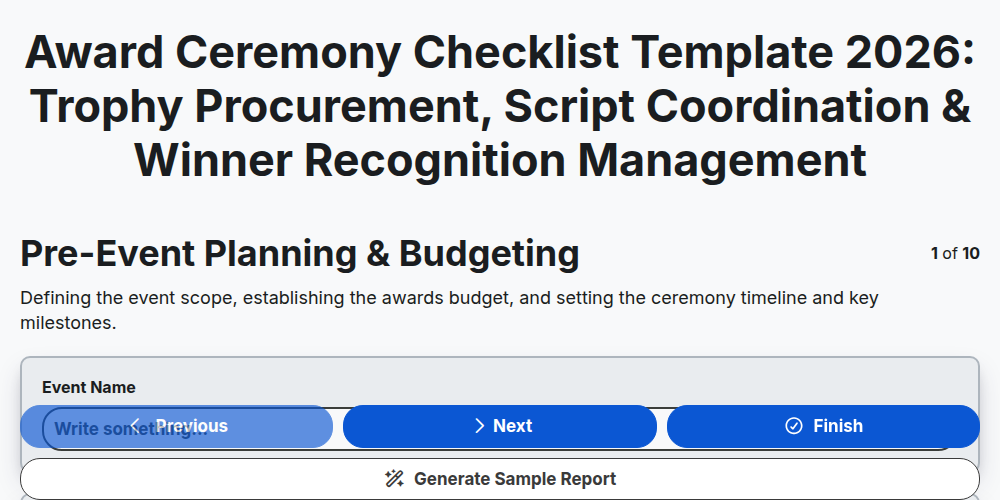
Table of Contents
- Introduction: Setting the Stage for a Memorable 2026 Awards Gala
- Phase 1: Foundation & Financial Planning: Pre-Event Budgeting
- Phase 2: Defining Excellence: Award Categories & Nominee Management
- Phase 3: The Tangible Symbols: Trophy & Award Procurement Strategies
- Phase 4: Crafting the Narrative: Scriptwriting & Program Coordination
- Phase 5: Mastering the Moment: Winner Recognition & Stage Protocol
- Phase 6: Environmental Logistics: Venue & Technical Setup
- Phase 7: Guest Experience: VIP Management & Guest List Curation
- Phase 8: Visual Storytelling: Content & Multimedia Production
- Phase 9: Show Day Readiness: On-Site Event Execution
- Phase 10: Measuring Success: Post-Event Wrap-up & Impact Analysis
- Conclusion: Ensuring a Flawless Ceremony Delivery
- Resources & Links
TLDR: Master your 2026 awards event with our comprehensive, step-by-step checklist. This guide covers everything from initial budgeting and trophy procurement to script coordination, stage protocols, and post-event impact analysis, ensuring a seamless, prestigious experience for nominees and guests alike.
Introduction: Setting the Stage for a Memorable 2026 Awards Gala
Planning an award ceremony is an ambitious feat of orchestration. Whether you are organizing a corporate excellence gala, an industry-specific honors night, or a community recognition event, the stakes are high. In 2026, the standard for live events has shifted; audiences no longer just want to witness an awards presentation-they expect an immersive, seamless, and emotionally resonant experience.
The Art of the Flawless Execution
An award ceremony is more than just handing out plaques; it is a high-pressure production where the margin for error is razor-thin. A single misplaced name in a script, a delayed trophy delivery, or a technical glitch during a winner's walk-up can diminish the prestige of the entire evening. To prevent these prestige-killers, organizers must move beyond simple coordination and embrace a strategic, multi-layered management approach.
Beyond the Basics: A 360-Degree Approach
The difference between a forgettable gathering and a landmark event lies in the details. As we look toward the 2026 event season, successful planners are focusing on three critical pillars:
- Logistical Precision: Managing the complex lifecycle of trophy procurement and physical award logistics.
- Narrative Flow: Mastering script coordination to ensure the program moves with energy and purpose.
- The Human Element: Implementing rigorous winner recognition management to ensure every honoree feels truly celebrated.
Your Roadmap to Success
The following checklist has been engineered to serve as your master blueprint. We have broken down the complex lifecycle of an awards program into ten strategic phases-ranging from initial budgeting and nominee management to the critical post-event impact analysis.
By following this template, you aren't just checking boxes; you are building a framework for excellence that ensures your 2026 ceremony is professional, prestigious, and profoundly impactful.
Phase 1: Foundation & Financial Planning: Pre-Event Budgeting
Building the Blueprint: Pre-Event Planning & Budgeting
The success of any prestigious award ceremony is determined months before the first spotlight hits the stage. The foundation of a 2026 event lies in the precision of your initial planning phase. Without a robust structural framework, even the most beautiful trophies cannot mask the chaos of poor logistics.
Defining the Vision and Scope
Before allocating a single cent, you must define the Why behind your ceremony. Are you celebrating corporate excellence, industry innovation, or community impact? Your core objectives will dictate the scale of your venue, the caliber of your guest list, and the complexity of your production.
Establishing the Master Budget
A 2026 award ceremony requires a dynamic budget that accounts for inflation and the rising costs of high-end production. Your budget should be categorized into non-negotiable pillars:
- Venue & Catering: The largest variable cost, including rentals, AV, and hospitality.
- Production & Technicals: Lighting, sound, stage design, and live-streaming capabilities.
- Award Procurement: The cost of physical trophies, plaques, and bespoke engravings.
- Marketing & Communications: Invitations, PR, and digital promotion.
- Talent & Staffing: Emcees, security, event planners, and technical crews.
- The Contingency Fund: A mandatory 10-15% buffer to handle last-minute logistical shifts or technical emergencies.
Strategic Timeline Development
Effective planning requires a backward-mapped timeline. Working backward from your 2026 event date, identify critical milestones for vendor bookings, nomination deadlines, and script lock-down dates. This prevents the domino effect, where a delay in trophy procurement ripples through to the entire program schedule.
Phase 2: Defining Excellence: Award Categories & Nominee Management
Establishing the Framework for Recognition
Once your budget is set and your event vision is clear, the focus must shift to the core of the ceremony: the awards themselves. This phase is where the integrity of your event is built. Without a rigorous approach to how categories are defined and how nominees are vetted, the prestige of your ceremony can quickly diminish.
Defining Award Categories
The categories you choose serve as the roadmap for your event's narrative. To ensure your 2026 ceremony feels modern and relevant, avoid template fatigue.
- Alignment with Values: Ensure every category reflects the core mission of your organization or industry.
- Granularity vs. Overcrowding: Aim for a balance. Too few categories may leave deserving talent overlooked; too many can make the ceremony feel fragmented and drag out the runtime.
- Trend Integration: For 2026, consider introducing Innovation or Sustainability focused categories to keep the program feeling forward-looking and prestigious.
The Nominee Lifecycle Management
Managing nominees is a high-stakes logistical task. Errors in naming, titles, or credentials can lead to significant embarrassment on stage.
1. The Nomination Call
Establish a clear, transparent, and accessible nomination process. Use digital forms that allow for easy data collection, ensuring you capture not just the nominee's name, but their full professional title, company, and a brief summary of their achievements.
2. The Judging/Selection Committee
To maintain the Gold Standard of your awards, implement a multi-tiered judging process:
- Selection Criteria: Create a standardized rubric to remove bias.
- Committee Vetting: Recruit a diverse panel of experts to review submissions.
- Verification: Implement a fact-check stage where all shortlisted nominees are verified for eligibility according to your event's specific rules.
3. Shortlist Communication & Logistics
Once the finalists are selected, the management moves into the Communication Phase. This involves:
- Notification Protocols: How and when will nominees be notified? (A personalized approach is always preferred for high-tier awards).
- Data Accuracy Audit: Cross-reference the finalist list with your technical and multimedia teams. Every name on this list must be 100% accurate for the teleprompter, the trophies, and the digital graphics.
Pro-Tip for 2026: Use a centralized CRM or project management tool to track nominee status. Moving from a spreadsheet to a dedicated database will prevent the lost email syndrome that often plagues large-scale award productions.
Phase 3: The Tangible Symbols: Trophy & Award Procurement Strategies
Crafting the Icons of Success
The trophy is more than just a piece of hardware; it is the physical manifestation of a winner's hard work and the most enduring memory of your event. In 2026, the standard for awards has shifted toward sustainability, personalization, and premium craftsmanship. To ensure your procurement process is flawless, you must move beyond simply ordering trophies and instead focus on curated prestige.
1. Define the Aesthetic & Materiality
Before contacting vendors, establish a cohesive design language that aligns with your brand identity.
- Material Selection: Decide between timeless glass and crystal, sustainable reclaimed wood, or modern 3D-printed polymers.
- Weight and Feel: A heavy, substantial award communicates importance. Ensure the weight of the trophy matches the prestige of the category.
- Sustainability Audit: In 2026, eco-friendly procurement is a priority. Seek out vendors using recycled metals or FSC-certified materials to align with modern corporate social responsibility (CSR) standards.
2. The Procurement Timeline: Working Backward
Procurement failure is often a result of late-stage realization. Use this backward-planning approach:
- Concept Approval (6-8 Months Out): Finalize designs and approve 3D renders or prototypes.
- Vendor Selection & Sampling (4-5 Months Out): Order physical samples to test engraving clarity and material durability.
- Bulk Ordering (3 Months Out): Secure your production slot. High-end artisans often have long lead times during peak award seasons.
- Quality Control Check (1 Month Out): Receive the full shipment early to inspect for scratches, cracks, or engraving errors.
3. Precision Engraving & Personalization Management
The greatest risk to your event's reputation is a misspelled name on a trophy.
- The Golden Record System: Create a single, locked master document for winner names. This document should be the only source used by the engraver.
- Tiered Engraving Levels: Differentiate between Nominee plaques and Winner trophies. Ensure the distinction is clear to prevent logistical errors on stage.
- The Double-Verification Protocol: Implement a two-person verification step: one person checks the name against the database, and a second person checks the physical engraving against the digital record.
4. Logistics: Storage, Transit, and Safety
A beautiful trophy is useless if it arrives broken or lost.
- Protective Packaging: Insist on custom-fitted foam or silk-lined presentation boxes for each individual award.
- Climate-Controlled Transit: If using delicate materials like certain crystals or organic woods, ensure the transport method protects against extreme temperature fluctuations.
- On-Site Inventory Management: Assign a dedicated Awards Handler responsible for checking each trophy into the venue's secure storage as they arrive, ensuring every piece is accounted for before the first guest enters the room.
Phase 4: Crafting the Narrative: Scriptwriting & Program Coordination
Mastering the Flow: Scriptwriting & Program Coordination
An award ceremony is more than just a series of names being read aloud; it is a choreographed narrative designed to build tension, celebrate excellence, and maintain a high level of emotional engagement. Even with the most expensive trophies and a world-class venue, a poorly paced program or a disorganized script can derail the entire experience.
To ensure your 2026 event maintains a professional rhythm, you must focus on the synchronization of verbal delivery and technical cues.
The Anatomy of a Winning Script
The script serves as the backbone of your ceremony. It is not merely a list of winners, but a roadmap for your presenters, emcees, and technical crew. Your coordination efforts should focus on three key layers:
- The Emcee Script: This includes the opening remarks, housekeeping notes, transitions between categories, and the closing statement. The tone must be consistent-prestigious yet engaging.
- The Presenter Introducers: Brief, impactful blurbs that set the stage for each award. These should highlight the significance of the category without dragging out the runtime.
- The Winner Reveal Sequence: This is the most critical micro-moment. The script must include the dramatic pause, the announcement of the name, and the transition to the winner's acceptance speech.
Synchronizing Script with Technical Cues
A common pitfall in event management is a disconnect between what is said and what is seen. To prevent awkward silences or technical glitches, your coordination must include a Run of Show (ROS) that aligns the script with:
- Audio Cues: When the music should swell during a walk-up, when the drumroll occurs, and when the microphone levels need to be adjusted for a podium speaker.
- Visual Cues: Coordination with the video team to ensure that Winner Graphics or Nominee Montages appear on screen the exact second the presenter begins speaking.
- Lighting Transitions: Directing the lighting designer to dim the house lights or follow the winner with a spotlight as they move from their seat to the stage.
Managing the Program Timeline
In 2026, audience attention spans are more precious than ever. Effective program coordination requires strict adherence to a buffer-integrated timeline.
- The Overrun Strategy: Always account for unexpected long acceptance speeches. Plan your transitions so that if a speaker goes over their allotted time, the following segment can be tightened without compromising the ceremony's integrity.
- Rehearsal Protocols: Never skip the technical rehearsal. This is the time to practice the physical movement of presenters, the hand-off of trophies, and the timing of the script to ensure every second of the program feels intentional and polished.
Phase 5: Mastering the Moment: Winner Recognition & Stage Protocol
The climax of any award ceremony isn't just the moment the name is announced; it is the seamless orchestration of emotion, prestige, and professional execution. This phase is where the hard work of planning meets the high-pressure reality of live performance. If the protocol fails, the prestige of the award diminishes.
To ensure your winners feel celebrated and your brand maintains its authority, you must master the choreography of the stage.
Designing the Moment of Glory
The goal of winner recognition is to create a crescendo effect. You need to manage the transition from the suspense of the announcement to the celebration of the win.
1. Establishing the Announcement Flow
A standardized flow prevents confusion and keeps the energy high. Every award should follow a repeatable pattern:
- The Reveal: The introduction of the award category and its significance.
- The Nominees: A brief visual or verbal roll-call of all finalists to ensure everyone feels recognized.
- The Reveal: The dramatic pause and the announcement of the winner.
- The Walk: Clear directions (either verbal or via visual cues) for the winner to move from their seat to the stage.
2. Defining Stage Protocol & Movement
Chaos on stage is the enemy of professionalism. You must establish a Stage Flow Map for your winners and presenters.
- The Approach Path: Clearly define which side of the stage the winner enters from and which side they exit.
- The Handover Ritual: Coordinate the exact moment the trophy is handed from the presenter to the winner. This includes ensuring the presenter is facing the audience, not the winner, during the handoff.
- The Photo Op Anchor: Define a specific Photo Spot on stage. Winners should be directed to pause there for three seconds to allow photographers to capture the high-resolution shot.
Managing the Presentation Sequence
The logistics of how the physical award moves from the hands of the staff to the winner is often overlooked but critical for preventing dead air.
The Presenter-Trophy Sync
- The Second Presenter: Always have a designated Trophy Bearer or Award Assistant positioned near the podium. Their role is to ensure the correct trophy is ready the moment the presenter reaches the microphone.
- Verification Checks: Implement a Double-Check system where the stage manager verifies the trophy matches the announced name before the presenter even reaches the stage.
Post-Award Transition
The ceremony doesn't end when the winner leaves the stage.
- The Mic Pass-back: If winners are expected to give a brief acceptance speech, ensure the handheld microphone is ready and the audio engineer is prepared for the volume shift.
- The Exit Strategy: Ensure the winner's path back to their seat is unobstructed and that they are directed toward the exit flow rather than colliding with the next presenter.
Pro-Tip: The Mistake Mitigation Plan
In 2026, live events demand even higher levels of precision. Always have a Plan B for:
- The Wrong Name Read: A script cue for the presenter to recover gracefully.
- The Audio Glitch: A pre-arranged signal between the stage manager and the DJ to play recovery music if a microphone fails.
- The Missing Trophy: A backup set of generic, high-quality awards kept off-stage in case of a labeling error.
Phase 6: Environmental Logistics: Venue & Technical Setup
Creating the Stage for Excellence: Venue & Technical Setup
An award ceremony is defined by its atmosphere. Even the most prestigious trophy loses its luster if the lighting is dim, the sound is muffled, or the stage feels disconnected from the audience. As you approach 2026, the integration of physical space and digital technology is more critical than ever.
To ensure your venue and technical infrastructure support the gravity of your awards, follow this specialized sub-checklist:
The Physical Environment & Stage Design
The stage is the focal point of the entire evening. Your setup must accommodate not just the presenters, but the entire flow of the ceremony.
- Stage Layout & Sightlines: Ensure that the podium, trophy display area, and seating for winners are visible from every corner of the room.
- Acoustic Engineering: Work with audio professionals to eliminate dead zones. Clear, crisp audio is non-negotiable for when a winner delivers their acceptance speech.
- Lighting Design: Plan for a multi-layered lighting scheme:
- Ambient lighting for the dining/seating area.
- Spotlighting for presenters and award recipients.
- Dynamic lighting for high-energy walk-up moments.
- Backdrop & Branding: Whether using physical tension fabrics or high-resolution LED walls, ensure your event branding is crisp and integrates with the ceremony's visual theme.
Technical Integration & AV Production
In 2026, technical setup goes beyond simple microphones; it involves the seamless orchestration of digital assets and live feeds.
- The Master Control Suite: Designate a central hub where the AV team can sync the script with the visual cues (lower thirds, intro videos, and nominee graphics).
- Audio Reinforcement: Implement a redundant audio system. Ensure there are dedicated microphones for the podium, roving mics for audience interaction, and high-quality playback for victory music.
- Digital Content Syncing: Coordinate the timing of walk-up music with the physical movement of the winner from their seat to the stage. A delay of even three seconds can break the ceremony's momentum.
- Live Streaming & Hybrid Connectivity: If your ceremony is being broadcast or streamed, verify high-speed dedicated internet lines and ensure the signal strength is robust enough to handle high-definition video uplinks without latency.
Accessibility & Safety Compliance
A truly professional ceremony is inclusive and safe.
- Accessibility (ADA Compliance): Ensure ramps, wide aisles, and accessible seating are integrated into the floor plan so all winners and guests can navigate the venue effortlessly.
- Load-in & Load-out Logistics: Coordinate with the venue regarding the timeline for technical rehearsals (tech checks). The Pre-Event Planning phase must include a window for a full dry run of the technical cues.
Phase 7: Guest Experience: VIP Management & Guest List Curation
Orchestrating the Guest Experience: VIP Management & Guest List Curation
An award ceremony is more than just a presentation of trophies; it is a high-stakes networking event where the caliber of your attendees defines the prestige of your brand. In 2026, managing a diverse guest list requires a blend of precision logistics and white-glove hospitality. To ensure your event runs smoothly, you must move beyond simple RSVPs and focus on personalized engagement.
Mastering the Guest List Strategy
The foundation of a successful ceremony lies in a strategic selection process. Your guest list should be categorized into distinct tiers to allow for tailored communication and resource allocation:
- The Honorees & Nominees: The core protagonists of your event.
- VIPs & Industry Stakeholders: Key sponsors, board members, and high-profile keynote speakers.
- General Attendees: Industry peers, partners, and media representatives.
- Internal Stakeholders: Organizers, staff, and judging committee members.
VIP Management & White-Glove Hospitality
For your VIPs, the experience begins long before they arrive at the venue. Effective management involves a proactive approach to their specific needs:
- Personalized Invitations & RSVP Tracking: Utilize automated, branded digital invitation systems that provide real-time updates on dietary requirements, accessibility needs, and arrival times.
- The Concierge Approach: Assign dedicated liaisons for high-profile guests. This includes managing travel arrangements, hotel accommodations, and specialized transport if necessary.
- Pre-Event Briefing: Ensure all VIPs are briefed on the program flow, their specific roles (e.g., presenting an award), and any necessary protocols to avoid confusion on the night.
Seamless On-Site Arrival & Registration
The first ten minutes of a guest's arrival dictate their perception of the entire event. A bottleneck at the registration desk can derail the momentum of your ceremony.
- Digital Check-in Systems: Implement QR-code-based scanning to eliminate long queues and provide instant data on attendee presence.
- Integrated Seating Management: For high-stakes ceremonies, use a digital seating chart that allows staff to quickly direct VIPs to reserved tables, ensuring the front row prestige is maintained.
- The Welcome Experience: Coordinate with your catering and hospitality teams to ensure that the transition from the registration desk to the cocktail lounge or dining area is fluid, with immediate access to refreshments and networking opportunities.
Risk Mitigation in Guest Logistics
A professional organizer anticipates the what ifs. Always have a contingency plan for:
- The Plus One Dilemma: Clear policies regarding unannounced guests.
- Dietary & Accessibility Compliance: A robust system for tracking and communicating allergies to the catering team to prevent errors during the main service.
- Last-Minute Nominee Changes: A streamlined process for updating seat assignments and digital programs in real-time.
Phase 8: Visual Storytelling: Content & Multimedia Production
Bringing the Night to Life: Content & Multimedia Production
An award ceremony is more than just a series of announcements; it is a cinematic experience. While the trophies represent the physical achievement, the multimedia elements provide the emotional heartbeat of the event. To ensure your 2026 ceremony leaves a lasting impression, your production planning must bridge the gap between technical precision and storytelling.
The Power of the Winner Reveal
The moment a name is announced is the pinnacle of the evening. To maximize the impact, you need high-quality visual assets ready to trigger the second the envelope is opened. This includes:
- Introductory Motion Graphics: High-energy animations that build anticipation for each category.
- Nominee Montages: Short, polished video clips featuring the achievements and highlights of each nominee to build prestige and context.
- Winner Graphics: Clean, branded Congratulations overlays that appear on the main screens immediately following the announcement.
Creating a Cohesive Visual Brand
Consistency is key to maintaining a premium feel. Every digital asset-from the digital programs to the lower-third graphics on the live stream-must adhere to your 2026 event branding.
- Event Sizzle Reels: A pre-event teaser to build hype and a post-event recap to celebrate success.
- Lower Thirds & Titles: Standardized templates for introducing speakers, VIPs, and award recipients on-screen.
- Digital Signage: Cohesive visuals for lobby displays, registration kiosks, and social media live-updates.
Audio-Visual Integration
Multimedia production isn't just about what the audience sees, but what they feel. Your production checklist must include:
- Soundscapes & Stingers: Curated musical cues for the walk-up (the moment a winner heads to the stage) and the triumphant fanfare.
- Live Stream Integration: If your event has a hybrid component, your multimedia plan must account for multi-camera switching and real-time graphics overlays for remote viewers.
- Lighting Sync: Coordinating visual content with programmed lighting cues to ensure that the atmosphere shifts dynamically between somber moments of reflection and high-energy celebrations.
Phase 9: Show Day Readiness: On-Site Event Execution
Mastering the Moment: Real-Time Execution Excellence
When the lights dim and the music rises, your months of meticulous planning move from spreadsheets to the spotlight. On-site execution is where the magic happens, but it is also where the pressure is highest. Success on the day of the event depends on a synchronized rhythm between your production crew, your presenters, and your backstage team.
The Command Center: Stage Management & Flow Control
The heartbeat of a successful ceremony is the Stage Manager. During execution, their role is to manage the Run of Show (ROS) with surgical precision.
- The Calling Sequence: Ensure your cues-lighting transitions, audio swells, and video playbacks-are perfectly synced with the script.
- Backstage Flow: Implement a rigorous Lineup Protocol. Winners and presenters should be lined up in the wings at least two cues before they are due on stage to prevent dead air or awkward searching.
- The Buffer Strategy: Always have a contingency plan for technical delays. If a video fails to load, your host must be briefed on how to bridge the gap seamlessly.
Managing the Winner's Journey
The most critical element of the ceremony is the moment a name is called. If the winner's journey from their seat to the stage is disorganized, the prestige of the award diminishes.
- The Escort System: Designate specific Usher Leads responsible for guiding winners from the audience to the backstage holding area, and eventually to the stage entrance.
- The Trophy Hand-off: Coordinate a seamless hand-off between the trophy bearer and the presenter. The physical movement must be fluid, ensuring the trophy is presented at the exact moment the name is announced.
- The Photo Op Coordination: Work closely with the photography team to ensure that once the winner reaches the center of the stage, they pause for the hero shot before exiting.
Technical & Environmental Synchronicity
The atmosphere is dictated by the sensory experience. On-site execution requires constant monitoring of the following:
- Audio Integrity: Conduct sound checks for all microphones (lavaliers, handhelds, and podium mics) immediately before doors open. Ensure the transition between ambient background music and walk-up music is seamless.
- Lighting Transitions: Ensure the spotlight follows the presenter accurately. Sudden shifts in lighting can disrupt the professional aesthetic of the broadcast or live recording.
- Real-Time Communication: Utilize clear-coms or radio headsets for all key personnel (AV, Stage Manager, Floor Manager, and Security) to ensure instant communication regarding any shifts in the program.
Phase 10: Measuring Success: Post-Event Wrap-up & Impact Analysis
Closing the Loop: The Final Step to Long-Term Success
The conclusion of the ceremony is not the end of the project; it is the beginning of your post-event legacy. The final phase of your 2026 awards cycle focuses on evaluating performance, honoring the community, and extracting data-driven insights to ensure next year's ceremony is even more impactful.
Data-Driven Reflection
To justify your budget and refine your strategy for 2027, you must transition from execution mode to analysis mode. This involves:
- Post-Mortem Meetings: Gather your core planning committee to discuss what worked, what failed, and where the logistical bottlenecks occurred (e.g., script timing issues or trophy handover delays).
- Financial Reconciliation: Close out all vendor contracts, audit final expenses against the initial 2026 budget, and ensure all trophy procurement invoices are settled.
- KPI Evaluation: Measure success against your pre-set objectives. Did you hit your target social media impressions? Was the attendee satisfaction score high?
Sentiment & Feedback Collection
An awards ceremony lives or dies by the perception of its prestige. You must capture the voices of your stakeholders while the experience is still fresh:
- Winner & Nominee Surveys: Send personalized follow-up surveys to your honorees. Their feedback on the stage protocol and the recognition process is vital for maintaining the ceremony's prestige.
- Attendee Experience Polls: Use short, impactful surveys to gauge satisfaction regarding the venue, the program flow, and the quality of the multimedia production.
- Sponsor Debriefs: For your 2026 partners, provide a Value Report demonstrating the ROI they received through brand visibility and engagement.
Sustaining Momentum via Content Re-purposing
The Afterglow period is the best time to maximize the lifecycle of your event assets. Do not let your high-quality multimedia production sit in a drive:
- The Highlight Reel: Release a high-energy recap video within 48-72 hours of the event to capitalize on the social media buzz.
- Digital Archives: Update your official website with a 2026 Winners Gallery, featuring high-resolution photography of the trophy presentations and winner quotes.
- Press & PR Distribution: Distribute formal press releases to industry publications, ensuring the winners' achievements are documented in the permanent professional record.
By treating the post-event phase with the same rigor as the pre-event planning, you transform a single night of recognition into a continuous cycle of brand prestige and community engagement.
Conclusion: Ensuring a Flawless Ceremony Delivery
Master the Art of the Grand Finale
Executing an award ceremony is much more than just handing out plaques; it is about orchestrating a symphony of logistics, emotions, and prestige. As we look toward the 2026 event season, the complexity of hybrid presentations and heightened audience expectations means that good enough is no longer an option. Success lies in the details-the weight of the trophy in a winner's hand, the seamless transition between a heartfelt speech and a dramatic video, and the precision of the stage protocol.
Turning a Checklist into a Legacy
By following this comprehensive template-from the initial stages of budget allocation and nominee management to the high-pressure moments of on-site execution-you are doing more than just managing a checklist; you are protecting your organization's reputation. A well-executed ceremony honors the hard work of your nominees and reinforces the value of your brand.
Final Pro-Tips for 2026 Success
To ensure your event stands out in the upcoming year, keep these three pillars in mind:
- Redundancy is Key: Always have a Plan B for technical elements, such as backup scripts for presenters and secondary digital assets for multimedia.
- The Human Element: While logistics drive the event, the emotional impact drives the memory. Prioritize the Winner Recognition phase to ensure every recipient feels truly seen and celebrated.
- Post-Event Momentum: The ceremony doesn't end when the lights go down. Use your post-event impact analysis to turn the success of this year's gala into the blueprint for an even more spectacular 2027.
Use this checklist as your roadmap, but allow your creativity to drive the storytelling. With meticulous planning and rigorous execution, your 2026 award ceremony will be nothing short of legendary.
Resources & Links
- Eventbrite: A leading platform for event management, ticketing, and discovering industry-standard event planning workflows.
- Cvent: Comprehensive event management software for large-scale professional conferences and award ceremonies.
- Canva: Essential tool for designing award certificates, program booklets, and visual social media announcements.
- Pinterest: An invaluable resource for visual inspiration regarding stage design, trophy aesthetics, and gala decor themes.
- Trello: A project management tool perfect for tracking nominee progress, vendor deadlines, and task distribution.
- Asana: Advanced workflow management for coordinating complex timelines between scriptwriters, technical crews, and planners.
- Behance: A platform to find high-end graphic designers and motion artists for award ceremony multimedia production.
- Vimeo: High-quality video hosting for presenting nominee loops and winner highlight reels during the ceremony.
- SurveyMonkey: The ideal tool for post-event impact analysis and measuring attendee satisfaction and engagement.
- Adobe Creative Cloud: Professional software suite for creating high-impact video content, motion graphics, and digital program assets.
- Dropbox: Secure cloud storage for managing large files, including high-resolution nominee photos and heavy video assets.
- Expedia Group: Useful for managing travel logistics and hotel blocks for international VIP guests and keynote speakers.
- HubSpot: Great for managing guest communications, email marketing for nominees, and post-event follow-up campaigns.
- Slack: Real-time communication hub for the on-site event execution team and technical production crew.
- Typeform: Interactive forms for collecting nominee bios, dietary requirements, and RSVP details in an engaging way.
- Mint: Useful for personal or small-scale budgeting and tracking event-related expenses and cash flow.
- Zola: While wedding-focused, it offers excellent templates for registry-style management, which can inspire trophy/gift logistics.
- Smartsheet: Powerful spreadsheet-based tool for complex budget tracking and large-scale resource allocation.
Comments
There are no comments yet. Be the first to add one!
Event Planning Management Solution Demo
Plan flawless events with ease! ChecklistGuro streamlines event planning - from vendor management to budget tracking & guest communication. Stay organized, reduce stress, & deliver unforgettable experiences. Manage it all with our Work OS.
Related Articles
Event Safety Sorted: Your Free Mitigation Checklist Template
The Ultimate Product Launch Checklist Template: Your Guide to Marketing, Demos & Sales Success

The Ultimate Fundraising Event Checklist: Donations, Promotion & Volunteer Management
The Ultimate Seminar Planning Checklist: From Topic to Attendees
The Ultimate Promotional Event Checklist Template: Your Guide to Brand Activation & Social Buzz
Anniversary Party Checklist: Plan Your Perfect Celebration
Grand Opening Checklist Template: Your Guide to a Successful Launch
The Ultimate Virtual Event Planning Checklist Template
Need help with
Event Planning Management?
Have a question? We're here to help. Please submit your inquiry, and we'll respond promptly.