Event Safety Sorted: Your Free Mitigation Checklist Template
Published: 10/13/2025 Updated: 12/13/2025
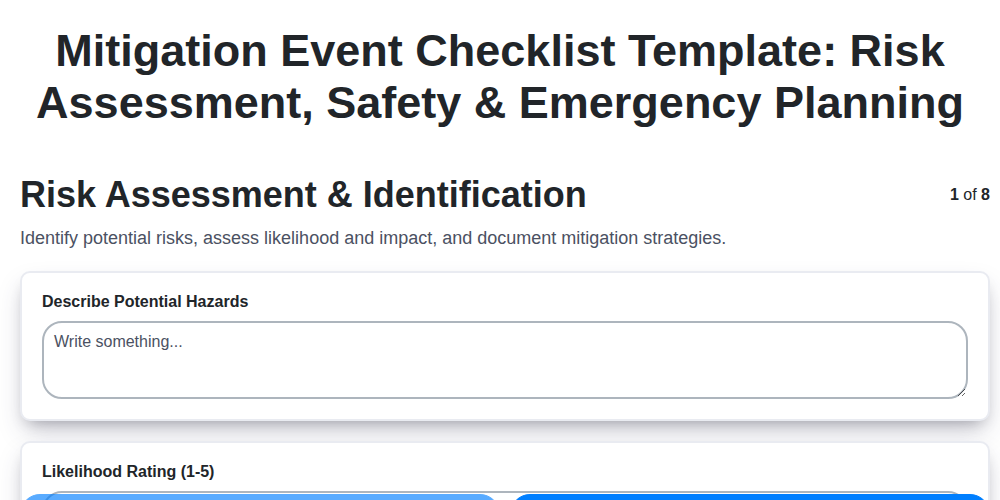
Table of Contents
- Event Safety Sorted: Your Free Mitigation Checklist Template
- Why Event Mitigation is Non-Negotiable
- Introducing Your Free Event Mitigation Checklist
- 1. Risk Assessment & Identification: Knowing What Could Go Wrong
- 2. Safety & Security Planning: Building a Secure Environment
- 3. Emergency Response Procedures: Preparing for the Unexpected
- 4. Communication & Notification: Keeping Everyone Informed
- 5. Resource Allocation & Equipment: Ensuring You Have What You Need
- 6. Legal & Regulatory Compliance: Staying on the Right Side of the Law
- 7. Training & Drills: Equipping Your Team
- 8. Post-Event Review: Learning and Improving
- Download Your Free Checklist Now!
- Resources & Links
TLDR: Worried about event safety? Our free checklist template guides you through risk assessment, emergency planning, and legal compliance - from crowd control to post-event review. Download it now to proactively protect your attendees and your event!
Event Safety Sorted: Your Free Mitigation Checklist Template
Planning an event - any event - is a whirlwind of excitement and detail. But amidst the logistics and marketing, ensuring the safety and well-being of your attendees must be a top priority. A reactive approach to safety simply isn't enough. You need a proactive plan, a roadmap for anticipating and mitigating potential risks.
That's why we're thrilled to offer you this free, comprehensive Event Mitigation Checklist Template. It's more than just a list; it's a practical guide designed to walk you through every crucial step of creating a robust safety plan, from initial risk assessment to post-event review.
This template is built around eight key areas - Risk Assessment, Safety & Security Planning, Emergency Response, Communication, Resource Allocation, Legal Compliance, Training, and Post-Event Documentation. Each section breaks down the essential tasks and considerations, providing a clear framework for creating a secure and enjoyable experience for everyone involved.
Ready to take the guesswork out of event safety? Download your free template today and confidently navigate the planning process knowing you're putting attendee well-being first!
Why Event Mitigation is Non-Negotiable
The stakes are simply too high to ignore. Event mitigation isn't a 'nice-to-have'; it's a fundamental responsibility. Beyond the potential for physical harm to attendees, a preventable incident can devastate an organization's reputation, leading to long-term damage and loss of trust. Legal repercussions, financial liabilities, and the emotional toll on staff and volunteers are further consequences of inadequate preparation. Moreover, a well-executed mitigation plan isn't just about avoiding disaster; it contributes to a positive attendee experience, fostering a sense of safety and well-being that enhances the event's overall success. It's an investment in people, a commitment to professionalism, and a proactive step toward ensuring the longevity and positive impact of your events.
Introducing Your Free Event Mitigation Checklist
Planning an event, big or small, comes with a responsibility - the safety and well-being of everyone involved. It's easy to get caught up in the excitement of logistics and entertainment, but overlooking potential risks can have serious consequences. That's why we've created this comprehensive Event Mitigation Checklist, designed to be your go-to resource for proactive planning and risk management.
This isn't just a formality; it's a detailed roadmap, broken down into eight essential areas, that will help you identify potential hazards, establish clear procedures, and ensure a smoother, safer event experience. We're putting the power of preparedness in your hands with a downloadable template, packed with actionable items and designed to be easily customized to fit the unique needs of your event. Inside, you'll find checklists covering everything from risk assessment and security planning to emergency response and post-event review - providing a complete framework for creating a robust mitigation plan. Let's work together to create memorable events, safely.
1. Risk Assessment & Identification: Knowing What Could Go Wrong
The foundation of any robust event mitigation plan lies in a thorough risk assessment. It's not about imagining the worst-case scenario for the sake of fear; it's about proactively identifying potential hazards so you can plan effective preventative measures. This process involves more than just a quick walkthrough - it requires a systematic examination of your event's environment, activities, and potential vulnerabilities.
Start by considering both natural and human-caused risks. What are the typical weather patterns for your location? Could flooding, extreme heat, or severe storms pose a threat? Examine the terrain - is it sloped, uneven, or prone to slips and falls? For human-caused risks, think about potential issues like theft, vandalism, unauthorized access, crowd surges, and even acts of terrorism (though the likelihood will vary greatly depending on the event and location).
Don't underestimate the importance of historical data. If you're running a recurring event, analyze past incidents-even minor ones-to identify trends and recurring problems. Were there issues with crowd control? Did anyone require medical attention? These insights can highlight areas where your plan needs strengthening.
To help prioritize your efforts, we recommend using a risk matrix. This simple tool plots the likelihood of an event occurring against its potential impact. Risks that are both highly likely and have a severe impact require immediate attention. Lower-priority risks can be addressed later or monitored closely. Remember, even seemingly minor risks can escalate if left unaddressed. By taking the time to meticulously assess and identify potential risks, you're laying the groundwork for a safer and more successful event.
2. Safety & Security Planning: Building a Secure Environment
A robust safety and security plan goes beyond simply reacting to potential threats-it's about proactively creating an environment where risks are minimized and attendees feel safe. This starts with establishing clear physical security measures and stringent access control protocols.
Perimeter Protection is Paramount: Your event's perimeter is the first line of defense. Carefully assess the site's vulnerabilities and implement appropriate barriers. This might include:
- Fencing and Barriers: Strategically placed fencing, barricades, and bollards can deter unauthorized access and channel attendees along designated pathways. Consider height and material based on the risk assessment.
- Controlled Entry Points: Clearly marked entry points with visible security personnel are essential. Minimize the number of access points to facilitate monitoring and control.
- Lighting: Adequate lighting around the perimeter and within the event space is crucial for visibility and deterring criminal activity, especially during evening hours.
Access Control: Who's Coming In? Beyond the perimeter, it's vital to control who enters your event.
- Ticket Scanning & Validation: Implement a reliable ticket scanning system to verify tickets and prevent fraud. Consider wristbands or other identifiers for entry.
- Bag Checks & Screening: Implement consistent bag checks at entry points, employing trained personnel or security technology to identify prohibited items (weapons, alcohol, etc.). Communicate this policy clearly to attendees beforehand.
- Staff Identification: Clearly identify all staff and volunteers with appropriate badges or uniforms. This helps attendees distinguish authorized personnel and improves overall security.
- VIP/Backstage Access: Strictly control access to backstage areas and VIP sections to prevent unauthorized entry and protect performers and personnel.
By prioritizing these foundational security measures, you create a safer and more controlled environment, laying the groundwork for a successful and worry-free event.
3. Emergency Response Procedures: Preparing for the Unexpected
Events, by their nature, present a spectrum of potential risks. While preventative measures significantly reduce the likelihood of incidents, a well-defined emergency response plan is your crucial second line of defense. This isn's about fearing the "what ifs"; it's about proactively preparing so that when the unexpected happens, you can respond swiftly, calmly, and effectively.
A solid emergency response procedure isn't a generic document - it's a tailored plan built around the specific layout, anticipated attendance, and potential hazards of your event. Here's a breakdown of key components:
1. Scenario-Specific Plans: Don't rely on a single, all-encompassing plan. Develop separate protocols for common scenarios like:
- Medical Emergencies: Identify and equip first aid stations, train designated personnel in basic medical response, and establish clear protocols for escalating care. Consider having on-site medical professionals or contracted EMS support.
- Fire: Designate fire marshals, ensure clear escape routes are marked, and maintain functional fire extinguishers. Conduct regular fire drills.
- Severe Weather: Establish shelter locations, develop communication protocols for weather warnings, and create evacuation plans for outdoor events.
- Security Threats: Develop procedures for dealing with theft, vandalism, crowd surges, and potential acts of violence.
- Lost Children: Create a designated meeting point and train staff on procedures for locating and reuniting lost children with their guardians.
2. Clear Communication Channels: Define how information will flow during an emergency. This includes:
- Internal Communication: Equip key personnel with reliable two-way radios or other communication devices.
- Public Address (PA) System: Script pre-prepared announcements to disseminate information calmly and efficiently.
- Notification System: Consider a mass notification system (SMS, email) to alert attendees of critical updates.
3. Designated Roles & Responsibilities: Clearly define roles for key personnel: Incident Commander, Medical Coordinator, Security Lead, Communications Officer, etc. Ensure everyone understands their responsibilities and has the necessary training.
4. Evacuation Procedures: Develop detailed evacuation routes and assembly points. Regularly practice evacuation drills to ensure attendees know what to do and where to go. Clearly mark exits and pathways.
5. Post-Incident Review: After any emergency or near-miss incident, conduct a thorough debriefing to identify areas for improvement in your response procedures. Documentation is key to continuous improvement.
4. Communication & Notification: Keeping Everyone Informed
Effective communication isn't just about announcements; it's the bedrock of a safe and successful event. A swift, clear, and reliable communication plan can be the difference between a minor inconvenience and a full-blown crisis. Here's a breakdown of critical elements to consider:
Pre-Event Communication: Build anticipation and set expectations. Utilize your website, social media channels, and email newsletters to share essential information like event schedules, parking details, security protocols, and any potential weather advisories. Transparency upfront reduces confusion and fosters a sense of preparedness.
On-Site Communication Systems: Invest in reliable on-site systems. Public Address (PA) systems are vital for making announcements, but ensure they are powerful enough to reach all areas of the event space. Consider supplementing with two-way radios for key personnel - security, medical staff, and event organizers - to enable instant communication and coordination. Clearly marked signage directing attendees to key locations (first aid, restrooms, exits) is also paramount.
Emergency Notification Protocols: The ability to quickly notify attendees of an emergency is absolutely critical. Establish a clear chain of command for issuing alerts and ensure all personnel are trained on how to deliver messages calmly and effectively. Explore multiple notification methods: announcements over the PA system, SMS alerts (if you have attendee contact information), flashing lights, and designated messengers. Regularly test these systems to guarantee they function properly under pressure.
Post-Event Updates: Don't let communication end when the event concludes. A brief update via social media or email can address any lingering questions, acknowledge any issues that arose, and thank attendees for their cooperation. This reinforces your commitment to safety and leaves a positive final impression.
Remember, proactive and transparent communication builds trust and contributes significantly to a secure and enjoyable event experience.
5. Resource Allocation & Equipment: Ensuring You Have What You Need
Having a meticulously planned event mitigation strategy is useless if you don't have the resources to execute it. This isn't just about having enough people; it'll also about the right equipment being readily available, properly maintained, and in the hands of those who need it. A shortage of crucial supplies or a malfunctioning piece of equipment can quickly derail even the best-laid plans and create dangerous situations.
Here's a deeper look at what resource allocation and equipment readiness involves:
1. Personnel Power: Don't underestimate the number of trained personnel needed. This includes security staff (uniformed and plainclothes), medical responders (certified EMTs, nurses, or paramedics), crowd management specialists, and volunteers. Account for shifts, breaks, and potential overtime. Consider the ratio of staff to attendees - it should be based on risk assessment and event type.
2. Essential Equipment Inventory: Create a comprehensive inventory of all necessary equipment, including:
- First Aid Supplies: Fully stocked first aid kits, AEDs (Automated External Defibrillators) readily accessible.
- Communication Devices: Two-way radios, mobile phones, public address (PA) systems for clear announcements. Ensure backup batteries and charging stations.
- Safety Gear: Fire extinguishers (regularly inspected and serviced), personal protective equipment (PPE) for staff (high-visibility vests, gloves, masks).
- Crowd Control: Barriers, stanchions, signage to direct traffic and manage crowds.
- Lighting: Adequate lighting for pathways, entrances, and emergency areas. Generators for backup power.
- Emergency Vehicles: Ambulances, fire trucks (if applicable) stationed at strategic locations.
- Specialized Equipment: This varies based on the event type - e.g., stage rigging for concerts, snow removal equipment for winter events.
3. Maintenance & Inspection: Regular inspections and maintenance are just as important as having the equipment. Maintain a log of all inspections and repairs. Test communication systems before the event.
4. Strategic Placement: Don's just have the equipment; place it strategically. First aid stations should be clearly marked and accessible. Emergency vehicles should have unobstructed access. Communication devices should be easily accessible to key personnel.
5. Contingency Planning: Always have a "Plan B." What happens if a generator fails? What if a key staff member is unavailable? Cross-train staff and have backup equipment on standby.
Effective resource allocation and equipment readiness is the invisible foundation upon which a safe and successful event is built. Don't let it be an afterthought; prioritize it from the very beginning.
6. Legal & Regulatory Compliance: Staying on the Right Side of the Law
Navigating the legal landscape surrounding events can feel daunting, but it's a non-negotiable aspect of responsible event planning. Failure to comply with applicable laws and regulations can lead to hefty fines, legal action, and damage to your organization's reputation. Let's break down what needs your attention.
First, securing the correct permits and licenses is paramount. These vary widely depending on your event type, location, and size. Think beyond just the event itself - consider alcohol sales (if applicable), food vendor permits, noise permits, and fire safety approvals. Your local government website and permitting office are your primary resources.
Accessibility is another critical area. The Americans with Disabilities Act (ADA) mandates reasonable accommodations for individuals with disabilities. This includes accessible parking, restrooms, pathways, and seating. A thorough accessibility review of your venue is a must.
Insurance coverage is your safety net. Make sure you have adequate general liability insurance to cover potential accidents or injuries. Specialized event insurance may also be necessary depending on the event's nature and risks. Carefully review your policy's coverage limits and exclusions.
Finally, contractual obligations play a significant role. When working with vendors, contractors, and performers, include clauses that address safety compliance, insurance requirements, and liability. A well-drafted contract can protect your organization and clearly define responsibilities. Don't hesitate to consult with legal counsel to ensure your contracts are legally sound and protect your interests.
7. Training & Drills: Equipping Your Team
A meticulously crafted mitigation plan is only as effective as the people executing it. Simply having a checklist isn't enough; your team needs the knowledge, skills, and confidence to respond swiftly and appropriately in an emergency. This isn't about theoretical understanding; it's about practical, hands-on training.
Training should cover a wide range of scenarios, including evacuation procedures, first aid and CPR certification, conflict resolution techniques, and security protocols. Regularly scheduled refreshers are vital, ensuring skills don's fade and new team members are brought up to speed.
Beyond formal training, drills are absolutely essential. Tabletop exercises, where teams walk through scenarios and discuss responses, are a great starting point. But the real value comes from full-scale drills - simulating real-world emergencies. These drills should be unpredictable, pushing the team to think on their feet and adapt to unexpected challenges. Post-drill debriefs are crucial. Honest, open discussion about what worked well and what needs improvement allows for continuous improvement and builds team cohesion. Remember: practice under pressure breeds preparedness.
8. Post-Event Review: Learning and Improving
The event is over. Attendees have gone home, the venue is quiet, and the immediate rush is behind you. But the work isn's truly done. A thorough post-event review is critical not only for understanding what went right, but even more importantly, for identifying areas for improvement. This isn't about blame; it's about continuous learning and refining your event mitigation plan for future success.
What to Review:
- Incident Log: Meticulously examine the incident log. Even minor occurrences (near misses) can reveal systemic weaknesses.
- Feedback Collection: Gather feedback from attendees, staff, volunteers, security personnel, and emergency responders. Surveys, informal conversations, and social media monitoring can provide valuable insights.
- Plan Effectiveness: Assess how effectively the mitigation plan was executed. Were procedures followed? Were resources adequate? Were communication channels clear and efficient?
- Unexpected Events: Document any events that weren't anticipated in the original plan. These unknown unknowns should be incorporated into future risk assessments.
- Team Performance: Evaluate the performance of your team and identify areas where training or process adjustments might be necessary.
Turning Insights into Action:
The goal isn't just to identify issues, but to develop concrete actions to address them. This might involve:
- Updating the Risk Assessment: Incorporate new risks identified during the event.
- Revising Procedures: Modify protocols based on lessons learned.
- Improving Communication: Enhance communication strategies for future events.
- Providing Additional Training: Offer specialized training for staff and volunteers.
- Investing in New Equipment: Acquire necessary equipment to address identified weaknesses.
Remember, a robust event mitigation plan is a living document that evolves with each event. By embracing a culture of continuous improvement, you can create safer, more enjoyable experiences for everyone involved.
Download Your Free Checklist Now!
We know creating a comprehensive event mitigation plan can feel overwhelming. That's why we're offering this free, downloadable checklist as a starting point - your roadmap to a safer and more successful event.
Inside, you'll find a detailed breakdown of critical areas, from risk assessment and security planning to emergency response and post-event review. It's designed to be easily customizable to your specific event needs and local regulations.
Go to the Checklist below to download your free version and start building a proactive safety plan today!
Resources & Links
- Occupational Safety and Health Administration (OSHA): The official OSHA website provides comprehensive information and regulations regarding workplace safety, including resources that can be adapted for event safety. Useful for understanding legal responsibilities and best practices.
- Federal Emergency Management Agency (FEMA): FEMA offers a wide range of resources on disaster preparedness and emergency management. While primarily focused on large-scale disasters, the principles and planning processes are applicable to event safety. Includes templates and guides for creating emergency plans.
- International Organization for Standardization (ISO): ISO provides various standards related to risk management (ISO 31000) and event management. These standards provide frameworks for systematic risk assessment and mitigation. While often requiring certification, the principles are valuable.
- Eventbrite Event Safety Guide: Eventbrite's blog has articles and guidance specifically tailored to event safety considerations. They cover a range of topics from crowd management to security measures, helpful for practical implementation tips.
- International Association of Emergency Managers (IAEM): IAEM is a professional organization for emergency managers. Their website provides information, training, and resources related to emergency planning and response, valuable for understanding best practices in crisis management for events.
- Centers for Disease Control and Prevention (CDC): The CDC website is essential for understanding health and safety concerns, especially regarding infectious disease prevention (particularly relevant post-pandemic). Provides guidance on sanitation, hygiene, and health protocols for events.
- National Fire Protection Association (NFPA): NFPA develops codes and standards related to fire safety. Important for ensuring your event complies with fire safety regulations, including emergency exits, fire extinguishers, and fire alarms.
- American Red Cross: The Red Cross provides training and resources for first aid, CPR, and disaster preparedness. Equipping your event staff with these skills is critical for responding to medical emergencies.
- International Crowd Management Alliance (ICMA): ICMA focuses specifically on crowd management principles and best practices. Offers insights into controlling crowd flow, preventing incidents, and ensuring public safety at events with large attendance.
- Insurance Information Institute: Provides information about event insurance and liability. Important to understand your insurance coverage and potential risks associated with your event.
Frequently Asked Questions
What is this checklist template for?
This checklist template is designed to help you identify and mitigate potential safety risks at events, regardless of size or type. It's a starting point to ensure a safer environment for attendees, staff, and volunteers.
Is this checklist template free to use?
Yes, the checklist template is completely free to download and use. We want to make event safety accessible to everyone.
What types of events is this checklist suitable for?
This checklist is adaptable and useful for a wide range of events, including concerts, festivals, conferences, sporting events, workshops, and more. You can customize it to fit the specifics of your event.
How detailed is the checklist?
The checklist provides a broad range of potential safety considerations, covering areas like emergency procedures, crowd management, security, venue safety, and more. It's designed to be thorough but adaptable to your specific needs. You're encouraged to add to it based on your event's unique factors.
Can I customize the checklist?
Absolutely! The checklist is meant to be a starting point. We strongly encourage you to customize it by adding event-specific risks and mitigation strategies. The more tailored it is, the more effective it will be.
Who should use this checklist?
Event organizers, safety managers, venue staff, and anyone responsible for event planning and risk assessment should use this checklist. It's a valuable tool for collaborative planning and ensuring everyone is on the same page.
How often should I review and update the checklist?
We recommend reviewing and updating the checklist regularly, especially before each event and after any significant changes to your event plan or venue. This ensures it remains relevant and effective.
Comments
There are no comments yet. Be the first to add one!
Event Planning Management Solution Demo
Plan flawless events with ease! ChecklistGuro streamlines event planning - from vendor management to budget tracking & guest communication. Stay organized, reduce stress, & deliver unforgettable experiences. Manage it all with our Work OS.
Related Articles
Your Ultimate Festival Planning Checklist: Stage, Permits & Artist Success
The Ultimate Product Launch Checklist Template: Your Guide to Marketing, Demos & Sales Success

The Ultimate Fundraising Event Checklist: Donations, Promotion & Volunteer Management
The Ultimate Seminar Planning Checklist: From Topic to Attendees
The Ultimate Promotional Event Checklist Template: Your Guide to Brand Activation & Social Buzz
Anniversary Party Checklist: Plan Your Perfect Celebration
Grand Opening Checklist Template: Your Guide to a Successful Launch
The Ultimate Virtual Event Planning Checklist Template
We can do it Together
Need help with
Event Planning Management?
Have a question? We're here to help. Please submit your inquiry, and we'll respond promptly.