Commercial Insurance Policy Compliance Checklist: Your Guide to Staying Protected
Published: 12/01/2025 Updated: 07/02/2026
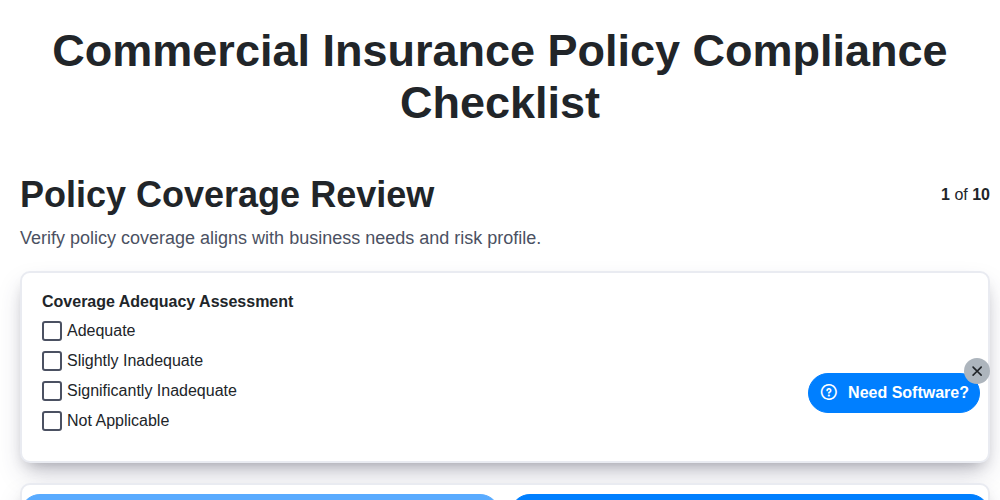
Table of Contents
- Introduction: Why Commercial Insurance Compliance Matters
- 1. Policy Coverage Review: Understanding What You're Insured For
- 2. Policy Documents & Records: Maintaining Accurate Documentation
- 3. Coverage Limits & Deductibles: Ensuring Adequate Protection
- 4. Deciphering Exclusions & Conditions: Knowing Your Boundaries
- 5. Navigating Regulatory Compliance: Staying on the Right Side of the Law
- 6. Renewal & Expiration Dates: Avoiding Coverage Gaps
- 7. Premium Payment & Budgeting: Managing Costs Effectively
- 8. Loss Prevention & Safety Measures: Proactive Risk Management
- 9. Claims Handling Procedures: Being Prepared for the Unexpected
- 10. Contractual Requirements: Meeting Obligations to Third Parties
- 11. Employee Training and Awareness
- 12. Regular Audits & Updates
- Conclusion: Staying Compliant for Long-Term Security
- Resources & Links
TLDR: Feeling overwhelmed by your commercial insurance? This checklist helps you stay compliant! It covers everything from reviewing coverage and limits to understanding exclusions, managing payments, and handling claims. Using it ensures you're fully protected and avoids costly surprises - think of it as your insurance policy's best friend!
Introduction: Why Commercial Insurance Compliance Matters
Commercial insurance isn't just about having a policy; it's about ensuring that policy works for you when you need it most. A lapse in compliance, however unintentional, can lead to denied claims, legal liabilities, and financial repercussions. This isn't about finding fault; it's about proactively managing risk and demonstrating due diligence. A robust compliance program shows insurers you're a responsible policyholder, potentially leading to favorable renewals and rates. Ultimately, commercial insurance compliance isn't a burden-it's a critical investment in the long-term health and stability of your business.
1. Policy Coverage Review: Understanding What You're Insured For
Regularly reviewing your commercial insurance policy coverage is far more than just a formality - it's a crucial step in ensuring your business is truly protected. It's easy to set up a policy and forget about it, but business operations change, risks evolve, and your insurance needs to keep pace.
This review isn't just about skimming the summary page; it's about delving into the specifics of what your policy actually covers. Ask yourself:
- Does the coverage align with your current business activities? Have you added new services, expanded your operations, or acquired assets that aren't adequately covered? A new product line, for example, may require specialized coverage.
- Are your industry-specific risks addressed? Different industries face unique exposures. Ensure your policy accounts for those specific risks.
- Have your business values changed? The value of your inventory, equipment, or building can fluctuate. Make sure your coverage reflects these changes to avoid being underinsured in a loss.
- Are there any gaps in coverage? Consider potential liabilities that might not be explicitly mentioned.
Take the time to thoroughly understand each section of your policy documentation, and don't hesitate to contact your insurance broker or agent with any questions. A proactive approach to policy coverage review can save you significant financial hardship down the road.
2. Policy Documents & Records: Maintaining Accurate Documentation
Having a robust commercial insurance policy is only half the battle; diligent record-keeping is equally critical. Lost or disorganized documents can severely hinder claims processes and potentially invalidate your coverage. This section outlines essential documentation to maintain and how to organize it.
What to Keep:
- Original Policy Documents: This includes the declarations page, policy wording, endorsements, and any riders attached. These are the definitive sources of your coverage terms.
- Renewal Documents: Keep copies of all renewal offers, acceptance forms, and any correspondence regarding policy changes.
- Communication with Insurer: Maintain a record of all emails, letters, and notes from phone calls with your insurance broker or insurer. This is crucial for understanding any agreed-upon changes or clarifications.
- Proof of Loss Records: Keep records of any prior claims filed, including documentation submitted, correspondence, and settlement details.
- Risk Assessments & Surveys: Document any risk assessments or safety surveys conducted on your premises. This demonstrates proactive risk management.
- Inventory Records: For businesses with significant inventory, maintain detailed records.
- Employee Training Records: If your policy requires certain safety training, keep records proving employee completion.
Organization is Key:
- Digital Copies: Scan all physical documents and store them in a secure, organized digital folder. Consider cloud storage for added security and accessibility.
- Physical Filing System: If you prefer physical copies, use labeled folders and a clear filing system.
- Regular Review: Schedule time to review your policy documents at least annually to ensure you understand the terms and conditions.
3. Coverage Limits & Deductibles: Ensuring Adequate Protection
Your commercial insurance policy's coverage limits and deductibles are critical components determining your financial protection. It's not enough to simply have coverage; you need to ensure it's adequate for potential losses. Regularly reviewing these aspects is essential.
Coverage Limits: These represent the maximum amount your insurance company will pay for a covered loss. Are your limits sufficient to cover the full potential impact of a significant event, such as a major property damage, a liability lawsuit, or a business interruption? Consider factors like the value of your assets, potential lawsuit payouts in your industry, and the cost of lost income during an outage. Underinsurance can leave you exposed to devastating financial consequences.
Deductibles: This is the amount you pay out-of-pocket before your insurance coverage kicks in. A lower deductible means higher premiums, while a higher deductible results in lower premiums but increases your financial responsibility in the event of a claim. Carefully assess your risk tolerance and budget when determining your deductible levels. A higher deductible might be suitable for a business with substantial cash reserves, while a lower one might be preferred by a business with tighter margins.
Regular Review is Key: Coverage limits and deductibles should be revisited periodically, at least annually, and whenever your business experiences significant changes, such as expansion, new product lines, increased employee count, or a shift in operations. Don't assume your existing limits are still appropriate; proactively adjust them to reflect your current risk profile and financial capacity. Consult with your insurance broker to ensure you're making informed decisions.
4. Deciphering Exclusions & Conditions: Knowing Your Boundaries
Commercial insurance policies are comprehensive documents, but they aren't blank checks. A crucial - and often overlooked - aspect of maintaining compliance is a thorough understanding of the exclusions and conditions outlined within your policy. These sections detail what your policy doesn't cover and the specific requirements you must meet to maintain coverage.
What are Exclusions?
Exclusions are specific events, situations, or types of losses that your insurance policy explicitly excludes from coverage. They'd be the fine print detailing what you're not protected against. Common exclusions might include acts of war, certain types of pollution, damage from faulty workmanship, or losses occurring while a business is vacant. Ignoring these exclusions can lead to unexpected and costly surprises when you need coverage the most.
Understanding Conditions - Your Responsibilities
Conditions outline your responsibilities as a policyholder. These aren't about what the insurance company doesn't cover; instead, they're about how the policy works and what you need to do to maintain coverage. Examples include promptly notifying the insurance company of any changes to your business operations (like expanding into new locations or adding new products), maintaining specific safety measures, or adhering to reporting timelines. Failing to fulfill these conditions can void your coverage, even if the loss itself would otherwise be covered.
Why is Understanding Them Critical for Compliance?
- Avoid Coverage Gaps: Knowing what's excluded prevents the assumption that every potential loss is covered.
- Minimize Disputes: Clear understanding reduces disagreements with the insurance company during claims.
- Proactive Risk Management: Understanding exclusions can highlight areas where you need to implement additional risk mitigation strategies.
- Maintain Valid Coverage: Fulfilling conditions ensures your policy remains active and enforceable.
Take Action:
- Review the Policy Language: Carefully read and understand the entire exclusions and conditions sections of your commercial insurance policy.
- Ask Questions: Don't hesitate to ask your insurance broker or agent to clarify any confusing language.
- Document Your Understanding: Keep a summary of key exclusions and conditions for easy reference.
5. Navigating Regulatory Compliance: Staying on the Right Side of the Law
Commercial insurance isn't just about protecting your business from financial loss; it's also about ensuring you're operating within the bounds of applicable laws and regulations. Regulatory compliance varies widely depending on your industry, location, and the types of risks you face. Failing to adhere to these rules can result in penalties, fines, and even legal action.
This section of your compliance checklist focuses on confirming your insurance coverage aligns with these crucial requirements. Consider these key points:
- Industry-Specific Regulations: Does your policy adequately address regulations specific to your industry (e.g., environmental liability for manufacturing, professional indemnity for consultants)? Review relevant laws and ordinances regularly.
- State and Federal Mandates: Be aware of state and federal mandates regarding insurance coverage. Some states require specific types of insurance for certain businesses.
- Workers' Compensation: If you have employees, ensure your workers' compensation coverage meets state requirements.
- Contractual Obligations: Many contracts (leases, vendor agreements, etc.) stipulate specific insurance coverage requirements. Your policy must meet these contractual obligations.
- Regular Updates: Regulations change. Establish a system to stay informed about updates and amendments to relevant laws. Consider subscribing to industry newsletters or working with a compliance expert.
It's highly recommended to consult with an insurance professional and legal counsel to ensure complete compliance and tailor your policy to meet your business's unique regulatory landscape.
6. Renewal & Expiration Dates: Avoiding Coverage Gaps
One of the most common and easily avoidable insurance compliance failures revolves around renewal and expiration dates. It's surprisingly simple to let a policy lapse, leaving your business vulnerable. Here's what you need to do:
- Centralized Calendar: Create a central calendar (digital is best!) to track all commercial insurance policy expiration dates. Share this with your insurance broker and relevant internal stakeholders (finance, risk management, etc.).
- Advance Notification: Your insurance broker should be providing renewal information and quotes well in advance (typically 60-90 days) before expiration. Verify they are doing so and proactively follow up if you haven't received anything.
- Review Renewal Quotes Carefully: Don't just accept the renewal quote automatically. Review it carefully. Are the coverage levels still appropriate for your current business activities and risk profile? Have there been any significant changes that need to be reflected in the coverage?
- Budgetary Considerations: Ensure you're factoring in renewal costs within your annual budget. Unexpected renewal increases can disrupt financial planning.
- Automated Reminders: Implement automated reminders (within your calendar or through specialized software) to trigger reviews and ensure timely action.
- Record Keeping: Document all communication regarding renewals, quotes, and final decisions. This creates an audit trail demonstrating due diligence.
7. Premium Payment & Budgeting: Managing Costs Effectively
Commercial insurance premiums represent a significant expense for most businesses. Simply paying the bill isn't enough; proactive premium payment and budgeting are crucial for financial health and ensuring you're getting the best possible value.
Here's how to approach this:
- Understand Your Payment Schedule: Know when payments are due and the accepted payment methods. Late payments can trigger penalties or even policy cancellation.
- Review Payment Options: Explore options like annual payments versus monthly installments. While monthly payments offer better cash flow, annual payments often come with a discount. Weigh the pros and cons based on your business's financial situation.
- Budgeting is Key: Integrate your insurance premiums into your overall business budget. This helps you anticipate costs and avoid surprises. Factor in potential premium increases at renewal.
- Explore Discounts: Inquire about potential discounts. Many insurers offer discounts for bundling policies, maintaining a good loss history, implementing safety measures, or qualifying for industry-specific programs.
- Regularly Review Your Coverage: Ensure your coverage aligns with your current risk profile and budget. Over-insured businesses are needlessly paying for coverage they don't need.
- Consider Payment Plans: If premium payments pose a strain, discuss payment plan options with your insurer. They may offer flexible arrangements to ease the burden.
- Keep Detailed Records: Maintain meticulous records of all premium payments, invoices, and communication related to your insurance policy. This is essential for audits and resolving any discrepancies.
8. Loss Prevention & Safety Measures: Proactive Risk Management
Your commercial insurance policy isn't just about covering losses; it's a component of a broader risk management strategy. A significant portion of maintaining compliance and potentially reducing premiums revolves around actively preventing losses in the first place. This section focuses on the loss prevention and safety measures you should have in place.
Beyond the Basics: Simply having fire extinguishers isn't enough. This requires a comprehensive approach:
- Regular Inspections: Implement a schedule for inspecting equipment, facilities, and processes. Document these inspections, noting any deficiencies and corrective actions taken.
- Employee Training: Provide thorough training on safety protocols, hazard recognition, and emergency procedures. This isn't a one-time event; refresher courses are crucial. Consider specialized training based on job roles and potential risks.
- Hazard Assessments: Conduct regular hazard assessments to identify potential risks and implement controls. This should be a collaborative effort involving employees at all levels.
- Emergency Preparedness: Develop and regularly practice emergency plans for fire, natural disasters, and other potential threats. Ensure employees know evacuation routes and procedures.
- Security Measures: Implement appropriate security measures, such as alarm systems, security cameras, and access controls, to prevent theft and vandalism.
- Maintenance Programs: Establish and adhere to preventative maintenance schedules for all equipment and machinery.
- Documentation: Keep meticulous records of all safety training, inspections, hazard assessments, and corrective actions. This documentation is invaluable in demonstrating compliance with your insurance policy and potentially mitigating claims disputes.
Demonstrating a commitment to loss prevention can also positively influence your insurance rates and potentially lead to premium discounts. Regularly reviewing and updating your loss prevention strategies is key to ensuring continued compliance and a safer work environment.
9. Claims Handling Procedures: Being Prepared for the Unexpected
A robust commercial insurance policy is only as valuable as your ability to effectively handle a claim when one arises. Don't wait until disaster strikes to understand your obligations and how to navigate the claims process. This checklist emphasizes the importance of having well-defined claims handling procedures.
Here's what you need to consider:
- Know Your Policy's Claims Process: Familiarize yourself with your policy's specific guidelines for reporting a claim. Understand timelines, required documentation, and designated contact persons.
- Designated Contact Person: Establish a single point of contact within your company responsible for managing claims. This ensures consistency and prevents conflicting information.
- Prompt Reporting: Time is of the essence. Know when and how to report a claim promptly. Delayed reporting can jeopardize coverage and impact the outcome. Most policies have strict deadlines.
- Documentation is Key: Maintain meticulous records related to the incident. This includes photos, videos, witness statements, police reports, repair estimates, and any other relevant documentation.
- Cooperate with the Insurer: Actively cooperate with your insurance company during the claims investigation. Provide accurate and complete information.
- Loss Mitigation: Take reasonable steps to prevent further damage or loss after an incident. Document these actions and associated costs.
- Legal Counsel (If Necessary): For complex or high-value claims, consider involving legal counsel to protect your interests.
- Review Past Claims: Periodically review past claims to identify areas for improvement in your loss prevention and safety measures. This proactive approach can lead to fewer claims in the future.
By establishing and regularly reviewing these claims handling procedures, you're not just complying with your policy - you're proactively safeguarding your business's financial well-being.
10. Contractual Requirements: Meeting Obligations to Third Parties
Many commercial insurance policies include contractual requirements - clauses that dictate how you must manage risk and handle claims to maintain coverage. These often arise from contracts you have with clients, vendors, or partners. For example, a construction contract might require you to carry a specific type of insurance with a particular limit, and mandate that the client be listed as an "additional insured." Failing to adhere to these stipulations can lead to denied claims, legal disputes, and even breach of contract.
Here's what you need to do:
- Identify Contractual Obligations: Carefully review all your contracts to pinpoint insurance-related clauses. Don't just scan; actively search for language related to insurance coverage, endorsements, certificates of insurance, and named insureds.
- Ensure Compliance: Verify that your policy meets every requirement outlined in your contracts. This may necessitate adding endorsements to your policy, adjusting coverage limits, or obtaining specific types of insurance.
- Communicate with Third Parties: Provide certificates of insurance to relevant parties as required by your contracts. Maintain records of these certificates and promptly update them when your insurance changes.
- Maintain Records: Keep copies of all contracts and associated insurance documentation in a centralized, accessible location.
- Regularly Review: As your contracts evolve or new ones are added, review them regularly to ensure ongoing compliance with insurance requirements.
Failing to address these contractual requirements isn't just an insurance matter; it's a legal one. Proactive diligence in this area protects your business and demonstrates your commitment to fulfilling your contractual obligations.
11. Employee Training and Awareness
Your commercial insurance policy isn't just a document; it's a commitment to risk management. And that commitment only holds weight if your employees understand their roles in upholding policy compliance. A lack of awareness can lead to unintentional breaches, increasing your risk profile and potentially impacting claims coverage.
This section focuses on ensuring your team is educated. Training should cover the following:
- Understanding the Policy: Briefly explain the core purpose and scope of the insurance policy - what it covers and why it's important for the business.
- Reporting Procedures: Employees need to know exactly who to contact and how to report incidents, near misses, or potential liabilities. Clearly defined procedures prevent critical information from being missed.
- Safety Protocols: Reinforce established safety protocols and highlight how they directly contribute to risk mitigation and policy adherence.
- Specific Role Responsibilities: Certain roles might have specific responsibilities related to policy compliance (e.g., vehicle maintenance for auto policies, handling hazardous materials for liability coverage). Tailor training to these roles.
- Regular Refreshers: Initial training isn't enough. Schedule regular refresher courses, especially when policy terms change or new procedures are implemented.
Document all training sessions, including dates, attendees, and topics covered. This provides tangible evidence of your commitment to employee awareness and policy compliance.
12. Regular Audits & Updates
Compliance isn't a "set it and forget it" endeavor. Your commercial insurance policy compliance is a living document that requires ongoing attention. Schedule regular audits - at least annually, but ideally more frequently - to review all aspects of your checklist. This includes verifying that your risk assessments are still accurate, your safety measures remain effective, and your documentation is up-to-date.
Beyond annual reviews, stay vigilant for any significant business changes. Expansion, new product lines, changes in operations, or even a shift in your physical location can all impact your coverage needs. Each of these triggers should prompt a review of your policy and compliance procedures. Don't hesitate to consult with your insurance broker or legal counsel to ensure continued adherence to all requirements and to address any evolving risks. Proactive updates are far less costly than dealing with the consequences of non-compliance.
Conclusion: Staying Compliant for Long-Term Security
Navigating commercial insurance compliance can feel like a complex undertaking, but the rewards - minimized risk, cost savings, and peace of mind - are well worth the effort. This checklist is more than just a formality; it's a roadmap to ensure your business is adequately protected and operating within the terms of your policy. Regularly reviewing these elements isn't a one-time task, but an ongoing commitment. By embedding this compliance checklist into your annual business review process and proactively addressing any potential gaps, you're not only fulfilling your contractual obligations but also investing in the long-term security and success of your organization. Don't wait for a claim to reveal a compliance lapse - stay proactive, stay informed, and stay compliant.
Resources & Links
- IRMI (Insurance Risk Management Institute): A leading provider of insurance training, content, and consulting. Offers comprehensive resources on commercial insurance, risk management, and compliance - invaluable for understanding policy language and legal requirements. Look for their courses and articles specifically on commercial lines.
- NAIC (National Association of Insurance Commissioners): Provides information on state insurance regulations and consumer protection. Useful for understanding the regulatory landscape impacting commercial insurance policies and compliance obligations. Their resources can clarify state-specific requirements.
- III (Insurance Information Institute): Offers educational resources and data on insurance trends, including commercial insurance. Their website features articles and fact sheets that can help explain complex insurance concepts and compliance issues.
- SBA (Small Business Administration): While primarily focused on small business loans and support, the SBA provides general information about business insurance needs. Can be useful for understanding the types of coverage generally required for various businesses.
- RMA (Risk Management Association): A professional organization for risk managers. Offers resources, training, and networking opportunities related to risk management and insurance compliance. Excellent for in-depth understanding and best practices.
- CFA Institute: While primarily for investment professionals, the CFA Institute's resources on financial risk management provide a good foundation for understanding risk mitigation and insurance best practices - especially relevant to coverage limits and deductibles.
- IRMI - Loss Prevention and Safety: IRMI's dedicated section on Loss Prevention and Safety provides details and examples relevant to section 8: Helps businesses implement proactive risk management strategies to reduce potential losses and stay compliant.
- SCORE (Service Corps of Retired Executives): Provides free business mentoring and workshops. Local chapters often have resources or mentors who can offer insights into insurance compliance specifically relevant to your industry and location. Consider checking their event listings.
- Marsh: A global insurance broker and risk advisor. While their services are geared toward larger businesses, their website contains a wealth of information, articles, and guides on commercial insurance best practices and compliance - a good resource for understanding complex issues.
- Aon: Another major insurance broker, Aon provides similar resources to Marsh, including articles, webinars, and insights into commercial insurance trends and compliance requirements. Provides broader risk management perspective.
- HUB International: A global insurance broker offering a broad range of insurance and risk management solutions. Their website provides insights and resources on various commercial insurance topics, useful for understanding policy terms and conditions.
Frequently Asked Questions
What is a commercial insurance policy compliance checklist and why do I need one?
A compliance checklist is a tool that outlines all the requirements and responsibilities outlined in your commercial insurance policies. It helps you ensure you're meeting those terms, avoiding potential claim denials, premium increases, or even policy cancellation. Think of it as a roadmap to staying protected and validating your coverage.
What types of commercial insurance policies typically require compliance checklists?
Most commercial insurance policies benefit from a compliance checklist, including but not limited to: General Liability, Property, Workers' Compensation, Commercial Auto, Professional Liability (Errors & Omissions), and Cyber Liability. Policies with specific requirements related to safety, security, or operations are especially crucial.
What are some common items found on a commercial insurance policy compliance checklist?
Checklists vary depending on the policy but often include things like: Fire safety procedures, regular equipment maintenance records, employee training certifications, security protocols (cameras, alarms), proper handling and storage of hazardous materials, adherence to industry-specific regulations, and documentation of inspections.
What happens if I fail to comply with my commercial insurance policy requirements?
Non-compliance can have serious consequences. Insurers can deny claims, increase premiums, place restrictions on coverage, or even cancel your policy. They may also impose fines or other penalties.
Who is responsible for ensuring compliance with my commercial insurance policy?
Ultimately, the responsibility lies with the policyholder (your business). However, you may delegate responsibility to specific employees or assign it to a third-party compliance specialist. Regardless, the policyholder remains accountable.
How often should I review and update my commercial insurance policy compliance checklist?
Regular review is key. We recommend reviewing your checklist at least annually, or more frequently if there are significant changes to your business operations, industry regulations, or physical assets. Significant changes warrant immediate review and updates.
Can I create my own commercial insurance policy compliance checklist, or do I need to use a pre-made one?
You *can* create your own, but it's essential to have a deep understanding of your policy's specific requirements. Many insurance brokers or risk management consultants offer pre-made checklists tailored to different industries and policy types. Using a professional checklist ensures thoroughness and accuracy.
Where can I find help creating or implementing a commercial insurance policy compliance checklist?
Your insurance broker or agent is a valuable resource. They can help you understand your policy requirements and develop a tailored checklist. Risk management consultants also specialize in helping businesses achieve and maintain compliance.
Does compliance apply to subcontractors as well?
Yes, absolutely. Your compliance obligations extend to contractors and subcontractors who operate under your coverage. Ensure their actions and activities are consistent with your insurance policy terms and documented accordingly.
How does documentation play a crucial role in commercial insurance compliance?
Documentation is your evidence of compliance. Maintaining accurate and accessible records of inspections, maintenance, training, and other required activities is vital. It demonstrates to the insurer that you're taking steps to mitigate risks and uphold your obligations.
Comments
There are no comments yet. Be the first to add one!
Insurance Management Solution Demo
Managing policies, claims, and compliance in the insurance industry is complex. ChecklistGuro's Work OS platform streamlines your operations, from underwriting and renewals to claims processing and reporting. Improve efficiency, reduce errors, and enhance customer satisfaction. Discover how ChecklistGuro can transform your insurance business!
Related Articles
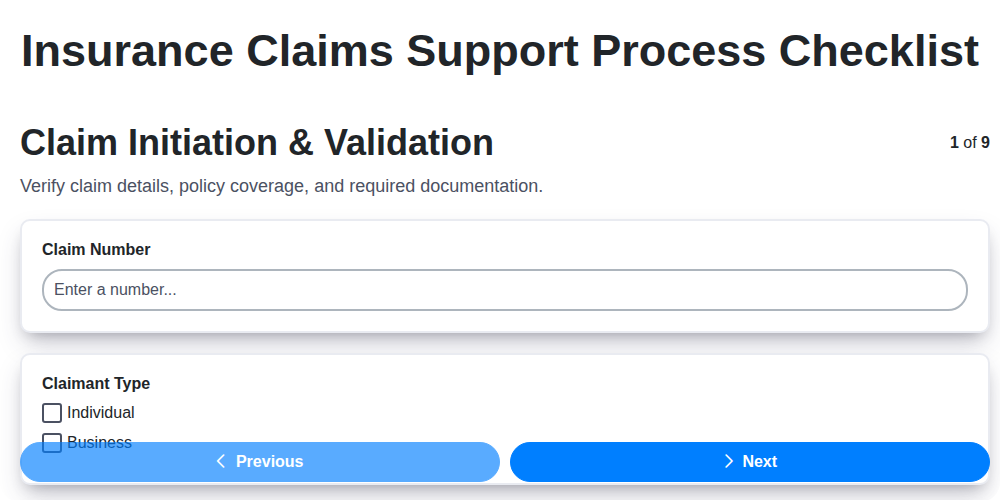
Streamline Claims: Your Insurance Claims Support Process Checklist Template
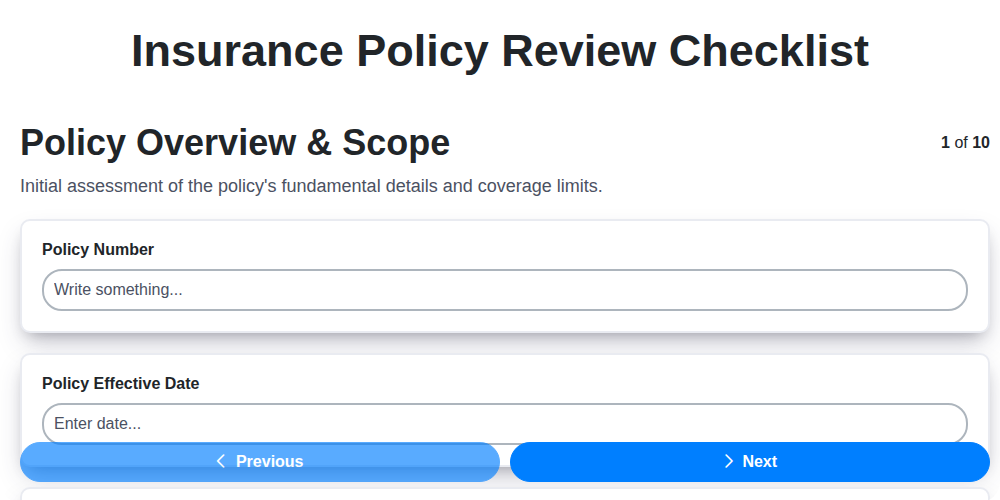
Your Insurance Policy Review Checklist: A Step-by-Step Guide
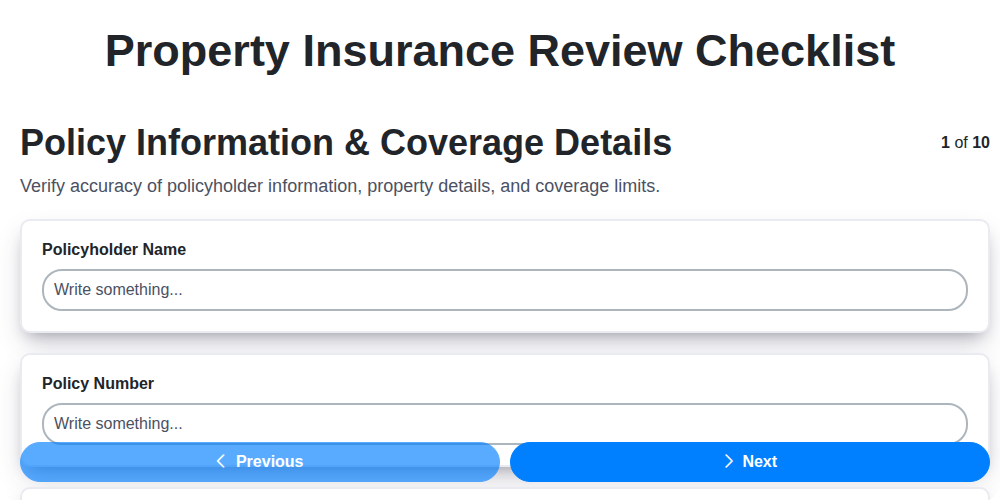
Your Property Insurance Review Checklist: A Step-by-Step Guide
Your Title Search & Insurance Checklist Template
Simplify Insurance Verification: Your Free Dental Checklist Template
Crop Insurance Policy Review Checklist: A Farmer's Guide

The Ultimate Vehicle Registration & Insurance Validation Checklist
Mastering the Policyholder Journey: Your Insurance Experience Survey Checklist
Need help with
Insurance?
Have a question? We're here to help. Please submit your inquiry, and we'll respond promptly.