Dental Insurance Claim Submission Workflow: Maximize Reimbursement & Minimize Errors
Published: Updated: 04/16/2026
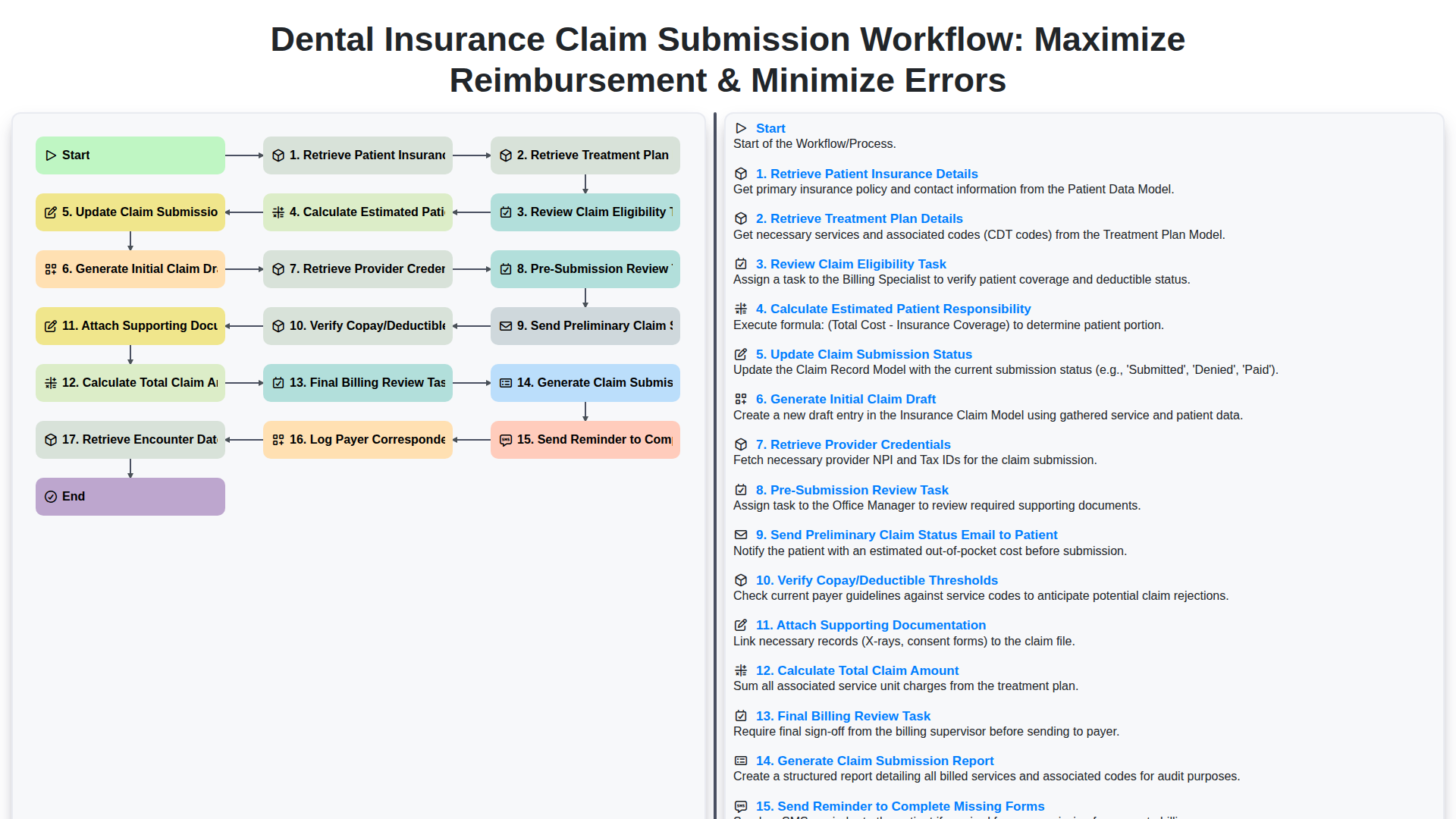
Table of Contents
- The Critical Role of a Streamlined Claim Submission Workflow
- Phase 1: Gathering Necessary Information (Foundation Building)
- Action Step 1: Retrieving Patient and Treatment Details
- Action Step 2: Verifying Insurance Eligibility and Coverage
- Calculating Patient Financial Responsibility Accurately
- Phase 2: Building and Reviewing the Claim (Drafting & Verification)
- Generating the Initial Claim Draft and Documentation
- Crucial Checks: Verifying Copayments and Deductible Thresholds
- Reviewing Provider Credentials and Service Dates
- The Pre-Submission Gauntlet: Minimizing Errors Before Sending
- Phase 3: Submission, Communication, and Finalization
- Communicating with Patients: Setting Expectations Early
- The Submission Process: Finalizing and Sending the Claim
- Post-Submission Management: Tracking, Logging, and Follow-up
- Resources & Links
TLDR: This workflow guides you through the entire dental insurance claim submission process, from gathering patient/treatment details to final submission. By systematically completing steps like eligibility checks, calculating patient responsibility, meticulous pre-submission reviews, and proper documentation, you ensure claims are accurate, compliant, and submitted correctly the first time, maximizing your reimbursement and drastically reducing costly errors.
The Critical Role of a Streamlined Claim Submission Workflow
A well-defined and optimized workflow is the backbone of accurate and timely dental insurance claim submissions. Without a structured process, claims are prone to delays, rejections, and incorrect billing, directly impacting your revenue cycle. A streamlined workflow acts as a systematic guide, ensuring that every necessary step-from gathering initial data to final submission-is followed meticulously. This process minimizes the risk of human error, boosts the speed of reimbursement, and provides complete transparency for both your administrative staff and your patients.
Phase 1: Gathering Necessary Information (Foundation Building)
The process begins with establishing a rock-solid foundation of data. This initial phase is all about gathering every piece of information needed to ensure the claim is accurate and complete from the outset. The first crucial step is to Retrieve Patient Insurance Details, making sure we have the current policy information. Simultaneously, we must Retrieve Treatment Plan Details to understand exactly what services were rendered. Following this, a vital check is required: the Review Claim Eligibility Task. This confirms that the services are actually covered under the patient's plan. Once we have this baseline, we can accurately Calculate Estimated Patient Responsibility, giving the patient a clear financial picture early on. This information helps set expectations and prevents payment disputes later in the cycle.
Action Step 1: Retrieving Patient and Treatment Details
The entire process begins with the foundation: gathering accurate information. Our first critical step is to Retrieve Patient Insurance Details. This involves pulling up the patient's specific insurance policy information, including member ID, group number, and policy effective dates. Simultaneously, we must Retrieve Treatment Plan Details. This ensures that we have the complete, authorized scope of work-what services were performed, what codes apply, and what the billed services are. Having these two datasets linked and validated upfront prevents downstream roadblocks and is essential for accurate subsequent calculations.
Action Step 2: Verifying Insurance Eligibility and Coverage
At this crucial stage, our workflow focuses on making sure the patient's insurance coverage is up-to-date and accurately assessed. This involves Retrieving Patient Insurance Details to pull the most current policy information and simultaneously Retrieving Treatment Plan Details to understand exactly what services are being billed. Immediately following this, the Review Claim Eligibility Task is executed. This automated check flags any discrepancies or service gaps, ensuring that the proposed treatment plan aligns with the patient's policy guidelines before any claim is filed. This upfront verification process saves significant time and prevents costly rejections down the line.
Calculating Patient Financial Responsibility Accurately
This critical stage of the workflow is where we translate complex insurance policy language into clear patient billing estimates. By systematically retrieving the patient's insurance details alongside the proposed treatment plan, we can accurately calculate the patient's expected financial responsibility. This involves cross-referencing the current payer guidelines with the specific services outlined. We must meticulously verify copay amounts and track deductible progress to prevent over-billing or under-billing the patient. This calculation isn't just an arithmetic exercise; it's a proactive step in patient financial education, setting clear expectations upfront and significantly improving patient satisfaction and reducing front-end billing disputes.
Phase 2: Building and Reviewing the Claim (Drafting & Verification)
Once the initial necessary information is gathered, the workflow moves into the critical phase of building and thoroughly reviewing the claim. This stage is all about precision and preemptive error checking. We begin by Generating the Initial Claim Draft, which compiles all gathered data into a structured format. Before this draft is finalized, the system must Retrieve Provider Credentials to ensure the submitting party is valid and recognized by the payer. Following the draft creation, a Pre-Submission Review Task kicks off, acting as a comprehensive internal audit. This review checks the foundation of the claim, ensuring that all associated Supporting Documentation (like X-rays or operative notes) are correctly attached to the corresponding procedures. Simultaneously, the system verifies crucial financial elements by Verifying Copay/Deductible Thresholds against the patient's insurance plan. This systematic verification is followed by the Calculation of the Total Claim Amount, which incorporates all services rendered. The process is iterative, requiring careful attention to timelines by Retrieving Encounter Dates to match services to the correct billing period.
Generating the Initial Claim Draft and Documentation
Once the necessary details are gathered, the workflow moves to Generate Initial Claim Draft. This critical step compiles all the gathered information-patient details, treatment plans, and service codes-into a preliminary claim form. Following this, the process requires the system to Retrieve Provider Credentials to ensure all necessary professional information is attached to the draft. The drafted claim is then subjected to a Pre-Submission Review Task. This manual or automated check is vital for catching formatting errors or missing required data points before it ever leaves the practice. After the initial draft is polished, the workflow dictates that a Send Preliminary Claim Status Email to Patient is dispatched, keeping the patient informed about the next steps in the billing cycle.
Crucial Checks: Verifying Copayments and Deductible Thresholds
A critical step in the reimbursement process is the meticulous verification of copayments and deductible thresholds. Before submitting a claim, you must confirm exactly what the patient owes at the point of service versus what the insurance plan covers. This involves cross-referencing the service codes with the patient's specific policy details to ensure that any applicable copayments are accurately calculated and billed. Furthermore, checking the patient's deductible status is vital; if the service falls under a deductible that hasn't been met, the claim submission process must account for this upfront patient responsibility. Failing to verify these details can lead to claim rejections or underpayments, significantly delaying reimbursement.
Reviewing Provider Credentials and Service Dates
This stage is crucial for ensuring that the services rendered by the provider are recognized and covered by the insurance plan. We must accurately Retrieve Provider Credentials to confirm that the dentist or specialist is in good standing with the payer. Simultaneously, we need to Retrieve Encounter Dates to map the services against the patient's active coverage period. Cross-referencing these two elements prevents claim denials related to outdated credentials or services rendered outside the policy window, setting a solid foundation for accurate billing.
The Pre-Submission Gauntlet: Minimizing Errors Before Sending
This crucial phase acts as a quality gatekeeper, ensuring that a claim is as complete and accurate as possible before it ever leaves your system. The process kicks off with gathering fundamental data points: first, we Retrieve Patient Insurance Details and Retrieve Treatment Plan Details to establish the bedrock of the claim. Next, the system performs a Review Claim Eligibility Task, instantly confirming if the patient is covered for the planned procedures. Following this, we Calculate Estimated Patient Responsibility, giving the patient visibility into their out-of-pocket costs upfront.
Once preliminary data is solid, the system proceeds to Update Claim Submission Status and Generate Initial Claim Draft. To ensure the receiving payer accepts the submission, we must Retrieve Provider Credentials and execute a Pre-Submission Review Task. Communication is key here; a Send Preliminary Claim Status Email to Patient keeps everyone informed.
The core financial checks involve Verify Copay/Deductible Thresholds and Calculate Total Claim Amount, ensuring the billing reflects the correct financial obligations. Documentation is meticulously handled by ensuring all necessary supporting materials are included by Attach Supporting Documentation. Finally, the Final Billing Review Task acts as the last human and system check before we Generate Claim Submission Report, signaling that the claim is ready for transmission. If anything is amiss, the system knows to Send Reminder to Complete Missing Forms or to Log Payer Correspondence if necessary. We also verify operational timings by Retrieve Encounter Dates to guarantee the billing period aligns perfectly with services rendered.
Phase 3: Submission, Communication, and Finalization
This crucial phase moves beyond initial data gathering and focuses on ensuring a smooth, accurate, and communicative handover to the payer. The process begins with the Pre-Submission Review Task, a rigorous checkpoint where all gathered information is cross-referenced for any inconsistencies before the claim leaves your office. This review is paramount for minimizing immediate rejections. Following this, the system must Verify Copay/Deductible Thresholds against the most current payer guidelines to set accurate patient expectations. Simultaneously, all necessary Supporting Documentation-from radiographs to operative notes-are gathered and securely Attached Supporting Documentation. The next steps involve finalizing the financial picture: Calculate Total Claim Amount and execute the Final Billing Review Task. This comprehensive check ensures that the services rendered are correctly aggregated and billed. Once the internal audit is complete, the Generate Claim Submission Report provides a transparent record of exactly what is being sent. Crucially, communication is key here: the system must Send Preliminary Claim Status Email to Patient, keeping the patient informed about the next steps. If any piece of information is missing, a Send Reminder to Complete Missing Forms is triggered immediately. Furthermore, all payer interactions must be meticulously logged by the Log Payer Correspondence step. Lastly, before the claim is officially submitted, the Generate Claim Submission Report confirms everything is ready, and the system confirms the Update Claim Submission Status to reflect Submitted, finalizing the process cycle.
Communicating with Patients: Setting Expectations Early
Early and clear communication with patients is foundational to a smooth billing process. When patients understand the financial aspects before their service, it drastically reduces claim denials and follow-up rework. This involves leveraging the patient's insurance details retrieved at the start of the workflow. By proactively explaining what the insurance covers, what the patient's estimated responsibility will be (based on initial verification), and what documentation they might need to bring, you set accurate expectations. A preliminary communication, often triggered after the initial eligibility review, prevents billing surprises and positions the patient as a partner in the financial process, rather than a recipient of unexpected bills.
The Submission Process: Finalizing and Sending the Claim
The final stages of the claim submission workflow are critical for ensuring that your reimbursement is maximized and errors are minimized. This phase moves beyond initial data gathering and focuses intensely on verification, assembly, and transmission. First, you must accurately Attach Supporting Documentation. This step involves compiling all necessary records, such as radiographs, operative notes, and pre-authorization letters, ensuring nothing is left out. Following documentation assembly, the system must Calculate Total Claim Amount, synthesizing the costs derived from the treatment plan and provider fees. This naturally leads to the Final Billing Review Task. During this review, dedicated staff or automated checks perform a comprehensive audit of the entire claim package for compliance and accuracy. Once satisfied, the process culminates in the Generate Claim Submission Report. This report serves as the final checkpoint, summarizing all submitted data for internal auditing. Should any issues remain, the workflow includes the proactive step to Send Reminder to Complete Missing Forms, prompting patients or internal staff to provide necessary missing information. Finally, after internal sign-off, the claim is officially transmitted, and all associated activity, including Log Payer Correspondence and confirmation of Retrieve Encounter Dates, marks the successful initiation of the payment cycle.
Post-Submission Management: Tracking, Logging, and Follow-up
Effective claim management doesn't end when you hit 'submit.' The post-submission phase is crucial for maximizing your reimbursement and preventing costly delays. This involves meticulous tracking, thorough logging of all payer interactions, and proactive follow-up. After generating the initial submission report, your process must pivot to actively managing the claim's lifecycle. Log Payer Correspondence diligently-every call, every explanation of benefits (EOB) received, and every correspondence trail must be documented against the patient and claim ID. Crucially, maintain a clear record of any actions taken based on payer feedback. If a claim is rejected or requires further information, your system needs workflows to flag this immediately. Furthermore, if the payer requires updated information, follow established protocols to Send Reminder to Complete Missing Forms to the necessary parties. Finally, utilize your workflow to track crucial dates; always keep an eye on the original Retrieve Encounter Dates and track when follow-up action is necessary to ensure nothing slips through the cracks, providing a complete audit trail for every dollar claimed.
Resources & Links
- Dental Billing & Insurance Management Hub : A comprehensive resource center offering best practices and industry insights for dental practice billing and insurance claim management.
- Medical Coding & Compliance Guide : Detailed articles on the latest dental CDT codes, coding compliance, and payer-specific submission guidelines.
- Payer Relations & Reimbursement Tips : Information on navigating various insurance carriers, understanding Explanation of Benefits (EOBs), and maximizing reimbursement rates.
- Practice Management Software Resources : Reviews and guides on best-in-class dental practice management software that automates claims submission workflows.
- Patient Financial Counseling Resources : Guides on transparently communicating insurance coverage, copays, and deductibles to patients to improve patient financial understanding.
Frequently Asked Questions
What is the first step in a dental insurance claim submission workflow?
The process begins with verifying patient insurance coverage and-eligibility before the appointment to ensure all necessary details are accurate and up-to-date.
How can dental practices minimize claim denials during submission?
To minimize denials, practices should ensure all required fields are completed, use correct CDT codes, attach necessary X-rays or radiographs, and double-check for coding errors before sending.
What are the most common errors found in dental insurance claims?
Common errors include incorrect patient identification, mismatched provider information, missing clinical documentation, and the use of outdated or incorrect procedure codes.
Why is clinical documentation critical for maximizing reimbursement?
Detailed clinical notes and supporting imagery provide the evidence insurance carriers need to justify the medical necessity of the procedures, which reduces the likelihood of claim denials or downcoding.
How often should a dental practice audit its claim submission workflow?
Practices should perform regular audits of their denial rates and submission accuracy to identify patterns of error and implement necessary training or process improvements.
Found this Article helpful?
Dental Management Solution Demo
Simplify your dental practice & enhance patient care! ChecklistGuro streamlines appointment scheduling, patient records, and billing. Improve efficiency, reduce errors, & boost patient satisfaction. Manage it all with our Work OS.
Related Articles
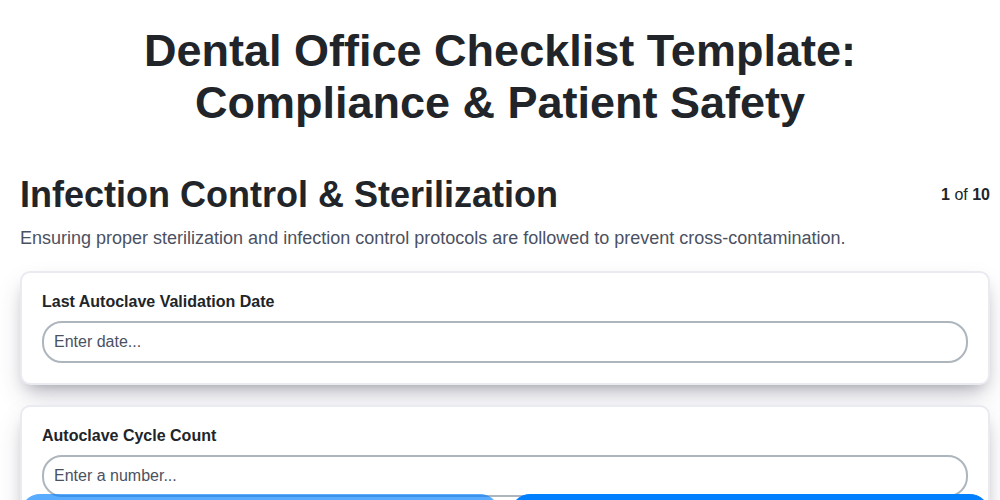
Your Dental Office Safety Net: The Compliance & Patient Safety Checklist Template
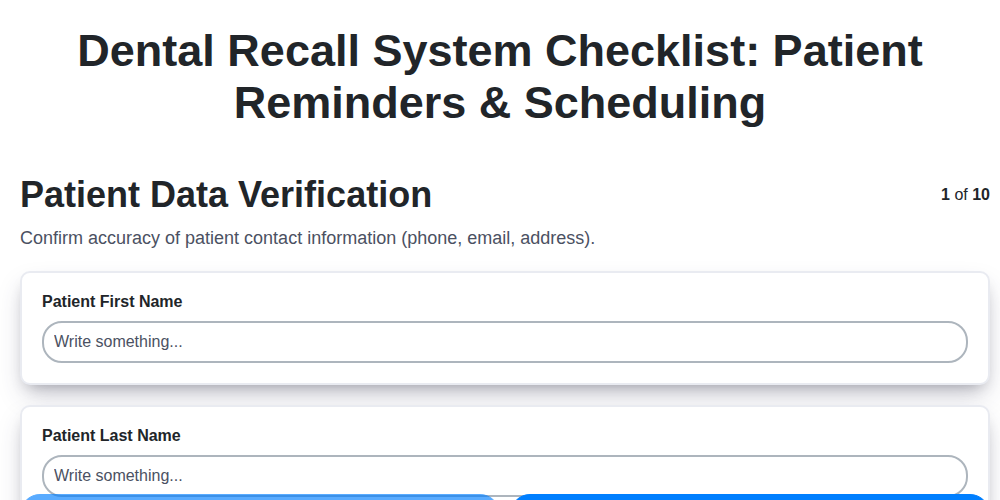
Mastering Dental Recalls: Your Ultimate Checklist Template

Mastering Dental Case Presentations: Your Checklist Template for Success

Your Dental Compliance Checklist: A State & Federal Guide
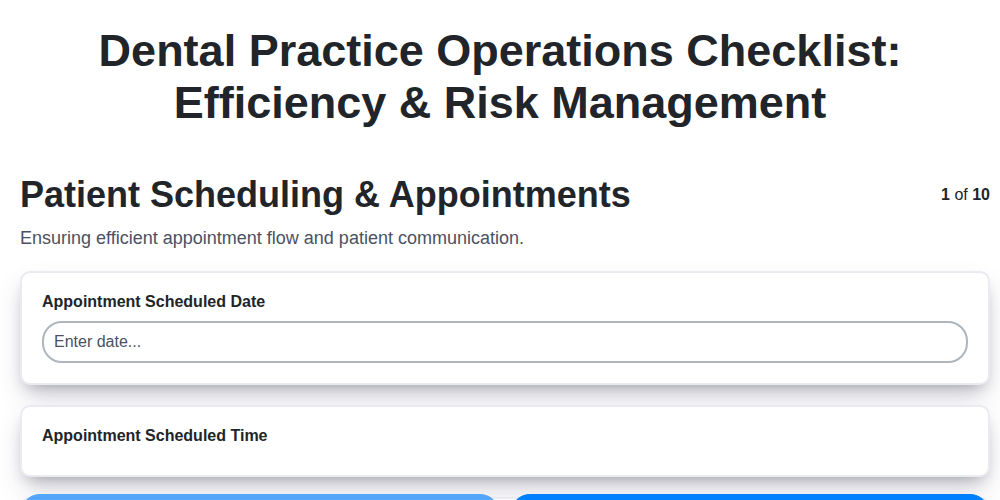
Dental Operations Checklist: Boost Efficiency & Manage Risk

The Ultimate Dental Lab Case Checklist: Fabrication & Quality Assurance

Your Complete Dental Infection Control Checklist: PPE & Surface Disinfection
Mastering Dental Exams: Your Complete Charting Checklist Template
We can do it Together
Need help with
Checklists?
Have a question? We're here to help. Please submit your inquiry, and we'll respond promptly.