Streamline Your Operations: A Comprehensive Guide to the Distribution Center Resource Planning Workflow
Published: 06/04/2026 Updated: 10/05/2026
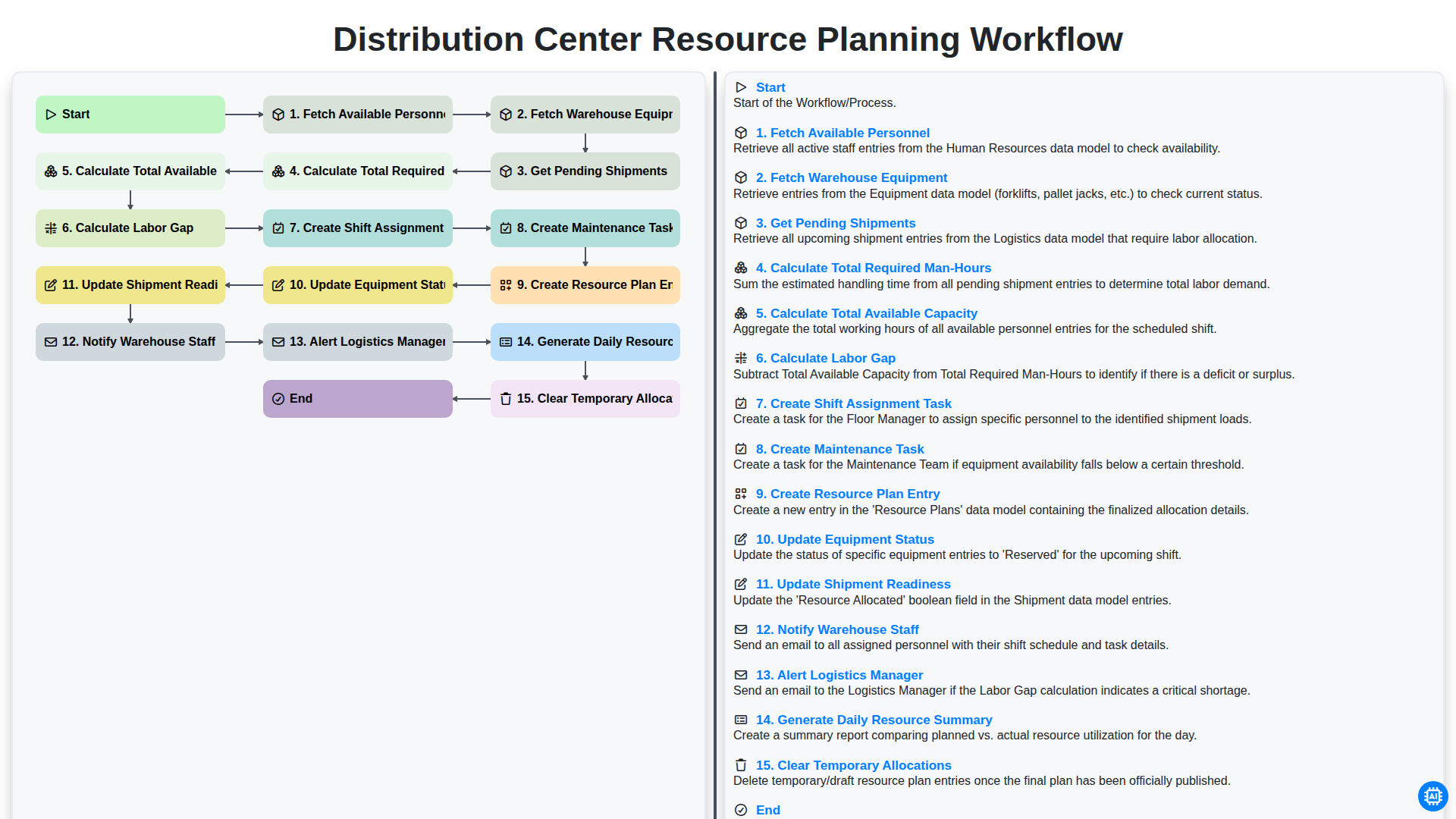
Table of Contents
- Introduction: The Importance of Precision in Resource Planning
- Step 1: Assessing Your Foundation: Fetching Personnel and Equipment
- Step 2: Analyzing Demand: Retrieving Pending Shipments
- Step 3: The Mathematical Core: Calculating Man-Hours and Capacity
- Step 4: Identifying the Discrepancy: Calculating the Labor Gap
- Step 5: Operational Execution: Creating Shift Assignments and Maintenance Tasks
- Step 6: Formalizing the Strategy: Creating Resource Plan Entries
- Step 7: Real-Time Updates: Synchronizing Equipment and Shipment Status
- Step 8: Communication Loops: Notifying Staff and Alerting Management
- Step 9: Closing the Loop: Generating Summaries and Clearing Allocations
- Conclusion: Achieving Continuous Operational Excellence
- Resources & Links
TLDR: Learn how to optimize warehouse efficiency using our Distribution Center Resource Planning Workflow, a step-by-step automated process designed to balance labor capacity with shipment demands, manage equipment maintenance, and eliminate operational bottlenecks through intelligent resource allocation.
Introduction: The Importance of Precision in Resource Planning
In the fast-paced environment of a modern distribution center, the margin for error is razor-thin. Efficiency is not merely a goal; it is a necessity for survival. When managing complex logistics networks, the ability to synchronize labor, machinery, and outbound orders determines whether a facility operates as a streamlined engine of productivity or falls into a state of costly bottlenecking.
Precision in resource planning is the backbone of operational excellence. Without a structured, automated workflow, managers are often forced to rely on reactive decision-making-responding to shortages only after they have already disrupted the supply chain. Inaccurate forecasting of man-hours, overlooked equipment maintenance, or a failure to align staff availability with shipment volumes can lead to missed shipping windows, increased overtime costs, and diminished service levels.
To achieve true operational stability, a distribution center requires more than just oversight; it requires a systematic approach to resource orchestration. A well-defined planning workflow ensures that every variable-from the availability of warehouse personnel to the operational status of heavy machinery-is accounted for well before the first shift begins. By integrating data-driven insights with actionable task creation, companies can transition from reactive firefighting to proactive, precision-based management.
Step 1: Assessing Your Foundation: Fetching Personnel and Equipment
Before a single shipment can be processed, a successful resource plan must begin with a comprehensive audit of your existing assets. The first stage of the workflow focuses on establishing the baseline of what is actually available to work with. This begins with Fetching Available Personnel, where the system pulls real-time data regarding staff attendance, skill sets, and current shift availability. Without an accurate headcount, any subsequent planning is built on a foundation of guesswork.
Parallel to human capital, the workflow moves to Fetching Warehouse Equipment. This step involves auditing the readiness of your fleet-ranging from forklifts and reach trucks to automated conveyors and handheld scanners. By integrating live data on equipment availability, the system ensures that you aren't just planning for hands on deck, but also for the mechanical power required to move those hands. This initial assessment phase is critical; it provides the raw data necessary to understand your operational ceiling before the complexities of shipment volume are even considered.
Step 2: Analyzing Demand: Retrieving Pending Shipments
After securing the baseline of your available resources, the next critical phase in the workflow is evaluating the workload that needs to be managed. In this step, the system performs a deep dive into the current backlog by performing a Get Pending Shipments operation.
This process involves pulling real-time data from the Warehouse Management System (WMS) to identify all outgoing orders, inbound receiving tasks, and internal transfers scheduled for the upcoming period. By retrieving these pending shipments, the workflow establishes the demand side of the equation. Without an accurate snapshot of these pending tasks, any subsequent calculations regarding labor or equipment would be based on guesswork rather than operational reality. This data serves as the fundamental driver for the entire resource planning engine, ensuring that every subsequent calculation is anchored in the actual volume of work awaiting fulfillment.
Step 3: The Mathematical Core: Calculating Man-Hours and Capacity
Once the system has gathered the necessary data regarding personnel availability and equipment readiness, the workflow moves into its most critical phase: the computational engine. This is where raw data is transformed into actionable intelligence through two vital calculations: Calculating Total Required Man-Hours and Calculating Total Available Capacity.
First, the algorithm analyzes the Pending Shipments queue. By evaluating the volume, weight, and complexity of each order, the system estimates the precise amount of labor time required to pick, pack, and stage each shipment. This isn't just a simple count of boxes; it accounts for the physical effort and time-per-unit variables inherent in the warehouse's specific operational profile.
Simultaneously, the system performs a Total Available Capacity audit. This step cross-references the Fetched Available Personnel with the Fetched Warehouse Equipment. It calculates the actual operational strength by determining how many man-hours can be physically realized based on current staffing levels and the operational availability of machinery like forklifts, conveyors, and reach trucks.
The magic happens when these two figures meet. By comparing the required effort against the available strength, the system identifies the Labor Gap. This calculation is the pulse check of the distribution center; it reveals whether the facility is prepared for the day's workload or if a deficit in manpower or machinery will lead to missed shipping deadlines. This mathematical bridge ensures that the subsequent scheduling tasks are based on mathematical reality rather than optimistic guesswork.
Step 4: Identifying the Discrepancy: Calculating the Labor Gap
Once the system has determined the total man-hours required to fulfill pending shipments and compared them against your current available capacity, the most critical analytical step begins: Calculating the Labor Gap.
This stage is the moment of truth in the workflow. The calculation is a simple yet profound subtraction: Required Man-Hours minus Available Capacity. If the result is zero or negative, your operation is balanced; however, a positive number represents a deficit that must be addressed immediately to prevent shipment delays.
Identifying this gap is not just about recognizing a shortage of bodies; it is about quantifying the exact scale of the operational strain. By pinpointing the precise number of missing hours, the system moves from passive observation to proactive management. This calculation serves as the primary trigger for the subsequent automated actions, such as creating shift assignments or alerting management, ensuring that the gap is addressed before it evolves into a bottleneck that halts your distribution center's throughput.
Step 5: Operational Execution: Creating Shift Assignments and Maintenance Tasks
Once the system has identified the labor gap, the focus shifts from analysis to actionable execution. This stage is where the data-driven insights from the planning phase are converted into concrete operational instructions. The workflow automates the creation of two critical task types: Shift Assignment Tasks and Maintenance Tasks.
First, the system generates Shift Assignment Tasks, which strategically allocate the necessary personnel to specific time slots and zones within the distribution center. By intelligently mapping available staff to the identified workload, the system ensures that every workstation is adequately covered, minimizing idle time and preventing bottlenecks.
Simultaneously, the workflow triggers Maintenance Tasks for any warehouse equipment flagged during the resource assessment. This proactive approach ensures that machinery-such as forklifts, conveyors, or automated sorters-is serviced before a breakdown can disrupt the flow of operations. By integrating maintenance scheduling directly into the resource planning loop, the distribution center transitions from a reactive fix-it-when-it-breaks model to a streamlined, predictive operational rhythm.
Step 6: Formalizing the Strategy: Creating Resource Plan Entries
Once the gap analysis is complete and the logistical requirements are clearly defined, the workflow moves from calculation to documentation. This stage involves the creation of a Resource Plan Entry, which serves as the official record of the day's operational strategy.
This step is critical because it transforms abstract numbers and calculated gaps into a concrete, actionable roadmap. The Resource Plan Entry consolidates the finalized shift assignments, the scheduled maintenance windows, and the projected equipment usage into a single source of truth. By formalizing this data into a permanent entry, the system ensures that management has a historical benchmark to track operational efficiency and a real-time reference point for all warehouse stakeholders. This documentation acts as the foundational blueprint that guides the execution phase, ensuring that every resource-whether human or mechanical-is accounted for before the first shift begins.
Step 7: Real-Time Updates: Synchronizing Equipment and Shipment Status
Once the resource plan is finalized, the workflow transitions from planning to execution by synchronizing the physical state of the warehouse with the digital plan. This stage is critical for ensuring that the data used for decision-making remains accurate as operations unfold.
The process involves two parallel updates: Update Equipment Status and Update Shipment Readiness. First, the system automatically updates the status of all allocated machinery and tools; for instance, if a forklift is assigned to a specific shift, its status is flagged as In Use to prevent double-booking. Simultaneously, the Update Shipment Readiness step cross-references the new labor allocation with the pending shipment queue. This ensures that every shipment is tagged with its expected processing time based on the newly assigned manpower. By synchronizing these two variables, the system eliminates the risk of ghost capacity-where equipment is available on paper but physically unavailable-and ensures that shipment deadlines are always aligned with actual warehouse capabilities.
Step 8: Communication Loops: Notifying Staff and Alerting Management
Once the resource plan is finalized, the workflow transitions from calculation to execution through automated communication loops. This stage ensures that the gap between planning and action is bridged instantly, eliminating the delays caused by manual updates.
First, the system triggers an automated Notification to Warehouse Staff, delivering precise shift assignments and updated task lists directly to their mobile devices or workstations. This ensures that every team member knows exactly when they are expected on the floor and which specific areas require their focus. Simultaneously, a critical Alert is sent to the Logistics Manager if the resource plan reveals any unresolvable discrepancies-such as a significant labor gap that cannot be covered by available personnel or equipment downtime that threatens shipment deadlines. By proactively flagging these bottlenecks, the system allows management to make real-time adjustments, such as authorizing overtime or rerouting shipments, before the operational delay impacts the bottom line.
Step 9: Closing the Loop: Generating Summaries and Clearing Allocations
The final stage of the workflow is just as critical as the planning phase itself. Once the resource plan is finalized and all tasks are assigned, the system moves into a phase of auditing and preparation for the next cycle. This involves generating a daily resource summary, which provides stakeholders with a high-level overview of the planned labor, equipment availability, and potential bottlenecks for the upcoming shift. This summary acts as a single source of truth for the warehouse leadership to validate the plan's feasibility.
To ensure data integrity and prevent overlaps in future planning cycles, the system executes a critical cleanup step: clearing temporary allocations. This ensures that any placeholder resources or temporary overrides used during the calculation phase are wiped clean, leaving a fresh slate for the next period's demand forecasting. By automating this closing loop, the workflow eliminates the risk of ghost data influencing future schedules, ensuring that every new planning cycle begins with accurate, real-time information.
Conclusion: Achieving Continuous Operational Excellence
Implementing a structured Distribution Center Resource Planning Workflow is more than just a logistical necessity; it is a strategic blueprint for operational resilience. By moving away from reactive firefighting and transitioning toward a systematic approach-where personnel, equipment, and shipment data are synchronized in real-time-warehouse managers can eliminate the uncertainty that often plagues peak periods.
The true value of this workflow lies in its ability to bridge the gap between current capacity and incoming demand. When you automate the identification of labor gaps and the scheduling of maintenance, you create a proactive environment where bottlenecks are resolved before they can disrupt the supply chain. This closed-loop system-from fetching initial resources to generating final daily summaries-ensures that every stakeholder, from floor staff to logistics managers, is aligned with the day's objectives.
Ultimately, mastering this workflow empowers your facility to achieve continuous operational excellence. By ensuring that equipment is maintained, labor is optimized, and shipments are prepared with precision, you drive higher throughput, reduce unnecessary overhead, and foster a culture of reliability that serves as a competitive advantage in an increasingly complex global market.
Resources & Links
- Gartner Supply Chain Research: In-depth industry reports and benchmarks regarding warehouse automation and resource optimization trends.
- Inbound Logistics: Expert insights and case studies on managing labor shortages and equipment maintenance in large-scale distribution centers.
- Supply Chain Brain: Comprehensive resources on logistics management, focusing on digital transformation and real-time workforce scheduling.
- IBM Supply Chain Intelligence: Technical documentation on using AI and predictive analytics to calculate labor gaps and automate shipment readiness.
- MHI (Material Handling Institute): Industry standards and best practices for warehouse equipment maintenance and resource allocation strategies.
Frequently Asked Questions
What is Distribution Center Resource Planning (DCRP)?
Distribution Center Resource Planning is a strategic workflow designed to optimize the use of labor, equipment, and space to meet incoming and outgoing shipment demands efficiently.
What are the key components of a distribution center workflow?
The primary components include demand forecasting, labor scheduling, inventory management, equipment allocation, and real-time performance monitoring.
How can resource planning help reduce operational costs?
By accurately predicting workload, managers can prevent overstaffing during slow periods and avoid costly overtime or missed deadlines during peak periods, ensuring optimal labor utilization.
What role does technology play in streamlining DC operations?
Technologies such as Warehouse Management Systems (WMS), automated data collection, and AI-driven forecasting tools are essential for providing the real-time visibility needed for effective resource planning.
How frequently should resource planning workflows be reviewed?
Resource planning should be a continuous process, with daily tactical adjustments and periodic strategic reviews (monthly or quarterly) to account for seasonal shifts and long-term growth.
Comments
There are no comments yet. Be the first to add one!
Logistics Management Solution Demo
Tired of shipping delays, lost packages, and inefficient routes? ChecklistGuro's Work OS platform streamlines your entire logistics operation, from warehouse management and order fulfillment to route optimization and delivery tracking. Gain real-time visibility, reduce costs, and improve customer satisfaction. Learn how ChecklistGuro can transform your logistics business!
Related Articles
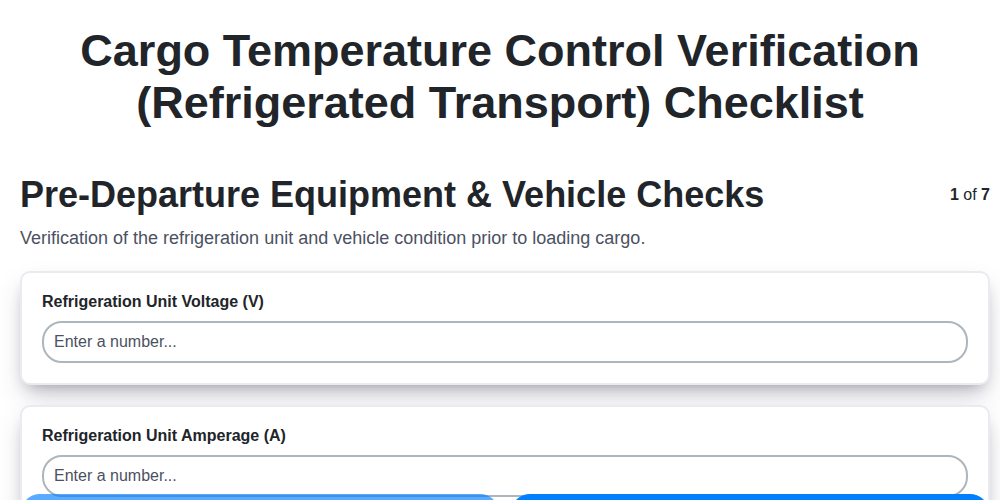
The Ultimate Refrigerated Cargo Temperature Control Checklist Template
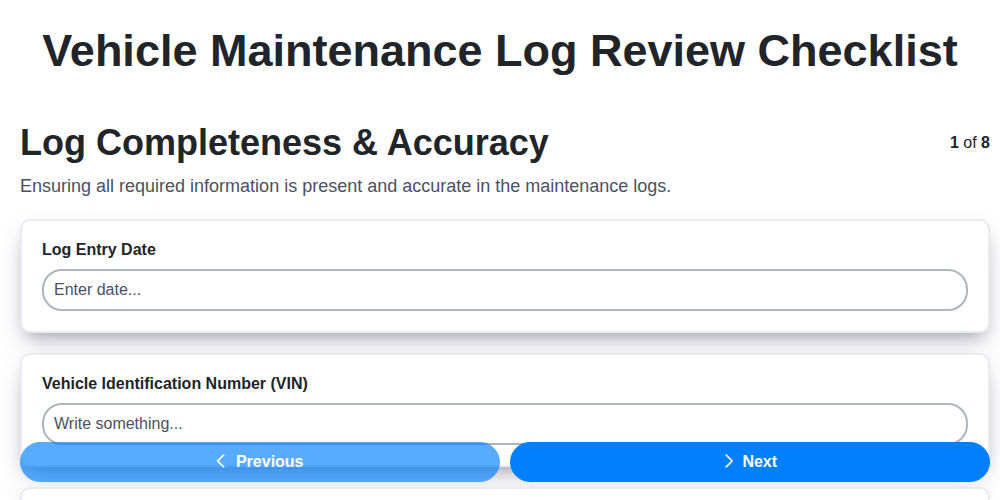
Mastering Your Fleet: A Vehicle Maintenance Log Review Template
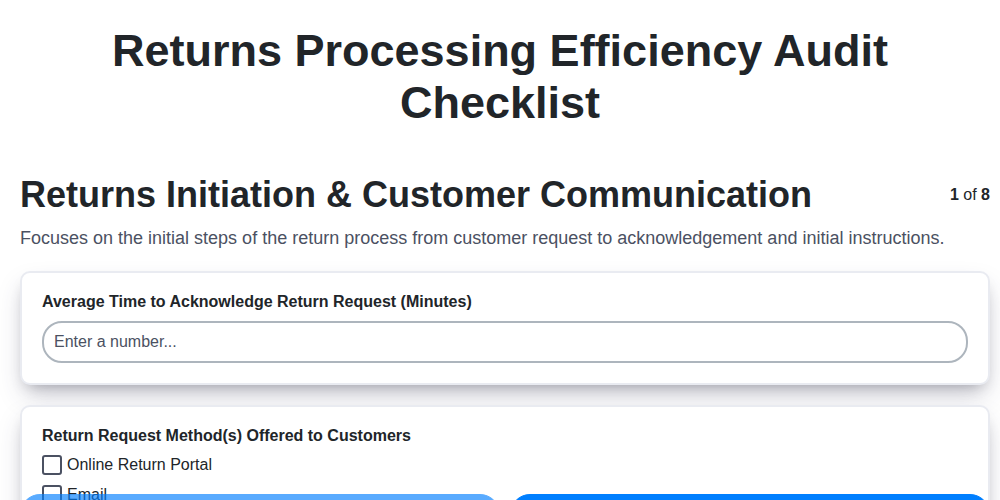
Master Your Returns: The Ultimate Returns Processing Efficiency Audit Checklist
Data Privacy Policy Compliance: Your Essential Checklist Template
Delivery Confirmation Audit: Your Checklist Template for Process Excellence
Your Pallet Inspection & Maintenance Checklist Template
Fuel Efficiency Monitoring: Your Checklist Template for Savings
Supply Chain Risk Assessment: Your Essential Checklist Template
Need help with
Checklists?
Have a question? We're here to help. Please submit your inquiry, and we'll respond promptly.