Boosting Student Success: Your Guide to the Educational Assessment Survey Checklist
Published: 25/11/2025 22:00 Updated: 14/12/2025 6:58
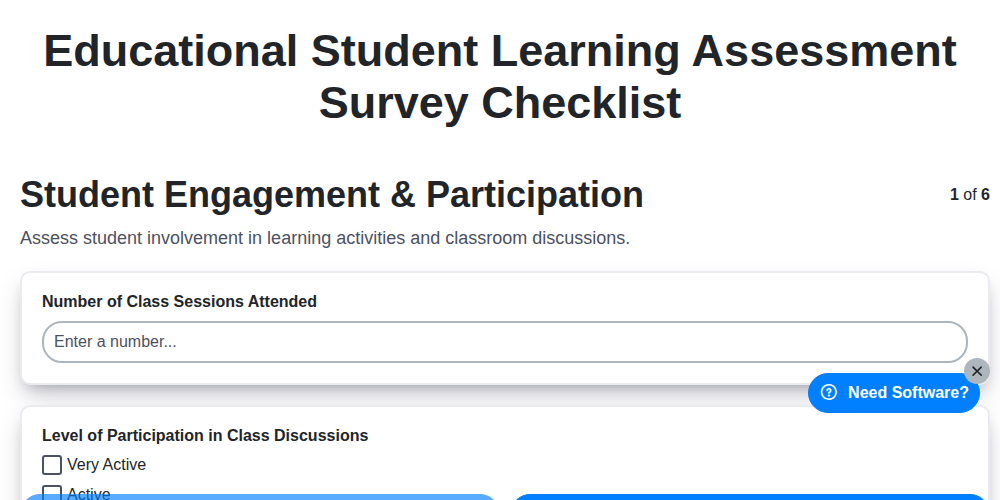
Table of Contents
- Introduction: Why Student Assessment Surveys Matter
- Understanding the Educational Assessment Survey Checklist
- 1. Student Engagement & Participation: Gauging Active Involvement
- 2. Content Comprehension & Understanding: Measuring Knowledge Retention
- 3. Skill Application & Problem Solving: Evaluating Practical Abilities
- 4. Assessment Methods & Feedback: Analyzing Evaluation Effectiveness
- 5. Learning Environment & Resources: Assessing Support Systems
- 6. Overall Learning Experience: Capturing the Holistic View
- 7. Decoding Survey Results: Identifying Trends & Patterns
- 8. Actionable Insights: Turning Feedback into Improvements
- 9. Communicating Results & Fostering Collaboration
- Conclusion: Cultivating a Culture of Continuous Improvement
- Resources & Links
TLDR: Feeling overwhelmed by student assessment? This checklist template (covering engagement, understanding, skills, feedback, environment, and overall experience) is your shortcut! It's a simple, structured way to gather feedback, identify areas for improvement, and ultimately, boost student success - for both instructors and learners.
Introduction: Why Student Assessment Surveys Matter
Student assessment isn't just about grades; it's a crucial opportunity to understand how students are truly learning. Traditional assessments often focus solely on outcomes, but a comprehensive evaluation needs to delve deeper. That's where student assessment surveys come in. These surveys provide invaluable insight into the student experience - offering a voice for learners to share their perspectives on engagement, understanding, and overall satisfaction. By actively soliciting and acting upon student feedback, educators and institutions can identify areas for improvement, refine teaching strategies, and ultimately, cultivate a more effective and supportive learning environment. This blog post explores a detailed checklist designed to guide these assessments, providing a structured approach to gathering insightful feedback and driving positive change.
Understanding the Educational Assessment Survey Checklist
This checklist isn't just a list of items; it's a structured way to gain a comprehensive view of student learning and the effectiveness of your educational approach. Each section focuses on a critical area, providing specific indicators to observe and evaluate. Let's break down what each section aims to uncover:
Student Engagement & Participation: This area probes how actively students are involved in the learning process. Are they participating in discussions, asking questions, and demonstrating genuine interest? Low engagement can signal underlying issues like lack of relevance, ineffective teaching methods, or personal challenges.
Content Comprehension & Understanding: Beyond memorization, this section assesses whether students grasp the core concepts and can articulate their understanding. Can they explain ideas in their own words, connect new information to prior knowledge, and demonstrate a deeper level of understanding?
Skill Application & Problem Solving: True learning isn't just about knowing what but also how. This component explores students' ability to apply learned knowledge and skills to solve problems, analyze situations, and make informed decisions.
Assessment Methods & Feedback: Effective assessment isn't just about assigning grades; it's about informing and guiding learning. This section examines the types of assessments used, their alignment with learning objectives, and the quality and timeliness of feedback provided to students.
Learning Environment & Resources: The physical and emotional climate significantly impacts learning. This explores the accessibility of resources (digital and physical), the safety and inclusivity of the learning environment, and the overall support available to students.
Overall Learning Experience: This section provides a holistic view, capturing students' perceptions of their learning journey, their sense of belonging, and their overall satisfaction with the educational experience. It often reveals patterns and themes emerging from the other sections.
By systematically reviewing these areas, you can identify strengths, pinpoint areas for improvement, and ultimately create a more enriching and effective learning experience for all students.
1. Student Engagement & Participation: Gauging Active Involvement
Student engagement isn't just about bodies in seats; it's about active minds participating in the learning process. This section of the checklist focuses on observing and assessing how students actively participate in class and demonstrate a genuine interest in the material.
Consider these key indicators:
- Frequency of Contribution: Do students volunteer answers, ask questions, or participate in discussions? A high level of voluntary participation signals engagement.
- Quality of Participation: Are contributions thoughtful, relevant, and demonstrating a clear understanding of the topic? Superficial or off-topic contributions may indicate a lack of deeper engagement.
- Non-Verbal Engagement: Observe body language - are students attentive, making eye contact, and appearing interested? Disconnected postures and fidgeting can be red flags.
- Group Work Participation: In collaborative activities, are students contributing meaningfully, listening to others, and working together effectively? Assess their ability to share ideas and responsibilities.
- Initiative & Curiosity: Do students ask clarifying questions beyond what's directly asked? Do they show an eagerness to explore topics further?
- Respectful Interaction: Do students engage respectfully with peers and the instructor, even when expressing differing opinions?
Ultimately, a truly engaged student isn't passively receiving information-they're actively constructing their understanding. Use these observations to identify areas where you can further stimulate and encourage participation.
2. Content Comprehension & Understanding: Measuring Knowledge Retention
Beyond simply observing if a student is actively participating, it's crucial to assess if they've truly grasped the material. This section of the checklist focuses on gauging content comprehension and understanding - moving beyond surface-level recognition to ensure genuine knowledge retention.
Here's what to look for and questions to consider:
- Recall & Explanation: Can students accurately recall key concepts and explain them in their own words? Look for clarity, accuracy, and the ability to connect ideas. Don't just accept regurgitation; probe for deeper understanding. Question to ask: Can you explain [concept] as if you were teaching it to someone else?
- Conceptual Connections: Do students demonstrate an understanding of how different concepts relate to each other? Can they synthesize information from various sources and draw meaningful conclusions? Check for: Ability to identify relationships, cause-and-effect, and patterns.
- Addressing Misconceptions: Observe if students can identify and correct common misconceptions related to the material. This reveals a critical level of understanding - not just knowing what is correct, but understanding why incorrect ideas are wrong. Look for: Students proactively questioning and correcting themselves or others.
- Application in Different Contexts: Can students apply their understanding of the content in new or unfamiliar situations? This goes beyond rote memorization and demonstrates true comprehension. Consider: Presenting hypothetical scenarios or asking students to apply the material to a different, related topic.
- Quality of Responses: Evaluate not just the quantity, but the quality of student responses. Are they thoughtful, well-supported, and demonstrate a clear understanding of the subject matter?
Assessing content comprehension isn't just about assigning grades; it's about identifying areas where students are struggling and providing targeted support to ensure they're building a solid foundation of knowledge.
3. Skill Application & Problem Solving: Evaluating Practical Abilities
Beyond simply understanding concepts, true learning is demonstrated through the ability to apply that knowledge. This section of the checklist focuses on observing and assessing how students utilize what they've learned to tackle real-world scenarios and solve problems.
Consider these indicators when evaluating a student's skill application and problem-solving abilities:
- Practical Application: Can the student connect theoretical concepts to practical examples or case studies? Do they demonstrate an ability to use what they've learned in a new, relevant context?
- Problem-Solving Strategies: Do they approach problems systematically? Do they identify key information, formulate hypotheses, and test potential solutions? Are they able to break down complex problems into manageable steps?
- Critical Thinking: Do they question assumptions? Do they analyze different perspectives? Can they evaluate the potential consequences of different actions?
- Creativity & Innovation: Do they explore different approaches to solving problems? Are they willing to take risks and try new methods?
- Resourcefulness: Can they identify and utilize appropriate resources (e.g., tools, data, expert advice) to solve problems?
- Adaptability: Can they adjust their approach when faced with unexpected challenges or incomplete information?
- Error Analysis: When errors occur (and they inevitably will!), do they analyze the cause of the error and adjust their approach accordingly? Do they demonstrate resilience and a willingness to learn from mistakes?
Assessment prompts for this area might include:
- Observe student performance on projects, presentations, or case study analyses.
- Review student solutions to problem sets and critiques of their approach.
- Solicit feedback from students on the opportunities provided for practical application.
- Assess the clarity and justification provided in student explanations of their problem-solving processes.
4. Assessment Methods & Feedback: Analyzing Evaluation Effectiveness
How effectively are we gauging student learning? This section moves beyond simply giving assessments to critically examining how we assess and the feedback we provide. A robust assessment strategy isn't just about grades; it's about guiding student growth and informing instructional practices.
Let's consider these key questions:
- Variety & Alignment: Are assessments varied (quizzes, projects, presentations, class participation, etc.) to reflect diverse learning styles and accurately measure different learning objectives? Do they directly align with the learning outcomes stated for each unit or module?
- Clarity of Expectations: Do students understand why they are being assessed and what constitutes successful completion? Are rubrics clear, specific, and accessible before the assessment is administered? Vague instructions lead to frustration and inaccurate evaluation.
- Timeliness & Specificity of Feedback: Is feedback provided promptly? Generic comments like "Good job!" are unhelpful. Feedback should be specific, highlighting strengths and identifying areas for improvement with concrete suggestions for growth.
- Feedback Integration: Do students have opportunities to act on feedback? Are there revisions, reflections, or follow-up activities that allow students to demonstrate understanding after receiving feedback?
- Assessment Data Analysis: Are we actively analyzing assessment data to identify patterns and areas where students are struggling? This data should inform adjustments to teaching methods and curriculum design.
- Student Perception of Fairness: Do students perceive the assessments as fair and relevant? Regularly solicit student feedback on assessment methods to ensure transparency and build trust.
By thoughtfully addressing these questions, we can move towards a more effective and student-centered approach to assessment, ultimately enhancing the learning experience and fostering a deeper understanding of the material.
5. Learning Environment & Resources: Assessing Support Systems
A student's learning journey isn't solely about the content; it's deeply intertwined with the environment and resources available to them. This section of the checklist digs into those crucial support systems. We're looking beyond textbooks and lectures to examine the overall learning environment and the availability of necessary resources.
Consider these questions as you reflect on student experiences:
- Physical Space: Is the classroom (or online learning platform) conducive to learning? Is it well-maintained, organized, and comfortable? Does it offer opportunities for collaboration and individual study?
- Technology Access: Do students have reliable access to the technology required for coursework, including internet, computers, and relevant software? Are they adequately trained in using these tools?
- Library & Research Support: Is the library (physical or digital) accessible and adequately stocked with relevant materials? Do students receive sufficient support with research and information literacy?
- Accessibility for All: Are accommodations and resources available for students with diverse learning needs? Are these accessible and effectively utilized?
- Staff Support: Are students aware of and comfortable seeking help from teaching assistants, tutors, counselors, or other support staff? Is there a supportive and approachable atmosphere?
- Online Platform Usability: If online learning is involved, is the platform user-friendly, intuitive, and accessible on various devices? Are technical issues promptly addressed?
Negative responses in this area can significantly hinder student progress and create unnecessary barriers. Focusing on improving the learning environment and ensuring resource accessibility can create a more equitable and supportive learning experience for all.
6. Overall Learning Experience: Capturing the Holistic View
Beyond specific skills and content mastery, it's crucial to gauge the student's overall learning experience. This section moves away from granular details and aims to understand their satisfaction, motivation, and perception of the learning journey. Questions here should elicit feelings and insights beyond just grades and scores.
Consider prompts like:
- How would you describe your overall learning experience in this [course/program]? (Open-ended - allows for rich narrative)
- To what extent do you feel supported in your learning journey? (Scale: Not at all - Very much so)
- What were the most rewarding aspects of this learning experience? (Open-ended)
- What, if anything, would you change about the overall learning experience? (Open-ended - constructive feedback)
- Do you feel prepared for future learning opportunities based on what you've learned? (Scale: Strongly Disagree - Strongly Agree)
- Would you recommend this [course/program] to others? Why or why not? (Open-ended - gauge perceived value)
This holistic perspective provides invaluable insights into what truly resonates with students and identifies areas for broader program improvement. It complements the data from previous checklist sections by providing context and capturing the intangible elements that contribute to student success.
7. Decoding Survey Results: Identifying Trends & Patterns
Once your Educational Student Learning Assessment Survey is complete, the real work begins: analyzing the data. Raw numbers are just that - numbers. To gain actionable insights, you need to decode those results, identifying trends and patterns.
Start by segmenting your data. Break down responses by demographic (grade level, major, etc.) or by specific course if you're evaluating individual courses. Look for areas where scores consistently fall below a predetermined threshold (e.g., a 3 or 4 on a 5-point scale). These are your red flags - areas needing immediate attention.
Don't just look at averages; examine the distribution of responses. A high average score might mask a significant number of students who consistently rated something low. Tools like histograms or bar graphs can be invaluable here.
Look for correlations between different checklist categories. For instance, is low Student Engagement & Participation consistently linked to lower Content Comprehension? This could indicate a need to revise teaching strategies or course structure to better engage students. Conversely, a strong correlation between Skill Application & Problem Solving and Overall Learning Experience highlights what's working well.
Qualitative data - the open-ended comments - are invaluable for providing context and explaining why students feel the way they do. Categorize and theme these comments to identify recurring concerns or suggestions. Look for patterns - do students repeatedly mention a particular resource, teaching method, or aspect of the learning environment?
Finally, consider benchmarking. How do your results compare to previous years or similar programs? This helps put your findings in perspective and identify areas for continuous improvement. Remember, the goal isn't just to find problems, but to translate those findings into actionable steps to enhance the student learning experience.
8. Actionable Insights: Turning Feedback into Improvements
The data from your Educational Student Learning Assessment Survey isn't just numbers; it's a roadmap to better learning. Let's translate those scores and comments into concrete action. Here's how to move beyond analysis and create real change:
1. Prioritize Based on Impact & Frequency: Look for areas with consistently low scores and significant negative comments. These are your immediate priorities. A slight dip in Skill Application & Problem Solving might be addressed later, but a widespread concern about Learning Environment & Resources demands quicker action.
2. Segment Your Analysis: Don't just look at the overall averages. Break down your data by:
- Grade Level: Are concerns different for younger vs. older students?
- Subject Area: Do specific subjects consistently show weaker performance?
- Demographic Groups: (Carefully and ethically) Are there disparities in experience for different student groups? This requires careful consideration and a focus on equity.
- Specific Assessment Types: Are students struggling more with project-based assessments versus traditional tests?
3. The Why Behind the Numbers: Quantitative data tells you what is happening; qualitative comments reveal why. For each area flagged as needing improvement (e.g., low scores in Content Comprehension & Understanding), meticulously analyze the comments. Look for recurring themes: The explanations were confusing, I didn't understand how this connected to previous lessons, or The material felt rushed.
4. Collaborative Action Planning: Don't work in a vacuum. Share findings with:
- Teachers: They are on the front lines and can implement changes in their teaching methods.
- Curriculum Developers: Adjustments to content and sequencing may be needed.
- Administrators: They can allocate resources and champion necessary changes.
- Students (when appropriate): Involving students in brainstorming solutions demonstrates that their voices are valued and can lead to innovative ideas.
5. Focus on Small, Achievable Changes: Overhauling an entire curriculum is daunting. Instead, implement smaller pilot programs or adjustments to specific lessons. For instance, if feedback indicates a lack of engagement, try incorporating more interactive activities or incorporating student choice in assignments.
6. Track Progress & Iterate: After implementing changes, re-administer the survey (or a shorter pulse check) to gauge their effectiveness. Learning is an ongoing process, and so is improvement. Be prepared to adjust your actions based on the new data.
9. Communicating Results & Fostering Collaboration
Sharing assessment results effectively and encouraging collaboration between students, educators, and even parents is crucial for continuous improvement. Simply handing out scores isn't enough. Consider these strategies:
- Student-Friendly Reports: Translate assessment data into clear, concise reports that students can understand. Use visuals like graphs and charts to highlight strengths and areas for growth. Avoid jargon.
- Individual Conferences: Schedule brief one-on-one meetings to discuss results, focusing on actionable steps the student can take. This personalized approach fosters a growth mindset.
- Collaborative Goal Setting: Encourage students to participate in setting their own learning goals based on assessment feedback. This empowers them and increases accountability.
- Peer Feedback Opportunities: Implement structured peer review activities where students can provide constructive criticism on each other's work, fostering a culture of support and shared learning.
- Educator Collaboration: Regularly share assessment data among teaching staff to identify broader trends, adjust curriculum, and tailor instruction to meet diverse student needs.
- Parent-Teacher Communication: Share key findings with parents through progress reports, conferences, or online portals, emphasizing student progress and outlining support strategies.
- Anonymous Data Sharing (Where Appropriate): Consider sharing aggregated, anonymized data with the wider school community to promote transparency and encourage systemic improvement.
Conclusion: Cultivating a Culture of Continuous Improvement
Ultimately, this Student Learning Assessment Survey Checklist isn't about assigning blame or pointing fingers. It's a powerful tool for fostering a culture of continuous improvement. The insights gleaned from consistent, thoughtful application of this checklist-by educators, administrators, and even student representatives-can illuminate areas of strength and highlight opportunities for growth. By regularly reviewing these data points, we can refine our teaching strategies, optimize our learning environment, and ensure that every student has the support they need to thrive. This proactive approach shifts the focus from reactive problem-solving to a proactive, student-centered model of educational excellence. Let's embrace this checklist as a springboard for meaningful dialogue and ongoing enhancements to the student learning journey.
Resources & Links
- Education Southeast: Offers resources, articles, and professional development focused on improving student outcomes, including assessment strategies. Their focus is on equity and quality in education.
- ASCD (Association for Supervision and Curriculum Development): A leading voice in education, offering research, resources, and professional development on all aspects of learning and assessment, including best practices for student surveys and feedback loops.
- NAIS (National Association of Independent Schools): Provides resources for independent schools, but many of their insights on assessment, student voice, and continuous improvement are applicable to all educational settings. They offer articles and webinars on gathering and acting on student feedback.
- NEA (National Education Association): A large teachers union that offers research, articles, and policy information related to student learning and assessment. Their site contains articles on student voice and creating supportive learning environments.
- Learning for Justice: Formerly Teaching Tolerance, this organization provides resources and frameworks for creating equitable and inclusive classrooms. This is particularly relevant for understanding how surveys can be used to identify biases and disparities in student experiences.
- ETS (Educational Testing Service): The organization behind standardized tests (like SAT and GRE), but also provides research and resources on assessment design and analysis, which can inform survey development and interpretation.
- PBIS (Positive Behavioral Interventions and Supports): While focused on behavior, PBIS principles of data collection and feedback loops are extremely relevant to understanding student experiences and using surveys to inform school-wide improvement efforts.
- U.S. Department of Education: The official website for the US Department of Education, providing research, data, and policy information on a wide range of educational topics, including assessment practices.
- SurveyMonkey: A popular online survey platform. While a paid service for many features, it provides tutorials and resources on survey design and data analysis, valuable for creating and interpreting your assessment surveys.
- Google Forms: A free, user-friendly tool for creating and distributing surveys, integrated with Google Sheets for easy data analysis. Good for initial survey design and gathering responses.
Frequently Asked Questions
What is the Educational Assessment Survey Checklist?
The Educational Assessment Survey Checklist is a structured tool designed to help educators and institutions systematically evaluate and improve their assessment practices. It helps identify areas of strength and areas needing improvement to ultimately boost student success.
Why should I use the Educational Assessment Survey Checklist?
Using the checklist allows you to gain a comprehensive view of your current assessment strategies. It promotes data-driven decision-making, enhances teaching effectiveness, fosters a culture of continuous improvement, and, most importantly, positively impacts student learning outcomes and their overall success.
Who is the Educational Assessment Survey Checklist designed for?
This checklist is designed for a wide range of educational stakeholders, including teachers, administrators, curriculum developers, assessment specialists, and anyone involved in shaping the learning experience for students. It's applicable to K-12 schools, higher education institutions, and other educational settings.
How is the checklist structured?
The checklist is organized into thematic categories, such as alignment with learning objectives, assessment validity and reliability, feedback mechanisms, and accessibility. Each category contains specific questions or prompts to guide the evaluation process.
How do I interpret the results of the checklist?
Review each item on the checklist and rate it based on its current state (e.g., fully implemented, partially implemented, not implemented). Identify areas where scores are low or where concerns are raised. These areas represent opportunities for improvement.
Is the checklist meant to be a pass/fail assessment?
No, the checklist is not a pass/fail assessment. It's a diagnostic tool to identify areas for growth. The goal is to use the results to inform action plans and improve assessment practices, not to assign a judgment.
Can I modify the checklist to fit my specific needs?
Yes, the checklist is intended to be adaptable. Feel free to add, remove, or modify questions to better align with your specific context, programs, or institutional priorities. However, ensure any modifications maintain the checklist's purpose of assessing assessment practices.
What resources are available to help me implement the checklist?
The article provides explanations of each category and potential actions for improvement. Your institution may also have resources or expertise available to support the implementation and analysis of the checklist.
How often should I use the Educational Assessment Survey Checklist?
It's recommended to use the checklist periodically - ideally, annually or bi-annually - to track progress and ensure continuous improvement of assessment practices. It can also be used when implementing new programs or making significant changes to curriculum.
How does this checklist contribute to student success?
By systematically evaluating and improving assessment practices, the checklist leads to more accurate and meaningful assessments that better reflect student learning. This, in turn, allows for targeted instruction, personalized feedback, and ultimately, contributes to greater student achievement and success.
Found this Article helpful?
Comments
There are no comments yet. Be the first to add one!
Survey Management Solution Demo
Gather valuable insights with ease! ChecklistGuro simplifies survey creation, distribution, and analysis. Automate data collection, improve response rates, and make data-driven decisions. Manage it all with our Work OS.
Related Articles
The Ultimate Veterinary Animal Health Checkup Survey Checklist Template
Your Guide to a Green Business: The Environmental Sustainability Audit Checklist
Paper vs ChecklistGuro in Survey Management
Construction Site Safety Survey Checklist Template
A Checklist for Congregant Feedback: Template for Religious Organizations

Excel vs ChecklistGuro in Survey Management
Mastering the Policyholder Journey: Your Insurance Experience Survey Checklist
Real Estate Property Condition Survey Checklist Template
We can do it Together
Need help with
Survey Management?
Have a question? We're here to help. Please submit your inquiry, and we'll respond promptly.