Smooth Start: Your Financial Advisor Client Onboarding Survey Checklist
Published: 11/25/2025 Updated: 07/02/2026
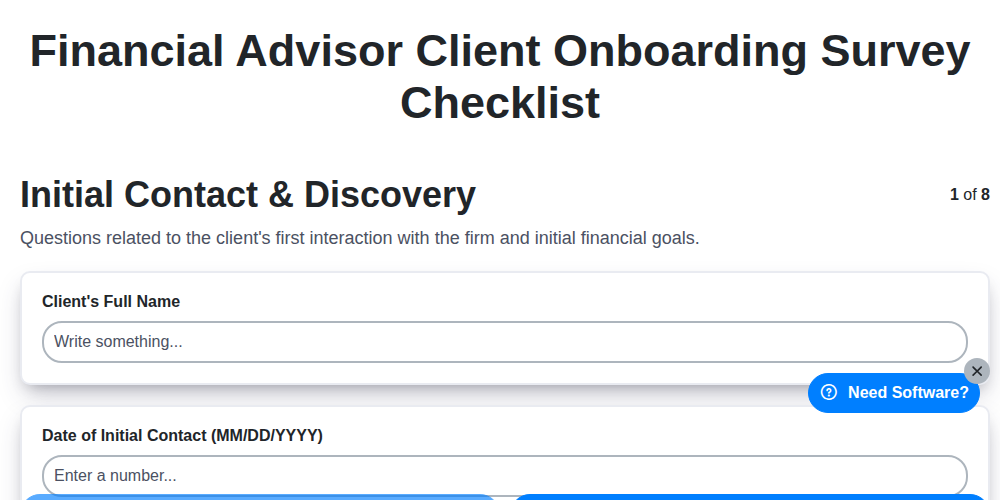
Table of Contents
- Why a Client Onboarding Survey is Essential
- 1. Initial Contact & Discovery: Building Rapport
- 2. Financial Information Gathering: Unveiling the Landscape
- 3. Risk Tolerance Assessment: Understanding Comfort Levels
- 4. Goal Setting & Prioritization: Charting the Course
- 5. Investment Strategy Discussion: Tailoring the Approach
- 6. Compliance & Disclosures: Ensuring Transparency
- 7. Account Setup & Paperwork: Streamlining the Process
- 8. Ongoing Communication & Review: Maintaining Momentum
- Resources & Links
TLDR: Starting a new relationship with a financial advisor can be overwhelming. This checklist ensures a smooth onboarding experience - covering everything from initial chats and financial details to risk assessment, goals, investment strategies, legal disclosures, account setup, and ongoing check-ins. It helps both you and your advisor get on the same page from the very beginning, leading to better planning and a stronger financial future.
Why a Client Onboarding Survey is Essential
Client onboarding isn't just about getting paperwork signed; it's about building a foundation of trust and understanding. A well-designed onboarding survey transforms this process from a series of transactions into a genuine partnership. It allows you to proactively gather crucial information - things clients might not readily volunteer - and demonstrates that you value their perspective. Skipping this step can lead to misunderstandings about expectations, missed opportunities for tailored advice, and ultimately, a less satisfied client. A survey ensures you're starting from a place of clarity, setting the stage for a successful and long-lasting advisor-client relationship.
1. Initial Contact & Discovery: Building Rapport
The first impression is critical. This stage isn't just about gathering basic information; it's about establishing a foundation of trust and understanding. Your onboarding survey should gently guide the conversation, subtly highlighting your expertise and genuine interest in the client's situation.
Think beyond just "Name" and "Contact Information." Include questions that allow you to understand why they've sought your services. Examples might include:
- What prompted you to seek financial advice at this time?
- What are your biggest concerns about your financial future?
- What are your expectations of a financial advisor?
This helps you tailor your subsequent interactions and demonstrates you're truly listening. Don't overwhelm them with a lengthy form; keep it concise and focused on the big picture. A warm, personalized welcome email setting expectations for this initial discovery phase is also a nice touch.
2. Financial Information Gathering: Unveiling the Landscape
This stage is about truly understanding your client's current financial situation. It's more than just numbers; it's about context. We're looking for a comprehensive picture of their assets, liabilities, income, and expenses.
Here's what we typically explore:
- Assets: This includes everything from cash in bank accounts, investment accounts (brokerage, retirement, etc.), real estate, business ownership, and valuable collectibles. We're interested in the type, location, and current values.
- Liabilities: We need a clear understanding of all debts, including mortgages, student loans, credit card balances, and any other outstanding obligations.
- Income Sources: Identifying all income streams-salary, bonuses, business profits, rental income, pensions, social security-provides critical insight into their cash flow.
- Expense Breakdown: While clients often have a general idea of their spending, a detailed breakdown helps us pinpoint areas for potential savings and understand their lifestyle.
- Tax Information: Gathering basic tax information, such as filing status and previous returns, is important for tax-efficient planning.
- Insurance Coverage: We're interested in existing life, health, disability, and property insurance policies.
We understand that discussing finances can feel personal, and we strive to create a comfortable and confidential environment. This information is crucial for developing a tailored financial plan. We will explain exactly why we need each piece of information and how it contributes to a better outcome for you.
3. Risk Tolerance Assessment: Understanding Comfort Levels
Before we even discuss specific investments, it's crucial to understand your comfort level with risk. This isn't about predicting the market; it's about aligning your investment strategy with your feelings about potential losses. A risk tolerance assessment isn't a pass or fail test; it's a conversation.
We'll use a combination of questionnaires, scenario-based questions, and open discussions to gauge your risk profile. We're looking for insights into how you've reacted to past market fluctuations, your understanding of different investment types (stocks, bonds, real estate, etc.), and your overall financial goals.
For example, we might ask:
- How would you feel if your portfolio lost 10% in a single year? Would you see it as an opportunity to buy, panic and sell, or something in between?
- Are you comfortable with investments that have the potential for high growth but also carry higher risk?
- How important is preserving your capital versus maximizing potential returns?
Understanding your risk tolerance allows us to build a portfolio that keeps you comfortable and confident, even when the market gets volatile. Remember, we're building a long-term plan, and a comfortable investor is a successful investor.
4. Goal Setting & Prioritization: Charting the Course
Now that we understand your current financial landscape, it's time to look forward. This isn't just about saving; it's about why you're saving. We're here to help you define your goals - big and small - and prioritize them so we can build a strategy that helps you achieve them.
We'll discuss everything from retirement planning and homeownership to education funding and travel. We'll explore timelines, desired outcomes, and the level of importance you place on each goal. Don't be afraid to dream big! We're here to help you break down those dreams into actionable steps.
We'll use this process to rank your goals, considering factors like urgency, importance, and feasibility. Some goals might be short-term and require immediate attention, while others are long-term aspirations that need a more patient approach. Understanding these priorities allows us to allocate your resources effectively and build a plan that aligns with what truly matters to you. This stage isn't just a formality; it's the foundation upon which we build your financial future.
5. Investment Strategy Discussion: Tailoring the Approach
This isn't just about throwing buzzwords around; it's about crafting a roadmap to your financial goals. Following the foundational work of information gathering and risk assessment, we're now ready to discuss investment strategies - but not before understanding your preferences and expectations.
We'll explore different investment approaches, from conservative, income-focused strategies to growth-oriented portfolios. We'll explain the potential risks and rewards associated with each, using clear, understandable language. It's crucial you understand why we're recommending a particular strategy.
This discussion will cover:
- Asset Allocation: How your portfolio will be divided across different asset classes (stocks, bonds, real estate, etc.).
- Investment Vehicles: We'll discuss options like mutual funds, ETFs, individual stocks, and bonds, explaining their pros and cons.
- Tax Considerations: We'll consider how your investment choices will impact your tax situation.
- Your Comfort Level: Your peace of mind is paramount. We'll ensure the chosen strategy aligns with your risk tolerance and personal feelings about investing.
Ultimately, the investment strategy is a collaborative effort. We're here to guide you, but the final decision rests with you. We want you to feel confident and informed every step of the way.
6. Compliance & Disclosures: Ensuring Transparency
Navigating the complexities of financial planning requires a bedrock of trust and unwavering transparency. This stage of the onboarding process is absolutely critical for building that trust and ensuring a compliant relationship. We've built it into our process to prioritize clarity and openness from the very beginning.
Here's what you can expect:
- Full Disclosure of Fees: You'll receive a clear and concise explanation of all fees associated with our services, including how they are calculated and when they are due. No hidden charges, ever.
- Conflict of Interest Disclosure: We're committed to transparency. We'll proactively disclose any potential conflicts of interest we may have, allowing you to make informed decisions.
- Regulatory Disclosures: You'll receive all required regulatory documents, such as Form ADV Part 1 and Part 2, explained in plain English. We're happy to walk you through these documents and answer any questions you have.
- Privacy Policy Review: We'll review our privacy policy, outlining how we protect your personal and financial information.
- Consent Forms: You'll be asked to formally consent to our services, acknowledging your understanding of the agreement.
Our goal isn't just to fulfill regulatory requirements - it's to empower you with the knowledge you need to feel confident in your financial journey. We believe informed clients are successful clients.
7. Account Setup & Paperwork: Streamlining the Process
This is often the most tedious part for clients - and for you! Let's face it, mountains of paperwork aren't exactly exciting. However, a well-designed process here leaves a lasting positive impression.
Here's how to streamline account setup:
- Digital First: Prioritize digital document delivery and e-signatures whenever possible. Platforms like DocuSign or HelloSign can significantly reduce processing time and improve client convenience.
- Clear Instructions: Provide clients with a clear, step-by-step guide outlining what documents they need and how to complete them. Consider creating short video tutorials for common forms.
- Pre-Populate Forms: Wherever possible, pre-populate forms with information already gathered during the discovery and data collection phases. This minimizes errors and saves clients time.
- Dedicated Support: Offer a point of contact (even if it's just a dedicated email address) to answer questions and guide clients through the paperwork. A little support goes a long way.
- Checklists & Reminders: Send reminders to clients who haven't completed necessary forms and provide a simple checklist to ensure everything is submitted.
- Review & Verification: Thoroughly review all paperwork for accuracy and completeness before submitting it to custodians. This prevents costly delays and errors later.
- Data Security: Clearly communicate your firm's data security protocols to assure clients their information is protected.
8. Ongoing Communication & Review: Maintaining Momentum
Onboarding isn't a one-and-done process; it's the foundation for a long-term, trusting relationship. Ongoing communication and regular reviews are absolutely crucial for maintaining that momentum and ensuring your clients stay on track toward their financial goals.
Here's what this ongoing phase should entail:
- Scheduled Reviews: Implement a clear schedule for regular reviews - quarterly, semi-annually, or annually, depending on client preference and complexity of their situation. These aren't just about performance; they're about revisiting goals, discussing life changes, and adjusting strategies as needed.
- Proactive Check-ins: Beyond scheduled reviews, initiate proactive check-ins. A quick email or phone call to see how things are going, especially after significant life events (new job, marriage, birth of a child) can demonstrate your commitment and build rapport.
- Performance Reporting - with Context: Don't just send performance reports. Explain why the performance is what it is. Relate it back to the original strategy, market conditions, and their long-term goals.
- Education & Updates: Keep clients informed about relevant financial news, market trends, and changes in tax laws that might impact their plan. Offer educational resources (articles, webinars) to empower them.
- Feedback Loop: Actively solicit feedback on your services. Are they satisfied with the communication? Do they understand the strategies? Use this feedback to continuously improve your onboarding and advisory process.
Consistent, meaningful communication is what transforms a client onboarding process into a true partnership.
Resources & Links
- Investor.gov: U.S. Securities and Exchange Commission (SEC) website - a comprehensive resource for investors of all levels. Includes information on understanding investments, avoiding fraud, and investor education. Useful for general financial literacy relevant to onboarding.
- FINRA: Financial Industry Regulatory Authority - Provides investor education materials, regulatory updates, and resources related to financial professionals. Valuable for ensuring compliance and transparency in client onboarding.
- CFP Board: The Certified Financial Planner Board of Standards provides resources related to financial planning, ethical conduct, and finding qualified financial professionals. Relevant for ensuring professional standards are met during onboarding.
- NAPFA: National Association of Personal Financial Advisors - A professional organization of fee-only financial advisors. Provides a view on best practices for client interaction and a commitment to fee transparency, which aligns with onboarding principles.
- XY Planning: Focuses on serving younger clients and leveraging technology. Provides insights on how to adapt onboarding processes for different demographics and use digital tools effectively. Helpful for adapting the process described.
- Practifi: Software provider for financial advisors - Offers tools for client onboarding, CRM, and compliance. Provides insight into modernizing client workflow and technology integrations for a smoother experience.
- Riskalyze: Provides a risk assessment platform. Specific to Section 3 (Risk Tolerance Assessment), this resource allows for a more data-driven approach to understanding client risk profiles. Very helpful for quantifiable risk assessment.
- Kitces.com: Michael Kitces' Nerd's Eye View blog - Offers in-depth articles and research on financial planning topics, including client acquisition, retention, and technology. Provides a thought leadership perspective on the whole process.
- Formstack: Online form builder platform. Can be utilized for creating onboarding surveys and questionnaires. Useful for streamlining the data gathering process, specifically Section 2, 3, 4, 6, and 7.
- Zoho: Zoho offers a suite of business applications, including CRM and survey tools. A broader platform for managing client information and automating processes relevant to onboarding.
Frequently Asked Questions
What is the purpose of a client onboarding survey?
The purpose is to gather essential information about new clients, understand their financial goals, risk tolerance, investment experience, and preferences. This ensures a personalized and effective advisory relationship from the start.
Why is a checklist important for onboarding surveys?
A checklist ensures consistency and completeness in the information collected from each client. It minimizes errors, reduces redundancy, and allows for better record-keeping and compliance.
What types of information should be included in a financial advisor client onboarding survey?
It should include sections covering demographics, financial goals (retirement, home purchase, education), risk tolerance assessment, investment experience, existing accounts, legal/estate planning, communication preferences, and emergency contact information.
How can I make my onboarding survey user-friendly?
Use clear and concise language, use a mix of question types (multiple choice, rating scales, open-ended), break down long sections into smaller, manageable chunks, and ensure mobile compatibility.
What is a risk tolerance assessment and why is it important?
A risk tolerance assessment gauges a client's comfort level with potential investment losses. This is crucial for aligning investment strategies with their individual capacity and willingness to take risks.
Should I use a digital or paper-based survey?
Digital surveys are generally preferred for their ease of distribution, automatic data collection, and integration with client management systems. Paper-based surveys can be useful for clients who prefer them, but require manual data entry.
How often should I review and update my onboarding survey?
At least annually, or more frequently if there are significant changes in regulations, market conditions, or your firm's practices. Client feedback should also be considered for updates.
What should I do with the information collected from the onboarding survey?
Analyze the data to develop personalized financial plans, update client profiles in your CRM, track progress towards goals, and ensure compliance with regulatory requirements. It also serves as a baseline for future performance reviews.
Can I add custom questions to the onboarding survey?
Yes, adding custom questions tailored to your firm's specific services or client base is highly recommended. Just ensure these questions are relevant, comply with regulations, and are clearly explained to the client.
How can I ensure the survey complies with privacy regulations (like GDPR or CCPA)?
Clearly state how client data will be used and protected, obtain explicit consent for data collection and usage, provide easy access to personal data for review and correction, and adhere to all applicable privacy laws.
Comments
There are no comments yet. Be the first to add one!
Survey Management Solution Demo
Gather valuable insights with ease! ChecklistGuro simplifies survey creation, distribution, and analysis. Automate data collection, improve response rates, and make data-driven decisions. Manage it all with our Work OS.
Related Articles
The Ultimate Veterinary Animal Health Checkup Survey Checklist Template
Your Guide to a Green Business: The Environmental Sustainability Audit Checklist

Paper vs ChecklistGuro in Survey Management
Construction Site Safety Survey Checklist Template
A Checklist for Congregant Feedback: Template for Religious Organizations

Excel vs ChecklistGuro in Survey Management
Mastering the Policyholder Journey: Your Insurance Experience Survey Checklist
Real Estate Property Condition Survey Checklist Template
Need help with
Survey Management?
Have a question? We're here to help. Please submit your inquiry, and we'll respond promptly.