Florist Flower Inventory Management Checklist Template: Your Guide to Freshness & Profitability
Published: 09/10/2025 Updated: 08/26/2026
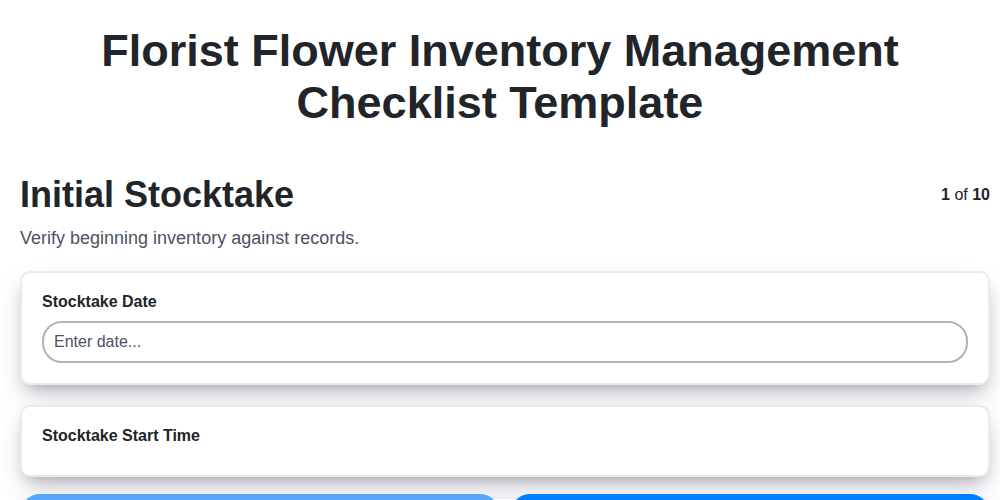
Table of Contents
- Why Flower Inventory Management Matters for Florists
- Creating Your Florist Flower Inventory Checklist
- Step-by-Step: Your Flower Inventory Management Process
- Daily Arrivals & Condition Assessment
- Tracking Sales, Usage, and Waste
- Setting Reorder Points and Preventing Stockouts
- Seasonal Adjustments for Optimal Freshness
- Regular Physical Counts: Ensuring Accuracy
- Resources & Links
TLDR: Running a flower shop? Stop guessing and start tracking! This checklist helps you manage your flower inventory - from daily arrivals to waste disposal - ensuring freshness, minimizing losses, and maximizing your profits. Download the template to streamline your workflow and grow your business!
Why Flower Inventory Management Matters for Florists
Beyond simply knowing what flowers you have on hand, effective inventory management is the backbone of a thriving florist business. It directly impacts your profitability, customer satisfaction, and overall operational efficiency. Let's break down the key reasons why prioritizing this area is absolutely vital.
Firstly, waste reduction is paramount. Flowers are a perishable commodity, representing a significant investment. Without a structured system, you're almost guaranteed to see a higher rate of premature disposal - directly eating into your profit margins. Proper storage and timely usage, informed by accurate inventory data, dramatically minimize these losses.
Secondly, cash flow is king. Overselling or overbuying based on guesswork ties up valuable capital. Knowing your stock levels allows for smarter purchasing decisions, optimizing your working capital and improving overall financial health.
Thirdly, customer expectations are rising. Today's customers expect readily available, high-quality flowers. Stockouts lead to disappointed customers and lost sales - a reputation you can't afford to damage. Proactive inventory management ensures you have the varieties they need, when they need them.
Finally, and perhaps most importantly, it reduces stress and boosts team efficiency. A well-organized system frees you and your team from the constant guesswork and frantic searching, allowing you to focus on creativity, customer service, and growing your business.
Creating Your Florist Flower Inventory Checklist
Building a robust inventory checklist isn't about creating a rigid, inflexible document. It's about establishing a framework you can adapt and improve over time. Start simple, and gradually add complexity as needed. Here's a step-by-step approach to building your own custom checklist:
1. Identify Your Core Flowers: Begin by listing all the flower varieties you regularly stock. Don't forget greenery and filler! This comprehensive list forms the foundation of your checklist.
2. Define Tracking Categories: For each flower type, determine what information needs to be recorded. Consider these categories:
- Date Received: Essential for tracking freshness and supplier performance.
- Supplier: Know exactly where your flowers are coming from.
- Quantity: Number of stems or bunches received.
- Initial Condition: A quick assessment upon arrival.
- Storage Location: Where is the flower being stored (cooler, vase, etc.)?
- Usage: How the flower is utilized in designs or sold individually.
- Disposal Reason: Why the flower was discarded (wilted, damaged, unsold).
3. Choose Your Format: Will you use a spreadsheet, a physical paper form, or dedicated inventory management software? Each has pros and cons. Spreadsheets offer flexibility, paper forms are simple to implement, and software automates many tasks.
4. Assign Responsibility: Designate specific team members to be responsible for updating the inventory checklist. This ensures accuracy and accountability. Cross-training is ideal.
5. Regular Review & Adjustment: Your inventory needs will change! Review your checklist at least quarterly. Adjust flower lists, tracking categories, and assigned responsibilities as needed. Incorporate feedback from your team. A living checklist is a helpful checklist.
Step-by-Step: Your Flower Inventory Management Process
Implementing a robust flower inventory management system doesn't have to be overwhelming. Think of it as a series of manageable steps, each contributing to a clearer picture of your floral stock and a healthier bottom line. Let's break down the process, linking directly to the checklist items mentioned earlier.
1. Receiving and Initial Recording: When a delivery arrives, resist the urge to immediately start arranging! First, meticulously record each flower type, quantity, supplier, and the date received. Note any initial quality concerns - this information is valuable for future supplier communication. This aligns with the 'Initial Stocktake' and 'Daily Arrivals & Purchases' checklist items.
2. Daily Condition Monitoring - The Quick Scan: Dedicate just 10-15 minutes each day to a brief 'condition scan.' Quickly assess each flower type, rating its quality (excellent, good, fair, poor). Look for signs of wilting, bruising, or disease. Document these observations. This ties directly to 'Flower Condition Assessment'. A simple color-coded system can be helpful here - green for excellent, yellow for fair, red for needing immediate attention.
3. Cooler Management - Temperature and Hydration: Regularly check and record your cooler's temperature and humidity. Even slight deviations can significantly impact flower lifespan. Adjust settings as needed to maintain optimal conditions. This is crucial for extending vase life and minimizing waste. This step complements the 'Flower Condition Assessment' and informs adjustments to your 'Daily Arrivals & Purchases'.
4. Replenishment Planning - The Reorder Point Trigger: Don't wait until you're completely out of a popular flower to reorder. Set reorder points for each type - the level at which you initiate a new order. Factor in supplier lead times to avoid shortages. When those points are reached, the 'Reorder Point' triggers a notification, streamlining your ordering process. This directly supports the 'Reorder Point' on your checklist.
5. Weekly Stock Rotation - First In, First Out (FIFO): Implement a strict First In, First Out policy. Older flowers should be used before newer deliveries. This prevents spoilage and ensures you're showcasing your freshest blooms. Consider a simple labeling system to indicate arrival dates. This proactive approach minimizes waste and maximizes profitability.
Daily Arrivals & Condition Assessment
The moment a flower delivery arrives, the clock is ticking. Consistent, accurate record-keeping begins immediately. Don't just unload and store - meticulously document each arrival. Note the supplier, variety (be specific - 'spray roses' not just 'roses'), quantity, and, crucially, the initial condition. A quick visual inspection is essential; look for signs of bruising, wilting, or blemishes.
This initial assessment isn't just about ticking a box; it's about proactive problem-solving. If you receive a delivery with noticeable quality issues, document this clearly. Photograph the problem if possible. Promptly notify the supplier - a picture and a concise explanation are more effective than a vague complaint. This builds a record of supplier reliability and opens a channel for addressing concerns.
Beyond the arrival, a daily condition assessment is paramount. Regularly (ideally daily, but at least every other day) check the condition of each flower variety. This isn't a full physical count - just a quick visual assessment. Assign a rating (e.g., Excellent, Good, Fair, Poor) based on visual cues. Note any deteriorating conditions. This helps prioritize usage - those "Fair" rated blooms should be used in less critical designs or offered at a discounted price. It also allows for targeted adjustments to storage practices and informs future ordering decisions. Proactive assessment minimizes waste and maximizes the beauty and longevity of your floral inventory.
Tracking Sales, Usage, and Waste
Understanding where your flowers go - whether they're brightening a customer's home, forming a stunning bridal bouquet, or sadly ending up in the compost - is absolutely vital for a healthy floral business. Tracking these three key areas, sales, usage, and waste, provides invaluable insights that inform purchasing decisions, optimize arrangement designs, and ultimately boost your profitability.
Sales Data: Unveiling Customer Preferences
Beyond simply knowing what you sold, dive deeper. Analyze sales data by flower type, arrangement style, and even time of day or week. Are certain flowers consistently popular? Do particular arrangements fly off the shelves during specific seasons or holidays? This data allows you to anticipate demand, prioritize inventory, and potentially create targeted promotions. For example, if you consistently sell a lot of red roses on Valentine's Day, you know to stock up accordingly - and potentially offer pre-order discounts.
Usage Tracking: Maximizing Efficiency & Design
When flowers are used in arrangements, it's crucial to record those details as well. This isn't just about accounting; it's about understanding your design efficiency. Do certain flowers consistently end up being used sparingly in arrangements? Are there combinations that lead to less waste? This knowledge can inform your design choices, allowing you to create more efficient and visually appealing arrangements while reducing floral scrap. A simple note system (e.g., Rose - 3 stems used in bridal bouquet) can work wonders.
Waste Analysis: Identifying Problem Areas
Waste is an unavoidable part of the floral business, but it shouldn't be ignored. Diligently track discarded flowers, noting the type, quantity, and suspected reason for disposal (e.g., bruising, overstock, damage). Is a specific supplier consistently sending flowers with shorter vase life? Are your storage practices contributing to premature wilting? Waste tracking shines a light on these problem areas, empowering you to address the root causes and minimize losses. Don't be afraid to have tough conversations with suppliers or re-evaluate your internal processes. Remember, every discarded stem represents lost revenue.
Setting Reorder Points and Preventing Stockouts
Knowing when to reorder is just as important as knowing what to reorder. Setting effective reorder points prevents frustrating stockouts while minimizing overstocking and waste. Here's a breakdown of how to determine those critical numbers:
1. Understand Lead Times: This is the foundation. How long does it take your supplier to deliver flowers after you place an order? Factor in weekends, holidays, and potential delays. A longer lead time requires a higher safety stock.
2. Calculate Average Daily Usage: Track your daily sales and usage for each flower type over a period of time (e.g., a month, a season). This gives you a realistic picture of your demand.
3. Determine Safety Stock: Safety stock is the extra inventory you keep on hand to buffer against unexpected surges in demand or supplier delays. A good starting point is to calculate it as 2-3 times your average daily usage. Factors like seasonality, promotions, and special events will influence this number.
4. The Reorder Point Formula: A simple formula to calculate your reorder point is:
(Average Daily Usage x Lead Time) + Safety Stock = Reorder Point
Example: Let's say your average daily usage of roses is 20 stems, your supplier's lead time is 3 days, and you want a safety stock of 50 stems.
(20 stems/day x 3 days) + 50 stems = 110 stems. Your reorder point for roses would be 110 stems.
5. Leverage Technology: Many inventory management systems automatically calculate reorder points and send alerts when it's time to place an order. This can save you time and reduce the risk of errors.
6. Regularly Review and Adjust: Demand fluctuates, so it's essential to regularly review your reorder points (at least quarterly) and adjust them as needed. Consider seasonal trends, promotions, and any changes in your business. Don't be afraid to tweak your calculations - staying flexible is key to effective inventory management.
Seasonal Adjustments for Optimal Freshness
Seasonal adjustments are more than just stocking peonies in spring; they's about proactively managing your entire inventory to maximize freshness and minimize waste throughout the year. Consider how weather patterns, holidays, and local events impact flower demand.
Spring (March - May): Focus shifts towards lighter, brighter blooms like tulips, daffodils, hyacinths, and lilies. Demand for pastel colors surges. Anticipate increased wedding and event orders. Order in smaller, more frequent batches to account for fluctuating temperatures and potential damage from late frosts.
Summer (June - August): Sunflowers, zinnias, gerberas, and other vibrant summer flowers are in high demand. Be mindful of heat stress on sensitive varieties. Ensure adequate hydration and cooler storage. Wedding and outdoor event orders peak, requiring careful planning and potentially sourcing from local growers.
Autumn (September - November): Rich, warm tones like mums, sunflowers, and foliage become popular. Consider offering autumn-themed bouquets and arrangements. Prepare for increased demand around Thanksgiving and Halloween.
Winter (December - February): Evergreens, amaryllis, and red roses are staples. Demand spikes significantly around Valentine's Day and the holiday season. Pre-ordering and early sourcing are essential to secure supply and manage pricing. Pay close attention to cooler conditions to prevent frost damage.
Don't just react to the seasons; anticipate them. Regularly analyze sales data from previous years to refine your seasonal ordering strategy and ensure your flowers are always at their peak.
Regular Physical Counts: Ensuring Accuracy
Regular physical counts are the bedrock of any reliable inventory system, acting as a vital reality check against your digital records. It's easy for discrepancies to creep in - a misplaced bloom, a forgotten sale, or even just human error. Ignoring these small inconsistencies can snowball into significant problems, affecting your profit margins and potentially leading to stockouts or overstocking.
Think of it this way: your digital inventory is a snapshot in time, while a physical count provides a ground-truth assessment of what's actually present. This comparison allows you to identify and correct any errors, ensuring that your records accurately reflect your stock levels.
Best Practices for Successful Physical Counts:
- Schedule Regularly: Monthly or quarterly counts are generally recommended, but adjust based on the turnover rate of your flowers.
- Dedicated Time: Allocate sufficient time and resources to conduct a thorough count - don't rush the process.
- Teamwork: Enlist the help of multiple team members to expedite the count and improve accuracy.
- Systematic Approach: Count each flower type systematically, moving in a logical order to avoid omissions.
- Document Discrepancies: Meticulously record any discrepancies between the physical count and the digital records, noting potential causes.
- Investigate & Correct: Don't just note discrepancies - actively investigate the root cause and implement corrective actions to prevent recurrence. This might involve retraining staff, refining counting processes, or reviewing supplier orders.
- Reconcile & Update: Once the physical count is complete and discrepancies are resolved, update your digital records to reflect the true inventory levels.
Resources & Links
- Floral Wholesale: A wholesale flower distributor providing insights into flower types, seasonality, and care. Useful for understanding flower characteristics and potential lifespan, essential for accurate inventory planning.
- The Floral Reserve: Another major flower distributor. Offers market trends and flower availability, helping florists anticipate demand and adjust inventory accordingly.
- BloomsyBox: While a direct-to-consumer flower delivery service, their blog often discusses flower care and longevity, which ties directly into inventory management - how long a flower *should* last to inform purchasing decisions.
- FTD: FTD provides resources and insights for florists, including information on flower care and industry trends, potentially offering a glimpse into best practices for inventory control.
- Punchbowl: Although known for invitations, Punchbowl's articles often provide insights on event planning & popular flower choices, which can help forecast demand and plan inventory for peak seasons.
- Simply Wholesale Flowers: Provides information on wholesale flowers and industry trends. A good source for understanding flower pricing and seasonality - vital for budgeting and reorder points.
- ProFlowers: Similar to BloomsyBox, their blog contains articles about flower care and selection, which can contribute to understanding flower lifespan and proper handling, reducing waste.
- ExcelJS: If florists are considering a more complex spreadsheet-based inventory system, ExcelJS (a JavaScript library) provides tools for advanced data manipulation and reporting.
- Google Sheets: A free, web-based spreadsheet application that can be used for basic inventory tracking and analysis. Accessible from anywhere with an internet connection.
- Square: Point of Sale (POS) system that can be integrated with inventory tracking. Offers sales data insights which is a critical part of tracking usage and preventing stockouts, providing real-time sales figures.
Frequently Asked Questions
What is this checklist template for?
This checklist template is designed to help florists manage their flower inventory effectively, minimizing waste, maximizing freshness, and ultimately boosting profitability. It covers everything from receiving deliveries to tracking expiration dates and planning orders.
Who is this checklist template for?
This template is specifically for florists, flower shops, and businesses that handle fresh flowers. It's useful for owners, managers, or anyone responsible for flower inventory management.
What sections are included in the checklist template?
The template typically includes sections for receiving deliveries, checking flower quality, storage conditions, stock rotation, expiration date tracking, order planning/forecasting, and waste management. Specific sections might vary slightly depending on the detailed version.
How can this checklist template help me reduce flower waste?
The checklist emphasizes consistent quality checks upon delivery, proper storage, and a 'first-in, first-out' (FIFO) rotation system. Regularly tracking expiration dates and identifying slow-moving varieties allows you to adjust orders and minimize losses.
How does this template help with profitability?
By reducing waste, optimizing orders, and ensuring flowers are in peak condition for sale, this template helps you increase revenue and lower expenses, leading to improved profitability. It allows you to make informed purchasing decisions.
Is this a printable template or a digital document?
The template is often available in both printable PDF format and as a digital spreadsheet (e.g., Excel or Google Sheets). The downloadable format allows for customization and tracking data electronically.
Can I customize the checklist template?
Yes! The template is designed to be customizable. You can add, remove, or modify sections and details to best suit your specific flower varieties, shop layout, and ordering practices.
What kind of data should I track using this checklist?
You should track information like flower variety, supplier, delivery date, quality grade, storage location, expiration date, usage/sale rate, and any notes about special care or issues.
How often should I use this checklist?
Ideally, you should use the checklist daily when receiving deliveries and rotating stock. Regular reviews (weekly or monthly) of overall inventory trends are also recommended.
Where can I find this checklist template?
The article refers to a downloadable checklist template; look for a link or instructions within the article to access and download it.
Comments
There are no comments yet. Be the first to add one!
Inventory Management Solution Demo
Optimize your inventory & boost profitability! ChecklistGuro streamlines tracking, ordering, & fulfillment. Reduce waste, minimize stockouts, & improve efficiency. Manage it all with our Work OS.
Related Articles
Warehouse Data Integrity: Your WMS Checklist Template

Mastering Inventory Turnover: Your Analysis Checklist Template
Seasonal Mulch & Gravel Checklist Template: Stay Stocked & Ready
Daily Shelf Stocking & Rotation Checklist: FIFO Made Easy
Order Picking Process Verification: Your Checklist Template
Monthly Stockroom Organization & Safety Checklist Template
Vendor Lead Time Validation: A Checklist Template for Supply Chain Success
Daily Warehouse Walkthrough Inspection Checklist Template
Need help with
Inventory Management?
Have a question? We're here to help. Please submit your inquiry, and we'll respond promptly.