Maximize Bloom Longevity: The Ultimate 2026 Flower Shop Perishable Stock Rotation & Freshness Audit Checklist
Published: 10/28/2026 Updated: 10/29/2026
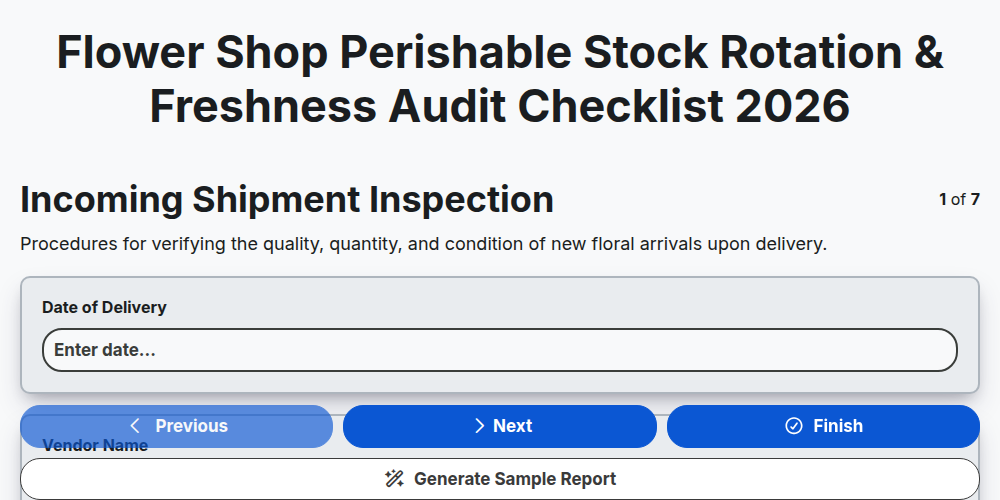
Table of Contents
- Introduction: The Importance of Precision in Floral Inventory Management
- Step 1: Incoming Shipment Inspection: Setting the Standard at the Loading Dock
- Step 2: Mastering FIFO: Implementing Strict Stock Rotation & Compliance
- Step 3: Hydration Excellence: Water Quality & Nutrient Management
- Step 4: Environmental Controls: Temperature & Humidity Monitoring
- Step 5: Post-Harvest Care: Stem Pruning & Daily Maintenance Routine
- Step 6: The Waste Audit: Tracking Inventory Aging & Shrinkage
- Step 7: Sanitation Protocols: Maintaining a Sterile Storage Environment
- Conclusion: Building a Culture of Freshness for 2026 and Beyond
- Resources & Links
TLDR: Learn how to eliminate floral waste and boost profitability with our 2026 master checklist. This guide provides a step-by-step audit strategy-covering everything from incoming shipment inspections and FIFO rotation to advanced hydration management and sanitation protocols-to ensure every bloom in your shop stays peak-fresh longer.
Introduction: The Importance of Precision in Floral Inventory Management
The High Stakes of Floral Freshness
In the competitive landscape of 2026's floral industry, the difference between a thriving boutique and a struggling shop often comes down to a single variable: shelf life. When you are dealing with living, breathing inventory, your profit margins are directly tied to how well you manage the biological clock of every stem in your cooler.
Every wilted rose, every browning hydrangea, and every dehydrated eucalyptus represents more than just a lost sale-it represents wasted labor, lost water, and diminished brand reputation.
Beyond Basic Care: Why an Audit-First Approach is Essential
In an era of rising supply chain costs and increasing consumer expectations for farm-to-vase quality, eye-balling your stock is no longer a viable business strategy. A formal Perishable Stock Rotation & Freshness Audit transforms your workflow from reactive to proactive.
Instead of waiting for a customer to complain about a drooping stem, an audit-driven approach allows you to:
- Minimize Shrinkage: Identify aging inventory before it reaches the point of no return.
- Optimize Cash Flow: Reduce the frequency of emergency reorders by understanding exactly what you have in stock.
- Guarantee Consistency: Ensure that every bouquet leaving your shop meets the same high standard of vigor and hydration.
- Enhance Food Safety & Hygiene: Maintain a sterile environment that prevents the spread of bacteria and pathogens that accelerate floral decay.
The following checklist is designed to serve as your operational roadmap. By implementing these seven critical checkpoints, you aren't just managing flowers; you are mastering the science of longevity.
Step 1: Incoming Shipment Inspection: Setting the Standard at the Loading Dock
The First Line of Defense: Quality Control at the Door
The lifespan of a premium bouquet is decided the moment the delivery truck pulls up to your shop. In the 2026 floral industry, where supply chain volatility is more common than ever, your ability to catch substandard stock before it hits your display is your most powerful tool for reducing shrink.
An effective inspection isn't just a quick glance; it is a systematic evaluation of every stem, box, and bucket entering your facility.
Key Inspection Parameters
To ensure your inventory meets the high standards of your brand, every incoming shipment must be audited against these four critical criteria:
- Visual Integrity & Petal Health: Inspect for signs of sleepiness (wilting), bruising, or browning at the petal edges. Check for any discoloration that might indicate early-stage botrytis or fungal issues.
- Hydration Levels & Stem Turgidity: Gently squeeze the stems. They should be firm and turgid. Any stems that feel soft, rubbery, or hollow are a red flag for dehydration and should be flagged for immediate re-hydration or rejection.
- Pest & Pathogen Screening: In an era of globalized shipping, never skip the micro-inspection. Look closely at the undersides of leaves and within the bud crevices for aphids, thrips, or spider mites. A single infested shipment can compromise your entire cold storage unit.
- Packaging & Temperature Continuity: Check the condition of the shipping containers. Were the boxes damp or crushed? More importantly, use an infrared thermometer to verify that the flowers arrived within the optimal temperature range. If the flowers have undergone a temperature abuse cycle during transit, their vase life will be significantly truncated.
Pro-Tip for 2026: The Reject & Record Protocol
Don't just discard bad stock-document it. Create a standardized digital log for every shipment arrival. By tracking which wholesalers consistently deliver compromised goods, you turn your inspection process into a strategic procurement tool, allowing you to hold suppliers accountable and protect your profit margins.
Step 2: Mastering FIFO: Implementing Strict Stock Rotation & Compliance
The Gold Standard of Freshness: Implementing FIFO Compliance
In the floral industry, profit margins are often determined by the difference between a blooming petal and a wilting stem. To prevent hidden losses-stock that looks fine today but becomes waste by tomorrow-your shop must move beyond simple observation and embrace a rigorous First-In, First-Out (FIFO) protocol.
Implementing FIFO isn't just about moving old flowers to the front; it is about creating a systematic flow that ensures no stem is overlooked.
The New Arrivals Quarantine Protocol
Effective rotation begins the moment a delivery hits your floor. Never integrate new shipments directly into your main display or cooler.
- Isolate New Stock: Keep incoming shipments in a designated Processing Zone separate from your existing inventory.
- Immediate Labeling: As soon as blooms are processed, attach a small, discreet date tag to the stems or the underlying florist tape. This removes the guesswork for your staff during busy holiday rushes.
The Front-to-Back Physical Movement
The most common mistake in floristry is nesting-placing new, vibrant hydrangeas or roses in front of older stock. This creates a graveyard of aging blooms at the back of your cooler.
- The Daily Re-stack: During every morning opening shift, every single bucket must be physically moved. The old stock must be pulled to the front, and the new stock placed behind it.
- Visual Auditing: Use the Depth Check method. When inspecting a bucket, look specifically at the stems at the very bottom and back. If you cannot see the back of the bucket, you cannot audit the freshness.
Standardizing the Rotation Workflow
To make FIFO compliance sustainable in 2026, it must be part of your shop's DNA, not an afterthought.
- The Shift Change Handover: Integrate a Rotation Check into your closing and opening checklists. The closing team should ensure all stems are accessible, and the opening team should execute the physical rotation.
- Training for Accountability: Ensure every team member, from junior assistants to senior designers, understands that a stem's age is just as important as its color.
By mastering these rotation habits, you aren't just managing inventory; you are actively extending the sellable life of your most expensive assets, directly impacting your shop's bottom line.
Step 3: Hydration Excellence: Water Quality & Nutrient Management
Maintaining the Lifeblood of Your Inventory
Hydration is the single most critical factor in determining the vase life of your floral stock. Even the most beautiful bloom will succumb to rapid wilting if the water delivery system is compromised. In 2026, maintaining a gold standard of hydration requires moving beyond simply changing the water to a rigorous, scientific approach to water quality.
The Three Pillars of Hydration Management
To ensure your flowers remain vibrant from the moment they arrive to the moment they reach the customer, your audit must focus on these three critical areas:
1. Water Purity and Sterilization Bacteria are the primary enemy of floral longevity. As bacteria multiply, they clog the vascular system (xylem) of the stem, preventing water uptake.
- Microbial Control: Regularly audit your use of floral preservatives and sanitizers. Are you using a consistent dosage of biocide to inhibit bacterial growth?
- Water Source Testing: Periodically check for impurities in your water supply. Hard water or high chlorine levels can interfere with nutrient uptake.
- Vase Sanitation: Every vessel must be scrubbed with a professional-grade floral cleaner between uses to remove biofilm.
2. Precise Nutrient Balancing Freshness isn't just about hydration; it's about nutrition. As flowers age, they deplete the natural sugars present in their stems.
- Preservative Consistency: Ensure that your floral food (carbohydrates, acidifiers, and biocides) is being applied according to the specific needs of the species in stock.
- Concentration Audits: Periodically verify that your nutrient solutions are mixed at the correct parts-per-million (PPM) to avoid nutrient toxicity or deficiency.
3. Temperature Regulation of Water The temperature of the hydration solution can accelerate or decelerate metabolic processes.
- Optimal Thermal Range: Audit your water temperature daily. For most woody stems and hardy blooms, cool water (near 34-38°F or 1-3°C) is ideal to slow respiration.
- Heat Management: Ensure that heat from refrigeration motors or sunlight from windows isn't warming your water buckets, which creates a breeding ground for pathogens.
Audit Pro-Tip for 2026
Use a digital thermometer to log water temperatures during your morning walkthrough. Consistency in temperature is the secret to predictable vase life and reduced shrink.
Step 4: Environmental Controls: Temperature & Humidity Monitoring
Precision Climate Management: Temperature & Humidity Monitoring
In 2026, maintaining the cold chain is no longer just a best practice-it is a digital necessity. For perishable floral stock, your storage environment is the single most important factor in determining the lifespan of your inventory. Even a two-degree fluctuation or a sudden drop in humidity can trigger rapid senescence (aging) and significant financial loss.
The Science of the Cold Chain
To ensure your blooms remain in peak condition from the moment they enter your shop until they reach the customer, your audit must focus on two critical metrics:
- Temperature Stability: Most cut flowers thrive in temperatures between 34°F and 38°F (1°C to 3°C). Your checklist should include verifying that your floral coolers are maintaining a consistent range without hot spots near the door or near heat-generating equipment.
- Relative Humidity (RH) Optimization: High humidity is essential to prevent transpiration (water loss through the petals). Aim for an ideal humidity level of 85% to 95%. Monitoring this prevents wilting and petal drop in thirsty varieties like Hydrangeas and Roses.
2026 Audit Standards: Digital Integration
As we move into 2026, manual thermometer checks are no longer sufficient for a high-performing shop. Your audit should verify the functionality of your Smart Monitoring Systems.
Key Audit Verification Points:
- Sensor Calibration: Regularly check that your digital hygrometers and thermometers are calibrated and providing accurate, real-time data.
- Alert System Testing: Test your automated alert system. If the cooler temperature rises above the threshold during non-business hours, does your mobile device receive an immediate notification?
- Airflow Assessment: Inspect the placement of stock. Ensure that flowers are not blocking the evaporator fans, as obstructed airflow creates pockets of warm, stagnant air that accelerate decay.
- Humidity Buffer Checks: Verify that humidification systems (misters or ultrasonic humidifiers) are operational and that the water reservoirs are clean to prevent mineral buildup.
By treating temperature and humidity as controllable variables rather than environmental constants, you can significantly reduce your waste percentage and ensure that every stem you sell meets the highest standard of freshness.
Step 5: Post-Harvest Care: Stem Pruning & Daily Maintenance Routine
The Art of the Cut: Precision Maintenance for Extended Vase Life
Even the highest quality shipment can lose its vitality if neglected once it hits your cooler. In 2026, maintaining a competitive edge means moving beyond checking your flowers to implementing a rigorous, standardized maintenance routine. The goal is simple: delay senescence (aging) and maximize the hydration potential of every stem.
The 45-Degree Rule and Beyond
Every single stem entering your workspace should undergo a fresh re-cut before entering the display or storage area.
- Precision Cutting: Use sharp, sanitized shears to make a clean 45-degree angle cut. This increases the surface area available for water uptake and prevents the stem from sitting flat against the bottom of the bucket, which can block hydration.
- Remove Submerged Foliage: Inspect the lower portion of every stem. Any leaves that sit below the water line must be stripped away. Foliage left in water is the primary driver of bacterial growth, which clogs stems and leads to rapid wilting.
Daily Maintenance Tasks
To ensure your inventory remains at peak freshness, your team should follow this daily ritual:
1. The Refresh & Replace Protocol
- Water Change Frequency: Water should be changed daily (or every 48 hours for hardier varieties). Stagnant, lukewarm water is a breeding ground for pathogens.
- Clean the Vessels: Never simply top off old water. Empty the buckets, scrub them with a mild disinfectant to remove biofilm, and refill with fresh, temperature-controlled water.
2. Nutrient and Sanitizer Calibration
- Flower Food Integration: Ensure that floral preservative is mixed precisely according to manufacturer instructions. Over-concentrated solutions can cause osmotic stress, while under-concentrated solutions fail to provide necessary sugars.
- Bacterial Control: Periodically add a drop of professional-grade floral preservative or a tiny amount of bleach (if compatible with your specific species) to keep the water sterile.
3. Individual Stem Inspection
- The First Sign Check: During the daily rotation, look for the subtle signs of decline: slight petal translucency, drooping necks (bent neck), or slimy stems.
- Immediate Action: If a stem shows signs of distress, move it immediately to a recovery bucket with specialized hydration treatment or mark it for immediate markdown/sale to prevent it from contaminating the rest of the batch.
Pro-Tip for 2026: The Audit-Ready Mindset
Train your staff to view pruning not as a chore, but as the most critical value-added step in the shop. A well-maintained stem is the difference between a customer returning for a second bouquet or never coming back at all.
Step 6: The Waste Audit: Tracking Inventory Aging & Shrinkage
Mastering the Art of the Waste Audit
In the competitive landscape of 2026 floristry, profitability isn't just about how much you sell-it's about how much you don't throw away. An effective inventory aging and waste audit is the heartbeat of a sustainable flower shop. It is the process of turning shrinkage into actionable data.
Identifying the Dead Zone
The primary goal of this audit step is to identify the transition point where a bloom moves from prime retail to clearance and, eventually, to waste. By tracking the lifecycle of specific varieties, you can identify patterns in your inventory. Are your hydrangeas consistently hitting the waste bin on day four? Are your eucalyptus stems lasting longer than expected? This data allows you to adjust your ordering frequency and volume with surgical precision.
The Anatomy of a Waste Audit
To perform a professional-grade audit, your checklist should focus on three critical metrics:
- Shrinkage Categorization: Don't just record the total loss; categorize it. Was the loss due to mechanical damage during transit, improper hydration, temperature fluctuations, or simply over-ordering?
- The Aging Log: Implement a daily check of your at-risk stock. This involves flagging stems that have reached their predicted senescence point, allowing you to move them into prepared arrangements or budget bouquets before they become total losses.
- Financial Impact Analysis: Translate stems lost into dollars lost. Seeing the monetary value of wasted inventory is often the necessary catalyst for changing long-standing (but inefficient) purchasing habits.
Turning Losses into Insights
An audit is not a finger-pointing exercise; it is a diagnostic tool. If your waste audit reveals high levels of stem-end rot, the solution lies in your Hydration & Water Quality Management. If the audit shows bruising, the focus must shift to Incoming Shipment Inspection.
By treating every discarded stem as a data point, you transform your waste management from a reactive chore into a proactive strategy for maximizing your shop's bottom line and ensuring that every bloom you purchase finds its way into a customer's hands, not the compost bin.
Step 7: Sanitation Protocols: Maintaining a Sterile Storage Environment
The Foundation of Longevity: Why Sanitation is Non-Negotiable
In the floral industry, cleanliness is not just about aesthetics; it is a critical component of plant pathology management. Even the most perfectly pruned stem will succumb to rapid decay if it is placed into a vessel contaminated with bacteria or fungi. As we move into 2026, the focus of professional floral management has shifted from cleaning to pathogen prevention.
Eliminating the Invisible Killers
The primary enemy of a long-lasting bouquet is the microscopic buildup of bacteria, such as Pseudomonas, which clogs the vascular system of the stem. To ensure your stock remains at peak freshness, your sanitation protocol must address three critical areas:
- Vessel Sterilization: Every vase, bucket, and container must be scrubmed with an approved disinfectant and rinsed thoroughly. Residual organic matter from previous shipments acts as a breeding ground for pathogens that can compromise an entire new batch of inventory.
- Tool Disinfection: Pruning shears, floral knives, and stem cutters must be sanitized between every use. A single contaminated cut can spread disease through your entire inventory via cross-contamination.
- Surface Sanitization: Worktables, cooling unit shelving, and even delivery crates should be wiped down daily using food-safe, floral-grade sanitizers to prevent the transfer of spores.
The Clean Slate Routine
To make this checklist actionable, implement a structured cleaning schedule that leaves no room for error:
| Frequency | Task Focus | Action Item |
|---|---|---|
| Daily | Surface & Tools | Sanitize all cutting implements and wipe down primary work surfaces. |
| Per Shipment | Receptacles | Deep-clean all buckets used for the incoming delivery. |
| Weekly | Deep Sanitation | Scrub cooler floors, shelves, and drainage trays to prevent biofilm buildup. |
| Monthly | Infrastructure | Inspect and sanitize cooling unit evaporator coils and drainage systems. |
Proactive vs. Reactive Maintenance
A truly effective audit doesn't just look for dirt; it looks for the potential for decay. By maintaining a sterile storage environment, you are not merely reacting to wilted flowers-you are proactively extending the shelf life of your entire inventory, reducing waste, and ensuring that every customer receives a bloom that looks as fresh as the moment it was harvested.
Conclusion: Building a Culture of Freshness for 2026 and Beyond
Turning Compliance into Competitive Advantage
Implementing a rigorous audit checklist is more than just a way to reduce waste-it is a commitment to your brand's reputation. In the highly competitive floral market of 2026, customers no longer just buy flowers; they buy the promise of longevity and beauty. By standardizing your Incoming Shipment Inspection and strictly adhering to FIFO (First-In, First-Out) protocols, you ensure that every stem leaving your shop is at the peak of its vitality.
Beyond the Checklist: Creating a Sustainable Workflow
While the technical aspects of Temperature Monitoring and Hydration Management are vital, the true success of this audit lies in how it integrates into your daily shop culture. An audit should not feel like a monthly chore, but rather a natural extension of your passion for floral excellence.
- Empower Your Team: Train every staff member to see themselves as quality guardians. When a team member feels empowered to prune a stem or report a temperature fluctuation, your entire inventory benefits.
- Leverage Data for Growth: Use your Inventory Aging & Waste Audit results to make smarter purchasing decisions. Reducing shrinkage directly impacts your bottom line, allowing you to reinvest in more exotic, high-margin varieties.
- Prioritize Hygiene: Never underestimate the power of Storage Area Sanitation. A clean environment is the foundation upon which all other freshness protocols are built.
Final Thoughts
As we move into 2026, the floral industry is becoming more sophisticated, with even higher consumer expectations for sustainability and quality. By adopting this comprehensive rotation and freshness audit, you are not just managing perishables; you are protecting your margins, reducing your environmental footprint, and ensuring that every bouquet you create tells a story of perfection.
Start your audit today-your blooms (and your profit margins) will thank you.
Resources & Links
- American Association of Lords & Florists: Professional industry standards and networking for floral retailers and wholesalers.
- Federal Trade Commission (FTC): Regulatory guidelines regarding business practices and consumer transparency in retail.
- IPM Technologies: Advanced research on post-harvest treatments and floral longevity technologies.
- Food and Agriculture Organization of the United Nations: Global standards for agricultural supply chain management and perishable goods handling.
- Bloomex Industry Insights: Examples of large-scale floral logistics and inventory management trends.
- Floral Seasonality Guides: Resources for tracking bloom cycles and seasonal inventory planning.
- United States Department of Agriculture: Official guidelines on plant health, inspections, and agricultural safety standards.
- MSU Extension - Horticulture: Scientific research on flower hydration, nutrient management, and post-harvest care.
- FSMA Compliance Resources: Best practices for sanitation and preventing contamination in perishable environments.
- Shopify Retail Management: Tools and tutorials for digital inventory tracking and waste auditing in small businesses.
- Environmental Protection Agency (EPA): Guidelines on safe sanitation chemicals and environmental control for retail spaces.
- Forbes Business Strategy: Insights on operational efficiency and building a culture of excellence in retail operations.
- Supply Chain Dive: Deep dives into FIFO (First-In, First-Out) logistics and modern warehouse management.
- Bloomberg Business Intelligence: Macro-economic trends affecting global floral supply chains and logistics costs.
- ISSAL (International Society for Horticultural Science): Academic resources regarding humidity, temperature, and plant physiology.
Comments
There are no comments yet. Be the first to add one!
Flower Shop Management Solution Demo
Bloom with efficiency! ChecklistGuro simplifies flower shop management - from order tracking to inventory control and delivery scheduling. Enhance customer service, reduce waste, & boost profits. Manage it all with our Work OS.
Related Articles
The Ultimate Flower Shop Order Fulfillment Checklist Template
Blooming Safe: Your Flower Shop Fire Safety & Emergency Checklist Template

Excel vs ChecklistGuro in Flower Shop Management
Blooming Business: Your Free Flower Shop Daily Operations Checklist Template
The Ultimate Flower Shop Website & Online Orders Checklist Template
Florist Flower Inventory Management Checklist Template: Your Guide to Freshness & Profitability

Paper vs ChecklistGuro in Flower Shop Management
The Ultimate Flower Shop Mother's Day Promotion Checklist Template
Need help with
Flower Shop Management?
Have a question? We're here to help. Please submit your inquiry, and we'll respond promptly.