A Step-by-Step Guide to Guest Complaint Resolution and Service Recovery
Published: 06/18/2026 9:00 PM Updated: 06/19/2026 12:30 PM
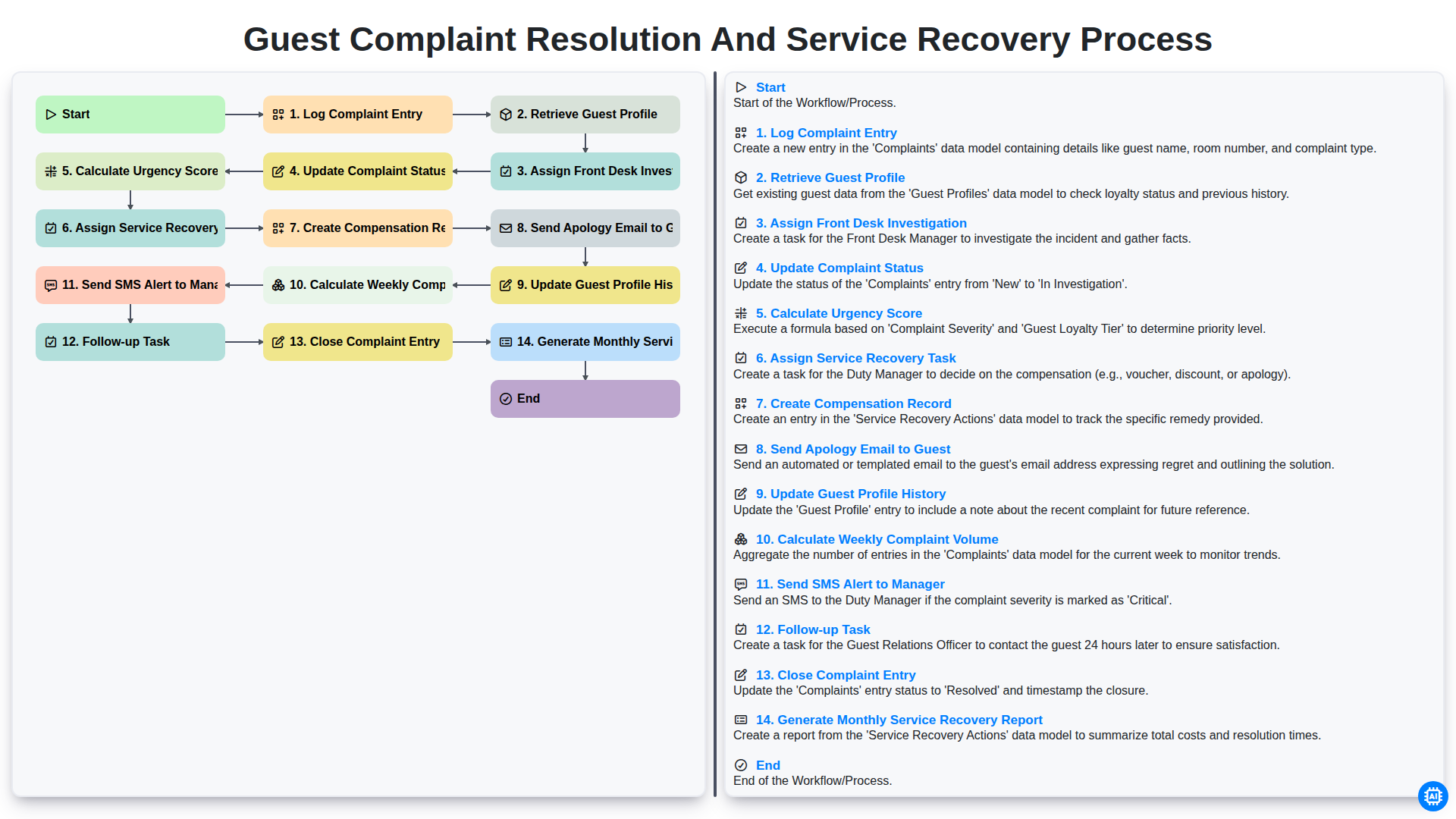
Table of Contents
- Introduction: The Importance of Effective Service Recovery
- Phase 1: Initial Capture and Identification
- Step 1: Logging the Complaint Entry
- Step 2: Retrieving the Guest Profile for Context
- Phase 2: Investigation and Prioritization
- Step 3: Assigning Front Desk Investigation
- Step 4: Calculating the Complaint Urgency Score
- Step 5: Monitoring and Updating Complaint Status
- Phase 3: Executing the Service Recovery Plan
- Step 6: Assigning Service Recovery Tasks
- Step 7: Creating a Formal Compensation Record
- Step 8: Delivering the Formal Apology Email
- Phase 4: Documentation and Follow-Up
- Step 9: Updating Guest Profile History and Closing the Case
- Phase 5: Management Oversight and Long-term Analysis
- Step 10: Managing Alerts, Follow-ups, and Periodic Reporting
- Resources & Links
TLDR: Master the art of turning unhappy guests into loyal advocates with this comprehensive guide to our Guest Complaint Resolution and Service Recovery workflow. Learn how to automate everything from initial logging and investigation to real-time manager alerts and long-term trend reporting, ensuring no grievance goes unresolved.
Introduction: The Importance of Effective Service Recovery
In the hospitality industry, a guest complaint is often viewed as a crisis, but in reality, it is one of the most critical opportunities for brand loyalty. When a guest voices a grievance, they are handing you a second chance to prove your commitment to excellence. This concept, known as the Service Recovery Paradox, suggests that a guest who experiences a problem that is resolved with exceptional care often becomes more loyal than a guest who never encountered an issue at all.
However, true service recovery cannot rely on intuition or ad-hoc gestures alone. Without a standardized, structured workflow, complaints can slip through the cracks, leading to repeated errors, frustrated staff, and permanent loss of reputation. An effective recovery process ensures that every grievance is tracked, investigated, and resolved with consistency. By transforming reactive troubleshooting into a proactive, systematic workflow, hotels can turn moments of friction into lasting moments of delight, ensuring that every guest feels heard, valued, and respected.
Phase 1: Initial Capture and Identification
The foundation of a successful service recovery strategy lies in the precision of the initial intake. The process begins with the Log Complaint Entry step, where every grievance-no matter how minor-is formally documented. This ensures that no guest feedback falls through the cracks and provides a paper trail for accountability.
Once the complaint is logged, the system immediately moves to Retrieve Guest Profile. By pulling up the guest's historical data, the staff can see if this is an isolated incident or a recurring issue. This context is vital for understanding the guest's loyalty level and previous experiences. To ensure the right level of attention is applied, the system then proceeds to Calculate Urgency Score. By analyzing the nature of the complaint and the guest's profile, the workflow assigns a priority level, allowing the team to distinguish between a minor inconvenience and a critical service failure that requires immediate intervention.
Step 1: Logging the Complaint Entry
The foundation of an effective service recovery strategy lies in the precision of the initial intake. The process begins the moment a guest expresses dissatisfaction. Logging the Complaint Entry is not merely about recording a grievance; it is about capturing the granular details that will drive the entire investigation.
During this stage, staff must document the what, when, and where of the incident. This includes the specific nature of the issue, the time it occurred, the departments involved, and the immediate emotional state of the guest. By ensuring that the initial entry is comprehensive and standardized, you eliminate the risk of information loss, ensuring that the subsequent steps in the workflow are based on accurate, actionable data. A well-documented entry serves as the single source of truth for the entire resolution journey.
Step 2: Retrieving the Guest Profile for Context
Once a complaint has been logged, the next critical step in the workflow is to Retrieve the Guest Profile. Resolution cannot happen in a vacuum; to provide a truly personalized recovery, the staff must understand the context of the guest's history with the property.
By accessing the guest's profile, the front desk team can identify whether this is a first-time occurrence or a recurring issue. Is this a loyal VIP member who has stayed with us dozens of times, or a first-time visitor? Does their history show a pattern of similar dissatisfaction, or is this an isolated incident?
Retrieving this data allows the team to transition from a generic one-size-fits-all response to a tailored service recovery strategy. Understanding the guest's preferences, previous interactions, and loyalty status ensures that the subsequent investigation and compensation are proportionate and meaningful, turning a moment of frustration into an opportunity to strengthen brand loyalty.
Phase 2: Investigation and Prioritization
Once a complaint is logged, the true work of service recovery begins. This phase shifts the focus from passive recording to active investigation and strategic prioritization. The process starts with Retrieving the Guest Profile, allowing the team to understand the guest's history, previous preferences, and any past grievances that might influence the current situation. With this context in hand, the system moves to Assigning a Front Desk Investigation, ensuring that a dedicated staff member is tasked with uncovering the root cause of the issue.
To ensure that critical issues do not get buried under minor inconveniences, the workflow incorporates a Calculate Urgency Score step. By analyzing the severity of the incident, the system automatically flags high-priority cases that require immediate intervention. As the investigation progresses, the team must consistently Update the Complaint Status, providing real-time visibility into the resolution progress. This structured approach ensures that no grievance is left unaddressed and that resources are allocated where they are needed most.
Step 3: Assigning Front Desk Investigation
Once a complaint has been logged and the guest's profile has been retrieved, the next critical phase is the Assign Front Desk Investigation step. At this stage, the workflow transitions from data entry to active inquiry.
The responsibility is formally delegated to the Front Desk team or a designated duty manager to perform a deep dive into the specifics of the incident. This stage is not merely about reading the complaint; it involves a systematic review of recent transactions, room logs, and staff interactions related to the guest's stay. The goal of this investigation is to identify the root cause-whether it was a technical failure, a service lapse, or a communication breakdown-ensuring that the subsequent resolution is based on facts rather than assumptions. By assigning this task specifically to the Front Desk, the process ensures that the personnel most capable of immediate, on-site intervention are leading the investigation.
Step 4: Calculating the Complaint Urgency Score
Once the initial investigation has been assigned to the Front Desk, the system moves into a critical phase: Calculating the Complaint Urgency Score. Not all complaints are created equal, and treating a missed towel with the same level of-priority as a billing error or a safety concern can lead to inefficient resource allocation.
To ensure the most pressing issues are addressed immediately, the system utilizes a weighted algorithm to assign a numerical value to every logged entry. This score is determined by analyzing several key variables:
- Nature of the Incident: High-impact issues (such as security breaches, health/safety concerns, or significant property damage) are automatically assigned a higher weight.
- Guest Loyalty Tier: Complaints from VIP members or frequent stayers are prioritized to protect the lifetime value of your most important customers.
- Time Elapsed: As a complaint remains unaddressed, the urgency score increases, preventing silent issues from lingering in the queue.
- Impact Potential: The system evaluates the potential for negative social media exposure or impact on the hotel's online reputation.
By automating this calculation, your team no longer has to guess which task to tackle first. The urgency score acts as a digital compass, guiding the Front Desk team to focus their energy where it is needed most, ensuring that critical service failures are mitigated before they escalate into public PR crises.
Step 5: Monitoring and Updating Complaint Status
Once the investigation is underway, it is critical to maintain transparency and real-time visibility within the system. The Update Complaint Status step serves as the central pulse of the resolution process, ensuring that no grievance falls through the cracks.
As the Front Desk investigation progresses, the status must be transitioned from New to In Progress and, eventually, Resolved. This constant updating allows all stakeholders-from floor managers to general managers-to see exactly where each issue stands. This phase also triggers the Calculate Urgency Score function; by re-evaluating the priority of a complaint based on the findings of the investigation, the system can dynamically re-prioritize tasks to ensure that high-impact issues receive immediate attention. This continuous monitoring ensures that the resolution process is not just a reactive measure, but a structured, data-driven workflow.
Phase 3: Executing the Service Recovery Plan
Once the initial investigation is complete and the severity of the issue is understood, the focus shifts from diagnosis to action. This phase is where the recovery actually happens, transforming a negative experience into an opportunity to rebuild trust. The execution phase is a synchronized dance between internal task management and direct guest communication.
The process begins with the formalization of the resolution. After the investigation is finalized, the system must Assign a Service Recovery Task to the appropriate department, ensuring that the solution is not just a promise, but a scheduled action. Simultaneously, we Create a Compensation Record-whether that involves a room upgrade, a meal voucher, or a partial refund-to ensure accountability and financial tracking.
Communication is the heartbeat of this phase. To ensure the guest feels heard and valued, the system triggers the process to Send an Apology Email to the Guest. This communication must be timely and personalized, demonstrating that their feedback has been processed and an active solution is underway.
However, the work does not end with a single email. To prevent the service gap from reopening, a Follow-up Task is automatically generated. This ensures that a staff member checks back with the guest after the compensation has been applied to confirm their satisfaction. Only once the guest's needs are met and the resolution is verified can the team move to Close the Complaint Entry, marking the successful completion of the recovery cycle.
Step 6: Assigning Service Recovery Tasks
Once the initial investigation is complete and the severity of the issue has been assessed, the workflow moves into the action phase: Assigning Service Recovery Tasks. At this stage, the focus shifts from identifying the problem to actively fixing it.
This step is crucial because a complaint cannot be resolved by a single person or a single action. The system automatically delegates specific, actionable tasks to the relevant departments-whether it is housekeeping to rectify a room cleanliness issue, maintenance to fix a broken amenity, or food and beverage to replace a meal. By assigning these tasks directly within the workflow, you ensure clear accountability and eliminate the risk of lost requests. This ensures that the recovery process is not just a reactive gesture, but a structured, departmentalized effort to restore the guest's trust.
Step 7: Creating a Formal Compensation Record
Once the investigation is complete and a resolution strategy has been decided, the next critical step is to Create a Compensation Record. This stage moves the process from investigation to formal documentation.
A compensation record serves as the official ledger for all gestures made to rectify the guest's dissatisfaction. Whether it is a room upgrade, a meal voucher, a discount on a future stay, or a full refund, every concession must be logged with precision. This record must include the specific type of compensation provided, the monetary value (if applicable), and the authorized staff member who approved the gesture.
By formalizing this step, you ensure transparency and accountability. It prevents service creep, where unrecorded discounts become an unmanaged expense, and it provides the necessary data for the finance team to reconcile accounts. More importantly, having a centralized record of compensation allows the management team to identify patterns-helping you distinguish between a one-off error and a systemic issue that requires operational changes.
Step 8: Delivering the Formal Apology Email
Once the investigation is complete and the compensation has been determined, the next crucial step is reaching out to the guest. The Send Apology Email to Guest stage is much more than a formality; it is a pivotal moment in the service recovery process where you transition from problem-solving to relationship rebuilding.
A well-crafted apology email serves to validate the guest's feelings and demonstrates that their feedback has been heard and acted upon. To make this step effective, the communication should be personalized, sincere, and transparent. Avoid generic templates that feel automated; instead, reference the specific details of their complaint and explicitly state the steps taken to resolve the issue.
The goal of this email is to bridge the gap between a negative experience and future loyalty. By proactively delivering a formal apology, you strip the guest of the need to follow up with a grievance, effectively turning a moment of frustration into a demonstration of your brand's commitment to excellence. This step ensures that the final impression left on the guest is one of accountability and care.
Phase 4: Documentation and Follow-Up
Once the immediate crisis has been averted and the guest has received their compensation, the workflow shifts from reactive damage control to proactive documentation. This phase is critical because a complaint handled well is only a success if the organization learns from it to prevent future recurrence.
The process begins with the Close Complaint Entry step, officially marking the specific incident as resolved in your system. However, the work does not end there. To ensure long-term service excellence, the system must Generate Monthly Service Recovery Reports, providing management with a high-level overview of trends, recurring pain points, and the effectiveness of current recovery strategies.
Furthermore, a Follow-up Task should be automatically triggered to check in with the guest after a set period. This final touchpoint demonstrates that your commitment to their satisfaction extends far beyond the immediate resolution, turning a potentially negative experience into a lasting moment of loyalty. By meticulously documenting these final steps, you transform individual resolutions into institutional intelligence.
Step 9: Updating Guest Profile History and Closing the Case
Once the apology has been delivered and the immediate tension has been diffused, the process moves into the critical phase of long-term data integration. Updating the Guest Profile History is a vital step in ensuring that the incident does not become a recurring issue. By documenting the specifics of the complaint and the resolution provided within the guest's permanent profile, you create a digital memory for the hotel. This ensures that if the guest returns, any staff member can see the previous mishap and proactively offer a personalized, extra layer of care to rebuild trust.
The final stage of the workflow is the official Closing of the Complaint Entry. A complaint should only be marked as Closed once the follow-up tasks are verified and the guest's satisfaction has been confirmed. This formal closure serves as the signal to the management team that the service recovery cycle is complete, allowing the focus to shift from reactive troubleshooting to proactive data analysis and reporting.
Phase 5: Management Oversight and Long-term Analysis
The final phase of the workflow shifts the focus from individual incident resolution to high-level operational intelligence. Once the immediate crisis is averted and the guest is satisfied, the process moves into a systematic oversight stage designed to prevent recurrence and improve service standards.
This stage begins with the automation of administrative tasks, such as calculating weekly complaint volumes and generating monthly service recovery reports. These metrics are crucial for identifying patterns; for instance, a spike in complaints regarding check-in delays during a specific weekend can signal staffing shortages or operational bottlenecks. To ensure leadership remains proactive rather than reactive, the system triggers a SMS alert to managers for high-priority issues, ensuring that critical failures never go unnoticed by decision-makers.
Beyond immediate data, this phase incorporates a continuous loop of accountability through the follow-up task mechanism. This ensures that the loop is never left open and that the resolution wasn't merely a temporary fix, but a permanent improvement in service delivery. By analyzing these long-term trends, management can transform individual service failures into strategic opportunities for institutional growth, turning a culture of damage control into a culture of continuous excellence.
Step 10: Managing Alerts, Follow-ups, and Periodic Reporting
Once the immediate crisis has been averted and the guest has received their apology, the final phase of the workflow focuses on oversight, accountability, and long-term improvement. A seamless service recovery process does not end when the guest is satisfied; it ends when the data is used to prevent future occurrences.
This stage involves three critical layers of management:
1. Real-Time Management Alerts To ensure leadership remains informed of critical service failures, the system triggers a Send SMS Alert to Manager whenever a high-urgency complaint is logged or a recovery task remains unaddressed. This ensures that management is never blindsided by systemic issues and can step in to provide support during high-pressure situations.
2. Closing the Loop and Follow-up The integrity of our service recovery depends on the Follow-up Task. After the compensation has been delivered, a scheduled task prompts staff to check back with the guest after 24 to 48 hours. This ensures the resolution was truly satisfactory and reinforces our commitment to their experience. Only after this verification is complete can the team officially Close Complaint Entry, marking the incident as resolved in our database.
3. Data-Driven Continuous Improvement The true value of the workflow lies in its ability to turn individual grievances into actionable intelligence. By automatically performing a Calculate Weekly Complaint Volume and generating a Monthly Service Recovery Report, we move from a reactive state to a proactive one. These reports allow management to identify trends-such as recurring issues with specific room types or meal service times-enabling us to implement structural changes that elevate the standard of service for all future guests.
Resources & Links
- Hospitality Net: A leading source for hospitality industry news, trends, and best practices in guest service management.
- Revfine: Comprehensive insights into hotel management, revenue management, and operational excellence.
- Forbes Travel Guide: Industry-standard benchmarks for luxury service and excellence in guest experience and service recovery.
- TripAdvisor Management Center: Tools and resources for understanding guest feedback and managing online reputation through effective resolution.
- SHRM (Society for Human Resource Management): Resources for training staff on conflict resolution, investigation protocols, and professional communication.
- Zendesk Customer Service Blog: Expert guides on workflow automation, ticketing systems, and managing complex customer complaint lifecycles.
Found this Article helpful?
Comments
There are no comments yet. Be the first to add one!
Hospitality Management Solution Demo
Running a hotel, restaurant, or other hospitality business is demanding. ChecklistGuro's Work OS platform simplifies management, from reservations and guest services to inventory and staff scheduling. Improve efficiency, enhance guest experience, and boost profitability! See how ChecklistGuro can transform your hospitality operations.
Related Articles
Your Ultimate Security Camera Monitoring Log Checklist Template
Payroll Processing Verification Checklist Template: Your Guide to Accuracy
Complaint Handling Checklist Template: Resolve Issues & Retain Customers

Emergency Evacuation Drill Documentation: Your Checklist Template Guide

Mastering Incident Response: Your Free Reporting Protocol Checklist Template
Conquer Your Kitchen: A Monthly Deep Cleaning Checklist Template
Mastering Food Safety: Your Free Temperature Control Checklist Template
Mastering Hand Hygiene: Your Compliance Checklist Template
We can do it Together
Need help with
Checklists?
Have a question? We're here to help. Please submit your inquiry, and we'll respond promptly.