Navigating Actuarial Reviews: Your Insurance Actuarial Review Checklist Template
Published: 12/01/2025 Updated: 07/02/2026
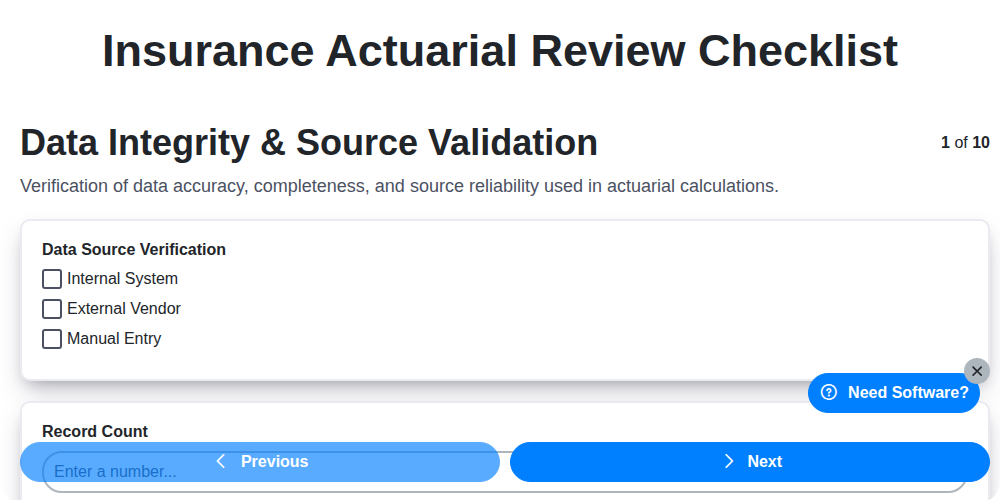
Table of Contents
- Introduction: Why Actuarial Reviews Matter
- 1. Data Integrity & Source Validation: The Foundation of Accuracy
- 2. Model Assumptions Review: Challenging the Building Blocks
- 3. Projection Methodology Validation: Forecasting with Confidence
- 4. Loss Reserving Adequacy: Ensuring Future Liabilities are Covered
- 5. Pricing and Rate Adequacy: Balancing Profitability and Competitiveness
- 6. Capital Adequacy Assessment: Maintaining Financial Strength
- 7. Regulatory Compliance: Meeting External Requirements
- 8. Documentation & Audit Trail: A Clear Record of Decisions
- 9. Sensitivity & Scenario Testing: Stress-Testing Your Models
- 10. Peer Review & Validation: Seeking External Perspectives
- 11. Common Pitfalls in Actuarial Reviews
- 12. Streamlining Your Review Process
- Conclusion: Building a Robust Actuarial Framework
- Resources & Links
TLDR: Feeling overwhelmed by actuarial reviews? This checklist template is your guide! It ensures thorough assessment of data, models, pricing, reserves, capital, and compliance - covering everything from data integrity to scenario testing. Use it to streamline your reviews, minimize risk, and confidently demonstrate your work to stakeholders and regulators.
Introduction: Why Actuarial Reviews Matter
Actuarial reviews are the backbone of a stable and reliable insurance operation. They're far more than just a compliance exercise; they represent a rigorous, independent assessment of the core assumptions, models, and processes that drive financial stability and future performance. These reviews scrutinize everything from the accuracy of the data fueling projections to the adequacy of reserves set aside to cover future claims. A robust actuarial review process isn't just about identifying potential risks; it's about building confidence for stakeholders, ensuring regulatory adherence, and ultimately, safeguarding the insurer's financial health. Ignoring or shortcutting these crucial assessments can expose an insurer to significant financial, reputational, and regulatory risks. This checklist provides a framework for ensuring a comprehensive and thorough actuarial review, minimizing those risks and maximizing long-term success.
1. Data Integrity & Source Validation: The Foundation of Accuracy
The actuarial review process hinges on the quality of the data underpinning it. Without reliable data, even the most sophisticated models and analyses will yield inaccurate and potentially misleading results. This initial checklist item - Data Integrity & Source Validation - is therefore paramount.
This step isn't just about confirming the presence of data; it's about rigorously examining its origins, accuracy, and consistency. Key considerations include:
- Source Identification & Traceability: Can you clearly identify the original source of each data element used in the actuarial review? This includes understanding the systems where data is collected, processed, and stored.
- Data Accuracy Checks: Implementing robust checks to identify errors and outliers. This can involve comparisons to historical trends, cross-referencing with external data sources, and statistical validation techniques.
- Data Completeness: Assessing the extent of missing data and understanding the potential impact on the analysis. Are missing values being handled appropriately (e.g., through imputation or exclusion)?
- Data Consistency: Ensuring that data is consistent across different systems and reporting periods. Discrepancies need to be investigated and resolved.
- Data Validation Rules: Verifying that data conforms to predefined validation rules and business logic.
- Data Governance & Controls: Reviewing the processes and controls in place to maintain data quality throughout its lifecycle.
Failure to thoroughly validate data sources and integrity can lead to significant errors in actuarial projections, impacting pricing, reserving, and capital adequacy assessments. A robust data validation process is the bedrock upon which a reliable and defensible actuarial review is built.
2. Model Assumptions Review: Challenging the Building Blocks
The robustness of any actuarial model hinges critically on the validity of its underlying assumptions. This isn't a cursory glance; it's a rigorous interrogation of every assumption, questioning its rationale and potential impact. A flawed assumption, even seemingly minor, can lead to significant misstatements in projections and reserves.
The review begins with a clear articulation of each assumption - no ambiguity allowed. For example, instead of mortality rates are expected to remain stable, a strong assumption states, Mortality rates for male lives aged 45-55 will be based on the 2023 base table, adjusted by a selection factor of 0.95, and reflecting projected improvements of 0.1% per year for the next five years. Specificity is key.
Next, challenge these assumptions. Ask:
- What is the empirical basis for this assumption? Is it derived from historical data, industry benchmarks, or expert judgment? Can the data support it?
- What are the potential biases in the data? Have we accounted for changes in data collection methodologies or changes in the insured population?
- What is the sensitivity of the model to changes in this assumption? Even a seemingly small change in an assumption can have a dramatic effect on the results. Conduct sensitivity testing (discussed further in a later section) to quantify this impact.
- What are the potential limitations of this assumption? Consider external factors that might render the assumption invalid. For instance, a mortality assumption based on pre-pandemic data may not accurately reflect current trends.
- Are there alternative assumptions that should be considered? Explore different scenarios and the implications of adopting them.
Critically, document everything. The rationale behind each assumption, the data used to support it, any limitations identified, and the sensitivity analysis performed all need to be clearly documented and readily available for audit. A robust Model Assumptions Review isn't just about having assumptions; it's about demonstrating that they are well-reasoned, justifiable, and actively scrutinized.
3. Projection Methodology Validation: Forecasting with Confidence
Accurate projections are the bedrock of sound actuarial decisions, and validating the methodology used to generate them is critical. This goes far beyond simply checking the numbers; it's about scrutinizing the how behind the forecast. We're looking for a defensible and robust process.
The validation process should begin with a thorough understanding of the chosen methodology. What are its strengths and limitations? What assumptions underpin the model? Are these assumptions clearly documented and justifiable based on historical data, industry trends, and expert judgment?
Key areas for review include:
- Trend Analysis: Are the chosen trend methods (e.g., regression, moving averages, judgmental adjustments) appropriate for the specific data being projected? Are outliers adequately addressed? Has the extrapolation period been carefully considered, and are there clear rationales for any adjustments beyond historical data?
- Correlation Assessment: How are key variables correlated and used in projections? Is the assumed relationship stable and consistently applied?
- Lag Effects: Does the model account for lags between events (e.g., claim reporting and payment) and their impact on future projections?
- Macroeconomic Factors: Are relevant macroeconomic factors (inflation, interest rates, unemployment) incorporated, and are the assumptions about their future behavior reasonable and well-supported?
- Model Calibration: Does the model accurately reproduce historical outcomes? Calibration exercises, comparing projected versus actual results, are essential.
Ultimately, a robust projection methodology validation involves a critical assessment of the entire forecasting process, ensuring it's not only mathematically sound but also grounded in sound judgment and a deep understanding of the business.
4. Loss Reserving Adequacy: Ensuring Future Liabilities are Covered
Loss reserving is arguably the cornerstone of any insurance company's financial health. It's the process of estimating the amount of money needed to cover future claims for policies already written. An inadequate reserve can lead to insolvency, while excessive reserves tie up capital that could be used for growth. Therefore, a rigorous review of loss reserving adequacy is paramount.
This review goes beyond simply accepting the reserving actuary's initial calculations. It demands a critical evaluation of the methodologies used, including the selection of loss development patterns, the treatment of future claims, and the consideration of potential inflation or changes in legal environments. We examine the appropriateness of chosen development factors, questioning whether they accurately reflect historical trends and adequately account for changing claims environments.
A key component is an assessment of the data underpinning the reserve estimates. Are the historical claims data complete, accurate, and representative? Are there any emerging trends, such as rising medical costs or increased litigation, that need to be incorporated? This includes analyzing the frequency and severity of claims, and identifying any biases or limitations in the available information.
Finally, we test the sensitivity of the reserves to changes in key assumptions. What happens to the estimated liabilities if loss costs increase, or if claims are delayed? A robust review will not only confirm the initial reserve estimate but also provide a level of confidence that the insurer is prepared for a range of potential outcomes, ensuring sufficient funds are available to meet future obligations.
5. Pricing and Rate Adequacy: Balancing Profitability and Competitiveness
Pricing and rate adequacy represents a critical juncture where actuarial science meets business strategy. It's not simply about setting numbers; it's about finding the sweet spot - a level that ensures profitability while remaining competitive within the market. A robust review process here involves more than just checking calculations; it demands a deep dive into market conditions, competitor behavior, and evolving risk profiles.
The actuarial review should scrutinize the underlying data used to establish pricing, verifying its accuracy and relevance. This includes evaluating historical loss data, expense projections, and any adjustments made for trends or emerging risks. Are the rates accurately reflecting the risks being insured? Are they sufficient to cover anticipated losses, expenses, and desired profit margins?
Furthermore, the review must analyze the competitive landscape. How do our rates compare to those offered by competitors? Are we over- or under-pricing relative to the perceived value offered? A purely actuarial perspective might overlook crucial market dynamics; therefore, collaboration with underwriting and sales teams is vital.
The assessment shouldn't stop at current pricing. The review should consider the potential impact of rate changes on customer retention, market share, and overall profitability. Modeling different rate scenarios, and understanding their knock-on effects, is essential for informed decision-making. Finally, the process requires documenting the rationale behind pricing decisions and demonstrating how they align with the company's overall business objectives.
6. Capital Adequacy Assessment: Maintaining Financial Strength
A robust capital adequacy assessment is paramount for any insurance company. It's not just about meeting minimum regulatory requirements; it's about demonstrating the organization's ability to absorb unexpected losses and maintain solvency in adverse conditions. This checklist item goes beyond simply calculating ratios - it demands a thorough examination of the company's overall financial resilience.
Our review encompasses several key areas: Firstly, we scrutinize the methodologies used to calculate risk-based capital (RBC) requirements, verifying they accurately reflect the company's risk profile. This includes assessing the accuracy of risk weights assigned to various assets and liabilities. Secondly, we evaluate the quality of the capital buffer held by the insurer. Is it composed of predominantly core capital, or is it overly reliant on subordinated debt? Thirdly, we analyze the company's stress testing framework, evaluating its ability to project capital levels under various, potentially severe, scenarios. This goes beyond simple formulaic calculations; it involves critical judgment and a realistic understanding of potential future events. Finally, we examine the company's planning process for maintaining and increasing capital adequacy, including dividend policies and strategies for raising capital if needed. A strong capital adequacy assessment provides confidence to stakeholders and ensures the insurer can fulfill its obligations to policyholders, even during challenging times.
7. Regulatory Compliance: Meeting External Requirements
The insurance industry operates within a heavily regulated environment, and actuarial reviews must explicitly address adherence to these external requirements. This goes far beyond simply ticking boxes; it requires a thorough understanding of applicable laws, regulations, and supervisory guidance.
Our checklist items focused on ensuring alignment with these mandates. We scrutinize adherence to solvency regulations (like those defined by NAIC, Solvency II, or similar frameworks applicable to the jurisdiction), reserving practices dictated by regulatory bodies, and the accurate reporting of financial data. This includes verifying that the actuarial assumptions and methodologies used are consistent with permitted approaches and that any deviations are adequately justified and documented.
Furthermore, we ensure compliance with data privacy regulations (e.g., GDPR, CCPA) concerning the handling of sensitive policyholder information used in the actuarial models. Proper oversight also extends to anti-money laundering (AML) and fraud prevention measures. The review confirms that procedures are in place to detect, prevent, and report any suspicious activity. Ultimately, this section of the review helps ensure the insurer operates within the legal and ethical boundaries set by regulatory bodies, minimizing potential legal or reputational risks.
8. Documentation & Audit Trail: A Clear Record of Decisions
Maintaining a robust documentation and audit trail is paramount for any actuarial review. It's not just about ticking boxes; it's about providing a transparent and defensible record of the entire process, decisions made, and the rationale behind them. This section should detail who performed what task, when it was done, and why particular approaches were chosen.
This includes, but isn't limited to:
- Data Sources & Transformations: Clearly document the origins of all data used, any transformations applied, and the validation checks performed.
- Model Code & Parameters: Keep detailed records of the model code used, parameter settings, and justifications for those settings. Version control is crucial here.
- Assumptions & Rationale: Every assumption made - whether it's about mortality rates, investment returns, or claims frequency - must be clearly documented, including the supporting evidence and reasoning.
- Results & Outputs: Preserve all key outputs and calculations, with clear labeling and explanations.
- Change Management: A formal change management process is vital. Record any modifications to the model, assumptions, or processes, including the reason for the change, who authorized it, and the impact assessment.
- Review Comments & Resolutions: Track all review comments, the responses provided, and how issues were resolved.
A well-maintained audit trail demonstrates the rigor of the review process and provides invaluable support for regulatory examinations, internal audits, and future model updates. It allows stakeholders to understand the thought process and provides a clear path for reproducibility and validation. Without it, the entire review is significantly less defensible and more susceptible to scrutiny.
9. Sensitivity & Scenario Testing: Stress-Testing Your Models
Actuarial models, like any other complex system, aren't infallible. They rely on assumptions and historical data, and the future rarely unfolds exactly as predicted. That's where sensitivity and scenario testing come in - acting as critical stress tests to ensure model robustness and identify potential vulnerabilities.
Sensitivity testing involves systematically altering key model inputs - interest rates, mortality rates, claims severity, expense ratios - within a reasonable range to observe the impact on model outputs. This helps pinpoint which assumptions exert the most influence on the results and highlight areas where the model is particularly susceptible to small changes. For example, how much would projected reserves change with a 1% shift in the average claim severity?
Scenario testing takes this a step further, moving beyond single-variable changes to explore more complex, interconnected events. These scenarios could include economic downturns, pandemics (a lesson learned!), shifts in regulatory landscapes, or changes in competitor behavior. Defining plausible, yet challenging, scenarios allows actuaries to understand how the model behaves under extreme conditions and to assess the potential impact on the insurer's financial health.
The results of these tests aren't meant to dictate a specific course of action but rather to inform decision-making. They highlight areas needing further investigation, potential mitigation strategies, and the need for contingency plans. Robust sensitivity and scenario testing isn't simply about achieving a passing grade; it's about building confidence in the model's ability to perform reliably, even when faced with the unexpected. Documenting these tests and their results is essential for demonstrating due diligence and supporting any decisions made based on the model's output.
10. Peer Review & Validation: Seeking External Perspectives
The actuarial review process isn't a solo endeavor; it benefits immensely from independent verification. Peer review and validation represent a crucial final step, bringing in fresh eyes and expertise to assess the rigor and soundness of the work. This isn't about finding fault, but about strengthening the overall conclusions through constructive criticism and alternative viewpoints.
Ideally, the peer reviewer should be an experienced actuary, preferably one with a different background or area of specialization than the primary reviewer. This ensures a diverse perspective on the methodologies, assumptions, and results. The review should cover all aspects of the actuarial assessment, including data integrity, model logic, and projections.
The validation component focuses on verifying the practical applicability and reasonableness of the findings. This may involve comparing results to industry benchmarks, historical trends, or internal performance data. Discrepancies should be investigated thoroughly and documented, along with any adjustments made.
A well-executed peer review and validation process significantly enhances the credibility and defensibility of the actuarial review, providing assurance to stakeholders and contributing to sound decision-making. This step ensures a more robust and reliable outcome, acknowledging the inherent complexities of actuarial modeling and the value of diverse expertise.
11. Common Pitfalls in Actuarial Reviews
Actuarial reviews are critical for ensuring the financial health and regulatory compliance of insurance companies. However, even with diligent effort, common pitfalls can undermine the review's effectiveness. Here are a few to watch out for:
Over-Reliance on Historical Data: While historical data is essential, relying solely on it can lead to inaccurate projections. Failing to account for changing market conditions, emerging risks, or policyholder behavior can significantly impact future outcomes. Actuaries must incorporate forward-looking assumptions and consider the potential for non-linear trends.
Insufficient Challenge of Model Assumptions: Assumptions form the bedrock of actuarial models. A failure to critically challenge these assumptions - whether they relate to mortality rates, expense ratios, or investment returns - can result in biased or unrealistic results. Groupthink and a reluctance to question the status quo are particularly dangerous.
Lack of Granularity in Data: Aggregated data can mask important trends and inconsistencies. A failure to analyze data at a more granular level - such as by product line, age cohort, or geographic region - can prevent the identification of critical issues.
Neglecting Emerging Risks: Actuarial reviews need to proactively consider emerging risks like climate change, cyber threats, or pandemics. Failing to incorporate these risks into the model can leave the insurer exposed to unexpected losses.
Ignoring Regulatory Updates: Insurance regulations are constantly evolving. An outdated understanding of these regulations can lead to compliance issues and potential penalties. Regular updates and communication with regulatory bodies are crucial.
Poor Documentation & Audit Trail: A poorly documented review process lacks transparency and makes it difficult to track decisions and identify potential errors. A robust audit trail is essential for accountability and defensibility.
Limited Sensitivity Analysis: Simply running a few what-if scenarios isn't enough. A thorough sensitivity analysis should explore a wide range of potential outcomes and understand the model's behavior under stress.
Inadequate Peer Review: Peer review is a vital quality control mechanism. A superficial or rushed peer review process can miss critical errors and biases. It should involve a genuinely independent and experienced actuary.
These pitfalls aren't insurmountable, but they highlight the importance of a rigorous and skeptical approach to actuarial reviews. A proactive and thoughtful process is key to delivering accurate, reliable, and defensible results.
12. Streamlining Your Review Process
An actuarial review isn't a one-off event; it's a continuous process of assessment and refinement. To truly maximize the value of your review, consider strategies to streamline and improve efficiency. This isn't about cutting corners - it's about optimizing workflows and focusing efforts on areas of greatest risk.
Start by standardizing your checklist. A well-defined, readily accessible checklist like the one we've detailed provides a clear roadmap and ensures consistency across reviews. Regularly update the checklist to reflect changes in regulations, business practices, and risk landscapes.
Automation can also play a significant role. Explore tools that can automate data extraction, preliminary calculations, and basic validation checks. This frees up your actuaries' time to focus on the more nuanced and critical areas of judgment.
Furthermore, consider implementing a risk-based approach to your review schedule. Areas with higher risk profiles or recent significant changes should be reviewed more frequently than lower-risk areas. This targeted approach maximizes resource allocation.
Finally, encourage open communication and collaboration within your team and with other departments. Clear communication channels and a culture of continuous improvement will help identify bottlenecks and opportunities for optimization. The goal is to move from reactive reviews to a proactive and integrated risk management process.
Conclusion: Building a Robust Actuarial Framework
Ultimately, the Actuarial Review Checklist outlined above isn't just a procedural formality; it's the bedrock of a robust and defensible insurance framework. Consistent and rigorous adherence to each step - from validating data integrity to assessing capital adequacy - fosters confidence in actuarial judgments, minimizes risk exposure, and strengthens the insurer's overall financial health. By embedding this checklist into your processes and fostering a culture of continuous improvement, you're not just fulfilling regulatory requirements; you're building a foundation for sustainable success and demonstrating a commitment to protecting policyholders and stakeholders. Remember, the true value lies not just in having a checklist, but in actively and thoughtfully working through it, adapting it to evolving circumstances, and leveraging the insights gained to refine your actuarial practices.
Resources & Links
- Actuarial Standards Board (ASB): The ASB develops and maintains professional and qualification standards for actuaries in the US. Crucial for understanding ethical and professional guidance for actuarial work and reviews. Includes standards on loss reserving, pricing, and other core actuarial functions.
- The Casualty Actuarial Society (CAS): CAS is a professional actuarial organization focused on property, casualty, and health insurance. Provides resources, exams, and guidance specifically relevant to reserving and pricing in these lines of business. Look for practice exams, articles and technical updates.
- Society of Actuaries (SOA): SOA is a global actuarial professional organization focusing on life insurance, pensions, and broader financial risks. Provides resources including research publications, continuing education, and standards. Useful for understanding capital adequacy and broader financial risk modelling.
- National Association of Insurance Commissioners (NAIC): The NAIC is a regulatory body in the US. Their website provides insights into insurance regulation, including solvency requirements, reserving guidelines, and actuarial guidance. Essential for understanding the regulatory landscape.
- Actuaries Institute (Australia): While geographically focused on Australia, this institute's publications on actuarial risk management, solvency, and modelling are broadly applicable to the principles discussed in an actuarial review.
- RIMS (Risk Management Society): While not exclusively actuarial, RIMS provides resources on enterprise risk management. Useful context for understanding how actuarial reviews fit within a broader risk management framework. Helpful for framing the review's purpose.
- Actuarial Consulting Firms (e.g., Actex): Many actuarial consulting firms publish thought leadership and insights on actuarial modeling and reviews. Explore their websites for articles, webinars, and white papers on best practices.
- Insurance Actuarial Model Template: A template might be helpful if you are starting from scratch. Please read the instructions and carefully validate the model, not blindly adopting anything.
- Actuarial Review: A YouTube video offering an introduction to Actuarial Reviews and their importance.
- Wilberforce Actuarial Consultants: Consultant website with valuable articles about reserving and loss development trends
Frequently Asked Questions
What is an actuarial review and why is it important for insurance companies?
An actuarial review is an independent assessment of an insurance company's financial health and projections, performed by qualified actuaries. It's crucial for ensuring solvency, compliance with regulations, pricing accuracy, and overall risk management. It verifies that reserves are adequate, premiums are appropriately priced, and future liabilities are reasonably estimated.
Who conducts an actuarial review?
Actuarial reviews are conducted by qualified and experienced actuaries, often working either within the insurance company's actuarial department (internal review) or as independent consultants (external review). They must possess the necessary credentials and expertise to perform the assessment effectively.
What are the key components covered in a typical actuarial review?
Key components usually include an assessment of reserve adequacy, pricing accuracy, loss development patterns, expense projections, mortality/morbidity assumptions, and overall financial projections. The specific focus may vary based on the type of insurance product and regulatory requirements.
What is a checklist template for an actuarial review? What purpose does it serve?
A checklist template is a structured document outlining the specific areas and procedures to be examined during an actuarial review. It helps ensure consistency, completeness, and a systematic approach, reducing the risk of overlooking critical factors. Our article provides such a template for your use.
What types of insurance products are typically subject to actuarial reviews?
Almost all types of insurance products require actuarial reviews, including life insurance, health insurance, property and casualty insurance, and reinsurance. The frequency and scope of the review will depend on the product's complexity and regulatory framework.
How often should actuarial reviews be performed?
The frequency of actuarial reviews is typically mandated by insurance regulators and depends on the size and risk profile of the insurance company. Many jurisdictions require at least annual reviews, while others may necessitate more frequent assessments.
What are some common red flags that an actuarial review might uncover?
Red flags can include adverse loss development trends, inaccurate pricing assumptions, inadequate reserves, material errors in calculations, or inconsistencies between actual experience and projections.
What are reserves and why are they so important in an actuarial review?
Reserves are funds set aside by an insurance company to cover future claims and other obligations. Actuarial reviews heavily scrutinize reserve adequacy to ensure the company has sufficient funds to meet its commitments.
How can the checklist template provided in this article be used effectively?
The template serves as a starting point. You should customize it based on your specific insurance products, regulatory requirements, and internal processes. Use it to guide your review, document your findings, and identify areas for improvement.
Where can I find more information about actuarial standards and regulations?
Relevant resources include the Actuarial Standards Board (ASB), state insurance departments, the National Association of Insurance Commissioners (NAIC), and industry-specific actuarial societies.
Comments
There are no comments yet. Be the first to add one!
Insurance Management Solution Demo
Managing policies, claims, and compliance in the insurance industry is complex. ChecklistGuro's Work OS platform streamlines your operations, from underwriting and renewals to claims processing and reporting. Improve efficiency, reduce errors, and enhance customer satisfaction. Discover how ChecklistGuro can transform your insurance business!
Related Articles
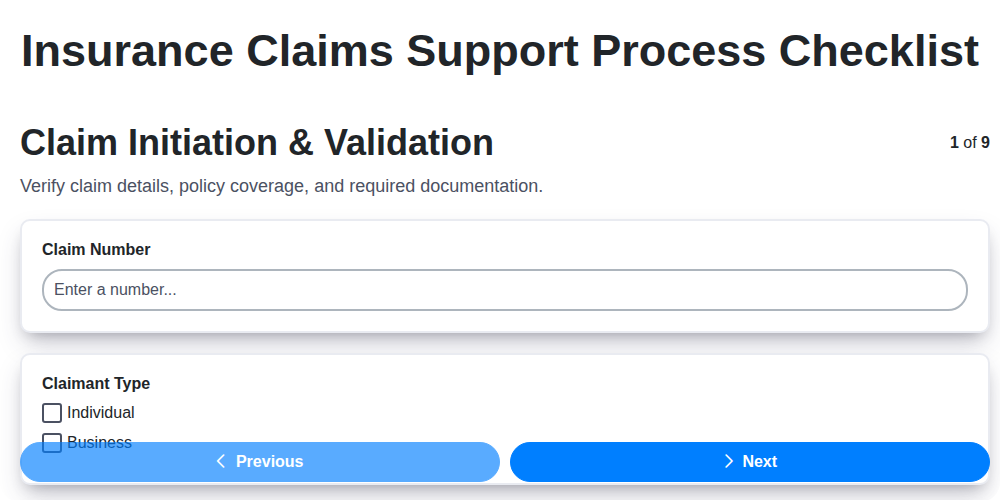
Streamline Claims: Your Insurance Claims Support Process Checklist Template
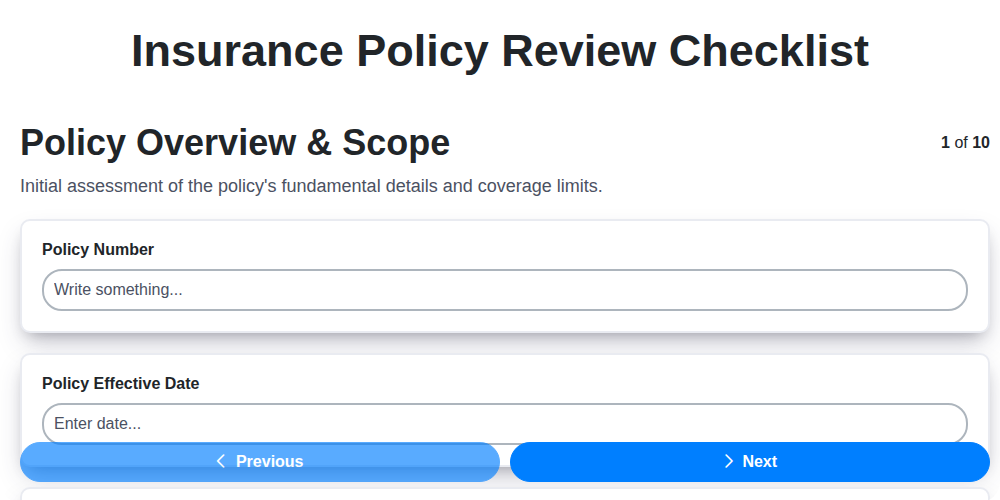
Your Insurance Policy Review Checklist: A Step-by-Step Guide
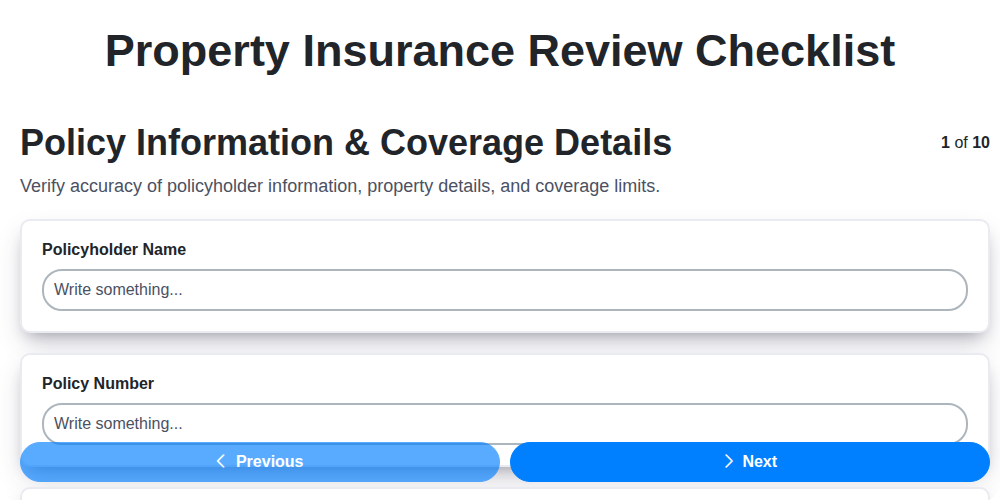
Your Property Insurance Review Checklist: A Step-by-Step Guide
Your Title Search & Insurance Checklist Template
Simplify Insurance Verification: Your Free Dental Checklist Template
Crop Insurance Policy Review Checklist: A Farmer's Guide

The Ultimate Vehicle Registration & Insurance Validation Checklist

Mastering the Policyholder Journey: Your Insurance Experience Survey Checklist
Need help with
Insurance?
Have a question? We're here to help. Please submit your inquiry, and we'll respond promptly.