Mastering Claims: Your Insurance Claims Adjustment Review Checklist
Published: 12/01/2025 Updated: 07/02/2026
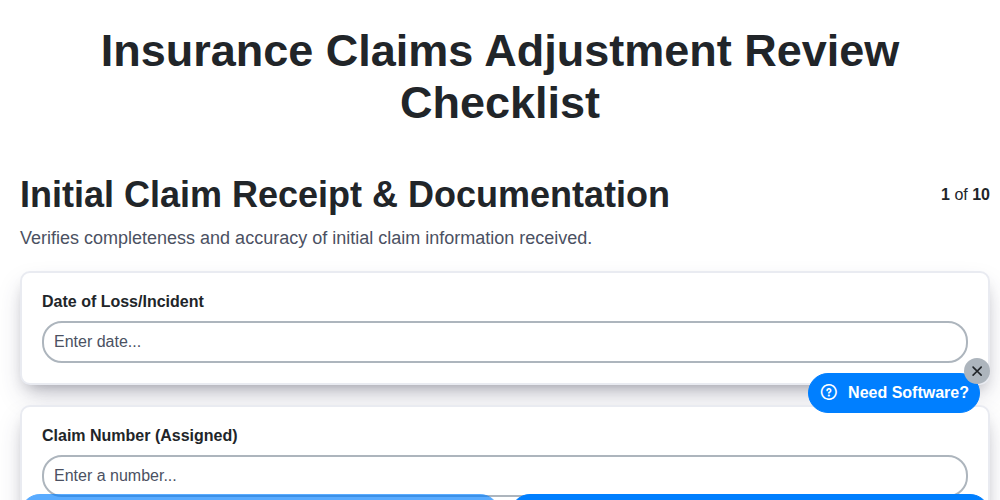
Table of Contents
- Introduction: Why a Claims Adjustment Review is Crucial
- 1. Initial Claim Receipt & Documentation: Setting the Foundation
- 2. Policy Verification & Coverage Assessment: Ensuring Eligibility
- 3. Damage Assessment & Investigation: Uncovering the Facts
- 4. Liability Determination (If Applicable): Establishing Responsibility
- 5. Reserves Establishment & Adjustment: Financial Prudence
- 6. Vendor Management & Payments: Controlling Costs
- 7. Communication & Customer Service: Building Trust
- 8. Regulatory Compliance & Reporting: Staying on the Right Side of the Law
- 9. Claim Closure & Documentation: Finalizing the File
- 10. Fraud Indicators Review: Identifying Red Flags
- 11. Best Practices for Consistent Reviews
- 12. Leveraging Technology to Streamline the Process
- 13. Continuous Improvement: Adapting to Change
- Resources & Links
TLDR: Feeling overwhelmed by insurance claims adjustments? This checklist breaks down the entire process - from initial receipt to final closure - into clear, actionable steps. Use it to ensure accuracy, consistency, and compliance in every claim, minimizing errors, improving efficiency, and ultimately, boosting customer satisfaction.
Introduction: Why a Claims Adjustment Review is Crucial
Insurance claims adjustment is a complex process, and ensuring its accuracy and fairness is paramount for both the insurer and the policyholder. A robust claims adjustment review checklist isn't just a formality; it's a vital safeguard against errors, potential litigation, and reputational damage. Without a structured review, subtle oversights can lead to incorrect payouts, inadequate reserves, or even expose the company to regulatory scrutiny. This checklist provides a roadmap to consistency, accountability, and ultimately, a more efficient and equitable claims handling experience. It's about minimizing risk, maximizing recovery, and upholding the integrity of the insurance process.
1. Initial Claim Receipt & Documentation: Setting the Foundation
The first, and arguably most critical, step in the claims adjustment process is the meticulous receipt and documentation of the initial claim. This isn't just about acknowledging the claim; it's about establishing a clear and auditable record from the very beginning.
Here's what's involved:
- Prompt Acknowledgement: Immediately acknowledge receipt of the claim to the claimant, typically within 24-48 hours. This sets a positive tone and demonstrates responsiveness.
- Comprehensive Data Collection: Gather all necessary information from the claimant, including contact details, date and time of the incident, a brief description of what occurred, and any initial reports (police reports, witness statements, etc.).
- Secure Document Handling: Implement secure methods for receiving and storing documents. This may include scanned copies, electronic portals, or designated secure filing systems. Ensure compliance with data privacy regulations.
- Claim Number Assignment: Assign a unique claim number immediately and prominently display it on all correspondence. This facilitates tracking and internal communication.
- Initial Claim Summary: Create a brief initial claim summary that summarizes the reported loss and identifies key personnel assigned to the case.
- Verification of Claimant Identity: Verify the claimant's identity to prevent fraudulent claims.
A strong foundation laid in this initial phase will streamline the entire claims adjustment process and contribute to a more efficient and accurate resolution.
2. Policy Verification & Coverage Assessment: Ensuring Eligibility
This crucial stage separates legitimate claims from those outside the scope of the policy. It's more than just confirming a policy exists; it's a deep dive into its terms and conditions. Begin by meticulously verifying the policyholder's identity and confirming the policy is active and in good standing.
Next, carefully review the policy's insuring agreement, exclusions, and conditions. Does the reported loss fall under the covered perils outlined? Pay close attention to specific exclusions relevant to the type of loss - flood, earthquake, business interruption, etc. - and ensure they haven't been waived or modified.
Consider the policy period and geographic location of the loss. Was the loss reported within the stipulated timeframe? Does the location fall within the policy's territorial limits? Ambiguity in policy language should be clarified by referencing endorsements, legal precedents, or consulting with legal counsel. Thorough documentation of the policy review, including any interpretations made, is paramount for audit trails and potential future disputes. Remember, a robust policy verification and coverage assessment lays the foundation for a fair and accurate claim settlement.
3. Damage Assessment & Investigation: Uncovering the Facts
This stage goes beyond a simple estimate. It's about meticulously uncovering the facts surrounding the loss. A thorough damage assessment and investigation are crucial for accurate claim resolution and preventing potential disputes.
Here's what this stage entails:
- Detailed Site Inspection: A qualified adjuster (or a designated inspector) must conduct a comprehensive site inspection. This isn't a quick walk-through; it's a methodical examination of all affected areas. Photos and videos are essential documentation.
- Damage Documentation: Detailed notes, photographs, and potentially video recordings of the damage are paramount. These should be clear, well-lit, and accurately depict the extent and nature of the damage. Don't just focus on the obvious; look for contributing factors or hidden damage.
- Cause of Loss Determination: Identifying the cause of the damage is critical. Was it due to a covered peril (e.g., fire, wind, water) or an excluded one? This may involve interviewing the claimant, witnesses, and potentially consulting with experts (e.g., engineers, contractors).
- Expert Consultation (If Necessary): For complex or catastrophic losses, specialized expertise is often required. This might involve structural engineers, fire investigators, forensic accountants, or other professionals to analyze the cause and extent of damage.
- Independent Estimates & Reports: Obtaining independent estimates from reputable contractors is standard practice to verify the scope and cost of repairs or replacements. Reviewing these estimates carefully and questioning any discrepancies is vital.
- Review of Existing Conditions: It's important to consider any pre-existing conditions or prior repairs that might have contributed to the damage or influenced the repair process. Documentation of these conditions is key.
The goal is to build a clear and unbiased picture of the loss, supporting the claim's validity and ensuring fair settlement.
4. Liability Determination (If Applicable): Establishing Responsibility
Determining liability is a critical step in many insurance claims, particularly those involving bodily injury, property damage caused by another party, or complex situations with multiple contributing factors. This phase moves beyond simply acknowledging the loss; it focuses on identifying who is responsible for the damages.
Here's what's involved:
- Gathering Evidence: This goes beyond the initial claim documentation. It may involve police reports, witness statements, expert opinions (accident reconstruction, engineering reports), photographs, videos, and any relevant legal documentation.
- Legal Research: Understanding applicable laws, statutes, and case precedents is essential. This ensures the determination aligns with legal standards and potential liability exposure.
- Comparative Negligence Analysis: In many jurisdictions, fault isn't always clear-cut. Comparative negligence principles assess the degree to which each party contributed to the loss, impacting the payout.
- Third-Party Involvement: If a third party is potentially liable, the adjuster must thoroughly investigate their actions and potential negligence. This might involve contacting the other party's insurance company and coordinating investigation efforts.
- Subrogation Potential: Identifying a liable third party opens the possibility of subrogation - the right of the insurer to recover claim payments from the responsible party. Early identification facilitates this process.
- Documentation is Key: Meticulous documentation of all liability determination steps, including evidence reviewed, rationale for conclusions, and communication with all parties, is vital for defending potential legal challenges.
It's important to remember that liability determination is often complex and may require consultation with legal counsel, particularly in cases with significant exposure or uncertainty.
5. Reserves Establishment & Adjustment: Financial Prudence
Accurate reserve setting is the bedrock of sound claims management. Reserves represent the estimated cost to settle a claim, and getting them right - from initial estimation to final settlement - is critical for insurer solvency and profitability. This isn't a one-and-done process; it's an ongoing adjustment based on new information and evolving circumstances.
Initially, reserves are established based on the information available at claim receipt. This often relies on preliminary damage estimates, policy limits, and common claim scenarios. However, as the claim progresses and more details emerge (e.g., contractor bids, expert opinions, legal assessments), the initial reserve must be reviewed and adjusted accordingly.
Several factors necessitate these adjustments. These include unforeseen complications, escalating repair costs, legal developments, and changes in the scope of coverage. Failing to do so can lead to under-reserved claims, potentially resulting in financial strain on the insurer. Conversely, over-reserving ties up capital that could be used for other investments.
Regular monitoring of claim files and comparing actual loss payments to reserve estimates is vital. This allows for proactive adjustments and helps identify trends that might impact future reserve setting. Employing sophisticated actuarial techniques and leveraging data analytics can significantly improve reserve accuracy and minimize financial risk. Ultimately, diligent reserve establishment and adjustment are about responsible financial management and ensuring the insurer's ability to meet its obligations to policyholders.
6. Vendor Management & Payments: Controlling Costs
A significant portion of claim expenses often stems from vendor services - contractors, appraisers, auto repair shops, medical providers, and more. Effective vendor management is therefore crucial for controlling claim costs and ensuring a smooth process. This section outlines key considerations:
- Vendor Selection & Qualification: Don't just use the first vendor you find. Implement a vetting process. This includes checking licenses, insurance, references, and performance history. Consider a pre-approved vendor list to ensure quality and often, more competitive pricing.
- Scope of Work & Bidding: Clearly define the scope of work required for each vendor assignment. Obtain multiple bids whenever possible to drive down costs and ensure fair pricing. Detailed scopes prevent scope creep and unexpected charges later.
- Contract Negotiation: Negotiate favorable payment terms and rates upfront. Consider volume discounts if you regularly utilize a vendor's services. Include clauses related to liability, dispute resolution, and termination rights.
- Invoice Review & Validation: Rigorously review all vendor invoices. Verify that work was performed according to the agreed-upon scope, and that the billed amounts are accurate and justifiable. Challenge any discrepancies promptly.
- Payment Controls & Approvals: Implement a layered approval process for vendor payments, requiring review by multiple parties to prevent unauthorized expenses.
- Performance Monitoring: Track vendor performance metrics like timeliness, quality of work, and customer satisfaction. Use this data to identify areas for improvement and potentially renegotiate contracts or remove underperforming vendors.
- Regular Audits: Periodically audit vendor invoices and payments to ensure compliance with established procedures and identify potential fraud or errors.
7. Communication & Customer Service: Building Trust
Navigating an insurance claim can be incredibly stressful for policyholders. They've likely experienced a significant loss and are looking for reassurance and resolution. Exceptional communication and customer service aren't just "nice-to-haves" - they're crucial for building trust, mitigating complaints, and fostering positive brand perception.
Here's what effective communication and customer service look like during the claims adjustment process:
- Proactive Updates: Don't wait for claimants to reach out. Regularly update them on the status of their claim, even if there's no new information. Brief, clear, and consistent communication reduces anxiety and shows you're actively working on their case.
- Empathy & Active Listening: Acknowledge their distress and listen attentively to their concerns. Understanding their perspective, even if you can't immediately resolve the issue, can significantly ease frustration. Use phrases like I understand this is difficult and genuinely listen to their descriptions.
- Clear Explanations: Insurance language can be complex. Break down policy terms, coverage limits, and claim processes into understandable terms. Avoid jargon and be prepared to explain things multiple times.
- Multiple Communication Channels: Offer various ways for claimants to stay in touch - phone, email, online portals, and even text messaging - to cater to their preferred methods.
- Prompt Responses: Respond to inquiries quickly. Even a brief acknowledgement that you've received their message and will investigate further can make a huge difference.
- Designated Point of Contact: Whenever possible, assign a single adjuster as the primary contact for each claimant. This fosters a sense of continuity and accountability.
- Feedback Mechanisms: Provide avenues for claimants to provide feedback on their experience. Use this information to identify areas for improvement and demonstrate a commitment to continuous service enhancement.
Remember, a satisfied claimant is more likely to renew their policy and recommend your company to others.
8. Regulatory Compliance & Reporting: Staying on the Right Side of the Law
Navigating the regulatory landscape surrounding insurance claims adjustment is crucial for both adjusters and insurance companies. Failure to comply can result in hefty fines, legal action, and reputational damage. This section highlights key considerations.
Understanding Applicable Regulations: Different jurisdictions have varying rules governing claims handling. Familiarize yourself with federal, state, and local laws. This includes regulations related to prompt payment, good faith claims handling, unfair claims settlement practices, and data privacy (like HIPAA if medical information is involved). Regularly update your knowledge as these regulations evolve.
Recordkeeping is Paramount: Meticulous recordkeeping is your best defense. Maintain detailed records of every step taken in the claims process, including communication with all parties, investigations, assessments, and decisions. These records must be readily available for audits and regulatory inquiries.
Reporting Requirements: Many states mandate periodic reporting of claims data to regulatory bodies. These reports often cover claims volume, settlement amounts, and timelines. Ensure accurate and timely submission of these reports. Failure to do so can trigger audits and penalties.
Data Security & Privacy: Claims often contain sensitive personal information. Adhere to strict data security protocols and privacy regulations to protect this data from unauthorized access or disclosure. Implement appropriate security measures and employee training.
Staying Informed: Subscribe to industry publications, attend webinars, and participate in professional organizations to stay abreast of regulatory changes and best practices. A proactive approach to compliance is essential for maintaining integrity and avoiding legal trouble.
9. Claim Closure & Documentation: Finalizing the File
Claim closure isn't just about marking a file as "closed." It's the culmination of all the previous steps and a critical opportunity to ensure accuracy, prevent future issues, and maintain a strong audit trail. This phase involves a meticulous review to ensure all actions have been properly recorded and all required parties are satisfied.
Here's what a thorough claim closure & documentation process should include:
- Comprehensive File Review: Before closing, perform a final review of the entire claim file. Verify all correspondence, investigation reports, estimates, payments, and legal documents are present and legible.
- Final Payment Verification: Confirm all payments have been made to vendors and the insured, and that the final ledger balances are reconciled.
- Release of Liens (If Applicable): If liens were filed, ensure they are properly released and documented.
- Acknowledgement of Closure: Depending on the claim type and company policy, obtain written acknowledgement from the insured and/or claimant confirming their satisfaction with the resolution. While not always possible, striving for this demonstrates commitment to customer service.
- Internal Audit Trail: Ensure all actions taken throughout the claim process are clearly documented in the claim system, with dates, initials, and brief descriptions.
- File Archiving: Follow company guidelines for file archiving, ensuring retention periods are met and files are easily retrievable for future reference or audits. Proper archiving protects against future disputes and legal challenges.
- System Closure: Officially mark the claim as "closed" in the claims management system, triggering any required internal notifications or reporting.
A well-executed claim closure and documentation process not only solidifies a successful resolution but also safeguards the insurance company against potential liabilities and strengthens its reputation for integrity.
10. Fraud Indicators Review: Identifying Red Flags
Insurance fraud is a serious issue, impacting premiums for everyone. As claim adjusters, we have a vital role in identifying and preventing fraudulent claims. This review isn't about accusing anyone, but about diligently assessing potential red flags and following protocol. Here's what to look for:
Suspicious Claim Details:
- Inconsistent Statements: Discrepancies between the claimant's initial report, witness accounts, and police reports are significant. Pay close attention to changes in the narrative over time.
- Unexplained Delays: Unusual delays in reporting the incident or seeking medical attention can raise concerns.
- Vague or Evasive Responses: Be wary of claimants who avoid direct answers or offer vague explanations.
- Unusual Timing: Claims filed shortly after a policy is taken out or around the expiration date warrant closer examination.
Property & Vehicle Claims:
- Inflated Damage Estimates: Compare estimates from multiple vendors and question unusually high repair costs compared to similar claims.
- Pre-Existing Damage: Investigate any pre-existing conditions that weren't disclosed.
- Questionable Witnesses: Verify the reliability and connection of witnesses.
- Salvage Issues: Scrutinize claims involving salvaged vehicles or properties.
Personal Injury Claims:
- Similar Claims: Check for patterns or similarities with other claims involving the same claimant, witnesses, or medical providers.
- Unrepresented Injuries: Consider the consistency of claimed injuries with the accident circumstances.
- Medical Billing Discrepancies: Investigate any unusual or excessive medical billing practices.
- Referral Patterns: Be alert for networks of claimants and medical providers who appear to be working together.
General Indicators:
- Unfamiliar Addresses/Contacts: Investigate addresses or contacts that are unusual or untraceable.
- Multiple Claims History: Review the claimant's and any involved parties' claims history - frequent or unusual claims should be investigated.
- Cash Payments: Be cautious of claimants insisting on cash payments.
Important Note: Identifying a red flag doesn't automatically mean fraud has occurred. It simply triggers a deeper investigation following established procedures and utilizing available resources. All findings must be thoroughly documented and escalated according to company policy.
11. Best Practices for Consistent Reviews
To ensure your insurance claims adjustment reviews are thorough, accurate, and contribute to continuous improvement, implementing consistent best practices is crucial. Here's how to achieve that:
- Standardize Review Templates: Don't rely on ad-hoc reviews. Develop standardized checklists (like the one we discussed earlier!) and templates that clearly outline the areas to be assessed. This ensures every review covers the necessary elements and reduces the risk of overlooking critical details.
- Define Reviewer Qualifications: Clearly define the qualifications and experience required for claim reviewers. This ensures a baseline level of expertise and understanding of claim handling best practices. Consider ongoing training and competency assessments.
- Implement a Rotation Schedule: Rotate reviewers across different claim types and complexity levels. This prevents tunnel vision and broadens their understanding of potential issues.
- Establish Clear Escalation Paths: Define a clear process for escalating claims with identified errors or concerns. Ensure reviewers know to whom they should direct questions and issues.
- Regular Calibration Sessions: Conduct regular calibration sessions where reviewers evaluate the same claim files and discuss their findings. This promotes consistency in judgement and interpretation of policy language.
- Feedback Loops & Continuous Improvement: Treat reviews not as a one-off event, but as a data point for process improvement. Analyze review findings to identify trends, weaknesses, and opportunities to refine claim handling procedures and training materials.
- Documentation of Review Outcomes: Meticulously document the findings of each review, including corrective actions taken and follow-up measures. This creates an audit trail and provides valuable data for future analysis.
- Technology Integration: Leverage technology (claim management systems, AI-powered tools) to streamline the review process and improve accuracy. Automated checks can flag potential issues and reduce manual errors.
12. Leveraging Technology to Streamline the Process
The insurance claims adjustment process, traditionally a paper-heavy and time-consuming endeavor, is ripe for technological disruption. Implementing the right tools can significantly boost efficiency, accuracy, and customer satisfaction. Here's how:
- AI-Powered Document Processing: Optical Character Recognition (OCR) and Artificial Intelligence (AI) can automate the initial claim receipt and documentation phase. These tools can extract key information from claim forms, police reports, and medical records, minimizing manual data entry and reducing errors.
- Virtual Damage Assessment: Drones and satellite imagery can be used to assess damage remotely, especially for large-scale events like hurricanes or wildfires. This allows for faster initial evaluations and quicker dispatch of adjusters to areas of greatest need.
- Mobile Claim Apps: Empowering adjusters with mobile applications enables them to capture photos, videos, and notes directly in the field, automatically syncing data with the central system. This eliminates paperwork and improves data accuracy.
- Predictive Analytics: Utilizing data analytics to predict potential claim costs and identify high-risk claims allows for proactive resource allocation and improved reserve establishment.
- Automated Workflows: Implementing workflow automation can streamline tasks, route claims to the appropriate adjusters, and trigger notifications for necessary actions, minimizing delays and ensuring consistent processing.
- Secure Online Portals: Providing claimants with online portals to track their claims, upload documents, and communicate with adjusters enhances transparency and improves the overall customer experience.
Embracing these technologies isn't just about keeping pace; it's about transforming the claims adjustment process into a more efficient, accurate, and customer-centric operation.
13. Continuous Improvement: Adapting to Change
The insurance claims adjustment landscape is constantly evolving. New technologies emerge, regulations shift, and customer expectations rise. What worked effectively last year might be inefficient or even inadequate today. That's why a commitment to continuous improvement isn't just a nice-to-have; it's essential for maintaining operational efficiency, accuracy, and customer satisfaction.
This means regularly reviewing your claims adjustment processes - including the checklist steps outlined here - to identify areas for optimization. Consider incorporating feedback from adjusters, policyholders, and even vendors. Explore automation tools for repetitive tasks, analyze data to identify trends and patterns in claim types and outcomes, and stay abreast of industry best practices and emerging technologies like AI and machine learning. Don't be afraid to experiment and adapt; a willingness to embrace change and learn from experience will ensure your claims adjustment process remains robust and responsive to future challenges. Schedule periodic reviews (e.g., annually, or more frequently after significant changes) specifically focused on how you can refine your approach.
Resources & Links
- National Association of Insurance Commissioners (NAIC): The NAIC provides resources, model laws, and regulations impacting insurance claims practices. A valuable source for understanding industry standards and legal frameworks.
- RM Education (RM): RM offers extensive insurance education, including courses and materials on claims adjusting, covering various aspects from initial claim handling to litigation. Great for in-depth understanding of claim processes.
- Insurance Information Institute (III): The III provides objective information about insurance, including claims processes, consumer guides, and industry data. Useful for understanding the bigger picture and consumer expectations.
- American Institute of Certified Public Accountants (AICPA): While focused on accounting, AICPA resources on internal controls and audit procedures can be adapted for improving claims adjustment review processes, especially concerning reserves and financial accuracy.
- Actuarial Standards Board (ASB): If your review involves reserves, the ASB provides standards and guidance for actuaries establishing and monitoring reserves, providing a framework for prudent financial practices.
- LexisNexis: LexisNexis offers legal research and risk management solutions, which can be helpful for understanding relevant case law and statutes impacting liability determination and regulatory compliance.
- Verisk: Verisk provides data analytics and technology solutions for the insurance industry, including claims risk assessment, fraud detection, and vendor management tools. Relevant for optimizing processes and identifying potential risks.
- The Exceler Group: The Exceler Group specializes in insurance claims management and offers consulting services, articles, and resources related to claims adjusting best practices and process improvement.
- Climsys: Climsys provides claims automation software, relevant to the section on leveraging technology. It showcases how technology can streamline many of the listed processes.
- Guidewire Software: Guidewire offers a comprehensive insurance platform with claims management capabilities. Provides insights into how modern claims platforms support consistent reviews and automation (technology section).
- The Institutes: Provides a wide range of education and resources for claims professionals, including webinars, articles, and professional designations. Valuable for continuous professional development.
- PropertyCasualty360: A news and information source for the property and casualty insurance industry, frequently featuring articles and insights related to claims adjusting and best practices.
- National Council on Compensation Insurance (NCCI): If your post touches on workers' compensation claims, NCCI provides data, research, and resources specifically for that area of claims adjusting.
Frequently Asked Questions
What is an insurance claims adjustment review?
An insurance claims adjustment review is a process where a neutral third party examines a previously settled insurance claim to determine if the adjuster's assessment and payment were accurate and in accordance with policy terms and applicable law. It's essentially a quality check on the original claims handling.
Why would I need a claims adjustment review?
You might need a review if you believe the original claim was undervalued, unfairly denied, or if you suspect errors in the adjuster's calculations or application of policy terms. It can also uncover potential mishandling of the claims process.
Who conducts a claims adjustment review?
Claims adjustment reviews are typically conducted by independent adjusters, public adjusters, or attorneys specializing in insurance law. They must be impartial and have expertise in insurance policies and claim handling practices.
What types of claims are typically reviewed?
Most types of insurance claims can be reviewed, including property damage (homeowners, auto), business interruption, commercial general liability, workers' compensation, and health insurance claims. Complex or disputed claims are particularly well-suited for review.
What's included in a claims adjustment review checklist? (referring to the article's focus)
The checklist typically covers areas such as policy interpretation, damage assessment accuracy, calculation of loss, legal compliance, and adherence to fair claims practices. The article provides a detailed breakdown of each item to look for.
How does a claims adjustment review differ from a second opinion?
While both offer an alternative perspective, a review specifically focuses on the adjuster's process and calculations for accuracy and compliance. A second opinion might simply focus on the extent of damages and isn't always focused on the adjuster's handling.
What documentation will I need for a claims adjustment review?
You'll generally need the original insurance policy, the adjuster's report, documentation supporting your loss (photos, receipts, invoices), and any correspondence you had with the insurance company.
How long does a claims adjustment review take?
The timeline varies based on the claim's complexity and the reviewer's availability, but it usually takes several weeks to a few months to complete. The article discusses factors influencing the timeframe.
What are the potential outcomes of a claims adjustment review?
Possible outcomes include confirmation of the original settlement, identification of errors leading to a revised settlement offer, or a recommendation to pursue legal action.
Is there a cost associated with a claims adjustment review?
Yes, most reviewers charge an hourly fee or a contingency fee (a percentage of any recovered funds). The article suggests ways to understand and compare these costs.
Comments
There are no comments yet. Be the first to add one!
Insurance Management Solution Demo
Managing policies, claims, and compliance in the insurance industry is complex. ChecklistGuro's Work OS platform streamlines your operations, from underwriting and renewals to claims processing and reporting. Improve efficiency, reduce errors, and enhance customer satisfaction. Discover how ChecklistGuro can transform your insurance business!
Related Articles
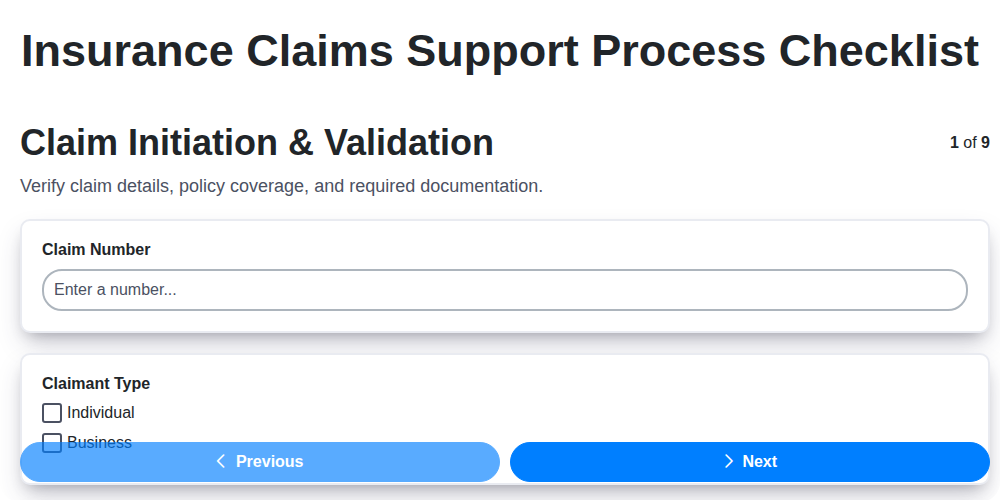
Streamline Claims: Your Insurance Claims Support Process Checklist Template
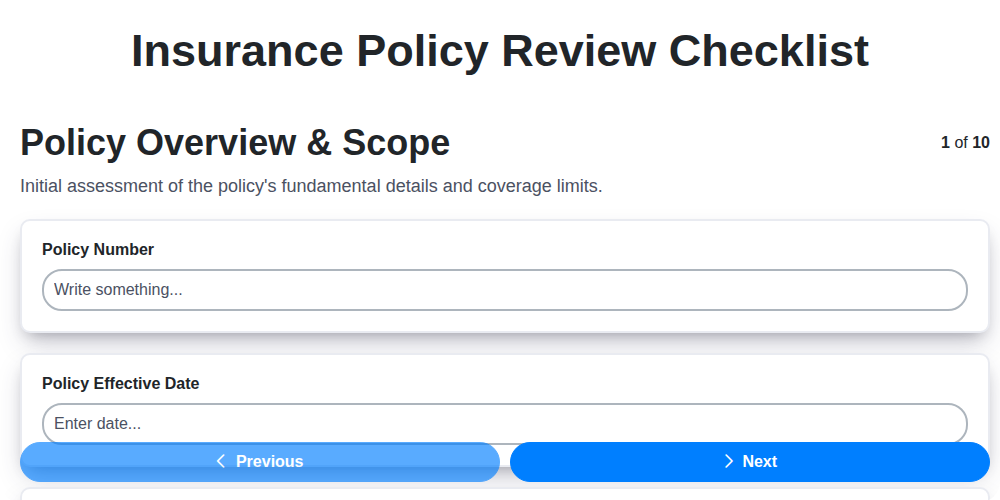
Your Insurance Policy Review Checklist: A Step-by-Step Guide
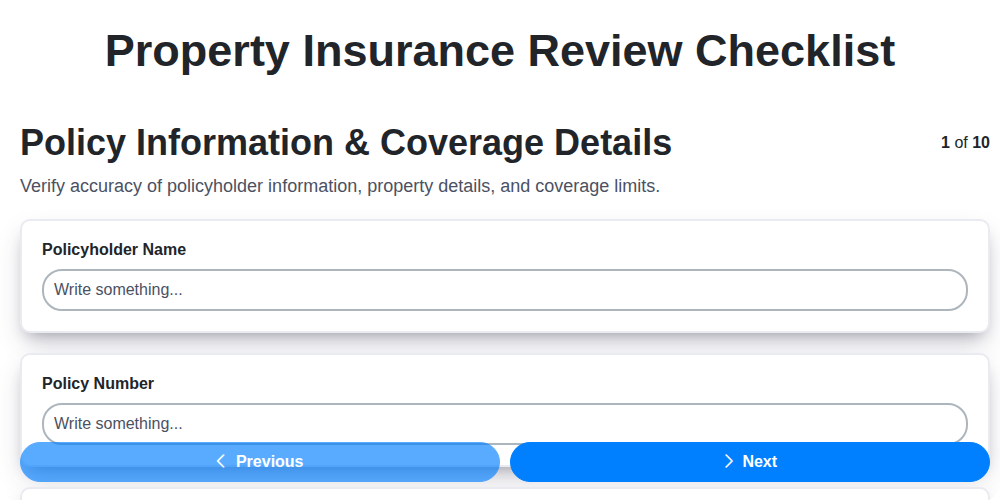
Your Property Insurance Review Checklist: A Step-by-Step Guide
Your Title Search & Insurance Checklist Template
Simplify Insurance Verification: Your Free Dental Checklist Template
Crop Insurance Policy Review Checklist: A Farmer's Guide

The Ultimate Vehicle Registration & Insurance Validation Checklist
Mastering the Policyholder Journey: Your Insurance Experience Survey Checklist
Need help with
Insurance?
Have a question? We're here to help. Please submit your inquiry, and we'll respond promptly.