The Ultimate Insurance Claims Investigation Checklist: A Step-by-Step Guide
Published: 12/01/2025 Updated: 07/02/2026
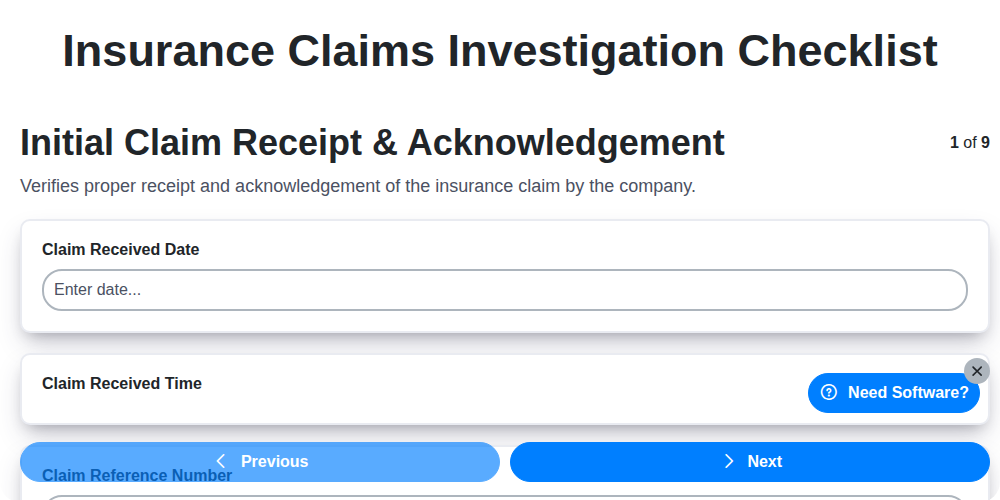
Table of Contents
- Introduction: Why a Claims Investigation Checklist Matters
- 1. Initial Claim Receipt & Acknowledgement
- 2. Policy Verification & Coverage Assessment: The Foundation of the Investigation
- 3. Damage Documentation & Evidence Gathering: Building a Comprehensive Picture
- 4. Liability Determination: Establishing Responsibility
- 5. Deeper Dive: Coverage Verification & Policy Interpretation
- 6. Estimate Review & Validation: Accuracy and Reasonableness
- 7. Fraud Indicators Assessment: Recognizing Red Flags
- 8. Regulatory Compliance & Reporting: Staying on the Right Side of the Law
- 9. Settlement Authority & Approval: Ensuring Proper Authorization
- 10. Key Tools & Resources for Claims Investigators
- 11. Best Practices for a Thorough Investigation
- 12. Common Pitfalls to Avoid
- Conclusion: Streamlining the Claims Process
- Resources & Links
TLDR: Overwhelmed by insurance claims investigations? This checklist breaks down the process into 9 crucial steps - from initial receipt to final approval - ensuring thoroughness, accuracy, and compliance every time. Use it to streamline your investigations and minimize errors!
Introduction: Why a Claims Investigation Checklist Matters
Insurance claims investigations can be complex, intricate processes. A single missed step or overlooked detail can lead to inaccurate assessments, unfair settlements, legal challenges, and even fraudulent payouts. That's why a robust checklist isn't just a good idea-it's a critical tool for insurance professionals. This systematic approach ensures consistency, reduces errors, and provides a clear audit trail, ultimately protecting both the insurer and the policyholder. A well-defined checklist minimizes risk, streamlines the investigation process, and ensures compliance with regulations. Let's dive into the essential steps that a thorough claims investigation should cover.
1. Initial Claim Receipt & Acknowledgement
The first and arguably most crucial step in any insurance claims investigation is promptly receiving and acknowledging the claim. This demonstrates to the claimant that their report is being taken seriously and initiates the investigation process. It's more than just a simple receipt; it's about establishing a clear line of communication.
Here's what this stage involves:
- Immediate Acknowledgement: Send an automated or personalized acknowledgement immediately upon claim receipt. This confirms the claim has been received and provides a reference number for tracking.
- Contact Information: Provide the claimant with a dedicated contact person (if possible) and their contact details for any questions or updates.
- Explanation of Process: Briefly outline the claims investigation process, setting expectations for timelines and required documentation.
- Claimant Communication: Open a clear communication channel. Encourage the claimant to reach out with any additional information or concerns.
- Record Keeping: Meticulously document the receipt date, time, method of receipt (phone, email, online portal), and all communication regarding the initial receipt.
2. Policy Verification & Coverage Assessment: The Foundation of the Investigation
The cornerstone of any successful insurance claims investigation is a meticulous policy verification and coverage assessment. This isn't simply about confirming the policy is active; it's a deep dive into the specific language and conditions outlined within. We meticulously examine the policy declarations page, endorsements, exclusions, and any riders to understand the scope of coverage applicable to the claimed loss.
This crucial step involves confirming the insured's identity, address, and other pertinent details against the policy. We verify the effective dates of coverage, ensuring the loss occurred during an active period. Furthermore, we carefully analyze any exclusions that might apply, such as damage from specific perils, geographical limitations, or pre-existing conditions.
Understanding the policy's definitions is equally important. Terms like "accidental loss," "water damage," or "business interruption" often have precise legal meanings within the policy itself. We ensure a clear understanding of these definitions to accurately determine whether the loss falls within the policy's coverage. This foundational assessment is the compass guiding the entire investigation, preventing wasted effort and ensuring a fair outcome for all parties. A misinterpretation at this stage can have significant ramifications, so we prioritize thoroughness and accuracy.
3. Damage Documentation & Evidence Gathering: Building a Comprehensive Picture
Thorough documentation is the backbone of any successful insurance claims investigation. It's not just about taking a few photos; it's about building a comprehensive picture of the damage and the circumstances surrounding the loss. This includes both physical evidence and recorded observations.
Here's what a robust damage documentation & evidence gathering process should encompass:
- Detailed Photography & Videography: Capture everything! Wide-angle shots to establish context, close-ups of specific damage, and video walkthroughs are invaluable. Don't forget to include date/time stamps if possible.
- Witness Statements: Obtain signed statements from anyone who witnessed the incident or observed the damage. These statements should be detailed, objective, and include contact information.
- Police Reports & Incident Records: Secure copies of any police reports, fire department reports, or other official records related to the loss.
- Inventory Lists: If applicable, compile a detailed inventory of damaged or lost items, including descriptions, estimated values, and proof of ownership (receipts, appraisals, etc.).
- Expert Assessments: Depending on the nature of the damage (e.g., structural, mechanical, environmental), obtain assessments from qualified experts. These reports should be objective and provide a professional opinion on the cause and extent of the damage.
- Preservation of Evidence: Instruct the claimant to take steps to mitigate further damage and preserve evidence whenever possible. Document these efforts.
- Mapping & Diagramming: Create diagrams or sketches showing the location of damage and the layout of the affected area.
Properly documented evidence strengthens your case and provides a clear and defensible record of the loss.
4. Liability Determination: Establishing Responsibility
Liability determination is a critical, and often complex, step in insurance claims investigation, particularly in cases involving bodily injury, property damage caused by negligence, or auto accidents. It's not always applicable - straightforward claims like those solely involving weather damage bypass this phase. However, when multiple parties are involved and fault isn't immediately clear, a thorough liability assessment is essential.
This process involves a deep dive into the facts of the incident. We begin by gathering all available information: police reports, witness statements, medical records, photographs, and any relevant documents. We then carefully analyze this information to determine the degree of responsibility each party bears. This might involve reconstructing the events leading up to the incident, analyzing traffic laws or building codes, and considering expert opinions.
Determining liability isn't simply about assigning blame; it's about establishing legal responsibility. We investigate to understand who was negligent, what actions (or inaction) contributed to the damage or injury, and the extent to which each party is responsible. This can involve comparative negligence assessments, where fault is distributed among multiple parties. Ultimately, a clear understanding of liability is vital for accurate claim resolution and prevents unnecessary legal disputes. If the investigation suggests a potential for legal action, we may recommend consultation with legal counsel.
5. Deeper Dive: Coverage Verification & Policy Interpretation
Understanding the fine print is absolutely critical in insurance claims investigation. This stage goes beyond a cursory glance at the policy; it demands a meticulous review and interpretation of the language used. We're not just checking if coverage exists, but how it applies to the specific circumstances of the claim.
Here's what we delve into:
- Specific Exclusions: We scrutinize the policy for exclusions that might negate coverage, such as pre-existing conditions, acts of war, or specific types of property.
- Conditions Precedent: Many policies require the insured to take certain actions before coverage kicks in (e.g., notifying authorities, mitigating further damage). We verify these conditions were met.
- Definitions: Insurance policies are full of defined terms. We ensure we understand the precise meaning of these terms within the context of the claim. For example, what constitutes loss or actual cash value?
- Policy Forms & Endorsements: Policies often consist of base forms with endorsements that modify or extend coverage. We reconcile all forms and endorsements to ensure a complete understanding.
- Legal Precedent: In complex or ambiguous situations, we may research relevant case law to guide our interpretation of the policy language.
This detailed verification minimizes potential disputes and ensures a fair and accurate assessment of the claim's validity.
6. Estimate Review & Validation: Accuracy and Reasonableness
The estimate review phase is a critical checkpoint in the insurance claims investigation process. It's not just about confirming a number; it's about ensuring the repair or replacement costs presented are both accurate and reasonable in relation to the damages sustained.
Here's what we look at during this stage:
- Scope of Work: Does the estimate comprehensively address all damages identified in the damage documentation? Are any repairs or replacements missing?
- Pricing Verification: We compare the listed prices for labor and materials to industry standards, local market rates, and our own historical data. This helps identify potential overcharges or inflated pricing.
- Labor Hours: Are the labor hours estimated realistic for the scope of work? We consider the complexity of the repairs and typical completion times.
- Material Quality: Are the materials specified in the estimate appropriate for the property type and construction standards? Are any upgrades or unnecessary premium materials included?
- Hidden Damage Contingency: Does the estimate include a reasonable allowance for potential hidden damage that may be uncovered during the repair process?
- Independent Review: When appropriate, we may engage an independent adjuster or contractor to provide an unbiased review of the estimate.
A thorough estimate review protects both the insurance company and the policyholder, ensuring fair and accurate settlements.
7. Fraud Indicators Assessment: Recognizing Red Flags
Claims investigations aren't just about determining the extent of damage; they're also about safeguarding against fraudulent claims. Recognizing potential fraud early can save significant resources and prevent financial losses. This assessment involves a keen eye and a systematic approach.
Here are some key indicators that should raise a red flag during an investigation:
- Inconsistencies in Statements: Discrepancies between the claimant's initial report, witness testimonies, and police reports are major warning signs. Look for conflicting details regarding the incident's timeline, location, or circumstances.
- Unusual Timing: Claims filed immediately after a major weather event or a sudden increase in similar claims in a specific area deserve closer scrutiny.
- Lack of Documentation: A claimant's reluctance or inability to provide necessary documentation, like repair invoices, medical records (if applicable), or proof of ownership, can be suspicious.
- Suspicious Repair History: A history of prior claims, especially those involving similar incidents or repair shops, warrants further investigation.
- Witness Discrepancies: Conflicting accounts from witnesses, or witnesses who appear coached or hesitant, raise questions about the legitimacy of the claim.
- Unexplained Disappearance of Evidence: If key evidence, like vehicle parts or damaged property, mysteriously disappears, it's a significant concern.
- Unfamiliarity with Details: Claimants who seem remarkably uninformed about their own claim, or who demonstrate an unusual lack of concern about the incident's severity, should be investigated further.
- Inflated or Unjustified Damage: Exaggerated claims, where the reported damage far exceeds the actual loss, should trigger a deeper dive into the situation.
When any of these red flags appear, escalate the claim for a more detailed investigation, which may involve additional interviews, surveillance, or consultation with fraud specialists. Remember, a proactive and vigilant approach is crucial in combating insurance fraud.
8. Regulatory Compliance & Reporting: Staying on the Right Side of the Law
Insurance claims investigations operate within a complex web of regulations. Failure to adhere to these rules can result in hefty fines, legal action, and reputational damage. This step isn't just about ticking boxes; it's about building a defensible and ethical claims process.
Here's what's involved:
- State-Specific Requirements: Insurance laws vary significantly by state. Stay current on the specific regulations in each jurisdiction where you operate. This includes guidelines on claimant communication, privacy (like HIPAA if applicable), and record-keeping.
- Federal Regulations: Federal laws like the Gramm-Leach-Bliley Act (GLBA) impact data security and privacy. Compliance here is critical.
- Reporting Requirements: Many states require periodic reporting of claims data, including information on the number of claims, settlement amounts, and types of losses. Understand your reporting obligations and deadlines.
- Documentation is Key: Maintain meticulous records of all investigation activities, including correspondence, interviews, and findings. This documentation is crucial for demonstrating compliance if questions arise.
- Staying Updated: Regulations change! Subscribe to industry publications, participate in professional development, and consult with legal counsel to stay abreast of evolving legal requirements.
- Internal Audits: Regularly conduct internal audits of your claims handling processes to identify and address any potential compliance gaps.
- Training: Ensure all claims investigators are properly trained on relevant regulatory requirements and ethical considerations.
9. Settlement Authority & Approval: Ensuring Proper Authorization
Reaching the settlement stage signifies a significant milestone in the claims investigation process. However, it's absolutely crucial to avoid premature conclusions and potential legal repercussions by meticulously adhering to established settlement authority protocols. This phase isn't simply about finalizing payments; it's about confirming that the proposed settlement aligns with policy terms, investigation findings, and company guidelines.
First, a thorough review of the claims file is essential. This includes revisiting all previous steps - from the initial acknowledgement to the liability determination and damage assessment - to ensure consistency and accuracy. The proposed settlement amount must be demonstrably supported by the evidence gathered.
Next, verify the settlement authority level required for the proposed payment. Insurance companies typically have tiered authority limits based on experience, expertise, and the complexity of the claim. Claims exceeding the investigator's authority must be escalated to a supervisor or claims manager for review and approval. Document this escalation process clearly within the claim file, noting the date, individuals involved, and the reason for the escalation.
Furthermore, consider potential legal and regulatory implications. Complex claims, those involving subrogation opportunities, or those with potential for litigation require extra scrutiny and may necessitate legal counsel involvement before settlement approval.
Finally, meticulous documentation is key. The settlement approval should be formally recorded, including the approving authority's name, signature (or electronic equivalent), date, and a brief justification for the decision. This protects both the company and the investigator, ensuring a clear audit trail and demonstrating responsible claims handling practices. Ignoring this vital step can lead to costly errors and potential legal challenges.
10. Key Tools & Resources for Claims Investigators
The modern claims investigator has a wealth of technological and informational resources at their disposal. These tools streamline the investigation process, enhance accuracy, and improve overall efficiency. Here's a look at some essential aids:
- Claims Management Software: Platforms like Guidewire ClaimCenter, Duck Creek Claims, and similar systems centralize claim data, facilitate workflow management, and provide robust reporting capabilities.
- GIS (Geographic Information Systems): GIS software allows investigators to visualize claim locations, assess environmental factors, and identify potential patterns or trends. This is particularly valuable for natural disaster claims.
- Social Media Monitoring Tools: Platforms that monitor social media activity can provide valuable context, verify information, and potentially identify inconsistencies in claimant statements. Note: Always adhere to privacy regulations and ethical guidelines when utilizing these tools.
- Public Record Databases: Access to public records like property ownership, vehicle registrations, criminal records, and litigation history is crucial for background checks and verifying information.
- Photo and Video Analysis Software: Tools for examining photos and videos, enhancing image quality, and detecting inconsistencies or alterations are increasingly important.
- Estimating Software: Platforms like Xactimate and similar tools provide industry-standard pricing data for property damage repairs, aiding in estimate validation.
- Fraud Detection Databases: These databases contain information on past fraudulent claims and individuals involved, helping investigators identify potential red flags.
- Legal Research Databases: Westlaw, LexisNexis, and similar platforms provide access to legal precedents, statutes, and regulations relevant to claims investigation.
- Drone Technology: For large-scale damage assessment, particularly after natural disasters, drone footage can provide comprehensive visual data efficiently.
- Mobile Device Apps: Numerous apps dedicated to claims investigation exist, facilitating documentation, communication, and access to data in the field.
11. Best Practices for a Thorough Investigation
Beyond simply ticking boxes on a checklist, a truly effective insurance claims investigation requires a proactive and detail-oriented approach. Here are some best practices to elevate your investigations:
- Maintain Impartiality: Approach each claim with an open mind, avoiding pre-conceived notions. Objectivity is paramount to fair and accurate assessments.
- Communicate Regularly: Keep all parties involved - claimant, policyholder, legal counsel (if applicable) - informed throughout the investigation process. Clear and consistent communication builds trust and minimizes potential misunderstandings.
- Go Beyond the Basics: Don't rely solely on provided information. Actively seek out additional details and supporting documentation that might not be immediately apparent. This includes interviewing witnesses, reviewing public records, and consulting with subject matter experts.
- Document Everything: Detailed and accurate documentation is crucial. Record all interviews, observations, findings, and decisions. Use standardized forms and digital tools to ensure consistency and traceability.
- Leverage Technology: Utilize claims investigation software, data analytics tools, and image/video analysis platforms to enhance efficiency and uncover hidden patterns or inconsistencies.
- Cross-Reference Information: Continuously compare and contrast information from various sources to identify discrepancies or potential red flags.
- Consider the Why: Don't just focus on what happened; delve into the why. Understanding the underlying circumstances can provide valuable context and reveal potential issues.
- Stay Updated on Legal and Regulatory Changes: Insurance laws and regulations are constantly evolving. Staying abreast of these changes is essential for ensuring compliance and avoiding legal challenges.
- Continuous Improvement: Regularly review past investigations to identify areas for improvement and refine processes. Implement feedback loops to enhance the overall quality of investigations.
- Collaborate with Specialists: Don't hesitate to engage with specialists (e.g., forensic accountants, engineers, medical professionals) when dealing with complex or technical claims.
12. Common Pitfalls to Avoid
It's incredibly easy to get bogged down in the granular details of an insurance claim investigation - meticulously documenting each dent, reviewing every line item on an estimate, and scrutinizing policy language. However, focusing solely on individual checklist items without considering the overall claim narrative can be a significant pitfall. A seemingly minor discrepancy in a single area could be a symptom of a larger, more complex issue, or it could be perfectly explainable within the broader context. Always step back and review the entire investigation alongside the checklist to ensure consistency and identify any red flags that might arise from the interplay of various elements. Avoid treating the checklist as a rigid, standalone guide; use it as a framework to guide your thoroughness, but always maintain a holistic perspective.
Conclusion: Streamlining the Claims Process
Ultimately, employing a comprehensive Insurance Claims Investigation Checklist like the one outlined above isn't just about ticking boxes; it's about building trust, minimizing risk, and ensuring fairness for all parties involved. By consistently following these steps, investigators can improve accuracy, reduce potential errors, and accelerate the claims resolution process. This leads to enhanced customer satisfaction, reduced operational costs, and a stronger overall reputation for the insurance company. Remember, a thorough and documented investigation is the cornerstone of a robust and ethical claims handling process.
Resources & Links
- National Association of Insurance Commissioners (NAIC): The NAIC provides resources, research, and model laws related to insurance regulation. Crucial for understanding legal frameworks and compliance standards.
- Insurance Information Institute (III): The III offers consumer information, research, and statistics about insurance. Useful for understanding the broader context of claims and industry trends.
- American Institute of Certified Public Accountants (AICPA): AICPA provides resources for fraud examination and forensic accounting, which are valuable skills for identifying and investigating fraudulent claims.
- Adjusters International: AI is a large public adjusting firm with a wealth of claims knowledge and resources - particularly useful for understanding the claimant's perspective and best practice in handling large and complex claims.
- Claims and Litigation Management Professionals (CLM): CLM provides networking, education, and resources for claims professionals, including information on investigation techniques and best practices.
- Risk Management Institute, Inc. (RMI): RMI offers a wide range of insurance and risk management training courses and resources, some of which cover claims investigation principles.
- The Justice Institute: This organization focuses on providing training and resources related to legal compliance, risk management, and investigations. Relevant for the 'Regulatory Compliance' and 'Fraud Indicators' sections.
- Federal Bureau of Investigation (FBI): While not solely focused on insurance, the FBI's resources on fraud and investigation techniques are applicable to identifying and prosecuting insurance fraud. Particularly useful in understanding complex fraud schemes.
- Iowa Insurance Division (Example State Agency): This link is for an example State Insurance Department. You would substitute this with the link to the relevant insurance department in the specific state your article targets. State departments are vital for regulatory compliance information.
- National Council on Compensation Insurance (NCCI): Specifically related to workers' compensation claims, NCCI provides data, resources, and education on workers' compensation laws and practices. Valuable if your article addresses workers' compensation claims.
- LexisNexis: Legal research platform. Claims investigators often need to verify laws, regulations, and case precedents. LexisNexis is a powerful tool for doing so.
- Westlaw: Similar to LexisNexis, Westlaw is another leading legal research service essential for policy interpretation and legal verification during investigations.
Frequently Asked Questions
What is an insurance claims investigation?
An insurance claims investigation is a detailed process used by insurance companies to verify the details of an insurance claim. It involves gathering evidence, interviewing parties, and analyzing documentation to determine the validity and extent of the loss.
Why is a claims investigation checklist important?
A checklist ensures a thorough and consistent investigation, reducing errors, preventing fraud, and ensuring fair settlements. It helps investigators stay organized and document all steps taken.
Who typically performs insurance claims investigations?
Investigations are usually conducted by insurance adjusters, private investigators hired by insurance companies, or forensic accountants. Their specific roles and expertise vary based on the complexity of the claim.
What are the initial steps in an insurance claims investigation?
Initial steps usually include reviewing the claim form, police reports, medical records, and any other submitted documentation. Investigators also identify key individuals involved and begin planning the investigation scope.
What kind of evidence might be collected during an investigation?
Evidence can include photos and videos of the damage, witness statements, repair estimates, financial records, surveillance footage, social media posts, and expert opinions (e.g., engineering reports).
How are witness statements taken and documented?
Witness statements are typically taken through recorded interviews, signed affidavits, or written questionnaires. Accurate and detailed records, including date, time, and interviewer information, are essential.
What role do expert opinions play in claims investigations?
Experts, such as engineers, medical professionals, or forensic accountants, provide specialized knowledge to assess damage, determine causation, and quantify losses. Their reports are crucial in complex claims.
What is fraud investigation and how does it relate to claims investigations?
Fraud investigation specifically focuses on identifying and proving fraudulent claims. It involves analyzing data, interviewing suspects, and gathering evidence of intentional deception to obtain benefits.
How are discrepancies and red flags handled during an investigation?
Discrepancies require further investigation to determine their cause. Red flags warrant heightened scrutiny and potentially involve more in-depth analysis and interviews to uncover potential issues.
What are the potential outcomes of an insurance claims investigation?
Outcomes can range from claim approval with full payment, claim approval with adjusted payment, claim denial, or referral to legal action. The outcome depends on the evidence and findings of the investigation.
What happens after the investigation is complete?
After the investigation, a report is compiled summarizing the findings and recommendations. This report is reviewed by the insurance company for a final decision on the claim.
Comments
There are no comments yet. Be the first to add one!
Insurance Management Solution Demo
Managing policies, claims, and compliance in the insurance industry is complex. ChecklistGuro's Work OS platform streamlines your operations, from underwriting and renewals to claims processing and reporting. Improve efficiency, reduce errors, and enhance customer satisfaction. Discover how ChecklistGuro can transform your insurance business!
Related Articles
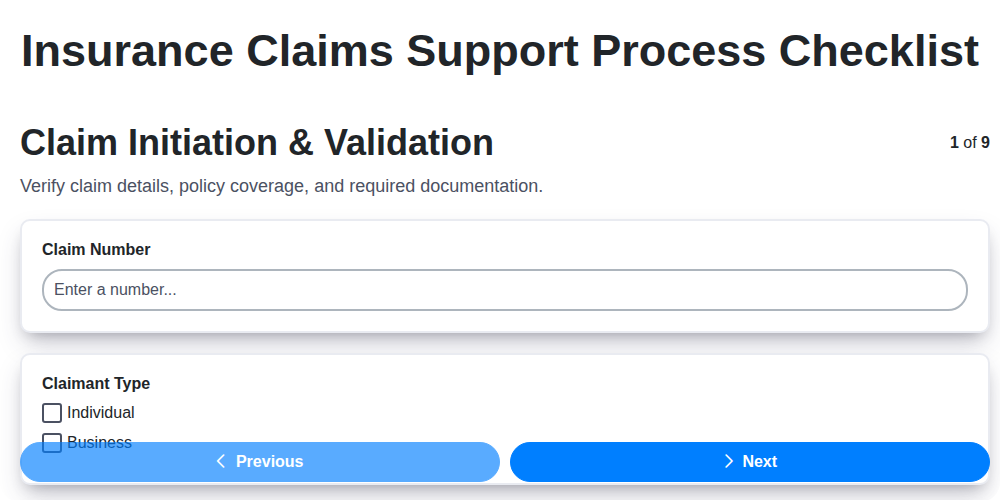
Streamline Claims: Your Insurance Claims Support Process Checklist Template
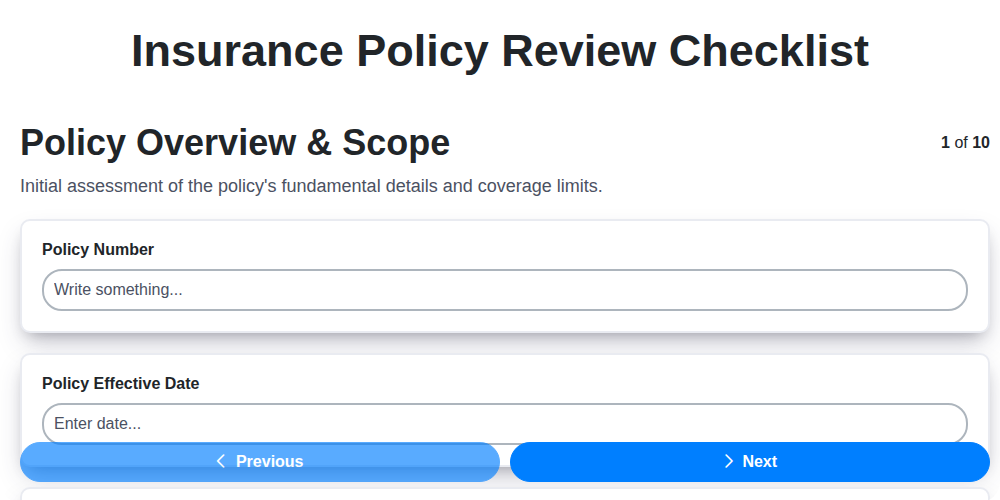
Your Insurance Policy Review Checklist: A Step-by-Step Guide
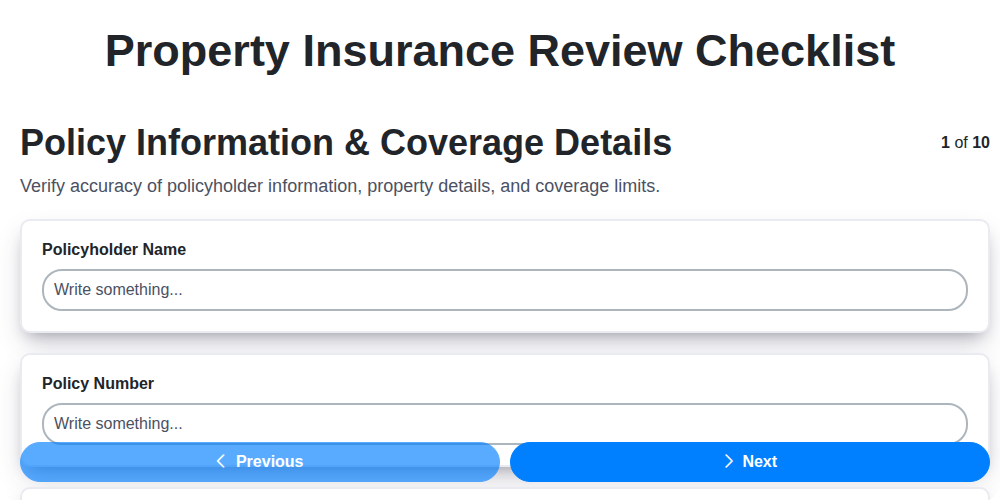
Your Property Insurance Review Checklist: A Step-by-Step Guide
Your Title Search & Insurance Checklist Template
Simplify Insurance Verification: Your Free Dental Checklist Template
Crop Insurance Policy Review Checklist: A Farmer's Guide

The Ultimate Vehicle Registration & Insurance Validation Checklist
Mastering the Policyholder Journey: Your Insurance Experience Survey Checklist
Need help with
Insurance?
Have a question? We're here to help. Please submit your inquiry, and we'll respond promptly.