Mastering Insurance Reserves: Your Comprehensive Review Checklist
Published: 12/01/2025 Updated: 07/02/2026
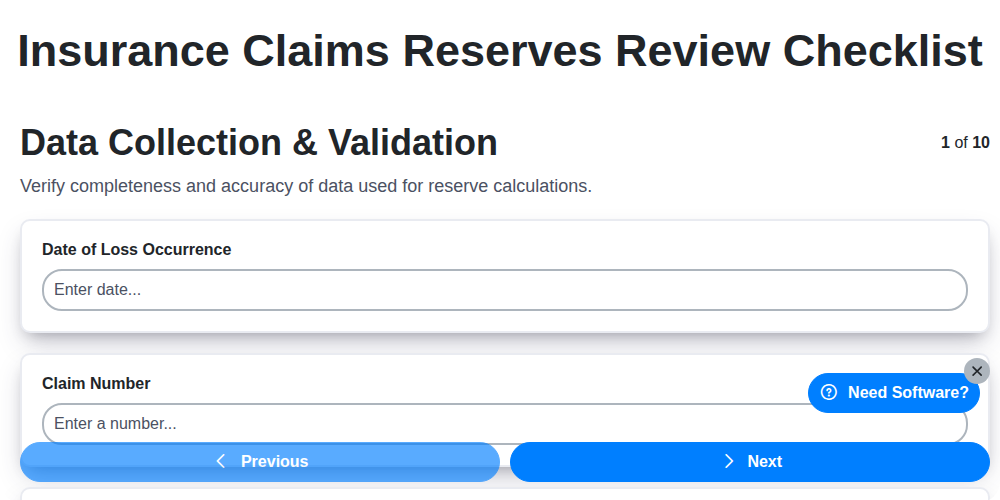
Table of Contents
- Introduction: Why Reserves Reviews Matter
- 1. Data Collection & Validation: The Foundation of Accuracy
- 2. Loss Ratio Analysis: Identifying Trends and Anomalies
- 3. Development Pattern Review: Tracking Claim Settlement Over Time
- 4. Severity Analysis: Understanding Claim Cost Drivers
- 5. Incurred But Not Reported (IBNR) Analysis: Estimating the Unknown
- 6. Discount Rate Assessment: Accounting for the Time Value of Money
- 7. Legal & Regulatory Compliance: Staying on the Right Side of the Law
- 8. Documentation & Audit Trail: Maintaining Transparency and Accountability
- 9. Sensitivity Analysis: Stress-Testing Your Assumptions
- 10. Management Review & Approval: Ensuring Informed Decision-Making
- 11. Best Practices for Reserve Estimation
- 12. Common Pitfalls to Avoid
- Conclusion: Continuous Improvement in Reserve Management
- Resources & Links
TLDR: Worried about your insurance reserves? This checklist is your guide! It walks you through verifying your reserves - from gathering data and analyzing loss trends to ensuring legal compliance and understanding potential risks. It's a step-by-step process to help you confidently assess if your reserves are accurate and sufficient.
Introduction: Why Reserves Reviews Matter
Insurance reserves represent a critical element of a company's financial health. They are essentially estimates of future payments related to claims that have already occurred but haven't been fully resolved. Setting these reserves accurately is paramount - underestimate them and you risk insolvency; overestimate them and you've tied up capital unnecessarily. A thorough reserves review isn't just a compliance exercise; it's a crucial risk management process that ensures financial stability, provides reliable reporting to stakeholders, and supports sound decision-making. This blog post will outline a comprehensive checklist to guide you through a robust reserves review, helping you to confidently assess and manage your insurance liabilities.
1. Data Collection & Validation: The Foundation of Accuracy
A robust reserves review hinges on a solid foundation of accurate and reliable data. This initial phase, Data Collection & Validation, is arguably the most critical - flawed data will inevitably lead to flawed conclusions. Don't underestimate the time and effort required here.
This step isn't just about gathering data; it's about verifying its integrity. We're talking about everything from claim loss triangles and development patterns to policy information and external data sources. Consider the following:
- Source Verification: Confirm the source of your data - is it from your claims system, a third-party vendor, or a combination? Understand the processes used to generate it.
- Completeness Checks: Are all necessary data points present for each claim and across the entire portfolio? Missing data introduces bias and limits analysis.
- Accuracy Assessments: Validate data against original records where possible. This might involve spot-checking claim files or comparing data to policy documentation. Look for outliers and inconsistencies.
- Data Consistency: Ensure consistency across different data sources. Do claim dates, policy numbers, and amounts align?
- Data Transformation: Carefully document all data transformations performed - any adjustments, calculations, or allocations made to the raw data.
- Data Security: Adhere to data privacy and security protocols throughout the collection process.
A dedicated effort in data collection and validation will significantly enhance the reliability of subsequent analyses and build confidence in the final reserve estimates. Remember, garbage in, garbage out!
2. Loss Ratio Analysis: Identifying Trends and Anomalies
The loss ratio, calculated as incurred losses divided by earned premiums, is a cornerstone metric for assessing the financial health of your insurance claims reserves. A thorough review of this ratio over time is crucial for identifying potential problems and ensuring reserve adequacy.
Start by calculating the loss ratio for various periods - monthly, quarterly, annually - and compare these figures against historical averages and industry benchmarks. Significant deviations warrant further investigation. Are you seeing a consistently rising loss ratio? This could signal underwriting challenges, increased claims frequency, or inaccurate pricing. Conversely, a consistently low loss ratio might indicate overly conservative reserving or pricing that's too competitive.
Don't just focus on the overall loss ratio. Drill down to analyze trends by line of business, geographic region, and even specific policy types. This granular view can highlight specific areas experiencing disproportionate losses. Look for sudden spikes or unexpected patterns - these anomalies are often red flags that require immediate attention. For example, a spike in auto claims in a particular region might suggest a localized incident or a shift in driving behavior.
Consider the impact of external factors. Major events like natural disasters, economic downturns, or changes in legal rulings can significantly influence claims frequency and severity, impacting the loss ratio. Factor these into your analysis and adjust your reserves accordingly. Finally, consistently review your assumptions and methodologies for calculating the loss ratio to ensure they remain accurate and relevant.
3. Development Pattern Review: Tracking Claim Settlement Over Time
Understanding how claims settle over time - their development pattern - is crucial for accurate reserve estimations. This review isn't just about looking at current settlement trends; it's about identifying historical patterns and assessing whether they remain relevant.
We examine the progression of claims through various stages: reported, investigated, evaluated, and ultimately, paid or closed. For each claim cohort (claims from a specific period, like a policy year), we track the cumulative payments and expenses over time. This involves analyzing the cumulative loss ratio (cumulative payments / cumulative reserves) and visually representing these trends using development triangles or similar graphical tools.
Key questions we address include:
- Are development patterns consistent across different claim age groups? Significant deviations can indicate changes in claim handling practices, changing legal landscapes, or unforeseen events influencing claim settlement.
- How do the development patterns compare to historical trends and industry benchmarks? Significant departures warrant further investigation.
- Are there any unusual spikes or dips in claim settlements at specific development periods? This might reveal issues like a concentrated legal judgment payout or a change in vendor pricing.
- Has the average time to settle claims changed? A prolonged settlement timeline can impact reserve estimates.
By meticulously analyzing these patterns, we gain insights into the expected future settlement profile, allowing for more reliable reserve estimations and highlighting areas that require closer monitoring.
4. Severity Analysis: Understanding Claim Cost Drivers
Severity analysis dives deep into the individual claim costs within your portfolio. It's not just about how many claims you have, but how much each one is costing. This is crucial for accurate reserve setting as unusually high claim severities can significantly impact your financial position.
This analysis involves examining the distribution of claim severities - how often claims fall into different cost brackets (e.g., under $1,000, $1,000-$5,000, over $5,000). We look for trends: are average severities increasing? Are specific types of claims (e.g., bodily injury, property damage) driving the increases? Analyzing loss triangles by severity band can reveal how claim costs evolve over time.
Key areas of focus within severity analysis include:
- Trend Identification: Identifying any upward or downward trends in claim severities.
- Root Cause Investigation: Determining the underlying reasons for severity changes. Are they due to changes in medical costs, legal settlements, litigation trends, or perhaps changes in claim handling practices?
- Claim Type Segmentation: Separating claim severities by claim type to pinpoint which lines are most affected.
- Geographic Analysis: Understanding if severity varies by geographic region.
- Claim Handling Effectiveness: Assessing if claim handling practices are adequately managing costs.
Understanding the drivers of claim severity allows for more precise loss reserve estimations, proactive mitigation strategies (e.g., adjusting claim handling protocols, negotiating better vendor contracts), and ultimately, a stronger financial position.
5. Incurred But Not Reported (IBNR) Analysis: Estimating the Unknown
IBNR represents claims that have already occurred but haven't been reported to the insurer. Accurately estimating this figure is critical for setting adequate reserves and maintaining financial stability. It's arguably one of the most challenging aspects of the reserves review, requiring a blend of historical data, actuarial judgment, and a keen understanding of your business.
The process typically begins with a thorough examination of historical reporting patterns. How long does it typically take for claims of different types to be reported? Are there seasonal trends affecting reporting times? Changes in claims management processes or marketing campaigns can also impact these patterns and need to be accounted for.
Several methodologies exist for IBNR estimation, ranging from simple trend analysis to more sophisticated actuarial models. Trend analysis often uses a historical average of the average delay in reporting, projected forward. More complex models might incorporate factors like claim severity, line of business, and geographic region. Consideration should be given to any changes in claims handling practices that may impact reporting patterns. For example, if you're actively encouraging policyholders to report claims via an online portal, you might see a shift towards faster reporting.
Furthermore, assess the reasonableness of your existing IBNR methodology. Are the assumptions still valid? Is it adequately capturing the potential for delayed reporting in more complex or unique claims? It's vital to regularly review and refine your approach. This section requires a strong understanding of actuarial principles and should be overseen by experienced professionals.
6. Discount Rate Assessment: Accounting for the Time Value of Money
Accurately assessing the discount rate is crucial for a robust reserves review. It directly impacts the present value of future payments, and choosing an inappropriate rate can significantly skew your reserve estimates. Remember, money received today is worth more than the same amount received in the future, due to factors like inflation and potential investment opportunities.
This section focuses on validating the discount rates applied to your reserves. Here's what to examine:
- Review the Methodology: Understand how the discount rate was calculated. Is it based on a market-related yield (e.g., government bonds, corporate bond yields) adjusted for risk and liquidity? Is the methodology clearly defined and consistently applied?
- Risk Adjustment: Insurance claims inherently carry uncertainty. The discount rate should reflect this risk. Consider how the risk adjustment is determined and whether it adequately accounts for factors like claim severity, legal risks, and the potential for unexpected losses.
- Liquidity Premium: Reserves often involve illiquid assets. A liquidity premium compensates for the difficulty of converting these assets to cash quickly if needed. Evaluate the justification for this premium.
- Consistency: Ensure consistency in discount rates applied to claims with similar characteristics and maturities. Variations should be documented and justified.
- Comparison to Market Rates: Periodically compare your discount rates to current market rates to ensure they remain appropriate and aligned with prevailing economic conditions. Significant deviations warrant investigation.
- Documentation: Thoroughly document the assumptions, calculations, and rationale behind the chosen discount rate. This ensures transparency and facilitates review.
7. Legal & Regulatory Compliance: Staying on the Right Side of the Law
Insurance claims reserves are not just about actuarial science; they've got a significant legal and regulatory dimension. Failing to adhere to these can lead to hefty fines, reputational damage, and even legal action.
This review isn't just about making sure your reserves are actuarially sound; it's about ensuring they align with applicable laws and regulations. Key areas of focus include:
- Solvency Regulations: Most jurisdictions have solvency requirements that dictate how reserves are calculated and reported. Understand your local requirements and ensure your methodology supports compliance.
- Statutory Accounting Principles (SAP): These principles dictate how reserves are recognized and reported for regulatory filing purposes. Familiarize yourself with applicable SAP guidelines and ensure your reserve calculations align.
- Reporting Requirements: Pay close attention to deadlines and formats for reporting reserves to regulatory bodies. Consistent, accurate reporting is crucial.
- Data Privacy Laws: The data used to develop reserves often includes sensitive personal information. Adherence to data privacy regulations (like GDPR or CCPA) is paramount. Securely manage and protect this data throughout the review process.
- Anti-Fraud Measures: Reserves reviews should incorporate checks for fraudulent claims and ensure compliance with relevant fraud prevention regulations.
- Industry-Specific Regulations: Certain lines of insurance (like health or long-term care) may have specific legal or regulatory requirements impacting reserve calculations.
Regularly update your compliance knowledge and consult with legal counsel to ensure ongoing adherence to evolving regulations. Documenting how you addressed these compliance considerations within the reserves review is also essential for audit trails.
8. Documentation & Audit Trail: Maintaining Transparency and Accountability
A robust reserves review isn't just about the calculations; it's about demonstrating how those calculations were reached. A comprehensive documentation and audit trail are absolutely critical for defensibility, internal consistency, and ongoing process improvement. This goes beyond simply saving spreadsheets - it's about creating a clear narrative of the entire review process.
Here's what this documentation should include:
- Data Sources: Clearly identify every data source used, including dates of extraction and any manipulations performed.
- Methodologies: Detail the methodologies employed for each step of the reserves review (loss ratio analysis, IBNR development, etc.). This includes formulas, assumptions, and the rationale behind those assumptions.
- Assumptions Log: A dedicated log documenting all significant assumptions made throughout the review, along with justifications. This is especially important for IBNR calculations and discount rate assessments.
- Version Control: Implement a version control system for all models and worksheets. This allows for easy tracking of changes and allows you to revert to previous versions if necessary.
- Reviewer Sign-offs: Document who reviewed each stage of the process and their approval (or any required revisions).
- Meeting Minutes: If discussions led to changes in methodology or assumptions, record these in meeting minutes and link them to the affected documents.
- Exception Handling: Any deviations from standard procedures or identified data anomalies must be documented, along with the reasoning for the exceptions and how they were addressed.
A well-maintained audit trail isn't just for satisfying regulators; it provides invaluable insights for continuous improvement, allows new team members to quickly understand the process, and reinforces accountability at every level.
9. Sensitivity Analysis: Stress-Testing Your Assumptions
Reserves aren't set in stone. Economic conditions, legal precedents, and emerging trends can all impact the ultimate cost of claims. That's where sensitivity analysis comes in. This critical step goes beyond the base case reserve calculation to understand how your reserves could change under various scenarios.
Think of it as a stress test for your reserves. You're deliberately altering key assumptions - inflation rates, loss adjustment expense (LAE) ratios, average claim severity, even discount rates - to see the impact on the final reserve estimate.
What should you be testing? Start with the variables that have the most significant impact on your reserves and those with the highest degree of uncertainty. For example:
- Claim Severity: Model scenarios where average claim severity increases by 5%, 10%, or even 20%.
- Inflation: Examine the impact of varying inflation rates on loss costs and LAE.
- Discount Rate: Assess how changes in the discount rate influence the present value of future claim payments.
- Development Patterns: Explore how reserves might change if claims develop faster or slower than anticipated.
Sensitivity analysis doesn't aim to predict the future, but rather to quantify the potential range of outcomes. It allows you to understand the downside risk associated with your reserve estimates and to identify areas where you might need to hold greater conservatism. Document your sensitivity testing - the assumptions tested, the methodology used, and the range of results - to demonstrate a thorough and defensible reserve review process.
10. Management Review & Approval: Ensuring Informed Decision-Making
This final, crucial step isn't merely a formality; it's the culmination of the entire reserves review process and the gateway to confident, defensible decisions. The detailed findings from the previous nine steps-data validation, loss ratio analysis, development pattern review, severity analysis, IBNR assessment, discount rate assessment, legal & regulatory compliance, documentation, and sensitivity analysis-are now presented to senior management (typically CFO, Actuary, and relevant department heads).
The review should focus on not just the numbers, but the story those numbers tell. Management needs to understand the assumptions underpinning the reserves, the potential risks identified through sensitivity testing, and any areas of uncertainty. This is an opportunity to challenge the actuary's methodology, discuss potential impacts on the company's financial statements, and ensure alignment with overall business strategy.
Approval signifies management's acknowledgement of the reasonableness of the reserves and their commitment to the methodology employed. Detailed minutes of this review, including dissenting opinions and the rationale for final decisions, are essential for the audit trail. This step provides a vital layer of oversight and accountability, demonstrating a proactive and disciplined approach to reserves management.
11. Best Practices for Reserve Estimation
Estimating insurance claims reserves is a critical and complex process, demanding rigorous methodology and consistent oversight. While the checklist provides a structural framework, adhering to best practices elevates the accuracy and defensibility of your reserve estimates. Here's how:
Embrace a Forward-Looking Perspective: Reserves aren't just about historical data; they're about predicting future costs. Incorporate macroeconomic forecasts, emerging trends (like climate change impacting claims), and evolving legal landscapes into your analysis.
Maintain Independence: The reserve estimation process should be largely independent of the claims payment team. This minimizes potential bias and ensures objectivity. Ideally, a dedicated actuarial team or independent consultant should lead the process.
Document Assumptions Explicitly: Every assumption underpinning your reserve estimates - from loss cost trends to ultimate loss ratios - needs to be thoroughly documented and justified. Don't just state a number; explain why it's the chosen value. This is vital for audit trails and subsequent review.
Utilize Multiple Estimation Methods: Don't rely solely on one method. Employ a range of techniques (e.g., chain-ladder, loss ratio methods, regression models) and compare the resulting reserve estimates. Significant discrepancies warrant further investigation and a reasoned reconciliation.
Regularly Review and Update: Insurance is a dynamic environment. Reserve estimates shouldn't be set in stone. Establish a schedule for regular reviews (at least annually, and ideally quarterly) to reflect changes in claims patterns, legal rulings, and economic conditions.
Collaboration is Key: Foster communication and collaboration between claims, actuarial, and finance teams. Shared understanding and input improve the quality of the estimates.
12. Common Pitfalls to Avoid
Reserves reviews aren't just about ticking boxes; they's about providing a reliable assessment of your liabilities. Here are some frequent mistakes that can undermine the entire process:
- Ignoring Emerging Trends: Relying solely on historical data can be misleading. Failing to incorporate changes in claims handling practices, legal precedents, or economic conditions (like inflation) can lead to inaccurate reserves.
- Data Silos & Inconsistent Data: If claims data resides in multiple systems and isn't reconciled, inconsistencies and inaccuracies are inevitable. This makes analysis unreliable and hinders informed decision-making.
- Over-Reliance on a Single Method: Utilizing only one method for reserve calculation (e.g., paid loss development method) can create blind spots. A robust review utilizes a range of methods and compares results.
- Underestimating Legal Expenses: Legal proceedings can significantly impact claims costs. Ignoring or underestimating these expenses is a common error, especially for complex or high-value claims.
- Neglecting Catastrophe Impact: Failing to account for the impact of natural disasters or other catastrophic events in reserve estimations can lead to underfunding.
- Lack of Independence: Reviews conducted by individuals too closely involved in claims handling can lack objectivity. An independent perspective is crucial.
- Insufficient Expertise: Reserve setting requires specialized knowledge. Using personnel without adequate training or experience increases the risk of errors.
- Ignoring Actuarial Guidance: Actuarial standards and best practices provide valuable frameworks. Departing from these without strong justification is risky.
- Failure to Document Assumptions: Without clear documentation of the assumptions used in the review, the process lacks transparency and auditability.
- Insufficient Consideration of Emerging Risks: New risks, such as cyber claims or novel legal challenges, require proactive assessment and incorporation into reserve estimations.
- Assuming Linearity: Many reserve methods assume a linear progression of development. This is often incorrect, and failing to account for non-linearity can skew results.
- Not Regularly Updating Reserves: Reserves aren't a set it and forget it exercise. They require ongoing monitoring and adjustment based on emerging information.
Conclusion: Continuous Improvement in Reserve Management
Ultimately, a robust insurance claims reserves review isn't a one-time event; it's a journey of continuous improvement. The checklist outlined above provides a solid framework, but its true value lies in consistent application and adaptation. Regularly revisiting these steps, incorporating new data and evolving industry best practices, strengthens your reserve estimates and minimizes potential surprises. Embrace a culture of ongoing scrutiny and refinement - it's an investment that protects your company's financial health and builds stakeholder confidence. Remember, proactive and diligent reserve management isn't just about compliance; it's about resilience.
Resources & Links
- Actuarial Standards Board (ASB): The ASB develops and maintains professional and ethical standards for actuaries, crucial for reserve estimation and demonstrating compliance. Their practice notes and standards related to reserves are essential reading for anyone involved in reserve management.
- The Casualty Actuarial Society (CAS): The CAS provides education, research, and examinations for casualty actuaries. Their publications, including research papers and guidance on reserving practices, offer valuable insights and best practices.
- National Association of Insurance Commissioners (NAIC): The NAIC develops regulations and provides guidance for state insurance regulators, impacting reserve requirements and reporting. Reviewing their model laws and regulations is key to legal and regulatory compliance.
- Society of Actuaries (SOA): The SOA provides education, research, and guidance for actuaries, including those involved in life, health, and property-casualty insurance. Their research reports and practice notes can provide data and methodology insights for reserve estimation.
- IRMI (Insurance Risk Management Institute): IRMI offers a vast library of insurance information, including articles, definitions, and training materials related to reserving, loss reserving, and regulatory compliance. A useful resource for understanding terminology and concepts.
- CU Solutions Group (CU Solutions): CU Solutions, through its subsidiary CU Risk, provides actuarial consulting services and has numerous blog posts and whitepapers related to reserves and financial reporting, especially relevant for credit unions and smaller insurers.
- PwC (PricewaterhouseCoopers): PwC offers risk and actuarial consulting services and often publishes insights and thought leadership pieces on insurance reserving. Search their website for publications and articles specifically related to reserves.
- Deloitte: Similar to PwC, Deloitte offers consulting services, and their insurance practice often publishes thought leadership on reserves and related topics. Search their website for relevant articles and whitepapers.
- Ernst & Young (EY): EY's insurance practice provides consulting and auditing services. They frequently publish articles and reports on reserving practices and regulatory changes. Check their site for publications.
- KPMG: KPMG provides auditing, tax, and advisory services to the insurance industry. Their website features publications and insights related to reserve estimation and financial reporting. Explore their insurance practice page.
- Actuarial Outpost: An online community for actuaries. A good place to find discussions, resources, and insights shared by actuaries working in reserve estimation.
- SIFMA (Securities Industry and Financial Markets Association): While focused on broader financial markets, SIFMA's publications and advocacy efforts can impact regulatory frameworks relevant to insurance reserving and financial reporting.
Frequently Asked Questions
What are insurance reserves and why are they important?
Insurance reserves are funds set aside by insurance companies to cover future claims. They are crucial for ensuring the company can meet its obligations to policyholders, maintain financial stability, and comply with regulatory requirements. Without adequate reserves, an insurer could face insolvency if claims exceed premiums and invested assets.
Who is this checklist for?
This checklist is designed for a wide audience involved in insurance reserves, including actuaries, risk managers, auditors, regulators, and anyone seeking a thorough understanding of the reserve review process. While targeted at professionals, it aims to provide clarity even for those relatively new to the topic.
What types of reserves are typically included in this checklist?
The checklist covers various reserve types, including but not limited to: premium reserves, loss reserves (paid and unpaid claims), loss adjustment expense (LAE) reserves, unearned premium reserves, and policy reserves. It addresses both statutory and GAAP reserve calculations.
What does 'actuarial assumptions' mean in the context of reserve reviews?
Actuarial assumptions are the best estimates used by actuaries when projecting future claim payments. These include things like loss development patterns, inflation rates, interest rates, and mortality rates. The checklist emphasizes reviewing the reasonableness of these assumptions and their impact on reserve calculations.
What's the difference between statutory reserves and GAAP reserves?
Statutory reserves are mandated by state insurance regulators and focus on solvency. GAAP reserves are used for financial reporting and generally reflect a more conservative view of future obligations. The checklist addresses key differences and considerations for both types of reserves.
What are some common red flags to look for during a reserve review?
Red flags include significant deviations from historical trends, inconsistent loss development patterns, an unusually high reliance on judgmental estimates without sufficient support, and inadequate documentation of assumptions and methodologies.
How does this checklist address regulatory compliance?
The checklist incorporates key regulatory guidelines and considerations for reserve calculations and reporting, helping ensure compliance with applicable state and federal regulations. It prompts users to document adherence to specific regulatory requirements.
Can this checklist be used for companies of all sizes?
While the principles are universally applicable, the level of detail required will vary based on the insurer's size and complexity. Larger, more complex insurers may need to adapt the checklist to address more specific risks and regulations.
What does 'loss development patterns' refer to?
Loss development patterns describe how claims evolve over time - specifically, how the ultimate value of claims changes as time passes since the original loss occurred. The checklist examines these patterns to assess whether the current reserves accurately reflect the expected ultimate cost of claims.
How does the checklist promote independent review of reserves?
The checklist encourages a critical and independent evaluation of reserve calculations, methodologies, and assumptions, emphasizing the importance of obtaining objective opinions from qualified professionals and internal audit functions.
Comments
There are no comments yet. Be the first to add one!
Insurance Management Solution Demo
Managing policies, claims, and compliance in the insurance industry is complex. ChecklistGuro's Work OS platform streamlines your operations, from underwriting and renewals to claims processing and reporting. Improve efficiency, reduce errors, and enhance customer satisfaction. Discover how ChecklistGuro can transform your insurance business!
Related Articles
Streamline Claims: Your Insurance Claims Support Process Checklist Template
Your Insurance Policy Review Checklist: A Step-by-Step Guide
Your Property Insurance Review Checklist: A Step-by-Step Guide
Your Title Search & Insurance Checklist Template
Simplify Insurance Verification: Your Free Dental Checklist Template
Crop Insurance Policy Review Checklist: A Farmer's Guide

The Ultimate Vehicle Registration & Insurance Validation Checklist

Mastering the Policyholder Journey: Your Insurance Experience Survey Checklist
Need help with
Insurance?
Have a question? We're here to help. Please submit your inquiry, and we'll respond promptly.