Insurance Data Privacy Compliance Checklist: Your Step-by-Step Guide
Published: 12/01/2025 Updated: 07/02/2026
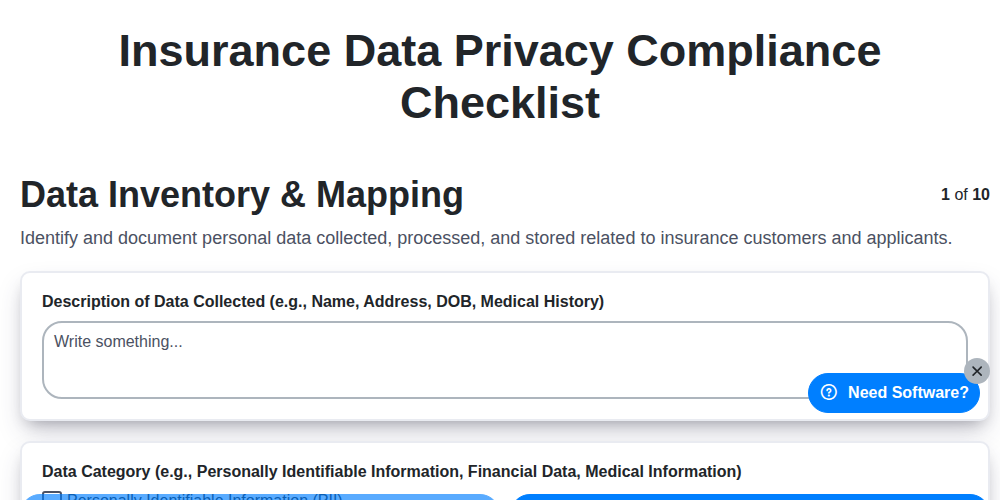
Table of Contents
- Introduction: Why Insurance Data Privacy Matters
- 1. Data Inventory & Mapping: Knowing What You Have
- 2. Consent & Notices: Transparency is Key
- 3. Data Subject Rights Requests (DSRs): Responding Effectively
- 4. Data Security Measures: Protecting Sensitive Information
- 5. Third-Party Vendor Management: Due Diligence & Contracts
- 6. Data Breach Response Plan: Preparation is Paramount
- 7. Training and Awareness: Building a Privacy-Conscious Culture
- 8. Regulatory Updates: Staying Ahead of the Curve
- 9. Policy and Procedure Review: Ensuring Alignment
- 10. Data Transfer Compliance: Navigating International Flows
- 11. Specific Insurance Considerations: Unique Challenges
- 12. Documentation & Record Keeping: Building a Privacy Audit Trail
- 13. Continuous Improvement: The Ongoing Privacy Journey
- Resources & Links
TLDR: Navigating data privacy as an insurance company can feel overwhelming! This checklist breaks down the crucial steps - from knowing what data you hold to responding to customer requests and handling breaches - so you can stay compliant with regulations like GDPR, CCPA, and more. It's your roadmap to building a robust data privacy program and minimizing risk.
Introduction: Why Insurance Data Privacy Matters
The insurance industry handles incredibly sensitive data - medical records, financial information, personal details - all vital for assessing risk and providing coverage. This data is not just valuable; it's also highly regulated. Increasingly stringent privacy laws like GDPR, CCPA, and others demand that insurance companies prioritize data privacy and security. Failing to do so can result in hefty fines, reputational damage, and a loss of customer trust. This isn't just about legal compliance; it's about upholding ethical responsibilities and safeguarding the privacy of individuals whose lives are touched by insurance. A robust data privacy program is no longer optional - it's a necessity for sustained success and a cornerstone of responsible business practices within the insurance landscape.
1. Data Inventory & Mapping: Knowing What You Have
Before you can even begin to think about protecting insurance data privacy, you need to know what data you have, where it resides, and how it's used. This is the foundation of any robust compliance program. A data inventory and mapping exercise isn't a one-time task; it's an ongoing process that needs regular updating.
Here's what this crucial step involves:
- Identify Data Types: Categorize the personal data you collect, process, and store. This includes everything from names and addresses to health information, financial details, and policy numbers. Be granular - differentiate between data collected directly from customers, data obtained from third parties, and data generated through system interactions.
- Map Data Flows: Trace the journey of data from collection to storage to processing and disposal. Visualize how data moves within your systems, departments, and potentially to external partners. Document systems, databases, spreadsheets, and any other locations where personal data resides.
- Document Purpose of Processing: For each data element, clearly articulate the legitimate purpose for which it is processed. This is critical for demonstrating compliance with regulations like GDPR and CCPA.
- Assign Data Ownership: Designate specific individuals or teams responsible for the accuracy, security, and compliance of particular data sets.
- Utilize Data Mapping Tools: Consider leveraging data mapping software to automate and streamline the process, especially for organizations with complex data landscapes.
Proactive data inventory and mapping provides a clear picture of your data footprint, making it easier to identify and mitigate privacy risks, respond to data subject requests, and prepare for audits.
2. Consent & Notices: Transparency is Key
In the insurance industry, building trust is paramount. A significant part of that trust hinges on clear, concise, and easily understandable communication regarding how you collect, use, and share personal data. This goes far beyond a simple privacy policy - it's about proactively informing policyholders and customers.
Here's what you need to focus on:
- Layered Notices: Avoid overwhelming users with one gigantic document. Utilize layered notices - short, digestible summaries upfront, with links to more detailed explanations for those who want them.
- Plain Language: Ditch the legal jargon. Use clear, plain language that everyone can understand. Consider using visuals, such as infographics, to illustrate your data practices.
- Purpose Specification: Clearly state why you're collecting specific data points. "We collect your date of birth for age-based risk assessment" is far more helpful than "We collect demographic information."
- Consent Mechanisms: Implement robust consent mechanisms, especially for data uses beyond what's strictly necessary for providing insurance services. Ensure consent is freely given, specific, informed, and unambiguous.
- Notice Updates: Keep your notices updated and easily accessible. Notify users of any material changes to your data practices, ensuring they have an opportunity to review and re-consent if necessary.
- Accessibility: Ensure your notices are accessible to individuals with disabilities, complying with WCAG guidelines.
Prioritizing transparency in your consent and notice practices demonstrates respect for your customers' privacy and fosters a stronger, more enduring relationship.
3. Data Subject Rights Requests (DSRs): Responding Effectively
Data Subject Rights Requests (DSRs) are a core component of modern privacy compliance, particularly under regulations like GDPR, CCPA, and others. These requests, ranging from access and rectification to erasure and restriction of processing, are legally binding and require timely and accurate responses. Failing to handle them correctly can result in hefty fines and reputational damage.
Here's a breakdown of what's involved and how to respond effectively:
- Understanding the Requests: Familiarize yourself with the different types of DSRs. Are you being asked for access to data, correction of inaccuracies, deletion of data, or something else? Clearly defining the request is the first step.
- Verification & Authentication: Before fulfilling any request, robust verification procedures are crucial. You must confirm the identity of the requester to prevent unauthorized access to data. Implement layered verification methods - don't rely solely on email.
- Timeframes: Regulations dictate strict response deadlines. GDPR, for example, mandates responses within one month, potentially extendable under specific circumstances. Document your timelines and stick to them.
- Data Retrieval & Preparation: Efficiently locate the requested data. This requires a well-maintained data inventory (see step 1 of this checklist!). Prepare the data in a clear and understandable format. Consider redaction to remove confidential information of other individuals.
- Documentation: Meticulously document every interaction related to a DSR. This includes the initial request, verification steps, data retrieval efforts, communication with the data subject, and the final response.
- Internal Coordination: DSR fulfillment often requires input from multiple departments (IT, Legal, Customer Service). Establish clear internal processes for coordination and escalation.
- Automate Where Possible: Consider using privacy management software to automate aspects of the DSR process, such as request intake, verification, and response generation. This can significantly improve efficiency and accuracy.
- Training: Ensure your team understands the legal requirements and internal procedures for handling DSRs. Regular training is essential.
4. Data Security Measures: Protecting Sensitive Information
Insurance data is a prime target for cybercriminals, making robust data security measures absolutely critical for compliance and maintaining customer trust. This goes far beyond simply having an antivirus program. Here's a breakdown of essential security practices:
- Encryption at Rest and in Transit: Protect data both when it's stored (at rest) and when it's being transmitted (in transit) using strong encryption protocols. This makes data unreadable even if intercepted. Consider using industry-standard encryption algorithms and regularly review key management practices.
- Access Controls & Least Privilege: Implement granular access controls, ensuring employees only have access to the data they need to perform their jobs. Employ the principle of least privilege - granting minimal access rights necessary for a specific role. Regularly review and update these permissions.
- Network Segmentation: Divide your network into isolated segments to limit the potential impact of a breach. If one segment is compromised, it doesn't automatically expose the entire system.
- Vulnerability Scanning & Patch Management: Regularly scan systems for vulnerabilities and apply security patches promptly. Automated patch management systems can significantly streamline this process.
- Multi-Factor Authentication (MFA): Implement MFA for all user accounts, especially those with access to sensitive data. This adds an extra layer of security beyond just a password.
- Endpoint Security: Protect endpoints (laptops, desktops, mobile devices) with antivirus software, firewalls, and intrusion detection systems. Consider Mobile Device Management (MDM) solutions.
- Regular Security Audits & Penetration Testing: Conduct regular security audits to assess the effectiveness of your security controls. Penetration testing simulates real-world attacks to identify weaknesses.
- Data Loss Prevention (DLP): Implement DLP solutions to monitor and prevent sensitive data from leaving your organization's control, whether through accidental disclosure or malicious intent.
5. Third-Party Vendor Management: Due Diligence & Contracts
Your insurance business likely relies on third-party vendors for a variety of functions - from data analytics and cloud storage to claims processing and marketing. These vendors often have access to sensitive customer data, making their compliance with data privacy regulations absolutely critical. Failing to properly vet and manage these relationships can expose your organization to significant legal and reputational risk.
This section isn't just about having a list of vendors; it's about ongoing risk management. Here's what to include:
- Initial Due Diligence: Before engaging a vendor, conduct thorough due diligence. This includes assessing their security practices, data privacy policies, and any relevant certifications (e.g., SOC 2, ISO 27001). Don't just take their word for it - request documentation and, where possible, conduct independent verification.
- Contractual Obligations: Your vendor contracts must include specific data privacy clauses. These should outline the vendor's responsibilities for data security, data processing, data minimization, and compliance with applicable regulations (like GDPR, CCPA, etc.). Include provisions for audits, data return/deletion upon termination, and liability in case of a breach.
- Ongoing Monitoring: Due diligence shouldn't stop at contract signing. Implement ongoing monitoring of vendor compliance. This can include periodic reviews of their security practices, performance assessments, and staying informed about any data breaches or regulatory actions involving the vendor.
- Risk Tiering: Categorize vendors based on the sensitivity of the data they process and the criticality of their services. Higher-risk vendors require more stringent oversight and controls.
- Right to Audit: Ensure contracts grant your organization the right to audit the vendor's data privacy and security practices.
6. Data Breach Response Plan: Preparation is Paramount
A data breach is a nightmare scenario for any insurance company, potentially leading to financial loss, reputational damage, and regulatory penalties. Having a robust Data Breach Response Plan (DBRP) isn't just a good idea-it's a critical compliance requirement. But a plan sitting on a shelf is useless; it needs to be regularly tested and updated.
Your DBRP should outline exactly what steps to take immediately following a suspected breach. This includes:
- Incident Identification & Containment: Clearly defined procedures for recognizing a breach and swiftly containing it to prevent further data exposure. Who is the first point of contact? What systems need immediate investigation?
- Assessment and Notification: A thorough assessment of the scope and impact of the breach, followed by timely notification to relevant parties-including regulators, affected individuals, and law enforcement-as required by applicable laws.
- Forensic Investigation: Engaging qualified professionals to investigate the breach's root cause and identify vulnerabilities.
- Remediation & Recovery: Steps to remediate the vulnerabilities that led to the breach and restore affected systems and data.
- Communication Strategy: A pre-approved communication plan for internal and external stakeholders, ensuring consistent and accurate messaging.
Regularly test your DBRP through tabletop exercises and simulations to identify weaknesses and ensure team familiarity. Remember, proactive preparation minimizes damage and accelerates recovery.
7. Training and Awareness: Building a Privacy-Conscious Culture
Compliance isn't just about ticking boxes; it's about fostering a culture where data privacy is ingrained in everyone's daily actions. A robust training and awareness program is paramount for insurance companies, given the sensitive nature of the personal information you handle.
Why is Training Essential?
- Reduces Human Error: Most data breaches aren't the result of sophisticated hacks, but rather employee negligence. Training minimizes mistakes like sending data to the wrong recipient or falling for phishing scams.
- Empowers Employees: Informed employees are your first line of defense. They're better equipped to identify potential privacy risks and report concerns.
- Reinforces Policy: Training ensures employees understand the company's privacy policies and procedures, and why they're important.
- Adaptability: Policies evolve. Regular training keeps employees updated on the latest regulations and best practices.
What Should Your Training Cover?
- Data Privacy Basics: Define key terms like PII, GDPR, CCPA, and data subject rights.
- Company Policies: Clearly explain the organization's specific data privacy policies and procedures.
- Phishing and Social Engineering Awareness: Equip employees to recognize and avoid these common threats.
- Secure Data Handling: Cover best practices for handling, storing, and transmitting data securely.
- Data Subject Rights (DSR) Procedures: Teach employees how to process and respond to data subject requests correctly.
- Reporting Concerns: Establish a clear and confidential process for employees to report suspected privacy breaches or concerns.
Beyond the Initial Onboarding:
Training shouldn't be a one-time event. Consider:
- Annual Refresher Courses: Reinforce key concepts and address any changes in regulations.
- Role-Specific Training: Tailor training to the specific data privacy responsibilities of different roles (e.g., claims adjusters, underwriters, IT staff).
- Regular Communication: Use newsletters, posters, and internal communications to keep privacy top-of-mind.
A proactive and ongoing training and awareness program isn't just a compliance requirement; it's an investment in your organization's reputation and the trust of your customers.
8. Regulatory Updates: Staying Ahead of the Curve
The insurance landscape is notoriously complex, and regulatory frameworks surrounding data privacy are no exception. What's compliant today might not be tomorrow. Staying informed about evolving laws like GDPR, CCPA/CPRA, HIPAA (where applicable), and emerging state-level regulations is absolutely critical. Don't rely on a one-time compliance assessment - make regulatory updates a continuous process.
Here's how to stay ahead:
- Subscribe to industry newsletters and alerts: Organizations like the IAPP (International Association of Privacy Professionals) and state insurance regulators often publish valuable updates.
- Follow regulatory websites: Regularly check the websites of relevant regulatory bodies (e.g., state insurance departments, FTC, EU GDPR portal).
- Engage with legal counsel: A qualified attorney specializing in data privacy can provide guidance on interpreting new regulations and adapting your practices.
- Attend webinars and conferences: These events offer opportunities to learn from experts and network with peers.
- Implement a tracking system: Document regulatory changes and assign responsibility for evaluating their impact and updating compliance measures.
Failing to monitor regulatory shifts can lead to significant fines, reputational damage, and loss of customer trust. Continuous vigilance is the price of maintaining data privacy compliance in the insurance industry.
9. Policy and Procedure Review: Ensuring Alignment
Regularly reviewing and updating your insurance data privacy policies and procedures isn't a one-and-done task; it's an ongoing commitment. The regulatory landscape shifts, data privacy best practices evolve, and your business operations likely change over time. A stale policy is a liability, not an asset.
This review should be more than just a cursory glance. It should involve:
- Cross-functional Collaboration: Engage legal, compliance, IT, security, and business unit representatives to ensure the policy reflects all aspects of your operations and considers all relevant perspectives.
- Documented Changes: Any modifications to the policy or procedures should be formally documented, including the rationale behind the change, the date of implementation, and the individuals responsible for the update.
- Gap Analysis: Periodically assess your existing policies against current regulations (GDPR, CCPA, HIPAA, etc.) and industry standards to identify any gaps or areas of non-compliance.
- Version Control: Implement a system for version control, ensuring that everyone uses the most up-to-date policy and procedures.
- Frequency: Aim for a comprehensive review at least annually, with more frequent updates triggered by regulatory changes, significant business events (like mergers or acquisitions), or changes in data processing activities.
10. Data Transfer Compliance: Navigating International Flows
The insurance industry often involves transferring data across borders - whether for processing claims, accessing global reinsurance markets, or supporting international customers. This presents unique compliance challenges. GDPR, CCPA, and other regional privacy laws impose strict rules about transferring personal data outside of their jurisdictions.
Understanding Transfer Mechanisms:
Familiarize yourself with legally recognized transfer mechanisms. These include:
- Adequacy Decisions: Countries deemed to have adequate data protection standards by relevant authorities (like the EU) allow for free data flows. Regularly check for updates to adequacy lists.
- Standard Contractual Clauses (SCCs): These pre-approved contractual clauses provide safeguards for international data transfers. The EU's updated SCCs require a transfer impact assessment (TIA) to evaluate risks and implement supplementary measures.
- Binding Corporate Rules (BCRs): For multinational insurance groups, BCRs can be a viable solution but require rigorous approval from data protection authorities.
- Derogations: Limited exceptions exist for specific situations, like data transfers for contractual necessity or public interest, but require careful justification.
Conducting Transfer Impact Assessments (TIAs):
Following the EU's updated SCCs, a TIA is crucial. This assessment should:
- Evaluate the laws and practices of the recipient country.
- Identify potential risks to data subject rights.
- Determine supplementary measures (e.g., encryption, pseudonymization) needed to ensure adequate protection.
- Document the TIA findings and the rationale behind implemented measures.
Maintaining Records & Documentation:
Comprehensive documentation is key. Maintain records of:
- Data transfer agreements
- TIAs
- Implemented supplementary measures
- Data subject rights request processing related to transferred data.
Stay Informed: Data transfer rules are constantly evolving. Monitor regulatory changes and seek legal advice to ensure ongoing compliance.
11. Specific Insurance Considerations: Unique Challenges
The insurance industry faces a particularly complex landscape when it comes to data privacy compliance. Beyond the standard obligations, several factors create unique challenges. Firstly, the sheer volume of personal data collected is immense. Insurance companies gather information for underwriting, claims processing, risk assessment, and ongoing customer service - a vast amount of sensitive data including health records, financial details, driving history, and more.
Secondly, regulatory frameworks are often very specific to insurance. Regulations like HIPAA (in the US for health insurance), GDPR (particularly concerning cross-border data transfers for international insurers), and similar state-level laws create a layered and often conflicting set of requirements. Understanding and adhering to each applicable regulation is critical.
Thirdly, the nature of insurance contracts often involves long retention periods for data, sometimes spanning decades. This extends the window of vulnerability and requires robust storage and security measures throughout the entire data lifecycle. Finally, the use of actuarial modeling and risk assessment, which rely heavily on aggregated data, demands careful consideration of anonymization techniques to avoid re-identification risks while still maintaining model accuracy. Failing to address these unique insurance-specific considerations can lead to significant compliance failures and reputational damage.
12. Documentation & Record Keeping: Building a Privacy Audit Trail
Compliance isn't just about doing the right things; it's about proving you're doing them. A robust documentation and record-keeping system is the backbone of any successful insurance data privacy compliance program. Without it, demonstrating adherence to regulations like GDPR, CCPA, and others becomes incredibly difficult, if not impossible.
Think of it as building a privacy audit trail. This trail should encompass everything from initial data collection and processing to ongoing maintenance and updates. Here's what needs to be captured:
- Data Inventory & Mapping Records: Keep track of where data resides, its purpose, and how it flows. Update these records regularly.
- Consent Records: Document how consent was obtained, what information was provided, and when consent was given (or withdrawn).
- DSR Fulfillment Records: Meticulously log all Data Subject Rights Requests, including receipt dates, responses provided, and any associated correspondence.
- Security Measures Documentation: Maintain records of implemented security controls, assessments, and vulnerability management activities.
- Vendor Contracts & Assessments: Keep copies of all vendor contracts and documentation related to their data processing activities, alongside any due diligence assessments.
- Breach Response Records: Document every step taken during a data breach, including investigation findings, remediation efforts, and notifications.
- Training Records: Maintain records of employee training completion, outlining topics covered and dates of training.
- Policy & Procedure Updates: Track all revisions to your privacy policies and procedures, including the reasons for the changes and the approval process.
- Data Transfer Agreements: Keep copies of all data transfer agreements (e.g., Standard Contractual Clauses) and documentation demonstrating compliance.
This documentation isn't just for internal use. It's essential for responding to audits, demonstrating accountability, and minimizing potential fines and reputational damage. Implement a secure and easily accessible system for storing and managing these records, and ensure it's regularly reviewed and updated.
13. Continuous Improvement: The Ongoing Privacy Journey
Compliance isn't a destination; it's a continuous journey. The landscape of data privacy regulations is constantly evolving, and what's considered best practice today might not be tomorrow. Regularly revisiting and refining your insurance data privacy program is crucial. This means:
- Scheduled Reviews: Implement a recurring schedule (e.g., quarterly, annually) to review your entire checklist. This isn't just about ticking boxes; it's about actively assessing the effectiveness of your processes.
- Feedback Loops: Establish mechanisms for employees, data subjects, and internal stakeholders to provide feedback on privacy practices. This can be as simple as a dedicated email address or anonymous suggestion box.
- Stay Agile: Build flexibility into your privacy framework. New regulations, emerging technologies (like AI), and evolving data breach threats demand adaptability.
- Embrace Automation: Where possible, automate repetitive tasks to improve efficiency and reduce the risk of human error.
- Lessons Learned: Thoroughly document any data incidents or compliance gaps and use those experiences to improve future performance.
Continuous improvement isn't an optional extra; it's the key to sustaining a robust and compliant data privacy program in the long run.
Resources & Links
- The Institutes (formerly The Insurance Institute of America): Provides education, research, and resources for insurance professionals, including some materials related to risk management and compliance which can inform data privacy practices. Their risk management expertise is relevant to understanding data security risks.
- National Association of Insurance Commissioners (NAIC): The NAIC develops model laws and regulations for insurance, which frequently touch on aspects related to consumer protection and data security. Monitor their publications for relevant guidance.
- Privacy Rights Clearinghouse: A non-profit organization that provides information and advocacy related to privacy. Good for understanding consumer privacy rights and regulatory updates - helpful for responding to DSRs.
- International Association of Privacy Professionals (IAPP): The leading global organization for privacy professionals. Offers certifications, training, and resources, particularly valuable for understanding GDPR, CCPA, and other privacy laws. Their website features extensive articles and webinars.
- Federal Trade Commission (FTC): The FTC enforces consumer protection laws and has released guidance on data security, including for the insurance sector. Look for their publications on unfair or deceptive practices related to data.
- U.S. Department of Justice (DOJ): The DOJ enforces federal laws related to data breaches and privacy violations. While less directly about compliance, understanding enforcement actions can inform your approach.
- California Consumer Privacy Act (CCPA) Official Website: Provides official information and resources about the CCPA and CPRA, including frequently asked questions and regulatory guidance. Critical for companies operating in or serving California residents.
- GDPR Official Website: The official website for the General Data Protection Regulation. Essential for any insurer dealing with EU residents' data. Includes information about articles, guidelines, and authorities.
- DLA Piper - Data Privacy & Cybersecurity: A law firm with a strong data privacy practice. Their website offers articles, blog posts, and insights into privacy regulations globally. A good source for understanding legal developments.
- Kirkland & Ellis - Privacy, Cybersecurity & Data Breach Response: Another leading law firm specializing in privacy and cybersecurity. They provide analysis of data privacy regulations and compliance strategies.
- National Institute of Standards and Technology (NIST): NIST develops cybersecurity frameworks and guidelines. The NIST Cybersecurity Framework is particularly useful for building a data security program.
- Center for Internet Security (CIS): Provides the CIS Controls, a set of best practices for cybersecurity. Directly applicable to implementing data security measures outlined in the article.
- Electronic Frontier Foundation (EFF): A digital rights non-profit. While their focus is broader than insurance data privacy, they offer valuable insights into data security best practices and privacy-enhancing technologies.
Frequently Asked Questions
What does 'insurance data privacy compliance' mean?
Insurance data privacy compliance refers to adhering to laws and regulations designed to protect the personal and sensitive information collected and processed by insurance companies. This includes things like health records, financial information, and demographic data. Key regulations often include HIPAA, GDPR, CCPA, and state-specific laws.
Why is insurance data privacy compliance so important?
Compliance isn't just about avoiding fines. It's about building trust with customers, protecting their sensitive information from breaches, and maintaining a strong reputation. Non-compliance can lead to significant financial penalties, legal action, and reputational damage.
Who is this checklist for?
This checklist is designed for insurance companies of all sizes, their compliance officers, data protection officers, IT teams, and anyone involved in handling customer data. It's a tool to help ensure you're meeting legal and regulatory requirements.
What are some of the key regulations covered in this checklist?
The checklist covers key regulations such as the Health Insurance Portability and Accountability Act (HIPAA) for US healthcare data, the General Data Protection Regulation (GDPR) for EU citizens' data, the California Consumer Privacy Act (CCPA) for California residents' data, and various state-specific privacy laws. It's crucial to check for laws relevant to your specific operating locations.
Does this checklist replace legal advice?
No. This checklist is intended as a guide and should not be considered a substitute for legal advice. You should consult with legal professionals to ensure full compliance with applicable laws and regulations.
What is a Data Protection Officer (DPO) and do I need one?
A Data Protection Officer (DPO) is a designated individual responsible for overseeing data protection strategy and implementation. GDPR mandates a DPO for certain organizations, and even if not legally required, having one can be beneficial for compliance.
What is the difference between data security and data privacy?
Data security focuses on *how* you protect data through technical measures like encryption and access controls. Data privacy focuses on *why* you collect and use data and ensuring you're doing so fairly and transparently, in accordance with regulations and individual rights.
What are some common data privacy rights customers have that I need to be aware of?
Common rights include the right to access their data, the right to rectification (correcting inaccuracies), the right to erasure (being 'forgotten'), the right to restrict processing, the right to data portability, and the right to object to processing. These rights must be supported with clear processes.
How often should I review and update this checklist?
Data privacy laws and regulations are constantly evolving. It's recommended to review and update this checklist at least annually, or more frequently if there are significant changes in laws, regulations, or your data processing activities.
What do I do if I discover a data breach?
Following a data breach, you must act swiftly. This typically involves containing the breach, assessing the impact, notifying affected individuals and relevant authorities as required by law, and implementing measures to prevent future breaches. A detailed incident response plan is essential.
Comments
There are no comments yet. Be the first to add one!
Insurance Management Solution Demo
Managing policies, claims, and compliance in the insurance industry is complex. ChecklistGuro's Work OS platform streamlines your operations, from underwriting and renewals to claims processing and reporting. Improve efficiency, reduce errors, and enhance customer satisfaction. Discover how ChecklistGuro can transform your insurance business!
Related Articles
Streamline Claims: Your Insurance Claims Support Process Checklist Template
Your Insurance Policy Review Checklist: A Step-by-Step Guide
Your Property Insurance Review Checklist: A Step-by-Step Guide
Your Title Search & Insurance Checklist Template
Simplify Insurance Verification: Your Free Dental Checklist Template
Crop Insurance Policy Review Checklist: A Farmer's Guide

The Ultimate Vehicle Registration & Insurance Validation Checklist
Mastering the Policyholder Journey: Your Insurance Experience Survey Checklist
Need help with
Insurance?
Have a question? We're here to help. Please submit your inquiry, and we'll respond promptly.