Navigating Insurance Data Security: Your Compliance Checklist Template
Published: 12/01/2025 Updated: 07/02/2026
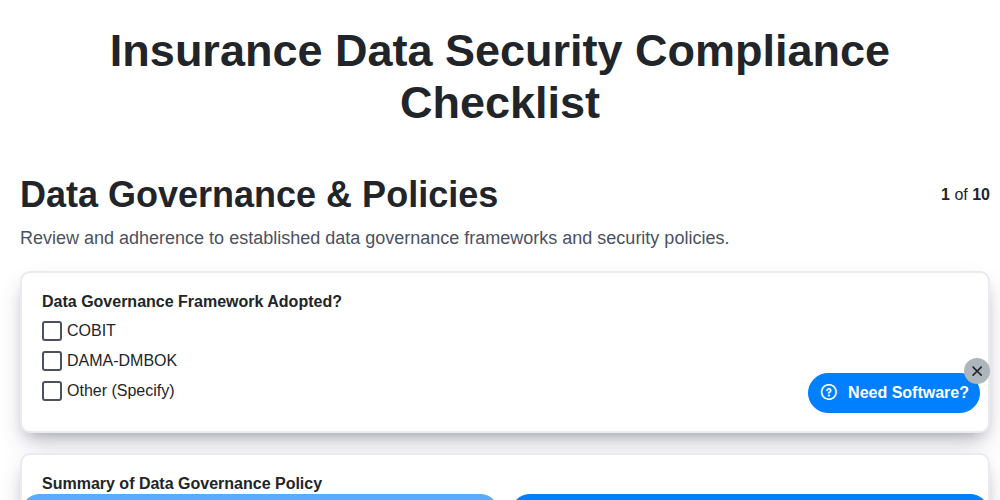
Table of Contents
- Introduction: The Growing Importance of Insurance Data Security
- Why a Data Security Compliance Checklist is Essential
- 1. Data Governance & Policies: Establishing the Foundation
- 2. Access Controls & Authentication: Who Can See What?
- 3. Data Encryption & Storage: Protecting Data at Rest and in Transit
- 4. Data Loss Prevention (DLP): Preventing Unauthorized Data Exfiltration
- 5. Incident Response & Recovery: Preparing for the Inevitable
- 6. Third-Party Risk Management: Securing Your Extended Ecosystem
- 7. Compliance & Regulatory Requirements: Meeting Legal Obligations (HIPAA, GDPR, CCPA, etc.)
- 8. Employee Training & Awareness: The Human Firewall
- 9. Vulnerability Management & Patching: Staying Ahead of Threats
- 10. Data Minimization & Retention: Less is More
- 11. Regular Audits & Assessments: Verifying Compliance
- Conclusion: Continuous Improvement for Insurance Data Security
- Resources & Links
TLDR: Worried about insurance data security compliance? This checklist template is your roadmap! It covers everything from data governance to employee training and incident response, ensuring you're protecting sensitive information and meeting regulatory requirements. Download it, customize it, and stay ahead of risks.
Introduction: The Growing Importance of Insurance Data Security
The insurance industry holds a vast trove of sensitive data - personal information, financial records, medical histories - making it a prime target for cyberattacks. The increasing sophistication of these attacks, coupled with evolving regulatory landscapes, means that data security compliance isn's just a 'nice-to-have' anymore; it's a business imperative. A single breach can result in significant financial losses, reputational damage, legal repercussions, and erosion of customer trust. Furthermore, the interconnected nature of modern insurance operations, involving numerous systems and third-party vendors, expands the attack surface and introduces new vulnerabilities. This blog post will guide you through a comprehensive checklist designed to bolster your insurance data security posture and navigate the complexities of compliance. Staying ahead of potential threats is crucial for the long-term viability and success of any insurance organization.
Why a Data Security Compliance Checklist is Essential
The insurance industry handles incredibly sensitive data - policyholder information, medical records, financial details - making it a prime target for cyberattacks and data breaches. Navigating the complex web of regulations like HIPAA, GDPR, CCPA, and state-specific privacy laws can feel overwhelming. A data security compliance checklist isn't just a "nice to have"; it's a critical safeguard for your organization.
Without a structured, documented approach, you risk inconsistent security practices, missed regulatory requirements, and ultimately, costly fines, reputational damage, and loss of customer trust. A checklist provides a clear roadmap, ensuring all essential areas are addressed and regularly reviewed. It shifts security from a reactive firefighting approach to a proactive, preventative strategy, demonstrating a commitment to data protection and building confidence with customers and stakeholders. It also provides valuable documentation for audits and assessments, streamlining the process and minimizing disruption. Essentially, a checklist transforms data security compliance from a daunting obligation into a manageable, actionable process.
1. Data Governance & Policies: Establishing the Foundation
A robust insurance data security compliance program begins with a clear and comprehensive data governance framework. This isn't just about having policies; it's about establishing who is responsible for what regarding data. Here's what your foundation should include:
- Define Data Ownership: Identify data owners and stewards who are accountable for data quality, accuracy, and security. Clearly outline their responsibilities.
- Data Classification: Categorize data based on sensitivity levels (e.g., public, confidential, restricted). This informs the level of security controls needed.
- Data Policies: Develop and document clear data policies covering data access, usage, sharing, and disposal. These policies should be easily accessible and understood by all employees.
- Regular Review & Updates: Data governance isn't a one-and-done activity. Policies need to be reviewed and updated regularly to reflect changes in regulations, business practices, and threats.
- Policy Enforcement: Establish mechanisms to enforce policies, including consequences for non-compliance. Consistent enforcement is key to building a culture of data security.
- Data Inventory: Maintain a data inventory that catalogs all data assets, their locations, and their classifications. This provides visibility and control.
2. Access Controls & Authentication: Who Can See What?
In the insurance industry, sensitive data - from policyholder information to claims history - is a prime target for cyberattacks. Robust access controls and authentication are your first line of defense. Simply put, access controls dictate who can access what data and how. Authentication verifies that the person accessing the data is actually who they claim to be.
Here's what you need to focus on:
- Principle of Least Privilege: Grant users only the minimum level of access necessary to perform their job functions. A claims adjuster shouldn't have access to HR data, for example.
- Role-Based Access Control (RBAC): Group users into roles (e.g., claims processor, underwriter, administrator) and assign permissions based on those roles. This simplifies management and reduces errors.
- Multi-Factor Authentication (MFA): Don't rely solely on passwords. Implement MFA - requiring users to provide multiple forms of identification (e.g., password + fingerprint, password + one-time code) - significantly strengthens authentication.
- Regular Access Reviews: Periodically review user access rights to ensure they are still appropriate and necessary. This helps identify and remediate potential risks from former employees or role changes.
- Strong Password Policies: Enforce complex password requirements and mandate regular password changes. Consider using a password manager for employees.
- Privileged Access Management (PAM): Implement strict controls over accounts with elevated privileges (e.g., system administrators) to prevent misuse.
- Logging and Monitoring: Track user access attempts, both successful and failed, to detect suspicious activity.
3. Data Encryption & Storage: Protecting Data at Rest and in Transit
In the insurance industry, sensitive data is the lifeblood of your business - and a prime target for cybercriminals. Robust data encryption and secure storage practices are absolutely critical for compliance and risk mitigation. This isn't just about scrambling data; it's about implementing a layered approach to protect data at every stage of its lifecycle.
Encryption at Rest: This protects data when it's stored - whether it's on servers, laptops, or in the cloud. Implement strong encryption algorithms (AES-256 is a common standard) for all databases, file servers, and storage media. Regularly review and update these encryption keys. Consider full-disk encryption on all portable devices like laptops and tablets.
Encryption in Transit: Data flowing between systems, whether internal or external (like communication with brokers or policyholders), needs to be protected using protocols like TLS/SSL. Ensure all connections are secured with the latest versions of these protocols. Don't rely on older, vulnerable versions.
Key Management: Encryption is only as strong as your key management practices. Securely store and manage encryption keys, implementing strong access controls and auditing key usage. Consider hardware security modules (HSMs) for enhanced key protection.
Cloud Storage Considerations: If you utilize cloud storage, understand the provider's encryption practices and ensure you have control over your data's encryption keys. Look for providers offering bring your own key (BYOK) options.
Regular Audits: Conduct periodic audits to verify the effectiveness of your encryption and storage methods. Ensure compliance with relevant industry standards and regulations.
4. Data Loss Prevention (DLP): Preventing Unauthorized Data Exfiltration
Data loss prevention isn't just about recovering from a breach; it's about stopping it from happening in the first place. In the insurance industry, where sensitive personal and financial data is paramount, DLP is crucial. It's more than just antivirus; it's a layered approach to identifying, monitoring, and protecting data in transit, at rest, and in use.
What does a robust DLP strategy for insurance involve?
- Data Discovery & Classification: The first step is knowing what data you need to protect. This involves identifying sensitive data types (PII, PHI, financial records, policy details) and classifying them based on their sensitivity. Automated discovery tools are invaluable here.
- Endpoint DLP: Controls what users can do with data on their devices (laptops, desktops, mobile devices). This includes restrictions on copying, printing, emailing, and saving data to unauthorized locations.
- Network DLP: Monitors network traffic for sensitive data being transmitted outside the organization. This includes email, web uploads, and file transfers.
- Cloud DLP: Extends protection to cloud environments, where data might reside in SaaS applications or cloud storage.
- Content Inspection: DLP solutions analyze data content, not just file names, to accurately identify sensitive information regardless of how it's disguised.
- Policy Enforcement: Clearly defined DLP policies must be enforced consistently across the organization. This isn't just a technical implementation; it requires clear communication and training.
Why is DLP particularly important for insurance?
Insurance companies are attractive targets for cybercriminals due to the wealth of data they hold. A single breach can lead to significant financial losses, reputational damage, and regulatory penalties. Effective DLP measures reduce the risk of data exfiltration, minimizing the potential impact of a security incident.
5. Incident Response & Recovery: Preparing for the Inevitable
Data breaches happen. It's a harsh reality, and pretending they won't impact your insurance organization is a dangerous gamble. A robust Incident Response & Recovery plan isn't about if you'll have an incident, but how you'll handle it to minimize damage, maintain customer trust, and meet regulatory obligations.
Your plan should be more than just a document - it's a living process. Here's what to include:
- Defined Roles & Responsibilities: Clearly outline who does what during an incident. This includes a designated Incident Response Team with contact information and escalation paths.
- Communication Plan: Establish internal and external communication protocols. Who's authorized to speak on behalf of the organization? How will you notify affected customers, regulators, and law enforcement?
- Containment Strategies: Detail steps to isolate affected systems and prevent further data leakage. This could involve network segmentation, system shutdowns, or account lockouts.
- Eradication & Recovery: Procedures for removing malware, restoring data from backups, and rebuilding compromised systems. Regularly test your backup and recovery processes.
- Post-Incident Analysis: Conduct a thorough review of the incident to identify root causes, lessons learned, and areas for improvement in your security posture. Document findings and update your plan accordingly.
- Regular Testing & Simulations: Conduct tabletop exercises and simulated attacks to test the effectiveness of your plan and identify weaknesses.
Ignoring incident response and recovery is like driving without insurance - you're risking everything. Make it a priority.
6. Third-Party Risk Management: Securing Your Extended Ecosystem
In today's interconnected business landscape, insurance data rarely stays within your organization's walls. You rely on third-party vendors - cloud providers, data processors, claims adjusters, and more - to handle sensitive information. These relationships introduce significant risk, making robust third-party risk management crucial for compliance and data security.
Here's what you need to do:
- Inventory & Classification: Begin by identifying all vendors who access, store, or process your insurance data. Categorize them based on risk level, considering the data's sensitivity and the vendor's access privileges.
- Due Diligence & Assessment: Conduct thorough due diligence before onboarding a new vendor. This includes reviewing their security posture, certifications (like SOC 2), data handling practices, and incident response capabilities. Utilize questionnaires and on-site assessments where appropriate.
- Contractual Agreements: Include stringent data security clauses in contracts. These should outline specific security requirements, data breach notification procedures, audit rights, and liability limitations. Don't just accept standard terms - tailor them to your needs.
- Ongoing Monitoring: Risk isn't a one-time assessment. Continuously monitor vendor performance against agreed-upon security standards. Implement automated tools where possible to track changes and detect potential vulnerabilities.
- Regular Audits: Schedule periodic audits of your vendors to verify compliance with contractual obligations and evolving security requirements.
- Business Continuity Planning: Ensure your vendors have robust business continuity and disaster recovery plans in place, and that these plans align with your organization's.
Failing to manage third-party risk effectively can expose your insurance data to breaches and non-compliance penalties. A proactive and ongoing approach is key to mitigating these risks.
7. Compliance & Regulatory Requirements: Meeting Legal Obligations (HIPAA, GDPR, CCPA, etc.)
The insurance industry operates under a complex web of regulations designed to protect sensitive customer data. Failing to adhere to these requirements isn't just a legal risk; it can severely damage your reputation and erode customer trust. Let's break down some key compliance areas insurers need to prioritize.
HIPAA (Health Insurance Portability and Accountability Act): If your insurance company deals with health information, HIPAA is non-negotiable. It dictates strict rules regarding the use and disclosure of Protected Health Information (PHI). This includes implementing administrative, physical, and technical safeguards to ensure data confidentiality, integrity, and availability. Regular risk assessments and business associate agreements (BAAs) are crucial.
GDPR (General Data Protection Regulation): For insurers operating in or serving customers in the European Union, GDPR applies. It emphasizes data subject rights - including the right to access, rectification, erasure, and data portability. Consent requirements are stringent, and data processing activities must have a clear, legitimate basis.
CCPA/CPRA (California Consumer Privacy Act/California Privacy Rights Act): California residents have significant data privacy rights under CCPA/CPRA. Insurers must provide clear disclosures about data collection practices, allow consumers to opt-out of the sale of their personal information, and provide the ability to access and delete their data. These rights are continually evolving and require ongoing monitoring.
State-Specific Laws: Beyond federal and EU regulations, numerous state laws govern data security and privacy. These can include breach notification laws, data minimization requirements, and restrictions on the use of certain data types. A thorough understanding of the laws applicable to your operational footprint is essential.
PCI DSS (Payment Card Industry Data Security Standard): If you process credit card information, PCI DSS compliance is mandatory. This standard outlines requirements for securing cardholder data, covering areas like network security, data encryption, and vulnerability management.
Staying Ahead of the Curve: Regulations are constantly evolving. Staying compliant isn't a one-time project; it requires ongoing monitoring of regulatory updates, regular audits, and a commitment to continuous improvement. Consider engaging with compliance experts to ensure you remain up-to-date and avoid costly penalties.
8. Employee Training & Awareness: The Human Firewall
Your data security policies and technological safeguards are only as strong as the people who use them. Human error is consistently a leading cause of data breaches, highlighting the critical importance of a robust employee training and awareness program.
This isn't just about annual compliance training - it's about fostering a culture of security consciousness across your entire organization. Your employees are your first line of defense, acting as a "human firewall" against threats.
What should this training encompass?
- Phishing Simulations: Regularly test employees' ability to identify and avoid phishing attacks. Real-world simulations are far more effective than simply reading about them.
- Password Security: Reinforce the importance of strong, unique passwords and multi-factor authentication.
- Data Handling Best Practices: Teach employees how to properly handle sensitive data - identifying it, classifying it, and storing it securely. Cover topics like email security, removable media usage, and safe internet browsing.
- Social Engineering Awareness: Educate them about social engineering tactics and how to recognize and resist them.
- Reporting Procedures: Clearly define how and to whom employees should report suspected security incidents or breaches.
- Mobile Device Security: Address the risks associated with using personal devices for work (BYOD) and provide guidance on secure mobile practices.
- Regular Updates: Security threats evolve constantly. Refresh training frequently to keep employees informed about new risks and emerging trends.
Beyond the Basics:
- Tailored Training: Customize training to specific roles and departments. What a claims adjuster needs to know is different from what an IT administrator requires.
- Engaging Content: Use interactive methods, gamification, and real-world examples to keep employees engaged and improve knowledge retention.
- Continuous Reinforcement: Incorporate security reminders into regular communications, such as newsletters or team meetings.
Investing in employee training and awareness isn't just a compliance requirement - it's a vital investment in your organization's data security posture. A well-trained workforce is your most valuable asset in protecting sensitive information.
9. Vulnerability Management & Patching: Staying Ahead of Threats
In the ever-evolving landscape of cyber threats, proactive vulnerability management and timely patching are not just best practices-they're essential for insurance data security compliance. Waiting for a vulnerability to be exploited is a gamble you can't afford.
What's involved?
- Regular Scanning: Implement automated vulnerability scanning tools to identify weaknesses in your systems, applications, and network infrastructure. Don't just scan once a year - aim for quarterly, or even monthly, depending on the criticality of your systems.
- Prioritization: Vulnerability scans generate a lot of data. Prioritize remediation based on severity, potential impact, and exploitability. CVSS scores are a good starting point, but consider your specific threat model.
- Patch Management: Establish a robust patch management process. Test patches in a non-production environment before deploying them to production to avoid unexpected disruptions. Have rollback procedures in place.
- Configuration Management: Vulnerabilities often arise from misconfigured systems. Use configuration management tools to enforce security baselines and prevent deviations.
- Staying Informed: Subscribe to security advisories from vendors and industry organizations to stay informed about new vulnerabilities and available patches.
- Penetration Testing: Supplement automated scanning with periodic penetration testing performed by qualified professionals to identify vulnerabilities that automated tools might miss.
- Documentation: Maintain detailed records of vulnerability scans, patching efforts, and any identified weaknesses. This documentation is crucial for audits and demonstrating due diligence.
Neglecting vulnerability management and patching can leave your insurance data exposed to attackers, leading to costly breaches, regulatory fines, and reputational damage. A proactive, ongoing approach is your strongest defense.
10. Data Minimization & Retention: Less is More
In today's data-driven world, it's tempting to collect and hoard as much information as possible. However, from a security and compliance standpoint, that approach is a recipe for disaster. The principle of data minimization dictates that you should only collect and retain the necessary data for a specific, legitimate purpose. The less data you hold, the smaller your attack surface and the lower your compliance burden.
Why is it important?
- Reduced Risk: Less data means fewer potential vulnerabilities for cybercriminals to exploit. A breach impacting a smaller dataset is significantly less damaging.
- Simplified Compliance: Regulations like GDPR, CCPA, and HIPAA all emphasize data minimization. Reducing the amount of data you process makes demonstrating compliance far easier.
- Cost Savings: Storing, securing, and managing data costs money. Reducing data volume directly translates to cost savings.
- Enhanced Privacy: Minimizing data collection respects the privacy of your customers and stakeholders.
Practical Steps:
- Data Inventory: Conduct a thorough inventory of all data you collect and its purpose. Identify data that isn't actively used or necessary.
- Define Retention Periods: Establish clear retention schedules based on legal, regulatory, and business needs. Automatically delete data when the retention period expires.
- Pseudonymization & Anonymization: Where possible, replace identifiable data with pseudonyms or anonymize it to reduce risk.
- Regular Review: Periodically review your data collection and retention practices to ensure they remain aligned with evolving regulations and business needs.
- Challenge Data Requests: Question why data is being requested and whether a less intrusive alternative exists.
11. Regular Audits & Assessments: Verifying Compliance
Regular audits and assessments are the cornerstone of a robust insurance data security compliance program. Simply implementing the controls outlined in this checklist isn't enough; you need to prove they are working effectively and consistently. These reviews provide an independent verification of your security posture, identifying gaps, weaknesses, and areas for improvement.
What should these audits cover?
- Policy Adherence: Are employees following established data security policies?
- Control Effectiveness: Are access controls, encryption, and DLP measures functioning as intended?
- Configuration Management: Are systems and applications properly configured and secured?
- Compliance Mapping: Do your controls align with relevant regulatory requirements (HIPAA, PCI DSS, state-specific laws, etc.)?
- Documentation Review: Are policies, procedures, and system configurations properly documented and up-to-date?
Types of Audits:
- Internal Audits: Conducted by your internal audit team or a designated security team. Offer a frequent and detailed view of your controls.
- External Audits: Performed by independent third-party auditors. Provide an unbiased assessment and often required for regulatory compliance.
- Vulnerability Assessments & Penetration Testing: Although mentioned previously, these are key components of a broader audit process.
Frequency & Scope: The frequency and scope of audits should be based on your organization's risk profile, regulatory requirements, and the criticality of the data you handle. High-risk areas should be audited more frequently. Document all audit findings and remediation plans, and track progress until issues are resolved. Remember, continuous improvement is key to maintaining a strong data security compliance posture.
Conclusion: Continuous Improvement for Insurance Data Security
Achieving and maintaining insurance data security compliance isn't a one-and-done project; it's an ongoing journey. The checklist outlined provides a robust starting point, but the threat landscape is constantly evolving. New regulations emerge, cyberattacks become more sophisticated, and internal processes change. Therefore, regularly reviewing and updating your checklist, performing periodic audits, and fostering a culture of security awareness within your organization are paramount. Embrace a mindset of continuous improvement, proactively identify vulnerabilities, and adapt your defenses accordingly. Your clients' trust, and your company's reputation, depend on it.
Resources & Links
- National Association of Insurance Commissioners (NAIC): The NAIC provides resources, model laws, and regulations related to insurance data security and cybersecurity. A crucial source for understanding industry standards.
- HITRacks: Provides tools and services for tracking HIPAA compliance. Useful for understanding HIPAA requirements and potential liabilities. Many other regulatory frameworks are covered too.
- GDPR Official Website: The official website for the General Data Protection Regulation (GDPR). Critical for organizations handling EU citizens' data.
- California Consumer Privacy Act (CCPA): Provides information and resources regarding the CCPA, a key privacy law for businesses operating in California.
- National Institute of Standards and Technology (NIST): NIST provides cybersecurity frameworks, guidelines, and standards (like the Cybersecurity Framework) that are applicable to insurance data security. Frameworks are crucial for organizing and prioritizing security efforts.
- CISA (Cybersecurity and Infrastructure Security Agency): CISA offers alerts, advisories, and resources to help organizations improve their cybersecurity posture, particularly in critical infrastructure sectors like insurance.
- International Organization for Standardization (ISO): Provides internationally recognized standards for information security management, such as ISO 27001, which can serve as a framework for insurance data security programs.
- SANS Institute: Offers cybersecurity training, certifications, and research. Helpful for employee training and understanding security threats.
- Federal Bureau of Investigation (FBI): Provides information on cybersecurity threats and incidents, including those targeting the insurance industry. Staying informed about current threats is essential.
- ENISA (European Union Agency for Cybersecurity): Provides cybersecurity expertise and resources for EU member states, including information relevant to insurance data security.
- The Institutes: Professional organization for risk management and insurance professionals. Offers courses, certifications, and resources related to risk management and cybersecurity.
- Center for Internet Security (CIS): Provides the CIS Controls, a prioritized set of cybersecurity best practices. Very practical set of best practice controls.
- UK Information Commissioner's Office (ICO): The ICO provides guidance and resources on data protection law in the UK, including specific advice for the insurance sector.
- HITRUST Alliance: Provides a comprehensive cybersecurity and compliance framework specifically designed for the healthcare industry, which can be adapted for insurance companies handling sensitive health information. Strong focus on risk based approach.
Frequently Asked Questions
What is insurance data security and why is it important?
Insurance data security refers to the measures taken to protect sensitive information held by insurance companies, including personal details, medical records, financial information, and claims data. It's crucial for maintaining customer trust, complying with regulations (like HIPAA, GDPR, CCPA), and preventing financial and reputational damage from data breaches.
What regulations govern insurance data security?
Several regulations impact insurance data security. Key examples include HIPAA (for health information), GDPR (for EU residents' data), CCPA (California Consumer Privacy Act), state-specific data breach notification laws, and PCI DSS (if handling credit card information). This list isn't exhaustive - regulations vary by location and type of data.
What is a compliance checklist template, and how can it help me?
A compliance checklist template is a structured document that outlines the specific steps and controls needed to meet insurance data security regulations. It provides a roadmap to identify gaps in your current security posture and ensures you're consistently meeting compliance requirements. Our template simplifies the process by providing pre-defined tasks and checkpoints.
Who should use this compliance checklist template?
This template is beneficial for anyone involved in insurance data security, including: insurance companies of all sizes, third-party vendors (TPAs, claims processors, software providers), compliance officers, IT security professionals, and risk managers.
What types of controls are typically included in an insurance data security compliance checklist?
Typical controls include: access controls (authentication, authorization), data encryption (at rest and in transit), vulnerability management (scanning and patching), incident response planning, data loss prevention (DLP), security awareness training, vendor risk management, and regular security audits.
How often should I update my insurance data security compliance checklist?
You should review and update your checklist at least annually, or more frequently if there are changes in regulations, your business processes, or your risk profile. Staying abreast of evolving threats and regulatory updates is vital.
What is the difference between access control and authentication?
Authentication verifies *who* someone is (e.g., confirming a username and password), while access control determines *what* they are authorized to do once authenticated. Access control builds upon authentication to ensure appropriate permissions are granted.
How can I ensure my third-party vendors are also compliant with insurance data security regulations?
Implement a vendor risk management program. This includes conducting due diligence assessments, establishing contractual agreements with specific security requirements, regularly monitoring their security posture, and ensuring they understand your data security expectations.
What is data loss prevention (DLP) and why is it important?
DLP tools and processes are designed to prevent sensitive data from leaving your control, whether intentionally or unintentionally. They monitor data movement, identify potential data leaks, and enforce policies to protect confidential information.
Where can I find more information about specific insurance data security regulations?
Resources include: the U.S. Department of Health and Human Services (HHS) for HIPAA, the European Union's website for GDPR, the California Attorney General's office for CCPA, and your state's insurance regulator website. Consult with legal and compliance professionals for expert advice.
Comments
There are no comments yet. Be the first to add one!
Insurance Management Solution Demo
Managing policies, claims, and compliance in the insurance industry is complex. ChecklistGuro's Work OS platform streamlines your operations, from underwriting and renewals to claims processing and reporting. Improve efficiency, reduce errors, and enhance customer satisfaction. Discover how ChecklistGuro can transform your insurance business!
Related Articles
Streamline Claims: Your Insurance Claims Support Process Checklist Template
Your Insurance Policy Review Checklist: A Step-by-Step Guide
Your Property Insurance Review Checklist: A Step-by-Step Guide
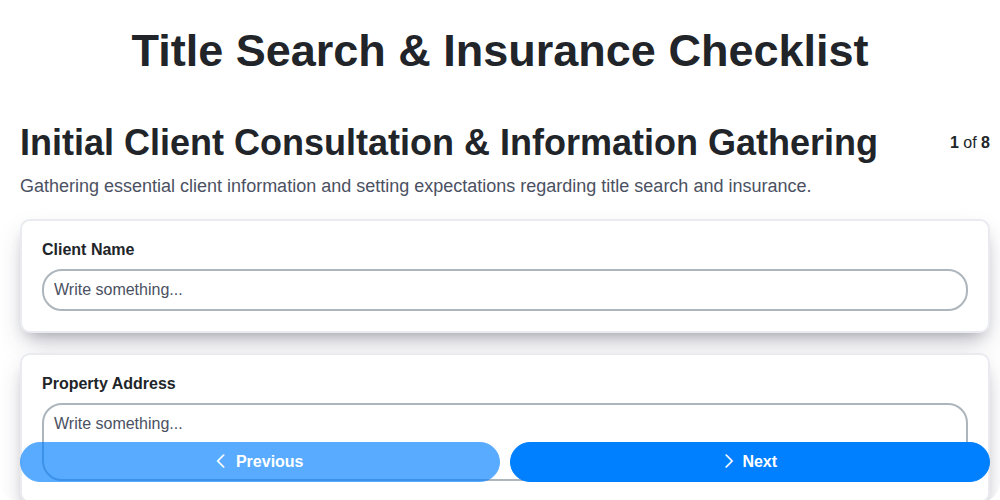
Your Title Search & Insurance Checklist Template
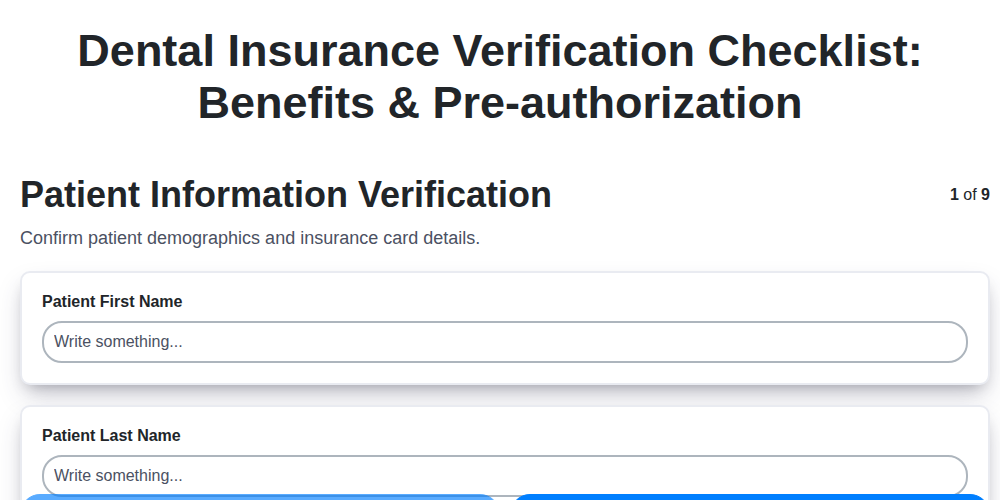
Simplify Insurance Verification: Your Free Dental Checklist Template
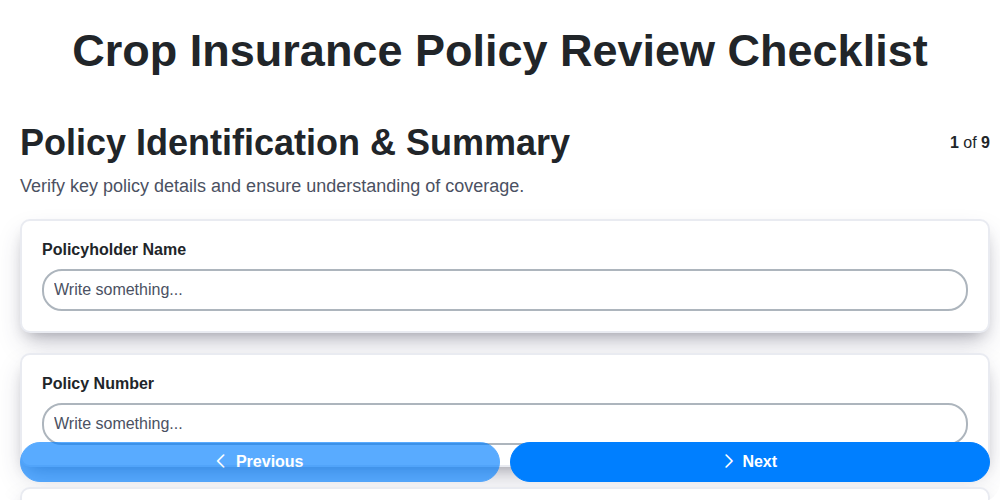
Crop Insurance Policy Review Checklist: A Farmer's Guide

The Ultimate Vehicle Registration & Insurance Validation Checklist
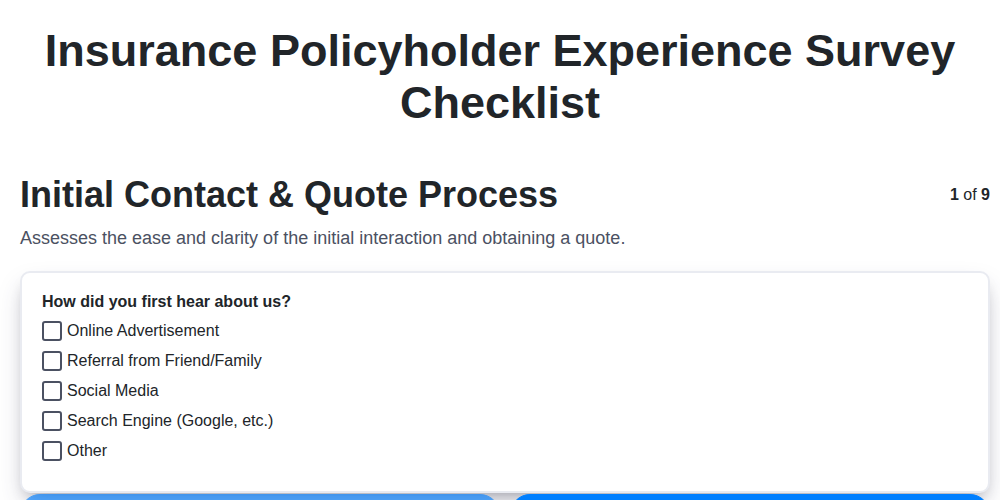
Mastering the Policyholder Journey: Your Insurance Experience Survey Checklist
Need help with
Insurance?
Have a question? We're here to help. Please submit your inquiry, and we'll respond promptly.