Insurance Fraud Prevention Checklist: Your Step-by-Step Guide
Published: 12/01/2025 Updated: 07/02/2026
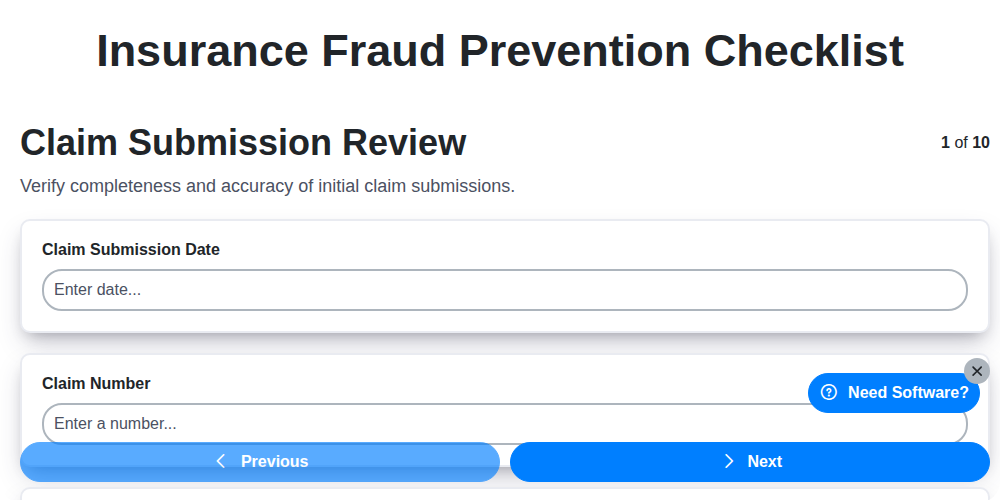
Table of Contents
- Introduction: The Rising Threat of Insurance Fraud
- Why a Fraud Prevention Checklist is Essential
- The Insurance Fraud Prevention Checklist: A Detailed Breakdown
- 1. Claim Submission Review: Spotting the Red Flags
- 2. Applicant/Insured Background Checks: Digging Deeper
- 3. Loss History Verification: Uncovering Past Incidents
- 4. Witness Statement Analysis: Evaluating Credibility
- 5. Damage Assessment Verification: Ensuring Accuracy
- 6. Medical Records Scrutiny: Identifying Inconsistencies
- 7. Vehicle/Property Inspection: Physical Evidence Check
- 8. Policy Coverage Review: Confirming Eligibility
- 9. Data Analytics Monitoring: Leveraging Technology
- 10. Reporting & Escalation: A Clear Process
- Best Practices for Continuous Fraud Prevention
- Resources & Links
TLDR: Think your insurance claims are clean? This checklist walks you through critical steps - from verifying applicant backgrounds and reviewing damage assessments to analyzing medical records and spotting suspicious patterns - to help you proactively identify and prevent costly insurance fraud. It's your easy-to-use guide to staying vigilant and protecting your business.
Introduction: The Rising Threat of Insurance Fraud
Insurance fraud is a pervasive and increasingly sophisticated problem impacting insurers, policyholders, and the economy as a whole. It's no longer the isolated case of a staged accident; fraudsters are employing complex schemes leveraging technology, organized crime, and increasingly, exploiting vulnerabilities in processes. The cost of these fraudulent activities is staggering, driving up premiums for everyone and diverting resources that could be used for legitimate claims and community support. This isn't just about a few bad actors; it's a systemic risk that demands proactive measures and a vigilant approach. Understanding the threat and implementing preventative measures is crucial for maintaining the integrity of the insurance industry and protecting honest policyholders. This article will outline a comprehensive checklist - a practical guide - to help insurers identify and mitigate the risk of insurance fraud.
Why a Fraud Prevention Checklist is Essential
Insurance fraud is a costly problem, impacting premiums for everyone. It's not just about a few bad actors; it's a systemic issue that drains billions of dollars annually. While robust security measures and sophisticated technology are crucial, a structured, repeatable process - a fraud prevention checklist - provides a vital layer of defense.
Think of it as a safety net. Even with advanced AI and data analysis, human error can occur. A checklist ensures that essential steps aren't overlooked, creating a more consistent and thorough review process. It promotes a culture of diligence among claims adjusters and investigators, reduces the risk of accidental payouts due to oversight, and provides a documented audit trail demonstrating due diligence. Ultimately, a checklist helps minimize financial losses, protects the integrity of the insurance process, and keeps premiums manageable for all policyholders.
The Insurance Fraud Prevention Checklist: A Detailed Breakdown
Preventing insurance fraud is a complex undertaking, demanding a multifaceted approach. Simply relying on gut feeling isn't enough; a robust, systematic checklist is crucial for identifying and mitigating fraudulent claims. Here's a detailed breakdown of the essential steps we incorporate into our fraud prevention protocols:
1. Claim Submission Review: This initial step involves a thorough examination of the claim form itself. We scrutinize inconsistencies, vague descriptions, unusual claim frequencies, and any discrepancies between the declared facts and readily available information. Red flags are immediately flagged for further investigation.
2. Applicant/Insured Background Checks: We conduct comprehensive background checks on applicants and insured individuals. This includes verifying identity, assessing prior insurance history (including cancelled policies and denied claims), and searching for any criminal records or financial difficulties that might suggest a motive for fraud.
3. Loss History Verification: A detailed check of the insured's loss history is paramount. This goes beyond simple database searches. We investigate past claims, looking for patterns of suspicious incidents, similar claims across different policies, and any red flags raised by previous investigations.
4. Witness Statement Analysis: Witness accounts are carefully analyzed for consistency and plausibility. We look for inconsistencies between statements, subtle pressure to corroborate a particular narrative, and potential signs of coached testimony. Statements are cross-referenced with other evidence and independently verified where possible.
5. Damage Assessment Verification: We don't just accept the initial damage assessment at face value. Our experts independently verify the extent of the damage, using industry standards and, when appropriate, engaging with independent adjusters or forensic experts. This includes verifying repair estimates, checking for pre-existing conditions, and ensuring the damage aligns with the reported incident.
6. Medical Records Scrutiny: In injury claims, medical records are rigorously reviewed. We analyze treatment plans, diagnoses, medication lists, and billing records for any inconsistencies or signs of exaggeration or fabrication. Consultations with medical professionals often provide vital insight.
7. Vehicle/Property Inspection: A physical inspection of the vehicle or property involved is essential. This allows us to directly assess the damage, identify any discrepancies between the reported incident and the physical evidence, and potentially uncover evidence that supports or refutes the claim.
8. Policy Coverage Review: We meticulously review the policy coverage to ensure the claimed loss falls within the terms and conditions. This includes verifying the type of coverage, applicable limits, and any exclusions that might apply.
9. Data Analytics Monitoring: Our proactive approach incorporates data analytics to identify emerging fraud trends and unusual claim patterns. We utilize algorithms to flag suspicious claims based on factors like geographic location, claim type, and claimant profile.
10. Reporting & Escalation: Any suspicions of fraud are promptly reported and escalated to a dedicated fraud investigation team. Clear protocols are in place to ensure proper documentation, chain of custody, and adherence to all relevant legal and regulatory requirements. This ensures a consistent and thorough investigative process.
1. Claim Submission Review: Spotting the Red Flags
The first line of defense against insurance fraud lies in meticulously reviewing claim submissions. Don't just accept information at face value - actively scrutinize it for inconsistencies and potential red flags. Here's what to look for:
- Inconsistencies within the Claim: Do the dates, times, locations, and descriptions align? A mismatch in even a minor detail can be a warning sign. Look for discrepancies between the claim form, police reports (if applicable), and any accompanying documentation.
- Unusual or Vague Language: Be wary of claims using overly dramatic or vague language, especially if it lacks specific details. Fraudulent claims often rely on emotional appeals to obscure the lack of concrete facts.
- Missing or Incomplete Information: A claim with noticeably missing information or unanswered questions should raise suspicion. Legitimate claimants usually provide all necessary details.
- Rapid Claim Filing: While promptness is good, an unusually rapid claim filing after an incident, particularly without a clear explanation, warrants further investigation.
- Unusual Claim Amounts: Claims significantly higher than expected for the described incident require careful evaluation. Research typical repair costs or medical expenses for similar situations.
- Multiple Claims for the Same Incident: Examine whether multiple claims have been filed for the same incident, potentially by different parties or claiming different aspects of the loss.
2. Applicant/Insured Background Checks: Digging Deeper
A thorough background check isn't just a formality; it's a critical first line of defense against insurance fraud. While a simple application form provides basic information, a deeper dive can reveal red flags that might otherwise be missed. This process should extend beyond a standard credit check and include several key areas.
What to Look For:
- Criminal History: A history of fraud, theft, or other relevant crimes is a significant indicator of potential risk.
- Prior Insurance Claims: Investigate past insurance claims, both successful and denied. A pattern of frequent claims, particularly those involving similar circumstances, warrants closer scrutiny.
- Litigation History: Past lawsuits, especially those related to fraud or property disputes, should be examined.
- Business Affiliations (for Commercial Policies): Understand the applicant's business history and any related entities. Look for connections to individuals or businesses previously involved in fraudulent activities.
- Social Media Presence: While not always conclusive, a review of publicly available social media can sometimes provide insights into lifestyle, affiliations, and potential inconsistencies with the information provided in the application.
Important Considerations:
- Compliance: Always adhere to the Fair Credit Reporting Act (FCRA) and other relevant regulations when conducting background checks. Obtain proper consent and provide clear disclosures.
- Consistency: Verify information provided on the application against the findings of the background check. Discrepancies need to be investigated further.
- Red Flags: Don't just look for convictions. Look for patterns and anomalies that could suggest a heightened risk of fraud.
3. Loss History Verification: Uncovering Past Incidents
A clean claim starts with a clean history. Loss history verification is a critical step in fraud prevention, digging into an applicant's or insured's past to reveal previously undisclosed incidents. This isn't just about checking for prior claims; it's about identifying patterns and potential red flags that might indicate a predisposition to fraudulent activity.
We go beyond a simple claims database search. Our process involves cross-referencing information from multiple sources, including:
- Comprehensive Claims Databases: Utilizing industry-standard databases to identify past insurance claims, regardless of the insurer.
- Public Records: Examining court records, police reports, and other public documents for accidents, lawsuits, or incidents that may not have been reported to insurance companies.
- Motor Vehicle Records (MVRs): Assessing driving history for violations, accidents, and license suspensions.
- Property Records: Investigating past property ownership and any related claims or incidents.
Discrepancies or a history of frequent claims, particularly for similar incidents, can signal potential fraud. While a past claim doesn't automatically equate to fraudulent intent, it warrants further investigation and careful consideration within the overall risk assessment. We document all findings and escalate suspicious patterns for deeper analysis.
4. Witness Statement Analysis: Evaluating Credibility
Witness statements are a crucial piece of the puzzle in many insurance claims, but their reliability can be easily compromised. A seemingly straightforward account can hide inconsistencies or deliberate deception. Thorough witness statement analysis is paramount in fraud prevention. This involves more than just reading the statement; it requires careful scrutiny and verification.
Here's what to look for:
- Internal Consistency: Does the witness's account make sense within itself? Are there contradictions or vague explanations?
- Consistency with Other Evidence: Does the witness's statement align with the findings of damage assessments, police reports, and other available documentation? Discrepancies should be flagged for further investigation.
- Relationship to Involved Parties: Evaluate the witness's relationship to the claimant or other involved parties. Are they biased? Do they have a motive to misrepresent the events?
- Language & Detail: Look for patterns. Does the language seem rehearsed or overly formal? Are details missing or excessively detailed, potentially indicating fabrication?
- Verbal vs. Written: Whenever possible, consider verifying the statement with a verbal interview. Body language and demeanor can offer additional clues to credibility.
- Look for Red Flags: Be alert for signs of coached testimony, such as identical phrasing or reluctance to answer questions directly.
Remember, a skeptical but objective approach is key. Don't dismiss a statement outright, but don't accept it at face value either. Thorough analysis, coupled with cross-referencing with other evidence, can help uncover fraudulent claims.
5. Damage Assessment Verification: Ensuring Accuracy
Damage assessment verification is a critical step in fraud prevention. Often, initial damage estimates provided by claimants or contractors are accepted at face value. However, these assessments can be inflated or even fabricated to maximize payouts. To combat this, a thorough verification process is essential.
This involves more than just comparing the initial assessment to the policy limits. It requires independent assessment by a qualified adjuster or expert, often including:
- Independent Estimates: Obtaining multiple, independent estimates from reputable contractors or repair shops. Discrepancies between these estimates and the original assessment should immediately raise red flags.
- Photographic and Video Documentation: Requiring detailed photographic and video documentation of the damage before any repairs are made. This provides an objective record for comparison.
- On-Site Inspections: Conducting on-site inspections by experienced adjusters to visually assess the damage and compare it to the provided documentation.
- Review of Repair Bills: Scrutinizing repair bills for accuracy, including parts used, labor hours, and overall cost. Unusually high labor rates or excessive use of expensive materials warrant further investigation.
- Geographic and Environmental Factors: Considering if reported damage aligns with known weather patterns or other events in the area at the time of the incident.
By actively verifying damage assessments, insurers can identify potential fraud, prevent unnecessary payouts, and maintain the integrity of their claims process.
6. Medical Records Scrutiny: Identifying Inconsistencies
Medical records scrutiny is a critical step in fraud prevention, particularly in injury claims. It's not about accusing anyone, but about ensuring the submitted documentation aligns with the reported incident and supports the legitimacy of the claim. Here's what to look for:
- Timeline Discrepancies: Do the dates of treatment, diagnosis, and medication prescribed align with the reported accident or incident? Gaps or inconsistencies can be red flags.
- Service Duplication: Are the same services being billed multiple times, potentially inflating the claim amount?
- Unexplained Treatments: Does the treatment received seem excessive or unnecessary given the reported injuries?
- Record Alterations: Look for signs of tampering, such as erasures, insertions, or changes in handwriting. While subtle, these can indicate fraudulent activity.
- Conflicting Diagnoses: Do different medical providers offer contradictory diagnoses or treatment plans? This may warrant further investigation.
- Billing Code Anomalies: Are the billing codes used appropriate for the services rendered? Incorrect or inflated codes are common in fraud schemes.
A thorough review requires expertise and often collaboration with medical professionals. It's essential to maintain objectivity and ensure compliance with privacy regulations throughout the process.
7. Vehicle/Property Inspection: Physical Evidence Check
A thorough physical inspection of the damaged vehicle or property is absolutely critical in fraud prevention. Photos and initial reports can be deceptive. An on-site assessment allows for a more complete understanding of the loss and can uncover inconsistencies.
Here's what to look for during a vehicle/property inspection:
- Damage Consistency: Does the damage claimed align with the reported incident? Look for signs of pre-existing damage, repairs attempted prior to the claim, or damage inconsistent with the reported cause.
- Mechanical Failure Indicators: For vehicle claims, look for signs of mechanical failure that might suggest a staged accident or attempt to inflate the damage.
- Property Modifications: On properties, are there any recent or ongoing modifications or improvements that could influence the claim value?
- Environmental Factors: Consider environmental factors like weather or vandalism which might not be immediately obvious from initial reports.
- Unexplained Items: Note any unusual or unexpected items present at the scene, which might indicate an attempt to manipulate the situation.
- Documentation: Take extensive photographs and detailed notes of everything observed during the inspection. This documentation serves as crucial evidence.
A qualified and experienced inspector is essential for performing a thorough and accurate assessment.
8. Policy Coverage Review: Confirming Eligibility
Before even considering the details of a claim, it's crucial to revisit the policy itself. A thorough policy coverage review is a fundamental step in fraud prevention. This isn't just a cursory glance; it requires a detailed examination of the policy's terms, conditions, exclusions, and limitations.
Does the claimed loss genuinely fall under the scope of coverage? Are there specific exclusions that apply to the situation? Has the policy lapsed or been modified recently? Simple misunderstandings can sometimes be mistaken for fraudulent activity, so clarifying coverage expectations upfront can avoid unnecessary investigations and ensure fair treatment for legitimate claimants.
Pay particular attention to declarations page details, ensuring the named insured is the correct individual or entity and that the stated property or vehicle is accurately described. Discrepancies here can be red flags, suggesting a potential attempt to deceive the insurer. Don't hesitate to consult with legal counsel or your company's compliance team if you have any doubts about policy interpretation.
9. Data Analytics Monitoring: Leveraging Technology
In today's data-rich environment, relying solely on manual reviews is simply not enough to effectively combat insurance fraud. Data analytics monitoring has become an indispensable tool, allowing us to identify suspicious patterns and red flags that might otherwise be missed.
We utilize sophisticated algorithms and machine learning models to continuously analyze claim data, looking for anomalies across numerous variables. This includes identifying unusual claim frequencies, inflated loss amounts, connections between claimants, and inconsistencies in reported circumstances. Our system flags claims that deviate significantly from established norms, prompting further investigation.
Beyond individual claim analysis, we also employ predictive modeling to assess overall risk profiles. This helps us proactively target areas with higher fraud potential and adjust our prevention strategies accordingly. By embracing these technologies, we enhance our ability to detect and prevent fraudulent activity, protecting our policyholders and ensuring the integrity of the insurance system. This isn't about punishing honest policyholders; it's about utilizing data responsibly to minimize losses and keep premiums affordable for everyone.
10. Reporting & Escalation: A Clear Process
Even with robust preventative measures in place, suspicious activity can still arise. A clear and defined reporting and escalation process is your final line of defense against insurance fraud. This isn't just about identifying potential fraud; it's about acting swiftly and effectively.
Here's what your process should include:
- Defined Reporting Channels: Provide multiple, easily accessible channels for employees, investigators, and even policyholders to report suspicions - this could be a dedicated hotline, email address, or online form.
- Designated Fraud Team/Contact: Ensure there's a specific team or individual responsible for receiving and investigating fraud reports. This avoids confusion and ensures expertise.
- Severity Triage: Implement a system to categorize reports based on the level of suspected fraud. This allows for prioritization and efficient resource allocation. Minor discrepancies can be investigated with a lighter touch, while high-risk claims require immediate attention.
- Internal Communication Protocols: Establish clear guidelines on how to share information within the company while maintaining confidentiality.
- External Collaboration: Define when and how to involve external authorities (law enforcement, regulatory bodies) for further investigation or legal action.
- Documentation & Audit Trail: Meticulously document all reported incidents, investigation steps, and decisions made. This creates an audit trail for accountability and future reference.
- Feedback Loop: Regularly review the effectiveness of your reporting and escalation process, incorporating feedback from investigators and making necessary adjustments.
A robust reporting and escalation process demonstrates a commitment to combating insurance fraud and protecting the integrity of your organization.
Best Practices for Continuous Fraud Prevention
Insurance fraud is an evolving threat, and a reactive approach simply won't cut it. Establishing a robust framework of continuous fraud prevention practices is essential to safeguarding your organization and policyholders. This means moving beyond just investigating suspicious claims and embedding preventative measures into your everyday operations. Here's how to build that framework:
Data Analytics Monitoring - The Eyes of Your System: Implement real-time data analytics to identify unusual patterns and anomalies. This isn't just about running reports; it's about setting up automated alerts triggered by specific indicators. For example, a sudden surge in claims from a particular geographic area, unusually high claim amounts for specific types of loss, or a spike in claims involving specific repair shops should immediately raise a flag. Regularly review and refine these algorithms to ensure accuracy and adapt to emerging fraud schemes.
Policy Coverage Review - A Proactive Guardrail: Don't wait for a claim to question policy coverage. Periodically review policies, especially high-risk types, to ensure they've been accurately assessed and align with the intended risk. Look for inconsistencies or gaps that could be exploited. Cross-reference policy details with applicant information and loss history.
Reporting & Escalation - The Chain of Responsibility: Establish clear, documented processes for reporting and escalating suspected fraud. Empower employees at all levels to identify and report concerns without fear of reprisal. Ensure a streamlined escalation path to specialized fraud investigation teams. Regularly audit these processes to verify efficiency and adherence.
Continuous Improvement & Training: Fraudsters constantly adapt their methods. To stay ahead, foster a culture of continuous improvement. Regularly update your fraud prevention strategies based on industry trends, investigative findings, and internal audits. Provide ongoing, specialized training to employees across all departments - claims, underwriting, sales - to enhance their awareness and ability to identify potential fraud indicators. This should include updates on new fraud techniques and changes to fraud prevention procedures.
Resources & Links
- National Association of Insurance Commissioners (NAIC): The NAIC is a leading resource for insurance regulation and fraud prevention. Their website offers publications, model laws, and data related to insurance fraud, including statistics and best practices. A valuable source for understanding the scope of the issue and industry initiatives.
- FBI - Insurance Fraud: The FBI investigates significant insurance fraud cases. Their website provides information on types of fraud, recent cases, and tips for preventing insurance fraud. A good resource for understanding the legal and investigative side of insurance fraud.
- National Insurance Crime Bureau (NICB): The NICB is a non-profit organization dedicated to combating insurance crime, including fraud. They provide resources, data, and training to insurers and law enforcement. They also provide information on VIN verification and other identification-related issues which is helpful for vehicle fraud prevention.
- Insure.com: While primarily an insurance comparison website, Insure.com has articles and guides covering insurance fraud, offering insights into common schemes and red flags from a consumer and industry perspective. Helpful for understanding the types of fraud that impact policyholders.
- Insurance Information Institute (III): The III provides objective, nonpartisan information about insurance. Their website includes articles and reports on insurance fraud trends and prevention strategies, with a focus on the economic impact of fraud.
- Verisk: Verisk is a data analytics and risk assessment provider for the insurance industry. Their website provides insights on fraud detection technologies and methodologies. Their white papers and reports can be valuable for understanding data analytics in fraud prevention (especially relevant to point #9 in the checklist).
- LexisNexis Risk Solutions: LexisNexis provides risk assessment data and analytics, often used in insurance underwriting and claims investigations. They offer resources and case studies on identifying fraudulent activity through data analysis. Useful for understanding background checks and loss history verification (points #2 and #3).
- Financial Conduct Authority (FCA) (UK): While focused on the UK market, the FCA publishes guidance and insights on combating financial crime, including insurance fraud. Their framework and best practices can be adapted globally. Particularly relevant to ethical conduct and reporting (point #10).
- American Institute of Certified Public Accountants (AICPA): The AICPA provides resources and training on fraud prevention, particularly for accountants and auditors who may be involved in insurance processes. Their publications can provide a broader understanding of fraud risks within the financial ecosystem.
- DXC Technology: DXC Technology offers technology solutions, including data analytics and automation, to the insurance industry. Their insights and case studies can showcase how technology can be leveraged for fraud detection and prevention (directly supports point #9).
Frequently Asked Questions
Can I be held responsible if I unknowingly participate in insurance fraud?
Yes, even unintentional involvement in insurance fraud can have serious consequences. It's important to be diligent and ask questions if anything seems suspicious.
Comments
There are no comments yet. Be the first to add one!
Insurance Management Solution Demo
Managing policies, claims, and compliance in the insurance industry is complex. ChecklistGuro's Work OS platform streamlines your operations, from underwriting and renewals to claims processing and reporting. Improve efficiency, reduce errors, and enhance customer satisfaction. Discover how ChecklistGuro can transform your insurance business!
Related Articles
Streamline Claims: Your Insurance Claims Support Process Checklist Template
Your Insurance Policy Review Checklist: A Step-by-Step Guide
Your Property Insurance Review Checklist: A Step-by-Step Guide
Your Title Search & Insurance Checklist Template
Simplify Insurance Verification: Your Free Dental Checklist Template
Crop Insurance Policy Review Checklist: A Farmer's Guide

The Ultimate Vehicle Registration & Insurance Validation Checklist
Mastering the Policyholder Journey: Your Insurance Experience Survey Checklist
Need help with
Insurance?
Have a question? We're here to help. Please submit your inquiry, and we'll respond promptly.