The Ultimate Insurance Internal Audit Checklist: Ensuring Compliance & Best Practices
Published: 12/01/2025 Updated: 08/26/2026
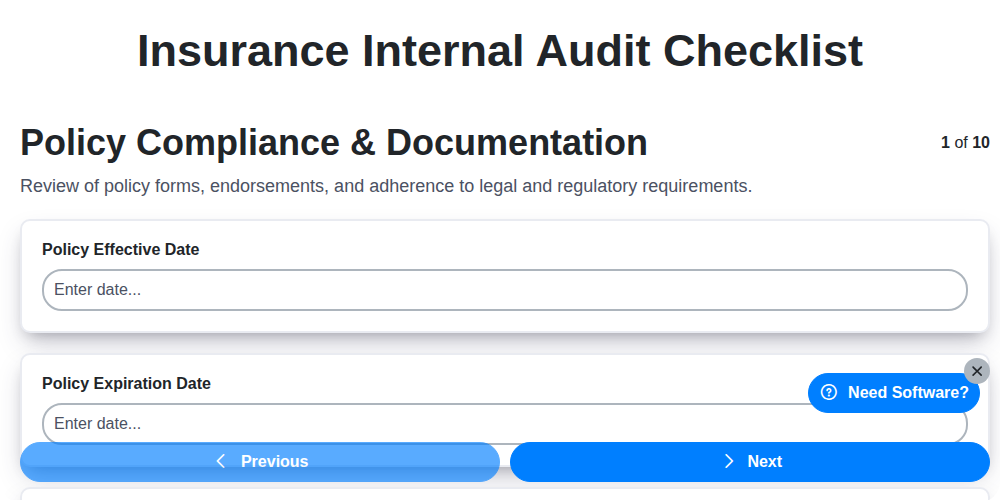
Table of Contents
- Introduction: Why an Insurance Internal Audit Matters
- 1. Policy Compliance & Documentation: A Foundation of Trust
- 2. Claims Management Process: Efficiency and Fairness
- 3. Underwriting Practices: Risk Assessment and Accuracy
- 4. Reinsurance Program: Mitigating Risk and Protecting Capital
- 5. Financial Reporting & Controls: Accuracy and Transparency
- 5.1 Key Financial Metrics to Scrutinize
- 6. Regulatory Compliance: Staying Ahead of the Curve
- 7. Data Security & Privacy: Protecting Sensitive Information
- 8. Business Continuity & Disaster Recovery: Resilience in the Face of Adversity
- 9. Customer Relationship Management (CRM): Building Loyalty and Reducing Risk
- 10. Internal Controls Effectiveness: Evaluating and Strengthening Safeguards
- 11. Technology and Systems Audit: Assessing Operational Efficiency
- Conclusion: Continuous Improvement Through Audits
- Resources & Links
TLDR: Worried about insurance compliance and best practices? This checklist covers EVERYTHING - from policy documentation and claims processing to data security and disaster recovery. It's your shortcut to a thorough internal audit, helping you identify weaknesses, improve operations, and avoid costly penalties. Download the template and breathe easy!
Introduction: Why an Insurance Internal Audit Matters
The insurance industry operates in a complex landscape, navigating evolving regulations, increasing cyber threats, and demanding customer expectations. Maintaining operational efficiency, financial stability, and regulatory adherence isn't just good practice - it's vital for survival. That's where internal audits become indispensable.
An insurance internal audit isn't just about ticking boxes; it's a proactive assessment of your organization's key functions and controls. It provides an independent and objective evaluation of your processes, highlighting potential risks, identifying areas for improvement, and ultimately, safeguarding your business against financial loss, reputational damage, and regulatory penalties. This isn't about finding fault; it's about strengthening your foundation and ensuring long-term success. By regularly evaluating your internal operations, you can build confidence amongst stakeholders, foster a culture of accountability, and adapt swiftly to a constantly changing environment. This checklist will be your guide to achieving just that.
1. Policy Compliance & Documentation: A Foundation of Trust
A robust insurance internal audit begins with a thorough review of policy compliance and documentation. This isn't just about ticking boxes; it's about ensuring the very foundation of your business - the promises you make to your customers - are upheld.
Our audit will delve into several key areas:
- Policy Form Review: We're assessing the accuracy, clarity, and legal soundness of your policy forms. Are they compliant with current regulations and fair to both the insurer and the insured?
- Policy Issuance Procedures: We'll examine the process from application to issuance. Is there appropriate verification of applicant information? Are underwriting guidelines consistently applied?
- Documentation Completeness: Are all required documents - applications, declarations, endorsements, and cancellation notices - meticulously maintained and readily accessible?
- Record Retention: We will verify adherence to record retention schedules, ensuring compliance and providing a historical trail for audits and legal purposes.
- Compliance with Policy Wording: We'll confirm that operational practices align with the specific terms and conditions outlined in your insurance policies.
A strong compliance and documentation review minimizes legal risk, strengthens customer trust, and supports operational efficiency. This crucial step provides a clear picture of how well your company is living up to its commitments.
2. Claims Management Process: Efficiency and Fairness
The claims management process is a critical touchpoint in the insurance lifecycle, directly impacting customer satisfaction and financial stability. An internal audit of this process should go beyond simply verifying adherence to procedures; it should assess its efficiency, fairness, and potential for improvement.
Key Areas to Evaluate:
- Claim Intake & Acknowledgement: Is the process for receiving claims straightforward and timely? Are claimants promptly acknowledged and provided with clear instructions? This includes reviewing online portals, phone handling procedures, and mail processing.
- Investigation & Assessment: Examine how claims are investigated. Are standardized procedures followed? Is the level of investigation appropriate for the claim's complexity and potential fraud risk? Look for evidence of thoroughness and consistency.
- Reserves & Estimates: Are reserves accurately established and periodically reviewed? Do estimates for repair or replacement costs reflect current market conditions and industry benchmarks? Inaccurate reserves can lead to financial instability.
- Payment Authority & Processing: Verify that claims payments are properly authorized and processed in a timely manner. Investigate any significant delays or unusual payment patterns.
- Fraud Detection & Prevention: Evaluate the controls in place to detect and prevent fraudulent claims. Are data analytics techniques used? Are red flags appropriately investigated?
- Customer Communication: Assess the quality and timeliness of communication with claimants throughout the claims process. Is it clear, empathetic, and compliant with regulatory requirements?
- Record Keeping: Are detailed and accurate records maintained for each claim, supporting the decisions made? This is vital for audit trails and potential litigation.
- Claims Ratio Analysis: Review claims ratios and trends to identify areas of potential inefficiency or escalating costs.
Red Flags to Watch For:
- Inconsistent claim settlement approaches.
- Delayed claims payments.
- Frequent complaints regarding claims handling.
- Lack of documentation supporting claim decisions.
- Evidence of potential fraud or improper influence.
By thoroughly examining these aspects, the internal audit can provide valuable insights into optimizing the claims management process, minimizing costs, and ensuring fair and equitable treatment for all claimants.
3. Underwriting Practices: Risk Assessment and Accuracy
Underwriting is the backbone of a stable insurance operation. A robust internal audit of underwriting practices focuses on ensuring consistent and accurate risk assessment, which directly impacts profitability and solvency. This section delves into key areas for examination.
Key Audit Points:
- Risk Selection Criteria: Verify that underwriting guidelines are clearly defined, consistently applied, and aligned with the company's risk appetite. Are these guidelines documented and readily accessible to underwriters?
- Data Verification: Assess the process for verifying applicant information. Are independent sources used to corroborate data? Are there controls in place to prevent fraud or misrepresentation?
- Risk Classification: Review how risks are classified and priced. Is the risk classification system accurate and reflects current market conditions and loss experience? Are pricing models regularly reviewed and updated?
- Authority Levels: Confirm that underwriters adhere to established authority levels and that exceptions require appropriate approvals.
- Documentation: Scrutinize documentation related to underwriting decisions. Is it complete, accurate, and readily available for review? Does it clearly justify the risk assessment and pricing?
- Training and Competency: Evaluate the training and competency levels of underwriters. Are they equipped with the knowledge and skills necessary to accurately assess risk?
- System Controls: Examine the controls surrounding the underwriting system. Are access controls properly implemented? Is data integrity maintained? Are audit trails sufficient?
- Loss History Analysis: Review how loss history is considered in the underwriting process. Is it appropriately factored into risk assessment and pricing?
A failure to diligently assess risk can lead to adverse selection, increased claims, and ultimately, financial instability. The internal audit should provide assurance that underwriting practices are both accurate and compliant.
4. Reinsurance Program: Mitigating Risk and Protecting Capital
Reinsurance is a critical component of a strong insurance company's risk management strategy. An internal audit of your reinsurance program should delve beyond simply verifying policy documents. It needs to assess the program's effectiveness in mitigating risk and protecting the insurer's capital.
Here's what your audit should cover:
- Reinsurance Strategy Alignment: Does the reinsurance program align with the overall risk appetite and strategic goals of the company? Are the types of risks reinsured appropriate?
- Counterparty Risk Assessment: Evaluate the financial stability, credit ratings, and claims-paying ability of reinsurers. Are due diligence processes adequate?
- Contract Review: Scrutinize reinsurance contracts for clarity, scope, exclusions, and termination clauses. Are contract terms consistent with the intended risk transfer?
- Claims Recovery Process: Verify the efficiency and effectiveness of the claims recovery process from reinsurers. Are claims submitted accurately and timely? Are disputes resolved effectively?
- Reinsurance Cost Efficiency: Analyze the cost-effectiveness of the reinsurance program. Are premiums competitively priced relative to the risk transferred?
- Regulatory Compliance (Reinsurance Specific): Review compliance with regulations related to reinsurance, including capital requirements and reporting obligations. (Solvency II, for example).
- Modeling & Risk Transfer Accuracy: Assess the accuracy of modeling used to determine reinsurance needs. Does the actual risk transfer match the intended coverage?
A robust audit in this area demonstrates a proactive approach to risk management and helps ensure the company's financial stability.
5. Financial Reporting & Controls: Accuracy and Transparency
A robust insurance internal audit must meticulously examine financial reporting and internal controls. This area is critical for maintaining stakeholder trust, complying with regulatory requirements, and ensuring the accuracy of financial statements. Our checklist focuses on several key areas.
We're looking for evidence of adherence to Generally Accepted Accounting Principles (GAAP) or International Financial Reporting Standards (IFRS), depending on your reporting framework. This includes verifying the proper recognition, measurement, and disclosure of revenue (premiums), expenses (claims, commissions, and operating costs), and assets and liabilities.
Specific areas of focus include a review of the premium revenue recognition process - are deferred premiums being handled correctly? A detailed assessment of the claims reserves calculation methodology, ensuring it's sound and well-documented, is vital. We'll also assess the effectiveness of internal controls over financial reporting, including segregation of duties, authorization limits, and reconciliation procedures.
Furthermore, we'll be examining the company's adherence to Solvency II requirements (where applicable) and investigating the robustness of the controls surrounding investment activities and asset management. Transparency is paramount; we're looking for clear audit trails and well-maintained documentation to support all financial reporting activities. Ultimately, the goal is to confirm the integrity of the financial data presented and the strength of the internal controls safeguarding it.
5.1 Key Financial Metrics to Scrutinize
A robust insurance internal audit digs deep into the financial health of the organization. Here are five key metrics that deserve particular attention:
- Combined Ratio: This is arguably the most critical metric for insurance companies. It reflects the relationship between incurred losses (claims paid and expenses) and earned premiums. A ratio above 100% indicates an underwriting loss. Scrutinize trends and investigate any significant deviations from benchmarks.
- Loss Ratio: Focusing specifically on claims experience, the loss ratio reveals the proportion of premiums paid out in claims. Analyze trends in claim frequency and severity, and assess the adequacy of reserves.
- Expense Ratio: This highlights operational efficiency. Track how much is spent on administrative, marketing, and other expenses relative to premiums earned. Identify areas for potential cost reduction.
- Return on Equity (ROE): This measures the profitability of the insurance company relative to shareholders' equity. Assess if the ROE is in line with industry averages and benchmarks.
- Premium Growth Rate: While growth is desirable, it must be sustainable and accompanied by adequate risk assessment and underwriting discipline. Investigate rapid growth periods for potential overexposure and adequacy of risk management practices.
6. Regulatory Compliance: Staying Ahead of the Curve
The insurance industry is heavily regulated, and non-compliance can result in hefty fines, reputational damage, and even legal action. This section of the audit focuses on ensuring your organization adheres to all applicable federal, state, and local regulations.
Our review will encompass areas like:
- Licensing & Permits: Verification of all necessary licenses and permits for operation across all jurisdictions.
- NAIC Model Laws & Regulations: Assessing adherence to relevant National Association of Insurance Commissioners (NAIC) model laws and regulations, including those pertaining to solvency, rate filings, and consumer protection.
- State-Specific Requirements: Detailed examination of compliance with specific state insurance codes, which can vary significantly. This includes reviews of policy forms, rate filings, and disclosures.
- Anti-Money Laundering (AML) Compliance: Ensuring your organization has robust AML procedures in place and is compliant with relevant regulations (e.g., Bank Secrecy Act).
- Consumer Protection Laws: Assessing adherence to laws designed to protect consumers, such as those related to fair credit reporting, truth in advertising, and claims handling practices.
- Updates & Training: Evaluation of the process for staying updated on regulatory changes and providing adequate training to employees on compliance requirements.
Documentation demonstrating compliance, including filings, reports, and training records, will be meticulously reviewed. Any gaps or deficiencies will be highlighted with recommendations for remediation.
7. Data Security & Privacy: Protecting Sensitive Information
In today's digital landscape, data is arguably the most valuable asset an insurance company possesses. This includes policyholder information, claims data, financial records - a treasure trove of sensitive information that, if compromised, can lead to severe financial and reputational damage. A robust data security and privacy framework is therefore absolutely critical during an internal audit.
This section of the audit should focus on verifying the implementation and effectiveness of controls designed to protect this data. Key areas to examine include:
- Data Encryption: Are sensitive data at rest (stored on servers) and in transit (being transmitted) encrypted using appropriate industry-standard methods?
- Access Controls: Are access permissions to data strictly controlled and based on the principle of least privilege? Are user access reviews regularly conducted?
- Network Security: Evaluate firewalls, intrusion detection systems, and other network security measures. Are they up-to-date and properly configured?
- Data Loss Prevention (DLP): Does the company have DLP tools and processes in place to prevent sensitive data from leaving the organization?
- Privacy Policies and Training: Are privacy policies clear, accessible, and regularly updated to comply with regulations (like GDPR, CCPA)? Are employees adequately trained on data privacy best practices?
- Vendor Risk Management: Do third-party vendors who handle data have adequate security measures in place? Are vendor contracts reviewed regularly to ensure compliance?
- Incident Response Plan: Is there a documented incident response plan for data breaches? Is it tested regularly?
- Data Subject Rights: Are procedures in place to handle data subject access requests (DSARs), including requests for data access, rectification, and erasure?
A thorough review in this area will ensure the insurance company is safeguarding its data, maintaining customer trust, and minimizing legal and financial risks associated with data breaches.
8. Business Continuity & Disaster Recovery: Resilience in the Face of Adversity
Insurance companies hold a critical role in society, and their stability is paramount. A catastrophic event - be it a natural disaster, a cyberattack, or a major system failure - can severely disrupt operations, impacting policyholders and eroding public trust. A robust Business Continuity & Disaster Recovery (BCDR) plan isn't just a best practice; it's a necessity.
During an internal audit, this area requires meticulous review. We're looking beyond simply having a plan; we're assessing its effectiveness. Key areas of focus include:
- Risk Assessment: Was a comprehensive risk assessment conducted to identify potential threats and vulnerabilities? This should go beyond obvious events and consider secondary and tertiary impacts.
- Plan Documentation: Is there a documented BCDR plan readily available and understood by relevant personnel? This includes contact lists, escalation procedures, and recovery timelines.
- Regular Testing & Drills: Are BCDR plans regularly tested through simulations and drills? These exercises should realistically mimic various disruption scenarios and involve all affected departments. Review documentation of these tests and identify any shortcomings.
- Recovery Time Objectives (RTOs) & Recovery Point Objectives (RPOs): Are RTOs and RPOs clearly defined, documented, and aligned with business needs? Are these objectives realistically achievable?
- Data Backup & Recovery: Verify the frequency and geographic location of data backups, and test the data recovery process. Are backups truly restorable?
- Alternate Facilities & Systems: Are adequate alternate facilities and systems in place to maintain critical functions in the event of a primary location being unavailable?
- Employee Training: Do employees receive regular training on BCDR procedures and their roles in the recovery process?
- Plan Updates & Maintenance: Is the BCDR plan regularly reviewed and updated to reflect changes in the business environment, technology, and risk landscape?
A strong BCDR program demonstrates an insurance company's commitment to its policyholders and its ability to weather unforeseen challenges. A weak program signals a significant operational vulnerability that demands immediate attention.
9. Customer Relationship Management (CRM): Building Loyalty and Reducing Risk
A robust CRM system isn't just about tracking interactions; it's a vital component of a sound insurance internal audit. Your CRM should be more than a glorified contact list; it's the central repository for understanding your customers and mitigating associated risks.
Audit Focus Areas:
- Data Accuracy and Completeness: Ensure customer data within the CRM is accurate, complete, and regularly updated. Errors can lead to miscommunication, incorrect policy servicing, and potential legal issues. Verify data validation processes and identify sources of error.
- Integration with Other Systems: Assess how well your CRM integrates with other key systems, such as policy administration, claims processing, and billing. Seamless integration minimizes errors and enhances efficiency.
- Compliance with Privacy Regulations: Review the CRM's configuration and processes to confirm adherence to privacy regulations like GDPR or CCPA. Audit access controls, data retention policies, and consent management practices.
- Customer Segmentation & Targeting: Examine how customer segmentation is used to tailor products and services. While beneficial for business, ensure these practices don't lead to unfair discrimination or regulatory breaches.
- Complaint Handling: Evaluate the CRM's role in tracking and resolving customer complaints. A well-managed complaint handling process demonstrates commitment to customer satisfaction and helps identify systemic issues.
- Accessibility and User Training: Determine if access to CRM data is appropriate for user roles and if adequate training is provided. Improper access or lack of training can compromise data security and lead to errors.
- Reporting & Analytics: Verify that the CRM generates accurate and reliable reports used for performance monitoring and decision-making. Are these reports used effectively to identify trends and areas for improvement?
By scrutinizing your CRM, you're not just assessing a technology platform; you're evaluating a core driver of customer loyalty, risk mitigation, and overall business performance.
10. Internal Controls Effectiveness: Evaluating and Strengthening Safeguards
Internal controls are the backbone of a robust insurance operation, safeguarding assets, ensuring accuracy, and fostering a culture of accountability. This section isn't just about ticking boxes; it's about actively assessing and improving the effectiveness of those controls.
During your internal audit, thoroughly examine the design and operation of key controls across all areas audited. This includes:
- Control Environment: Assess the tone at the top. Is management committed to ethical behavior and a strong control environment? Are employees adequately trained on internal control procedures?
- Risk Assessment Processes: Verify that the company has a formal process for identifying, assessing, and responding to risks. Are these risk assessments regularly updated?
- Information & Communication: Confirm that relevant information is communicated effectively throughout the organization, both internally and externally.
- Monitoring Activities: Evaluate the effectiveness of ongoing monitoring activities, including management reviews, reconciliations, and exception reporting. Are identified deficiencies promptly addressed?
- Control Activities: Go beyond just reviewing documentation. Observe processes in action, interview personnel, and test the effectiveness of controls such as segregation of duties, authorization limits, and reconciliation procedures.
Specific Focus Areas: Look for potential weaknesses like overrides of established procedures, inadequate documentation, and lack of independent reviews. Don't just focus on what controls exist, but how they are implemented and followed.
Recommendations: Provide clear and actionable recommendations to enhance internal controls, prioritizing those that address significant risks and deficiencies. Follow up on implementation to ensure controls are operating as intended. Remember, continuous improvement is key to maintaining a strong internal control environment.
11. Technology and Systems Audit: Assessing Operational Efficiency
In today's digital landscape, insurance operations are heavily reliant on technology. This section of the internal audit focuses on evaluating the effectiveness and efficiency of your core systems and applications. We're not just looking at if things work, but how well they work and if they're aligned with business objectives.
Here's what we're examining:
- System Performance & Reliability: Analyzing system uptime, response times, and overall stability. Are systems handling current and projected volumes?
- Application Security: Going beyond basic security checks to assess vulnerability management, access controls, and penetration testing results. This includes evaluating the security of third-party integrations.
- Data Integrity & Accuracy: Verification of data validation processes, data migration procedures, and reconciliation efforts to ensure accuracy and completeness across systems.
- Automation & Process Efficiency: Identifying opportunities to automate manual processes, streamline workflows, and improve overall operational efficiency through technology. This includes assessing the effectiveness of Robotic Process Automation (RPA) implementations, if applicable.
- IT Governance & Change Management: Evaluating the effectiveness of IT governance structures, policies, and change management processes to ensure alignment with business strategy and risk mitigation.
- Disaster Recovery & Backup Procedures: Specific testing and validation of data backup and recovery processes, ensuring data can be restored efficiently in the event of a system failure. This complements the broader Business Continuity & Disaster Recovery assessment.
- System Documentation & Training: Reviewing system documentation for accuracy and completeness, and assessing the adequacy of employee training on relevant systems.
Conclusion: Continuous Improvement Through Audits
Ultimately, an insurance internal audit isn't a one-and-done activity; it's a cornerstone of ongoing operational excellence. The checklist we've outlined - encompassing everything from policy compliance to data security - provides a robust framework for assessing risk and identifying areas for improvement. By consistently revisiting these areas, tracking remediation efforts, and adapting the checklist to reflect evolving industry best practices and regulatory changes, insurance companies can cultivate a culture of continuous improvement. This proactive approach strengthens resilience, enhances efficiency, and builds lasting trust with both policyholders and stakeholders. Remember, a well-executed audit isn't just about finding flaws; it's about leveraging those findings to build a stronger, more secure, and ultimately more successful insurance organization.
Resources & Links
- National Association of Insurance Commissioners (NAIC): The NAIC is a key resource for insurance regulators and provides model laws, guidance, and best practices for the insurance industry. Crucial for understanding regulatory expectations and compliance requirements.
- American Institute of Certified Public Accountants (AICPA): Provides auditing standards, frameworks, and guidance that are often referenced in insurance internal audits. Their resources support robust internal control assessments.
- Committee of Sponsoring Organizations of the Treadway Commission (COSO): COSO's Internal Control - Integrated Framework is a universally recognized framework for designing, implementing, and evaluating internal controls, providing a solid basis for your audit.
- Actuarial Standards Board (ASB): Relevant to underwriting and reinsurance audits, the ASB establishes professional and ethical standards for actuaries, impacting risk assessment and modeling.
- Risk and Insurance Management Institute (RIMS): RIMS offers resources and professional development for risk managers, offering insights into insurance operations and risk management practices - helpful for understanding operational context during audits.
- Insurance Information Institute (III): Provides education and information about insurance, including regulatory updates and industry trends. Important for staying informed about the evolving landscape.
- Securities Industry and Financial Markets Association (SIFMA): While focused on securities, SIFMA's publications and insights on financial risk management can be useful for assessing reinsurance programs and financial reporting controls.
- Institute of Risk Management (IRM): A global body for risk management professionals. Their resources on risk assessment and internal controls are valuable for a comprehensive audit.
- ISACA (Information Systems Audit and Control Association): Crucial for data security, privacy, and technology audits. Provides frameworks and certifications related to IT governance and controls.
- Financial Sector Conduct Authority (FSCA) (South Africa): While specific to South Africa, their regulatory guidance and supervisory approach can provide benchmarks for audit scope and testing - adaptable for other jurisdictions depending on the organization's geographical presence.
- Society of Actuaries (SOA): Provides guidance on actuarial practices, reserve setting, and pricing - essential for ensuring the robustness of underwriting practices and reserving methodologies.
- National Cyber Security Centre (NCSC) (UK): Excellent resource for understanding data security best practices and mitigating cyber risks - can inform the data security & privacy audit section.
Frequently Asked Questions
What is the purpose of an insurance internal audit?
An insurance internal audit assesses the effectiveness of an insurance company's internal controls, risk management processes, and governance structures. It aims to ensure compliance with regulations, identify areas for improvement, and ultimately protect the company's assets and reputation.
Who should conduct an internal audit of an insurance company?
Internal audits can be performed by the company's internal audit department, or by an independent, qualified auditor with expertise in insurance operations and regulations. The choice depends on the company's size, resources, and the level of independence required.
What are some key areas covered in an insurance internal audit checklist?
Typical areas include underwriting, claims management, actuarial functions, investment activities, financial reporting, regulatory compliance, data security, and operational efficiency.
What regulations should an insurance internal audit checklist consider?
The checklist should consider relevant state insurance regulations, federal laws (like GLBA and SOX where applicable), NAIC guidelines, and any other industry-specific requirements based on the insurance company's products and services.
How often should insurance internal audits be conducted?
The frequency of audits depends on factors like risk exposure, regulatory requirements, and management's assessment of control effectiveness. Annual audits are common, but high-risk areas may require more frequent reviews.
What are some common weaknesses identified in insurance internal audits?
Common weaknesses include inadequate segregation of duties, insufficient documentation of processes, weak data security controls, ineffective fraud prevention measures, and a lack of oversight from senior management.
What is the role of management in the internal audit process?
Management is responsible for establishing and maintaining effective internal controls. They should actively participate in the audit process, review audit findings, and implement corrective actions to address identified weaknesses. They also need to communicate the importance of internal audit to employees.
How can an insurance internal audit checklist be customized?
The checklist should be customized to reflect the specific risks and operations of the insurance company. This includes considering the company's size, product offerings, geographic locations, and regulatory environment. Tailoring ensures relevance and effectiveness.
What are the benefits of implementing the checklist?
Implementing a comprehensive checklist leads to improved compliance, stronger internal controls, reduced risk exposure, increased operational efficiency, enhanced reputation, and better stakeholder confidence.
Where can I find resources and templates for an insurance internal audit checklist?
Resources can be found through professional auditing organizations (like the IIA), regulatory bodies (like state insurance departments), industry publications, and consulting firms specializing in insurance internal audit.
Comments
There are no comments yet. Be the first to add one!
Insurance Management Solution Demo
Managing policies, claims, and compliance in the insurance industry is complex. ChecklistGuro's Work OS platform streamlines your operations, from underwriting and renewals to claims processing and reporting. Improve efficiency, reduce errors, and enhance customer satisfaction. Discover how ChecklistGuro can transform your insurance business!
Related Articles
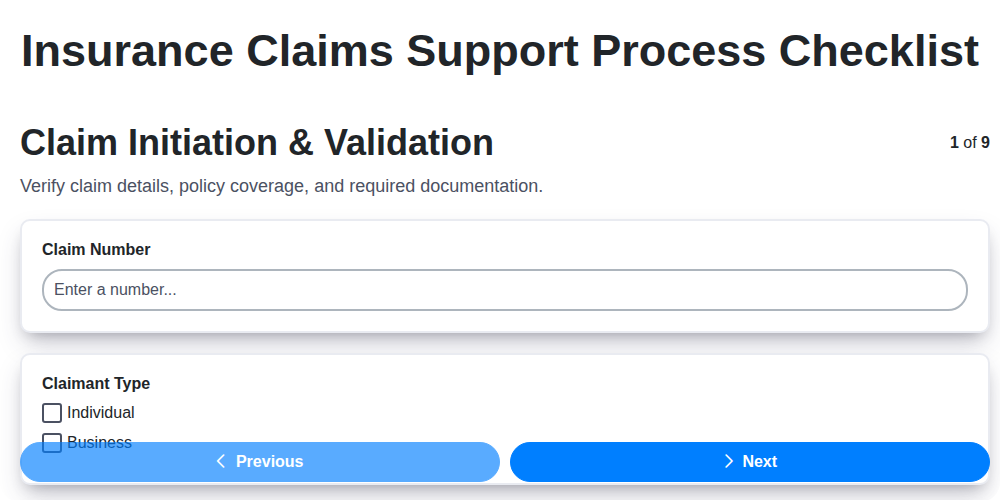
Streamline Claims: Your Insurance Claims Support Process Checklist Template
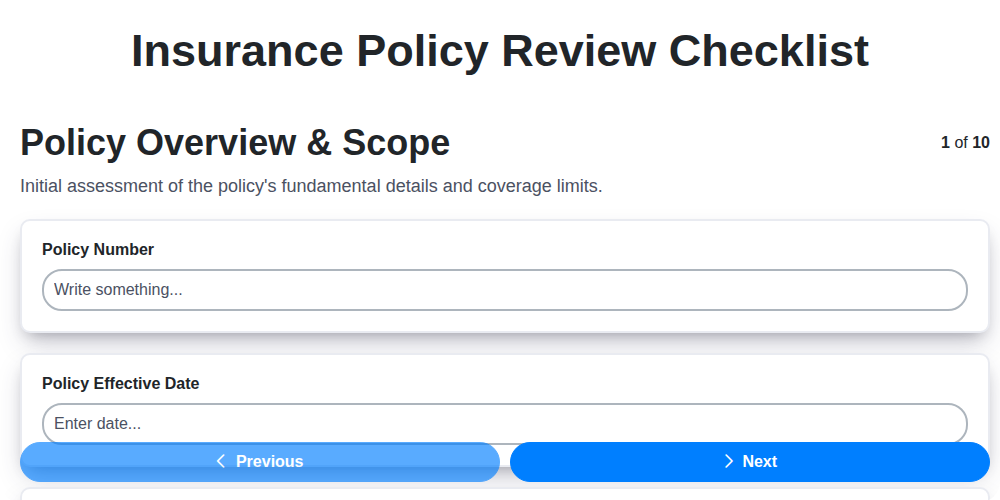
Your Insurance Policy Review Checklist: A Step-by-Step Guide
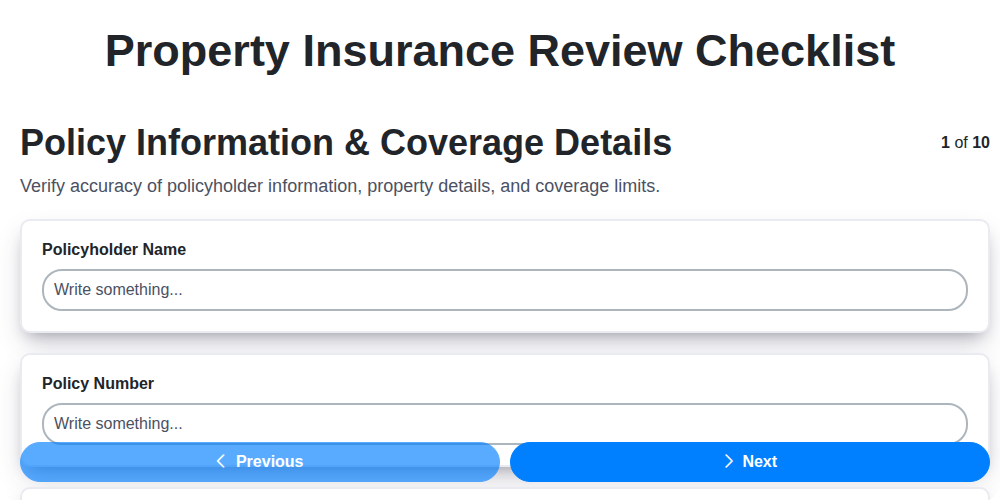
Your Property Insurance Review Checklist: A Step-by-Step Guide
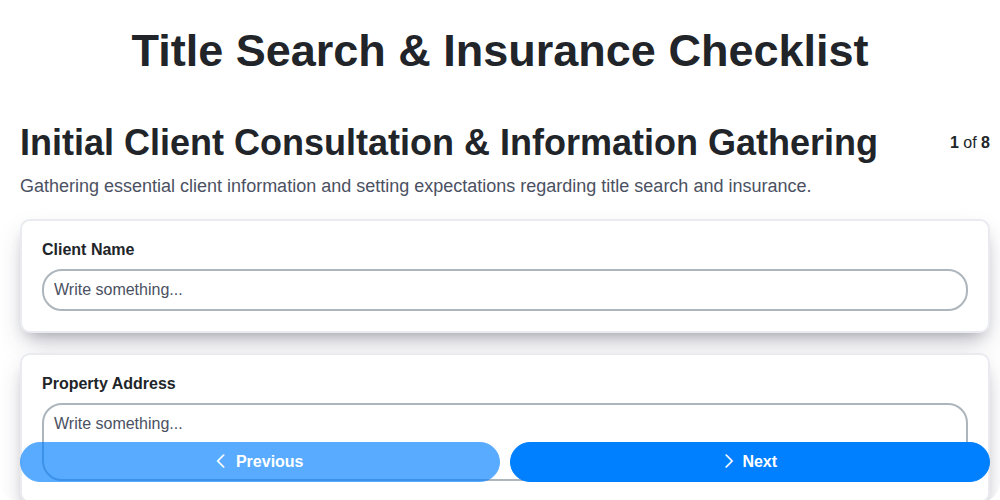
Your Title Search & Insurance Checklist Template
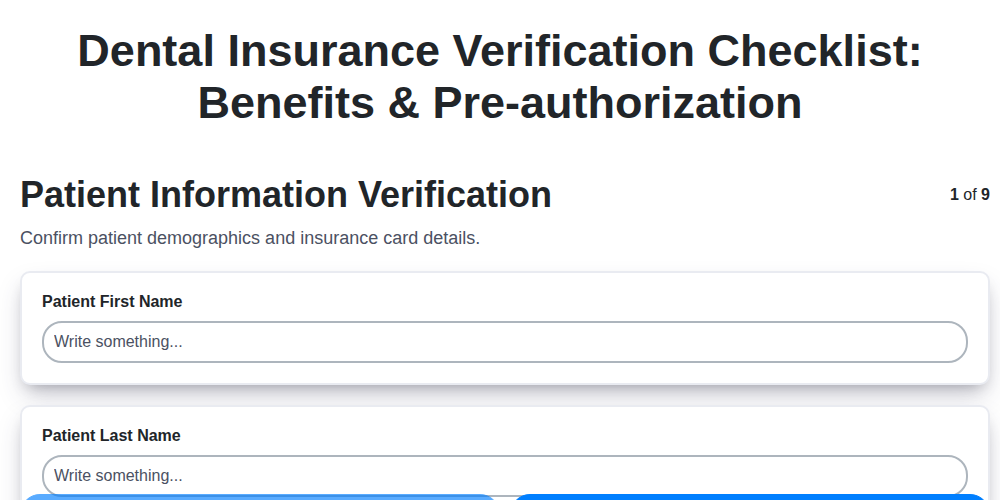
Simplify Insurance Verification: Your Free Dental Checklist Template
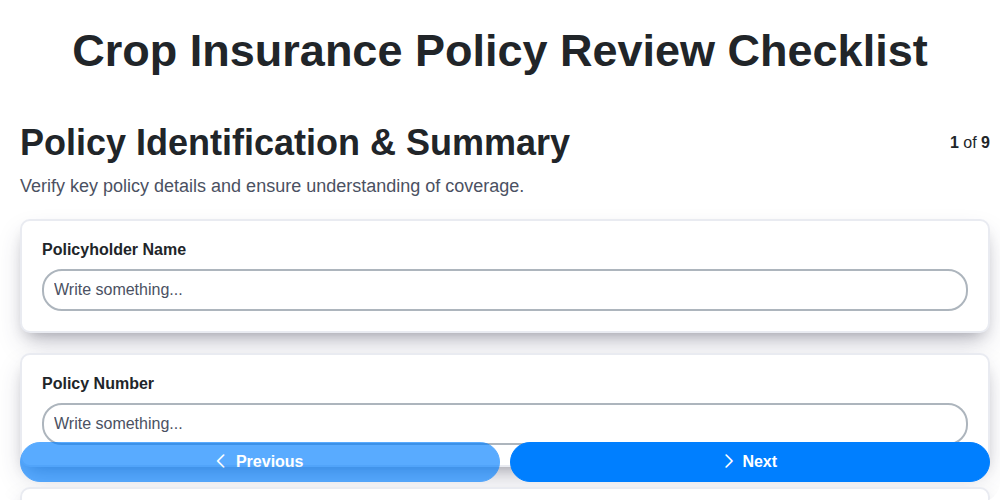
Crop Insurance Policy Review Checklist: A Farmer's Guide

The Ultimate Vehicle Registration & Insurance Validation Checklist
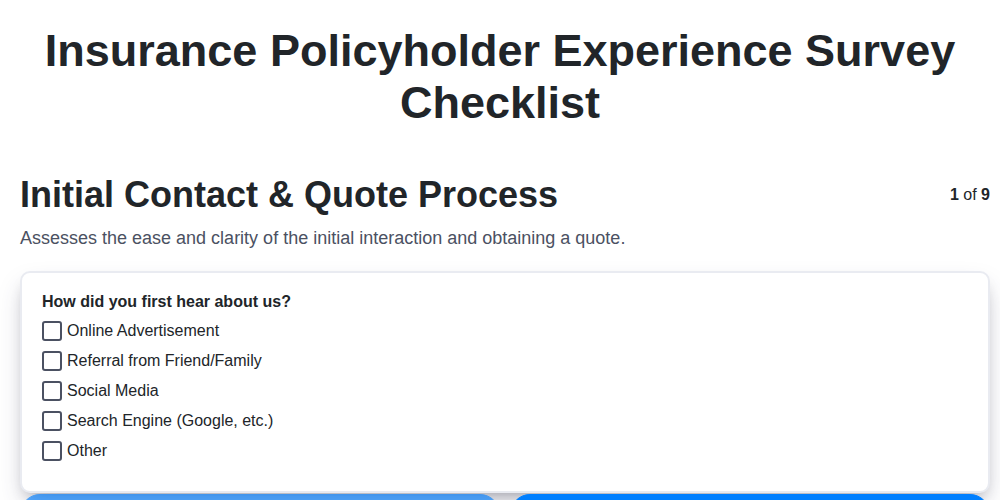
Mastering the Policyholder Journey: Your Insurance Experience Survey Checklist
Need help with
Insurance?
Have a question? We're here to help. Please submit your inquiry, and we'll respond promptly.