Insurance Record Retention Checklist: Your Compliance Guide
Published: 12/01/2025 Updated: 09/25/2026
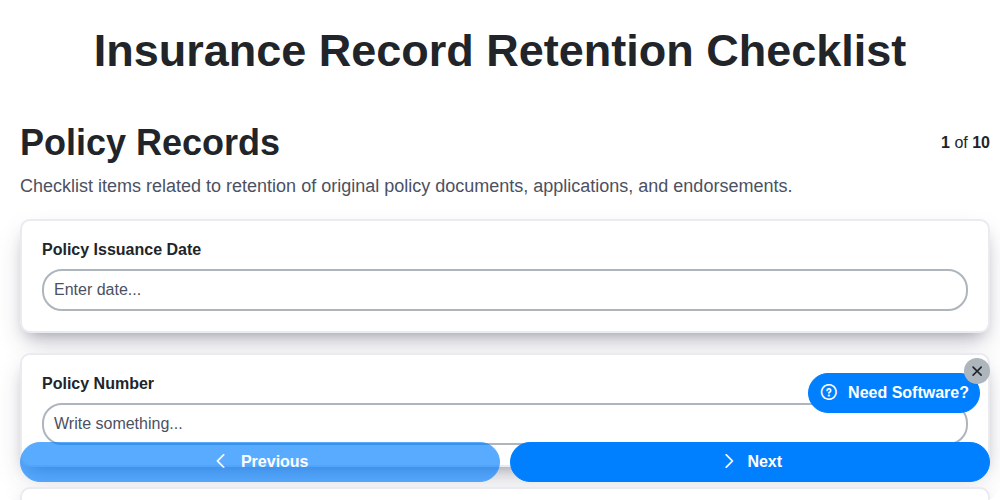
Table of Contents
- Introduction: Why Record Retention Matters
- 1. Policy Records: The Foundation of Your Business
- 2. Claims Records: Documenting Every Detail
- 3. Underwriting Records: Protecting Your Risk Assessment
- 4. Financial Records: Maintaining Accuracy and Transparency
- 5. Legal & Regulatory Compliance: Navigating the Landscape
- 6. Digital Records Management: Best Practices for Electronic Files
- 6.1. File Naming Conventions
- 6.2. Metadata & Indexing
- 7. Physical Records Storage: Secure and Organized
- 8. Data Disposal Procedures: Securely Destroying Obsolete Records
- 9. Audit Trail & Documentation: Demonstrating Compliance
- 10. Training & Awareness: Empowering Your Team
- Conclusion: Staying Compliant and Protecting Your Business
- Resources & Links
TLDR: Feeling overwhelmed by insurance record keeping? This checklist breaks down exactly what records to keep (policies, claims, financials, legal docs, etc.), how long to store them (digital & physical), and how to properly handle data disposal - all to ensure compliance and avoid costly penalties. Download the template and simplify your record retention process!
Introduction: Why Record Retention Matters
In the insurance industry, meticulous record-keeping isn't just good practice-it's a legal and operational necessity. Insurance companies handle sensitive personal information and manage complex financial transactions, making robust record retention policies crucial. Failing to retain records for the required periods can lead to severe consequences, including regulatory fines, legal challenges, and the inability to defend against claims. Beyond compliance, effective record retention safeguards your business from fraud, supports audits, facilitates informed decision-making, and ensures operational continuity. This checklist provides a comprehensive guide to help you establish and maintain a compliant and organized record retention program, minimizing risk and maximizing efficiency.
1. Policy Records: The Foundation of Your Business
Policy records are the bedrock of any insurance operation. These documents provide irrefutable proof of coverage, outlining the terms, conditions, premiums, and obligations for both the insurer and the insured. Maintaining meticulous records is not just good practice; it's essential for risk management, regulatory compliance, and accurate claims processing.
What should be included? Think beyond just the policy declaration page. This category encompasses:
- Original Policy Documents: Including all endorsements, riders, and amendments.
- Application Forms: These forms detail the information provided by the applicant at the time of policy inception, providing crucial context.
- Premium Payment Records: Detailed records of all premium payments, dates, methods, and any adjustments.
- Renewal Correspondence: Any communications related to policy renewals, including offers, acceptances, and counteroffers.
- Communication Logs: Records of significant communications with the insured regarding policy changes or clarifications.
Retention periods vary depending on jurisdiction and specific policy type, but generally, these records should be retained for a minimum of the statute of limitations for potential lawsuits (often 3-6 years, but can be longer). Consider retaining older policies electronically, as they may be valuable for historical analysis and potential claims investigations.
2. Claims Records: Documenting Every Detail
Claims records are arguably the most critical documentation you'll retain. They represent real-world events and provide a direct link to financial obligations and potential legal exposure. A robust claims record retention policy isn't just about keeping paperwork; it's about protecting your agency and clients.
Here's what you need to meticulously document and retain:
- Claim Forms: All initial claim forms submitted by policyholders, including all attachments and supporting documentation.
- Correspondence: Every letter, email, phone call log, and any other form of communication between your agency, the insurer, and the claimant. This includes acknowledgement receipts, denial letters, and settlement agreements.
- Investigation Reports: Comprehensive reports from claims adjusters detailing the investigation process, findings, and assessment of damages.
- Medical Records & Bills: All relevant medical records, bills, and reports submitted to support a claim (ensure proper redaction to protect sensitive information).
- Photos and Videos: Any photographic or video evidence related to the claim, such as accident scene photos or property damage recordings.
- Settlement Agreements & Releases: All finalized settlement agreements, releases, and related documentation.
- Expert Reports: Any reports from expert witnesses, engineers, or other specialists consulted during the claims process.
Retention Time: Claims records often require the longest retention periods due to the potential for litigation or audits. A standard recommendation is at least 5-7 years, and potentially longer (up to 10 years or beyond) depending on the type of claim and applicable state regulations. Consult with legal counsel to determine the specific retention period for your jurisdiction and the types of claims your agency handles.
3. Underwriting Records: Protecting Your Risk Assessment
Underwriting records are the bedrock of your insurance company's risk assessment process. These documents, encompassing application details, inspections, risk assessments, and any supporting documentation used to evaluate potential policyholders, are crucial for profitability and accurate risk management. Improper retention or disposal of these records can expose your organization to significant legal and financial risks.
What to Retain:
- Application Forms: Complete and signed applications, including all attachments and supporting documentation.
- Risk Assessments: Detailed reports from inspections, appraisals, and other assessments used to evaluate risk.
- Underwriting Guidelines & Manuals: Records demonstrating adherence to underwriting standards and decision-making processes.
- Correspondence: All communications (letters, emails, notes) related to underwriting decisions, including explanations for acceptances, declines, or modifications.
- Reinsurance Documentation: Records pertaining to reinsurance agreements and associated analyses.
- Credit Reports & Investigations: Records of credit checks and any background investigations performed as part of the underwriting process.
Retention Period: Maintain these records for a minimum of the statutory requirements (typically 3-6 years, but check your local regulations). Consider extending this period if the risk involves long-term obligations or complex agreements.
Why It's Critical: Proper retention allows for accurate analysis of underwriting performance, supports claims investigations, and demonstrates due diligence in case of regulatory scrutiny or litigation. Losing this information compromises your ability to fairly assess risk and potentially opens you up to liability.
4. Financial Records: Maintaining Accuracy and Transparency
Financial records are the backbone of any insurance operation, providing crucial data for financial reporting, audits, and regulatory compliance. This category includes premium receipts, payment records, investment documentation, bank statements related to insurance operations, and any records detailing revenue and expenses.
Accurate retention of these records is paramount. Generally, these records should be retained for a minimum of six to seven years to align with standard tax regulations and potential audits. However, specific state regulations or contractual obligations may require longer retention periods. Clear labeling and categorization of these records - distinguishing between investment income, premium revenue, and expense reimbursements - is essential for efficient retrieval and accurate financial analysis. Always consult with your finance team and legal counsel to ensure compliance with all applicable regulations regarding financial record retention.
5. Legal & Regulatory Compliance: Navigating the Landscape
The insurance industry operates under a complex web of legal and regulatory requirements that dictate record retention periods. Failing to comply can lead to hefty fines, legal action, and reputational damage. This section highlights some key considerations, but always consult with legal counsel and relevant regulatory bodies for definitive guidance specific to your jurisdiction and insurance lines.
Key Regulations to Consider:
- State Insurance Codes: Each state has its own insurance codes outlining record retention requirements. These often specify timelines for various record types, ranging from a few years to potentially indefinite retention for certain documentation (e.g., policy applications in cases of disputes).
- Federal Regulations: While federal regulations might not directly specify retention periods for all insurance records, they can influence requirements. For example, regulations related to Anti-Money Laundering (AML) or consumer protection laws may impact record retention.
- Gramm-Leach-Bliley Act (GLBA): This act mandates safeguarding consumer financial information, impacting how long you must retain records related to customer data.
- Sarbanes-Oxley Act (SOX): For publicly traded insurance companies, SOX compliance necessitates robust record-keeping practices, including retention schedules for financial records.
- Other Applicable Laws: Depending on your business, consider laws surrounding privacy (e.g., GDPR if handling EU citizens' data), consumer rights, and industry-specific regulations.
Proactive Steps:
- Regularly Review Regulations: Stay abreast of changes to state and federal laws affecting record retention. Subscribing to industry updates and legal alerts is crucial.
- Map Regulations to Records: Develop a comprehensive matrix that clearly maps each type of record to the relevant regulatory requirements and their associated retention periods.
- Document Rationale: If your retention policy deviates from standard regulatory timelines (perhaps due to business needs or litigation hold), thoroughly document the rationale behind the decision and obtain necessary approvals.
- Legal Counsel Review: Periodically have your retention schedule reviewed by legal counsel to ensure ongoing compliance and address any emerging legal risks.
6. Digital Records Management: Best Practices for Electronic Files
The shift to digital records presents both immense opportunity and potential pitfalls for insurance agencies. Simply scanning documents isn't enough; a robust digital records management strategy is essential for compliance, efficiency, and data security. Here's what to consider:
- Establish a Clear File Naming Convention: A consistent, logical naming system (e.g., PolicyNumber_ClientLastName_DocumentType_Date) is crucial for easy searching and retrieval. Document the convention and enforce it agency-wide.
- Folder Structure Hierarchy: Mirror your physical filing system electronically whenever possible. This reduces confusion and simplifies locating records. Use a tiered structure, clearly defining each folder's purpose.
- Metadata Tagging: Don't underestimate the power of metadata. Tag files with keywords, dates, policy numbers, and relevant identifiers to enhance search capabilities and make records more findable.
- Version Control: Implement version control to track changes to documents and ensure you're always working with the latest version. This prevents errors and provides an audit trail.
- Access Control and Permissions: Restrict access to sensitive documents based on roles and responsibilities. Utilize password protection, encryption, and multi-factor authentication to secure electronic files.
- Regular Backups & Disaster Recovery: Implement automated backups to a secure offsite location. A disaster recovery plan outlining procedures for data restoration is vital.
- Cloud vs. On-Premise: Carefully evaluate the pros and cons of cloud-based storage versus on-premise solutions, considering factors like security, cost, and scalability.
- Regular System Maintenance: Perform regular maintenance on your digital storage systems, including software updates and security patches.
- E-Discovery Preparedness: Ensure your digital records management system supports e-discovery processes, allowing for efficient retrieval of documents in legal proceedings.
6.1. File Naming Conventions
Consistent and descriptive file names are crucial for efficient record retrieval and organization. Avoid generic names like Document1.pdf. Instead, adopt a standardized system that includes key identifiers. Here's a suggested structure you can adapt:
[Policy Number]_[Record Type]_[Date (YYYYMMDD)]_[Brief Description]
Example:
123456789_Policy_20231026_DeclarationPage.pdf987654321_Claim_20240115_LossReport.pdf555121234_Underwriting_20221101_RiskAssessment.pdf
Key Considerations:
- Policy Number: Always include the relevant policy number.
- Record Type: Clearly identify the type of record (Policy, Claim, Underwriting, etc.).
- Date: Use a consistent date format (YYYYMMDD is recommended for sorting).
- Brief Description: Add a short, descriptive phrase to clarify the document's contents.
- Avoid Special Characters: Stick to alphanumeric characters and underscores. Avoid spaces and special symbols like %, &, #, etc., as they can cause issues with some systems.
- Consistency is Key: Enforce these conventions across all record types to maintain a uniform and easily searchable archive.
6.2. Metadata & Indexing
Simply storing records isn't enough; you need to be able to find them quickly and efficiently. Robust metadata and indexing are crucial for this. Assigning consistent, searchable metadata to each record - such as policy number, claim number, date, document type, relevant parties, and keywords - allows for precise searches and retrieval.
Consider a controlled vocabulary or taxonomy for consistent tagging. This ensures that "premium notice" and "rate change notification" are both appropriately categorized, preventing fragmented search results. Implement a clear indexing system - whether it's through a database, document management system, or even a well-organized physical filing structure - that leverages this metadata to enable fast and accurate access. Regularly review and update your metadata scheme to accommodate evolving business needs and new record types. Without this foundation, even the best records management system becomes a frustrating maze.
7. Physical Records Storage: Secure and Organized
Even in a digital age, many insurance agencies still maintain physical records. Proper storage is paramount to protect sensitive information and ensure accessibility when needed. Here's what you need to consider:
- Dedicated, Secure Space: Designate a locked room or cabinet specifically for storing physical insurance records. Limit access to authorized personnel only.
- Climate Control: Protect records from damage due to humidity, extreme temperatures, and pests. Consider a climate-controlled storage area, especially in regions with harsh weather conditions.
- Organization & Labeling: Implement a clear and consistent labeling system using a logical indexing method (e.g., policy number, client name, date). Use acid-free folders and boxes to prevent deterioration.
- Fire Safety: Ensure the storage area is equipped with fire suppression systems and clearly marked with fire safety signage.
- Inventory Management: Maintain a detailed inventory of all physical records stored, including location and retention period. This facilitates retrieval and tracking.
- Regular Inspections: Conduct periodic inspections to check for any signs of damage, disorganization, or security breaches.
- Disaster Preparedness: Develop a plan for protecting records in case of natural disasters or other emergencies, including potential evacuation procedures.
8. Data Disposal Procedures: Securely Destroying Obsolete Records
Knowing when to keep records is just as important as knowing how to store them. Eventually, records become obsolete and need to be disposed of securely. Improper disposal can lead to data breaches, regulatory fines, and reputational damage.
This isn't just about shredding paper! Digital records require equally robust disposal methods. Here's what you need to consider:
- Define Retention Periods: Your retention schedule should clearly state how long each record type must be kept before disposal is authorized.
- Physical Records: Utilize professional shredding services for paper records. This ensures complete destruction and provides a certificate of destruction for verification. Avoid simply throwing documents in the trash. For media like CDs or DVDs, consider degaussing or physical destruction.
- Digital Records: Securely wipe data from hard drives, USB drives, and other electronic media. Simple deletion isn't enough; use data wiping software that overwrites the data multiple times. Consider physically destroying the media after wiping.
- Cloud Storage: If records are stored in the cloud, ensure your provider's data destruction policies align with your own, and understand their procedures for securely deleting data when requested.
- Documentation: Maintain a record of data disposal activities, including the date, method of disposal, and who authorized the destruction. This serves as proof of compliance.
- Vendor Due Diligence: If outsourcing data disposal, thoroughly vet the vendor's security practices and ensure they adhere to relevant regulations.
9. Audit Trail & Documentation: Demonstrating Compliance
Maintaining a robust audit trail is paramount for insurance organizations. It's not enough to simply have records; you need to prove you've managed them correctly throughout their lifecycle. This involves meticulous documentation of every action taken regarding your records.
Here's what a strong audit trail should include:
- Record Creation & Modification Dates: Document when records were created and any subsequent changes made, including who made the changes and why.
- Access Logs: Track who accessed specific records and when. This helps identify potential unauthorized access.
- Disposal Records: Detail the disposal process, including authorization, method of destruction (shredding, secure deletion), and date of disposal.
- Policy Changes & Amendments: Keep a complete log of any changes made to insurance policies, with clear explanations and approvals.
- Retention Schedule Adherence: Record confirmation that the retention schedule is followed, and any deviations are justified and documented.
- Review Dates: Implement periodic reviews of records and retention processes, noting findings and corrective actions.
This audit trail provides irrefutable evidence of compliance with regulations, internal policies, and demonstrates due diligence in the event of an audit or legal inquiry. It also supports continuous improvement of your records management program. Remember to regularly review and update your audit trail procedures to reflect changes in regulations or business practices.
10. Training & Awareness: Empowering Your Team
Record retention isn't just about ticking boxes; it's about fostering a culture of compliance within your insurance organization. A well-defined policy is useless if your team doesn't understand it and consistently follow it. That's where training and awareness programs become critical.
Here's what a robust training program should include:
- New Employee Onboarding: Integrate record retention procedures into the onboarding process for all new hires, regardless of their role.
- Role-Specific Training: Tailor training to address the specific record-keeping responsibilities of different departments (e.g., claims adjusters, underwriters, customer service representatives).
- Regular Refresher Courses: Record retention regulations and best practices evolve. Schedule periodic refresher courses to keep everyone up-to-date.
- Phishing & Data Security Awareness: Educate your team on how to identify and avoid phishing scams and other threats that could compromise record integrity.
- Clear Communication: Utilize various communication channels (email, internal newsletters, team meetings) to reinforce record retention guidelines and provide updates.
- Accessibility: Make training materials readily accessible online, including FAQs, policy documents, and contact information for questions.
By investing in comprehensive training and awareness, you're not just ensuring compliance; you're building a proactive and responsible team that understands the importance of protecting your organization's valuable information.
Conclusion: Staying Compliant and Protecting Your Business
Navigating insurance record retention can feel overwhelming, but implementing a robust checklist like the one outlined above is a vital investment in your business's health and longevity. It's not merely about ticking boxes; it's about demonstrating due diligence, minimizing legal risks, and ensuring operational efficiency. By proactively managing your records, you build a foundation of trust with clients, regulators, and auditors. Remember, continuous review and adaptation are key. As regulations evolve and technology advances, your record retention policies should too. Don't wait for an audit or a legal challenge to discover gaps in your processes - start building a compliant and secure record retention program today. Your business will thank you for it.
Resources & Links
- National Association of Insurance Commissioners (NAIC): The NAIC provides model laws, regulations, and best practices related to insurance regulation, which often inform record retention requirements. A key resource for understanding industry standards.
- IRMI (Insurance Risk Management Institute): IRMI offers a wealth of information on insurance risk management, including articles, courses, and publications that touch upon record retention and compliance. Useful for deeper dives into specific regulations.
- Insurance Information Institute (III): The III provides consumer information and industry insights on insurance. While not solely focused on record retention, their reports and analysis can provide context for why compliance is important.
- Compliance Planet: This site publishes articles and resources about compliance across various industries, including insurance. Search for articles specifically about record retention and regulatory requirements.
- Association for Insurance Professionals (AAP): A professional association for insurance professionals, they may have resources or webinars about best practices in insurance record management and compliance.
- U.S. Small Business Administration (SBA): While not insurance-specific, the SBA provides guidance on record keeping for small businesses, which can be helpful for smaller insurance agencies. Look for sections on financial records and legal compliance.
- National Archives and Records Administration (NARA): NARA provides guidelines and best practices for records management, applicable across many industries and offering a foundational understanding of archiving principles.
- AIIM (Association for Information and Image Management): AIIM is a professional association focused on information governance and management. They offer resources, training, and best practices related to digital records management.
- TechRepublic - Records Management: TechRepublic offers articles and tutorials on various technology topics, including records management. Useful for exploring tools and best practices for digital records.
- Data Guardian: Data Guardian offers resources and solutions for information governance and compliance, including records management. Focus on their articles and webinars related to regulatory compliance.
- Legal Technology: Legal Technology covers technology used in legal and compliance functions, with articles and product reviews related to records management software and e-discovery tools.
- Smartsheet: Smartsheet offers project management and collaboration tools that can be adapted for records retention checklists and workflow tracking. Provides templates and examples for managing records processes.
Frequently Asked Questions
What is insurance record retention and why is it important?
Insurance record retention refers to the practice of keeping records related to insurance policies, claims, and other related documents for a specific period. It's crucial for legal and regulatory compliance, audit trails, dispute resolution, and potentially recovering lost data if needed. Failing to retain records for required periods can result in fines and legal issues.
What types of insurance records need to be retained?
This varies by jurisdiction and insurance type, but generally includes policy documents, application forms, correspondence (emails, letters), claim forms, adjuster notes, payment records, premium calculations, underwriting reports, and any supporting documentation related to claims and policies.
How long should I retain insurance records?
Retention periods are dictated by state laws, federal regulations (like HIPAA if applicable), and contractual obligations. Common retention periods range from 3 to 10 years, but some records (like those related to litigation) may need to be kept indefinitely. Consult with legal counsel and review your state's specific requirements.
What are the potential consequences of not adhering to insurance record retention policies?
Potential consequences include fines from regulatory bodies, legal action from policyholders or claimants, inability to defend against lawsuits, loss of audit trail, and reputational damage.
Can I store insurance records digitally? What are the requirements for digital storage?
Yes, digital storage is acceptable, but it must comply with legal and regulatory requirements. This includes ensuring data integrity, accessibility, security (password protection, encryption), and a reliable backup system. Consider implementing electronic discovery (eDiscovery) procedures for potential legal requests.
What is an audit trail and why is it important for record retention?
An audit trail is a chronological record of changes made to a document or record, including who made the changes and when. It's crucial for demonstrating compliance, tracking policy history, and verifying accuracy. Proper record retention policies should detail how audit trails are maintained and protected.
Does record retention apply to both personal and commercial insurance?
Yes, record retention policies apply to both personal (e.g., auto, homeowner's) and commercial (e.g., business liability, property) insurance. However, the specific retention periods and regulations may differ based on the type of insurance and jurisdiction.
What is the difference between retention and disposition of records?
Retention refers to the period records must be kept. Disposition is the process of properly destroying or archiving records after the retention period has expired. Disposition should be done securely (e.g., shredding paper documents, secure data wiping for digital files).
How often should my record retention policy be reviewed and updated?
Your record retention policy should be reviewed at least annually, or more frequently if there are changes in laws, regulations, or business practices. Regular updates ensure ongoing compliance and reflect evolving legal landscapes.
Where can I find more specific guidance on insurance record retention requirements for my state?
Check your state's Department of Insurance website. You can also consult with legal counsel specializing in insurance law or compliance professionals to ensure your policies align with all applicable regulations.
Comments
There are no comments yet. Be the first to add one!
Insurance Management Solution Demo
Managing policies, claims, and compliance in the insurance industry is complex. ChecklistGuro's Work OS platform streamlines your operations, from underwriting and renewals to claims processing and reporting. Improve efficiency, reduce errors, and enhance customer satisfaction. Discover how ChecklistGuro can transform your insurance business!
Related Articles
Streamline Claims: Your Insurance Claims Support Process Checklist Template
Your Insurance Policy Review Checklist: A Step-by-Step Guide
Your Property Insurance Review Checklist: A Step-by-Step Guide
Your Title Search & Insurance Checklist Template
Simplify Insurance Verification: Your Free Dental Checklist Template
Crop Insurance Policy Review Checklist: A Farmer's Guide

The Ultimate Vehicle Registration & Insurance Validation Checklist
Mastering the Policyholder Journey: Your Insurance Experience Survey Checklist
Need help with
Insurance?
Have a question? We're here to help. Please submit your inquiry, and we'll respond promptly.