The Ultimate Insurance Risk Assessment Checklist: A Step-by-Step Guide
Published: 12/01/2025 Updated: 07/02/2026
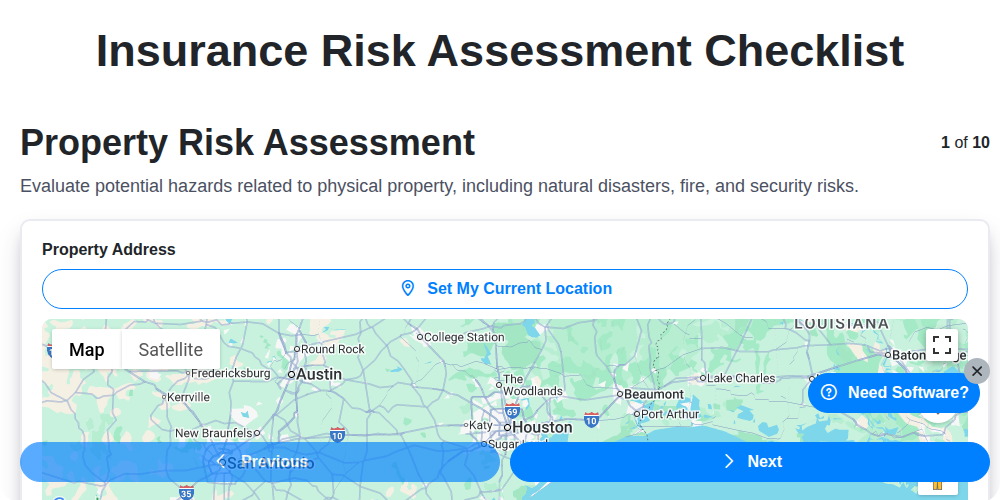
Table of Contents
- Introduction: Why a Risk Assessment Matters
- 1. Property Risk Assessment: Protecting Your Physical Assets
- 2. Liability Risk Assessment: Minimizing Legal Exposure
- 3. Business Interruption Risk: Planning for Unexpected Downtime
- 4. Cybersecurity Risk Assessment: Safeguarding Data and Systems
- 5. Environmental Risk Assessment: Addressing Potential Hazards
- 6. Employee Safety & Health Risk Assessment: Prioritizing Well-being
- 7. Contractual Risk Assessment: Navigating Legal Obligations
- 8. Regulatory Compliance Review: Staying on the Right Side of the Law
- 9. Identifying and Analyzing Potential Risks
- 10. Developing Risk Mitigation Strategies: Your Action Plan
- 11. Documentation & Reporting: Maintaining a Record
- 12. Reviewing and Updating Your Risk Assessment
- Conclusion: Proactive Risk Management for Insurance Success
- Resources & Links
TLDR: Worried about your insurance claims being rejected or underestimating your risks? This checklist walks you through 10 key areas - from property and liability to cybersecurity and employee safety - to comprehensively assess your risks, identify weaknesses, and build a strong defense for your insurance coverage. It's your roadmap to proactive risk management!
Introduction: Why a Risk Assessment Matters
Insurance isn't just about paying premiums; it's about proactively managing and mitigating potential losses. A comprehensive insurance risk assessment is the foundation of this proactive approach. It goes beyond simply listing assets - it's a deep dive into your business's vulnerabilities, identifying potential threats, and estimating the potential impact of those risks.
Failing to conduct a thorough risk assessment can lead to inadequate coverage, unexpected financial strain, and even business disruption. Conversely, a well-executed assessment can lead to more favorable insurance premiums, improved operational efficiency, and a stronger foundation for long-term stability. Think of it as an investment in your business's resilience, allowing you to anticipate challenges and prepare accordingly, rather than reacting to crises after they occur. This checklist will guide you through the key areas you need to evaluate, empowering you to take control of your insurance risk management.
1. Property Risk Assessment: Protecting Your Physical Assets
Your physical assets - buildings, equipment, inventory - represent a significant investment. A thorough property risk assessment is the foundation of a robust insurance risk management strategy. This goes far beyond simply calculating replacement value. It's about identifying vulnerabilities and potential threats that could lead to damage or loss.
Here's what a comprehensive property risk assessment should cover:
- Building Construction & Maintenance: Evaluate the building's age, materials, and overall condition. Are there signs of deterioration like roof leaks, cracks in foundations, or outdated electrical systems? Regular maintenance records are key here.
- Location & Environmental Factors: Consider geographical location. Is the property in a flood zone, earthquake-prone area, or wildfire risk zone? Assess potential impacts from severe weather events.
- Fire Safety: Review fire suppression systems (sprinklers, alarms), fire exits, and fire-resistant building materials. Ensure compliance with fire codes.
- Security Measures: Evaluate security protocols - alarms, security cameras, access controls - to deter theft and vandalism.
- Hazardous Materials: Identify and assess the risks associated with any hazardous materials stored on-site, including proper storage and handling procedures.
- Inventory Management: Assess the value and vulnerability of inventory, considering potential for spoilage, damage, or theft.
- Business Continuity Planning (Related to Property): How would your business continue operations if a property-related event occurred? Consider alternative locations or remote work capabilities.
By diligently assessing these aspects, you can identify potential weaknesses and implement preventative measures to minimize the likelihood and severity of property-related losses.
2. Liability Risk Assessment: Minimizing Legal Exposure
Liability risks represent potential legal responsibility for harm or damage caused to others. These can range from slip-and-fall accidents on your property to product defects or negligent professional services. A thorough assessment is crucial to proactively identify vulnerabilities and minimize potential lawsuits and financial losses.
Here's what a robust liability risk assessment should cover:
- Premises Liability: Examine your property - both indoor and outdoor - for potential hazards. This includes things like inadequate lighting, uneven surfaces, lack of proper signage, and failure to maintain common areas. Consider the frequency of foot traffic and potential for accidents.
- Product Liability: If your business manufactures, distributes, or sells products, assess the potential for defects in design, manufacturing, or warning labels. Implement rigorous quality control procedures and clearly communicate usage instructions.
- Professional Liability (E&O): For businesses offering professional services (e.g., consultants, accountants, architects), analyze potential errors or omissions that could cause financial or other harm to clients. Ensure adequate professional training and maintain detailed records of work performed.
- Auto Liability: If your business uses vehicles, assess the risks associated with accidents involving company-owned or employee-operated vehicles. Implement safe driving policies, provide driver training, and ensure adequate insurance coverage.
- Data Privacy & Security Breaches: Increasingly, liability extends to data breaches. Assess your data handling practices and security measures to prevent unauthorized access and misuse of personal information.
- Third-Party Contracts: Review contracts with vendors, contractors, and other third parties to identify potential liabilities stemming from their actions or omissions.
Mitigation Strategies: Implement preventative measures like regular property inspections, safety training for employees, clear warning signs, robust data security protocols, and appropriate liability insurance coverage. Conduct regular reviews of your practices and update them as needed to address emerging risks.
3. Business Interruption Risk: Planning for Unexpected Downtime
Business interruption - whether from a natural disaster, a supplier failure, a cyberattack, or even a localized event - can cripple an organization. It's not enough to simply have insurance; you need a plan to minimize the impact and expedite recovery. This section of your risk assessment should move beyond the 'what if' and delve into concrete strategies.
Key Considerations for Business Interruption Risk:
- Identify Critical Processes: What functions absolutely must operate for your business to survive? Rank them by importance.
- Dependency Mapping: Map out dependencies for each critical process - suppliers, utilities, technology, personnel. Where are the single points of failure?
- Financial Impact Analysis: Estimate the potential financial losses (lost revenue, increased expenses) for various downtime scenarios (e.g., 1 day, 1 week, 1 month).
- Recovery Time Objective (RTO): How quickly do you need to resume operations after an interruption?
- Recovery Point Objective (RPO): What is the maximum acceptable data loss?
- Develop Contingency Plans: These should include:
- Backup Locations: Do you have a secondary site for operations?
- Data Backup & Recovery: Regular backups and a tested recovery process are vital.
- Communication Plan: How will you communicate with employees, customers, and stakeholders during an interruption?
- Supplier Diversification: Can you secure alternative suppliers if your primary is unavailable?
- Insurance Coverage Review: Ensure your Business Interruption insurance policy adequately covers your identified risks and financial losses. Pay close attention to exclusions and waiting periods.
This assessment should go hand-in-hand with a regularly tested Business Continuity Plan (BCP).
4. Cybersecurity Risk Assessment: Safeguarding Data and Systems
In today's digital landscape, a robust cybersecurity risk assessment is no longer optional-it's a business imperative. This goes far beyond simply having an antivirus program. It's a deep dive into your organization's digital assets and vulnerabilities.
What's involved?
This assessment should cover a wide range of areas, including:
- Network Security: Examining firewalls, intrusion detection systems, and network segmentation. Are your networks properly isolated to limit potential damage?
- Data Security: Identifying where sensitive data is stored, how it's accessed, and whether it's adequately encrypted both in transit and at rest.
- Endpoint Security: Assessing the security of laptops, desktops, mobile devices, and servers. Are these devices patched and protected against malware?
- Application Security: Evaluating the security of your web applications and software, looking for vulnerabilities that could be exploited.
- User Awareness: Understanding the human element - are employees trained to identify phishing scams and follow secure password practices? A single click can compromise an entire system.
- Third-Party Risk: Many organizations rely on vendors who have access to their data. Assess the security practices of these partners - a weakness in their security can become a vulnerability for you.
- Incident Response Planning: Do you have a plan in place to respond effectively to a cyberattack? This includes steps for containment, recovery, and notification.
Why is it crucial?
A thorough cybersecurity risk assessment helps you identify weaknesses before they're exploited by cybercriminals. It allows you to prioritize investments in security measures and allocate resources effectively to protect your valuable data and systems. Failing to do so can lead to devastating financial losses, reputational damage, and legal ramifications.
5. Environmental Risk Assessment: Addressing Potential Hazards
Environmental risks pose a growing concern for businesses across all sectors. These risks aren't just about immediate physical damage; they can trigger regulatory fines, reputational damage, and long-term operational disruptions. A thorough environmental risk assessment goes beyond simply checking for visible pollution. It's about identifying potential hazards and vulnerabilities related to your operations and surrounding environment.
What to Consider:
- Site History: Investigate past uses of the property, looking for potential contamination from previous activities (e.g., dry cleaning, industrial processes).
- Natural Hazards: Evaluate susceptibility to flooding, earthquakes, wildfires, landslides, and severe weather. Consider climate change projections and their potential impact.
- Pollution Sources: Identify potential sources of pollution, including air emissions, water discharge, soil contamination, and waste disposal practices. Assess the risk of accidental spills or leaks of hazardous materials.
- Proximity to Sensitive Areas: Determine if your location is near protected areas (wetlands, endangered species habitats), water sources, or populated areas, which can heighten environmental sensitivity.
- Waste Management: Review waste storage, handling, and disposal procedures. Ensure compliance with regulations and best practices.
- Sustainability Practices: Consider your company's overall environmental footprint and opportunities to reduce impact (energy efficiency, waste reduction, renewable resources).
Documentation: Keep detailed records of environmental assessments, remediation efforts, permits, and compliance documentation. This demonstrates due diligence and can mitigate liability in the event of an incident. Addressing environmental risks proactively protects your business, the community, and the planet.
6. Employee Safety & Health Risk Assessment: Prioritizing Well-being
Your employees are your most valuable asset. Protecting their safety and health isn't just ethical; it's crucial for productivity, morale, and avoiding costly legal issues. A robust Employee Safety & Health Risk Assessment goes beyond basic compliance; it's about proactively identifying and addressing potential hazards.
This assessment should involve a thorough walkthrough of the workplace, observing tasks, and interviewing employees about potential dangers they encounter. Consider both physical risks like slips, trips, and falls, exposure to hazardous materials, and ergonomic concerns, as well as psychosocial risks like workplace stress, bullying, and harassment.
Key areas to investigate include:
- Hazard Identification: What potential dangers exist in the workplace?
- Risk Evaluation: How likely are these hazards to cause harm, and what's the potential severity?
- Control Measures: What preventative measures are currently in place, and are they effective?
- Training & Awareness: Are employees adequately trained on safety protocols and hazard awareness?
- Incident Reporting: Is there a clear and accessible system for reporting accidents and near misses?
- Emergency Procedures: Are emergency procedures clearly defined and regularly practiced?
Don't underestimate the power of employee involvement. Their firsthand experience is invaluable in identifying hidden risks and developing effective solutions. Regularly review and update your assessment based on changes in processes, equipment, or legislation. A safe and healthy workplace fosters a positive culture and contributes directly to your organization's success.
7. Contractual Risk Assessment: Navigating Legal Obligations
Contracts are the backbone of almost every business, outlining agreements, defining responsibilities, and establishing liabilities. However, failing to thoroughly assess the risks embedded within those contracts can open your organization up to significant financial and legal exposure. A contractual risk assessment goes beyond simply reading the document; it involves a critical examination of potential vulnerabilities and future implications.
Here's what a comprehensive contractual risk assessment should involve:
- Identify Key Clauses: Scrutinize clauses related to termination, indemnification, limitations of liability, warranties, intellectual property, governing law, dispute resolution, and force majeure. These are frequent sources of potential issues.
- Understand Obligations: Clearly define exactly what your organization is committing to under each clause. Are the terms achievable? Are you adequately resourced to meet your obligations?
- Assess Third-Party Risks: Evaluate the financial stability, reputation, and operational capabilities of the other party to the contract. Their failure can directly impact your ability to fulfill your commitments.
- Evaluate Change Management: Assess the contract's process for modifications and amendments. Understand who has authority to alter terms and the impact of those changes.
- Consider Assignment Rights: Determine if either party can assign the contract to a third party. This could significantly alter the risk profile.
- Review Insurance Coverage: Ensure your insurance policies adequately cover the potential liabilities arising from the contract's obligations.
- Seek Legal Review: For complex or high-value contracts, always involve legal counsel to identify potential loopholes or hidden risks.
By proactively addressing contractual risks, you can minimize potential liabilities, protect your organization's assets, and ensure that your business relationships are built on a foundation of clarity and mutual understanding.
8. Regulatory Compliance Review: Staying on the Right Side of the Law
Insurance risk assessment isn't just about internal processes; it's inextricably linked to external legal and regulatory frameworks. Failing to adhere to relevant laws and regulations can lead to hefty fines, legal battles, and reputational damage, significantly impacting your insurance coverage and financial stability.
This review goes beyond simply knowing what regulations apply - it's about demonstrating ongoing compliance. We're talking about everything from industry-specific guidelines (think HIPAA for healthcare or PCI DSS for payment processing) to broader labor laws, environmental regulations, and data privacy mandates (like GDPR or CCPA).
Here's what a thorough Regulatory Compliance Review entails:
- Identification: Mapping all applicable laws and regulations based on your industry, location, and business operations. This isn't a one-time task; it requires continuous monitoring for updates and new legislation.
- Gap Analysis: Comparing your current practices against those regulatory requirements to pinpoint any shortfalls.
- Remediation Plan: Developing a concrete plan to address identified gaps, including assigning responsibility and setting deadlines.
- Ongoing Monitoring: Establishing procedures to continually monitor for changes in regulations and ensure continued compliance. This might involve regular audits, employee training, and staying abreast of legal updates.
- Record Keeping: Maintaining meticulous records of compliance efforts, including policies, training materials, and audit results. This provides crucial evidence of your commitment to regulatory adherence.
Neglecting this critical step can render your insurance policy void or limit coverage in the event of a regulatory violation. A proactive and documented compliance review is a vital component of a comprehensive insurance risk assessment.
9. Identifying and Analyzing Potential Risks
This stage moves beyond simply listing potential hazards; it's about digging deep to understand how those risks could manifest and what their potential impact would be. We're not just saying fire is a risk; we're analyzing what would trigger a fire, how quickly it could spread, and what damage it would cause to property, operations, and reputation.
Here's a breakdown of key risk identification and analysis considerations within each area:
- Property Risk Assessment: Evaluate building construction, age, maintenance records, fire suppression systems, natural disaster vulnerability (flood zones, earthquake risk), and security measures. Analyze potential loss scenarios - a localized fire, widespread flood damage, or theft.
- Liability Risk Assessment: Examine past claims history, common areas of potential liability (slip-and-fall, product liability, professional errors), and the effectiveness of safety protocols. Consider the potential for lawsuits and the associated costs (legal fees, settlements, reputational damage).
- Business Interruption Risk: Map out critical business processes and dependencies. Determine what events could disrupt those processes (supplier failures, utility outages, pandemic, natural disasters) and estimate the financial impact of downtime. Consider recovery time objectives (RTOs) and maximum tolerable downtime.
- Cybersecurity Risk Assessment: Assess vulnerabilities in IT infrastructure, data security protocols, employee training, and third-party vendor relationships. Identify potential threats (malware, phishing, ransomware, data breaches) and the potential consequences (financial loss, data compromise, reputational damage).
- Environmental Risk Assessment: Review environmental permits, waste disposal practices, potential for pollution incidents (spills, leaks), and compliance with environmental regulations. Evaluate potential liabilities associated with environmental damage.
- Employee Safety & Health Risk Assessment: Identify workplace hazards (slips, falls, ergonomic issues, exposure to chemicals), analyze safety protocols, and assess the effectiveness of training programs. Consider workers' compensation claims history and potential for employee injuries.
- Contractual Risk Assessment: Scrutinize contracts to identify potential liabilities, indemnification clauses, and force majeure provisions. Understand the financial implications of contract breaches or disputes.
- Regulatory Compliance Review: Verify adherence to all applicable local, state, and federal regulations. Identify areas of potential non-compliance and assess associated penalties.
- Documentation & Reporting: Throughout the identification and analysis process, meticulous documentation is critical. This includes documenting the identified risks, the rationale behind their assessment, and supporting data. This information will be the foundation for developing effective mitigation strategies.
For each risk, assign a rating based on likelihood (how probable is it to occur?) and impact (how significant would the consequences be?). This combination allows for prioritizing risks based on their overall severity.
10. Developing Risk Mitigation Strategies: Your Action Plan
Now that you've thoroughly assessed your risks, it's time to translate that knowledge into actionable mitigation strategies. This isn't just about identifying potential problems; it's about proactively reducing your exposure. Here's how to build a robust action plan:
1. Prioritize Based on Severity & Likelihood: Your risk assessment should have given you a clear picture of which risks pose the greatest threat. Focus your mitigation efforts on the highest priority risks - those with a high likelihood of occurrence and significant potential impact. A risk matrix (likelihood vs. impact) is a powerful tool for visualization and prioritization.
2. Tailor Strategies to Each Risk: A one-size-fits-all approach won't cut it. Consider the specific nature of each risk and develop targeted solutions. For example:
- Property Risk: Implement fire suppression systems, improve building maintenance, secure vulnerable areas.
- Liability Risk: Review insurance coverage, improve training programs, enhance safety protocols.
- Business Interruption Risk: Develop contingency plans, diversify suppliers, invest in data backups.
- Cybersecurity Risk: Implement strong passwords, employee training, intrusion detection systems.
- Employee Safety & Health Risk: Enhance safety training, conduct regular inspections, promote a safety culture.
3. Explore a Range of Mitigation Techniques: Don't limit yourself. Consider these options:
- Risk Avoidance: Eliminating the activity that creates the risk altogether.
- Risk Reduction: Implementing measures to lower the likelihood or impact of the risk.
- Risk Transfer: Shifting the risk to a third party (e.g., through insurance).
- Risk Acceptance: Acknowledging the risk and accepting the potential consequences (usually reserved for low-priority risks).
4. Assign Responsibility & Set Timelines: Clearly define who is responsible for implementing each mitigation strategy and establish realistic timelines for completion.
5. Review & Update Regularly: Your risk landscape isn't static. Regularly review the effectiveness of your mitigation strategies and update them as needed, especially in response to changes in your business or external factors.
11. Documentation & Reporting: Maintaining a Record
A robust risk assessment isn't a one-and-done activity; it's an ongoing process. Thorough documentation and regular reporting are crucial for demonstrating due diligence, tracking progress, and ensuring the effectiveness of your mitigation strategies.
Here's what you need to document:
- Assessment Details: Date of assessment, assessor(s) involved, scope of the assessment, and any limitations.
- Identified Risks: A clear and concise list of each identified risk, categorized by type (property, liability, etc.).
- Risk Ratings: Documentation of the initial risk rating (likelihood and impact) for each identified risk.
- Mitigation Strategies: A record of the strategies implemented to mitigate each risk, including timelines and responsible parties.
- Review and Updates: Dates of reviews, any changes made to the assessment or mitigation plans, and the rationale behind those changes.
- Incident Reports: Any incidents that occur related to the assessed risks - this helps validate the assessment and refine strategies.
Reporting: Regularly share your risk assessment findings with key stakeholders (management, board of directors, relevant departments). Reports should be clear, concise, and actionable, highlighting key risks, mitigation progress, and any emerging concerns. Maintain these records securely and make them accessible to authorized personnel for audit purposes. Remember to adhere to any industry-specific or regulatory requirements for record retention.
12. Reviewing and Updating Your Risk Assessment
A risk assessment isn't a set it and forget it exercise. The business landscape is constantly evolving - new technologies emerge, regulations shift, and unforeseen events can occur. That's why regular review and updating are absolutely critical.
How Often Should You Review? At a minimum, conduct a full review annually. However, more frequent checks (quarterly or even monthly for particularly high-risk areas) are advisable. Trigger events, such as significant changes within your business (new product launch, expansion into a new market, acquisition) or external factors (natural disasters, legal rulings), should also prompt an immediate review.
What to Look For: When reviewing, don't just passively re-examine the original assessment. Actively question assumptions. Have circumstances changed? Are new risks emerging? Are existing controls proving effective? Consider incorporating feedback from employees across different departments; they often have valuable insights into potential risks you might miss.
The Feedback Loop: Your risk assessment should be a living document, continually refined based on experience and emerging threats. Document any changes made, the rationale behind them, and who approved them. This demonstrates a proactive approach to risk management and allows for easy tracking of your assessment's evolution. Failing to update regularly renders your risk assessment obsolete and potentially exposes your business to unnecessary vulnerabilities.
Conclusion: Proactive Risk Management for Insurance Success
Navigating the complexities of risk assessment isn't just a box to tick for insurance providers - it's the bedrock of sustainable success. By embracing a proactive and thorough approach, utilizing a robust checklist like the one detailed above, you're not only minimizing potential losses but also demonstrating a commitment to your clients' well-being. Remember, a comprehensive risk assessment fosters trust, allows for more accurate pricing, and ultimately strengthens your position in a competitive market. Don't wait for an incident to expose vulnerabilities; continuous monitoring, refinement of your risk assessment processes, and open communication with clients are key to building resilience and securing a future of confident insurance partnerships. The effort invested today translates to a safer, more stable, and more profitable tomorrow.
Resources & Links
- IRMI (Insurance Risk Management Institute): A comprehensive resource for insurance professionals and risk managers. Offers articles, courses, and publications on risk management, insurance, and legal topics. Particularly useful for understanding industry standards and legal frameworks.
- S&P Global: Provides data, analytics, and insights on various risk factors, including property, casualty, and business interruption risks. Valuable for understanding the financial implications of different risks.
- NFPA (National Fire Protection Association): A leading authority on fire safety and prevention. Offers resources and standards for assessing and mitigating fire risks, particularly relevant for property risk assessment.
- FEMA (Federal Emergency Management Agency): Provides information and resources for disaster preparedness and risk mitigation, covering a wide range of natural disasters and potential hazards. Useful for assessing geographical and environmental risks.
- OSHA (Occupational Safety and Health Administration): Provides regulations and resources for workplace safety and health risk assessments. Essential for the Employee Safety & Health Risk Assessment section.
- NIST (National Institute of Standards and Technology): Offers cybersecurity frameworks and guidelines to help organizations assess and manage cyber risks. Highly relevant for the Cybersecurity Risk Assessment section.
- ISO (International Organization for Standardization): Develops and publishes international standards for various risk management practices. Provides frameworks and guidelines for comprehensive risk assessment processes.
- AICPA (American Institute of Certified Public Accountants): Offers a strong foundation for understanding professional responsibility and legal obligations.
- ProPublica: Often publishes investigative journalism pieces that expose risk management failures and legal liabilities, providing real-world examples and lessons learned. Useful for illustrating the importance of a robust risk assessment.
- LexisNexis: Provides legal information and case law research capabilities, useful for understanding contractual risks and legal obligations discussed in Contractual Risk Assessment and Liability Risk Assessment.
- RMA (Risk Management Association): A professional organization for risk managers. Offers networking opportunities, publications, and educational resources. Useful for expanding knowledge and staying current with best practices.
- The Institutes: Offers education and resources for insurance professionals, including courses on risk management, insurance, and legal topics. Useful for building a foundation in insurance and risk assessment.
- EHS Insight: Focuses on Environmental, Health, and Safety (EHS) risk management. Contains templates, checklists, and best practices for environmental risk assessment and employee safety - complementing sections 2 and 6.
- CISA (Cybersecurity and Infrastructure Security Agency): Offers actionable insights into mitigating cyber threats.
Frequently Asked Questions
What is an insurance risk assessment?
An insurance risk assessment is a process of identifying, analyzing, and evaluating potential risks that could lead to a claim against an insurance policy. It helps insurers determine the appropriate premium to charge and manage potential losses.
Why is a risk assessment checklist useful?
A checklist provides a systematic and standardized approach to risk assessment, ensuring no crucial factors are overlooked. It helps to be more objective and consistent in evaluating risk and reduces potential errors.
Who needs to use this checklist?
This checklist is useful for insurance underwriters, risk managers, brokers, and anyone involved in evaluating and pricing insurance risk. It's applicable to various insurance types, including property, casualty, and liability.
What types of risks should I be looking for in a risk assessment?
The checklist covers areas like physical hazards (fire, flood), operational risks (equipment failure, human error), financial risks, environmental factors, legal and regulatory compliance, and security measures. Specific risks will depend on the insured's industry and operations.
How detailed does my assessment need to be?
The level of detail depends on the complexity of the risk. High-value or potentially catastrophic risks require more thorough and detailed assessments. Lower-value risks can be assessed with a less extensive process.
What does 'likelihood' and 'severity' mean in the checklist?
'Likelihood' refers to the probability of a risk event occurring. 'Severity' refers to the potential impact or financial loss if the risk event does occur. The checklist guides you in evaluating both factors to determine overall risk level.
How do I prioritize risks identified in the checklist?
Prioritize risks based on a combination of their likelihood and severity. Risks with high likelihood and high severity should be addressed first. A risk matrix is often used to visually represent risk prioritization.
What should I do after completing the risk assessment?
After completing the assessment, you should document your findings, develop mitigation strategies to reduce identified risks, and implement those strategies. Regularly review and update the risk assessment to account for changes in operations or environment.
Does this checklist cover all possible risks?
No, this checklist is a guide and covers common risks. It is important to supplement it with specific knowledge of the insured's business and industry, and to identify any unique risks not included in the checklist.
Where can I find more information about specific risk mitigation techniques?
Resources like industry associations, regulatory agencies, and risk management consultants can provide more information on specific risk mitigation techniques. Always consult with professionals for tailored advice.
Comments
There are no comments yet. Be the first to add one!
Insurance Management Solution Demo
Managing policies, claims, and compliance in the insurance industry is complex. ChecklistGuro's Work OS platform streamlines your operations, from underwriting and renewals to claims processing and reporting. Improve efficiency, reduce errors, and enhance customer satisfaction. Discover how ChecklistGuro can transform your insurance business!
Related Articles
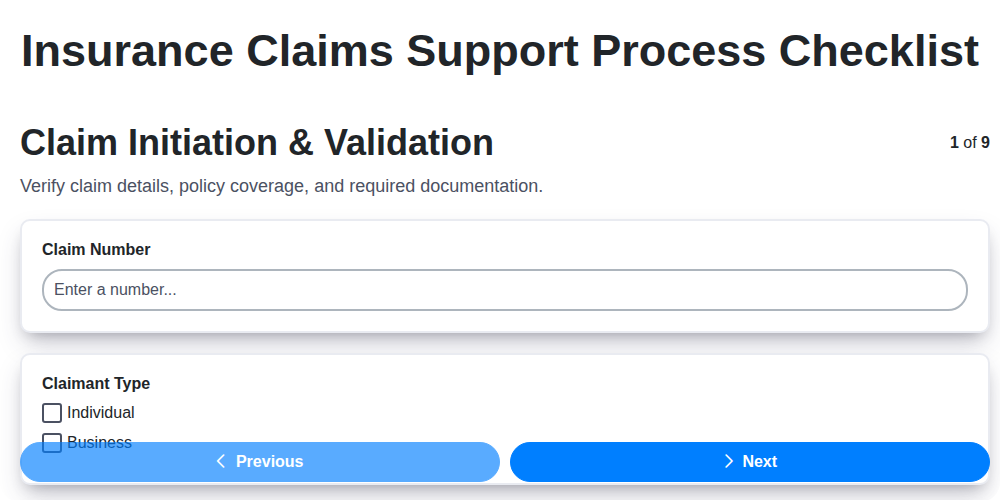
Streamline Claims: Your Insurance Claims Support Process Checklist Template
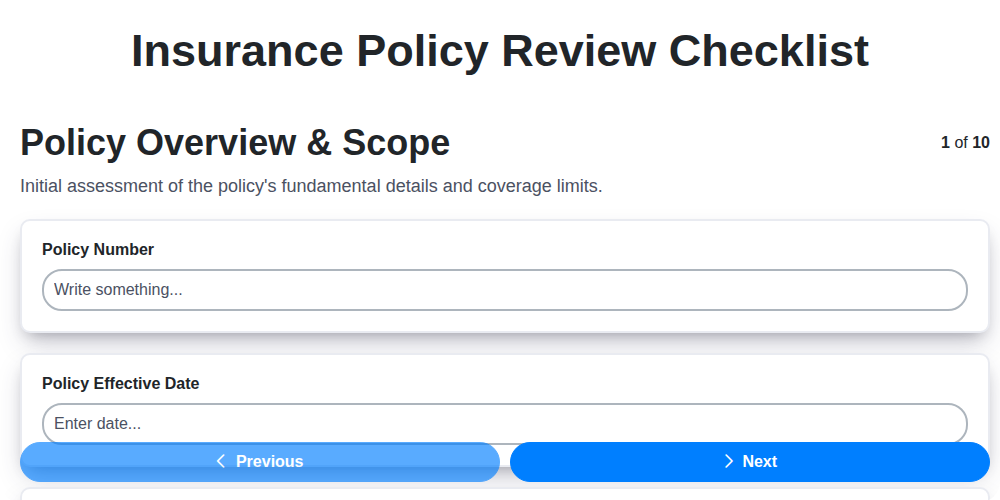
Your Insurance Policy Review Checklist: A Step-by-Step Guide
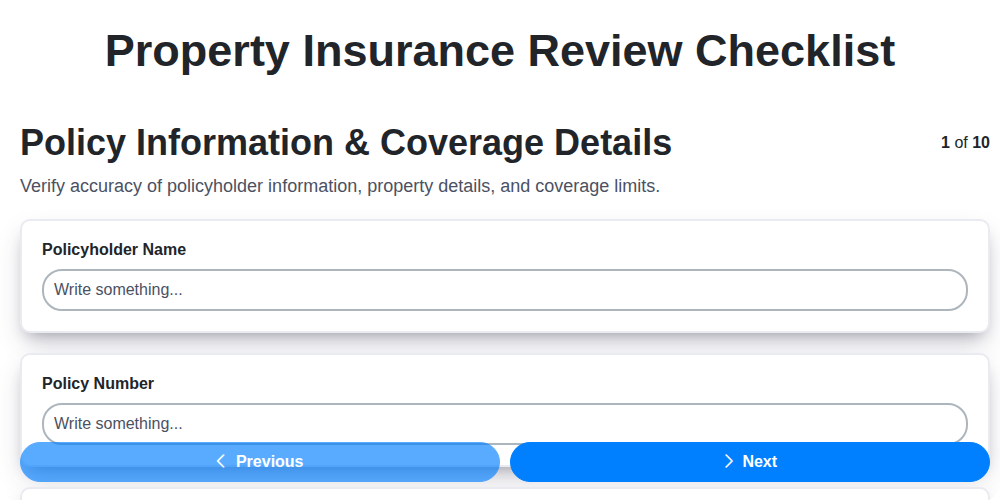
Your Property Insurance Review Checklist: A Step-by-Step Guide
Your Title Search & Insurance Checklist Template
Simplify Insurance Verification: Your Free Dental Checklist Template
Crop Insurance Policy Review Checklist: A Farmer's Guide

The Ultimate Vehicle Registration & Insurance Validation Checklist
Mastering the Policyholder Journey: Your Insurance Experience Survey Checklist
Need help with
Insurance?
Have a question? We're here to help. Please submit your inquiry, and we'll respond promptly.