Navigating Vendor Risk: Your Insurance Vendor Risk Management Checklist
Published: 12/01/2025 Updated: 07/02/2026
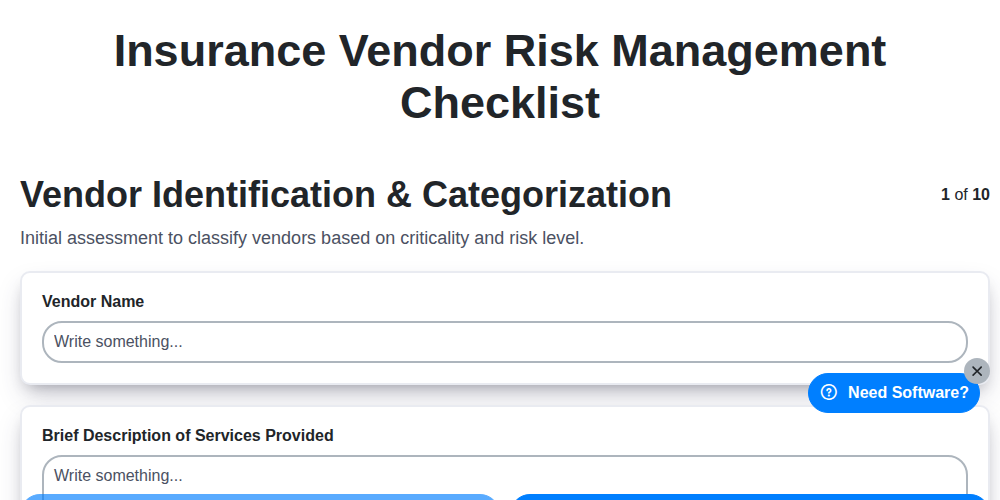
Table of Contents
- Introduction: Why Insurance Vendor Risk Management Matters
- 1. Vendor Identification & Categorization: Knowing Who You Work With
- 2. Financial Stability Assessment: Evaluating Vendor Viability
- 3. Cybersecurity Risk Assessment: Protecting Against Data Breaches
- 4. Data Privacy & Security Compliance: Meeting Regulatory Requirements
- 5. Business Continuity & Disaster Recovery: Ensuring Operational Resilience
- 6. Contractual Risk Mitigation: Defining Responsibilities and Liabilities
- 7. Performance Monitoring & Reporting: Tracking Vendor Effectiveness
- 8. Audit & Compliance Verification: Validating Vendor Practices
- 9. Insurance Coverage Review: A Critical Layer of Protection
- 10. Termination & Transition Planning: Minimizing Disruption
- 11. Due Diligence Checklist: Key Questions to Ask
- 12. Automation and Tools for Enhanced Risk Management
- Conclusion: Proactive Vendor Risk Management for Insurance Organizations
- Resources & Links
TLDR: Worried about the risks your insurance vendors pose? This checklist walks you through 10 crucial steps - from identifying vendors and assessing their financial health to ensuring data privacy, cybersecurity, and business continuity - so you can confidently manage those risks and protect your organization.
Introduction: Why Insurance Vendor Risk Management Matters
Insurance companies rely on a complex network of vendors to deliver services, manage technology, and handle critical business functions. From claims processing and data analytics to software solutions and facilities management, these relationships are vital. However, each vendor introduces potential risks - financial instability, cybersecurity breaches, data privacy violations, and operational disruptions - that can significantly impact your organization's reputation, financial stability, and regulatory compliance.
Ignoring or inadequately managing vendor risk in the insurance sector isn't just a potential problem; it's a growing liability. Increased regulatory scrutiny, evolving threat landscapes, and the interconnected nature of modern business demand a proactive and robust vendor risk management program. This isn't about creating unnecessary bureaucracy; it's about safeguarding your business, protecting your customers' data, and ensuring the continued delivery of essential services. A well-defined checklist, like the one we're outlining, offers a practical roadmap to achieving this.
1. Vendor Identification & Categorization: Knowing Who You Work With
Before you can even begin assessing risk, you need a clear understanding of who your vendors are and what they do. This seemingly simple step is foundational to a robust insurance vendor risk management program.
It's not enough to just have a list of vendor names. You need a systematic approach to identifying and categorizing them based on their role and potential impact on your organization. Here's how to get started:
- Comprehensive Inventory: Create a complete inventory of all vendors providing goods or services. This includes everything from cloud storage providers to payroll processors and marketing agencies. Don't underestimate the importance of every relationship, no matter how seemingly minor.
- Categorization by Risk Tier: Assign vendors to risk tiers (e.g., High, Medium, Low) based on factors such as the sensitivity of data they access, their criticality to business operations, and their potential impact in the event of a failure. Higher-risk vendors require more rigorous assessment and monitoring. Consider these factors:
- Data Access: Do they handle sensitive customer data, financial information, or proprietary business information?
- Criticality: How vital are their services to your core business functions?
- System Integration: How deeply integrated are their systems with yours?
- Documentation: Meticulously document each vendor's categorization, contact information, key services provided, and the rationale behind their assigned risk tier.
- Regular Updates: Vendor relationships evolve. Regularly review and update your vendor inventory and categorization (at least annually, and more frequently for high-risk vendors). New vendors are introduced, existing vendors change their services, and risk profiles shift.
By diligently implementing these steps, you're laying the groundwork for a more informed and effective vendor risk management program.
2. Financial Stability Assessment: Evaluating Vendor Viability
A vendor's financial health is a critical factor in risk management. A financially unstable vendor can lead to service disruptions, data breaches, or even complete failure, impacting your business operations and potentially leading to significant financial losses. This assessment goes beyond simply checking a credit score; it's about understanding their long-term viability.
Here's what a thorough financial stability assessment should include:
- Review Financial Statements: Analyze the vendor's balance sheets, income statements, and cash flow statements for the past 3-5 years. Look for trends in revenue, profitability, debt levels, and liquidity. Are they consistently profitable? Are their liabilities manageable?
- Credit Rating Analysis: Obtain and review the vendor's credit rating from reputable agencies. A lower rating indicates higher risk.
- News & Industry Analysis: Research the vendor's reputation and recent news. Are there any reports of financial difficulties, lawsuits, or restructuring? Understand the broader industry landscape - is the vendor operating in a volatile or declining market?
- Ownership & Funding: Investigate the vendor's ownership structure and sources of funding. Are they reliant on a single investor or client? Are they adequately capitalized?
- Key Customer Concentration: Determine if the vendor is overly reliant on a few key clients. Loss of even one major client could severely impact their stability.
- Assess Future Projections: While past performance is important, evaluate their projected growth and financial forecasts. Are these realistic given market conditions and their business model?
Documentation of this assessment and any identified weaknesses is essential. Implement mitigation strategies, such as requiring performance bonds or diversifying vendor relationships, if vulnerabilities are found.
3. Cybersecurity Risk Assessment: Protecting Against Data Breaches
Your insurance vendor handles sensitive data - client information, policy details, financial records - making them a prime target for cyberattacks. A robust cybersecurity risk assessment is not optional; it's a critical component of vendor risk management.
This assessment should go beyond superficial questionnaires. It requires a deep dive into the vendor's security posture. Here's what to consider:
- Security Framework Alignment: Does the vendor adhere to recognized security frameworks like NIST, ISO 27001, or SOC 2? Understanding their framework and level of certification provides a baseline for their security practices.
- Vulnerability Management: How frequently do they scan for vulnerabilities? What's their process for patching identified weaknesses? Demand transparency into their vulnerability management lifecycle.
- Incident Response Plan: A comprehensive Incident Response Plan (IRP) is essential. Review their plan, including testing and training protocols. What steps do they take when a breach occurs? Who is responsible?
- Data Encryption: Is data encrypted both in transit and at rest? What encryption standards are employed?
- Access Controls: Are access controls strictly enforced, limiting access to sensitive data on a need-to-know basis? Multi-factor authentication (MFA) should be mandatory.
- Third-Party Security Reviews: Do they regularly assess the security of their vendors (sub-vendors)? The chain of security is only as strong as the weakest link.
- Penetration Testing: Are they subject to regular penetration testing by qualified professionals? Results should be shared and remediation plans implemented.
Don't just accept self-assessments. Request evidence, audit reports, and engage your own cybersecurity experts to validate their claims. Failing to adequately assess cybersecurity risk leaves your organization vulnerable to devastating data breaches and reputational damage.
4. Data Privacy & Security Compliance: Meeting Regulatory Requirements
Insurance vendors often handle sensitive customer data, making robust data privacy and security compliance absolutely critical. Failure to adhere to regulations like GDPR, CCPA, HIPAA (if applicable), and state-specific laws can result in hefty fines, reputational damage, and legal action. This isn't just about ticking boxes; it's about demonstrating a proactive and ongoing commitment to protecting personal information.
Here's what your checklist should cover:
- Data Mapping & Inventory: Do you know exactly what data your vendor collects, processes, stores, and transmits? A detailed data map is essential.
- Compliance Framework Alignment: Does the vendor's security program align with relevant regulatory frameworks? Request documentation outlining their compliance efforts.
- Data Processing Agreements (DPAs): Ensure robust DPAs are in place outlining responsibilities for data processing, security measures, and data subject rights.
- Data Subject Rights Fulfillment: Assess the vendor's ability to respond to data subject requests (access, rectification, deletion, portability) within required timelines.
- Privacy Policy Transparency: Review the vendor's privacy policy to ensure clarity and accuracy regarding data handling practices.
- Training & Awareness: Confirm that vendor employees receive regular training on data privacy and security best practices.
- Incident Response Plan: Evaluate the vendor's incident response plan for data breaches - is it effective, and are you included in the notification process?
- Regular Assessments & Audits: Demand evidence of ongoing assessments and audits to verify compliance and identify vulnerabilities.
5. Business Continuity & Disaster Recovery: Ensuring Operational Resilience
Your insurance vendor isn't just providing a service; they're an extension of your own operations. A disruption to their business can directly and significantly impact your ability to serve clients and manage risk. A robust Business Continuity and Disaster Recovery (BCDR) plan is no longer a nice-to-have; it's a critical element of vendor risk management.
Here's what you need to assess:
- Documented Plan Existence: Does the vendor have a comprehensive, written BCDR plan? Don't accept vague assurances - demand documentation.
- Scope & Coverage: Does the plan cover all critical functions and systems? Specifically, consider how it addresses potential disruptions like natural disasters, cyberattacks, and pandemics.
- Regular Testing & Updates: How often does the vendor test their BCDR plan? Testing identifies weaknesses and ensures the plan remains effective. Look for evidence of periodic reviews and updates based on test results and changes in the threat landscape.
- Recovery Time Objectives (RTOs) & Recovery Point Objectives (RPOs): Understand the vendor's RTOs (how long it takes to restore services) and RPOs (maximum acceptable data loss). Are these acceptable to your organization, considering your own business requirements? Discrepancies can expose your business to unacceptable risk.
- Communication Protocols: How will the vendor communicate with you and your clients during a disruptive event? Clear and timely communication is vital for maintaining trust and minimizing panic.
- Employee Training: Are employees adequately trained on BCDR procedures? A well-written plan is useless if staff don't know how to execute it.
A thorough assessment of your vendor's BCDR plan provides reassurance and allows you to develop contingency plans for potential vendor-related outages.
6. Contractual Risk Mitigation: Defining Responsibilities and Liabilities
Your insurance vendor relationship shouldn't just be about premiums; it's a legally binding agreement. A robust contractual risk mitigation strategy ensures clear delineation of responsibilities and limits potential liabilities for your organization. This section moves beyond simply having a contract; it focuses on ensuring it actively protects you.
Key areas to scrutinize within your insurance vendor contracts include:
- Scope of Services: Precisely define what services the vendor provides. Ambiguity here can lead to disputes later.
- Indemnification Clauses: Understand the vendor's liability for losses arising from their negligence or errors. Negotiate favorable terms limiting their exposure while protecting your organization.
- Data Security & Privacy Obligations: Mirror your own data security and privacy requirements in the contract. Stipulate data breach notification procedures, incident response plans, and liabilities for data compromise.
- Subcontractor Management: If the vendor uses subcontractors, ensure they are also bound by the same contractual obligations and undergo your due diligence. The vendor shouldn't be a shield for poorly vetted subcontractors.
- Right to Audit: Include a clause allowing you to audit the vendor's processes and security controls to verify compliance with contractual requirements.
- Termination for Cause: Clearly define the conditions under which you can terminate the contract due to non-performance or breach of obligations.
- Service Level Agreements (SLAs): Establish measurable performance standards and consequences for failing to meet them.
Regularly review these clauses and ensure they remain aligned with evolving regulatory requirements and your organization's risk appetite. Don't assume the initial contract will suffice - proactive updates are crucial.
7. Performance Monitoring & Reporting: Tracking Vendor Effectiveness
Performance monitoring and reporting are crucial for ensuring your insurance vendor continues to meet your needs and mitigate potential risks. It's not enough to simply onboard a vendor and assume they're consistently delivering. Regular, data-driven assessment is key.
What to Monitor:
- Service Level Agreements (SLAs): Are they consistently meeting agreed-upon metrics? Track key performance indicators (KPIs) outlined in your contract. This might include response times, accuracy rates, error rates, and project completion timelines.
- Incident Response: Document and track all incidents related to the vendor. Analyze response times, resolution quality, and root causes to identify areas for improvement.
- Issue Resolution: How effectively are vendor-related issues resolved? Track resolution times and customer satisfaction related to those resolutions.
- Customer Feedback: Regularly collect feedback from internal stakeholders who interact with the vendor. This provides valuable insights into the vendor's performance and identify potential pain points.
- Cost Efficiency: Track vendor costs against budget and identify opportunities for optimization.
- Innovation & Proactive Engagement: Does the vendor actively seek ways to improve service or offer innovative solutions?
Reporting & Action:
- Establish Clear Reporting Cadence: Implement a regular reporting schedule (monthly, quarterly) to review vendor performance.
- Develop a Performance Scorecard: Create a scorecard to visually represent performance against agreed-upon KPIs.
- Escalation Procedures: Define clear escalation paths for addressing performance issues.
- Regular Review Meetings: Conduct regular meetings with the vendor to discuss performance, identify challenges, and collaborate on solutions.
- Documentation: Maintain detailed records of performance data, review findings, and corrective actions taken.
Consistent performance monitoring and reporting allows for proactive risk mitigation, strengthens vendor relationships, and ultimately ensures you're receiving the value you expect from your insurance vendor.
8. Audit & Compliance Verification: Validating Vendor Practices
Regular audits and compliance verification are critical for ensuring your insurance vendor maintains the standards you initially assessed and agreed upon. This isn't a one-and-done process; vendor risk evolves, and so should your oversight.
What does this entail?
- Scheduled Audits: Implement a schedule for periodic audits, frequency based on vendor risk categorization (higher risk = more frequent audits). These audits can be performed by your internal team, a third-party auditor, or a combination of both.
- Review of Certifications & Attestations: Continuously monitor vendor-provided certifications (e.g., SOC 2, ISO 27001, PCI DSS). Verify that these are current and applicable to the services they provide to you. Don't just accept them; actively review their scope and findings.
- Independent Verification: Where possible, seek independent verification of vendor claims. This could involve reviewing publicly available information, industry reports, or engaging with other clients of the vendor.
- Right to Audit Clauses: Ensure your contracts include clauses granting you the right to audit the vendor's security controls and compliance posture. Exercise this right periodically.
- Remediation Tracking: If audit findings reveal deficiencies, track remediation efforts. Establish clear timelines for corrective actions and follow up to ensure they are completed effectively.
- Documentation: Maintain meticulous records of all audits, findings, and remediation activities. This provides an audit trail and supports continuous improvement.
Failing to regularly verify vendor compliance opens your organization to significant risks, potentially undermining the benefits of outsourcing.
9. Insurance Coverage Review: A Critical Layer of Protection
While robust vendor risk management involves layers of due diligence, insurance coverage review often gets overlooked. It shouldn't. It's a final, vital safety net, providing financial recourse should a vendor-related incident occur despite all your preventative measures.
This review goes beyond simply confirming the vendor has insurance. It's about understanding:
- Policy Types & Limits: Do they have the right types of coverage (e.g., General Liability, Professional Liability/Errors & Omissions, Cyber Liability)? Are the coverage limits sufficient to cover potential losses your organization might face? Consider the scale of your reliance on the vendor and the potential impact of a breach or failure.
- Coverage Scope: What specific risks and liabilities are covered? Are there any exclusions that could leave you exposed? Pay particular attention to exclusions related to data breaches, cyberattacks, and regulatory fines.
- Certificate of Insurance (COI) Validation: Ensure the COI is current and reflects accurate information. Verify the listed insurance carrier is legitimate and the policy is still in effect.
- Your Organization as an Additional Insured: Ideally, your organization should be listed as an additional insured on the vendor's policy. This grants you certain rights and protections under their insurance coverage.
- Regular Review & Updates: Insurance policies expire and circumstances change. Conduct regular reviews (at least annually, or more frequently for high-risk vendors) to confirm continued coverage and adequacy.
Don't view insurance coverage as a replacement for effective risk mitigation. Think of it as a crucial, yet often forgotten, component of a comprehensive vendor risk management program. It's about being prepared for the unexpected and minimizing potential financial fallout.
10. Termination & Transition Planning: Minimizing Disruption
Even the most successful vendor relationships eventually come to an end. A robust termination and transition plan is crucial for ensuring a smooth handover and minimizing operational disruption when that time arrives. Don't leave this until the last minute - proactive planning can save significant headaches (and potential financial losses).
Here's what your termination & transition plan should cover:
- Defined Exit Process: Outline the steps required for termination within the vendor contract, including notice periods and associated fees.
- Data Retrieval & Ownership: Clearly define the process for retrieving all data (including backups) held by the vendor, ensuring its ownership transfers to your organization or a designated successor. This should include formats, deadlines, and secure transfer methods.
- System Access Revocation: Establish a detailed schedule for revoking vendor access to your systems and data. This needs to be coordinated to prevent service interruptions.
- Knowledge Transfer: Mandate a thorough knowledge transfer process, including documentation and training for your internal teams or a replacement vendor. Don't assume everything is documented; proactive training sessions are essential.
- Transition of Services: Plan for the seamless transition of services to a new vendor or internal team, including potential overlap during a transition period.
- Communication Plan: Develop a communication plan to inform relevant stakeholders (employees, customers, partners) about the vendor transition and any potential impact.
- Legal Review: Engage legal counsel to review the termination process and ensure compliance with contractual obligations.
- Contingency Planning: What happens if the vendor is uncooperative or the transition encounters unexpected challenges? Define fallback plans to mitigate risks.
A well-defined termination and transition plan isn't just about ending a relationship; it's about safeguarding your business and ensuring continued operational efficiency.
11. Due Diligence Checklist: Key Questions to Ask
Thorough due diligence is the cornerstone of effective insurance vendor risk management. This isn't just about checking boxes; it's about understanding the vendor's capabilities, potential vulnerabilities, and alignment with your organization's risk appetite. Here's a breakdown of key questions to ask across each area of your checklist:
1. Vendor Identification & Categorization:
- Why was this vendor selected? What services/products are they providing?
- What is the vendor's criticality to our business operations? (High, Medium, Low)
- What data do they access, store, or process on our behalf?
2. Financial Stability Assessment:
- Can you provide audited financial statements for the last three years?
- What is your current credit rating?
- What are your key revenue streams and dependencies?
- Do you have any outstanding legal judgments or claims?
3. Cybersecurity Risk Assessment:
- What cybersecurity frameworks do you adhere to (e.g., NIST, ISO 27001)?
- Can you provide details of your security certifications and audit results?
- What penetration testing and vulnerability scanning processes do you have in place?
- What is your incident response plan, and how frequently is it tested?
- How do you manage third-party access to your systems and data?
4. Data Privacy & Security Compliance:
- What data privacy regulations do you comply with (e.g., GDPR, CCPA)?
- What data encryption methods do you use, both in transit and at rest?
- How do you ensure data accuracy and integrity?
- What is your data retention policy?
5. Business Continuity & Disaster Recovery:
- Do you have a documented Business Continuity Plan (BCP) and Disaster Recovery Plan (DRP)?
- How frequently are these plans tested and updated?
- What is your Recovery Time Objective (RTO) and Recovery Point Objective (RPO)?
- What alternative facilities or systems do you have in place?
6. Contractual Risk Mitigation:
- Does your contract include clauses addressing data breach notification, indemnity, and liability?
- Are there clear performance metrics and service level agreements (SLAs) defined?
- Does the contract allow for audit rights and access to relevant documentation?
- Are there provisions for termination and transition of services?
7. Performance Monitoring & Reporting:
- What Key Performance Indicators (KPIs) do you track related to service delivery?
- How often do you provide performance reports?
- What mechanisms are in place to address and resolve performance issues?
8. Audit & Compliance Verification:
- Can you provide copies of independent audit reports (e.g., SOC 2)?
- What regulatory compliance requirements are relevant to your business?
- How do you ensure ongoing compliance with these requirements?
9. Termination & Transition Planning:
- What is your process for transitioning services back to us or to a new vendor?
- How will data be returned or destroyed upon termination?
- What support will you provide during the transition period?
10. Insurance Coverage Review:
- What types and amounts of insurance coverage do you maintain (e.g., Professional Liability, Cyber Liability)?
- Can we review your insurance certificates of coverage?
- Does your insurance coverage adequately address potential risks associated with our relationship?
Asking these questions - and digging deeper into the answers - will significantly strengthen your insurance vendor risk management program.
12. Automation and Tools for Enhanced Risk Management
Manually managing vendor risk across these ten critical areas (and beyond!) is a daunting task. Thankfully, modern technology offers powerful solutions to streamline and improve your processes. Automation isn't about replacing human oversight - it's about freeing up your team to focus on the nuanced aspects of risk assessment and mitigation.
Here's how automation and specialized tools can help:
- Centralized Vendor Portals: Platforms that provide vendors with a secure space to update their information, certifications, and security questionnaires, reducing the administrative burden on your team.
- Automated Risk Scoring: Leverage algorithms to assign risk scores based on vendor data, allowing you to prioritize high-risk vendors for deeper investigation.
- Continuous Monitoring: Set up automated scans and alerts for changes in vendor risk profiles, such as changes in financial stability ratings, data breaches, or regulatory updates.
- Workflow Automation: Automate tasks like sending questionnaires, tracking remediation plans, and generating reports, ensuring consistency and efficiency.
- Integration with Existing Systems: Connect your vendor risk management tools with your existing procurement, security, and compliance systems for a holistic view of vendor risk.
- Data Analytics and Reporting: Utilize dashboards and reports to visualize vendor risk trends, identify vulnerabilities, and demonstrate compliance.
Choosing the right tools depends on your organization's size, complexity, and risk appetite. Consider solutions that offer flexibility, scalability, and integration capabilities to maximize your return on investment.
Conclusion: Proactive Vendor Risk Management for Insurance Organizations
Navigating the intricate landscape of vendor relationships is no longer optional for insurance organizations; it's a critical component of overall risk management. The checklist we've outlined-covering vendor identification, financial stability, cybersecurity, data privacy, business continuity, contractual mitigation, performance monitoring, audit verification, termination planning, and crucially, insurance coverage-provides a robust framework for minimizing potential disruptions and protecting your organization's reputation and bottom line.
Remember, vendor risk isn't a one-time project. It's an ongoing process requiring continuous monitoring, periodic reassessments, and adaptation to evolving threats and regulatory requirements. By embracing a proactive and disciplined approach, insurance organizations can build resilience, foster trust with stakeholders, and ultimately, focus on their core business of providing vital protection and service. Don't wait for a crisis to highlight vulnerabilities - build a strong foundation of vendor risk management today.
Resources & Links
- National Cyber Security Centre (NCSC): Provides guidance, advice, and resources on cybersecurity risk management, crucial for assessing vendor cybersecurity posture. Relevant for header 3 & 12.
- Financial Stability Oversight Council (FSOC): While broader than just insurance, FSOC's publications on systemic risk and third-party risk management provide valuable context, particularly for financial stability assessment (header 2).
- International Organization for Standardization (ISO): ISO 27001 (Information Security Management) and related standards are frequently referenced in vendor risk assessments. Useful for headers 3, 4 & 8.
- National Institute of Standards and Technology (NIST): NIST provides frameworks and guidelines for cybersecurity risk management and data privacy, including the Cybersecurity Framework and Privacy Framework. Relevant for headers 3, 4 & 12.
- American Institute of Certified Public Accountants (AICPA): AICPA provides resources and standards related to SOC 2 and other attestation engagements, which can be used to verify vendor controls and practices (header 8).
- HITRUST Alliance: While primarily focused on healthcare, HITRUST's Common Security Framework (CSF) offers a comprehensive risk management approach and provides a valuable model for assessing vendor controls, adaptable to various industries. (header 8).
- GDPR Official Website: Provides comprehensive information on the General Data Protection Regulation, essential for data privacy and security compliance (header 4).
- U.S. Small Business Administration (SBA): While focused on small businesses, SBA resources on disaster preparedness and business continuity planning provide basic concepts useful for assessing vendor resilience (header 5).
- Risk Management Institute (RMI): RMI provides resources and training on various risk management topics, including vendor risk management and insurance. (header 9).
- Australian Cyber Security Centre (ACSC): Similar to the NCSC, ACSC offers practical advice and guides on cybersecurity risk management for organizations, relevant for header 3 and 12.
- National Association for Information Destruction (NAID): Provides resources and certification related to data destruction, important for assessing vendor practices when dealing with sensitive data. Useful if the vendor handles data destruction (Header 3, 4).
- ISACA COBIT: COBIT (Control Objectives for Information and Related Technologies) is a widely used framework for IT governance and management, can enhance the process for assessing and monitoring controls (Header 12).
- Legal Sifter: Provides contract review and analysis tools to assess vendor agreements. Can be helpful for contractual risk mitigation (header 6).
Frequently Asked Questions
What is vendor risk management?
Vendor risk management (VRM) is the process of identifying, assessing, and mitigating risks associated with third-party vendors who provide goods or services to your organization. It's about ensuring these vendors don't introduce vulnerabilities that could harm your data, reputation, or operations.
Why is insurance a critical component of vendor risk management?
Insurance, particularly liability and cybersecurity insurance, demonstrates a vendor's commitment to mitigating financial and operational risks. It provides a layer of protection for your organization should a vendor incident occur and impact your business.
What are the key areas to assess when reviewing a vendor's insurance coverage?
Key areas include coverage types (general liability, professional liability, cyber liability), coverage limits, deductibles, policy period, exclusions, and endorsements. You should also verify the insurer's financial stability and reputation.
What are common insurance coverage types I should look for in a vendor's insurance?
Essential coverage types include: General Liability (GL) for bodily injury and property damage, Professional Liability (E&O) for negligence claims, Cyber Liability for data breaches and cyberattacks, and Workers' Compensation (if applicable).
How do I verify a vendor's insurance coverage is active and meets my requirements?
Request Certificates of Insurance (COIs) directly from the vendor's insurance provider. Don't accept COIs from the vendor's internal sources. Verify the COI details match your contractual requirements and confirm the policy is currently active.
What is a Certificate of Insurance (COI), and why is it important?
A COI is a document provided by an insurance company that summarizes a vendor's insurance coverage. It provides proof that a vendor carries the insurance policies required by your contract.
What is a 'representation and warranty' regarding insurance, and why should I include it in vendor contracts?
A representation and warranty requires the vendor to confirm, in writing, that they maintain the specified insurance coverage. It provides legal recourse if the coverage is inaccurate or lapses.
What are endorsements, and why are they important when evaluating vendor insurance?
Endorsements are additions to an insurance policy that modify or expand coverage. Key endorsements to look for include naming your organization as an 'additional insured' and specifying coverage for cyber incidents.
What does it mean to be an 'additional insured' on a vendor's policy?
Being an additional insured means your organization is included under the vendor's insurance policy, providing you with some protection in the event of a claim arising from the vendor's actions or omissions.
How often should I review vendor insurance coverage?
At a minimum, review vendor insurance annually, or more frequently if the vendor's risk profile changes, there are significant operational changes, or the insurance policy expires.
Comments
There are no comments yet. Be the first to add one!
Insurance Management Solution Demo
Managing policies, claims, and compliance in the insurance industry is complex. ChecklistGuro's Work OS platform streamlines your operations, from underwriting and renewals to claims processing and reporting. Improve efficiency, reduce errors, and enhance customer satisfaction. Discover how ChecklistGuro can transform your insurance business!
Related Articles
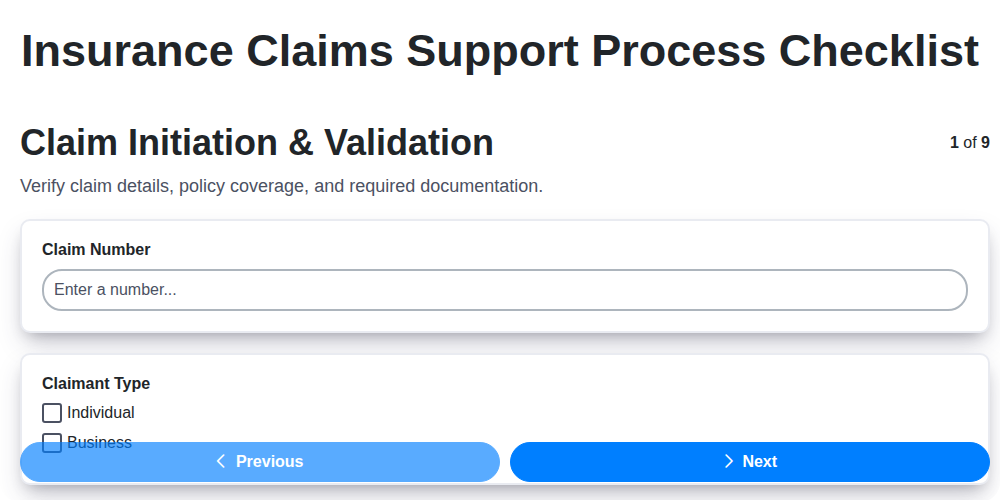
Streamline Claims: Your Insurance Claims Support Process Checklist Template
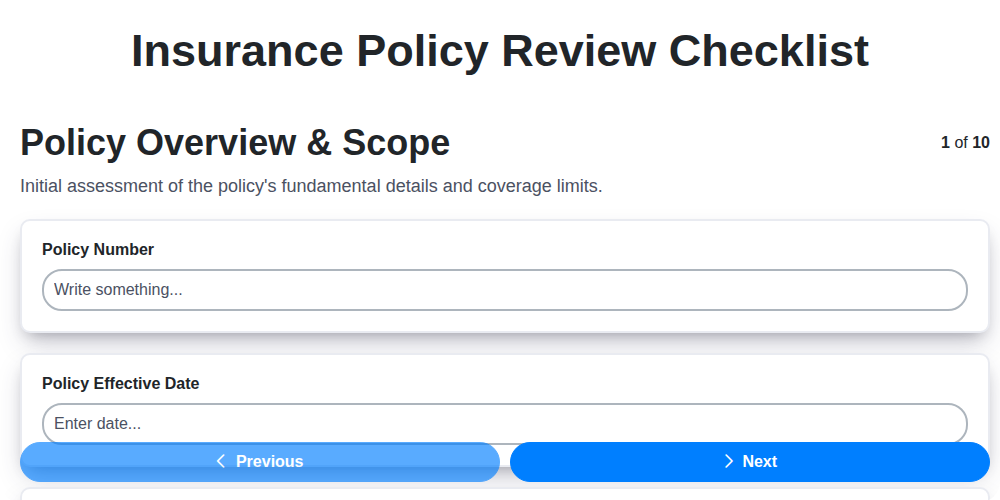
Your Insurance Policy Review Checklist: A Step-by-Step Guide
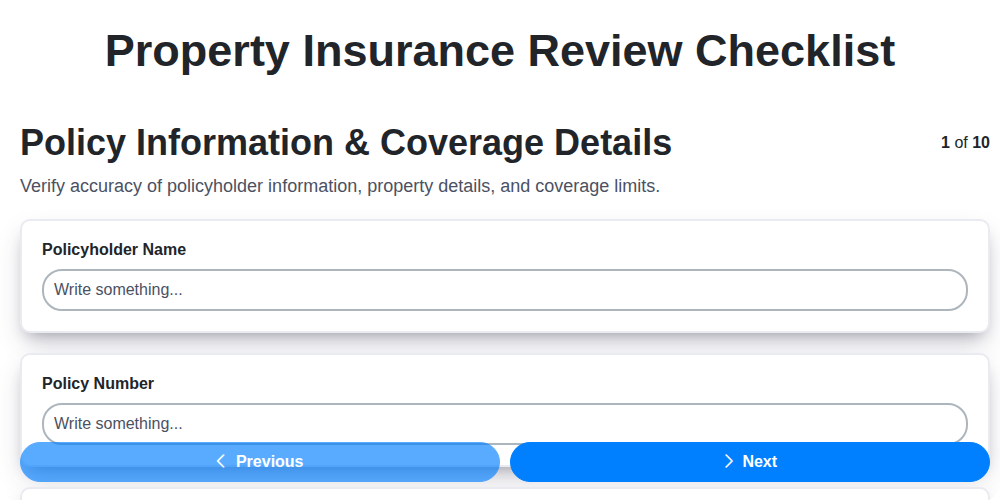
Your Property Insurance Review Checklist: A Step-by-Step Guide
Your Title Search & Insurance Checklist Template
Simplify Insurance Verification: Your Free Dental Checklist Template
Crop Insurance Policy Review Checklist: A Farmer's Guide

The Ultimate Vehicle Registration & Insurance Validation Checklist
Mastering the Policyholder Journey: Your Insurance Experience Survey Checklist
Need help with
Insurance?
Have a question? We're here to help. Please submit your inquiry, and we'll respond promptly.