Streamlining Change: A Manufacturing Engineering Change Order (ECO) Workflow Guide
Published: 03/30/2026 Updated: 03/31/2026
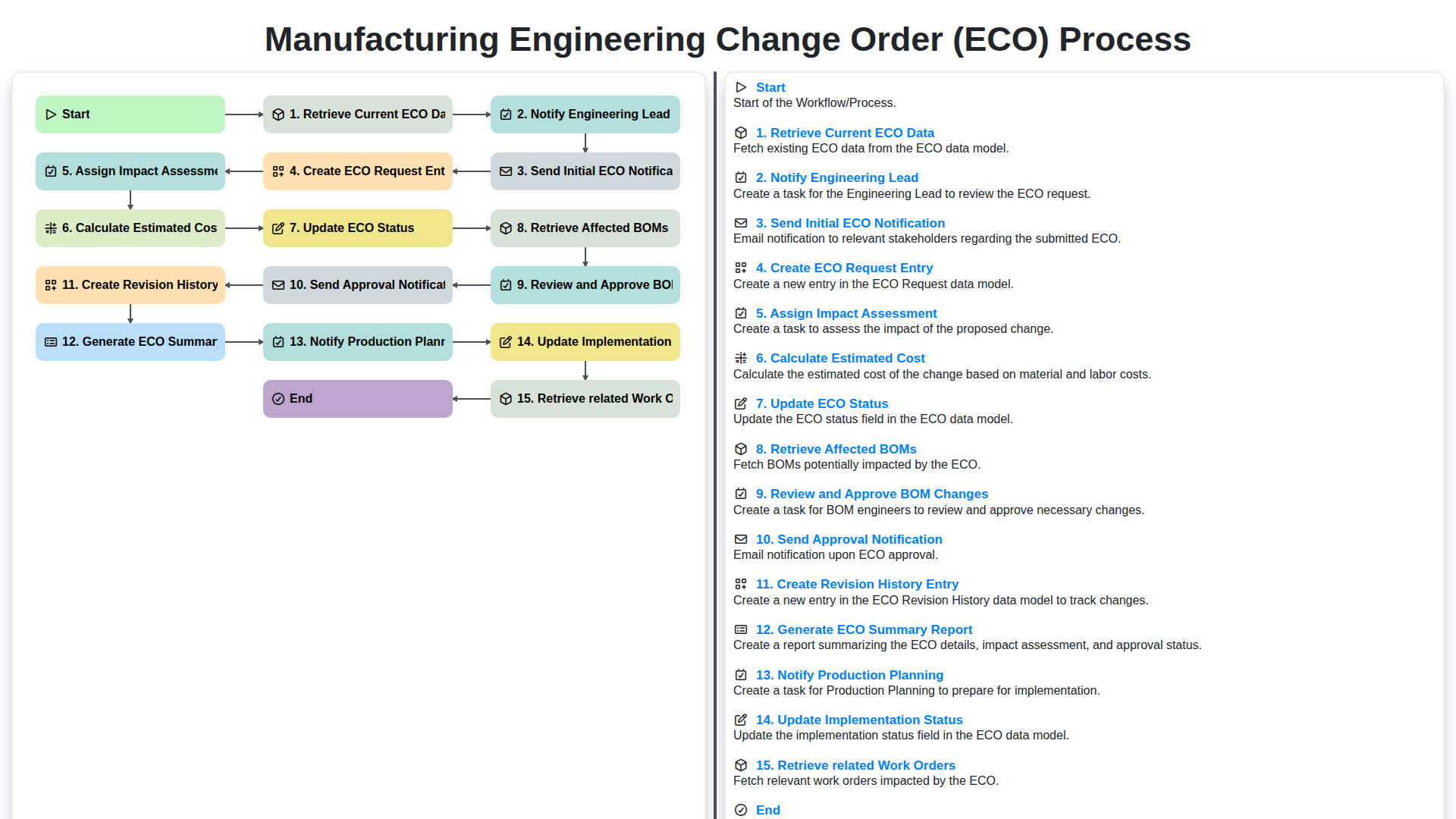
Table of Contents
- Understanding the Engineering Change Order (ECO) Process
- Why a Robust ECO Workflow Matters
- Step 1: Retrieving Current ECO Data - The Foundation
- Step 2: Engineering Lead Notification & Initial Assessment
- Step 3: Sending the Initial ECO Notification
- Step 4: Creating the ECO Request Entry - Defining the Change
- Step 5: Impact Assessment - Identifying Affected Areas
- Step 6: Calculating Estimated Costs - A Critical Evaluation
- Step 7: Updating ECO Status - Tracking Progress
- Step 8: Retrieving Affected Bills of Materials (BOMs) - Mapping the Impact
- Step 9: Reviewing and Approving BOM Changes - Ensuring Accuracy
- Step 10: Sending Approval Notifications - Transparency and Communication
- Step 11: Creating Revision History Entry - Maintaining Records
- Step 12: Generating ECO Summary Report - Concise Overview
- Resources & Links
TLDR: This workflow guides you through managing Engineering Change Orders (ECOs) - from initial request and impact assessment, through BOM revisions and cost calculation, to final implementation and reporting. It ensures a controlled and documented process for manufacturing changes, minimizing errors and maximizing efficiency.
Understanding the Engineering Change Order (ECO) Process
The Engineering Change Order (ECO) process is a critical element of any manufacturing operation. It's the formalized system for managing and documenting changes to products, designs, or manufacturing processes. Without a robust ECO process, you risk errors, inconsistencies, wasted resources, and potentially compromised product quality. Here's a breakdown of the typical workflow, step-by-step:
1. Retrieve Current ECO Data: The process begins by accessing and reviewing existing ECO data. This ensures everyone involved has a clear baseline understanding of the current state.
2. Notify Engineering Lead: The engineering lead is alerted to the potential change request. This ensures they are aware and can provide initial guidance.
3. Send Initial ECO Notification: A notification is sent to relevant stakeholders, informing them of the proposed change and its potential impact.
4. Create ECO Request Entry: A formal ECO request is created within the system, detailing the change, the reason for the change, and the individuals involved.
5. Assign Impact Assessment: The ECO is assigned to an individual or team to assess the potential impact of the change on various departments (e.g., engineering, manufacturing, procurement, quality).
6. Calculate Estimated Cost: A detailed cost analysis is performed to determine the financial implications of implementing the change, including material costs, labor, tooling, and potential rework.
7. Update ECO Status: The ECO status is updated to reflect the ongoing assessment and costing process.
8. Retrieve Affected BOMs: The Bill of Materials (BOM) is analyzed to identify which components and assemblies are impacted by the proposed change.
9. Review and Approve BOM Changes: Engineering and related teams thoroughly review the proposed BOM changes to ensure accuracy and feasibility.
10. Send Approval Notification: Once approved, a notification is sent to all relevant stakeholders, confirming the changes.
11. Create Revision History Entry: A detailed record of the ECO, including approvals and changes, is added to the revision history.
12. Generate ECO Summary Report: A comprehensive report summarizing the ECO, its impact, and its implementation plan is generated.
13. Notify Production Planning: Production planning is informed of the change, allowing them to adjust production schedules and material requirements accordingly.
14. Update Implementation Status: The ECO's implementation status is regularly updated to track progress and identify any roadblocks.
15. Retrieve Related Work Orders: All related work orders are reviewed and adjusted to reflect the implemented changes.
This structured approach ensures that all changes are carefully considered, documented, and communicated throughout the organization, minimizing risk and maximizing efficiency.
Why a Robust ECO Workflow Matters
A haphazard approach to Engineering Change Orders (ECOs) can quickly snowball into a manufacturing nightmare. Think scrapped parts, production delays, increased costs, and frustrated teams. A robust ECO workflow isn's just about ticking boxes; it's about minimizing risk and maximizing efficiency.
Without a clearly defined process, it's easy for changes to be implemented incorrectly, leading to quality issues and potential recalls. A well-structured workflow ensures every change is properly vetted, documented, and communicated across departments, from engineering and procurement to production and quality control. This transparency reduces errors, improves accountability, and fosters a culture of continuous improvement. Ultimately, a solid ECO workflow protects your company's reputation, safeguards your bottom line, and keeps your manufacturing process running smoothly.
Step 1: Retrieving Current ECO Data - The Foundation
Before any change can be managed effectively, we need a clear understanding of the existing state. This is where retrieving current ECO data becomes paramount. This isn't simply about pulling up a document; it's about gathering a complete snapshot of the ECO's history, current status, related documents, and any previous iterations.
This initial data retrieval involves accessing the central ECO management system - whether that's a dedicated software platform, a shared database, or even a meticulously maintained spreadsheet (though we strongly recommend the former!). The information retrieved should include details like the ECO number, description, initiating engineer, date of submission, current status, and any attached files (drawings, specifications, analyses, etc.).
Having this foundational data readily available ensures that everyone involved is operating from the same base of information, preventing misunderstandings and ensuring traceability throughout the entire ECO process. It sets the stage for accurate impact assessment and informed decision-making in the subsequent steps. Think of it as the ground truth against which all proposed changes will be evaluated.
Step 2: Engineering Lead Notification & Initial Assessment
Once an ECO Request Entry is created (Step 2), the next crucial step is to notify the Engineering Lead. This isn't just a courtesy; it's a critical part of the assessment process. The notification typically includes a summary of the initial request - the problem being addressed, the proposed solution (if any), and the originating department.
The Engineering Lead's role at this stage is a rapid initial assessment. They're evaluating the scope of the change request - is it a minor tweak or a significant overhaul? They're looking for potential red flags, considering the potential impact on existing designs and production processes, and gauging the urgency. This isn't a detailed technical review, but a preliminary judgment that helps prioritize the ECO within the team's workload and determine the resources needed for further investigation. Their feedback at this point, whether it's a simple acknowledgement, a request for clarification, or a preliminary assessment of feasibility, is vital to keeping the process moving efficiently. This step often concludes with a brief, documented assessment noting the lead's initial thoughts and any immediate questions or concerns.
Step 3: Sending the Initial ECO Notification
Once the ECO Request Entry is created, a crucial step is to proactively inform key stakeholders. This Initial ECO Notification isn't just a courtesy; it's a critical communication checkpoint. This notification, typically automated through the workflow system, alerts the impacted teams - including Design, Manufacturing, Procurement, and Quality - that an ECO is being initiated. The notification should include the ECO number, a brief description of the change, and the name of the originator. This early heads-up allows teams to prepare for potential impacts and resource allocation discussions, reducing potential bottlenecks later in the process. It fosters transparency and ensures everyone is on the same page from the outset.
Step 4: Creating the ECO Request Entry - Defining the Change
This is where the details of the proposed engineering change are formally documented. The ECO Request Entry is the foundation of the entire process, so accuracy and thoroughness are critical. This stage moves beyond simply identifying a problem; it outlines the solution and its specifics.
Typically, this involves completing a structured form within your ECO management system. Key fields will include:
- Description of Change: A clear and concise explanation of what is being changed. Avoid vague terms; be specific about affected components, assemblies, or processes.
- Reason for Change: Why is this change necessary? Is it for cost reduction, quality improvement, obsolescence mitigation, or a correction of an error? Document the root cause if known.
- Proposed Solution: Detail the technical solution. What specific part is being replaced? What design modification is being implemented? Include part numbers, drawings, or specifications where applicable.
- Justification: A more detailed explanation supporting the proposed solution. This should address any potential risks or trade-offs associated with the change.
- Requested Implementation Date: When is this change needed? This is important for production planning and scheduling.
- Requested By: Identifies the engineer or team initiating the change request.
- Attachments: Include any relevant documents such as drawings, specifications, failure analysis reports, or supplier quotes.
A well-defined ECO Request Entry serves as the communication hub for the change process, ensuring that all stakeholders have a shared understanding of the proposed modification. It prevents misinterpretations and streamlines the subsequent review and approval stages.
Step 5: Impact Assessment - Identifying Affected Areas
This is arguably one of the most critical steps in the ECO process. A thorough impact assessment goes beyond simply acknowledging the change; it actively identifies everything that will be affected. This isn't just about the immediate part being modified; it's about ripple effects throughout the manufacturing process.
The assigned impact assessment team (often including representatives from Engineering, Quality, Procurement, and Production) meticulously examines the proposed change and considers factors such as:
- Affected Components: Which specific parts are directly impacted by the change?
- Affected Assemblies: Which assemblies incorporate these components?
- Affected Work Instructions: Do current work instructions need to be revised or created?
- Affected Equipment: Will any equipment require adjustments or modifications?
- Affected Suppliers: Do suppliers need to be notified and provided with revised specifications?
- Affected Regulatory Compliance: Does this change impact compliance with any industry regulations or standards?
- Impact on Quality: How might the change affect product quality and reliability?
- Impact on Production Schedules: Will this change impact current production schedules and delivery dates?
This assessment is documented, detailing the scope of the change and a preliminary list of areas requiring attention. A detailed, well-documented impact assessment minimizes costly surprises and rework later in the process. This information feeds directly into the Cost Calculation phase and informs the subsequent planning and implementation activities.
Step 6: Calculating Estimated Costs - A Critical Evaluation
Accurately calculating the estimated cost of an ECO is arguably one of the most critical junctures in the entire process. It's not just about a quick sum of parts; it's a holistic evaluation of the ripple effect the change will have on the manufacturing operation. A flawed cost estimate can lead to project delays, budget overruns, and ultimately, a less-than-optimal solution.
This calculation should encompass more than just the cost of new or changed components. It needs to consider:
- Engineering Time: Account for the hours required for design modifications, testing, and validation.
- Tooling Costs: Are new jigs, fixtures, or molds necessary?
- Material Costs: Not just the new component price, but potential waste and scrap.
- Labor Costs: Increased labor for production, rework, or training.
- Testing and Validation Costs: Including equipment time and personnel.
- Potential Rework Costs: What if the implementation isn't smooth?
- Impact on Yield: Will the change affect overall production yield?
- Inventory Management: How will existing inventory be handled? (Obsolescence, disposal, or utilization)
The best approach involves a detailed bottom-up estimation, verified by experienced personnel from engineering, procurement, and manufacturing. Don't shy away from what-if scenarios and contingency planning. A well-reasoned and thoroughly vetted cost estimate sets realistic expectations, informs decision-making, and safeguards the project from unforeseen financial burdens. A simple spreadsheet can be a powerful tool here, but should be regularly reviewed and refined throughout the ECO lifecycle.
Step 7: Updating ECO Status - Tracking Progress
As the ECO moves through its lifecycle, accurately reflecting its current state is paramount. This Update ECO Status step ensures everyone involved has a clear understanding of where the change stands. This isn't just about ticking a box; it's about providing transparency and facilitating efficient collaboration.
The system should allow for a range of statuses to be assigned, such as: Draft, Under Review, Impact Assessment Complete, Cost Approved, Approved, Rejected, Implemented, and Closed. Each status should trigger specific actions and notifications, keeping stakeholders informed. For example, transitioning from Impact Assessment Complete to Cost Approved could automatically trigger a notification to the Engineering Lead for their review and approval.
Proper status updates also contribute significantly to accurate reporting and auditing. A well-maintained ECO status history provides a clear audit trail, demonstrating the decision-making process and the progression of the change. This level of detail is invaluable for continuous improvement and ensuring compliance. Furthermore, it helps identify bottlenecks and areas where the ECO process can be streamlined.
Step 8: Retrieving Affected Bills of Materials (BOMs) - Mapping the Impact
Once the ECO's impact assessment is complete and potential areas of change are identified, the next critical step is identifying exactly which Bills of Materials (BOMs) are affected. This isn't always straightforward; a seemingly small engineering change can ripple through multiple assemblies and sub-assemblies.
This step involves systematically searching the product structure to pinpoint every BOM containing affected parts, components, or specifications. This often leverages the product data management (PDM) system's built-in search capabilities, utilizing the identified affected part numbers, descriptions, or characteristics as search terms.
The goal is to create a comprehensive list of all impacted BOMs. This list should include details such as the BOM number, revision level, and the specific location (e.g., line item number) within the BOM where the change is required. Incorrectly identifying impacted BOMs can lead to production delays, incorrect assemblies, and ultimately, defective products.
Furthermore, this retrieval should not be a one-time event. As the ECO process evolves and further details emerge, it's crucial to revisit and potentially expand the list of affected BOMs. A visual representation, such as a dependency tree, can be incredibly helpful in understanding the interconnectedness of components and ensuring no BOM is overlooked.
Step 9: Reviewing and Approving BOM Changes - Ensuring Accuracy
This step is crucial for minimizing errors and ensuring a smooth implementation of the ECO. Once the impacted Bills of Materials (BOMs) are retrieved (Step 2.9), a thorough review and approval process begins. This isn't just about ticking a box; it's about verifying the proposed changes are technically sound, align with the ECO's intent, and won't negatively impact existing assemblies or sub-assemblies.
The review typically involves a team including engineers, procurement specialists, and potentially representatives from production. Key areas of focus during this review include:
- Quantity Adjustments: Confirming the revised quantities for each component are accurate and account for design changes or process improvements.
- Part Number Verification: Ensuring the correct part numbers are specified, preventing the introduction of incorrect or obsolete components.
- Supplier Compatibility: Validating that the selected parts are compatible with existing supplier agreements and lead times.
- Impact on Assembly: Assessing how the BOM changes affect the assembly process and potential rework required.
- Cost Implications: Double-checking the cost impact of the changes, considering any potential price fluctuations.
Once the review is complete, an authorized individual must formally approve the proposed BOM changes. This approval should be documented within the ECO system, including the reviewer's name, date of approval, and any relevant notes or justifications. Without proper review and approval, the entire ECO process can be derailed, leading to costly mistakes and production delays.
Step 10: Sending Approval Notifications - Transparency and Communication
Once a BOM change has been reviewed and approved, sending an approval notification is a crucial step in maintaining transparency and ensuring everyone involved remains informed. This notification should be automated whenever possible, leveraging your ECO system's capabilities.
The notification should clearly state:
- ECO Number: For easy reference and tracking.
- BOM(s) Affected: Specify the exact BOM(s) that have been changed.
- Changes Made: Briefly outline the modifications implemented.
- Approver(s): Identify who approved the changes.
- Approval Date: Record the date of the approval for audit trails.
Recipients of the notification should include the Engineering Lead, Production Planning, relevant Manufacturing Engineers, and any other stakeholders who need to be aware of the approved changes. This proactive communication prevents confusion, facilitates smoother implementation, and reinforces the importance of collaborative workflow. Lack of timely notification can lead to delays, errors, and rework, hindering overall efficiency.
Step 11: Creating Revision History Entry - Maintaining Records
A critical, and often overlooked, element of the ECO process is meticulously documenting every change. This is achieved through creating a detailed revision history entry linked directly to the ECO. This isn't just about ticking a box; it's about establishing a clear, auditable trail of modifications to designs, BOMs, and manufacturing processes.
The revision history entry should include the following:
- ECO Number: A direct link back to the originating ECO.
- Date of Revision: The exact date the change was implemented.
- Revision Level: The new revision level assigned to the affected component, part, or assembly.
- Description of Change: A concise, yet comprehensive explanation of what was changed. Vague descriptions like minor adjustment are unacceptable. Provide specifics - e.g., Changed material from Steel A to Steel B for improved corrosion resistance.
- Reason for Change: Why the change was made. Was it a cost reduction effort, a quality improvement, a regulatory requirement, or something else?
- Engineer/Author: The individual responsible for the change.
- Approval Signature (if applicable): Confirmation of approval for the revision.
This entry becomes a vital resource for future reference, troubleshooting, and regulatory compliance. It allows engineers to understand the evolution of a product and the rationale behind previous design choices, preventing unnecessary rework and promoting knowledge retention within the organization. Properly maintained revision histories are invaluable assets for any manufacturing operation.
Step 12: Generating ECO Summary Report - Concise Overview
Once the ECO has progressed through the review, approval, and impact assessment phases, a comprehensive ECO Summary Report is generated. This report serves as a consolidated record of the entire process, vital for audit trails, future reference, and knowledge sharing. It includes key details such as the ECO requestor, date of request, affected parts and BOMs, engineering lead assigned, approved changes, cost estimations, impact assessment findings, and the overall status of the ECO. The report provides a clear and concise overview of the changes and their implications, facilitating communication across departments and ensuring everyone is aligned on the implemented changes. This report isn't just a document; it's a valuable tool for continuous improvement and risk mitigation.
Resources & Links
- National Institute of Standards and Technology (NIST): NIST provides guidance and standards relevant to manufacturing processes, including change management and quality systems. Explore their publications and resources on process control and documentation.
- International Organization for Standardization (ISO): ISO develops and publishes international standards. Specifically, ISO 9001 (Quality Management Systems) can inform and support a robust ECO process. Review their standards and related resources.
- American Society for Quality (ASQ): ASQ offers training, certifications, and resources related to quality management, process improvement, and change management. Their publications and webinars can provide valuable insights into best practices.
- Society of Manufacturing Engineers (SME): SME provides education, training, and networking opportunities for manufacturing professionals. Explore their resources on lean manufacturing and continuous improvement to enhance your ECO workflow.
- Association for Supply Chain Management (APICS): APICS focuses on supply chain management, which is critically linked to ECOs. They offer resources and training on production planning, inventory management, and workflow optimization.
- PTC (Product Lifecycle Management): PTC offers PLM software that can automate and manage ECO processes. Their website contains case studies, white papers, and product information relevant to change management.
- Oracle (ERP & PLM Solutions): Oracle provides ERP and PLM solutions that often include ECO management capabilities. Their website offers information on their products and related resources.
- Infor (ERP & PLM Solutions): Similar to Oracle and PTC, Infor provides ERP and PLM software that often integrates with ECO processes. Explore their website for product demos and case studies.
- BOMTool: BOMTool specializes in BOM management software. Their website offers insights into BOM best practices and tools for managing and tracking changes.
- Tech-Clarity: Tech-Clarity provides industry research and analysis related to manufacturing technologies. Their reports can offer perspectives on how technology is shaping ECO processes.
Frequently Asked Questions
What is an Engineering Change Order (ECO)?
An Engineering Change Order (ECO) is a formal document and process used in manufacturing to authorize, track, and implement modifications to products, components, or manufacturing processes.
Why is a streamlined ECO workflow important for manufacturing?
A streamlined workflow reduces lead times, minimizes costly errors, prevents production downtime, and ensures that all stakeholders are aligned with the most current technical specifications.
What are the typical stages of an ECO process?
A standard ECO process typically includes identification of the change, impact analysis, documentation creation, review/approval by stakeholders, implementation, and verification.
Who are the key stakeholders involved in an ECO workflow?
Key stakeholders usually include design engineers, manufacturing engineers, quality assurance, production managers, procurement, and sometimes supply chain or regulatory affairs specialists.
How can automation help in managing Engineering Change Orders?
Automation can reduce manual data entry errors, provide real-time status updates, ensure all required approvals are captured, and maintain a digital audit trail for compliance purposes.
Comments
There are no comments yet. Be the first to add one!
Manufacturing Management Solution Demo
Stop chasing paperwork and wrestling with disconnected systems! Our solution brings clarity and control to your production process. From standard operating procedures (SOPs) and equipment maintenance to quality control and inventory tracking, we simplify every step.
Related Articles
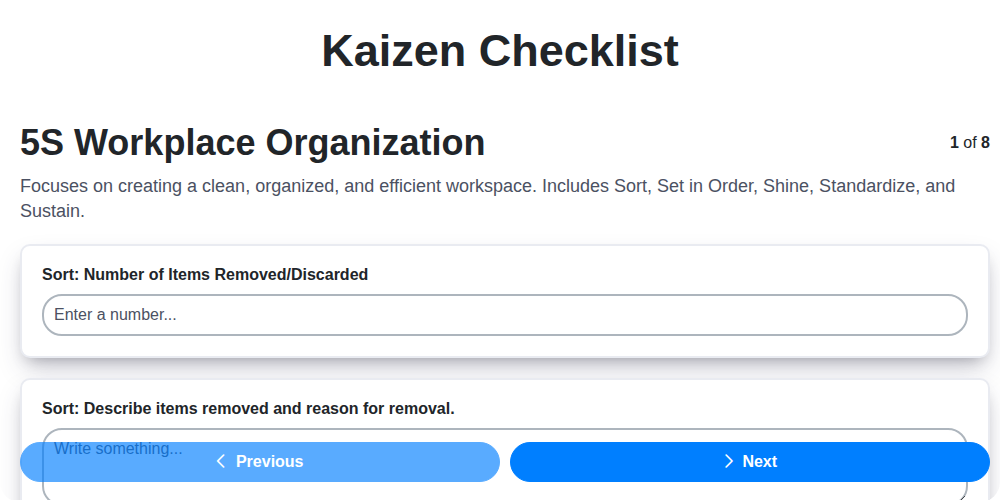
Kaizen Checklist Template: Your Path to Continuous Improvement

Machine Safety Audit Checklist: Your Guide to a Safer Manufacturing Workplace
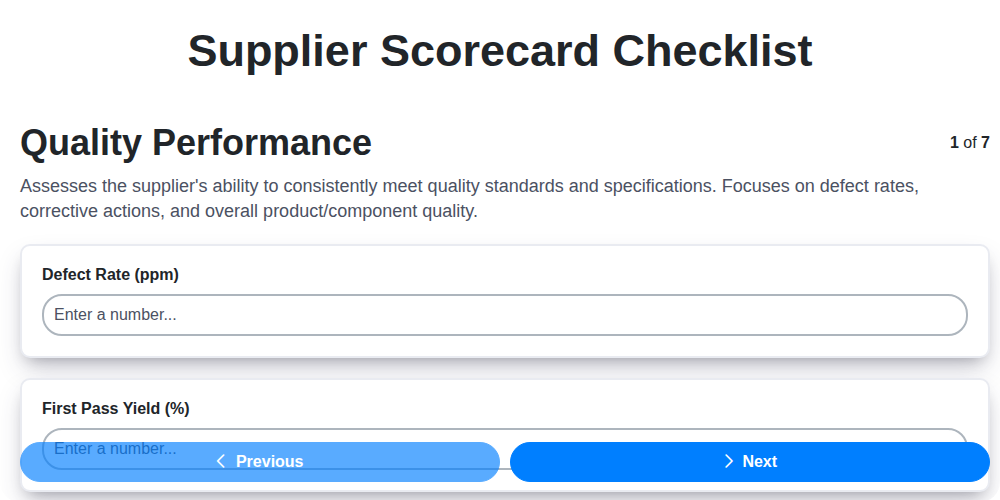
Mastering Supplier Performance: Your Free Supplier Scorecard Checklist Template
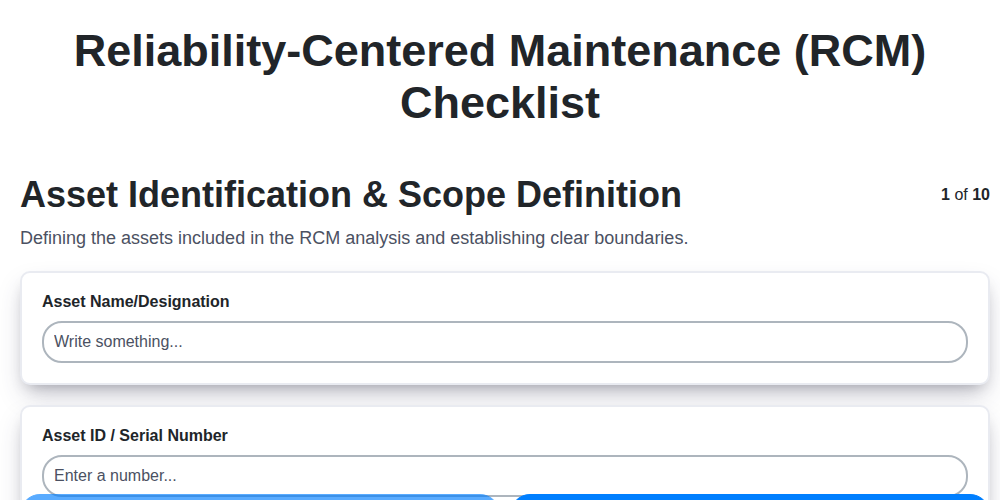
Your Ultimate RCM Checklist Template: A Step-by-Step Guide

LPA Checklist Template: Your Guide to Layered Process Audits

Your Ultimate Lockout/Tagout (LOTO) Checklist Template

Your Ultimate FSC 22000 Checklist Template
Quality Control Inspection Checklist Template: Prevent Defects & Improve Manufacturing Processes
We can do it Together
Need help with
Checklists?
Have a question? We're here to help. Please submit your inquiry, and we'll respond promptly.