Mastering the New Business Intake Process: A Step-by-Step Workflow Template for Seamless Sales Transitions
Published: 06/04/2026 Updated: 10/05/2026
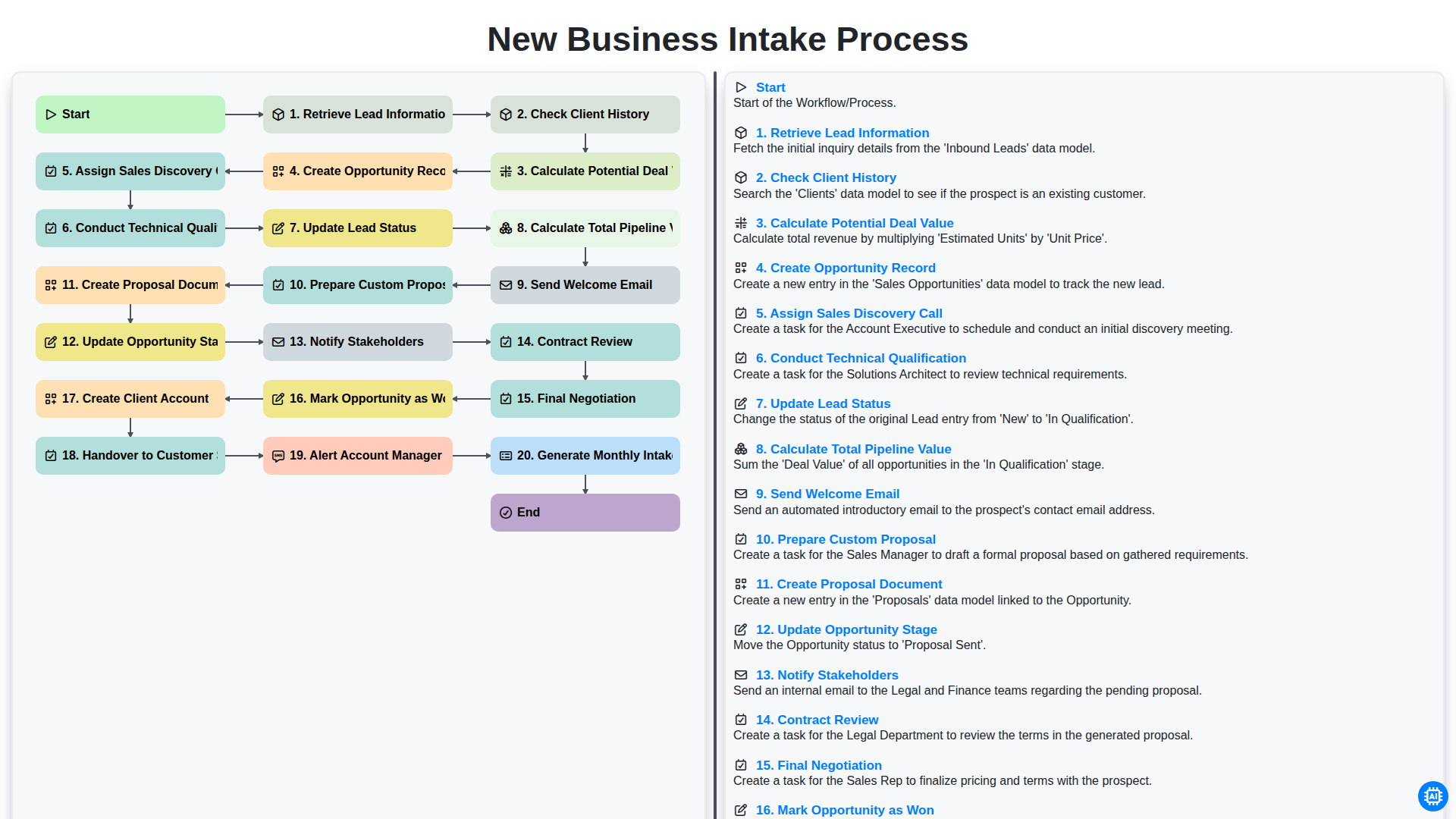
Table of Contents
- Introduction: Why a Standardized Intake Process Matters
- Phase 1: Lead Identification and Initial Assessment
- Step 1: Retrieving Lead Information and Checking Client History
- Step 2: Quantifying Potential: Calculating Deal Value and Creating Opportunity Records
- Phase 2: Qualification and Discovery
- Step 3: Assigning Sales Discovery Calls and Conducting Technical Qualification
- Step 4: Maintaining Pipeline Integrity: Updating Lead Status and Pipeline Value
- Phase 3: Proposal Development and Client Engagement
- Step 5: Personalized Outreach: Sending Welcome Emails and Preparing Custom Proposals
- Step 6: Documenting the Offer: Creating Proposals and Updating Opportunity Stages
- Phase 4: Negotiation and Closing the Loop
- Step 7: Finalizing Terms: Contract Review and Final Negotiation
- Step 8: Closing the Deal: Marking Opportunities as Won and Notifying Stakeholders
- Phase 5: Post-Sale Handover and Account Activation
- Step 9: Smooth Transitions: Creating Client Accounts and Handover to Customer Success
- Step 10: Long-term Management: Alerting Account Managers and Monthly Reporting
- Resources & Links
TLDR: Learn how to streamline your sales cycle using our comprehensive New Business Intake Process workflow. This guide explains how to automate everything from initial lead retrieval and technical qualification to contract negotiation and the final handover to Customer Success, ensuring a consistent, scalable, and error-free transition from prospect to loyal client.
Introduction: Why a Standardized Intake Process Matters
In the fast-paced world of sales and client management, first impressions are everything. The moment a new lead enters your ecosystem, the clock starts ticking. Without a structured approach, this critical window of opportunity is often lost to manual errors, fragmented communication, and missed follow-ups. A disorganized intake process doesn't just cause internal headaches; it creates a disjointed experience for the potential client, signaling a lack of professionalism and reliability.
A standardized New Business Intake Process serves as the backbone of a scalable organization. By implementing a repeatable, step-by-step workflow-from the initial retrieval of lead information to the final handover to Customer Success-you transform a chaotic series of tasks into a high-performing engine. This standardization ensures that no detail is overlooked, every stakeholder is informed, and every opportunity is evaluated with consistent accuracy. Ultimately, a well-defined process reduces friction for your team, maximizes your pipeline visibility, and paves the way for a seamless transition from prospect to loyal partner.
Phase 1: Lead Identification and Initial Assessment
The foundation of a scalable sales engine lies in how you handle the moment a prospect first enters your ecosystem. The Lead Identification and Initial Assessment phase is designed to move a raw inquiry into a structured sales opportunity through a systematic vetting process.
The process begins with Retrieving Lead Information, ensuring that all data points from your marketing channels are captured accurately within your CRM. Once the data is in hand, the next critical step is to Check Client History to identify if the prospect is a returning contact or part of an existing enterprise account, preventing fragmented communication.
With the context established, the workflow moves into quantitative analysis. We Calculate Potential Deal Value to help the sales team prioritize high-impact leads, followed by the formal step to Create Opportunity Record, which serves as the single source of truth for the lifecycle of the deal. To ensure momentum, the system will Assign a Sales Discovery Call, putting the lead in front of the right expert immediately. Finally, the team will Conduct Technical Qualification to ensure the prospect's requirements align with your product capabilities, ensuring that only viable, high-quality leads progress further down the funnel.
Step 1: Retrieving Lead Information and Checking Client History
The foundation of a successful sales cycle begins long before a proposal is ever sent. It starts with the critical first step: Retrieving Lead Information and Checking Client History.
The moment a new lead enters your ecosystem-whether via a website form, a LinkedIn inquiry, or a manual referral-the clock starts ticking. Efficiency in this stage is paramount. Automating the retrieval of lead information ensures that your sales team isn't bogged down by manual data entry, allowing them to focus on high-value tasks instead of hunting for contact details.
However, simply having a name and an email address isn't enough. To provide a personalized and professional experience, you must immediately cross-reference this new data with your existing database. Checking client history allows your team to identify if the prospect is a returning customer, a former lead that went cold, or part of a larger corporate group you already serve. This context is vital; it prevents redundant outreach, avoids embarrassing first-time greetings to existing partners, and provides the necessary intelligence to tailor your initial approach. By mastering this initial stage, you set the stage for a seamless, informed, and highly professional onboarding experience.
Step 2: Quantifying Potential: Calculating Deal Value and Creating Opportunity Records
Once you have retrieved the lead information and performed a quick check of the client's history to ensure there are no conflicting past engagements, the focus shifts from simple data collection to strategic forecasting. This stage is where a lead transforms into a tangible business prospect.
The process begins by calculating the potential deal value. Rather than relying on guesswork, this step involves analyzing the lead's requirements, scale, and service needs to estimate the projected revenue. By assigning a monetary value to the lead early on, your sales team can prioritize high-impact opportunities and ensure that resources are allocated where they will yield the highest return.
Immediately following this valuation, you must create an opportunity record within your CRM. This creates a single source of truth for the entire sales organization. A well-structured opportunity record serves as the foundation for all future interactions, housing the estimated deal size, client details, and the initial scope of work. Moving from a lead to an opportunity signifies that the prospect has moved past mere interest and is now a serious contender in your sales pipeline.
Phase 2: Qualification and Discovery
Once the initial lead information is retrieved and the client history is reviewed, the process moves into the critical evaluation stage. This phase is designed to move beyond simple data collection and into deep analysis to ensure that the opportunity is both viable and profitable.
The workflow begins by calculating the potential deal value, allowing the team to prioritize leads based on their impact on the bottom line. Once the value is estimated, a formal opportunity record is created within the CRM, providing a central source of truth for all future interactions.
To ensure alignment between sales and product capabilities, the next step involves assigning a sales discovery call to the appropriate representative. During this call, the team will conduct a technical qualification to verify that the prospect's requirements align with our service offerings. This rigorous vetting process is essential to prevent resource drain on unqualified leads.
As the discovery progresses, the workflow automatically updates the lead status to reflect the current level of engagement. Simultaneously, the system will calculate the total pipeline value, providing real-time visibility into the sales forecast. Finally, to maintain momentum and build early rapport, a welcome email is sent to the prospect, officially transitioning the relationship from a cold lead to an active, engaged opportunity.
Step 3: Assigning Sales Discovery Calls and Conducting Technical Qualification
Once an opportunity record has been officially created, the focus shifts from data collection to active engagement. This stage is where the momentum of the lead begins to build through direct human interaction. First, the system triggers the Assignment of a Sales Discovery Call, ensuring that the most qualified or available sales representative is immediately paired with the new lead. This prevents lead decay and ensures a rapid response time, which is critical for maintaining prospect interest.
Following the initial outreach, the process moves into Technical Qualification. Not every lead is a perfect fit for your product or service, and attempting to move forward with incompatible prospects can waste valuable resources. During this phase, the assigned representative evaluates the lead's specific technical requirements, integration needs, and infrastructural compatibility. By conducting this deep dive early, your team can determine if the prospect has the necessary complexity or scale to justify a full proposal, ensuring that the sales pipeline remains populated with high-quality, actionable opportunities.
Step 4: Maintaining Pipeline Integrity: Updating Lead Status and Pipeline Value
Once the initial technical qualification is complete, the workflow moves into a critical phase of data management. This stage is not just about moving a card from one column to another; it is about ensuring your sales data remains a single source of truth for the entire organization.
The first priority is to Update Lead Status. Once a lead has been vetted and deemed a viable opportunity, the status must be updated to reflect their current position in the funnel. This prevents sales reps from chasing dead ends and ensures that marketing efforts are aligned with the actual quality of incoming leads.
Simultaneously, the system must Calculate Total Pipeline Value. As leads transition into qualified opportunities, their estimated potential deal value must be aggregated into your real-time pipeline metrics. By automating this calculation, leadership gains an accurate, high-level view of the company's projected revenue. This step is vital for forecasting accuracy, allowing you to identify whether you are on track to hit quarterly targets or if there are gaps in the funnel that require immediate intervention. Maintaining this level of precision ensures that your pipeline reflects reality, not just optimism.
Phase 3: Proposal Development and Client Engagement
Once the technical qualification is complete and the lead status is updated, the focus shifts from internal validation to external engagement. This phase is critical, as it marks the transition from a mere lead to a tangible business opportunity. The process begins by calculating the total pipeline value to ensure resource allocation aligns with the potential impact of the deal. With a clear understanding of the opportunity's scale, the workflow moves into direct client interaction by sending a personalized welcome email, setting a professional and welcoming tone for the partnership.
The core of this phase lies in the meticulous preparation of the deal's formal offer. This involves calculating the potential deal value against the specific needs identified during discovery to prepare a custom proposal. The creation of the proposal document must be precise, ensuring all technical requirements and scope details are accurately reflected. As the document is finalized, the opportunity stage is updated, and all relevant stakeholders are notified to ensure organizational alignment. This stage concludes with the rigorous contract review and final negotiation processes, where the terms are refined and agreed upon, ultimately leading to the pivotal moment of marking the opportunity as Won.
Step 5: Personalized Outreach: Sending Welcome Emails and Preparing Custom Proposals
Once the technical qualification is complete and the lead status is updated, the focus shifts from evaluation to engagement. This stage is critical because it transforms a validated lead into a tangible business opportunity through personalized outreach.
The process begins with the automated trigger of a Welcome Email. This isn't just a generic automated response; it serves as the first official touchpoint in the client relationship, reinforcing the value proposition and setting clear expectations for the next steps. Following this, the workflow moves into the high-value task of Preparing a Custom Proposal.
During this phase, the team leverages the data gathered during the discovery and qualification stages to Create a Proposal Document that addresses the client's specific pain points. By tailoring the scope, deliverables, and pricing to the unique needs identified earlier in the workflow, you move away from one-size-fits-all selling and toward a consultative partnership. This stage is where the momentum of the initial lead capture is solidified into a professional, customized roadmap for success.
Step 6: Documenting the Offer: Creating Proposals and Updating Opportunity Stages
Once the technical qualification is complete and the lead's needs are fully understood, the focus shifts from discovery to formalization. This stage is critical because it bridges the gap between a qualified lead and a formal commitment.
The process begins with the preparation of a custom proposal. Unlike generic quotes, a custom proposal is tailored specifically to the pain points identified during the discovery call. This involves gathering all necessary technical requirements and-value propositions to ensure the offer is both accurate and compelling. To maintain professional consistency, the next sub-step is to create the formal proposal document, ensuring that all terms, deliverables, and pricing structures are clearly outlined and aligned with the technical scope.
However, the process is not complete until the CRM reflects this movement. As the proposal is being finalized, it is vital to update the opportunity stage within your workflow. Moving the deal to the Proposal Sent or Proposal Pending stage ensures that your sales pipeline remains a single source of truth. This update provides real-time visibility for the entire organization, signaling that the deal has moved out of the qualification phase and into the formal decision-making phase.
Phase 4: Negotiation and Closing the Loop
Once the technical qualification is complete and the proposal has been presented, the workflow enters its most critical stage: moving from a potential opportunity to a confirmed partnership. This phase is where the momentum of the sales process meets the precision of legal and operational readiness.
The process begins with the Contract Review and Final Negotiation steps. During this period, both parties align on terms,- ensuring that all-encompassing details-from service level agreements to pricing structures-are mutually agreed upon. This is the final hurdle to ensure that the deal is not only profitable but sustainable for long-term success.
Once the terms are finalized and the signature is secured, the focus shifts to officially Marking the Opportunity as Won. This transition triggers a critical downstream sequence of operational tasks. To ensure a seamless transition from sales to service, the system will automatically Create a Client Account, ensuring that all billing and administrative foundations are in place.
To prevent any knowledge gaps during the transition, the workflow then initiates the Handover to Customer Success and triggers an Alert to the Account Manager. This ensures that the person responsible for the client's long-term growth is fully briefed on the deal specifics from day one. Finally, to maintain visibility and continuous improvement, the system will Generate a Monthly Intake Report, providing leadership with the data needed to analyze conversion rates and pipeline health. This closed-loop approach ensures that no detail is lost between the closing of a sale and the commencement of a successful client relationship.
Step 7: Finalizing Terms: Contract Review and Final Negotiation
Once the preliminary technical qualifications are met and the custom proposal is ready, the workflow shifts from discovery to the critical closing phase. This stage is where the theoretical value of the deal meets the reality of legal and financial commitments.
The Contract Review phase is a vital checkpoint designed to mitigate risk and ensure alignment. During this step, your legal and finance teams scrutinize the proposed terms, service level agreements (SLAs), and payment structures. The goal is to ensure that every promise made during the sales process is accurately reflected in the formal documentation, preventing scope creep or unexpected liabilities before the partnership officially begins.
Following the review, the process moves into Final Negotiation. This is often the most delicate part of the intake workflow. It requires a strategic balance of flexibility and firmness. The objective is to resolve any remaining friction points-such as pricing adjustments or specific implementation timelines-while maintaining the momentum built during the discovery phase. Successfully navigating these negotiations is the final hurdle; once both parties reach a consensus, the deal moves out of the negotiation stage and toward the definitive milestone of marking the opportunity as Won.
Step 8: Closing the Deal: Marking Opportunities as Won and Notifying Stakeholders
Once the final negotiations are successfully concluded and the contract is signed, the workflow transitions from a pursuit of opportunity to a moment of celebration and operational execution. Marking an opportunity as Won is more than just a status update in your CRM; it is the critical trigger that transforms a sales lead into an active revenue driver.
This stage is where the momentum of the sales cycle must be seamlessly transferred to the rest of the organization. Upon marking the deal as won, the system should automatically trigger a series of high-priority actions:
- Stakeholder Notification: Immediate alerts are sent to leadership and relevant departments to ensure everyone is aware of the new win, fostering a culture of transparency and shared success.
- Automated Handoffs: To prevent any loss of information or knowledge gaps, the transition from Sales to Customer Success must be instantaneous. This includes alerting the designated Account Manager and preparing the groundwork for the post-sale experience.
- Data Integrity: Closing the loop ensures that your pipeline data remains accurate, allowing for real-time visibility into true revenue performance.
By automating these final steps, you eliminate the manual friction that often leads to onboarding lag, ensuring that the client's first experience with your company after the sale is one of professional efficiency and organized excellence.
Phase 5: Post-Sale Handover and Account Activation
Once the deal is officially closed, the focus shifts from persuasion to integration. The final stage of our intake workflow is designed to bridge the gap between the sales promise and operational reality, ensuring that nothing is lost in translation during the transition.
The process begins immediately after the opportunity is marked as won. At this critical juncture, the system triggers the creation of a new client account, transforming a prospect into a formal entity within our ecosystem. To ensure seamless continuity, the workflow automatically alerts the assigned Account Manager, providing them with all the context gathered during the sales cycle.
To facilitate a smooth onboarding experience, we initiate a formal handover to the Customer Success team. This stage is vital for maintaining momentum; it ensures that the Success team is fully briefed on the client's specific needs, technical requirements, and the value propositions promised during the negotiation phase. By automating these final steps-from account creation to team notification-we eliminate manual errors and ensure that our new partners feel supported from the very first moment of their journey with us.
Step 9: Smooth Transitions: Creating Client Accounts and Handover to Customer Success
Once the opportunity is officially marked as Won, the focus shifts from sales acquisition to long-term retention. This critical phase marks the transition from a prospective lead to an active partner. The process begins with creating the client account within your CRM, ensuring that all data captured during the sales cycle-from initial contact details to specific technical requirements-is accurately migrated to the new account profile.
To prevent information silos and ensure a seamless client experience, the final, vital step is the handover to Customer Success. This is not merely a data transfer, but a strategic knowledge transfer. By effectively alerting the Account Manager and providing them with a comprehensive briefing on the client's goals, pain points, and the agreed-upon proposal details, you eliminate the need for the client to repeat themselves. A well-executed handover minimizes friction, builds immediate trust, and sets the stage for a successful, long-term relationship built on the promises made during the sales process.
Step 10: Long-term Management: Alerting Account Managers and Monthly Reporting
Once the initial excitement of a closed deal settles, the focus must shift from acquisition to retention. The final stages of a robust intake process ensure that no client falls through the cracks during the critical transition from sales to service. This begins with an automated Alert Account Manager protocol; as soon as an opportunity is marked as won and the client account is created, the assigned Account Manager must be instantly notified. This immediate hand-off ensures that the momentum gained during the sales cycle is preserved, allowing for a seamless transition that makes the client feel valued from day one.
However, true operational excellence requires more than just individual hand-offs-it requires oversight. To maintain a bird's-eye view of your growth, the process culminates in the ability to Generate Monthly Intake Reports. By aggregating data from every closed deal, these reports provide invaluable insights into lead velocity, conversion rates, and total pipeline value. This high-level visibility allows leadership to identify bottlenecks in the workflow, celebrate wins, and make data-driven decisions that fuel long-term scalability.
Resources & Links
- HubSpot Sales Management Guide: Comprehensive resources on managing lead intake, CRM workflows, and sales pipeline automation.
- Salesforce Opportunity Management Best Practices: Expert insights into managing opportunity stages, technical qualification, and sales forecasting.
- Asana Workflow Templates: Templates for automating task assignments, stakeholder notifications, and cross-departmental handovers.
- Monday.com CRM Workflows: Visual guides on tracking lead status, calculating deal value, and managing the sales-to-success transition.
- Project Management and Client Onboarding: Strategies for transitioning won opportunities into active client accounts and managing post-sale documentation.
- Digital Contract and Proposal Management: Resources for managing the contract review, proposal creation, and final negotiation phases of the intake process.
Frequently Asked Questions
What is a business intake process?
A business intake process is a structured workflow used to capture, evaluate, and transition new client information or sales opportunities from the initial inquiry stage to the fulfillment or account management stage.
Why is a seamless sales transition important?
A seamless transition prevents data silos, reduces manual errors, and ensures that the service delivery team has all the necessary context to meet client expectations immediately after a sale is closed.
What are the key components of an effective intake workflow template?
An effective template should include standardized lead capture forms, automated notification triggers, a clear evaluation checklist, and a defined handoff protocol between sales and operations.
How can automation improve the business intake process?
Automation reduces manual data entry, minimizes the risk of human error, and accelerates the speed of the handoff by instantly notifying relevant stakeholders when a new deal is won.
What common pitfalls should companies avoid during business intake?
Common pitfalls include fragmented communication, lack of standardized documentation, missing critical client details, and failure to define clear ownership of the transition process.
Comments
There are no comments yet. Be the first to add one!
Insurance Management Solution Demo
Managing policies, claims, and compliance in the insurance industry is complex. ChecklistGuro's Work OS platform streamlines your operations, from underwriting and renewals to claims processing and reporting. Improve efficiency, reduce errors, and enhance customer satisfaction. Discover how ChecklistGuro can transform your insurance business!
Related Articles
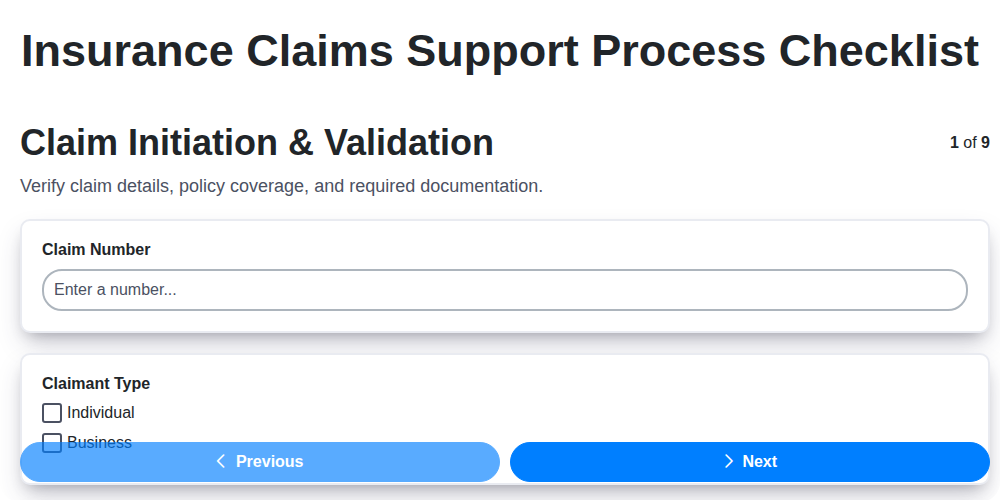
Streamline Claims: Your Insurance Claims Support Process Checklist Template
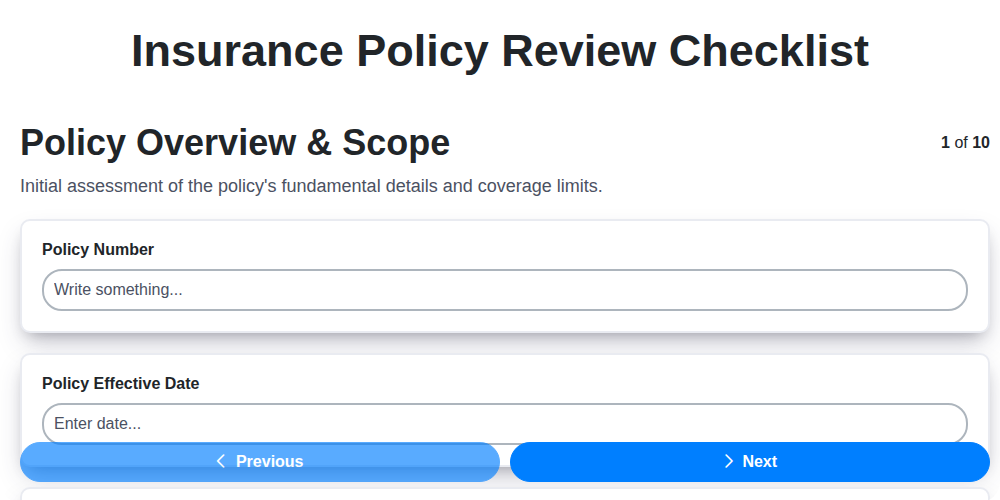
Your Insurance Policy Review Checklist: A Step-by-Step Guide
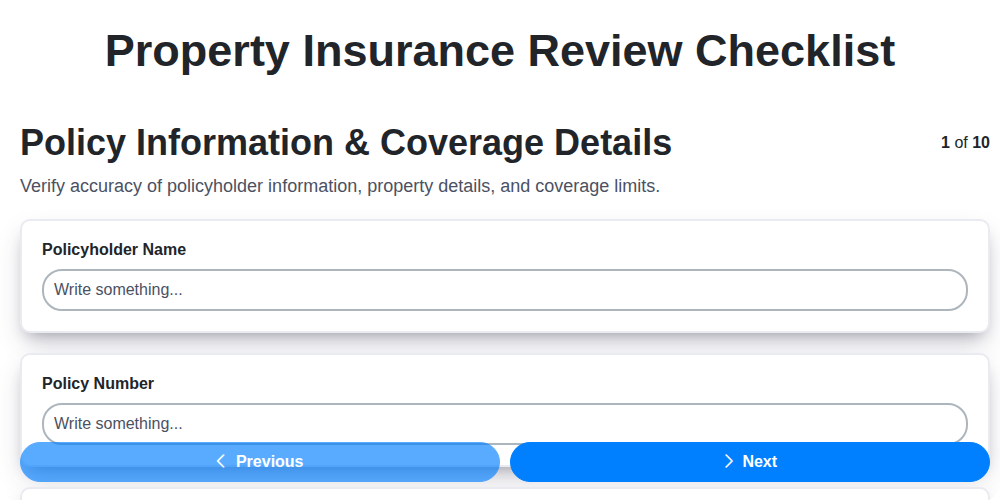
Your Property Insurance Review Checklist: A Step-by-Step Guide
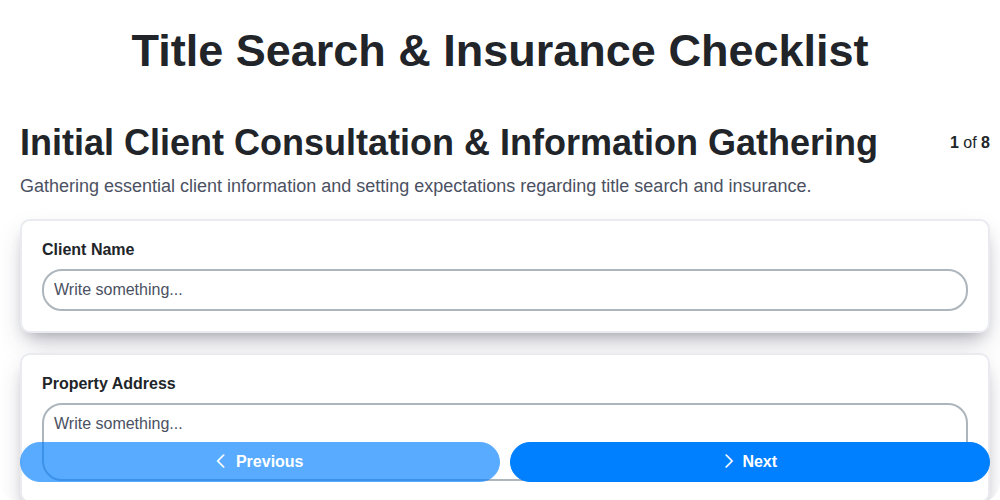
Your Title Search & Insurance Checklist Template
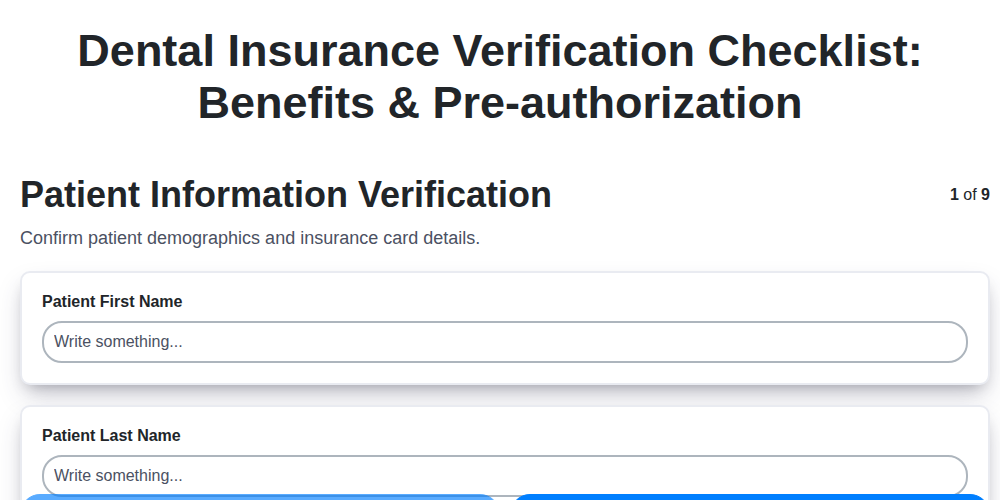
Simplify Insurance Verification: Your Free Dental Checklist Template
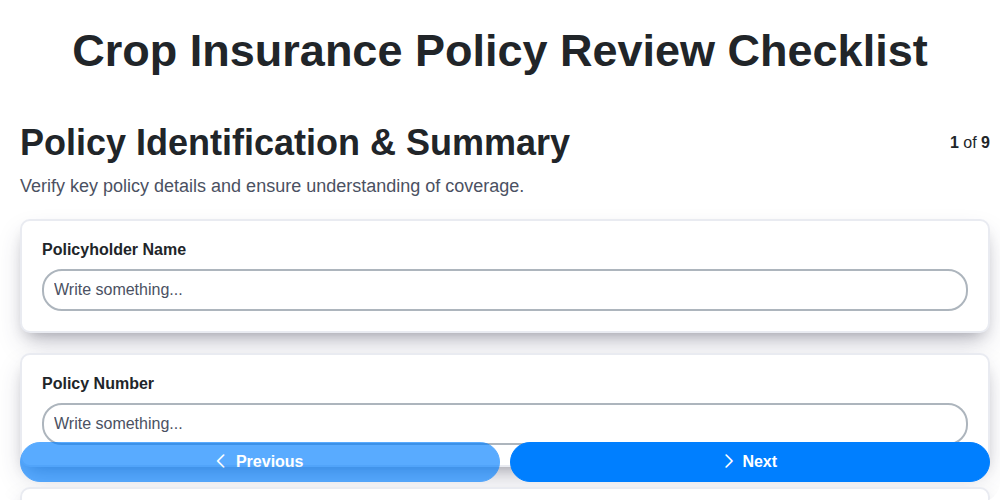
Crop Insurance Policy Review Checklist: A Farmer's Guide

The Ultimate Vehicle Registration & Insurance Validation Checklist
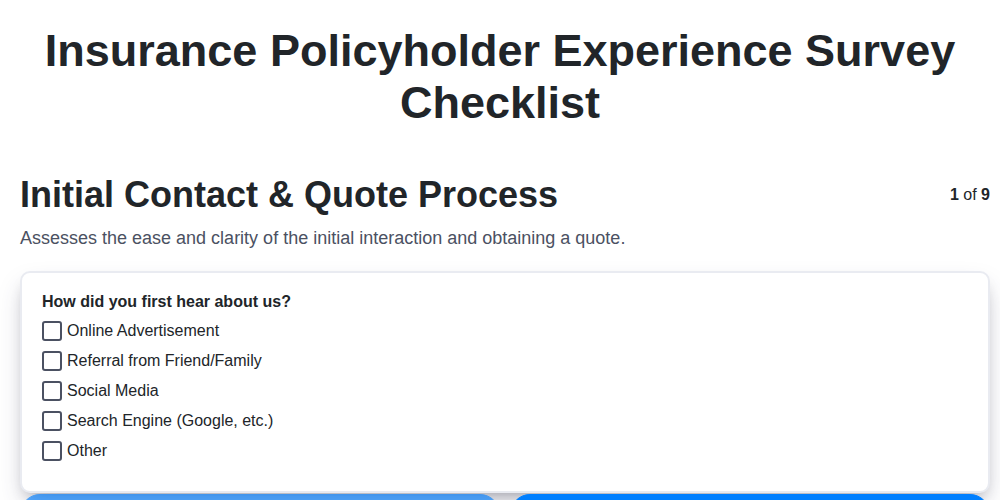
Mastering the Policyholder Journey: Your Insurance Experience Survey Checklist
Need help with
Checklists?
Have a question? We're here to help. Please submit your inquiry, and we'll respond promptly.