The Ultimate Onboarding Checklist Template for New Employees
Published: 09/02/2025 Updated: 12/13/2025
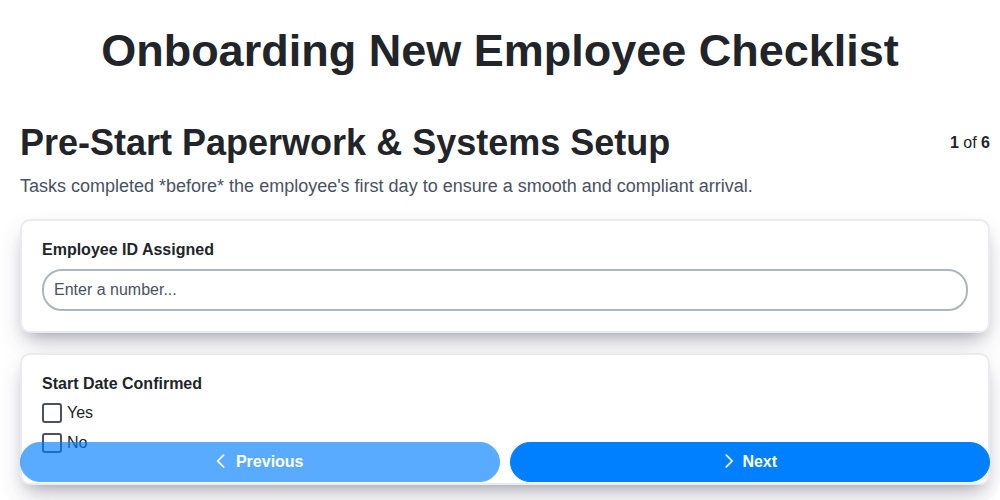
Table of Contents
- Welcome to Your New Adventure: The Importance of Onboarding
- Building Your Onboarding Checklist: A Template Overview
- Phase 1: Pre-Boarding - Setting the Stage for Success
- Task 1: Welcome Package & Initial Communication
- Task 2: Paperwork & System Access Preparation
- Phase 2: The First Week - Making a Stellar Impression
- Task 3: The Warm Welcome & Office Tour
- Task 3.1: Introductions to the Team & Key Contacts
- Task 4: Role-Specific Training Kick-Off
- Phase 3: Months 1-3 - Growth and Integration
- Task 3.2: Performance Check-Ins and Goal Alignment
- Task 3.3: Company Culture Immersion & Team Building
- Task 3.4: Ongoing Support & Resources - A Continuous Journey
- Resources & Links
TLDR: Need to onboard new hires effectively? This checklist template guides you through pre-start paperwork, first-day introductions, role-specific training, culture integration, and ongoing support - ensuring a smooth transition and setting them up for success. Download it, customize it for your business, and watch your employee retention soar!
Welcome to Your New Adventure: The Importance of Onboarding
Starting a new job is exhilarating - a fresh start, new challenges, and a chance to learn and grow. But that initial excitement can quickly fade if the onboarding experience isn't handled effectively. Onboarding isn't just about paperwork and introductions; it's about setting the stage for a long and successful journey. A strong onboarding process bridges the gap between a candidate's interview and their full integration into the team, ensuring they feel valued, supported, and equipped to thrive. It's the foundation for employee engagement, productivity, and ultimately, retention. A well-crafted onboarding program minimizes the learning curve, accelerates time-to-productivity, and fosters a sense of belonging from day one, paving the way for a positive and rewarding experience for both the employee and the organization.
Building Your Onboarding Checklist: A Template Overview
Think of your onboarding checklist as a customizable roadmap. It shouldn't be a rigid, one-size-fits-all document, but rather a flexible framework adaptable to different roles and experience levels. Below is a simplified template outline, broken down into phases, to help you get started. We're including a brief description of what each phase aims to achieve and a few sample tasks. Remember, this is a starting point; tailor it to reflect your company's unique needs and culture.
Phase 1: Pre-Boarding (Prior to Day 1)
- Goal: Build excitement, complete essential paperwork, and set the stage for a smooth first day.
- Sample Tasks: Welcome email, digital paperwork completion, system access setup requests.
Phase 2: First Week - Immersion
- Goal: Introduce the employee to the company, team, and immediate responsibilities.
- Sample Tasks: Office tour, introduction to team members, initial training on core systems, assignment of a buddy/mentor.
Phase 3: First Month - Integration
- Goal: Deepen understanding of role, build relationships, and contribute to initial projects.
- Sample Tasks: Role-specific training modules, check-in with manager, introduction to key stakeholders, participation in team meetings.
Phase 4: 90-Day Review & Beyond - Growth & Development
- Goal: Evaluate performance, identify areas for improvement, and plan for ongoing growth.
- Sample Tasks: Performance review, goal setting, identification of development opportunities, feedback gathering.
To help you visualize this, we'll be providing a more detailed, task-oriented checklist in the next section. Use this template as a guide to build a truly effective and personalized onboarding experience.
Phase 1: Pre-Boarding - Setting the Stage for Success
Before their first official day, a significant amount of groundwork can be laid to ensure a smooth and positive onboarding experience. This pre-boarding phase isn't just about paperwork; it's about building anticipation and demonstrating your commitment to their success before they even walk through the door. Think of it as a warm welcome extended virtually.
Start with a personalized welcome email from their manager or a team member, outlining what to expect on their first day and re-iterating their excitement about them joining. Share introductory materials about the company culture, mission, and values - videos often work wonders! Consider sending a small welcome package with company swag or a handwritten note. Proactively handling paperwork digitally through a secure portal not only streamlines the process but also shows efficiency and reduces first-day overwhelm. Finally, a quick introductory call from their buddy or mentor can ease any anxieties and create a connection even before day one. This simple effort shows you value their time and are invested in making their transition seamless.
Task 1: Welcome Package & Initial Communication
A warm welcome goes a long way! Your welcome package isn't just about handing over paperwork; it's the first tangible representation of your company's culture and commitment to your new hires. Start with an engaging email before their first day. This could include a personalized message from their manager or team, a brief overview of what to expect on day one, and perhaps even some fun facts about the company or team.
Beyond the email, consider a physical welcome package. This could be as simple as a branded notebook and pen, a company t-shirt, or a welcome card signed by the team. More elaborate packages can include local treats, helpful resources, or company swag. The key is to make them feel valued and excited to join the team, setting a positive tone for their entire onboarding journey. Don't underestimate the power of a handwritten note - it adds a personal touch that digital communication can't replicate.
Task 2: Paperwork & System Access Preparation
Before your new team member even steps foot in the office (or logs in remotely!), a significant portion of their onboarding can and should be completed. This proactive approach minimizes first-day chaos and sets a positive tone.
1. Digital Paperwork - Goodbye, Filing Cabinets!
Leverage a robust Human Resources Information System (HRIS) or digital onboarding platform to handle the necessary paperwork. This eliminates piles of physical forms and reduces errors. Ensure the following are accessible before their start date:
- I-9 Verification: Begin the I-9 verification process electronically.
- W-4 Form: Provide the W-4 form for completion.
- Direct Deposit Information: Secure their banking details for payroll.
- Benefit Enrollment Forms: Provide access to benefits enrollment paperwork.
- Company Policy Acknowledgements: Include links to essential policy documents for review and acknowledgement.
2. System Access - The Key to Productivity
Nothing's more frustrating than a new hire staring at a blank screen. Prepare their essential digital tools in advance:
- Email Account Creation: Set up their company email address and introduce them to the email signature guidelines.
- Software Licenses: Assign appropriate software licenses (e.g., Microsoft Office, Adobe Creative Suite, CRM software).
- Network Access: Grant access to the company network and relevant shared drives.
- Communication Tools: Set up their accounts on communication platforms like Slack, Microsoft Teams, or Google Workspace.
- Password Management: Provide clear instructions on password creation and security protocols.
3. Pro Tip: The Welcome Email
Send a "Welcome Aboard!" email a few days before their start date. Include login credentials (if applicable), a brief agenda for their first day, and a friendly introduction to their team. It's a small touch that makes a big difference!
Phase 2: The First Week - Making a Stellar Impression
The first week is critical. It's your chance to set the tone for the entire employee journey and create a genuinely positive impression. Forget a whirlwind of paperwork - focus on connection and comfort. Monday should be about a warm welcome, introductions, and a clear understanding of the week's priorities. Tuesday and Wednesday are prime for deeper dives into role-specific training and shadowing opportunities, allowing them to observe and begin applying their skills. Thursday might involve meetings with key stakeholders outside their immediate team, broadening their network and understanding of the company's interconnectedness. Finally, Friday should be a check-in - a relaxed conversation with their manager to gauge how things are going, address any early challenges, and reinforce that support system. Encourage questions, actively listen to concerns, and ensure they feel genuinely welcomed and valued. This isn't just about tasks; it's about fostering a sense of belonging and setting the stage for long-term success.
Task 3: The Warm Welcome & Office Tour
A warm welcome goes far beyond a simple hello. It's about setting a positive and inviting tone from the moment your new hire steps through the door. Their first impressions truly matter, and a thoughtfully planned welcome can significantly impact their feelings of belonging and comfort.
Beyond the Basics: Making it Personal
While a friendly greeting is essential, consider adding personal touches. A small welcome gift on their desk (company swag, a plant, or a handwritten note) can show you're excited to have them. Have their manager or a designated "welcome buddy" meet them at reception.
The Office Tour: More Than Just Directions
The office tour isn't just about showing them where the restrooms are. It's an opportunity to introduce them to key team members, highlight important resources, and give them a sense of the physical layout and feel of your workplace.
What to Include in Your Tour:
- Key Personnel: Introduce them to individuals they'll be regularly interacting with, even if it's just a brief "hello."
- Essential Locations: Point out restrooms, break rooms, kitchens, printers, and supply closets.
- Team Areas: Showcase where their team sits and any shared workspaces.
- Informal Gathering Spots: Show them where people tend to congregate for informal conversations and breaks. This helps them understand the company's social dynamic.
- Company Culture Markers: Point out displays of company values, mission statements, or employee recognition programs - subtly reinforcing your culture.
Don't rush the tour! Allow time for questions and casual conversation. A relaxed and welcoming atmosphere will help your new hire feel comfortable and confident in their new environment.
Task 3.1: Introductions to the Team & Key Contacts
Introducing a new team member can feel like a flurry of names and roles, but it's a crucial step in fostering a welcoming and collaborative environment. Don't just announce their arrival - facilitate genuine introductions that build rapport and understanding.
Here's how to make introductions meaningful:
- Structured Introductions: Dedicate time for a brief team meeting solely for introductions. Encourage everyone to share their roles and, more importantly, how they collaborate with the new hire's role. This highlights immediate relevance.
- About Me Round Robin: A quick "About Me" round robin can reveal common interests and break the ice. Encourage sharing a fun fact or hobby.
- Key Contact Spotlight: Identify 3-5 key individuals the new hire will interact with frequently. Schedule brief 1:1 introductions - even 15 minutes - with each person to clarify roles and communication preferences.
- Visual Aid: A team photo with brief role descriptions can be a helpful reference, especially for larger teams. Share it digitally or post it visibly.
- Follow-Up: After the initial introductions, encourage ongoing casual conversations and check-ins to solidify connections.
Task 4: Role-Specific Training Kick-Off
This isn't just a training session; it's the launchpad for your new hire's contribution to the team. The Role-Specific Training Kick-Off sets the tone for their ongoing skill development and directly impacts their ability to succeed.
Here's what this crucial phase entails:
- Prioritized Learning: Don't overwhelm them! Identify the 2-3 most critical skills or processes they need to know immediately and focus on those first. A phased approach is far more effective.
- Structured Curriculum: Move beyond generic presentations. Design a curriculum with clear learning objectives, interactive exercises, and practical application opportunities. Consider a mix of instructor-led sessions, online modules, and hands-on projects.
- Resource Repository: Create a readily accessible repository of training materials - guides, videos, templates, FAQs - that they can refer to long after the initial training.
- Dedicated Mentor/Buddy Support: Reinforce the role of their mentor or buddy - they're not just a friendly face, but a key resource for ongoing support and clarification. Encourage them to actively participate in the training and be available for questions.
- Knowledge Checks & Practical Application: Regularly assess their understanding through quizzes, demonstrations, or small, real-world tasks. This confirms comprehension and identifies areas requiring further support.
- Feedback Loop: Encourage open communication. Ask for their feedback on the training - what worked well, what could be improved? This helps refine the program for future new hires.
Phase 3: Months 1-3 - Growth and Integration
The initial flurry of introductions and training gives way to a critical phase: solidifying the new hire's role and integrating them fully into the team. Months 1-3 are about moving beyond the "survival" mode and focusing on growth and contribution. This period demands consistent support, clear expectations, and opportunities to showcase their skills.
Deepening Role Understanding: While the first few weeks focused on the basics, now's the time to delve deeper into their responsibilities. Encourage them to take ownership of projects, offering guidance and feedback along the way. Regular check-ins-weekly or bi-weekly-are essential to address challenges and ensure they're on track. These aren't just status updates; they're opportunities for coaching and mentorship.
Building Relationships Beyond the Team: Encourage your new hire to proactively connect with colleagues in other departments. This fosters collaboration and provides a broader understanding of the company's operations. Facilitate introductions where possible and suggest participating in cross-functional projects.
Feedback is a Two-Way Street: Implement a structured feedback process. This goes beyond formal performance reviews; it includes ongoing, informal feedback from both the manager and peers. Also, actively solicit feedback from the new hire about the onboarding process and their overall experience. This demonstrates a commitment to continuous improvement and allows for adjustments to future onboarding programs.
Early Wins and Recognition: Celebrate early successes, no matter how small. Recognizing contributions reinforces positive behaviors and demonstrates appreciation for their efforts. Public acknowledgement (when appropriate) can be a powerful motivator.
Addressing Challenges Proactively: This is a critical time to identify and address any performance gaps or integration issues. Don't wait for formal reviews - have open and honest conversations early on. Provide additional training or resources as needed and document all interventions.
Ultimately, months 1-3 are about building confidence, fostering a sense of belonging, and empowering the new hire to become a valuable and contributing member of your organization.
Task 3.2: Performance Check-Ins and Goal Alignment
Performance check-ins aren't a one-and-done event; they're an ongoing conversation. While the 30-day, 60-day, and 90-day milestones offer crucial initial assessments, establishing a rhythm of regular check-ins - ideally monthly or quarterly - is vital for sustained growth and goal alignment.
These aren't just about reviewing metrics. They're opportunities to:
- Revisit and Refine Goals: Ensure goals remain relevant and achievable as priorities shift and new information emerges. Are those initial objectives still the right targets?
- Identify and Remove Roadblocks: Proactively address any challenges hindering performance. What's preventing them from achieving their goals?
- Provide Continuous Feedback: Offer ongoing, constructive feedback - both positive reinforcement and areas for improvement - to foster growth.
- Promote Two-Way Communication: Create a safe space for new hires to voice concerns, ask questions, and offer suggestions.
- Ensure Alignment with Company Objectives: Reinforce how individual goals contribute to the broader company strategy.
These regular check-ins should be brief, focused, and action-oriented, fostering a culture of continuous improvement and ensuring the new hire remains engaged and on track for success. Don't just check on them; check in with them.
Task 3.3: Company Culture Immersion & Team Building
Company culture isn't something you tell people; it's something they experience. True immersion goes beyond a slide deck outlining your values - it's about creating opportunities for new hires to connect with their colleagues and genuinely feel like they're part of something bigger.
Here's how to move beyond the standard introductions and cultivate a thriving team environment:
- Coffee Roulette: Randomly pair new hires with existing employees for informal coffee chats. This breaks down barriers and fosters cross-departmental connections.
- Team Lunches/Happy Hours (with a Twist): Rotate themes or activities - a cooking class, trivia night, or volunteering together - to inject fun and camaraderie.
- Shadowing Opportunities (Beyond Their Immediate Team): Encourage brief shadowing experiences in different departments to broaden perspectives and build cross-functional understanding.
- Show & Tell: A casual session where team members share a hobby, passion, or interesting fact about themselves. It humanizes the workplace and encourages vulnerability.
- Values in Action Spotlights: Regularly highlight examples of employees demonstrating company values in their work or interactions. Reinforces desired behaviors and inspires others.
- Feedback Encouragement: Actively solicit feedback from the new hire about their perception of the team dynamics and culture, demonstrating that you value their input.
The goal is to create an environment where new hires not only learn the what of their jobs, but also feel connected to the why and the who.
Task 3.4: Ongoing Support & Resources - A Continuous Journey
Onboarding isn't a finish line; it's the beginning of a continuous journey of growth and development. While the initial weeks and months are structured with check-ins and training, true integration and peak performance rely on ongoing support and readily available resources. This phase shifts from formal instruction to a culture of continuous learning and proactive problem-solving.
We champion a help is always available mentality. This means more than just open-door policies; it's about providing accessible and diverse support channels. Think:
- Dedicated Mentorship: Pairing new hires with experienced mentors extends beyond the initial onboarding period. Regular check-ins provide guidance, address evolving challenges, and foster a sense of belonging.
- Knowledge Base & FAQs: A centralized repository of commonly asked questions, how-to guides, and procedural documentation empowers employees to find answers independently.
- Internal Forums/Collaboration Tools: Facilitate peer-to-peer support and knowledge sharing through internal platforms like Slack channels or dedicated forums.
- Managerial Check-ins: Continue regular one-on-one meetings, shifting the focus from task-oriented directives to broader career development and performance feedback.
- Professional Development Opportunities: Encourage participation in relevant workshops, online courses, and industry conferences to expand skills and expertise.
Ultimately, our commitment to ongoing support is about cultivating a growth mindset and fostering a workplace where employees feel empowered to continuously learn, adapt, and thrive. We view this phase as a crucial investment in long-term success-both for the individual and for our organization.
Resources & Links
- SHRM (Society for Human Resource Management): A comprehensive resource for HR professionals, offering articles, templates, and best practices related to onboarding and employee engagement. Excellent for understanding legal compliance and HR trends.
- Breezy HR: Provides onboarding software and blog content. Their blog focuses specifically on onboarding processes and strategies, often providing actionable tips and downloadable templates.
- Workday: A cloud-based HR software provider. Their content offers insights into modern onboarding practices, including digital onboarding and employee experience. Good for seeing examples of tech-enabled onboarding.
- Zenefits: Offers HR software solutions including onboarding. Their blog features articles and guides on onboarding best practices, with a focus on efficiency and compliance. Provides a user-friendly perspective.
- Betterworks: Focuses on performance management and employee engagement. They offer resources on goal setting, performance reviews, and creating a continuous feedback loop, vital for integrating new hires beyond the initial onboarding period.
- Monday.com: A work management platform that can be used to manage onboarding workflows. Their blog and resources showcase how to visualize and track onboarding tasks, and offers useful insights into project management for HR processes.
- TalentLMS: A learning management system (LMS) offering tools for training new employees. Their content provides information on structuring onboarding training and delivering it effectively.
- Quantum Workplace: Specializes in employee engagement and recognition. Their resources offer valuable perspectives on fostering a positive onboarding experience and building a strong company culture - crucial for long-term employee retention.
- AIHR (Academy to Innovate HR): Offers a range of HR certifications and resources, including a focus on strategic HR practices. Their content provides a deeper understanding of the broader impact of onboarding on organizational success.
- G2: A software review platform. If readers are considering onboarding software, G2 provides unbiased reviews and comparisons of different solutions, helping them make informed decisions.
Frequently Asked Questions
What is an onboarding checklist and why is it important?
An onboarding checklist is a structured document outlining all the tasks and steps required to successfully integrate a new employee into your company. It's important because it ensures consistency, reduces errors, accelerates productivity, improves employee retention, and sets a positive first impression.
What are the key categories typically included in an onboarding checklist?
Most comprehensive checklists include sections like Pre-boarding (before the employee's first day), Day 1, First Week, First Month, and First 90 Days. Subcategories often include paperwork, IT setup, introductions to the team, training, and goal setting.
Can I customize the template provided in the article?
Absolutely! The template is designed to be a starting point. Customize it to fit your specific company culture, industry, job roles, and processes. Add, remove, or modify tasks as needed.
What's the difference between onboarding and orientation?
Orientation is typically a short introduction to the company - its history, values, and basic policies. Onboarding is a more comprehensive process that extends beyond the first day and focuses on integrating the new hire into the team, providing training, and setting them up for success over a longer period.
Who should be responsible for completing the onboarding checklist?
Responsibility is often shared. HR is generally responsible for overall oversight and paperwork. The direct manager is responsible for team introductions, training, and performance goals. IT handles system access and equipment setup. Assign clear ownership for each task to ensure accountability.
What should I do if a task on the checklist is not applicable to a specific employee?
Simply mark it as 'Not Applicable' (NA) or remove it from the checklist. The goal is to provide a personalized onboarding experience that's relevant to the employee's role and needs.
How can I track progress on the onboarding checklist?
You can use various methods, from simple spreadsheets to dedicated onboarding software. The article suggests various options. Regular check-ins and a system for assigning deadlines are crucial for tracking progress and identifying potential roadblocks.
What if my company is fully remote? Does the onboarding checklist need to be different?
Yes, a remote onboarding checklist needs to be adjusted to account for the lack of in-person interaction. Emphasize virtual introductions, online training, and proactive communication. Consider adding tasks like setting up a home office ergonomically and ensuring remote access to all necessary systems.
How long should the onboarding process typically last?
While Day 1 focuses on the basics, a complete onboarding process ideally extends to at least 90 days, and often longer. Consistent support and feedback are essential during this period.
Where can I find additional resources for creating or improving my onboarding program?
The article provides links to helpful resources and suggests researching best practices in HR and employee development. Consider exploring industry publications and attending HR conferences.
Comments
There are no comments yet. Be the first to add one!
Hospitality Management Solution Demo
Running a hotel, restaurant, or other hospitality business is demanding. ChecklistGuro's Work OS platform simplifies management, from reservations and guest services to inventory and staff scheduling. Improve efficiency, enhance guest experience, and boost profitability! See how ChecklistGuro can transform your hospitality operations.
Related Articles
Your Ultimate Security Camera Monitoring Log Checklist Template
Payroll Processing Verification Checklist Template: Your Guide to Accuracy
Complaint Handling Checklist Template: Resolve Issues & Retain Customers

Emergency Evacuation Drill Documentation: Your Checklist Template Guide

Mastering Incident Response: Your Free Reporting Protocol Checklist Template
Conquer Your Kitchen: A Monthly Deep Cleaning Checklist Template
Mastering Food Safety: Your Free Temperature Control Checklist Template
Mastering Hand Hygiene: Your Compliance Checklist Template
We can do it Together
Need help with
Hospitality?
Have a question? We're here to help. Please submit your inquiry, and we'll respond promptly.