
Streamline Dental Clinic Operations: Comprehensive Workflow for Modern Dental Management
Published: Updated: 04/16/2026
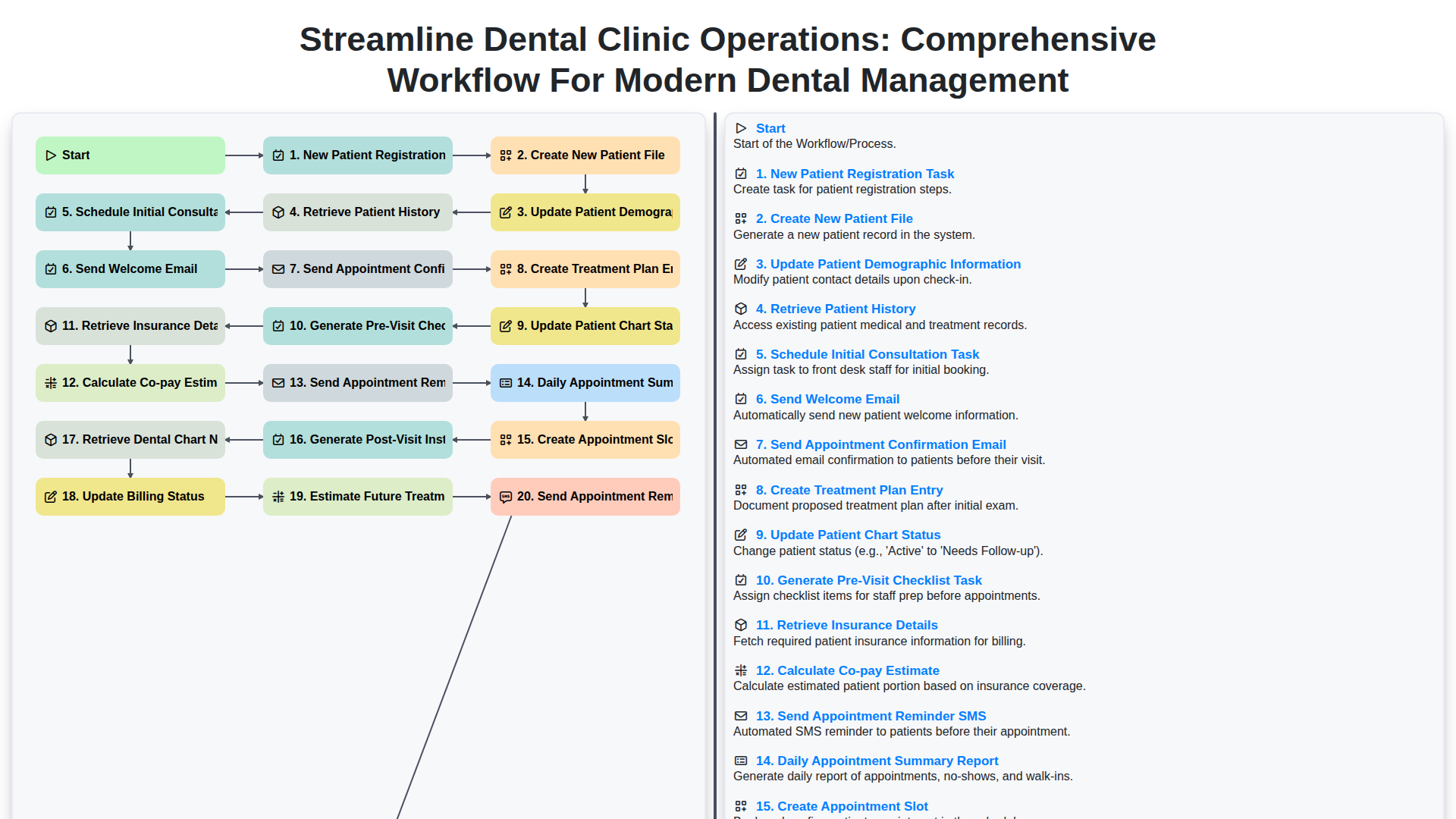
Table of Contents
- Welcome to Modern Dental Management: The Need for Workflow Optimization
- Phase 1: Onboarding the New Patient - From Inquiry to First Visit
- Pre-Visit Essentials: Setting the Stage for Success
- The Consultation Process: Gathering Data and Planning Care
- Managing Appointments: Scheduling, Reminders, and Preparation
- During the Visit: Clinical Documentation and Data Capture
- Post-Visit Procedures: Follow-up, Instructions, and Care Continuity
- Financial Operations: Billing, Estimates, and Insurance Verification
- Reporting and Analysis: Keeping the Clinic Running Smoothly
- Integrating Workflow Tools: Choosing the Right Technology
- Staff Roles and Workflow Ownership: Ensuring Seamless Handoffs
- Continuous Improvement: Auditing and Refining Your Dental Workflow
- Conclusion: Achieving Efficiency and Patient Satisfaction
- Resources & Links
TLDR: This guide reveals how implementing a standardized, step-by-step workflow-covering everything from new patient intake and scheduling to treatment planning, billing, and post-visit follow-up-can dramatically reduce administrative bottlenecks, improve patient experience, and boost revenue efficiency in your dental practice.
Welcome to Modern Dental Management: The Need for Workflow Optimization
In today's fast-paced healthcare environment, especially within the dental field, efficiency isn't just a bonus-it's a necessity for survival and growth. Dental clinics juggle a complex array of tasks daily: from welcoming a nervous new patient to coordinating intricate follow-up care and managing billing logistics. When processes are fragmented, manual, or poorly documented, delays creep in, patient experiences suffer, and valuable revenue gets left on the table. Modern dental management demands more than just good clinical skills; it requires a robust, predictable, and seamless operational backbone. Workflow optimization is precisely this backbone. It's about mapping out every patient journey-from their very first inquiry to their final follow-up-and ensuring that every touchpoint is optimized, automated where possible, and streamlined for maximum human efficiency.
Phase 1: Onboarding the New Patient - From Inquiry to First Visit
The journey begins the moment a potential patient shows interest. This phase focuses on transforming an initial inquiry into a confirmed first visit, ensuring a warm and organized welcome from the very first touchpoint. The process starts with the New Patient Registration Task. This isn't just paperwork; it's the foundation of their entire experience. Following registration, the next crucial step is to Create New Patient File, populating our digital records accurately. Simultaneously, we must build habits around data maintenance by having a streamlined process to Update Patient Demographic Information as needed. Before the consultation, thorough preparation is key: we need to Retrieve Patient History to understand their existing dental health context. Once the patient is ready to book, the Schedule Initial Consultation Task takes place. To build immediate rapport and set expectations, automating the Send Welcome Email is essential. This is immediately followed by sending the Send Appointment Confirmation Email to solidify the booking. The goal here is zero friction-a welcoming, efficient, and informative onboarding experience.
Pre-Visit Essentials: Setting the Stage for Success
This critical phase begins the moment a new appointment is booked, ensuring that both the patient and the clinic are fully prepared for a productive visit. The process starts with the Pre-Visit Patient Questionnaire, allowing us to gather vital background information before the patient even steps through the door. Simultaneously, staff members must Retrieve Insurance Details and Calculate Co-pay Estimate to manage financial expectations upfront. To keep everything organized, the Generate Pre-Visit Checklist task is executed, acting as a comprehensive internal guide. Finally, proactive communication is key: sending the Send Appointment Reminder SMS serves as a timely nudge, while also ensuring that all necessary documentation is ready for the clinical team to review upon arrival.
The Consultation Process: Gathering Data and Planning Care
This phase is where the journey from scheduling to active care truly begins. The Initial Consultation Task is the critical nexus point, requiring a coordinated effort of data gathering and strategic planning. Once the patient is scheduled, the workflow immediately pivots to nurture the relationship and prepare the clinical team. This starts with sending a Welcome Email to set a positive tone, followed closely by the Send Appointment Confirmation Email to lock in details. To ensure nothing is missed, a Generate Pre-Visit Checklist Task is triggered, reminding both the patient and the staff of necessary prerequisites. Simultaneously, the administrative side kicks into gear: the team must Retrieve Insurance Details and accurately Calculate Co-pay Estimate so that the patient understands their financial commitment upfront. Before the patient even walks in the door, proactive communication is key; sending an Appointment Reminder SMS serves as a vital secondary confirmation. When the patient arrives, they might be prompted to complete a Pre-Visit Patient Questionnaire Task, providing crucial contextual data.
Managing Appointments: Scheduling, Reminders, and Preparation
The cornerstone of smooth clinic operations is efficient appointment management. This phase covers everything from initially booking a slot to ensuring the patient is fully prepared for their visit. When a new appointment is scheduled, the process begins with the Create Appointment Slot task. This ensures that the provider's schedule is accurately reflected and bookable. Following the booking, we automate crucial patient communication: a Send Welcome Email upon first contact, and a timely Send Appointment Confirmation Email to solidify the visit in the patient's mind.
To minimize no-shows and maximize patient adherence, proactive reminders are key. Implementing Send Appointment Reminder SMS-both leading up to the visit and potentially reiterating details post-confirmation-is vital. However, preparation doesn't end with the reminder. We incorporate the Pre-Visit Patient Questionnaire task, which allows the patient to gather necessary preliminary information ahead of time. Furthermore, we create a Generate Pre-Visit Checklist to ensure both the patient and the administrative staff know exactly what to expect and bring. These steps, when executed seamlessly, reduce day-of-visit friction and improve the overall patient experience right from the scheduling stage.
During the Visit: Clinical Documentation and Data Capture
This phase is the heart of the dental visit. Once the patient is seated, the focus shifts entirely to meticulous clinical documentation and accurate data capture. The process begins with the Document Clinical Findings, where the dentist or hygienist performs thorough examinations, records visual findings (e.g., caries, gum inflammation, wear), and takes necessary measurements. These findings are immediately entered into the Electronic Health Record (EHR) system. Alongside the clinical notes, it is crucial to Update Patient Chart Notes, ensuring that every observation, procedure performed, and discussion point is logged contemporaneously. This real-time documentation is vital for continuity of care and legal records. Following the physical examination, the team may need to reference past data by utilizing the Retrieve Dental Chart Notes feature, allowing practitioners to see trends, prior treatments, and any previous issues that inform the current diagnosis. After all necessary procedures are completed, the final step of this section is to Update Patient Chart Notes again to summarize the visit's outcomes, treatments administered, and any immediate next steps required.
Post-Visit Procedures: Follow-up, Instructions, and Care Continuity
The process doesn't end when the patient leaves the clinic. Establishing robust post-visit procedures is crucial for patient satisfaction, adherence to treatment plans, and maintaining a steady stream of revenue. This phase focuses on thoughtful follow-up and clear communication to ensure continuous care. Immediately after the patient departs, the team must utilize the Generate Post-Visit Instructions task. These instructions should be customized based on the services rendered, detailing aftercare, medication schedules, and necessary precautions. Concurrently, the Retrieve Dental Chart Notes step allows clinical staff to thoroughly review the session notes, flagging any areas needing immediate attention or follow-up. A critical part of this handover is the Update Billing Status; if outstanding payments or follow-up procedures are required, the billing department must adjust the status accordingly. Furthermore, if a treatment plan requires future intervention, the team needs to Estimate Future Treatment Cost early, giving the patient transparency about their ongoing care commitment. Don't overlook proactive outreach: sending a timely Send Appointment Reminder SMS for the next scheduled follow-up, combined with proactive tasks like the Pre-Visit Patient Questionnaire (which can be scheduled for the following week), keeps the patient engaged and prepared for their next visit, thereby closing the loop on care continuity.
Financial Operations: Billing, Estimates, and Insurance Verification
Managing the financial aspects of your dental practice requires a smooth, repeatable workflow to ensure accurate billing, minimize claim rejections, and provide clear financial communication to patients. This section focuses on streamlining everything from initial insurance checks to final billing reconciliation.
The process begins with Retrieving Insurance Details. Before any treatment is finalized, the front office staff must validate the patient's coverage. This involves interfacing with insurance portals or using dedicated verification services to confirm active policies and coverage levels. Once verified, the next critical step is to Calculate Co-pay Estimate. Using the insurance data, the system calculates the patient's expected out-of-pocket cost immediately, setting clear expectations upfront.
As the patient progresses through care, the financial tracking updates are essential. After treatments are completed, the Update Billing Status task ensures that services rendered are accurately coded and submitted for claim processing. Furthermore, whenever a complex treatment is recommended, the system must Estimate Future Treatment Cost. This projection allows you to present a comprehensive financial view alongside the treatment plan.
Beyond immediate billing, the workflow incorporates proactive financial management. The Monthly Revenue Report acts as a crucial retrospective tool, allowing management to analyze income streams, identify underperforming services, and track overall profitability trends. For recurring reminders and pre-appointment preparation, while SMS reminders handle appointment logistics, the system also prepares financial guidance. Although Generate Post-Visit Instructions often relates to care, it must integrate billing expectations, reminding the patient about any outstanding balances or necessary follow-up payments.
By formalizing these financial touchpoints-from initial verification to final monthly reporting-your clinic ensures that revenue cycles are tight, billing is accurate, and financial transparency is maintained with both the practice and the patient.
Reporting and Analysis: Keeping the Clinic Running Smoothly
Beyond the day-to-day tasks, effective workflow management relies heavily on accurate reporting and analysis. These reports provide the crucial insights needed to keep the entire clinic running smoothly and proactively address potential bottlenecks. The Monthly Revenue Report is a cornerstone of this analysis, giving the practice an immediate understanding of financial health and revenue streams. Complementing this is the Daily Appointment Summary Report, which not only summarizes today's activity but helps management spot trends in appointment duration or high-volume service days. Furthermore, by analyzing Patient Demographic Data trends, clinics can better target marketing efforts or identify underserved patient groups. Consistent review of these reports allows for timely operational adjustments, ensuring that the entire workflow-from initial registration to final billing-remains optimized for efficiency and profitability.
Integrating Workflow Tools: Choosing the Right Technology
Choosing the right technology is not just about selecting software; it's about finding a system that genuinely supports and optimizes your existing patient journey. A robust workflow requires seamless integration. If your scheduling tool doesn't talk to your EHR, or if your billing system operates in a silo, you introduce manual bottlenecks-the very thing you are trying to eliminate. Modern dental management requires an integrated platform where tasks flow logically from one stage to the next, mimicking the efficient movement of a physical patient through your clinic. Look for systems that offer unified dashboards, allowing staff to see the next required action, whether it's completing the New Patient Registration Task right after a check-in, or automatically triggering the Send Welcome Email upon profile creation. Evaluating APIs, user interfaces, and the vendor's commitment to future updates is crucial. A modular system that allows you to add features (like advanced telehealth integration) as your practice grows is far superior to a one-size-fits-all solution that will feel restrictive in three years.
Staff Roles and Workflow Ownership: Ensuring Seamless Handoffs
Successful workflow execution hinges on clearly defined roles and accountability. To prevent bottlenecks and ensure a seamless patient journey, each task within the operational cycle must have an assigned owner. For instance, the front office staff typically 'owns' the New Patient Registration and initial scheduling tasks, while hygienists or assistants manage the documentation of clinical findings and the creation of initial treatment plans. The billing department takes primary ownership of retrieving insurance details, calculating co-pays, and updating the final billing status. Designating a single point of ownership for each step-from initial patient intake through to post-visit follow-up-minimizes confusion, reduces the risk of missed steps, and ensures that when one staff member completes their part, the next person knows exactly where to pick up the thread. This clear demarcation of responsibility is what transforms a process list into a truly efficient system.
Continuous Improvement: Auditing and Refining Your Dental Workflow
Regularly auditing and refining your dental workflow is not a one-time fix; it's a commitment to operational excellence. Set aside dedicated time-perhaps quarterly or after a significant process change-to review every step. Identify bottlenecks, redundancies, and points of friction. For example, if multiple staff members report difficulty locating specific historical documents, your retrieval process needs streamlining. Analyze the time taken for the New Patient Registration Task versus the time taken for the Update Patient Demographic Information to see where delays consistently occur. Use staff feedback extensively; the people executing the workflow know its pain points best. By continuously refining tasks like Create Treatment Plan Entry to incorporate clearer decision trees or optimizing the handoff between Document Clinical Findings and Update Patient Chart Notes, you move from merely managing tasks to engineering an efficient patient journey that maximizes both care quality and staff satisfaction.
Conclusion: Achieving Efficiency and Patient Satisfaction
By systematically implementing this comprehensive workflow, your dental clinic moves beyond simply managing appointments; you are orchestrating a seamless patient journey. From the initial moment a patient registers to the final billing and follow-up, every touchpoint is standardized, reducing human error and saving valuable staff time. This operational efficiency directly translates into improved patient satisfaction, as patients experience a smooth, professional, and worry-free interaction with your practice. A robust workflow isn't just a checklist of tasks-it's the framework that allows your team to focus on what matters most: delivering exceptional dental care. Regular review and adaptation of this workflow will ensure your clinic remains adaptable, profitable, and patient-centric in the evolving healthcare landscape.
Resources & Links
- Dental Practice Management Software Providers : Resources comparing and reviewing various dental practice management software systems that incorporate workflow automation.
- Dental Workflow Best Practices Guides : Articles and guides detailing optimized workflows for different stages of patient care in a dental setting.
- Dental Insurance and Billing Compliance Resources : Information on updating insurance protocols, CPT codes, and best practices for accurate co-pay estimation.
- Healthcare Workflow Optimization Case Studies : Real-world case studies showing how clinics improved efficiency by streamlining patient journeys.
- Modern Appointment Scheduling Technology Reviews : Reviews of automated scheduling tools, patient portals, and reminder systems (SMS/Email).
- Improving Patient Onboarding and First Impressions : Tips and best practices for creating a positive and seamless new patient experience from initial contact.
- Clinical Documentation and Charting Guidelines : Resources focusing on best practices for clinical note-taking, SOAP notes, and updating patient records.
Found this Article helpful?
Dental Management Solution Demo
Simplify your dental practice & enhance patient care! ChecklistGuro streamlines appointment scheduling, patient records, and billing. Improve efficiency, reduce errors, & boost patient satisfaction. Manage it all with our Work OS.
Related Articles
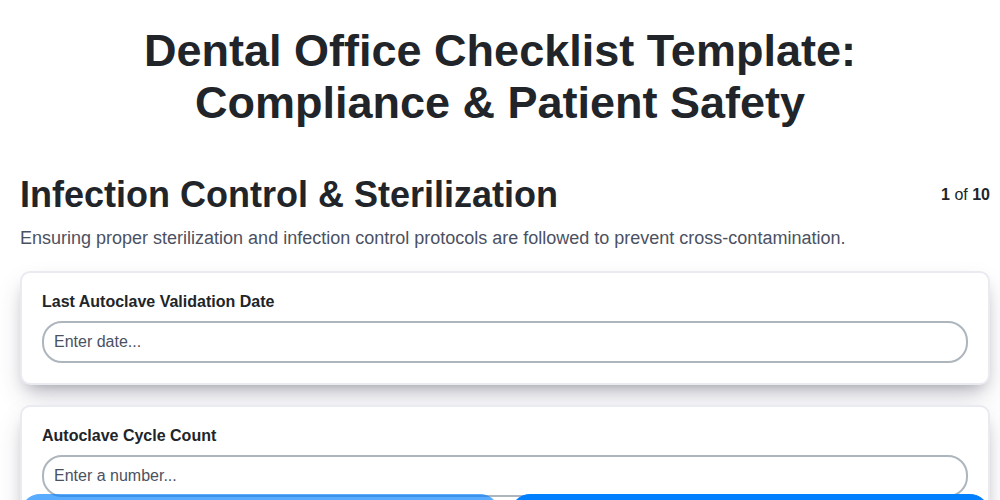
Your Dental Office Safety Net: The Compliance & Patient Safety Checklist Template
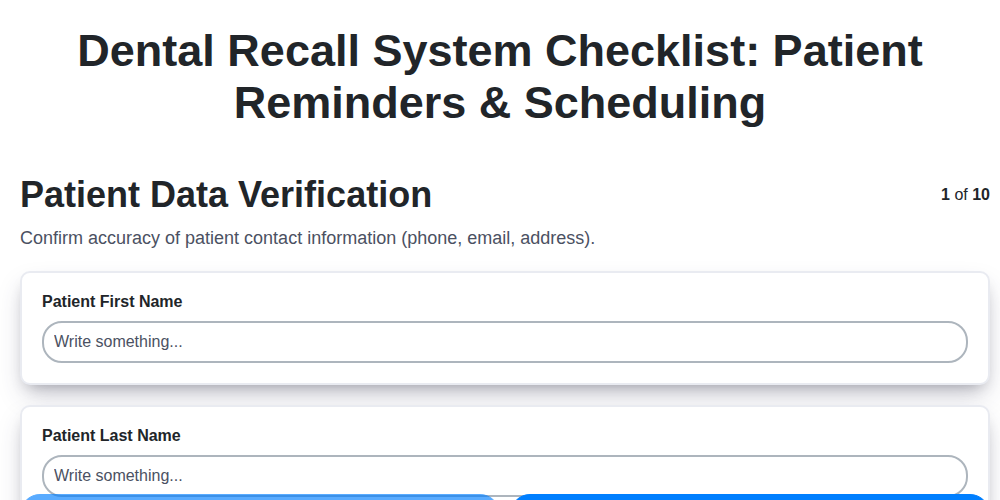
Mastering Dental Recalls: Your Ultimate Checklist Template

Mastering Dental Case Presentations: Your Checklist Template for Success

Your Dental Compliance Checklist: A State & Federal Guide
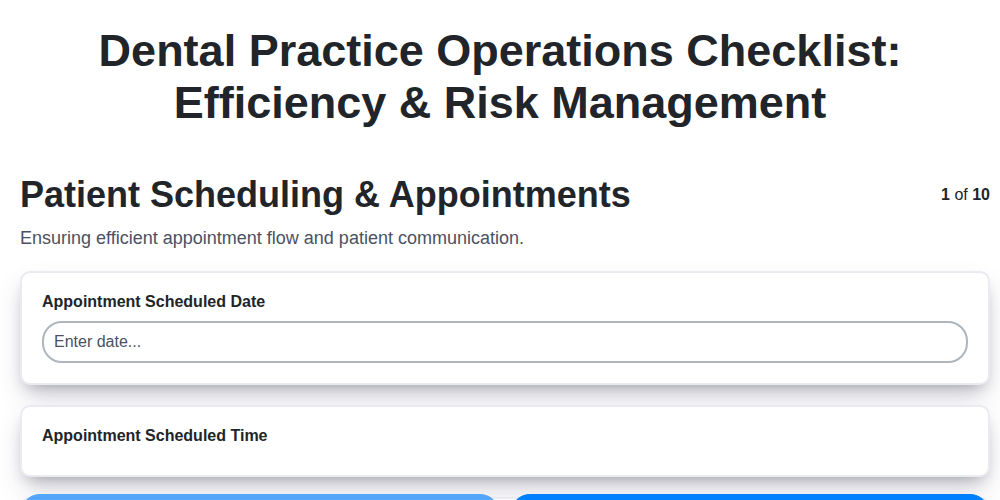
Dental Operations Checklist: Boost Efficiency & Manage Risk

The Ultimate Dental Lab Case Checklist: Fabrication & Quality Assurance

Your Complete Dental Infection Control Checklist: PPE & Surface Disinfection
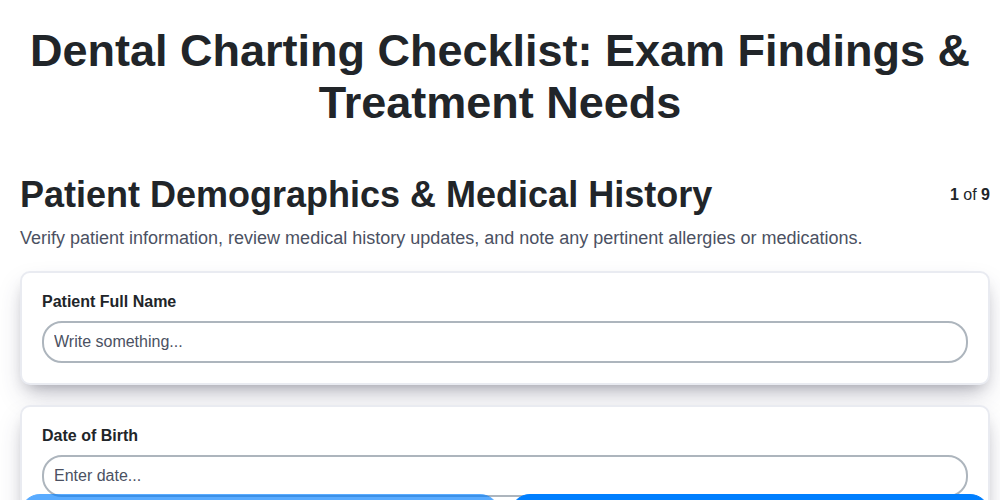
Mastering Dental Exams: Your Complete Charting Checklist Template
We can do it Together
Need help with
Checklists?
Have a question? We're here to help. Please submit your inquiry, and we'll respond promptly.