The 5 Best Public Transport Management Software of 2025
Published: 12/05/2025 Updated: 12/14/2025
Table of Contents
- Why Public Transport Management Software is Essential in 2025
- Key Features to Look For
- 1. <a href="https://transloc.com/" target="_blank">TransLoc</a>: Real-Time Intelligence for Transit Agencies
- 2. <a href="https://optibus.com/" target="_blank">Optibus</a>: AI-Powered Network Planning & Scheduling
- 3. <a href="https://trapezegroup.com/" target="_blank">Trapeze</a>: A Comprehensive Transit Management Platform
- 4. <a href="https://fleettrack.in/" target="_blank">FleetTrack</a>: Focused AVL and Telematics for Transit
- 5. <a href="https://www.route-master.com/" target="_blank">Routemaster</a>: Cloud-Native Microtransit & Mobility-as-a-Service (MaaS) Platform
- 6. <a href="https://checklistguro.com/solutions/public-transport-management" target="_blank">ChecklistGuro</a>: Streamlining Public Transport with BPM
- Implementation and Integration Considerations
- The Future of Public Transport Management
- Resources & Links
TLDR: Running a public transport business? Juggling routes, maintenance, scheduling, and passenger safety is tough. This post highlights the top 5 public transport management software solutions of 2025 - complete with checklists for route planning, vehicle inspections, driver compliance, and more - to streamline your operations, boost efficiency, and keep everything on track.
Why Public Transport Management Software is Essential in 2025
The landscape of public transport is evolving rapidly. Increased passenger expectations, stricter regulatory compliance, and the push for sustainable practices are all contributing to a more complex operating environment. Relying on outdated manual processes - spreadsheets, paper logs, and fragmented communication - simply isn't sustainable anymore.
In 2025, public transport management software isn't just a nice-to-have; it's a necessity. Here't why:
- Enhanced Efficiency: Automate scheduling, route optimization, and dispatching to minimize delays and maximize vehicle utilization.
- Improved Safety & Compliance: Implement rigorous vehicle maintenance checklists, driver performance monitoring, and incident reporting to ensure passenger safety and adhere to regulations. Real-time tracking and automated reminders significantly reduce the risk of accidents and non-compliance fines.
- Data-Driven Decisions: Gain valuable insights into passenger behavior, route performance, and operational costs. This data empowers you to make informed decisions regarding route adjustments, resource allocation, and service improvements.
- Reduced Operational Costs: Streamline processes, minimize wasted fuel, and optimize vehicle maintenance to significantly reduce operational expenses.
- Better Passenger Experience: Provide passengers with accurate real-time information, easy-to-use ticketing systems, and improved service reliability, leading to increased satisfaction and loyalty.
- Scalability: As your business grows, modern public transport management software can easily scale to accommodate increased demand and complexity.
Key Features to Look For
Choosing the right public transport management software isn't just about finding a tool; it's about finding a partner. Here's what to prioritize when evaluating different options:
- Real-time Vehicle Tracking: Essential for passenger information, dispatching, and responding to incidents. Look for GPS integration and a user-friendly map interface.
- Route Optimization: Software that intelligently plans routes based on traffic, demand, and vehicle capacity can significantly reduce fuel costs and travel times. Dynamic route adjustments are a huge plus.
- Scheduling & Dispatching: Robust scheduling tools should allow for easy creation of timetables, assignment of drivers, and management of vehicle allocation. Drag-and-drop interfaces and automated scheduling are highly desirable.
- Maintenance Management: Preventative maintenance is key to avoiding breakdowns and ensuring passenger safety. Look for features like maintenance scheduling, repair tracking, and automated reminders.
- Passenger Information Systems: Integrating with passenger information systems (e.g., real-time bus arrival apps) improves customer satisfaction and reduces inquiries.
- Compliance & Reporting: Ensure the software facilitates adherence to relevant regulations and provides detailed reports for audits and performance analysis. Driver logs, vehicle inspections, and incident reporting capabilities are crucial.
- Mobile Accessibility: Drivers and dispatchers need access to information on the go. Look for a mobile app with key functionalities.
- Integration Capabilities: Seamless integration with existing systems (e.g., accounting, HR) is vital for data consistency and workflow efficiency.
- Data Analytics & Reporting: Understand performance metrics, identify trends, and make data-driven decisions to optimize your operations. Customizable reports are a bonus.
- User-Friendly Interface: A complicated system won't be adopted. Ease of use for all users, regardless of technical skill, is paramount.
1. TransLoc: Real-Time Intelligence for Transit Agencies
TransLoc continues to be a strong contender in 2025, building on its established reputation for providing real-time vehicle tracking and passenger information systems. While other solutions have introduced wider feature sets, TransLoc's core strength remains its robust and user-friendly platform for operational intelligence.
Key Features (2025)
- Real-Time Vehicle Tracking: Provides accurate and granular location data for buses, shuttles, and other transit vehicles.
- Passenger Information: Offers rider information displays, mobile app integration, and real-time service alerts. Their upgraded mobile SDK allows for deeper integration with third-party mapping and ride-sharing apps.
- On-Demand Routing & Microtransit: Continues to offer flexible on-demand routing capabilities, crucial for expanding access to underserved areas. Improved AI-powered route optimization further reduces wait times and increases efficiency.
- Rider Dashboard: A more intuitive dashboard provides a comprehensive overview of system performance, allowing for data-driven decisions and proactive adjustments.
- Open API: Maintains a strong commitment to an open API, enabling seamless integration with other transit management systems and third-party applications.
Strengths in 2025
- Specialized Expertise: TransLoc's focus on core transit operations remains a significant differentiator.
- Reliability: A proven track record for stability and uptime.
- User-Friendly Interface: Easy to learn and use for both dispatchers and riders.
Considerations
- Feature Set: While excellent at what it does, its feature set is comparatively narrower than some of the more all-in-one platforms on this list.
- Reporting Capabilities: While improved, reporting features still lag slightly behind competitors focusing heavily on data analytics.
2. Optibus: AI-Powered Network Planning & Scheduling
Optibus remains a leading force in 2025, recognized for its powerful AI-driven approach to network planning, scheduling, and optimization. Their commitment to data-driven decision making continues to revolutionize how transit agencies design and operate their services. Significant advancements in their predictive modeling capabilities are making a real difference in service reliability.
Key Features (2025)
- AI-Powered Network Planning: Automatically generates optimal network designs based on demand data, cost constraints, and service objectives. Improved algorithms account for evolving commuter patterns and real-time events.
- Dynamic Scheduling: Creates and adjusts schedules in real-time, responding to disruptions and maximizing resource utilization. Integration with TransLoc's real-time tracking provides even greater responsiveness.
- Scenario Modeling: Allows planners to test and compare different service configurations before implementation, facilitating informed decision-making. Enhanced visualization tools make scenarios easier to understand.
- Resource Optimization: Optimizes the allocation of vehicles, drivers, and maintenance resources to minimize costs and maximize efficiency. Includes AI-powered driver fatigue prediction.
- Demand Forecasting: Uses machine learning to predict future demand patterns, enabling proactive adjustments to service offerings. Integrates with external data sources like weather forecasts and event calendars.
- Automated Route Structuring: Significantly reduces the manual effort involved in route design, allowing planners to focus on strategic improvements.
Strengths in 2025
- AI-Driven Optimization: Provides unparalleled levels of efficiency and cost savings through its advanced AI algorithms.
- End-to-End Solution: Covers the entire planning and scheduling lifecycle, from network design to real-time adjustments.
- Data-Driven Insights: Delivers actionable insights to help agencies make better decisions and improve performance.
- Integration Capabilities: Integrates with a wide range of third-party systems, including CAD/AVL, ITS, and passenger information platforms.
Considerations
- Learning Curve: The platform's depth and complexity can require a more significant investment in training and onboarding.
- Data Dependency: The effectiveness of the AI algorithms is highly dependent on the quality and availability of data.
- Cost: Optibus's pricing reflects its sophisticated capabilities, making it a more substantial investment for smaller agencies.
3. Trapeze: A Comprehensive Transit Management Platform
Trapeze remains a significant player in 2025, continuing to evolve its all-encompassing platform for transit agencies. Their strength lies in providing a broad suite of integrated modules that cover a wide range of operational needs, although some individual modules may not be as cutting-edge as those of more specialized solutions.
Key Features (2025)
- Scheduling & Dispatching: Offers robust scheduling and dispatching capabilities, including real-time vehicle tracking and automated passenger counting. Improved integration with mobile ticketing systems.
- Maintenance Management: Tracks vehicle maintenance history, schedules preventative maintenance, and manages parts inventory. Predictive maintenance features are enhanced with data from IoT sensors on vehicles.
- Revenue Management: Manages fare collection, ticketing, and revenue reporting. Expanded support for contactless payment methods.
- Passenger Information: Provides tools for managing and distributing passenger information, including real-time updates and service alerts. More direct integration with social media platforms.
- Fixed Route & Demand Response: Supports both fixed-route and on-demand transit services, allowing agencies to adapt to changing passenger needs. AI-powered routing for demand response services is now standard.
- CAD/AVL (Computer-Aided Dispatch/Automatic Vehicle Location): A core component, providing real-time location tracking and communication with vehicles.
Strengths in 2025
- Integrated Solution: Provides a unified platform for managing all aspects of transit operations, reducing data silos and improving coordination.
- Scalability: Suitable for agencies of all sizes, from small rural systems to large metropolitan networks.
- Established Reputation: A long track record of success and a large base of satisfied customers.
- Comprehensive Feature Set: Covers a wide range of operational needs in a single platform.
4. FleetTrack: Focused AVL and Telematics for Transit
FleetTrack continues to carve out a niche in 2025 as a highly specialized solution focused on AVL (Automatic Vehicle Location) and telematics for public transit. While not an all-encompassing transit management system, their deep expertise in vehicle tracking and data analytics makes them a valuable partner for agencies prioritizing real-time operational intelligence.
Key Features (2025)
- Real-Time Vehicle Tracking: Offers exceptionally accurate and granular vehicle location data, utilizing advanced GPS and cellular triangulation. Enhanced integration with dash cameras and onboard sensors.
- Driver Behavior Monitoring: Tracks driver performance metrics such as speeding, hard braking, and idling. AI-powered feedback systems now personalize coaching for drivers.
- Predictive Maintenance: Analyzes vehicle data to predict maintenance needs and prevent breakdowns. Integrates with vehicle diagnostic systems for automated fault reporting.
- Fuel Management: Tracks fuel consumption and identifies opportunities to improve fuel efficiency. Integration with electric vehicle charging infrastructure provides granular charging data.
- Customizable Dashboards: Allows agencies to create personalized dashboards to monitor key performance indicators (KPIs).
- Open API & Integrations: Facilitates integration with existing transit management systems and third-party applications.
Strengths in 2025
- Specialized Expertise: Deep focus on AVL and telematics leads to superior performance in these areas.
- Accuracy & Reliability: Known for its highly accurate vehicle tracking and dependable system uptime.
- Scalability: Can easily scale to accommodate agencies of all sizes.
- Driver Safety Focus: Strong emphasis on driver safety and performance improvement.
5. Routemaster: Cloud-Native Microtransit & Mobility-as-a-Service (MaaS) Platform
Routemaster stands out in 2025 as a leading platform specializing in microtransit and Mobility-as-a-Service (MaaS) solutions. Initially known for its on-demand routing capabilities, it has significantly expanded to offer a unified platform for integrating various transportation modes and delivering personalized mobility experiences.
Key Features (2025)
- Dynamic Routing & Scheduling: Offers AI-powered on-demand routing and scheduling for shuttles, vans, and other microtransit vehicles. Improved algorithms optimize routes based on real-time demand and traffic conditions.
- Multi-Modal Integration: Integrates with fixed-route transit, ride-sharing services, bike-sharing programs, and other transportation options, offering passengers a single interface for trip planning and booking.
- Passenger App: A user-friendly mobile app allows passengers to plan trips, book rides, track vehicles, and manage payments. Enhanced accessibility features and personalized recommendations.
- Agency Dashboard: Provides agencies with real-time visibility into microtransit operations, including vehicle location, passenger demand, and performance metrics. Predictive analytics help optimize service delivery.
- Open API & SDK: Enables seamless integration with existing transit systems and third-party applications. Expanded support for emerging mobility services.
- White-Labeling Options: Allows agencies to brand the platform with their own logos and colors.
Strengths in 2025
- Microtransit Expertise: Deep specialization in microtransit and demand-responsive transportation.
- Scalability & Flexibility: Can easily adapt to changing transportation needs and scale to accommodate growing demand.
- Passenger-Centric Design: Focused on providing a seamless and convenient experience for passengers.
- Modern Technology Stack: Built on a cloud-native architecture for optimal performance and reliability.
Considerations
- Limited Scope Beyond MaaS: While powerful for microtransit and MaaS, it doesn't offer a complete suite of traditional transit management modules.
- Integration Complexity: Integrating with legacy systems can be challenging.
- Dependent on Passenger Adoption: Success hinges on passenger adoption and usage of the platform.
6. ChecklistGuro: Streamlining Public Transport with BPM
While not solely focused on public transport management, ChecklistGuro stands out as a powerful Business Process Management (BPM) platform uniquely adaptable to the complexities of the industry. We're a versatile solution used by organizations of all sizes across diverse sectors, and our inherent flexibility allows for the creation of custom public transport workflows that address specific operational needs.
What makes ChecklistGuro different for Public Transport? Forget rigid, off-the-shelf software. With ChecklistGuro, you build your own. Imagine workflows for:
- Route Optimization & Scheduling: Design and automate processes to analyze route efficiency, adjust schedules based on demand, and manage real-time adjustments.
- Vehicle Maintenance & Inspection: Implement detailed checklists and workflows to ensure vehicle safety and compliance, proactively managing maintenance schedules.
- Incident Reporting & Resolution: Create structured incident reporting workflows, tracking investigations and ensuring timely resolution.
- Passenger Feedback Management: Build automated systems for gathering, analyzing, and responding to passenger feedback.
- Driver Management & Training: Streamline onboarding, training, and performance evaluations for your driver workforce.
Key Features:
- Drag-and-Drop Workflow Builder: No coding required to design and automate processes.
- Customizable Checklists & Forms: Tailor data collection to your exact requirements.
- Real-time Reporting & Analytics: Gain insights into operational efficiency and identify areas for improvement.
- Role-Based Access Control: Secure sensitive data and ensure proper authorization.
- Integration Capabilities: Connect with existing systems (e.g., GPS tracking, ticketing platforms).
Why Consider ChecklistGuro? If you're seeking a highly customizable and adaptable solution that empowers you to build your ideal public transport management system, ChecklistGuro offers unparalleled flexibility and control.
Implementation and Integration Considerations
Implementing new public transport management software is rarely a plug-and-play scenario. Careful planning and consideration of integration are crucial for a successful transition. Here's what you need to think about:
Data Migration: Moving existing data (routes, schedules, passenger information, maintenance records) to the new system can be complex. Plan a phased approach, prioritizing critical data first. Consider data cleansing to ensure accuracy and avoid carrying over outdated information. Many platforms offer data migration tools or services - explore these options.
System Integration: Most public transport businesses rely on a network of systems: ticketing platforms, GPS tracking, dispatch systems, and potentially even financial management software. The new management software must integrate with these existing tools. Check API availability and compatibility before selecting a platform. Poor integration can lead to data silos and negate many of the software's benefits.
Training & Change Management: Your team needs to be comfortable using the new software. Invest in thorough training programs for all relevant personnel - drivers, dispatchers, maintenance staff, and administrative teams. Address potential resistance to change proactively.
Scalability & Future-Proofing: Public transport needs evolve. Choose a platform that can scale with your business - handle increased ridership, add new routes, or integrate new technologies in the future. Look for platforms that embrace modern APIs and are committed to ongoing development.
Phased Rollout: A full-scale launch can be overwhelming. Consider a phased rollout, starting with a pilot program in a limited area or with a specific department. This allows you to identify and address any issues before wider adoption.
The Future of Public Transport Management
The public transport landscape is evolving rapidly. Increased urbanization, growing environmental concerns, and the rise of smart cities are driving a demand for more efficient, sustainable, and passenger-centric systems. Looking ahead to 2025 and beyond, we see several key trends shaping the future of public transport management software.
Real-time data analytics will become increasingly crucial. Operators need to move beyond reactive problem-solving and leverage data to predict demand, optimize routes dynamically, and proactively address potential issues like vehicle breakdowns or delays. AI and machine learning will be instrumental in analyzing this data, identifying patterns, and automating decisions. Think predictive maintenance scheduling based on vehicle usage, or route adjustments in response to real-time traffic conditions.
Furthermore, passenger experience is paramount. Integrated mobile apps offering journey planning, real-time arrival information, and contactless payment options are no longer a luxury, but an expectation. Management software will need to seamlessly connect with these passenger-facing tools to provide a cohesive and user-friendly experience.
Sustainability is also a major driver. Electric vehicle integration, route optimization to reduce emissions, and efficient energy management will be key features in the next generation of public transport management software. Finally, expect greater emphasis on cybersecurity and data privacy, ensuring the safety and integrity of sensitive passenger and operational data. The best solutions will be those that anticipate these shifts and provide flexible, scalable platforms capable of adapting to future challenges and opportunities.
Resources & Links
- TransLoc: Provides real-time passenger information, predictive arrival times, and route optimization solutions for transit agencies - a core subject of the first review section.
- Optibus: Offers AI-powered network planning, scheduling, and real-time operations, directly relating to the AI-driven aspects of the second review and future trends.
- Trapeze Group: Delivers a full suite of transit management software, encompassing scheduling, dispatch, passenger information, and more - vital for discussing comprehensive platforms.
- FleetTrack: Specializes in AVL (Automatic Vehicle Location) and telematics for public transit, supporting the discussion of vehicle tracking and operational efficiency.
- RouteMaster: Focuses on microtransit and Mobility-as-a-Service (MaaS) platforms, essential for exploring emerging transit models and cloud-native solutions.
- ChecklistGuro: Provides Business Process Management (BPM) solutions applicable to public transport, relevant for the 'Streamlining Public Transport with BPM' section.
- MAS Transit Software: Offers scheduling, dispatching, and mobile applications for transit agencies. A good comparison point for the featured options.
- InfoConnect (Transport Software): A broader resource for understanding industry trends and transportation management systems.
- ResearchAndMarkets: Provides market research reports on public transport software and related technologies; useful for substantiating the 'Future of Public Transport Management' section.
- Grand View Research: Another market research provider offering insights into market size, trends, and forecasts for public transport management software.
- Allied Market Research: Provides similar market analysis as Grand View Research and ResearchandMarkets.
- McKinsey & Company (Public Sector): Provides insights on the future of urban mobility and the role of technology - relevant for the broader context of public transport management.
- Deloitte (Public Sector): Similar to McKinsey, provides thought leadership and reports on trends shaping the public sector, including transportation.
- Institute for Transportation Development and Policy (ITDP): A non-profit organization dedicated to promoting sustainable transportation solutions - provides valuable context for the 'Future of Public Transport Management' section, particularly regarding MaaS and microtransit.
- American Public Transportation Association (APTA): The leading association for transit agencies in North America; provides industry resources, best practices, and standards.
- Mobility as a Service (MaaS) Alliance: Focuses on the development and implementation of MaaS solutions, important for understanding emerging mobility trends.
Frequently Asked Questions
What is public transport management software?
Public transport management software is a suite of tools designed to help transit agencies and operators manage their operations efficiently. It typically includes features like route planning, scheduling, fleet tracking, passenger information systems, and data analytics to optimize performance and improve passenger experience.
Why was this list of 'Best of 2025' software compiled?
This list was compiled based on extensive research considering factors like feature sets, user reviews, scalability, ease of use, integration capabilities, and projected trends in public transport technology leading up to 2025. We focused on solutions expected to be industry leaders in the coming year.
How were the five software options selected?
We evaluated a wide range of public transport management software solutions, scoring them based on pre-defined criteria. The top five based on these scores, and qualitative feedback from industry experts, were selected for this list. We prioritized software with demonstrated innovation and a strong commitment to the future of public transit.
What are the key features I should look for in public transport management software?
Essential features include real-time vehicle tracking, automated passenger counting, route optimization, predictive maintenance for fleet vehicles, integration with payment systems, robust reporting and analytics dashboards, and a user-friendly interface for both operators and passengers.
Are there different pricing models for these software solutions?
Yes, pricing models vary significantly. Many offer subscription-based pricing, often tiered based on the size of the operation and the features required. Some might offer perpetual licenses, while others may include usage-based costs. We recommend contacting each vendor directly for specific pricing details.
What kind of transit agencies would benefit most from these software solutions?
Virtually any transit agency can benefit, from small city buses to large metropolitan rail systems. However, agencies experiencing rapid growth, struggling with operational inefficiencies, or looking to enhance the passenger experience will find the most immediate and substantial benefits.
Do these software solutions integrate with existing infrastructure?
Most of the software listed offer integration capabilities with existing systems, such as GPS devices, ticketing machines, and passenger information displays. However, the complexity of integration will depend on the specific systems currently in place. Thorough assessment and planning are crucial.
What are the projected trends influencing public transport management software in 2025?
Key trends include increased focus on electric vehicle fleet management, enhanced use of data analytics and AI for predictive maintenance and route optimization, greater emphasis on accessibility and inclusivity features, and seamless integration with mobile apps and smart city initiatives.
Where can I find more detailed information about each software option?
Each software option has its own website with detailed product information, case studies, and demo requests. Links to these websites are provided within the full article. We also recommend contacting the vendors directly for tailored consultations.
Is there a free trial or demo available for any of these options?
Availability of free trials or demos varies by vendor. We recommend checking the individual software's website or contacting their sales team directly to inquire about trial options.
Comments
There are no comments yet. Be the first to add one!
Public Transport Management Solution Demo
Optimize public transport operations & enhance passenger experience! ChecklistGuro streamlines route planning, vehicle maintenance, and incident reporting. Improve efficiency, safety, and reliability. Manage it all with our Work OS.
Related Articles
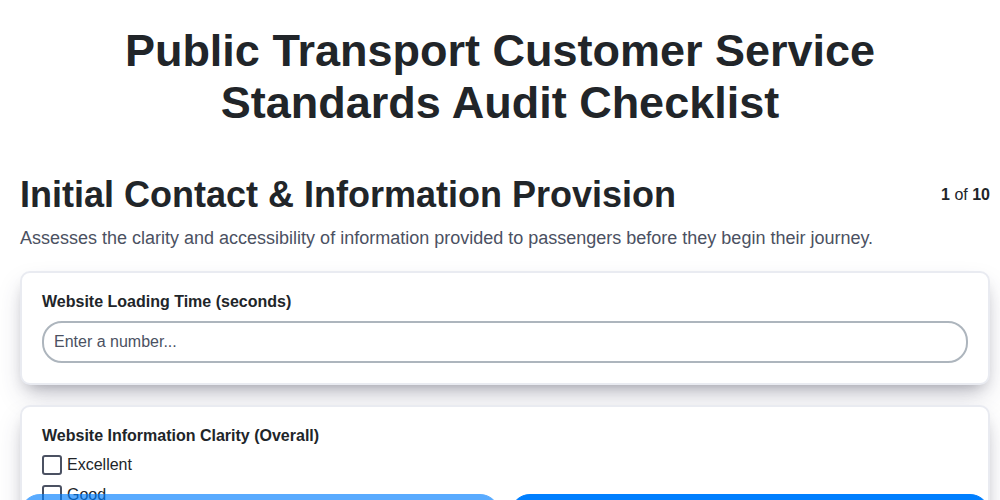
Ensuring Excellent Transit: Your Public Transport Audit Checklist Template

Ensuring Safe Wheels: Your Public Transport Driver Fitness Checklist Template
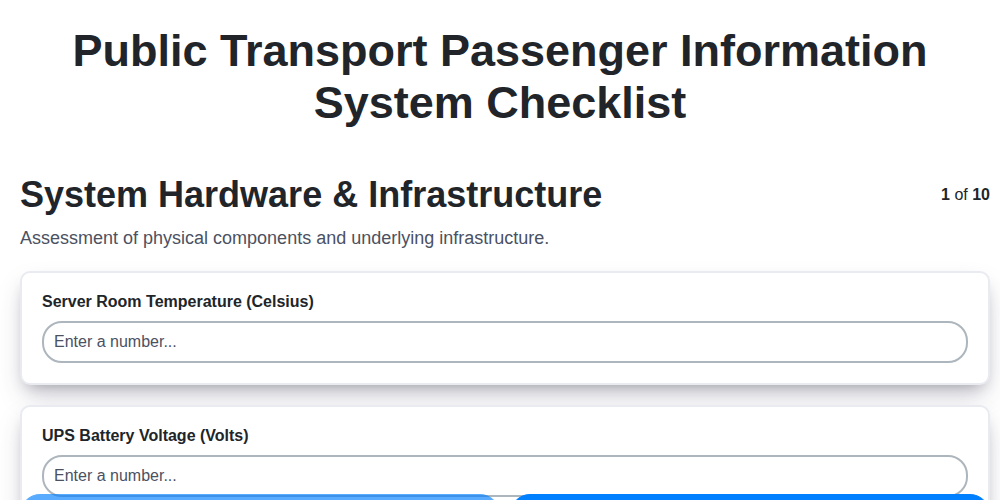
The Ultimate Public Transport Passenger Information System Checklist Template
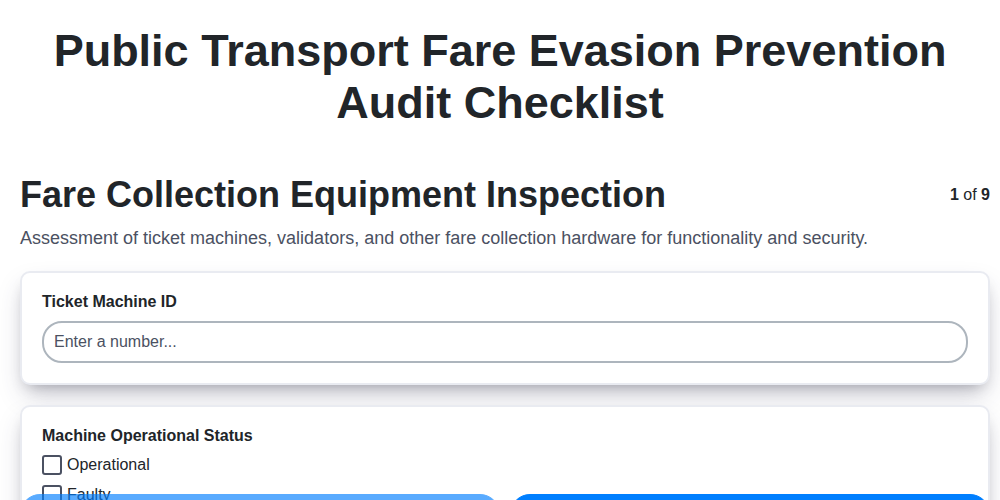
Public Transport Fare Evasion Prevention Audit Checklist Template
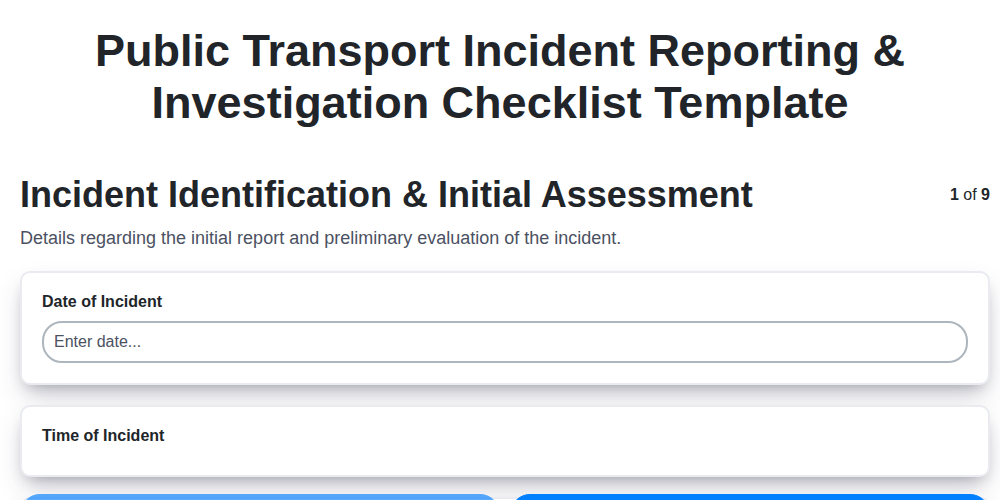
Navigating Safety: Your Public Transport Incident Reporting Checklist Template
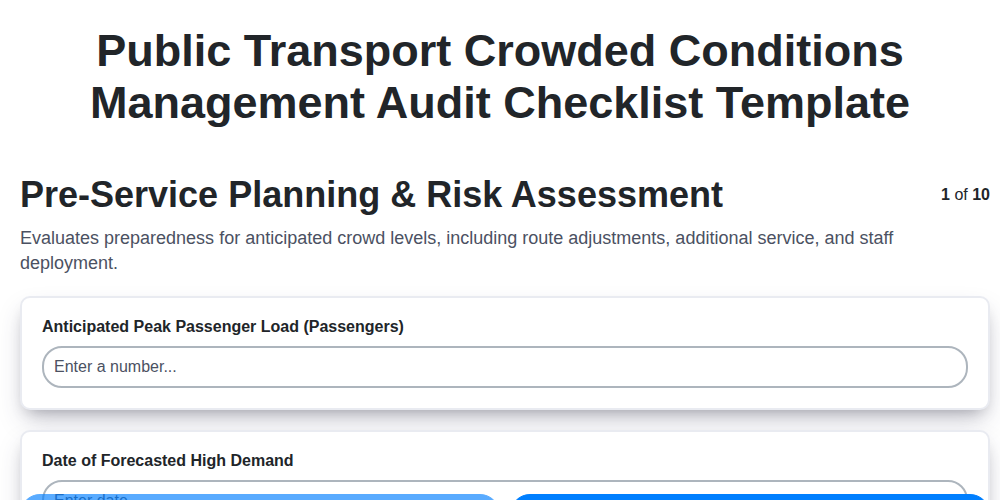
Mastering the Crush: Your Public Transport Crowded Conditions Audit Checklist
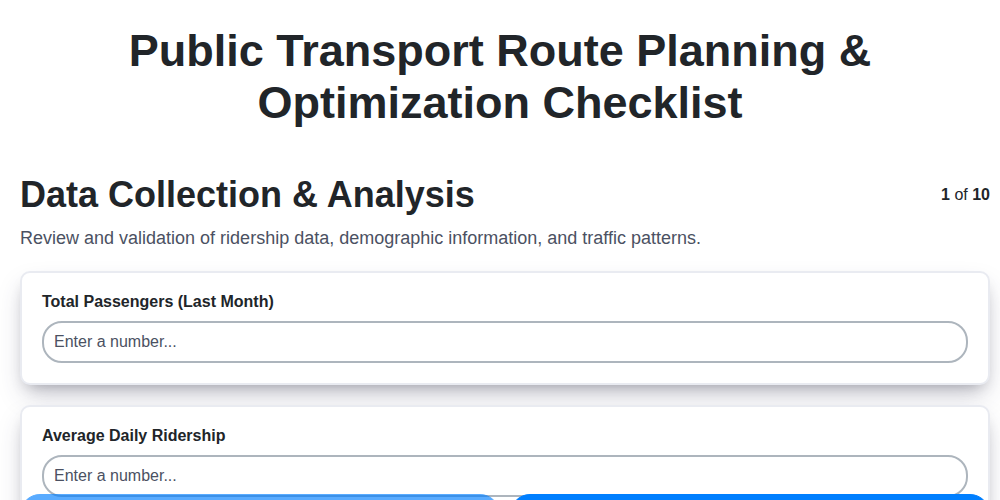
Your Ultimate Guide: The Public Transport Route Planning & Optimization Checklist Template
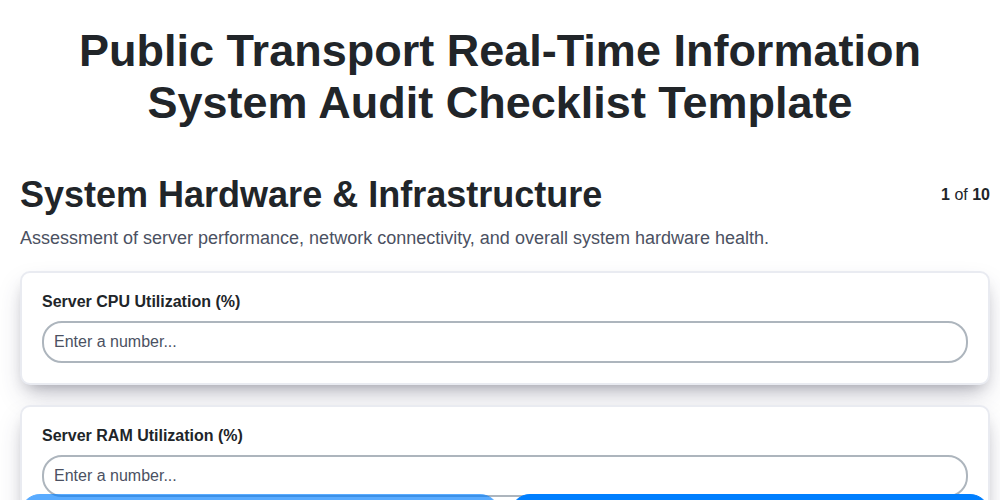
Keeping Transit on Track: Your Public Transport Information System Audit Checklist
We can do it Together
Need help with
Checklists?
Have a question? We're here to help. Please submit your inquiry, and we'll respond promptly.