Unlock Warehouse Efficiency: Your Capacity Planning Checklist Template
Published: 09/02/2025 9:00 PM Updated: 12/13/2025 9:24 AM
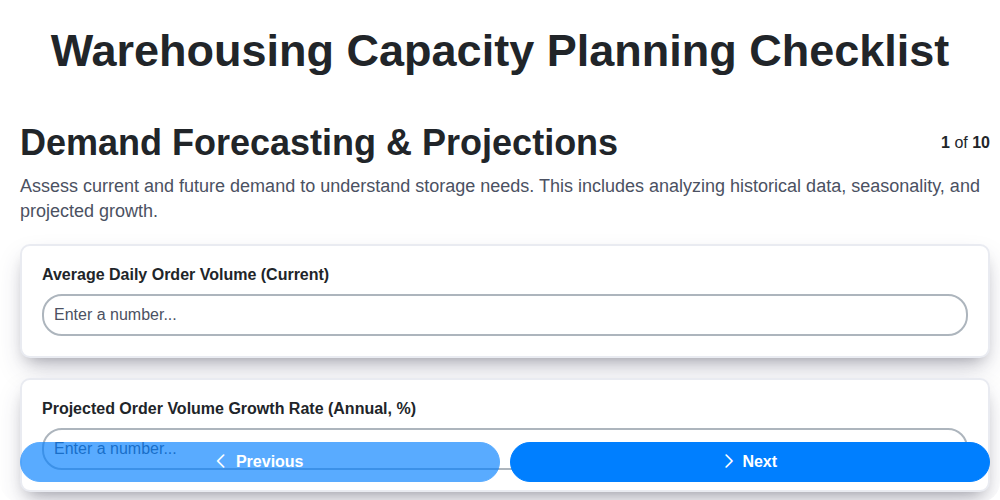
Table of Contents
- Why Warehouse Capacity Planning Matters
- Download Your Free Checklist Template
- 1. Assessing Current Warehouse Utilization
- 2. Demand Forecasting: Projecting Future Needs
- 3. Analyzing Storage Requirements & SKU Profiles
- 4. Optimizing Warehouse Layout for Flow
- 5. Evaluating Storage System Options
- 6. Technology Integration: WMS, Automation & Beyond
- 7. Space Optimization Techniques: Verticality & Density
- 8. Labor Planning & Workforce Allocation
- 9. Risk Management & Contingency Planning
- 10. Cost Analysis & Budgeting for Expansion
- 11. Location Considerations: New Facilities or Renovations
- 12. Scalability: Planning for Growth & Fluctuations
- 13. Performance Metrics: Tracking Your Progress
- 14. Continuous Improvement: Maintaining Efficiency
- Resources & Links
TLDR: Overwhelmed by warehouse capacity planning? Our free checklist template breaks down the process - from demand forecasting to workforce planning - so you can proactively manage space, minimize risks, and boost efficiency. Download it now and stop reacting to crises!
Why Warehouse Capacity Planning Matters
Beyond simply fitting more boxes, effective warehouse capacity planning acts as a critical engine for overall business success. Reactive capacity management - scrambling to expand when you're already operating at maximum efficiency - leads to costly bottlenecks, delayed order fulfillment, increased operational expenses, and ultimately, dissatisfied customers.
Consider the ripple effect: a congested warehouse slows down the entire supply chain. Orders are delayed, leading to expedited shipping charges and potential penalties. Production schedules can be disrupted, impacting downstream processes. Customer trust erodes, and valuable business is lost to competitors who can deliver reliably.
Strategic capacity planning, conversely, fosters agility and resilience. It allows for proactive adaptation to market fluctuations, seasonal spikes in demand, and the introduction of new products or services. It empowers your team to optimize workflows, reduce waste, and improve overall productivity, contributing directly to increased profitability and a stronger competitive position. Ultimately, it transforms your warehouse from a potential liability into a powerful asset driving sustainable growth.
Download Your Free Checklist Template
Ready to proactively manage your warehouse capacity and avoid costly bottlenecks? We've compiled all the steps outlined in this guide into a handy, downloadable checklist template. It's designed to be a practical tool to guide your assessment, planning, and implementation.
This isn't just a list; it's a structured framework with prompts and spaces for notes, allowing you to document your findings and track your progress. You're equipped to move beyond reactive firefighting and build a resilient, efficient warehouse operation.
1. Assessing Current Warehouse Utilization
Before diving into future planning, a brutally honest assessment of your current warehouse utilization is paramount. This isn't just about knowing your square footage; it's about understanding how effectively you're using every inch. Start with a thorough physical audit - don't rely solely on spreadsheets.
1. Data Reconciliation: Compare your records (WMS data, inventory counts) with a physical inventory. Discrepancies flag inefficiencies, potential errors, or even shrinkage.
2. Utilization Rate Calculation: The core metric. This is typically calculated as (Used Space / Total Space) x 100%. However, simply looking at total utilization is insufficient. Break it down further:
- SKU-Level Utilization: Identify underutilized SKUs occupying valuable space. Consider reallocation or optimization strategies.
- Storage Type Utilization: Evaluate the efficiency of your racking, shelving, floor space, and other storage methods. Are you using the optimal type for each SKU?
- Aisle Efficiency: Are aisles overly wide, hindering movement and consuming valuable space?
3. Visual Mapping: Create a visual map of your warehouse, color-coding areas by storage type and identifying bottlenecks. This can be a simple hand-drawn map or a more sophisticated digital rendering.
4. Waste Identification: Look for areas of "wasted" space - awkward corners, unused vertical space, cluttered walkways. Document these visually.
5. Flow Analysis: Observe the movement of goods throughout the warehouse. Identify pinch points and areas where congestion slows down processes.
Finally, engage your warehouse team. They're on the front lines and possess invaluable insights into daily operations and potential areas for improvement. Their feedback is essential for a truly accurate assessment.
2. Demand Forecasting: Projecting Future Needs
Accurate demand forecasting is the bedrock of any effective warehouse capacity planning strategy. It's not simply about guessing what customers will buy; it's about leveraging data and analytical techniques to project future needs with reasonable accuracy. A significant overestimation can lead to wasted space and unnecessary costs, while a severe underestimation results in stockouts, delayed orders, and frustrated customers - all impacting profitability and reputation.
The process begins with gathering historical sales data. This includes not just overall sales volumes, but also SKU-level detail, seasonality patterns, promotional activity impacts, and regional variations. More sophisticated approaches incorporate external factors like economic indicators, competitor actions, and even weather forecasts, particularly for industries with seasonal demand spikes.
Several forecasting methods are available, ranging in complexity and cost. Simple moving averages and exponential smoothing are good starting points for smaller operations with limited data. For businesses with more robust datasets and analytical capabilities, time series analysis, regression models, and machine learning algorithms can provide more nuanced and accurate projections.
Crucially, forecasting isn't a one-and-done exercise. It's a continuous process of refinement. Regularly compare your forecasts against actual sales data and adjust your models accordingly. A robust forecast review process, involving sales, marketing, and operations teams, ensures alignment and identifies areas for improvement. Remember to document your assumptions and methodologies for transparency and reproducibility.
3. Analyzing Storage Requirements & SKU Profiles
Understanding your SKUs - their characteristics, volume, and velocity - is the bedrock of accurate storage requirement analysis. It's not enough to simply know how many items you have; you need to know what they are and how they behave. We categorize this analysis through several key aspects:
1. ABC Classification & Prioritization: This is a cornerstone technique. 'A' items are your high-volume, high-value SKUs (typically 20% of your inventory representing 80% of your revenue). 'B' items are mid-range in both volume and value. 'C' items are your low-volume, low-value SKUs. Prioritize storage solutions and optimization efforts toward your 'A' items first. Dense, easily accessible racking and prime location within the warehouse are essential.
2. Dimensional Data & Cube Utilization: Don't just consider the number of units; measure the dimensions of each SKU. This allows for more efficient cube utilization. SKUs with large dimensions might necessitate floor stacking or wider aisle clearances. Track average cube per SKU and identify opportunities for consolidation or repackaging to reduce overall storage needs.
3. Velocity & Rotation: How quickly does each SKU move? Fast-moving items require readily accessible storage and potentially dedicated picking areas. Slow-moving items can be stored higher, further back, or in less accessible locations. Implement a First-In, First-Out (FIFO) system to prevent obsolescence for perishable or date-sensitive goods.
4. Handling & Special Requirements: Consider special handling requirements for each SKU. Fragile items need protected storage and careful handling. Temperature-sensitive goods require climate-controlled environments. Hazardous materials necessitate compliance with safety regulations and specialized storage areas.
5. Seasonal Fluctuations: Many businesses experience seasonal peaks and troughs in demand. Account for these fluctuations when calculating storage requirements. Ensure you have sufficient capacity to handle peak season orders, while minimizing excess space during slower periods.
By thoroughly profiling your SKUs and understanding their individual characteristics, you can create a storage strategy that maximizes efficiency, minimizes waste, and supports your overall supply chain goals.
4. Optimizing Warehouse Layout for Flow
A well-designed warehouse layout isn't just about aesthetics; it's the backbone of efficient operations. The goal is to minimize travel distances, reduce bottlenecks, and ensure a smooth flow of goods from receiving to shipping. Here's how to optimize your layout for maximum flow:
1. Receiving & Putaway Zones: These areas should be strategically located near loading docks and accessible to forklifts and other material handling equipment. Clear signage and designated lanes are essential to prevent congestion. Consider a staging area for inbound shipments to manage volume spikes.
2. Storage Areas - High-Throughput vs. Low-Throughput: Categorize your SKUs based on demand frequency (ABC analysis is helpful here). High-velocity items should be stored closer to shipping and accessible for quick retrieval. Less frequently moved items can occupy more distant and potentially denser storage locations.
3. Picking Zones - Dedicated vs. Consolidated: Dedicated zones assign specific areas to particular product categories. This streamlines picking but can lead to underutilized space during slow periods. Consolidated zones use a flexible approach, allowing pickers to move between product categories as needed. Choose the approach that best aligns with your product mix and picking strategy.
4. Packing & Shipping Zones: These areas should be located near the shipping docks and equipped with adequate packing materials and workstations. Consider a dedicated quality control station to ensure accuracy before shipment.
5. Aisles & Pathways: Maintain adequate aisle width to accommodate forklifts and pedestrian traffic. Clearly mark pathways with durable signage and floor markings. Avoid creating dead-end aisles.
6. U-Shaped Flow: The classic U-shaped layout promotes continuous flow, minimizing backtracking. Goods move from receiving, through storage and picking, and finally to shipping, all within a U-shaped path.
7. Right-Angle Flow: This layout works best for smaller warehouses with limited space. It focuses on creating clear, right-angle pathways for efficient movement.
8. Consider Vertical Space: Utilizing vertical racking systems maximizes storage density and reduces floor space usage, contributing to overall flow efficiency.
Regularly analyze your warehouse processes and adapt your layout to accommodate changing needs and product demands. A dynamic layout is a key driver of operational excellence.
5. Evaluating Storage System Options
Choosing the right storage system is about more than just fitting more items; it's about optimizing space, improving workflow, and reducing operational costs. Let's break down some popular options and their suitability for various warehouse scenarios.
Selective Pallet Racking: The workhorse of many warehouses, selective racking allows direct access to every pallet, making it ideal for facilities with high SKU turnover and diverse product mixes. However, it utilizes a significant portion of available vertical space.
Drive-In/Push-Back Racking: Maximizing density is the key here. Drive-in racking allows forklifts to drive into the racking system, storing pallets deep. Push-back racking uses a tilted track system, allowing pallets to be pushed back, increasing storage density further. These are great for high-volume, single-SKU storage but limit access to individual pallets.
Flow Racks (Gravity Flow Racks): These racks utilize gravity to move pallets forward, following a first-in, first-out (FIFO) principle. Excellent for perishable goods or items with expiry dates, and streamline picking operations. Requires a sloped floor or specialized racking design.
Mezzanines: Creating additional storage levels within your existing warehouse footprint. Mezzanines are ideal for smaller parts, components, or overflow storage. Ensure structural integrity and consider access requirements (stairs, lifts).
Automated Storage and Retrieval Systems (AS/RS): The pinnacle of storage density and efficiency. AS/RS utilizes automated equipment (cranes, shuttles) to store and retrieve goods. Significant investment but offers substantial long-term benefits in terms of labor reduction and throughput.
Pallet Shuttle Systems: Offer a balance between density and accessibility. Independent shuttles move pallets within the racking system, eliminating the need for forklifts in certain areas. Suitable for a variety of product types and volumes.
Considerations Beyond Capacity: When evaluating options, don't solely focus on storage capacity. Consider factors like:
- Budget: Initial investment and ongoing maintenance costs.
- Product Characteristics: Size, weight, fragility, and expiry dates.
- Throughput Requirements: Volume of goods moving in and out daily.
- Labor Availability & Costs: Automation can reduce labor needs but requires skilled personnel for maintenance.
- Future Growth: Scalability of the system to accommodate increased storage needs.
6. Technology Integration: WMS, Automation & Beyond
The right technology isn't just about shiny new gadgets; it's about creating a smarter, more responsive warehouse. While a spreadsheet might have sufficed in the past, modern demands necessitate more robust solutions. Let's explore key technologies driving warehouse capacity optimization and efficiency.
Warehouse Management System (WMS): The Central Nervous System
A WMS is foundational. It provides real-time visibility into inventory levels, location, and movement, enabling data-driven decisions. Beyond basic tracking, a modern WMS can optimize slotting, manage order fulfillment processes, integrate with e-commerce platforms, and improve overall accuracy. Features to look for include:
- Real-time Inventory Tracking: Accurate stock counts reduce errors and prevent stockouts.
- Order Management: Streamline order processing from receipt to shipment.
- Task Interleaving: Dynamically assign tasks to optimize employee workflows.
- Reporting & Analytics: Gain insights into warehouse performance and identify areas for improvement.
Automation: Taking the Load Off
Automation isn't limited to massive, expensive robots. It encompasses a range of solutions suitable for various warehouse sizes and budgets:
- Automated Guided Vehicles (AGVs): Transport materials within the warehouse, reducing manual labor and improving efficiency.
- Automated Storage and Retrieval Systems (AS/RS): Maximize storage density and speed up retrieval processes. Consider vertical lift modules (VLMs) or mini-load systems.
- Robotic Picking Systems: Automate repetitive picking tasks, increasing throughput and reducing labor costs.
- Conveyor Systems: Optimize the flow of goods within the warehouse, minimizing manual handling.
- Barcode/RFID Scanning: Improve accuracy and speed up data capture.
Beyond the Basics: Emerging Technologies
The warehouse tech landscape is constantly evolving. Keep an eye on:
- Warehouse Control Systems (WCS): Integrate and manage various automated systems.
- Internet of Things (IoT): Leverage sensors to monitor conditions like temperature and humidity, optimize energy usage, and track asset location.
- Artificial Intelligence (AI) and Machine Learning (ML): Predict demand, optimize routes, and improve decision-making.
- Digital Twins: Create virtual replicas of the warehouse for simulation and optimization.
Choosing the right technologies requires careful consideration of your specific needs, budget, and long-term goals. A phased approach, starting with a WMS and gradually integrating automation, is often a smart strategy.
7. Space Optimization Techniques: Verticality & Density
Traditional warehouse layouts often prioritize floor space, leaving significant vertical potential untapped. Embracing verticality and increasing storage density are critical for maximizing space utilization, especially when floor area is limited or expensive. Here's a breakdown of techniques to elevate your storage game:
1. High-Rise Racking & Mezzanines:
- High-Rise Racking: Extend your racking systems upwards! Utilizing the full height of your warehouse dramatically increases pallet storage capacity. Consider double-deep racking for even greater density, though it requires specialized equipment.
- Mezzanines: Create an entirely new level within your warehouse. Mezzanines are ideal for office space, light assembly areas, or additional storage for slower-moving inventory. They require careful structural assessment and permitting.
2. Flow Racking & Gravity Conveyors:
- Flow Racking: Utilize gravity to rotate stock, ensuring older items are picked first (FIFO). This minimizes spoilage and obsolescence for perishable goods.
- Gravity Conveyors: A cost-effective way to automate the movement of pallets or cartons downwards, streamlining picking and putaway processes.
3. Narrow Aisle Racking & Very Narrow Aisle (VNA) Systems:
- Narrow Aisle Racking: Reduces aisle width, allowing for denser storage. Requires specialized lift trucks with improved maneuverability.
- VNA Systems: A more advanced approach, utilizing even narrower aisles and specialized, automated guided vehicles (AGVs) or turret trucks. Offers the highest storage density but requires significant investment and careful planning.
4. Carton Flow Racking:
- Ideal for small parts, picking areas, or order fulfillment. Carton flow racking utilizes angled shelves and rollers to automatically rotate inventory, ensuring accessibility and optimizing space.
5. Dynamic Storage Systems (e.g., Automated Storage and Retrieval Systems - ASRS):
- Represent a significant investment, but offer unparalleled density and efficiency. ASRS utilize automated cranes and shuttles to retrieve and store items, minimizing wasted space and labor.
Considerations for Implementing Vertical Solutions:
- Ceiling Height: Carefully assess your warehouse's ceiling height to determine the maximum feasible racking height.
- Structural Integrity: Ensure your building's structure can support the added weight of high-rise racking.
- Safety: Prioritize safety by implementing proper training, lighting, and guardrails.
- Equipment: Invest in appropriate material handling equipment capable of accessing upper levels.
8. Labor Planning & Workforce Allocation
Warehouse capacity isn't just about space; it's intrinsically tied to your workforce. Even with the most efficient layout and cutting-edge technology, inadequate labor planning can quickly bottleneck operations. This section dives into strategies for effective labor planning and workforce allocation to maximize throughput and minimize costs.
Forecasting Labor Needs: Accurate demand forecasting (as discussed earlier) is the bedrock of effective labor planning. Once you have a projected volume of orders, you need to calculate the number of pickers, packers, forklift operators, and other personnel required. Consider factors like:
- Order complexity: A surge in orders requiring special handling (oversized items, fragile goods) will necessitate more skilled labor.
- Seasonal variations: Plan for peak seasons with temporary staff or overtime.
- New product introductions: Special training and dedicated staff may be required for new SKUs.
- Technology adoption: New WMS or automation implementations can initially increase labor needs while staff learn the system.
Right-Sizing Your Team: Don't just hire based on a gut feeling. Use data to identify trends in productivity. Track metrics like:
- Orders picked per hour: Monitor individual and team performance.
- Average pick time: Identify areas for improvement in picking processes.
- Packing efficiency: Minimize waste and maximize throughput during the packing phase.
- Dock door utilization: Optimize the number of dockworkers needed to manage inbound and outbound shipments.
Strategic Workforce Allocation: Once you know your staffing needs, it's about assigning the right people to the right tasks.
- Skill-Based Assignments: Match employee skills with job requirements. Experienced forklift operators should handle high-volume pallet movements, while less experienced staff can focus on picking less critical items.
- Cross-Training Initiatives: Equip employees with multiple skills to provide flexibility and cover for absences. A picker who can also operate a forklift, for instance, adds considerable value.
- Dynamic Scheduling: Utilize workforce management software to adjust schedules based on real-time demand.
- Contingency Planning: Have a plan for unexpected surges in workload or employee shortages (e.g., overtime, temporary staff, task prioritization).
Beyond Numbers: Employee Engagement A well-trained, engaged workforce is a more productive workforce. Invest in employee training, provide opportunities for advancement, and foster a positive work environment to reduce turnover and improve performance. Happy employees are efficient employees.
9. Risk Management & Contingency Planning
Unexpected disruptions are a reality for any warehouse operation. Failing to plan for them can lead to costly delays, lost revenue, and damaged customer relationships. A robust risk management and contingency planning strategy isn't about preventing the unpredictable - it's about minimizing its impact and ensuring business continuity.
Here's a breakdown of key considerations and actions:
Identifying Potential Risks:
Start by brainstorming potential threats. These can be categorized as:
- Natural Disasters: Floods, earthquakes, hurricanes, wildfires - assess your geographic location's vulnerability.
- Supplier Disruptions: Material shortages, supplier bankruptcy, transportation delays. Develop alternative sourcing options.
- Equipment Failures: Conveyor breakdowns, racking collapses, forklift malfunctions. Implement preventative maintenance programs and maintain backup equipment.
- Cybersecurity Threats: Data breaches, ransomware attacks. Strengthen your cybersecurity infrastructure and train employees.
- Labor Shortages: Unexpected absences, strikes, or a general lack of qualified workers. Cross-train employees and maintain a flexible workforce.
- Demand Fluctuations: Sudden surges or drops in orders. Flexible storage solutions and strong relationships with carriers are crucial.
- Geopolitical Events: Trade wars, sanctions, political instability - consider the impact on your supply chain.
Developing Contingency Plans:
For each identified risk, create a detailed contingency plan outlining specific actions to be taken. This should include:
- Communication Protocol: Who needs to be notified, and how? Establish clear lines of communication internally and externally.
- Alternative Storage: Identify offsite storage options or partnerships with other warehouses to handle overflow.
- Backup Equipment: Maintain a stock of critical spare parts and ensure backup equipment is readily available.
- Alternative Transportation: Establish relationships with multiple carriers and explore alternative transportation modes.
- Data Recovery: Regularly back up your data to a secure offsite location and test your recovery procedures.
- Business Interruption Insurance: Evaluate your coverage and ensure it adequately protects your business.
Regular Review and Testing:
Your risk management plan isn't a "set it and forget it" document. It needs to be reviewed and updated regularly, and your contingency plans should be tested through simulations and drills to ensure their effectiveness. By proactively addressing potential risks, you can safeguard your warehouse operations and maintain a competitive edge.
10. Cost Analysis & Budgeting for Expansion
Expanding your warehouse isn't just about square footage; it's a significant financial commitment. A meticulous cost analysis is the cornerstone of any successful capacity planning initiative. Let's break down the key cost categories you need to consider, along with strategies for realistic budgeting.
Direct Costs: The Immediate Investments
These are the expenses directly tied to the physical expansion or improvement of your warehouse.
- Construction/Leasehold Improvements: If building new or renovating, secure detailed quotes from contractors. Leasehold improvements (modifications to a leased space) often come with specific clauses in your lease agreement - understand them thoroughly.
- Equipment Purchases: New racking, conveyors, forklifts, and other material handling equipment represent a substantial investment. Factor in delivery, installation, and training costs. Don't forget about potential trade-in values for existing equipment.
- Technology Implementation: Warehouse Management Systems (WMS) or automated solutions require both initial software and hardware purchases, and ongoing subscription or maintenance fees.
- Permitting and Legal Fees: Building permits, environmental impact studies, and legal consultations can quickly add up.
Indirect Costs: The Hidden Expenses
These costs are often overlooked but can significantly impact your overall budget.
- Increased Utility Bills: More space generally means higher electricity, water, and heating/cooling expenses.
- Higher Insurance Premiums: A larger facility and increased inventory often lead to increased insurance costs.
- Increased Property Taxes: If you own the facility, property taxes will likely increase.
- Training Costs: New equipment and systems require staff training.
- Increased Labor Costs: You may need to hire additional staff to handle increased throughput.
- Potential Disruption Costs: Construction or relocation can disrupt operations and impact productivity - factor in lost revenue or efficiency during the transition.
Developing a Realistic Budget:
- Detailed Estimates: Don't rely on ballpark figures. Obtain multiple bids and conduct thorough research.
- Contingency Planning: Add a contingency fund (typically 10-15% of the total budget) to account for unforeseen expenses.
- Phased Approach: Consider a phased expansion to spread out costs and mitigate risks.
- ROI Analysis: Calculate the return on investment (ROI) for different expansion scenarios. Consider factors like increased throughput, reduced labor costs, and improved customer service.
- Explore Financing Options: Evaluate different financing options, such as loans or leases, to optimize your cash flow.
A well-planned budget isn't just about securing funding; it's about ensuring the long-term financial health and success of your warehouse expansion.
11. Location Considerations: New Facilities or Renovations
Choosing between a new facility and renovating an existing one is a pivotal decision with long-term implications for your warehouse operations. Both paths offer unique advantages and challenges, and the right choice depends heavily on your specific circumstances, budget, and future growth projections.
New Facilities: A Clean Slate & Future-Proofing
A new facility provides a blank canvas - the freedom to design a layout perfectly tailored to your current and anticipated needs. This minimizes wasted space and optimizes workflow from day one. You're also shielded from the headaches of retrofitting an older structure to accommodate modern technologies like ASRS or advanced conveyor systems. New construction often comes with enhanced energy efficiency, lower long-term maintenance costs, and potentially, favorable tax incentives. However, the upfront costs are significantly higher, including land acquisition, permitting, and construction. Location selection is also critical-proximity to transportation networks and workforce availability become paramount.
Renovations: Leveraging Existing Assets & Minimizing Disruption
Renovating an existing facility can be a more cost-effective and quicker solution. You're leveraging an existing asset, potentially avoiding significant land acquisition costs. The disruption to ongoing operations is typically reduced compared to building new. Existing infrastructure (power, utilities) is already in place. However, renovations often come with hidden costs and limitations. Structural changes can be challenging and costly, and you may be constrained by the existing layout. Bringing an older building up to modern safety and environmental standards can also add to the overall expense. Thorough due diligence and a detailed assessment of the building's condition are absolutely essential before committing to a renovation project.
Making the Right Choice: Key Questions to Ask
- What is your budget? Conduct a comprehensive cost analysis for both options, factoring in all associated expenses.
- What are your future growth plans? Will the facility be able to accommodate your projected needs in the next 5-10 years?
- What are the local zoning regulations and permitting requirements?
- What is the condition of existing infrastructure and potential for upgrades?
- What is the potential for disruption to ongoing operations?
A feasibility study, conducted by experienced professionals, can provide valuable insights and help you make an informed decision that aligns with your business goals.
12. Scalability: Planning for Growth & Fluctuations
Warehouse capacity planning isn't just about accommodating current volumes; it's about building a foundation for future growth and weathering inevitable fluctuations. Ignoring the potential for both surges and dips in demand can leave you overspending on space during slow periods or scrambling to fulfill orders when business booms.
Beyond Linear Growth: Many businesses assume growth will be a steady upward climb. The reality is often more complex. Seasonal peaks (think holiday shopping), promotional campaigns, new product launches, and even external factors like economic shifts can all create significant, and sometimes unpredictable, spikes in demand. Similarly, lulls in activity are a given - understanding those cycles allows you to optimize resource allocation and avoid unnecessary expenses.
Strategies for Adaptability:
- Modular Design: If expanding your warehouse, prioritize a modular design. This allows for flexible additions or reconfigurations as your needs evolve. Prefabricated racking and easily adaptable floor plans offer significant advantages.
- Lease Flexibility: Explore lease agreements with options for expansion or contraction based on your projected growth. This gives you a degree of control in managing space costs.
- Third-Party Logistics (3PL) Partnerships: A strategic relationship with a 3PL provider offers a scalable solution for handling overflow during peak seasons or testing new markets without significant capital investment.
- Cross-Docking & Flow-Through Strategies: These minimize storage requirements, freeing up valuable space that can be used to accommodate seasonal fluctuations.
- Data-Driven Forecasting - Revisited: Continuous refinement of your demand forecasting models is essential. Utilize historical data, market trends, and even external factors to improve accuracy and anticipate future fluctuations. Consider incorporating predictive analytics tools.
- Regular Capacity Reviews: Don't treat capacity planning as a one-time event. Schedule regular reviews (quarterly or annually) to assess your current situation, update forecasts, and adjust your strategy accordingly.
Scalability isn't just about can we handle more, it's about doing so efficiently and cost-effectively, regardless of the direction your business takes.
13. Performance Metrics: Tracking Your Progress
It's not enough to simply have capacity; you need to understand how effectively you're utilizing it. Tracking the right performance metrics provides actionable data for continuous improvement, allowing you to proactively address bottlenecks and optimize your warehouse operations. Here's a breakdown of key metrics to monitor, categorized by area:
Utilization & Efficiency:
- Storage Utilization Rate: (Total Storage Space Used / Total Available Storage Space) x 100%. A lower rate suggests untapped potential, while a consistently high rate indicates a need for expansion or optimization.
- Space Efficiency Ratio: (Total Pallet Positions / Total Square Footage). This provides a more granular view of space utilization than overall storage utilization.
- Throughput: Measures the volume of goods processed within a specific timeframe (e.g., orders per day, pallets per hour).
- Order Cycle Time: From order receipt to shipment - identify and eliminate delays.
- Picking Accuracy: (Correct Items Picked / Total Items Picked) x 100%. High accuracy minimizes returns and rework.
Labor & Productivity:
- Orders Picked Per Hour Per Picker: Tracks individual and team productivity.
- Pallets Moved Per Hour Per Forklift Operator: Gauges equipment and operator efficiency.
- Labor Cost Per Order: Directly links labor investment to order fulfillment costs.
Inventory & Flow:
- Inventory Turnover Rate: (Cost of Goods Sold / Average Inventory) - Reveals how quickly your inventory is being sold and replenished.
- Dock-to-Stock Time: How long it takes for received goods to be put away. Minimizing this reduces holding costs.
- Shipping Accuracy: (Correct Shipments / Total Shipments) x 100% - Critical for customer satisfaction and reduces costly returns.
Beyond the Numbers: Regularly review these metrics, identify trends, and don't be afraid to experiment with adjustments. A data-driven approach ensures your warehouse capacity works for you, not against you.
14. Continuous Improvement: Maintaining Efficiency
Warehouse capacity planning isn't a one-time project; it's an ongoing process. Even after implementing changes based on your initial assessment, you need to establish a system for continuous improvement to maintain efficiency and adaptability. This means regularly monitoring key performance indicators (KPIs) and seeking out new opportunities to optimize space and workflows.
Here's how to embed continuous improvement into your warehouse capacity plan:
- Regular KPI Reviews: Track metrics like storage utilization rates, order fulfillment times, labor productivity, and space costs. Establish thresholds for acceptable performance and investigate deviations promptly.
- Employee Feedback: Your warehouse team are on the front lines and often have valuable insights into inefficiencies. Implement regular feedback mechanisms - team meetings, suggestion boxes, or anonymous surveys - to gather their input.
- Process Audits: Conduct periodic audits of your warehouse processes to identify bottlenecks, redundancies, and areas for improvement. Don't be afraid to challenge existing practices.
- Technology Updates: Stay informed about new warehouse technologies and assess their potential to enhance capacity and efficiency. Consider pilot programs to test new solutions before widespread implementation.
- Data Analysis: Leverage data analytics tools to uncover hidden patterns and identify areas where further optimization is possible.
- Lean Principles: Adopt lean warehousing principles like 5S (Sort, Set in Order, Shine, Standardize, Sustain) to eliminate waste and improve workflow.
- Embrace Change: Foster a culture of continuous improvement where change is welcomed and experimentation is encouraged.
By making continuous improvement an integral part of your warehouse capacity plan, you can ensure your facility remains adaptable, efficient, and ready to meet the challenges of a dynamic marketplace.
Resources & Links
- Supply Chain Dive: Provides in-depth analysis and news on supply chain and logistics, including warehouse management and capacity planning. Great for industry trends and best practices.
- DC Velocity: A leading publication covering distribution, warehousing, and supply chain topics. Offers articles, webinars, and case studies relevant to warehouse efficiency.
- Inbound Logistics: Provides information and resources for supply chain professionals, covering warehouse operations, transportation, and logistics. Offers articles and whitepapers on capacity planning and optimization.
- APICS (The Association for Supply Chain Management): A professional organization for supply chain professionals, offering certifications, training, and resources related to capacity planning and warehouse management. Check for webinars and whitepapers.
- WMS Inside: Focuses on Warehouse Management Systems (WMS) and related technologies. Provides insights and comparisons of various WMS solutions, which are critical for capacity planning.
- Material Handling Institute (MHI): Provides resources and insights on material handling equipment and systems, which directly impact warehouse capacity and efficiency. Explore their research and reports.
- 3PL World: Provides resources and information on third-party logistics (3PL) providers, which can assist with capacity planning and warehousing needs. Valuable for understanding outsourcing options.
- Bluekairos: Specializes in warehouse simulation and modeling services. Important for visualizing and testing different capacity planning scenarios before implementation.
- Fortna: A consulting firm specializing in supply chain and warehouse optimization. Provides expertise in capacity planning, layout design, and automation.
- ERP Industries: Provides ERP (Enterprise Resource Planning) software and consulting, which integrates various warehouse functions for better visibility and control. Vital for data-driven capacity planning.
- Zebra Technologies: Offers barcode scanners, RFID systems, and other technologies that enhance warehouse tracking and data collection, crucial for accurate capacity assessments.
- Dematic: Provides automated material handling solutions, including conveyors, sorters, and automated storage and retrieval systems (AS/RS), to maximize warehouse capacity.
- Knapp: Provides warehouse automation solutions, including picking systems, shuttle systems, and warehouse control systems, to optimize warehouse efficiency and capacity.
- Swisslog: Provides automated warehouse and distribution solutions, with a focus on intralogistics and robotics. Offers a range of systems to improve capacity and throughput.
Frequently Asked Questions
What is warehouse capacity planning?
Warehouse capacity planning is the process of determining the optimal amount of space, equipment, and labor needed to meet current and future demand while maximizing efficiency and minimizing costs. It involves forecasting demand, analyzing current capabilities, and projecting future needs.
Why is capacity planning important for warehouses?
Effective capacity planning helps prevent bottlenecks, reduces storage costs, improves order fulfillment speed, prevents overspending on unnecessary resources, enhances customer satisfaction, and allows for proactive adjustments to meet changing market conditions.
Who should use this capacity planning checklist template?
This template is beneficial for warehouse managers, operations managers, logistics professionals, supply chain analysts, and anyone responsible for planning and optimizing warehouse operations.
What sections are included in the checklist template?
The checklist covers areas such as demand forecasting, storage space analysis, equipment requirements, labor planning, throughput assessment, risk assessment, and future growth considerations.
How do I use the demand forecasting section of the checklist?
The demand forecasting section guides you through gathering historical sales data, identifying seasonal trends, analyzing market factors, and using forecasting methods (e.g., moving averages, exponential smoothing) to predict future demand. It's a crucial first step.
What kind of storage space analysis should I perform?
The storage space analysis involves evaluating current storage utilization, identifying unused space, assessing the mix of storage types (e.g., racking, floor stacking), and considering the space requirements of different product categories based on size, frequency of access, and inventory turnover.
How does the checklist help with equipment planning?
The equipment section prompts you to evaluate current equipment (e.g., forklifts, conveyors, picking carts), estimate future equipment needs based on projected throughput and automation requirements, and factor in maintenance and replacement schedules.
Can I customize the checklist template?
Yes, absolutely! This is a template designed to be adapted to your specific warehouse environment and operational requirements. Feel free to add, remove, or modify sections to suit your needs.
What does 'throughput' refer to in the checklist?
Throughput refers to the volume of goods that can be processed through the warehouse in a given timeframe. The checklist helps you assess current throughput capabilities and identify areas for improvement or expansion.
What is a 'risk assessment' in this context?
The risk assessment section encourages you to identify potential disruptions to warehouse capacity, such as equipment failures, labor shortages, or supply chain issues, and develop mitigation strategies to ensure business continuity.
Found this Article helpful?
Comments
There are no comments yet. Be the first to add one!
Logistics Management Solution Demo
Tired of shipping delays, lost packages, and inefficient routes? ChecklistGuro's Work OS platform streamlines your entire logistics operation, from warehouse management and order fulfillment to route optimization and delivery tracking. Gain real-time visibility, reduce costs, and improve customer satisfaction. Learn how ChecklistGuro can transform your logistics business!
Related Articles
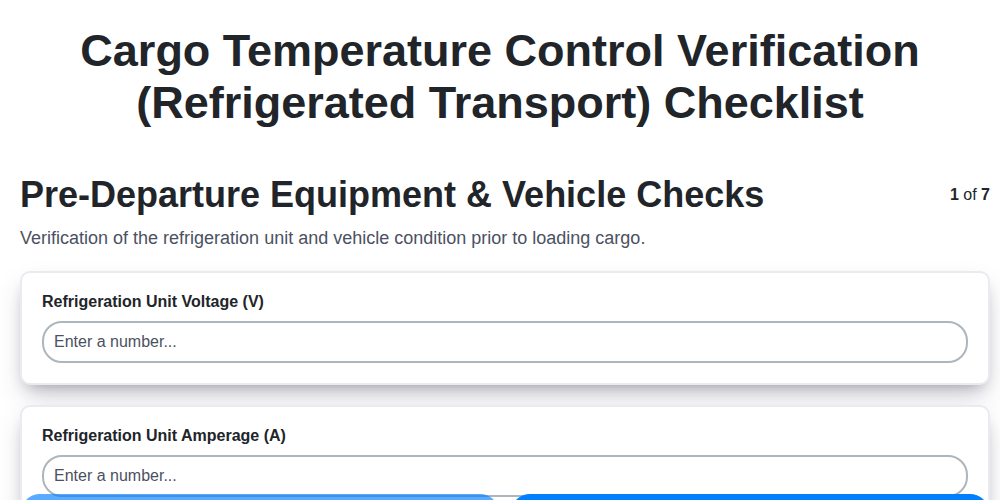
The Ultimate Refrigerated Cargo Temperature Control Checklist Template
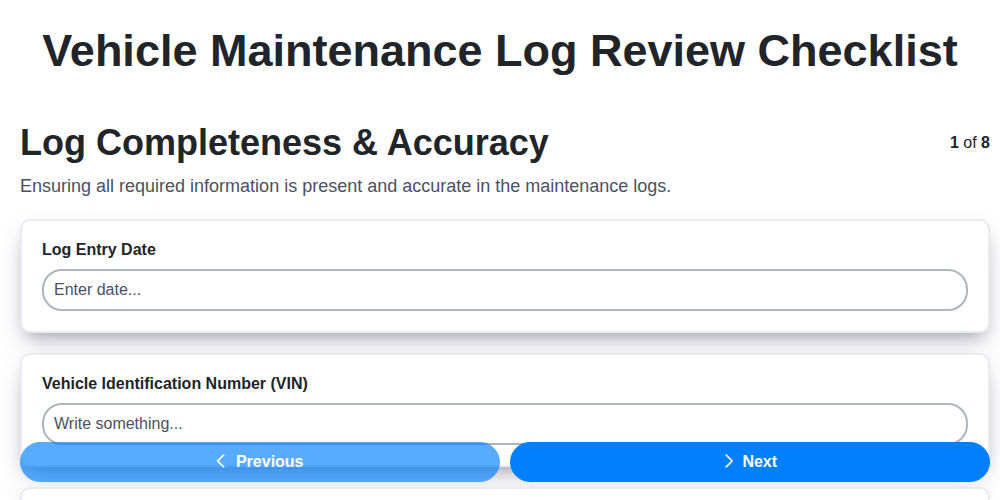
Mastering Your Fleet: A Vehicle Maintenance Log Review Template
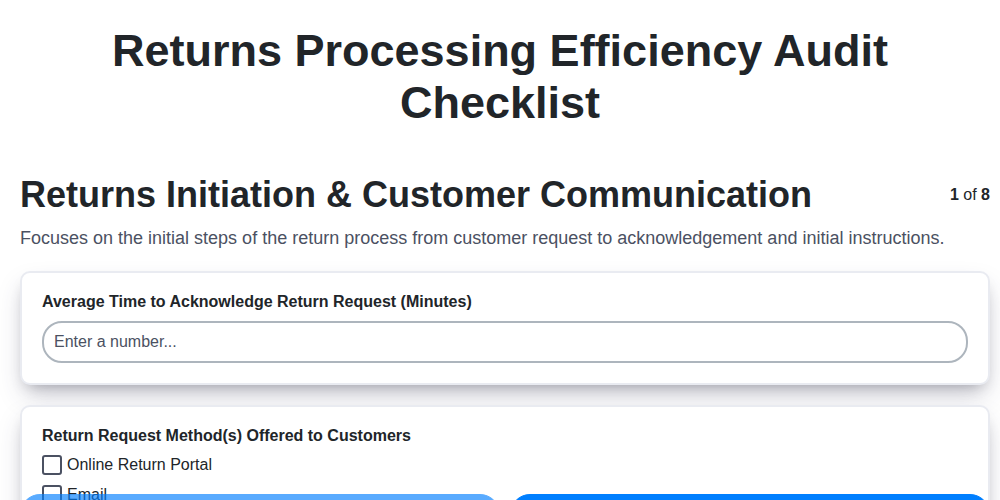
Master Your Returns: The Ultimate Returns Processing Efficiency Audit Checklist
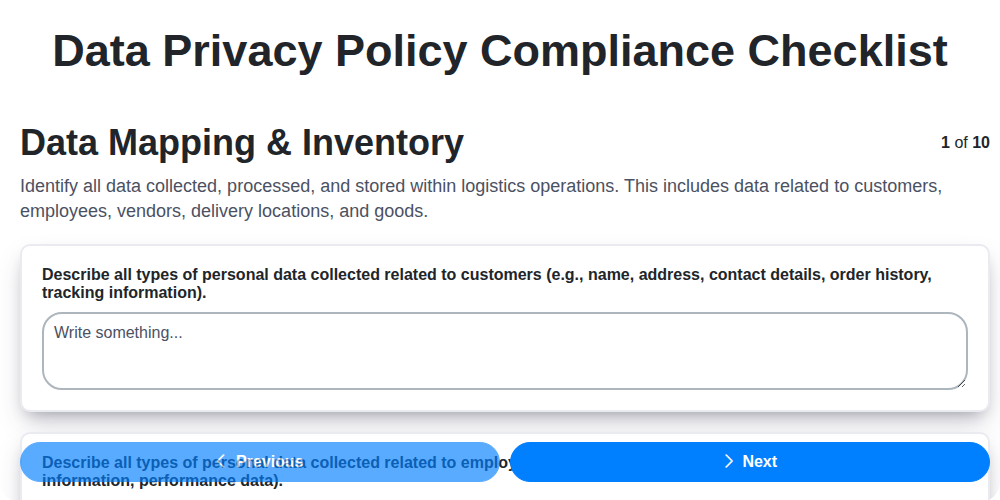
Data Privacy Policy Compliance: Your Essential Checklist Template
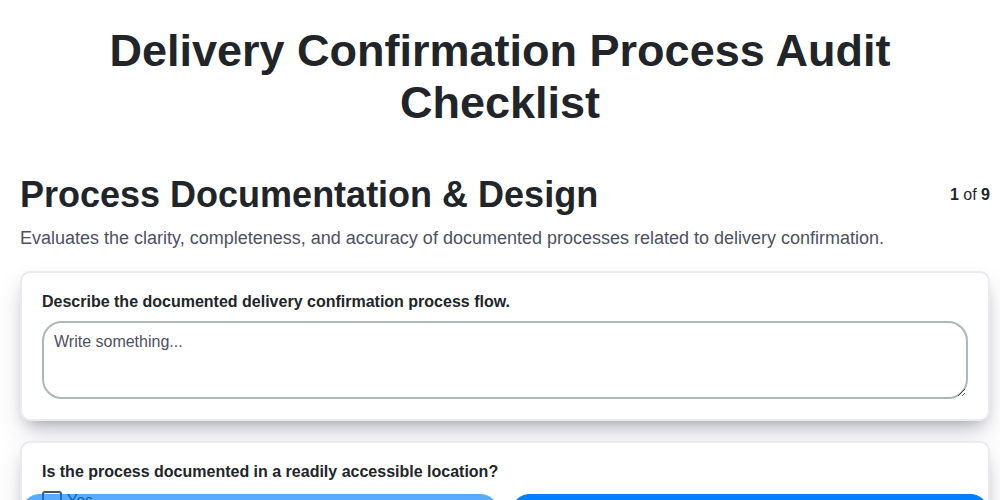
Delivery Confirmation Audit: Your Checklist Template for Process Excellence
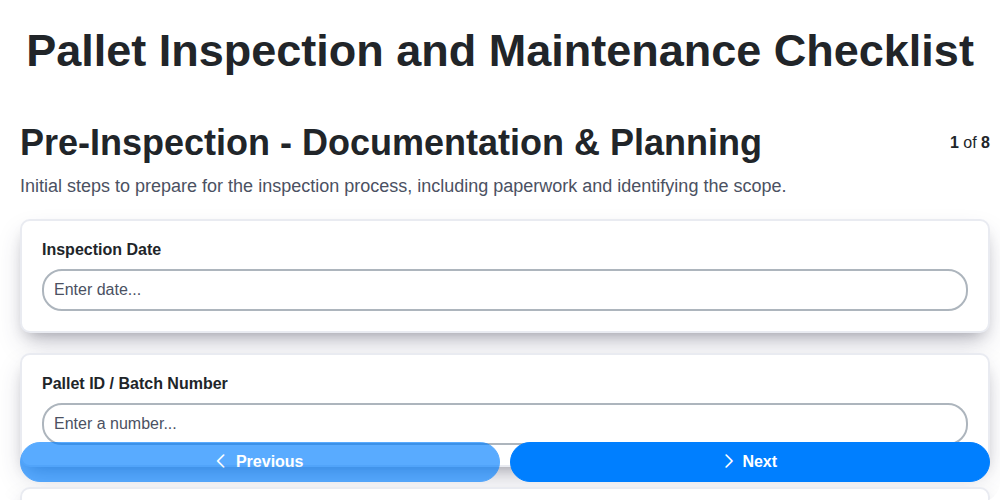
Your Pallet Inspection & Maintenance Checklist Template
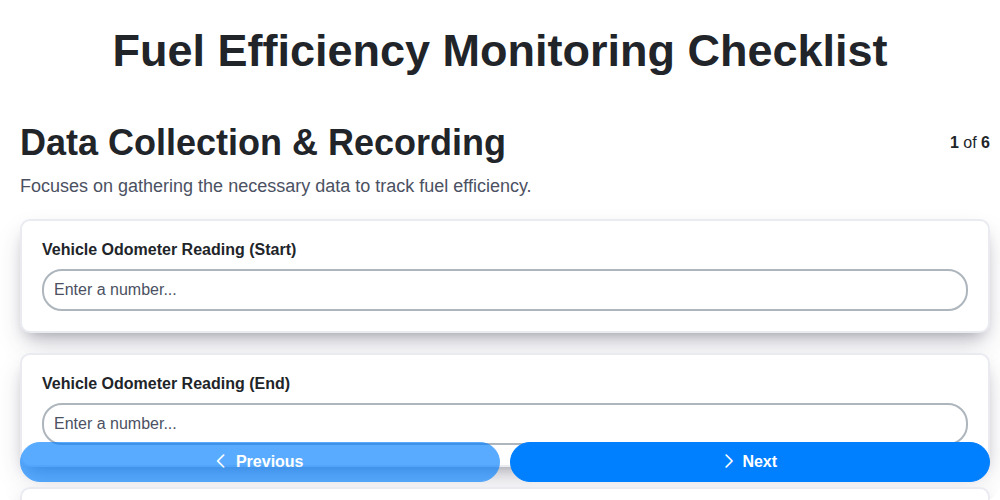
Fuel Efficiency Monitoring: Your Checklist Template for Savings
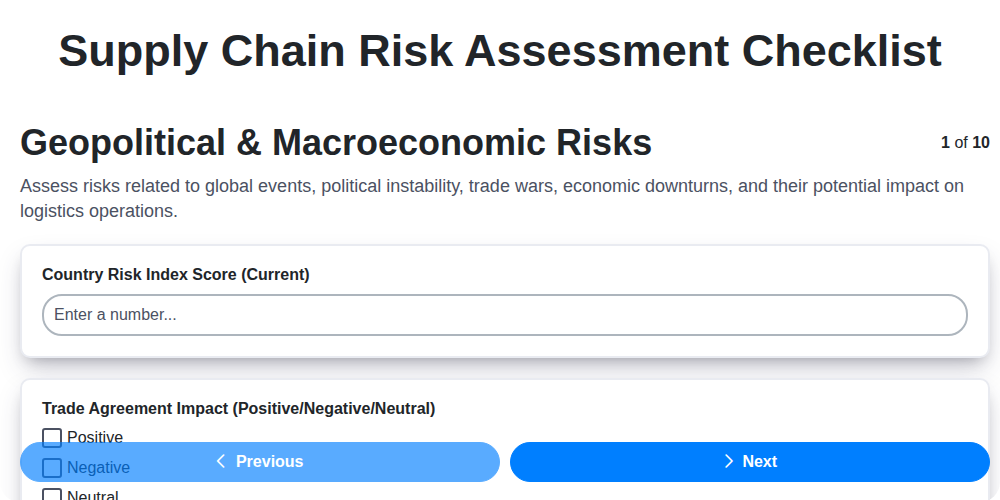
Supply Chain Risk Assessment: Your Essential Checklist Template
We can do it Together
Need help with
Logistics?
Have a question? We're here to help. Please submit your inquiry, and we'll respond promptly.