The Ultimate Window Display Checklist Template (Seasonal & Monthly)
Published: 09/02/2025 Updated: 12/13/2025
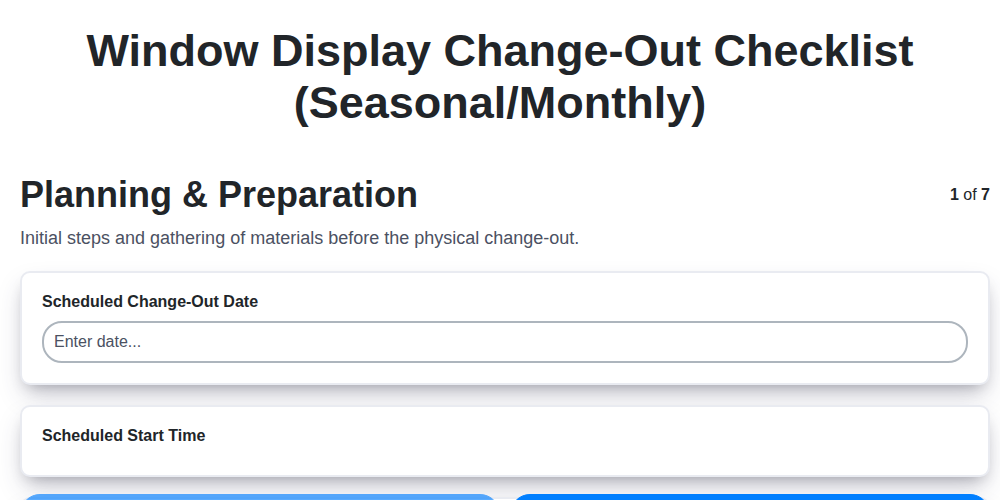
Table of Contents
- Planning & Concept Development
- Inventory & Resource Assessment
- De-Installation & Existing Display Breakdown
- Window Cleaning & Surface Preparation
- New Display Assembly & Placement
- Styling & Refinement: The Finishing Touches
- Photography & Documentation: Capturing Your Vision
- Post-Change-Out Evaluation & Feedback
- Maintenance Schedule & Ongoing Optimization
- Seasonal vs. Monthly Change-Out Strategies
- Essential Tools & Supplies Checklist
- Resources & Links
TLDR: Struggling to keep your window displays fresh and engaging? This checklist template takes the guesswork out of seasonal and monthly changes! It guides you through planning, installation, styling, and maintenance - saving you time, reducing errors, and boosting your store's curb appeal. Download it now and transform your window displays!
Planning & Concept Development
Before you even touch a single prop, a solid plan is your most valuable asset. This isn't just about aesthetics; it's about aligning your window display with your brand's message and business goals. Here's a breakdown of how to approach the crucial planning phase:
1. Define Your Objective: What do you want this display to achieve? Are you driving foot traffic, promoting a specific product line, or reinforcing your brand's identity? Clearly defined goals will guide all subsequent decisions.
2. Know Your Audience: Who are you trying to attract? Consider their demographics, interests, and shopping habits. A display targeting teenagers will look vastly different from one designed for a more mature audience.
3. Theme & Narrative: Develop a compelling theme or narrative. This could be seasonal (holiday, back-to-school), promotional (highlighting a new arrival), or brand-focused (showcasing your unique style). The stronger the story, the more engaging the display.
4. Mood Board Creation: Gather visual inspiration. Collect images, colors, textures, and patterns that resonate with your chosen theme. A mood board is a fantastic tool for visualizing the overall aesthetic and ensuring everyone involved is on the same page. Tools like Pinterest are perfect for this!
5. Sketching & Layout: Translate your mood board into a tangible layout. Even a rough sketch can help you experiment with different arrangements and proportions. Consider the "rule of thirds" to create a visually balanced display. Don't be afraid to experiment - and discard ideas that don't quite work.
6. Product Integration: Seamlessly integrate your featured products into the display. Don't just stack items; showcase them in a way that highlights their benefits and appeal. Think about how the products interact with each other and the overall theme.
7. Consider the Viewpoint: Remember, your display is often viewed from a distance and at varying angles. Ensure the key elements are visible and impactful even from afar.
Inventory & Resource Assessment
Before you even think about sketching a new design or ordering a single prop, a thorough inventory and resource assessment is your foundation. This isn't just about knowing what you own; it's about understanding what's usable, what needs repair, and what gaps exist.
Start with a complete audit of your existing display assets. This includes:
- Props: Mannequins, display tables, shelving units, decorative items, seasonal decorations, lighting fixtures. Categorize them by condition - excellent, good, needs repair, discard.
- Signage: Banners, posters, price tags, promotional materials. Assess their relevance and condition. Outdated signage detracts from a fresh look.
- Products: Which products will be featured in the new display? Are they readily available and in good condition?
- Human Resources: Who on your team has the skills and availability to assist with the change-out? Factor in time constraints and potential overtime.
- Budgetary Constraints: How much can you realistically spend on new props, materials, or labor? A clear budget prevents overspending and ensures feasibility.
Create a detailed spreadsheet or digital inventory - this will be your go-to resource throughout the process. Be honest about the condition of your assets; a realistic assessment prevents unpleasant surprises later on. Identifying what you don't have early on allows for proactive sourcing and prevents delays during the change-out.
De-Installation & Existing Display Breakdown
Careful de-installation is about more than just taking things apart; it's about preserving assets and gathering valuable data for future displays. Start by documenting the existing display before you touch anything. Take a series of photos from various angles, and even consider a short video walkthrough. This provides a visual record of the layout, product placement, and overall aesthetic, which can be surprisingly helpful when brainstorming new concepts or recreating a successful look later on.
Next, systematically dismantle the display, being mindful of fragile props and delicate merchandise. Label each item as you remove it, categorizing them into one of four groups: Re-use (items that will be incorporated into future displays), Storage (items to be put away for later use), Discard/Donate (items that are damaged or no longer relevant), and Assessment Needed (items of uncertain status - perhaps requiring a quick check for damage or relevance).
This labeling process is critical for efficient inventory management and helps prevent unnecessary purchases. Note any broken or missing items in a separate log, so replacements can be ordered promptly. Pay special attention to mannequins - carefully disassemble them and check for any damage to limbs, joints, or facial expressions. Finally, as you remove signage or graphic elements, take a moment to evaluate their effectiveness - what worked well, and what could be improved upon in future designs?
Window Cleaning & Surface Preparation
Before you even think about placing a single prop, ensuring your windows and display surfaces are impeccably clean is absolutely vital. Dirty windows diminish the impact of your entire display, making even the most creative concept look lackluster. And a greasy or dusty surface will compromise the adhesion of any new signage, graphics, or backdrops.
Here's a breakdown of the essential cleaning and preparation steps:
1. Windows: Inside & Out
- Gather Your Supplies: You'll need a good quality glass cleaner (streak-free is a must!), microfiber cloths (the key to avoiding streaks), a squeege (for larger windows), and possibly a ladder or step stool.
- Pre-Clean: Rinse the windows with water to remove loose dirt and debris.
- Apply Cleaner: Generously spray the window with glass cleaner.
- Wipe & Squeegee: If using a squeegee, overlap each pass slightly. Use a clean microfiber cloth to dry any remaining moisture. If not using a squeegee, thoroughly wipe with clean, dry microfiber cloths.
- Don't Forget the Frames! Clean the window frames as well to create a polished look.
2. Display Surfaces: Floors, Walls & Fixtures
- Identify Surface Types: Different surfaces require different cleaning methods. Wood, metal, painted walls - each needs a specialized approach.
- Dusting is Key: Start with a thorough dusting of all surfaces using a soft cloth or duster.
- Spot Cleaning: Address any stains or marks with appropriate cleaning solutions. Always test cleaning products in an inconspicuous area first.
- Grease Removal: If surfaces are greasy (common in food retail), use a degreasing cleaner.
- Surface Priming (Optional): For walls or surfaces where you're applying graphics or signage, consider a light priming to ensure good adhesion.
Remember: A clean canvas is the foundation for a stunning window display!
New Display Assembly & Placement
This is where your planning truly manifests into a tangible, eye-catching display. Start by laying out the key elements - mannequins, product groupings, signage - roughly according to your concept board. Don't feel bound to the exact layout just yet; this is about experimenting and seeing what feels right in the space.
Mannequin Mastery: Pay close attention to mannequin posing. A dynamic pose can tell a story and draw the eye. Consider the target customer - what would they find relatable and aspirational? Ensure the mannequin's clothing or featured products are properly showcased and wrinkle-free. Think about the line of sight from the street; the most impactful pose should be clearly visible.
Product Placement - The Storyteller: Product placement isn't just about aesthetics; it's about guiding the customer's eye and highlighting key items. Use a triangular arrangement to create visual flow. Place hero products in prominent positions. Group related items together to suggest pairings and inspire purchases. Think about layering - place smaller items in front of larger ones to create depth and visual interest.
Signage Strategy: Signage should be clear, concise, and strategically placed. Avoid overwhelming the customer with too much text. Consider font size, color, and placement to ensure maximum readability from a distance. Direct the customer's gaze to the products you want them to notice.
Secure and Stable: Once you're happy with the layout, meticulously secure all elements. Loose props or unstable mannequins are a safety hazard and create a sloppy impression. Double-check that everything is firmly in place and won't shift with the wind or pedestrian traffic. Use appropriate adhesives or mounting solutions.
Styling & Refinement: The Finishing Touches
The heavy lifting is done, the elements are in place - but a truly captivating window display goes beyond mere arrangement. This is where styling and refinement elevate your concept from 'good' to 'exceptional.' It's about the subtle details that catch the eye and linger in the memory.
The Art of the Angle: Don't be afraid to tilt, rotate, and experiment with angles. A slight shift in a mannequin's pose, or a subtle turn of a prop, can drastically change the visual impact. Consider the perspective from the street - what's the first thing passersby will notice?
Layering & Depth: Create visual depth by layering elements. Place smaller items in front of larger ones, and use varying heights to draw the eye through the display. This prevents a flat, one-dimensional look.
Lighting is Everything: Fine-tune your lighting. Too harsh, and it's jarring; too dim, and it's lost. Play with spotlights to highlight key products or create dramatic shadows. Warm lighting evokes a cozy feel, while cool lighting feels more modern and sleek. Consider the color temperature of your bulbs to achieve the desired atmosphere.
Negative Space Matters: Don't feel the need to fill every inch of space. Intentional use of negative space-empty areas-can actually draw attention to the elements that are present, creating a more sophisticated and uncluttered feel.
The Rule of Three: Designers often use the rule of three - arranging elements in groups of three is visually appealing and satisfying. Apply this principle to your product groupings, prop placements, or even mannequin poses.
Final Walkthrough: Step back and view the display from a distance, preferably from the street. Does it tell a clear story? Is it visually appealing? Make any final adjustments needed. Sometimes, a fresh pair of eyes (a colleague or even a friend) can offer valuable insights.
Photography & Documentation: Capturing Your Vision
Your stunning new window display deserves to be showcased! Photography and documentation aren't just about having pretty pictures for your archives; they're essential for marketing, analysis, and improving future displays. Here's how to capture your vision effectively:
Multiple Angles, Varied Lighting: Don't settle for a single snapshot. Take a series of photos from different angles - wide shots to show the entire scene, close-ups to highlight key products and details, and perspectives that mimic what passersby would see. Experiment with both natural and artificial lighting to see how it changes the mood and impact.
Video is Your Friend: A short, looping video (think Instagram Reels or TikTok) can be incredibly engaging. Film a slow pan across the display, or even a short reveal sequence. Consider adding background music that aligns with your brand's aesthetic.
Detailed Close-Ups: Showcase the finer details that make your display special. Highlight unique props, creative product arrangements, or intricate signage. These close-ups can be great for social media and Pinterest.
Document Your Process: Capture behind-the-scenes photos and videos of the change-out process itself. This humanizes your brand and can generate interest on social media.
Record Metadata: When saving your images and videos, be sure to add relevant keywords (e.g., window display, seasonal display, new collection). This will make it easier to find them later.
Analyze & Learn: After your display has been up for a while, revisit your photos and videos. Do they accurately reflect the impact on foot traffic and sales? Use this information to refine your photography and documentation techniques for future displays.
Post-Change-Out Evaluation & Feedback
The excitement of a fresh window display can easily overshadow the crucial step of evaluation. Don't let it! The period immediately following a change-out is prime time for gathering insights and identifying areas for improvement. This isn't about judgment; it's about learning and optimizing your approach for future displays.
Immediate Observations - The Gut Check
Take a few hours (or even a full day) to simply observe the new display. How do pedestrians react? Do they pause? Do they look engaged? Are they drawn to specific elements? Don't actively solicit feedback yet; just take mental notes. This gut check provides valuable initial impressions.
Formal Feedback Gathering:
- Team Discussion: Schedule a brief meeting with your team. Discuss your individual observations and any noticeable changes in foot traffic or customer behavior.
- Staff Input: Your frontline staff are your best resource. Ask them for their perspectives on customer reactions and any challenges they observe. A quick, informal survey can be effective.
- Social Media Monitoring: Track mentions and comments on social media related to your store and window displays.
- Website Analytics: If your window display prominently features a call to action (e.g., a QR code linking to a product page), monitor website traffic and conversion rates.
- Customer Surveys (Optional): For higher-end retail, a brief, optional customer survey could be considered. However, be mindful of potential biases.
Analyzing the Data and Iterating:
The feedback you gather might reveal that the display resonates perfectly, or it might highlight areas that need adjustment. Perhaps the lighting is too harsh, or a particular product placement isn't working. Don't be afraid to make minor tweaks based on this feedback. Remember, even small changes can make a significant difference in the overall impact of your window display. Document these adjustments and learnings-they're invaluable for planning your next change-out!
Maintenance Schedule & Ongoing Optimization
A stunning window display doesn't stay that way on its own. Consistent upkeep and a willingness to adapt are crucial for long-term impact. Here's a tiered maintenance schedule to keep your displays looking fresh and performing well.
Daily (5-10 minutes):
- Quick Dusting: A swift wipe-down of surfaces to remove dust and debris.
- Product Straightening: Ensure products are neatly arranged and facing forward.
- Signage Check: Verify that any digital signage is functioning correctly and that printed signage is securely in place.
Weekly (15-30 minutes):
- Thorough Cleaning: A more detailed cleaning of props, mannequins, and window surfaces. Pay special attention to areas prone to accumulating dust.
- Lighting Inspection: Check all lighting fixtures to ensure they are functioning optimally and that bulbs are free of dust. Replace any burnt-out bulbs.
- Minor Adjustments: Address any minor shifts or adjustments that may have occurred due to customer interaction or environmental factors.
Monthly (1-2 hours):
- Deep Cleaning: A more intensive cleaning involving specialized cleaners for specific materials (glass, wood, fabric).
- Prop Rotation: Introduce a few new props or subtly rearrange existing ones to keep the display feeling dynamic.
- Performance Review (Anecdotal): Observe customer behavior and solicit feedback (informally). Are they engaging with the display? What seems to be working well?
Seasonal (during change-outs - see full checklist above):
- Complete Refresh: Implement the full window display change-out checklist, including de-installation, cleaning, new assembly, styling, and documentation.
- Data Analysis: If possible, analyze sales data and website traffic during and after seasonal changes to gauge the display's impact.
Ongoing Optimization:
Beyond a regular schedule, proactive optimization is key. Regularly review your display's performance:
- A/B Testing: Experiment with different layouts, props, and lighting to see which combinations generate the most customer interest.
- Trend Awareness: Stay informed about current retail trends and adapt your displays accordingly.
- Customer Feedback Loop: Actively seek and incorporate customer feedback to continuously improve your displays' effectiveness. Remember, a window display isn't static - it's an evolving storytelling element of your brand.
Seasonal vs. Monthly Change-Out Strategies
The frequency of your window display changes significantly impacts your overall strategy and resource allocation. A sweeping seasonal overhaul demands more planning and effort than a quick monthly refresh. Let's break down the differences.
Seasonal Changes (Quarterly - Bi-Annually):
These are your big-impact transformations. Think Spring/Summer, Fall/Winter, or major promotional periods like back-to-school or holidays. Seasonal changes are an opportunity to dramatically shift your brand's narrative and reflect broader cultural trends.
- Lead Time: Plan at least 6-8 weeks in advance. This allows ample time for design, sourcing, ordering, and potential fabrication of custom props.
- Budget Allocation: Seasonal changes typically have a larger budget dedicated to new props, graphics, and potentially even construction.
- Impact & Themes: Focus on overarching themes that resonate with the season and target your key customer segments. Consider broader societal trends and competitor activity.
- Complexity: These changes are often more complex, involving multiple departments and potentially external vendors.
Monthly Refresh Strategies:
Monthly changes are about keeping things fresh and subtly evolving your message. They're a lower-stakes approach perfect for maintaining interest and responding to real-time sales data.
- Quick Turnaround: Aim for a 1-2 week turnaround, allowing for flexibility and responsiveness.
- Smaller Budget: Monthly changes require a smaller budget, typically focused on swapping out a few key props or adjusting existing elements.
- Incremental Changes: Focus on minor adjustments to existing displays - rotating products, changing mannequin poses, or updating signage.
- Data-Driven Decisions: Use sales data and customer feedback to inform your monthly changes. If a particular product isn't selling, give it a prime location.
Ultimately, a successful strategy combines both. Seasonal changes create a significant impact, while monthly refreshes keep the momentum going and ensure your window display remains a captivating and effective marketing tool.
Essential Tools & Supplies Checklist
Having the right tools and supplies on hand streamlines the window display change-out process and prevents frustrating delays. Here's a breakdown of what you're likely to need, categorized for clarity:
1. De-Installation & Cleaning:
- Gloves (various sizes)
- Screwdrivers (Phillips head, flathead - various sizes)
- Wrench set
- Pry bar
- Utility knife
- Cleaning cloths (microfiber recommended)
- Glass cleaner
- Dusting brush
- Vacuum cleaner (with attachments)
- All-purpose cleaner
2. Assembly & Construction:
- Measuring tape
- Level
- Drill (with various drill bits)
- Hammer
- Scissors
- Heavy-duty tape (packing, gaffer)
- Zip ties
- Wire cutters
- Ladder or step stool (appropriate height and stability)
3. Display Elements & Materials:
- New signage/graphics (pre-printed or materials for DIY)
- Adhesive (double-sided tape, mounting squares, glue gun & glue sticks)
- Hanging hardware (hooks, wire, rope)
- Manequin repair kit (if needed)
- Lighting components (bulbs, connectors, extension cords)
- Extra screws, nails, and fasteners
- Safety pins
Pro Tip: Create a dedicated Window Display Toolkit to keep these essentials organized and readily accessible.
Resources & Links
- Retail Design Blog: A comprehensive resource for retail design inspiration and insights, offering articles on window displays, store layouts, and overall branding. Great for concept development and staying on top of trends.
- Visual Merchandising & Display: Offers a wide range of resources, including articles, webinars, and courses, focusing on visual merchandising techniques. Excellent for inventory assessment and display assembly tips.
- The ID Co.: Focuses on retail design and visual merchandising, often with case studies and project showcases. Inspiration for styling & refinement and overall display themes.
- Pinterest: A visual discovery engine - crucial for gathering inspiration for styling, themes, and color palettes. Search for 'window display ideas', 'seasonal window displays,' or specific themes to curate a mood board.
- Shutterstock: A stock photo website useful for sourcing high-quality images for inspiration and for your own window display photography. Look for images of well-executed window displays.
- Creative Bloq: Articles covering design trends and tutorials which could be applied to window display concepts. Look for articles on color theory, typography and composition for added impact.
- The Display Group: Offers a variety of display solutions and resources, covering topics from fixture design to visual merchandising. Provides insight into assembly techniques and ongoing maintenance schedules.
- Retail Insider: Provides analysis and news about the retail industry, often including examples of innovative window display strategies and insights into seasonal trends. Helps for planning & concept development.
- Etsy: A marketplace for handmade and vintage items. A valuable resource for sourcing unique props, signage, and decorative elements for styling and refinement. Look for seasonal or themed items.
- Amazon: For the 'Essential Tools & Supplies Checklist' section, Amazon is a good starting point for sourcing basic tools like measuring tapes, levels, cleaning supplies, mounting hardware, and lighting fixtures.
- Home Depot: Similar to Amazon, Home Depot is a useful place to source supplies for cleaning, surface preparation (like paint or primer), and basic construction or mounting required for display elements.
- Retail Customer: Offers news and resources for retail professionals, including articles on visual merchandising and window displays. Useful for post-change-out evaluation & feedback - analyze what works and what doesn't.
Frequently Asked Questions
What is this checklist template for?
This checklist template is designed to help you plan and execute effective window displays, considering both seasonal themes (like Christmas or Spring) and monthly updates to keep your displays fresh and engaging for customers year-round.
Who is this checklist for?
This checklist is beneficial for retail store owners, visual merchandisers, marketing teams, and anyone responsible for creating and maintaining window displays.
How do I use the seasonal checklist?
The seasonal checklist provides a comprehensive list of tasks to complete before, during, and after a major seasonal change. Work through it in order, checking off each item as you complete it. It provides a framework for planning and execution.
How often should I update my window display monthly?
Monthly updates are recommended to keep your displays relevant and capture customer attention. Even small changes, like swapping out props or adjusting lighting, can make a big difference.
Can I customize the checklist?
Absolutely! This is a template, so feel free to add, remove, or modify items to suit your specific brand, products, and store environment. Consider adding tasks relevant to your unique product offerings or store layout.
What kind of props are suitable for a seasonal window display?
Props should always align with your brand and the chosen season. For example, pumpkins and fall foliage for Autumn, snowflakes and cozy textures for Winter, flowers and pastels for Spring, and bright colors and beach-themed items for Summer.
What is the importance of lighting in a window display?
Lighting is crucial! It highlights key products, creates mood, and draws attention to your display from a distance. Experiment with different types of lighting - spotlights, fairy lights, colored lights - to achieve the desired effect.
How do I choose a theme for my window display?
Consider current trends, holidays, special promotions, and your target audience. Brainstorm ideas that connect your products to the theme in a visually appealing way. Ensure the theme is clear and easily understood by passersby.
What are some best practices for window display layout?
Focus on creating a clear focal point, use the rule of thirds for visual balance, use vertical space to draw the eye upwards, and ensure the display is visible from the street. Avoid clutter and ensure products are well-lit and easy to see.
Where can I find inspiration for window display ideas?
Look to fashion magazines, online retail websites, social media (Pinterest, Instagram), competitor displays, and even nature for inspiration. Don't be afraid to adapt and personalize ideas to create a unique display.
Comments
There are no comments yet. Be the first to add one!
Retail Management Solution Demo
Boost retail efficiency! ChecklistGuro simplifies store operations, inventory management, and employee training. Improve customer experience and maximize profitability. Manage it all with our Work OS.
Related Articles
Seasonal Mulch & Gravel Checklist Template: Stay Stocked & Ready
Elevator & Escalator Inspection Checklist Template: Your Guide to Safety & Compliance
Daily Prescription Dispening Area Inspection Checklist Template

Weekly Waste Management & Recycling Checklist Template
Keep Your Storefront Sparkling: Your Daily & Weekly Cleaning Checklist Template
Your Ultimate Landscaping & Groundskeeping Checklist: Weekly & Monthly Templates
Monthly Stockroom Organization & Safety Checklist Template
Daily Dairy Case Inspection Checklist Template
We can do it Together
Need help with
Retail?
Have a question? We're here to help. Please submit your inquiry, and we'll respond promptly.