 ChecklistGuro
 Farm Carbon Footprint Reduction Checklist
Minimize your farm's environmental impact! This checklist guides you through key practices for reducing your carbon footprint, from soil health to energy efficiency. Promote sustainability & unlock potential cost savings.
This Template was installed 2 times.
Energy Consumption
Assess and reduce energy usage across farm operations.
Total Electricity Usage (kWh)
Diesel Consumption (Gallons)
Propane Consumption (Gallons)
Lighting Type (Barns/Buildings)
HVAC System Efficiency Rating
Last Energy Audit Date
Notes on Energy Saving Initiatives
Fuel Efficiency
Optimize fuel consumption for machinery and transportation.
Average Fuel Consumption (Gallons/Acre)
Tractor Engine Hours Last Month
Tractor Maintenance Schedule Adherence
Fuel Saving Practices Implemented
Last Fuel System Inspection Date
Average Speed (MPH) During Field Operations
Fertilizer Management
Reduce fertilizer use and optimize application techniques to minimize nitrous oxide emissions.
Total Fertilizer Applied (kg/ha)
Fertilizer Type Used
Application Rate (kg/ha)
Date of Application
Application Method
Soil Test Result (N-P-K)
Observations & Notes
Soil Health & Carbon Sequestration
Implement practices to improve soil health and increase carbon sequestration.
Organic Matter Percentage (%)
Last Cover Crop Planting Date
Soil Conservation Practices Implemented
Detailed Description of Soil Management Techniques
Soil Type
Annual Compost Application Rate (tons/acre)
Last Soil Test Date
Livestock Management
Reduce methane emissions from livestock through improved feeding and manure management.
Average Daily Feed Intake (kg/animal)
Manure Production Rate (kg/animal/day)
Manure Storage Method
Last Manure Analysis Date
Feed Additives Used (to reduce methane)
Percentage of Feed from Sustainable Sources
Notes on Livestock Health and Welfare practices impacting carbon footprint
Crop Selection & Rotation
Choose crops and implement rotation strategies to enhance carbon sequestration and reduce emissions.
Cover Crop Selection (Fall)
Crop Rotation Length (Years)
Crop Types in Rotation
Date of Crop Rotation Plan Review
Justification for Crop Selection
No-Till or Conventional Tillage?
Percentage of Land in Cover Crops
Waste Management
Minimize waste generation and implement sustainable waste disposal practices.
Estimated Waste Generated (tons/year)
Waste Types Generated
Details of 'Other' Waste (if applicable)
Current Waste Disposal Method
Details of 'Other' Disposal Method (if applicable)
Date of last waste audit
Renewable Energy Adoption
Explore and implement renewable energy sources for farm operations.
Current Energy Source(s)
Renewable Energy Option Considered
Estimated Solar Panel Capacity (kW)
Estimated Wind Turbine Size (kW)
Target Implementation Date
Estimated Project Cost ($)
Notes/Comments
Transportation & Logistics
Optimize transportation routes and logistics to reduce fuel consumption and emissions.
Average Fuel Consumption (liters/km)
Total Kilometers Driven (vehicles)
Vehicle Maintenance Schedule Adherence
Transportation Optimization Strategies Implemented
Last Transportation Route Review Date
Primary Transportation Hub Location
Monitoring & Reporting
Track carbon footprint and report progress towards reduction goals.
Last Carbon Footprint Assessment Date
Total Greenhouse Gas Emissions (tonnes CO2e)
Summary of Monitoring Methods Used
Reduction Target (Percentage)
Reporting Frequency
Supporting Documentation (e.g., Data Spreadsheets)
Notes on Data Collection Challenges or Improvements
Frequently Asked Questions
Can I customize this template after installing it?
Absolutely. Once installed, you can add, remove, or reorder tasks, add custom fields, and adjust deadlines to fit your specific workflow.
Can I add images or photos to these checklist items?
Yes. Our platform allows you to attach photos, signatures, and notes to any checklist item for better verification and proof of completion.
Can I create a custom checklist from scratch instead of using a template?
Yes. You can use our "Create your own checklist" feature to build a unique workflow tailored exactly to your operational requirements.
Can I add dependencies between tasks?
Yes, you can set up conditional logic and dependencies to ensure your team follows the correct sequence of operations.
Can I assign specific checklist items to different team members?
Yes. You can assign individual tasks to specific employees, ensuring clear accountability across your entire team.
Can I use these checklists on mobile devices in the field?
Yes. Our platform is fully responsive, allowing your team to complete, update, and upload photos to checklists directly from any smartphone or tablet.
How do I notify my manager when a checklist is completed?
You can set up automated notifications (via email, push notification, or in-app alerts) to trigger whenever a checklist is finished or if an item fails inspection.
Can multiple people work on the same checklist simultaneously?
Yes, the platform supports real-time updates, allowing multiple users to contribute to a single live checklist.
Where is the data from completed checklists stored?
All completed checklists are stored securely in your Work OS dashboard, creating a permanent, searchable audit trail of your operations.
Can I generate reports based on my checklist results?
Yes. You can track completion rates, identify recurring issues, and monitor team performance through our integrated reporting and analytics tools.
How can I use these checklists for compliance or auditing purposes?
Because our checklists capture timestamps, photos, and digital signatures, they serve as a robust digital paper trail for regulatory compliance and internal audits.
Can I export my completed checklist data for use in other tools?
Yes. You can export your data in various formats (CSV, Excel, etc.) to integrate your operational insights with your other business software.
Comments
There are no comments yet. Be the first to add one!
Farm Management Solution Demo
Grow your farm smarter & more efficiently! ChecklistGuro streamlines crop planning, task management, & resource tracking. Maximize yields, reduce waste, & improve profitability. Manage it all with our Work OS.
Related Checklist Templates
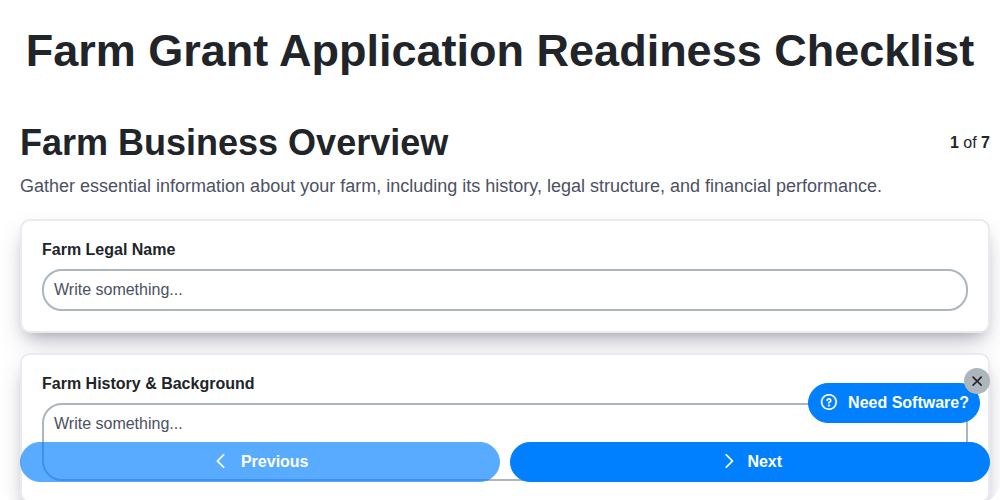
Farm Grant Application Readiness Checklist
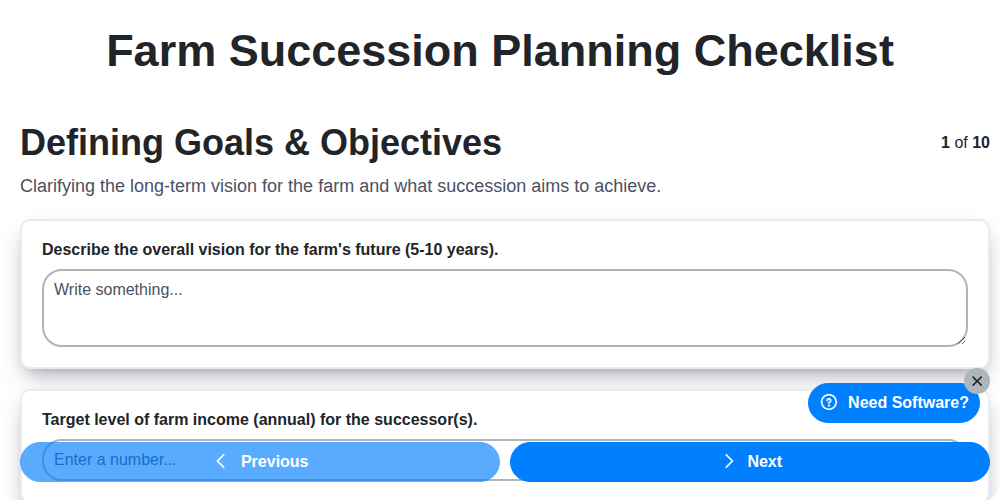
Farm Succession Planning Checklist
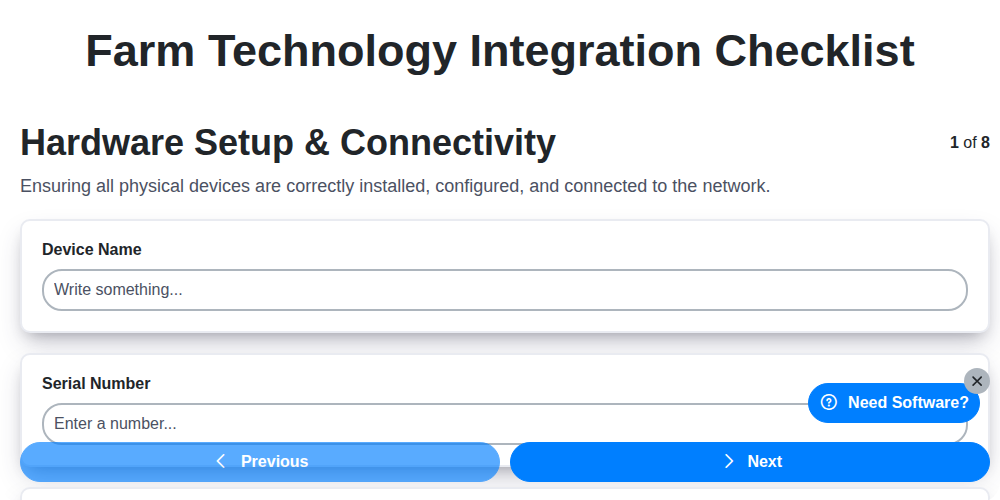
Farm Technology Integration Checklist
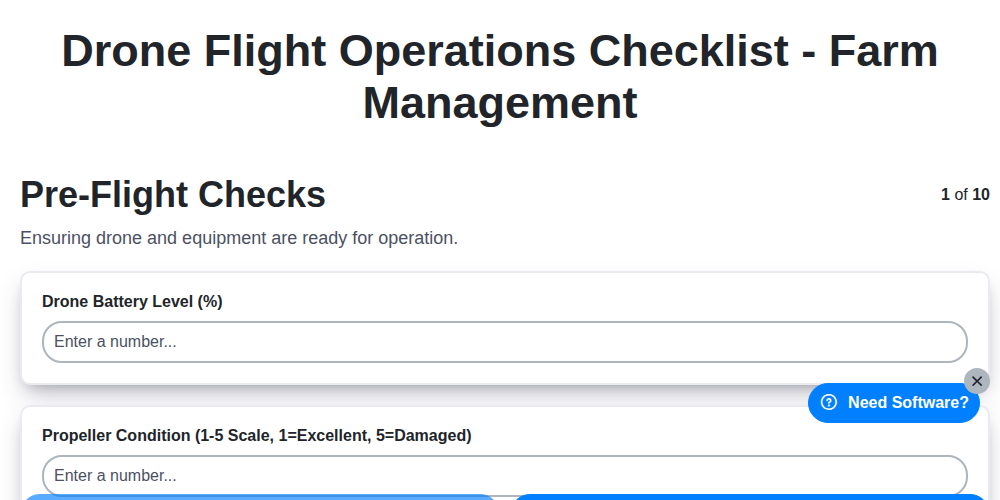
Drone Flight Operations Checklist - Farm Management
Farm Nutrient Management Checklist
Farm Conservation Plan Implementation Checklist
Soil Erosion Control Checklist - Farm Management
Farm Insurance Policy Review Checklist
Need help with
Farm Management?
Have a question? We're here to help. Please submit your inquiry, and we'll respond promptly.