 ChecklistGuro
 Vehicle Diagnostic and Troubleshooting Process
Streamline your service bay efficiency with our expert Vehicle Diagnostic and Troubleshooting Process. Designed specifically for auto repair shop management, this optimized workflow guides technicians through systematic fault identification, advanced scanner integration, and precision error analysis to reduce comeback rates, slash diagnostic time, and boost shop profitability.
This Template was installed 4 times.
Start
Start of the Workflow/Process.
1. Retrieve Vehicle Profile
Fetch existing vehicle data (VIN, Make, Model, Year) from the Vehicle Data Model using the provided identifier.
2. Perform Initial Visual Inspection
Assign a task to the Technician to inspect the vehicle for visible external damage or fluid leaks.
3. Create Diagnostic Session
Create a new entry in the Diagnostic Logs model to track this specific troubleshooting event.
4. Execute OBD-II Scanner Scan
Assign a task to plug in the diagnostic tool and read all active and stored DTC (Diagnostic Trouble Codes).
5. Fetch Error Code Details
Retrieve the descriptions and severity levels for the specific DTCs found during the scan from the Error Code Library.
6. Calculate Severity Score
Calculate a weighted severity score based on the number of active error codes and their associated risk levels.
7. Component Stress Test
Assign a task to perform specific physical tests (e.s., compression test, battery load test) based on identified error codes.
8. Update Diagnostic Findings
Update the Diagnostic Session entry with the results, measurements, and observed anomalies from the stress tests.
9. Summarize Fault Density
Aggregate all error codes found in the current session to count the total number of system faults detected.
10. Generate Repair Estimate
Create a new entry in the Service Quote model including required parts and estimated labor hours.
11. Notify Customer of Findings
Send an email to the vehicle owner detailing the detected issues and the proposed repair plan.
12. Final Verification Test
Assign a task to perform a post-diagnostic check to ensure all sensors are responding within factory parameters.
13. Finalize Diagnostic Report
Update the original Diagnostic Session entry to 'Closed' status and attach the final conclusion.
14. Generate Vehicle Health Report
Create a formatted PDF report containing the vehicle history, scan results, and technician notes for the customer.
15. Alert Service Advisor
Send an SMS to the Service Advisor notifying them that a high-severity diagnostic issue requires immediate parts ordering.
End
End of the Workflow/Process.
Start of the Workflow/Process.
Fetch existing vehicle data (VIN, Make, Model, Year) from the Vehicle Data Model using the provided identifier.
Assign a task to the Technician to inspect the vehicle for visible external damage or fluid leaks.
Create a new entry in the Diagnostic Logs model to track this specific troubleshooting event.
Assign a task to plug in the diagnostic tool and read all active and stored DTC (Diagnostic Trouble Codes).
Retrieve the descriptions and severity levels for the specific DTCs found during the scan from the Error Code Library.
Calculate a weighted severity score based on the number of active error codes and their associated risk levels.
Assign a task to perform specific physical tests (e.s., compression test, battery load test) based on identified error codes.
Update the Diagnostic Session entry with the results, measurements, and observed anomalies from the stress tests.
Aggregate all error codes found in the current session to count the total number of system faults detected.
Create a new entry in the Service Quote model including required parts and estimated labor hours.
Send an email to the vehicle owner detailing the detected issues and the proposed repair plan.
Assign a task to perform a post-diagnostic check to ensure all sensors are responding within factory parameters.
Update the original Diagnostic Session entry to 'Closed' status and attach the final conclusion.
Create a formatted PDF report containing the vehicle history, scan results, and technician notes for the customer.
Send an SMS to the Service Advisor notifying them that a high-severity diagnostic issue requires immediate parts ordering.
End of the Workflow/Process.
Found this Workflow Template helpful?
Comments
There are no comments yet. Be the first to add one!
Auto Repair Shop Management Solution Demo
Level up your auto repair shop & boost profits! ChecklistGuro simplifies job tracking, inventory management, and customer communication. Improve efficiency, reduce errors, & enhance customer satisfaction. Manage it all with our Work OS.
Related Workflow Templates
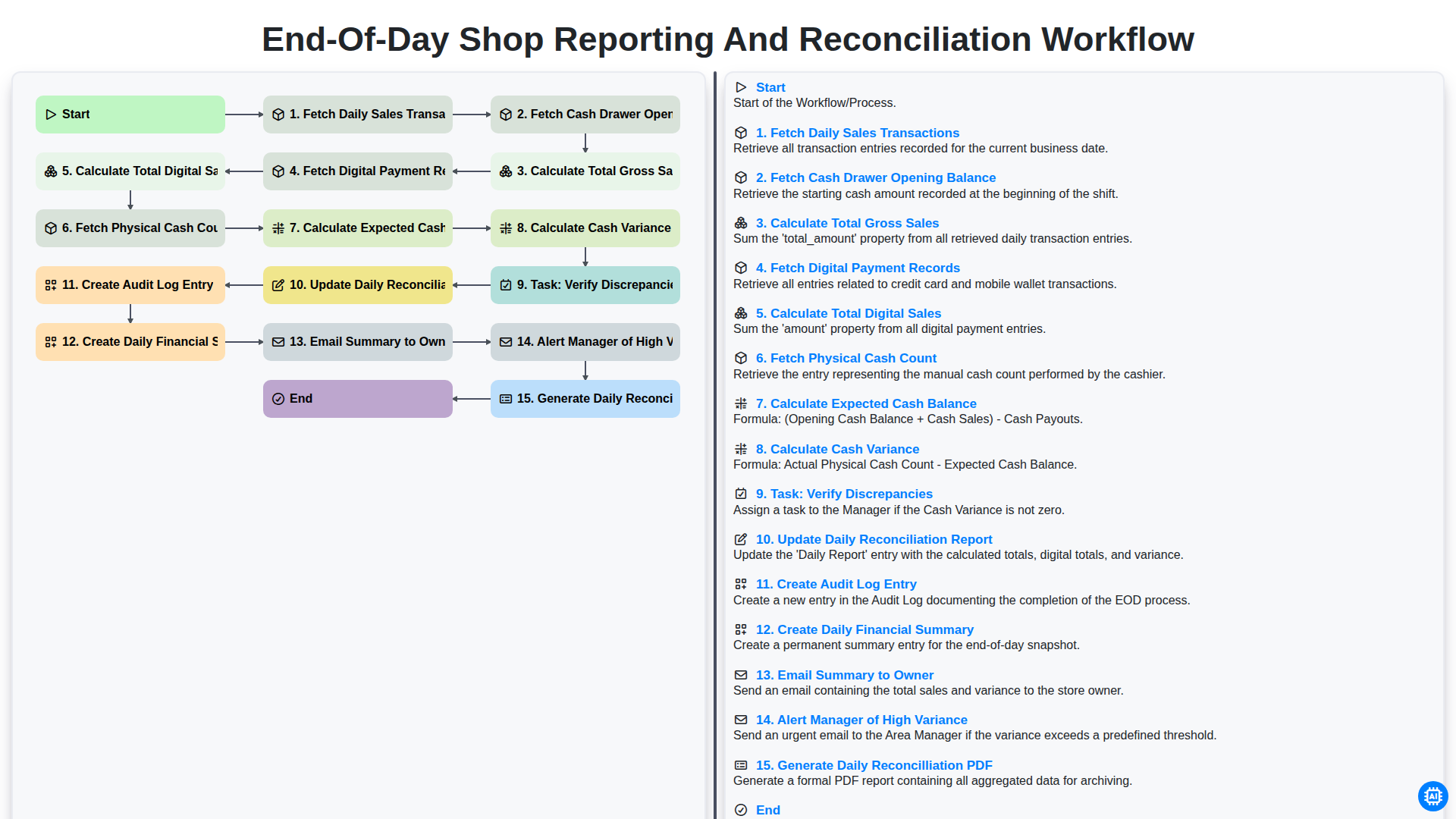
End-of-Day Shop Reporting and Reconciliation Workflow
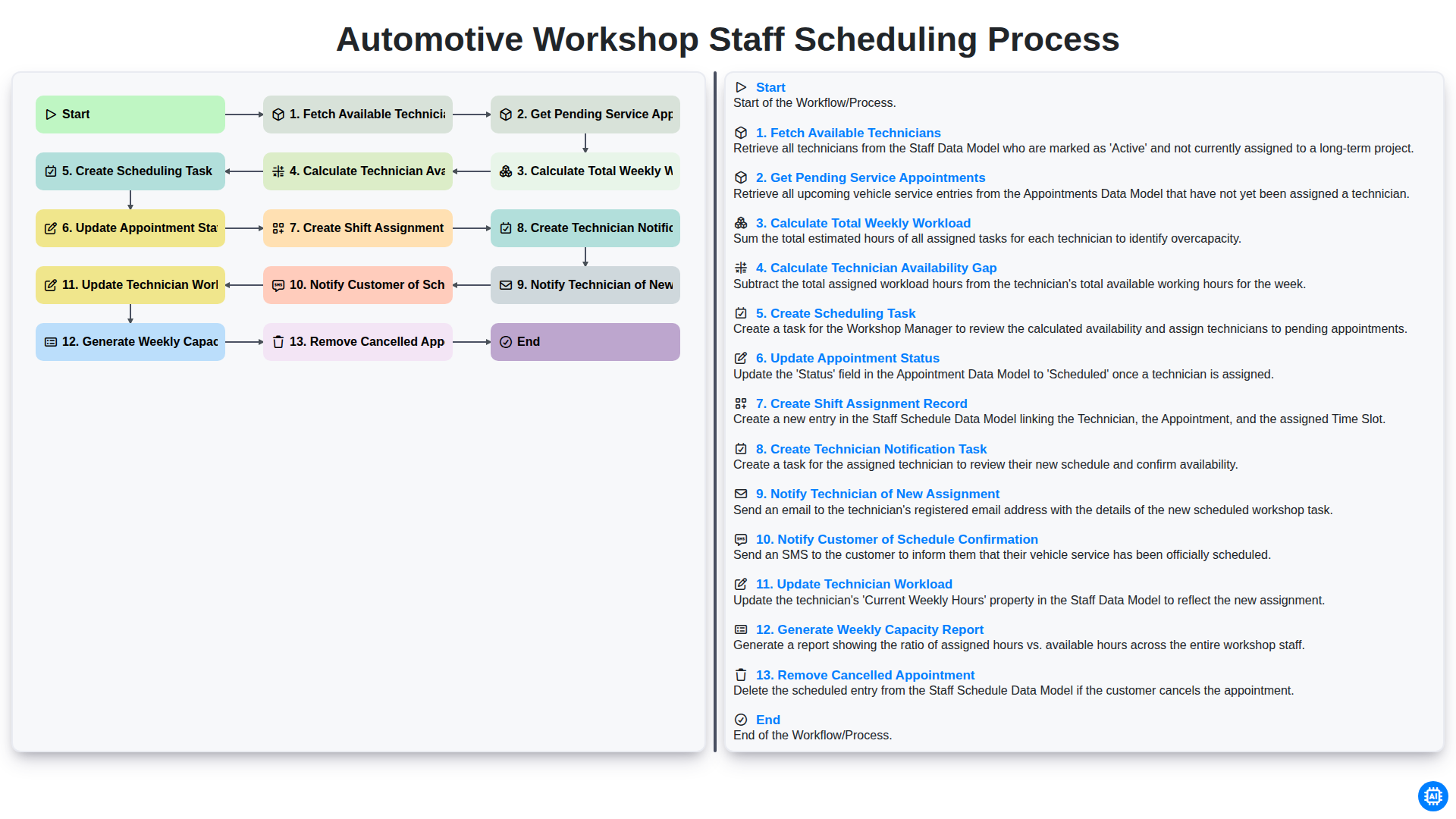
Automotive Workshop Staff Scheduling Process
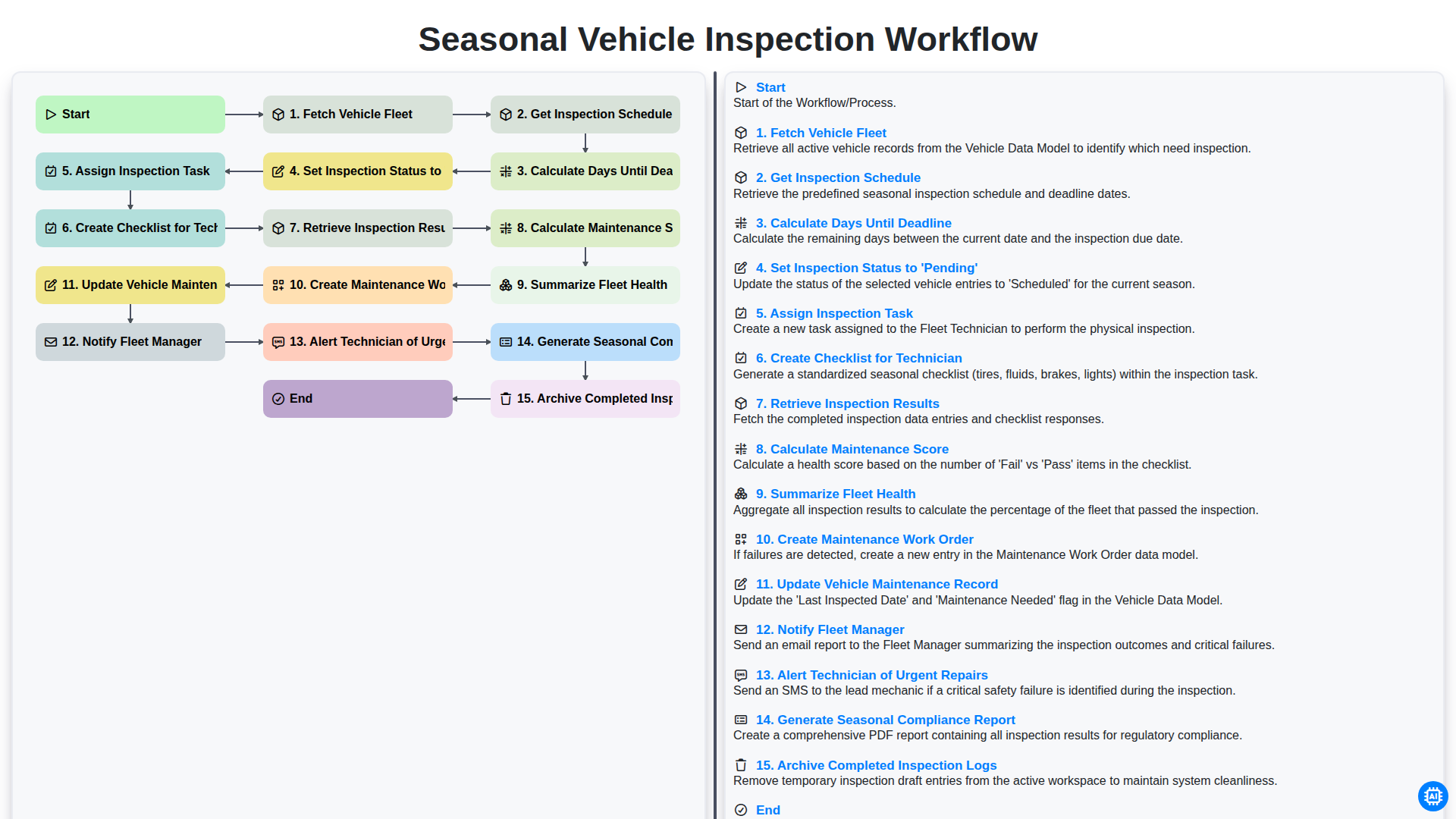
Seasonal Vehicle Inspection Workflow
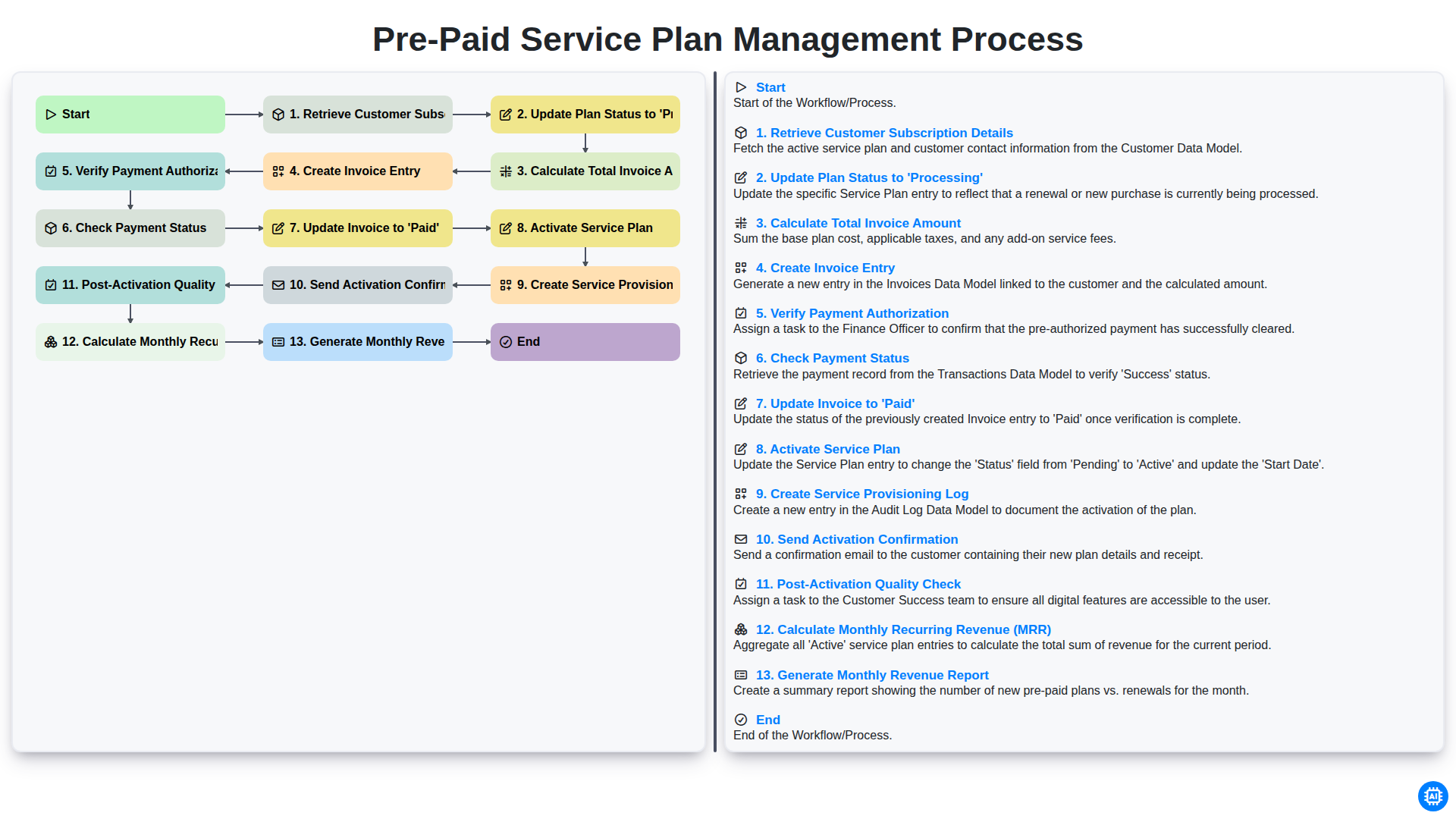
Pre-Paid Service Plan Management Process
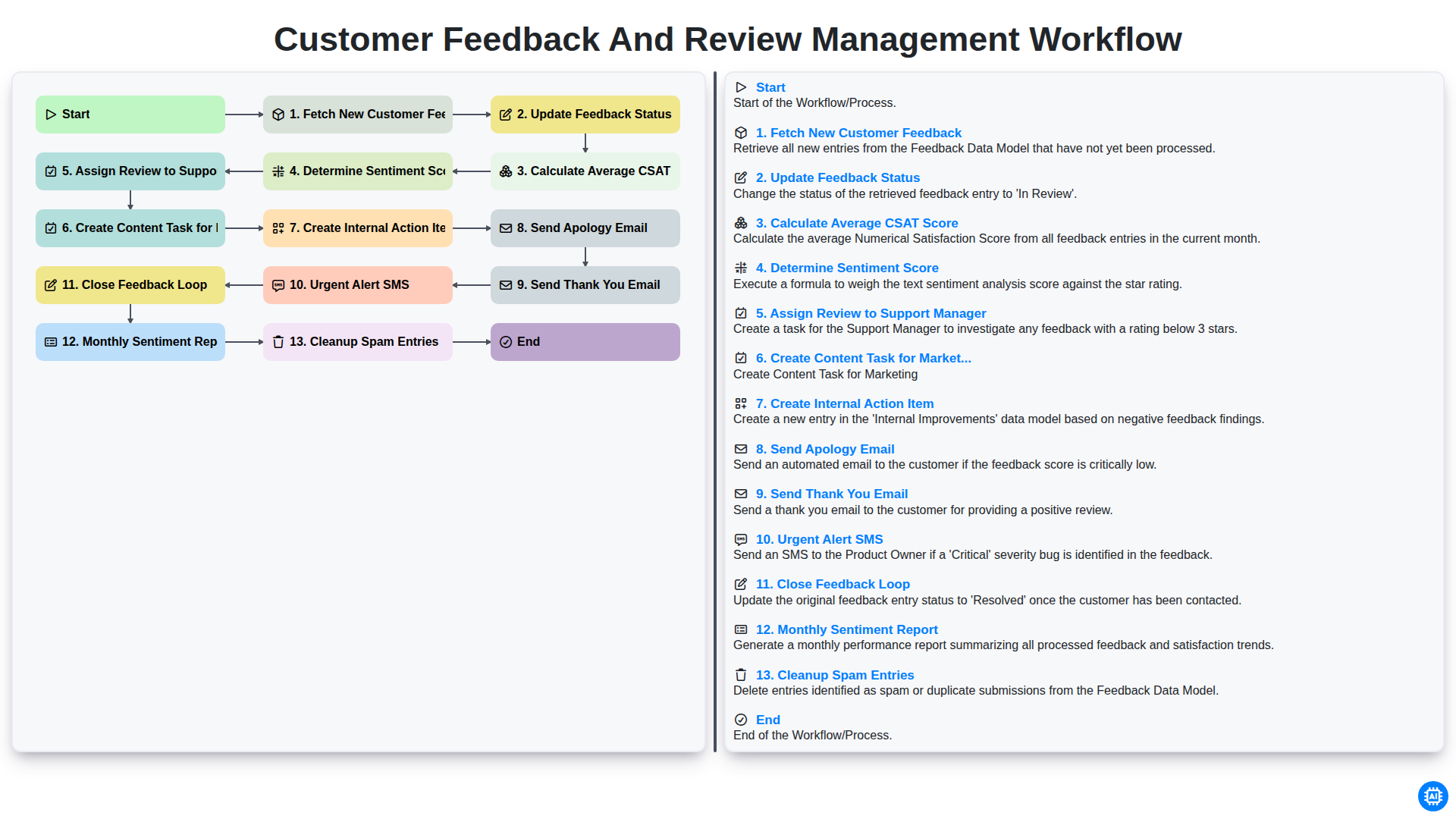
Customer Feedback and Review Management Workflow
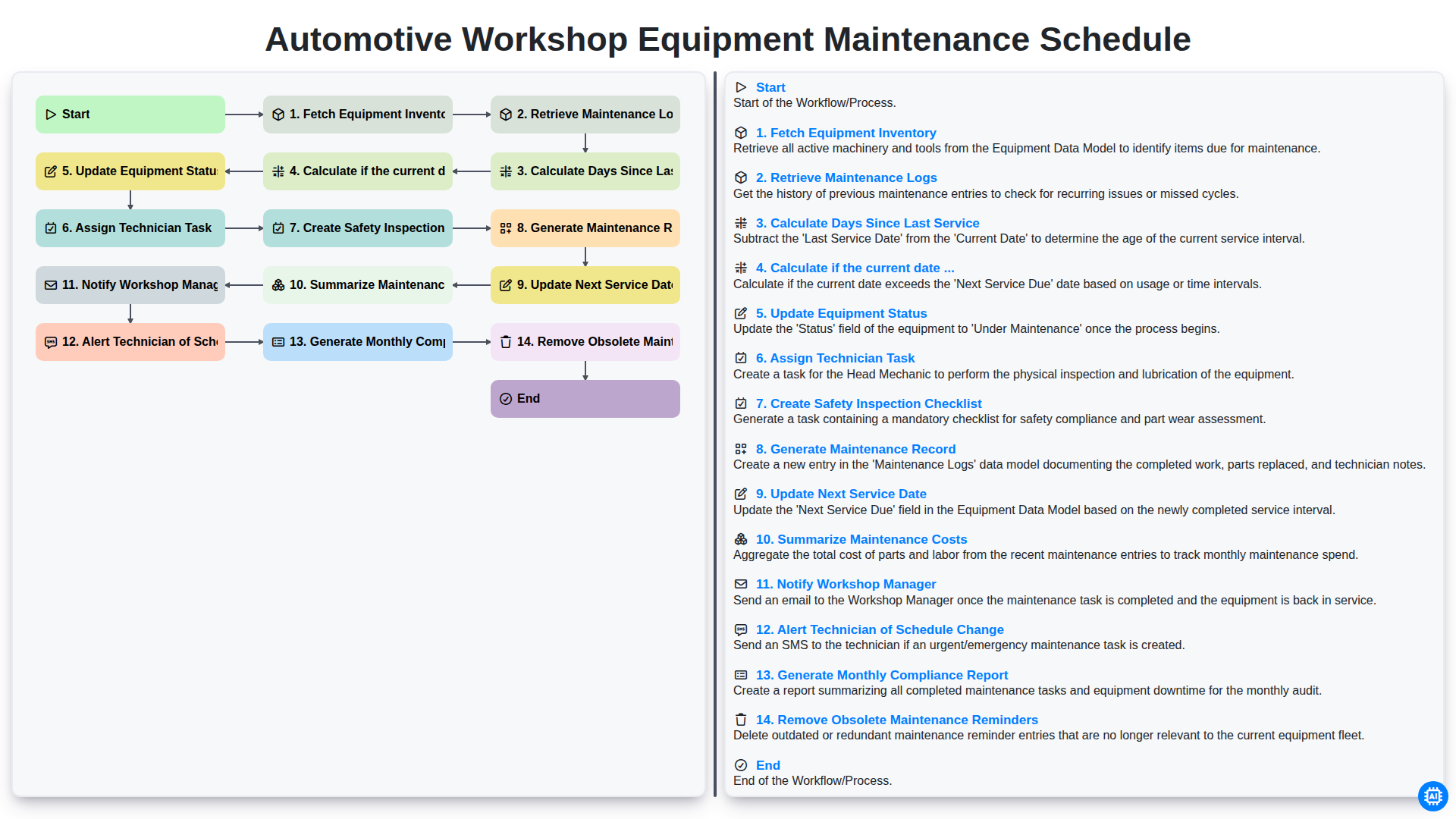
Automotive Workshop Equipment Maintenance Schedule
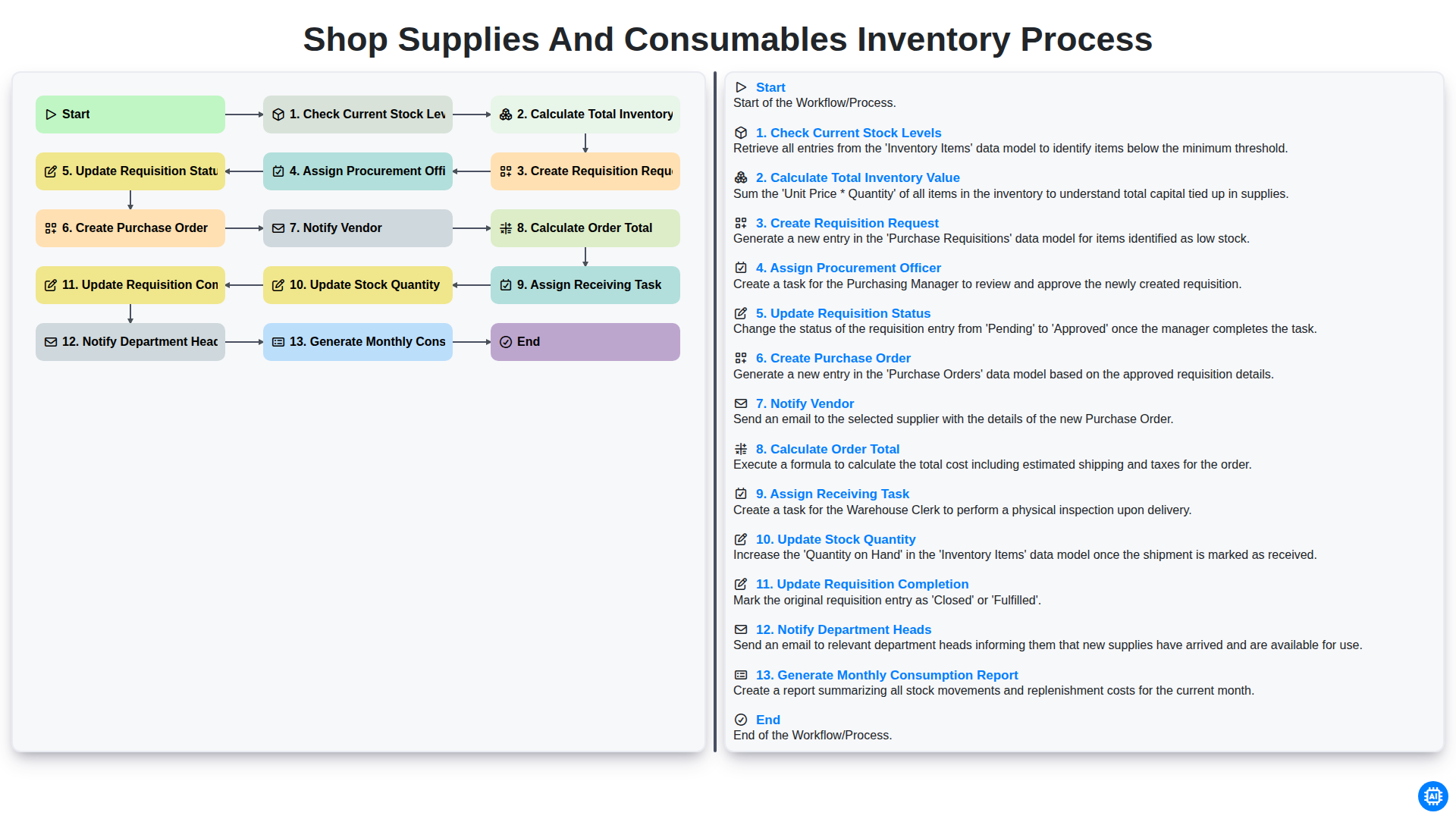
Shop Supplies and Consumables Inventory Process
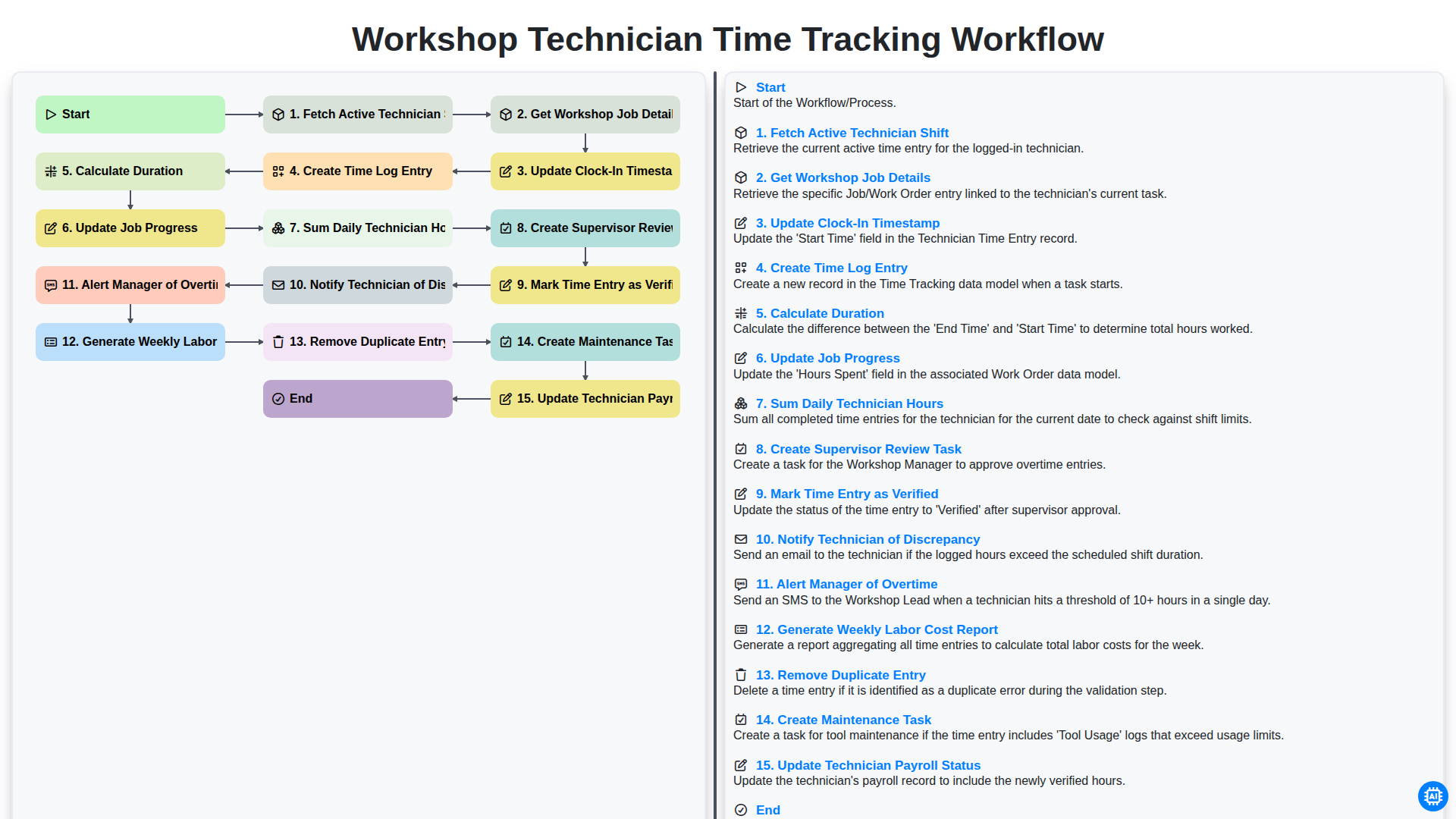
Workshop Technician Time Tracking Workflow
We can do it Together
Need help with
Auto Repair Shop Management?
Have a question? We're here to help. Please submit your inquiry, and we'll respond promptly.