 ChecklistGuro
 Employee Engagement and Retention Strategy
Boost productivity and reduce turnover with our comprehensive Employee Engagement and Retention Strategy workflow. This end-to-end HR management process provides a structured roadmap for building high-performance cultures through proactive feedback loops, recognition programs, and data-driven retention tactics designed to keep your top talent motivated and loyal.
This Template was installed 4 times.
Start
Start of the Workflow/Process.
1. Retrieve Employee Feedback Scores
Fetch all recent engagement survey scores from the Employee Feedback data model.
2. Calculate Average Engagement Score
Calculate the average of the retrieved engagement scores to determine the current sentiment level.
3. Determine Attrition Risk Level
Execute a formula comparing average engagement scores against historical attrition thresholds to categorize risk (High, Medium, Low).
4. Create Risk Assessment Record
Create a new entry in the 'Retention Risk Log' containing the calculated risk level and date.
5. Assign Retention Interview Task
Create a task for the Department Manager to conduct a 1-on-1 stay interview for high-risk employees.
6. Stay Interview Checklist
A predefined list of questions and steps to guide the manager during the interview process.
7. Update Employee Sentiment Status
Update the 'Employee Sentiment' field in the Employee Profile data model based on interview outcomes.
8. Create Personalized Development Plan Task
Create a task for HRBP to design a professional growth roadmap for the identified employee.
9. Log Development Plan Entry
Create a new record in the 'Development Plans' data model linked to the employee.
10. Notify Manager of Risk
Send an automated email to the relevant manager alerting them to the high-risk status of an employee.
11. Send Recognition Email
Send a congratulatory email to the employee if the engagement score has improved significantly.
12. Generate Monthly Engagement Summary
Generate a formal report aggregating all engagement trends and retention actions taken during the month.
13. Fetch Departmental Benchmarks
Retrieve historical benchmark data to compare current department performance.
14. Cleanup Resolved Risk Alerts
Delete temporary alert entries from the 'Active Alerts' model once the retention task is marked complete.
End
End of the Workflow/Process.
Start of the Workflow/Process.
Fetch all recent engagement survey scores from the Employee Feedback data model.
Calculate the average of the retrieved engagement scores to determine the current sentiment level.
Execute a formula comparing average engagement scores against historical attrition thresholds to categorize risk (High, Medium, Low).
Create a new entry in the 'Retention Risk Log' containing the calculated risk level and date.
Create a task for the Department Manager to conduct a 1-on-1 stay interview for high-risk employees.
A predefined list of questions and steps to guide the manager during the interview process.
Update the 'Employee Sentiment' field in the Employee Profile data model based on interview outcomes.
Create a task for HRBP to design a professional growth roadmap for the identified employee.
Create a new record in the 'Development Plans' data model linked to the employee.
Send an automated email to the relevant manager alerting them to the high-risk status of an employee.
Send a congratulatory email to the employee if the engagement score has improved significantly.
Generate a formal report aggregating all engagement trends and retention actions taken during the month.
Retrieve historical benchmark data to compare current department performance.
Delete temporary alert entries from the 'Active Alerts' model once the retention task is marked complete.
End of the Workflow/Process.
Found this Workflow Template helpful?
Comments
There are no comments yet. Be the first to add one!
HRM - Human Resources Management Solution Demo
Simplify HR processes & empower your team! ChecklistGuro's HRM solution streamlines onboarding, performance management, & compliance. Improve employee engagement, reduce admin burden, & drive organizational growth. Manage it all with our Work OS.
Related Workflow Templates
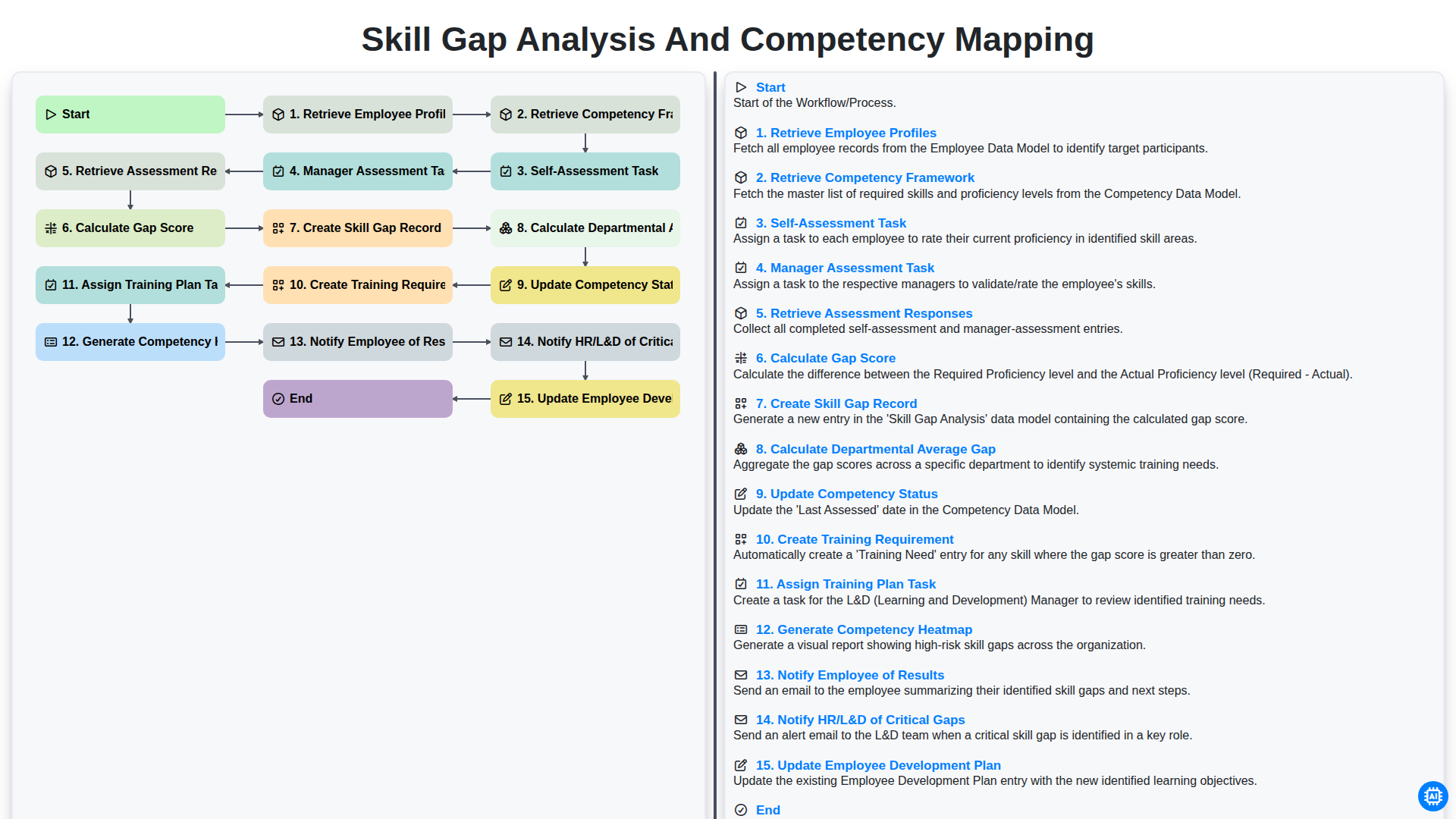
Skill Gap Analysis and Competency Mapping
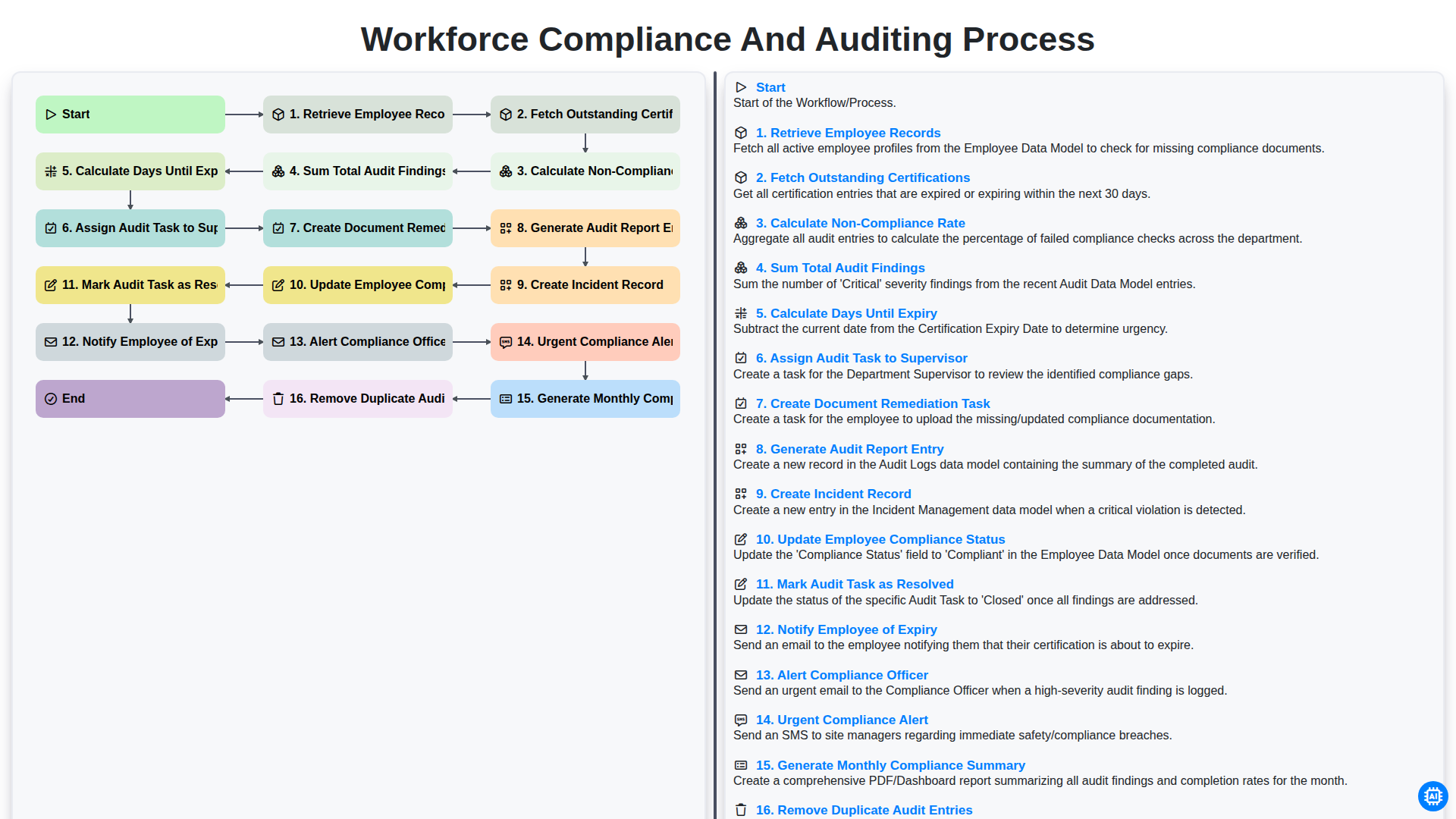
Workforce Compliance and Auditing Process
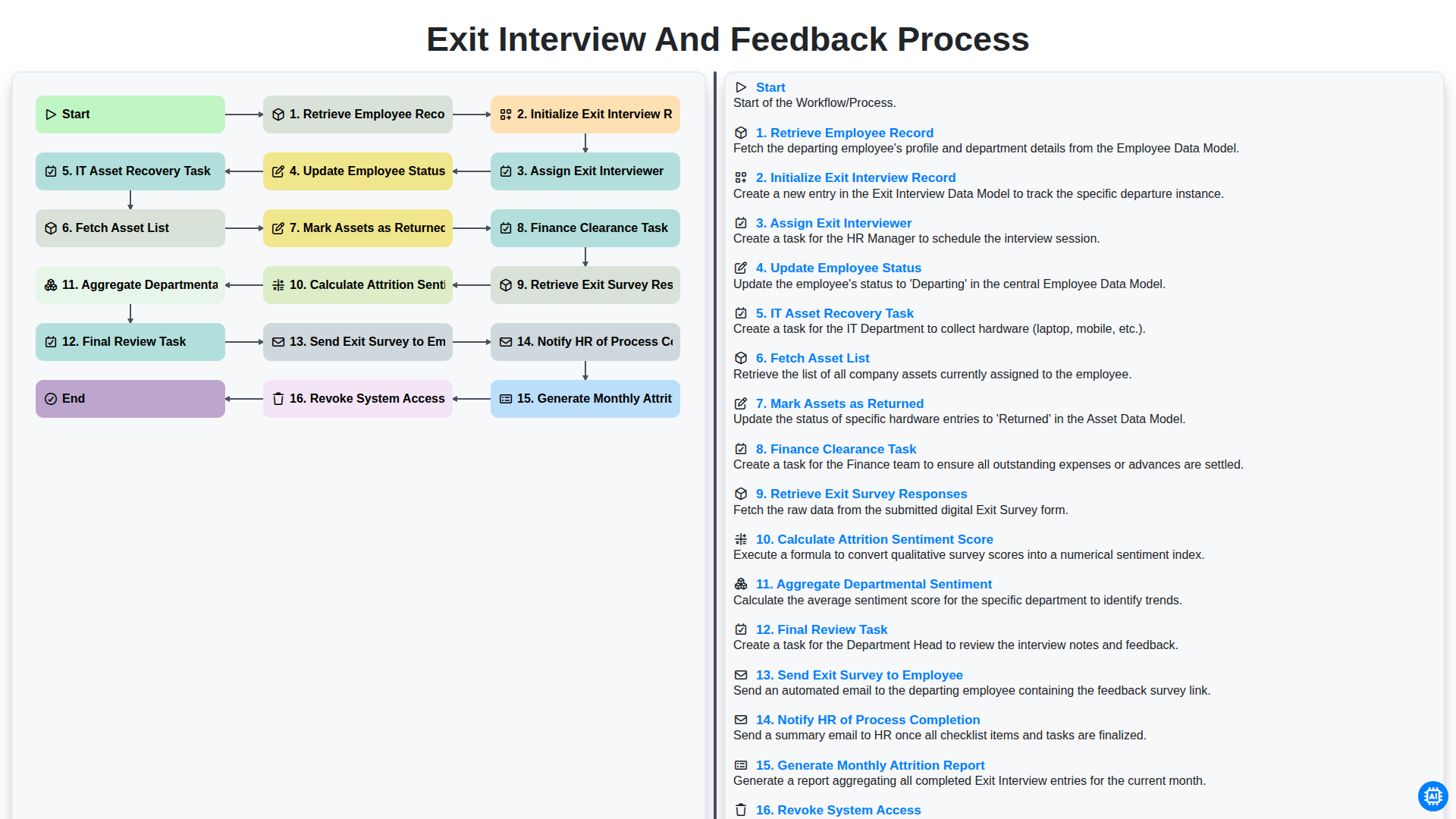
Exit Interview and Feedback Process
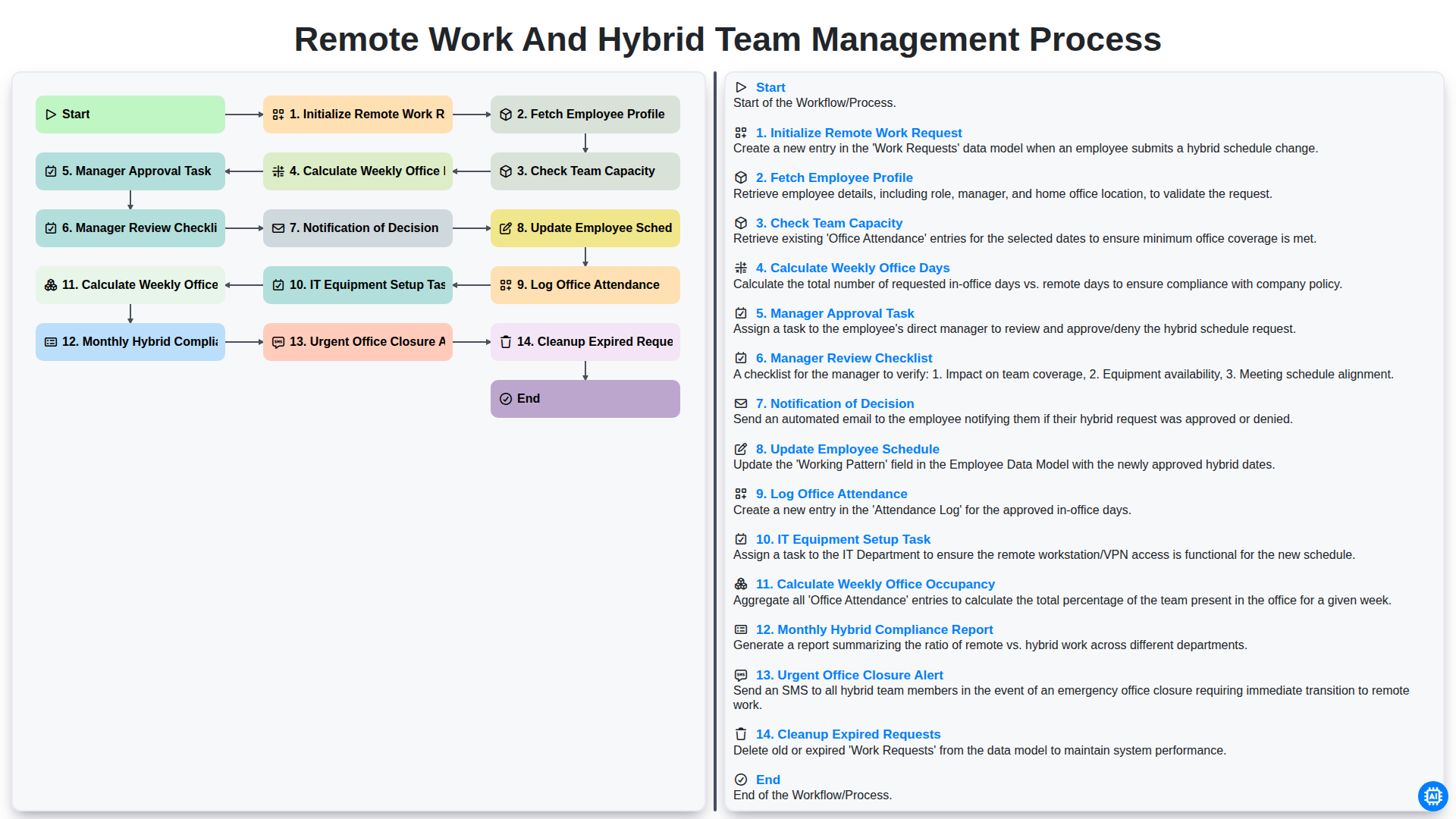
Remote Work and Hybrid Team Management Process
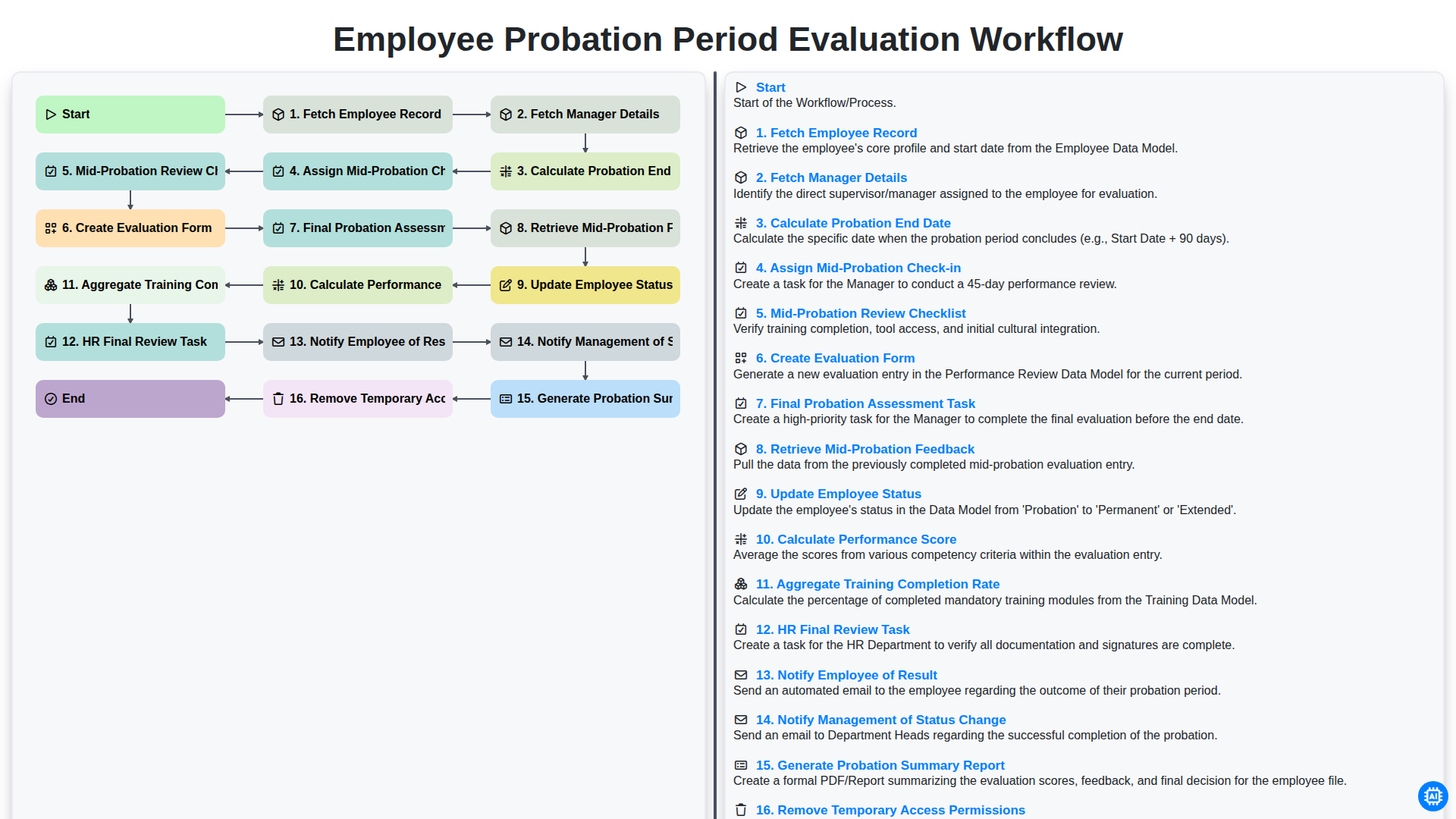
Employee Probation Period Evaluation Workflow
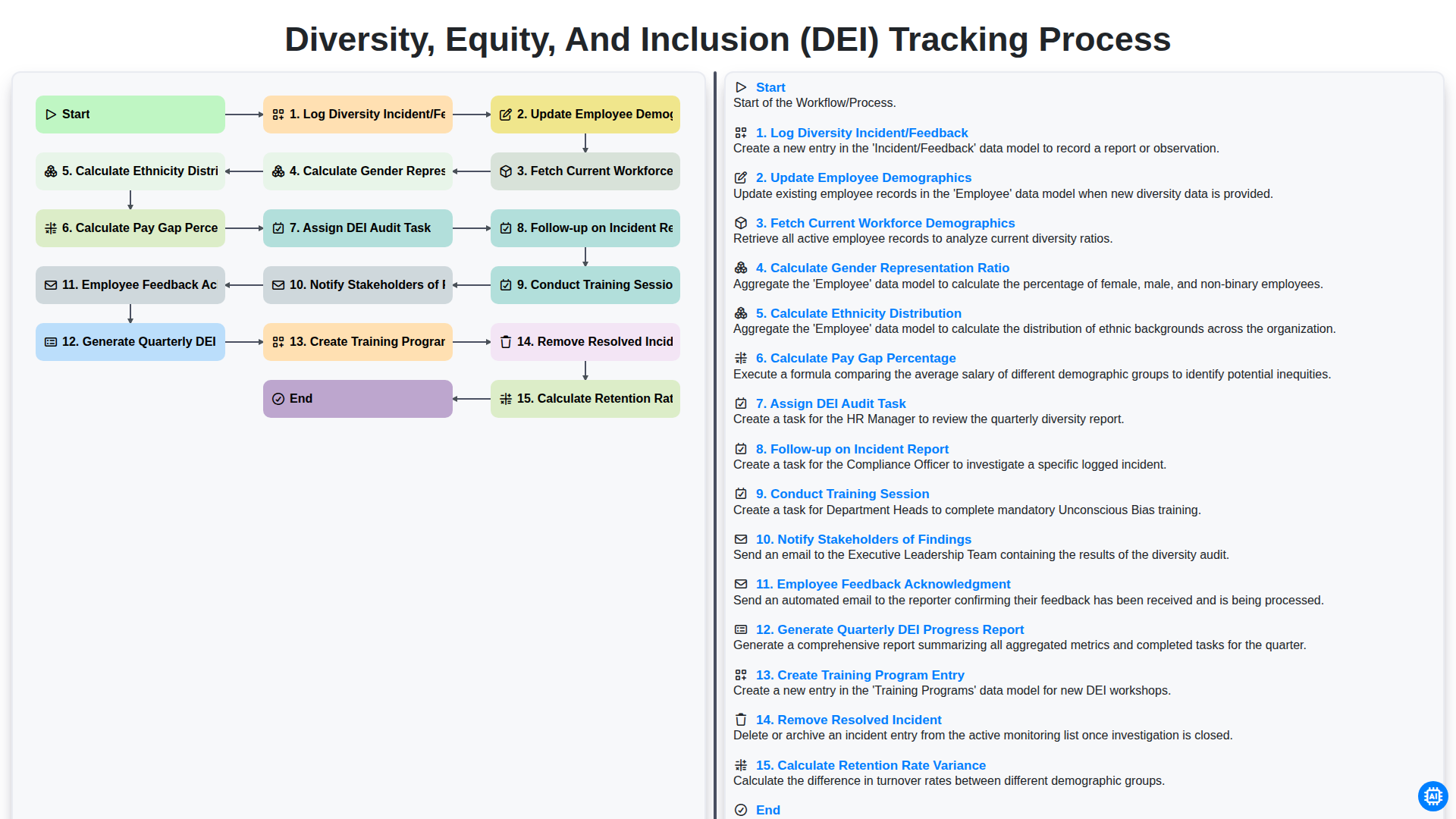
Diversity, Equity, and Inclusion (DEI) Tracking Process
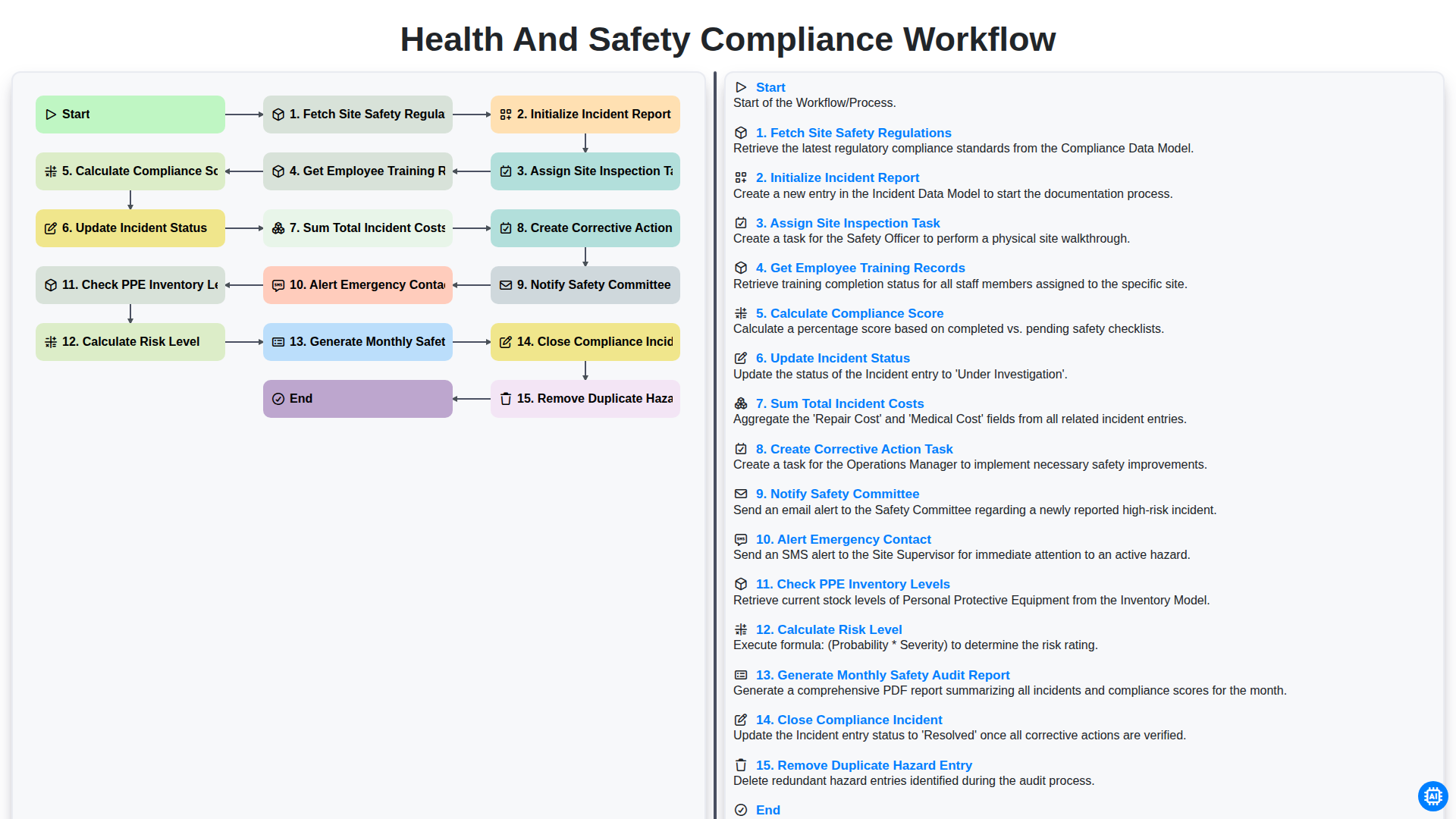
Health and Safety Compliance Workflow
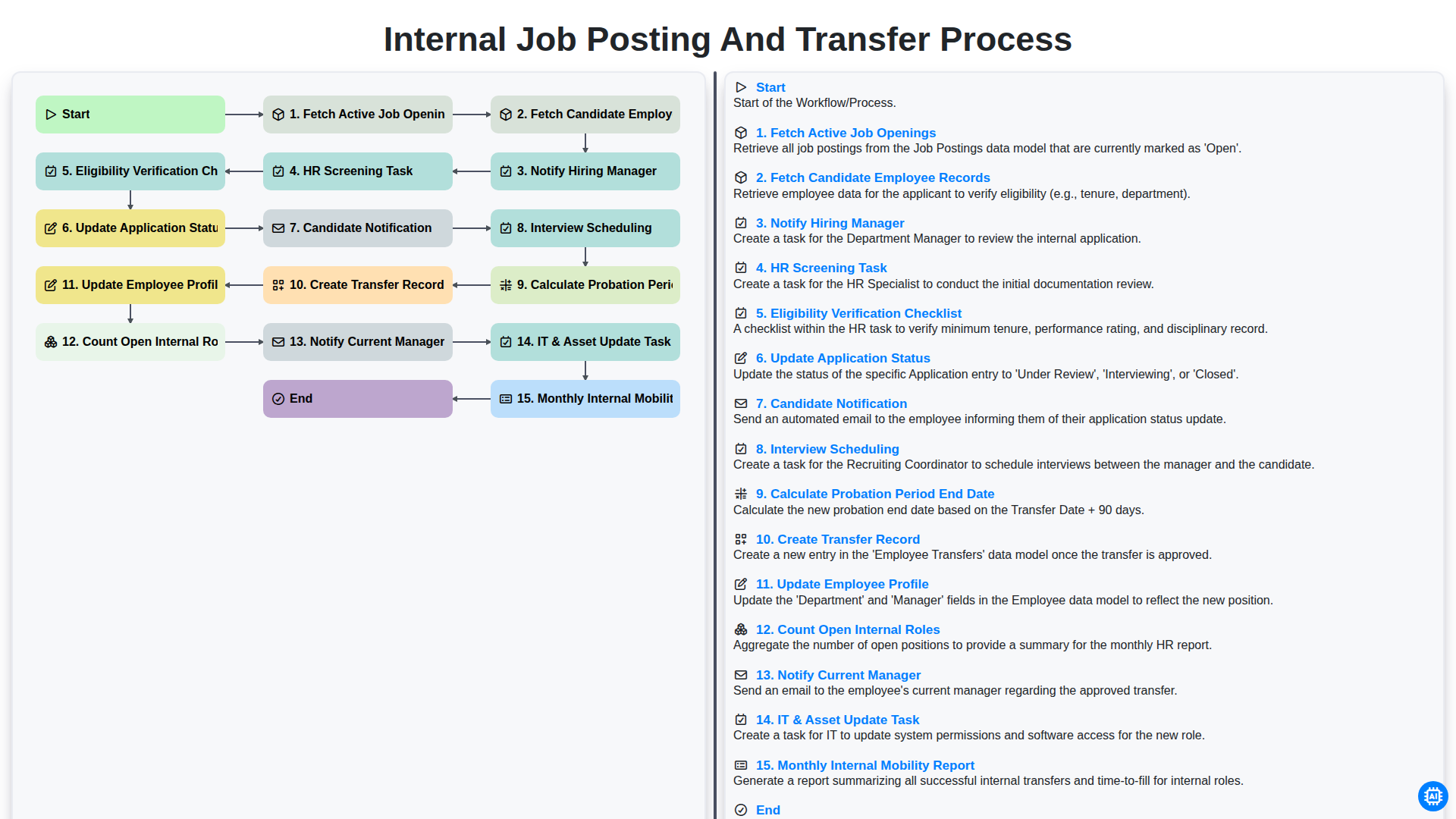
Internal Job Posting and Transfer Process
We can do it Together
Need help with
Human Resources Management (HRM)?
Have a question? We're here to help. Please submit your inquiry, and we'll respond promptly.