5 Common Mistakes in Hospitality Management
Published: 08/28/2026 Updated: 08/29/2026
Table of Contents
- 1. Relying on Paper Checklists and Manual Tracking
- 2. Inconsistent Communication Between Front and Back of House
- 3. Lack of Real-Time Visibility into Operational Compliance
- 4. Poor Training and High Dependency on Manual Oversight
- 5. Failing to Use Data-Driven Insights for Process Improvement
- Resources & Links
TLDR: Avoid common hospitality pitfalls like manual tracking, communication gaps, and lack of real-time visibility by transitioning from outdated paper processes to a centralized Work OS. Learn how modern management software, specifically specialized solutions like ChecklistGuro, can automate compliance, standardize operations, and drive efficiency across your entire team.
1. Relying on Paper Checklists and Manual Tracking
In the fast-paced world of hospitality, speed and precision are everything. Yet, many managers still cling to the tried and true method of using clipboards, laminated sheets, and post-it notes to manage daily operations. While it may feel familiar, this reliance on manual tracking is a ticking time bomb for your efficiency.
The Hidden Costs of Paper-Based Management
Paper checklists might seem cost-effective at first glance, but the long-term operational drain is significant. When your processes live on physical paper, you aren't just managing tasks; you are managing a massive amount of dark data-information that exists but is impossible to analyze, search, or scale.
The Breakdown of Accountability
The biggest issue with paper is the lack of real-time accountability. A checkbox on a piece of paper can be ticked off without the task actually being completed. Without a digital audit trail, managers have no way of knowing if a room inspection or a kitchen sanitation check actually took place at the required time, or if it was simply a pencil-whipping exercise performed minutes before a shift change.
The Data Silo Problem
When checklists are physical, your operational intelligence is trapped in a filing cabinet. If a recurring issue arises-such as a specific station consistently failing hygiene audits-you cannot easily spot the pattern. You cannot perform trend analysis, you cannot identify training gaps, and you certainly cannot predict future failures.
Transitioning to Digital Accountability
To stay competitive, modern hospitality leaders are moving away from static paper and toward dynamic, digital workflows. Transitioning to a digitalized system allows for:
- Instant Verification: Photo evidence and time-stamping ensure tasks are completed as instructed.
- Centralized Visibility: Operations leads can monitor multiple locations from a single dashboard.
- Automated Escalation: If a critical task is missed, the system can automatically alert a supervisor, preventing a small error from becoming a guest-facing disaster.
By replacing manual tracking with a specialized Work OS like ChecklistGuro, you transform your checklists from passive records into active management tools that drive consistent, high-quality service.
2. Inconsistent Communication Between Front and Back of House
In the fast-paced environment of hospitality, information moves at lightning speed. A single breakdown in communication can lead to a ripple effect of errors-from a forgotten dietary requirement in the kitchen to a guest's room not being ready at check-in.
The Silo Effect: Where Communication Breaks Down
The most common way this mistake manifests is through siloed information. When the front-of-house (FOH) team uses one method to record requests (like sticky notes or verbal cues) and the back-of-house (BOH) uses another (like a separate logbook or a different digital app), critical details inevitably fall through the cracks.
The Cost of Disconnected Workflows
When communication isn't centralized, managers face several operational hurdles:
- Increased Error Rates: Misinterpreted instructions lead to food waste, service delays, and unhappy guests.
- Reduced Staff Morale: Constant firefighting due to preventable misunderstandings leads to employee burnout and high turnover.
- Loss of Accountability: Without a single source of truth, it becomes impossible to trace where a breakdown occurred, making it difficult to implement corrective training.
Bridging the Gap with Integrated Solutions
To eliminate these gaps, modern hospitality leaders are moving away from fragmented messaging apps and paper logs in favor of a centralized Work OS.
By utilizing a unified platform like ChecklistGuro, both FOH and BOH teams operate on the same real-time ecosystem. Instead of relying on verbal handovers, tasks, updates, and compliance checks are logged in a shared digital space. This ensures that when a standard is updated or a task is completed, the entire team sees it instantly, ensuring seamless continuity across every department.
3. Lack of Real-Time Visibility into Operational Compliance
In the fast-paced world of hospitality, what you don't know can hurt you. Many operations managers operate under the illusion that everything is running smoothly simply because they haven't received a complaint yet. However, relying on retrospective reviews-like checking logs at the end of a shift or reviewing feedback days after an incident-is a recipe for operational failure.
The Danger of the Lagging Indicator Trap
When management lacks real-time visibility, you are essentially managing in the rearview mirror. If a critical safety protocol is skipped or a hygiene standard is missed during the morning shift, you won't discover the lapse until it has already impacted your guest experience or, worse, resulted in a health code violation. This delay in awareness turns small, fixable errors into expensive, reputation-damaging crises.
The Gap Between Policy and Practice
The biggest hurdle in hospitality compliance isn't usually a lack of written SOPs; it's the inability to verify that those SOPs are actually being followed in real-time. Without a digital paper trail, managers are forced to rely on trust-based management. While trust is vital, it is not a scalable or auditable strategy.
Bridging the Gap with Digital Oversight
To maintain high standards, leadership needs a single source of truth that provides instant visibility into every department. Modern hospitality leaders are moving away from fragmented spreadsheets and towards integrated Work OS solutions.
Why Checklists are the Foundation of Visibility
By implementing digitized, real-time auditing, you can transform compliance from a reactive chore into a proactive advantage. This is where tools like ChecklistGuro excel. Unlike traditional methods, ChecklistGuro provides:
- Instant Alerts: Immediate notifications when a critical task is missed or fails inspection.
- Live Dashboards: A high-level view of all operational checkpoints across multiple locations simultaneously.
- Audit-Ready Documentation: A permanent, time-stamped digital record that eliminates the guesswork during inspections.
By replacing manual oversight with automated, real-time tracking, you ensure that compliance isn't just a goal-it's a constant, visible reality.
4. Poor Training and High Dependency on Manual Oversight
The Hidden Cost of Tribal Knowledge
In many hospitality environments, much of the critical operational knowledge exists only in the heads of long-term employees. This reliance on tribal knowledge creates a dangerous single point of failure. When a veteran manager or head chef is off-duty, the standard of service often fluctuates, leading to inconsistent guest experiences and increased operational friction.
The Trap of Manual Oversight
When training is purely verbal or relies on physical binders, managers are forced into a cycle of constant, manual supervision. This micro-management by necessity prevents operations leads from focusing on high-level strategy and instead keeps them tethered to the floor, verifying that every basic task is being performed correctly. This lack of scalable training infrastructure means that every new hire represents a significant risk to your brand's consistency.
Moving from Supervision to Standardization
To break this cycle, hospitality leaders must transition from manual oversight to automated accountability. The goal is to create a digital ecosystem where the correct way is hardcoded into the workflow itself.
By implementing a specialized Work OS like ChecklistGuro, you can digitize your SOPs (Standard Operating Procedures) into interactive, smart checklists. Instead of a manager needing to physically stand over an employee to ensure a room is cleaned or a station is set, the system enforces the process. This allows your team to self-audit against a single source of truth, ensuring that high standards are maintained even when you aren't physically present.
5. Failing to Use Data-Driven Insights for Process Improvement
The Trap of Gut-Feeling Management
In the fast-paced hospitality industry, many managers fall into the trap of making operational decisions based solely on intuition or gut feelings. While experience is invaluable, relying on instinct alone leaves you blind to the underlying patterns that drive costs and customer satisfaction.
When you lack centralized, digitalized data, you aren't just guessing-you are operating in the dark. Without a way to track completion rates, audit accuracy, and time-to-task metrics, small operational lapses quickly snowball into systemic failures.
The Cost of Missing Metrics
Without measurable data, it is impossible to identify whether a dip in service quality is a one-time human error or a recurring breakdown in your standard operating procedures (SOPs). Without a digital audit trail, management is forced into a reactive mode-fixing problems only after a guest complains, rather than preventing them through trend analysis.
Transitioning from Reactive to Proactive
The most successful hospitality leaders use data to drive continuous improvement. This means moving beyond simply checking a box to analyzing the how and when of task execution.
To achieve this, your management tool must do more than just store lists; it must act as a source of truth. This is where modern Work OS platforms like ChecklistGuro provide a decisive edge. Unlike traditional methods, ChecklistGuro transforms every completed task into a data point, allowing Operations Leads to:
- Identify Bottlenecks: Pinpoint exactly which shifts or departments are struggling with specific protocols.
- Monitor Compliance Trends: Spot patterns of non-compliance before they impact your brand reputation.
- Validate Training ROI: Use real-time completion data to see if new training modules are actually translating into better operational habits.
By leveraging a specialized Hospitality Management solution, you turn your daily checklists into a strategic asset, ensuring that every operational decision is backed by measurable, actionable intelligence.
Resources & Links
- Hospitality Net: A leading source for hospitality industry news, trends, and professional development resources.
- Revfine: Comprehensive guides on hotel management, revenue management, and hospitality technology.
- Hotel Management Network: Industry news and insights focusing on hotel operations and management strategies.
- Forbes Business Council: Expert perspectives on business leadership and operational efficiency applicable to hospitality.
- SHRM: Resources for managing human capital, essential for addressing training and labor dependency issues.
- Hospitality School: Educational resources and training materials for hospitality management professionals.
- McKinsey & Company: High-level insights on digital transformation and data-driven decision making in service industries.
- Deloitte: Research and reports on operational excellence and technology integration in the hospitality sector.
- TripAdvisor: A key resource for understanding guest feedback and the impact of operational failures on reputation.
- OpenTable: Tools and insights regarding front-of-house management and guest experience optimization.
- Sertso: Focuses on digital transformation and streamlining manual processes in service-oriented businesses.
- Skift: undefined
- Big Hospitality: News and trends covering the UK and global hospitality sectors, focusing on operations.
- Zendesk: Resources on improving customer communication and streamlining service workflows.
- Tableau: Tools and learning resources for implementing data-driven insights and visualization.
- Slack: Platform examples for improving real-time communication between Front and Back of House teams.
- Monday.com: Workflow management tools to replace paper checklists and manual tracking with digital automation.
- HubSpot: Insights on using data and customer feedback to drive business process improvement.
- PlaceMart: Information regarding hospitality supply chain and operational compliance management.
- Foodservice News: Industry-specific resources for managing back-of-house operations and food safety compliance.
Comments
There are no comments yet. Be the first to add one!
Hospitality Management Solution Demo
Running a hotel, restaurant, or other hospitality business is demanding. ChecklistGuro's Work OS platform simplifies management, from reservations and guest services to inventory and staff scheduling. Improve efficiency, enhance guest experience, and boost profitability! See how ChecklistGuro can transform your hospitality operations.
Related Articles
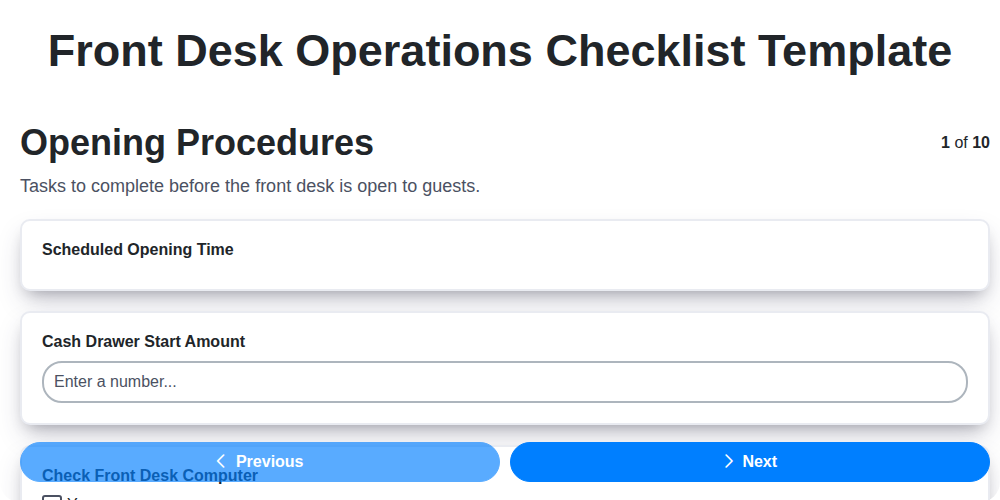
The Ultimate Front Desk Operations Checklist Template
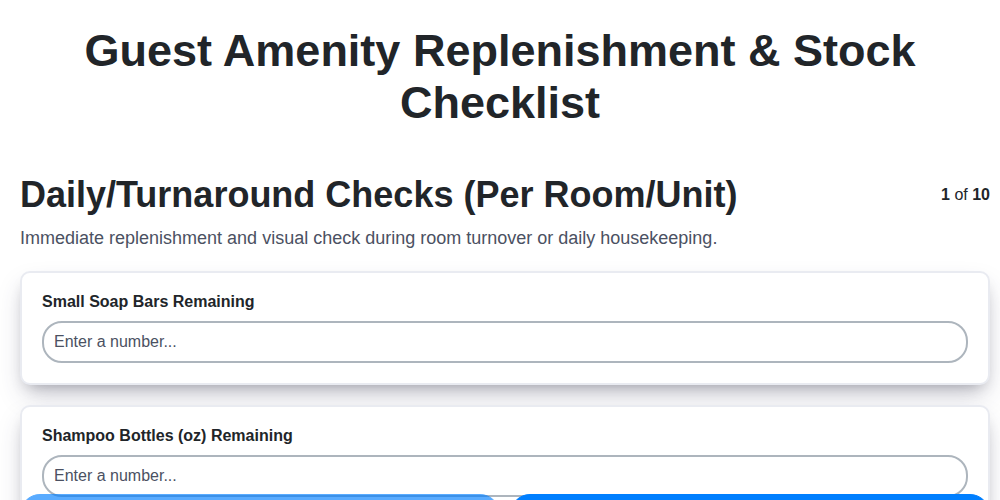
The Ultimate Guest Amenity Checklist Template
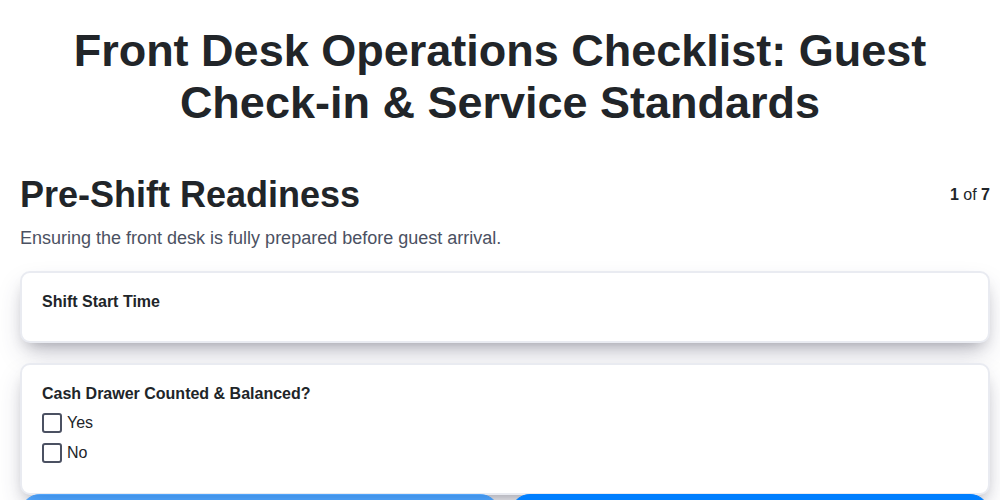
Front Desk Operations Checklist Template: Ace Guest Check-in & Service
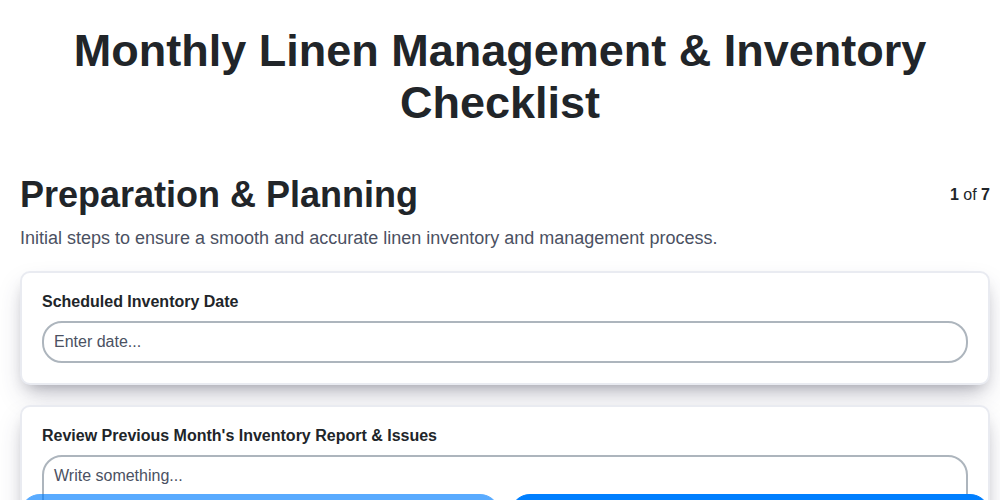
Monthly Linen Management: Your Essential Checklist Template

Hotel Guest Experience Audit Checklist Template
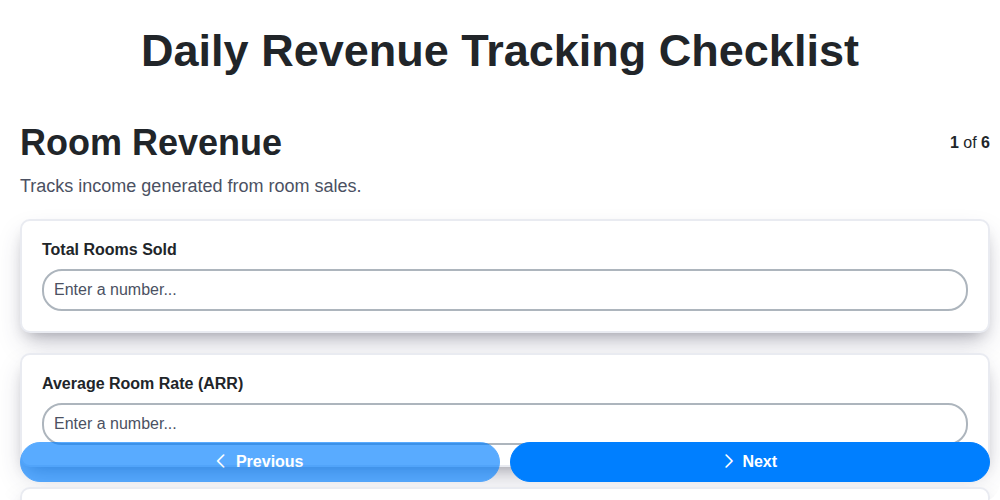
Daily Revenue Tracking: Your Essential Checklist Template
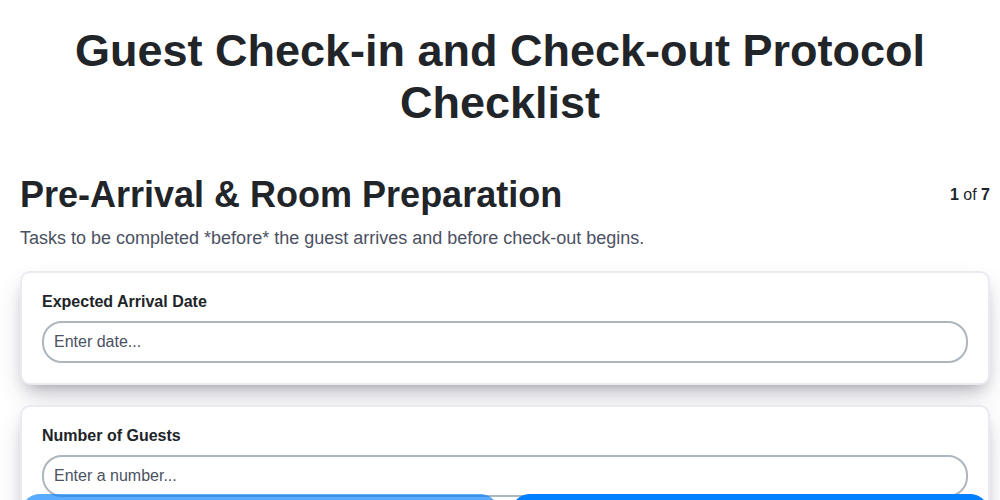
Streamline Guest Stays: Your Free Check-in & Check-out Protocol Template
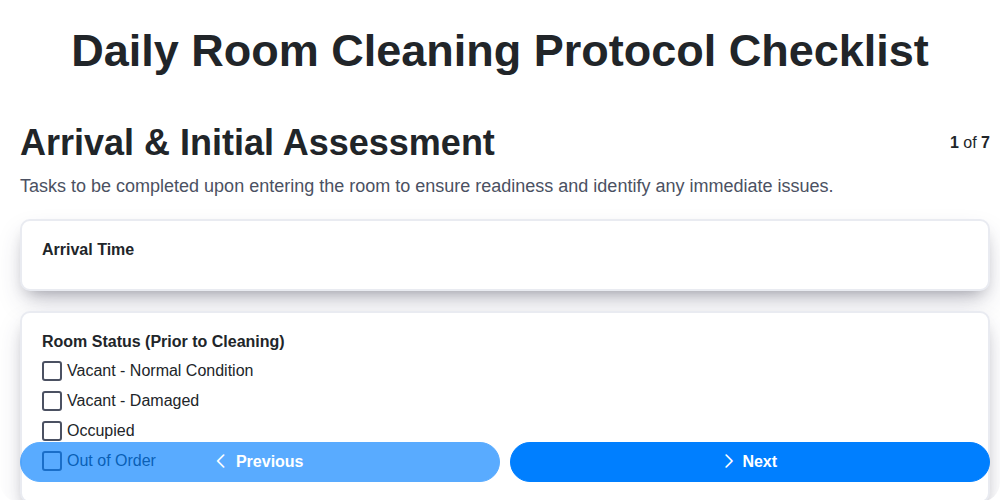
Daily Room Cleaning Protocol: Your Essential Checklist Template
Need help with
Checklists?
Have a question? We're here to help. Please submit your inquiry, and we'll respond promptly.