Your Ultimate Community Event Checklist: Permits, Volunteers & Partnerships
Published: 10/13/2025 Updated: 05/06/2026
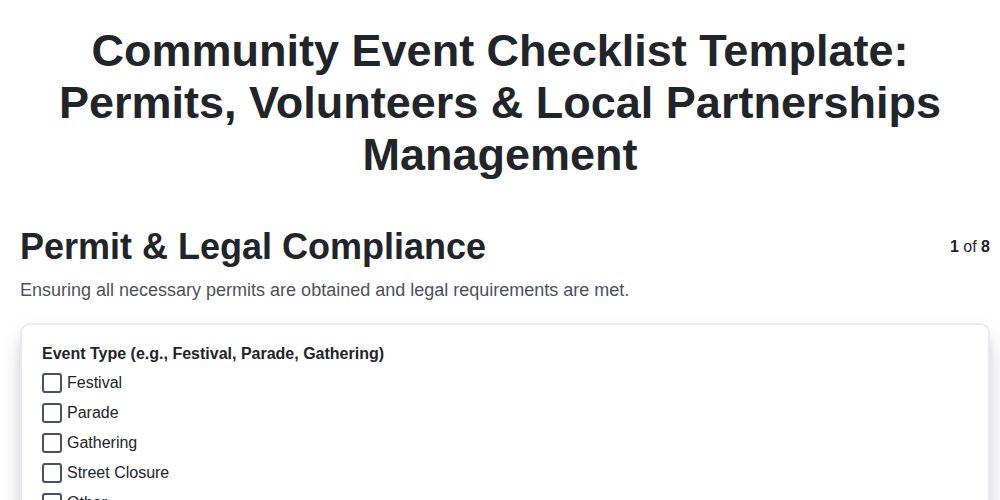
Table of Contents
- Planning Your Community Event: A Comprehensive Checklist
- Securing the Foundation: Permits & Legal Compliance
- Building Your Team: Volunteer Coordination
- Forging Connections: Local Partnerships & Sponsorships
- Logistical Essentials: Event Infrastructure & Setup
- Spreading the Word: Marketing & Promotion Strategies
- Prioritizing Safety: Risk Management & Emergency Planning
- Creating an Inclusive Space: Accessibility & Diversity
- Budgeting for Success: Financial Considerations
- Post-Event Wrap-Up: Evaluation & Reporting
- Timeline Management: Key Dates & Deadlines
- Troubleshooting Common Event Challenges
- Resources & Links
TLDR: Planning a community event? Overwhelmed? This free checklist template covers everything from permits and volunteer coordination to securing sponsorships and ensuring accessibility. It's your one-stop guide to a smooth, successful, and stress-free community gathering - download it and get planning!
Planning Your Community Event: A Comprehensive Checklist
Before you dive headfirst into decorations, entertainment, and delicious food, it's crucial to lay a solid foundation. A well-planned event minimizes stress, maximizes enjoyment, and ensures everything runs smoothly. This checklist isn't just about ticking boxes; it's a roadmap to a thriving community gathering. We're breaking down the process into eight key areas - permits, volunteers, partnerships, logistics, promotion, safety, inclusivity, and post-event evaluation. Each section contains vital tasks to keep you on track, from securing necessary approvals to ensuring a welcoming environment for all attendees. Remember, proactive planning is the best antidote to last-minute chaos! Let's get started and make your community event a resounding success.
Securing the Foundation: Permits & Legal Compliance
Navigating the legal landscape for your community event can feel daunting, but it's a crucial step towards a smooth and successful experience for everyone. Ignoring local regulations can lead to fines, event shutdowns, and even legal repercussions - things you definitely want to avoid! The specifics will vary depending on your location and the nature of your event (a small park picnic versus a large street festival has very different requirements), so thorough research is key.
Start by contacting your city or county government's event permitting office. They can provide you with a detailed list of required permits, application deadlines, and any specific ordinances you need to be aware of. Common permits might include those for park usage, street closures, amplified sound, food vendors, or alcohol sales. Be prepared to provide information about your event's size, location, expected attendance, and activities. Don't underestimate the time required for permit processing - it's best to begin this process well in advance, ideally several months before your event date. Finally, always ensure you have adequate event liability insurance to protect yourself and your organization.
Building Your Team: Volunteer Coordination
Volunteers are the backbone of any successful community event. Without a dedicated and well-organized team, even the best-laid plans can fall apart. Recruiting, training, and managing volunteers effectively requires a strategic approach.
Recruitment is Key: Don't just put up a flyer and hope for the best! Actively seek out potential volunteers through diverse channels. Utilize online platforms like VolunteerMatch and Idealist, connect with local community groups, schools, and universities, and spread the word through social media. Clearly define volunteer roles and responsibilities in your recruitment materials to attract individuals with the right skills and interests.
Streamline the Application & Screening Process: A simple, easy-to-understand application form is crucial. Consider background checks for roles involving children or vulnerable populations - transparency is key. A brief interview can also help assess suitability and ensure a good fit.
Invest in Training: Don't assume volunteers know what to do. Provide clear and concise training on their specific roles, event protocols, and emergency procedures. A dedicated training session, even a short one, can dramatically improve performance and boost confidence.
Communication is Paramount: Establish a reliable communication channel - a group email, messaging app, or regular meetings - to keep volunteers informed about updates, schedules, and any changes to the plan. Open communication fosters a sense of teamwork and allows for quick resolution of any issues.
Show Appreciation: Volunteer burnout is real. A simple "thank you" goes a long way. Consider small tokens of appreciation, volunteer appreciation events, or public recognition to acknowledge their valuable contributions. Recognizing their efforts not only boosts morale but also encourages continued involvement in future events.
Forging Connections: Local Partnerships & Sponsorships
Securing local partnerships and sponsorships isn't just about the financial boost - it's about weaving your event into the fabric of your community. These collaborations offer invaluable benefits that extend far beyond dollars and cents. Think increased visibility, shared resources, and a stronger sense of community ownership.
When you partner with local businesses, you're not just getting funding; you're gaining expertise and a network of contacts. A bakery might donate pastries, a print shop could provide signage, or a local radio station could offer promotional airtime. These in-kind contributions are incredibly valuable and demonstrate a shared commitment to your community.
Don't underestimate the power of community organizations either! Partnering with a local charity or non-profit can add a meaningful purpose to your event and attract a broader audience. It's a chance to highlight their mission and amplify their impact while simultaneously enriching your event's purpose.
Remember, approaching potential partners should be a relationship-building exercise. Clearly articulate your event's goals, audience, and the benefits of involvement. Offer tiered sponsorship packages with varying levels of recognition, and be prepared to tailor your approach to meet individual needs. A genuine connection and a shared vision will ultimately forge the most successful and rewarding partnerships.
Logistical Essentials: Event Infrastructure & Setup
Beyond securing permits and rallying volunteers, the physical backbone of your event - the infrastructure - is crucial for a smooth and enjoyable experience. This goes far beyond simply having a space; it's about creating a functional and welcoming environment for everyone.
Let's break down the key elements:
1. Site Layout & Flow: Carefully consider how people will move through your event space. Avoid bottlenecks and create clear pathways. Consider different zones for activities, food vendors, and relaxation areas. A well-planned layout maximizes space and minimizes confusion.
2. Stage & Performance Area (if applicable): If you're hosting performances, prioritize a safe and accessible stage area. Account for power requirements, lighting, sound reinforcement, and backstage access. Ensure the stage is stable and appropriately sized for the acts.
3. Power & Water Access: Reliable power is non-negotiable. Estimate your power needs accurately and arrange for generators or access to outlets. Likewise, water access is vital for vendors, restrooms, and potential fire safety.
4. Restroom Facilities: Adequate and clean restrooms are paramount for attendee satisfaction. Estimate the number of restrooms needed based on anticipated attendance and ensure accessibility. Portable restrooms should be well-maintained and regularly serviced.
5. Waste Management & Recycling: Responsible waste disposal is essential. Provide ample trash cans and recycling bins strategically placed throughout the event area. Consider composting options if feasible. Clearly label bins for easy identification.
6. Signage & Wayfinding: Clear and consistent signage is your friend. Guide attendees with directional signs, activity maps, and informational boards. Use large, legible fonts and easy-to-understand symbols.
7. Lighting & Security: Adequate lighting is vital for safety and ambiance, especially for evening events. Ensure well-lit pathways, entrances, and activity areas. Coordinate with security personnel to monitor the perimeter and respond to any issues.
8. Contingency Planning: Be prepared for the unexpected. Have backup power sources, tarps for rain, and a first-aid kit readily available. A little foresight can go a long way in preventing minor issues from escalating into major problems.
Spreading the Word: Marketing & Promotion Strategies
Sure, a well-placed flyer still has its place! But today's event marketing needs a broader approach to truly resonate with your audience. It's about connecting with people where they already are - online and in their daily lives.
Here's a breakdown of key strategies to amplify your event's visibility:
1. Social Media Domination: Don't just post; engage! Create compelling content - videos, behind-the-scenes glimpses, artist spotlights - tailored to each platform (Facebook, Instagram, TikTok, etc.). Run targeted ads to reach specific demographics and interests within your community. Utilize relevant hashtags to increase discoverability.
2. Local Media Love: Craft a compelling press release highlighting what makes your event special. Reach out to local newspapers, radio stations, community calendars, and bloggers. Offer exclusive interviews or previews to generate buzz.
3. Email Marketing Essentials: Build an email list and segment it based on interests. Send regular updates, exclusive offers, and reminders leading up to the event. Keep it concise and visually appealing.
4. Website/Event Page Power: A dedicated event page or section on your website serves as the central hub for all information - date, time, location, schedule, FAQs, ticketing. Ensure it's mobile-friendly and easy to navigate.
5. Community Partnerships: Cross-promote with local businesses and organizations. Offer reciprocal promotions or joint marketing campaigns.
6. Influencer Outreach: Partner with local influencers or community leaders to spread the word to their followers.
7. Online Calendars: Submit your event to online community calendars - a simple yet effective way to reach a wider audience.
Remember, consistency and creativity are key! Track your results and adapt your strategies based on what's working best.
Prioritizing Safety: Risk Management & Emergency Planning
Events, by their nature, involve gathering people, and with that comes inherent risks. Proactive risk management isn't about eliminating all risk-that's impossible-but about identifying potential hazards, assessing their likelihood and potential impact, and implementing measures to minimize those risks. A well-thought-out emergency plan is the crucial backup when preventative measures aren't enough.
Identifying Potential Hazards: Start with a comprehensive risk assessment. Consider factors like crowd size, venue layout, weather conditions, potential for medical emergencies, security threats (theft, vandalism, or more serious incidents), and even simple things like tripping hazards. Engage multiple people in this assessment - fresh perspectives can uncover blind spots.
Developing a Robust Emergency Plan: This isn't just for major incidents. Your plan should outline procedures for a range of scenarios:
- Medical Emergencies: Designated first aid stations, trained personnel, clear communication channels with emergency services.
- Weather-Related Issues: Evacuation routes, shelter locations, postponement protocols.
- Security Incidents: Crowd control measures, security personnel deployment, communication with law enforcement.
- Communication Protocols: Establish clear lines of communication between event staff, volunteers, and attendees. Use pre-determined codes to quickly relay information during an emergency.
- Evacuation Procedures: Clearly marked evacuation routes, designated assembly points, and staff trained to assist attendees.
- Regular Drills: Conduct mock drills with staff and volunteers to ensure everyone understands their roles and the plan's execution.
Don't Forget the Details:
- First Aid Kits: Ensure they're fully stocked and easily accessible.
- Emergency Contact List: Keep a readily available list of emergency services, local hospitals, and key personnel.
- Insurance Coverage: Confirm adequate liability insurance is in place.
- Ongoing Review: Regularly review and update your risk assessment and emergency plan to reflect changes in event scope, venue conditions, or identified vulnerabilities.
A commitment to safety demonstrates respect for your attendees and creates a more enjoyable and secure environment for everyone.
Creating an Inclusive Space: Accessibility & Diversity
Creating a truly successful community event isn't just about fun and entertainment; it's about ensuring everyone feels welcome and valued. An inclusive space acknowledges and celebrates diversity while removing barriers to participation. This goes far beyond simply complying with legal requirements; it's about fostering a sense of belonging for every attendee.
Let's break down practical steps. Accessibility isn't just about ramps. It's about considering individuals with various needs: those with mobility impairments, visual or hearing loss, sensitivities to noise or light, and cognitive differences. Provide accessible parking close to the entrance, clearly marked accessible restrooms, and routes free from obstacles. Offer large-print signage and consider assistive listening devices or captioning for performances.
Diversity extends beyond physical accessibility. Think about cultural sensitivities, language barriers, and representation. Ensure your marketing materials reflect the demographics of your community. Offer multilingual signage or translation services if needed. Feature diverse performers, vendors, and speakers who represent a range of backgrounds and perspectives. Be mindful of religious or cultural practices that may require accommodations.
Finally, create a zero-tolerance policy for discrimination and harassment. Clearly communicate your commitment to inclusivity and provide a designated point of contact for addressing concerns. By actively prioritizing accessibility and diversity, you'll create a richer, more welcoming experience for all - and build a stronger, more vibrant community.
Budgeting for Success: Financial Considerations
A well-planned budget is the backbone of any successful event. It's not just about knowing how much money you need, it's about understanding where that money will come from and how to maximize every dollar. Here's a breakdown of key areas to consider:
1. Identifying Income Sources:
- Sponsorships: Estimate potential sponsorship revenue based on tiered packages and outreach efforts. Be realistic - don't count on sponsorships until you have confirmed commitments.
- Ticket Sales/Entry Fees: Project attendance and set ticket prices that are both appealing and sustainable. Consider early bird discounts or group rates.
- Vendor Fees: If you're hosting vendors, establish a clear fee structure and factor in potential revenue.
- Grants & Donations: Research and apply for relevant grants and explore opportunities for community donations.
- Merchandise Sales: If applicable, estimate potential revenue from event merchandise.
2. Estimating Expenses:
Break down your expenses into categories:
- Permits & Licenses: Research and budget for all necessary fees.
- Venue Rental: Factor in rental costs, security deposits, and potential add-on fees.
- Marketing & Promotion: Allocate funds for advertising, printing, social media campaigns, and public relations.
- Entertainment & Performers: Budget for performer fees, travel, and technical requirements.
- Equipment Rental: List any equipment you're renting (tables, chairs, sound systems, etc.).
- Supplies & Materials: Estimate costs for signage, decorations, first aid supplies, and other essentials.
- Insurance: Factor in the cost of event liability insurance.
- Volunteer Expenses: Consider costs for volunteer meals, transportation, or recognition.
- Contingency Fund: Crucially, set aside 10-15% of your total budget as a contingency fund to cover unexpected costs.
3. Tracking and Adjusting:
- Spreadsheet is Your Friend: Use a spreadsheet to meticulously track all income and expenses.
- Regular Review: Review your budget regularly (weekly or bi-weekly) to compare actual spending against projections.
- Be Prepared to Adjust: If revenue falls short or expenses exceed projections, be prepared to make adjustments. This may involve cutting costs, seeking additional funding, or revising your event plan.
Remember, a transparent and well-managed budget not only contributes to the financial success of your event but also builds trust with sponsors, volunteers, and the community.
Post-Event Wrap-Up: Evaluation & Reporting
The confetti has settled, the last attendee has departed, and the cleanup is (mostly) complete. But your work isn't quite finished! A thorough post-event wrap-up is crucial for understanding what worked, what didn't, and how to make your next community gathering even better. This isn't just about patting yourselves on the back; it's about continuous improvement and maximizing impact.
Gathering Feedback - More Than Just Did You Have Fun?
While a simple How was the event? is a starting point, aim for more targeted feedback. Implement a few different methods to capture diverse perspectives:
- Post-Event Surveys: Utilize online survey tools (Google Forms, SurveyMonkey) to gather structured feedback on specific aspects of the event (logistics, programming, accessibility). Keep surveys concise and offer incentives for completion.
- Social Media Monitoring: Track mentions and hashtags related to your event. Analyze comments and direct messages for valuable insights.
- Volunteer Debriefing: Host a brief meeting with your volunteer team to discuss their experiences, challenges, and suggestions.
- Stakeholder Interviews: Connect with key partners, sponsors, and community leaders to gain their perspectives.
Analyzing Your Data & Identifying Key Takeaways
Once you've collected the feedback, it's time to dive into the data. Look for trends, patterns, and specific areas where improvements can be made. Consider these questions:
- Attendance Numbers: Were your attendance goals met? If not, why?
- Financial Performance: Did the event break even or generate a profit? Analyze income and expenses to identify cost-saving opportunities.
- Marketing Effectiveness: Which promotional channels proved most successful in reaching your target audience?
- Volunteer Satisfaction: Were volunteers adequately trained and supported?
- Attendee Experience: What were the biggest highlights and pain points for attendees?
Creating Your Post-Event Report
Document your findings in a comprehensive post-event report. This report should include:
- Executive Summary: A brief overview of the event's successes and challenges.
- Attendance Statistics: Total attendance, demographics (if collected).
- Financial Summary: Income and expenses breakdown, profitability analysis.
- Marketing Performance: Channel effectiveness, ROI.
- Feedback Summary: Key themes and recommendations from surveys, social media, and stakeholder interviews.
- Lessons Learned: Specific actions to be taken to improve future events.
- Appendix: Supporting documentation (survey results, financial statements).
Sharing this report with your team, sponsors, and key stakeholders demonstrates accountability and transparency, and helps ensure that your community event continues to thrive.
Timeline Management: Key Dates & Deadlines
A successful event hinges on meticulous timeline management. Procrastination is the enemy of organization! Here's a breakdown of key milestones, broken down into phases, to keep your project on track. Remember, these are estimates - adjust them based on the complexity of your event.
Phase 1: 6+ Months Out - The Foundation
- [ ] Initial Concept & Goal Setting: Define your event's purpose, target audience, and desired outcomes.
- [ ] Secure Key Dates: Confirm availability of venue, key performers, or speakers. This is often the first hurdle!
- [ ] Budget Creation: Establish a realistic budget and identify potential funding sources.
- [ ] Core Team Formation: Assemble your event planning committee or identify key volunteer leads.
- [ ] Preliminary Venue Scouting: Research and shortlist potential event locations.
Phase 2: 3-6 Months Out - Logistics & Permissions
- [ ] Venue Booking: Secure your event location through contract.
- [ ] Permit Applications: Initiate the permit application process (noise, alcohol, street closures, etc.). Allow ample time for processing!
- [ ] Sponsorship Outreach Begins: Start contacting potential sponsors and presenting event proposals.
- [ ] Vendor Selection & Booking: Identify and secure key vendors (catering, rentals, entertainment).
- [ ] Develop Marketing Plan: Outline your marketing strategies and identify key promotional channels.
Phase 3: 1-3 Months Out - Promotion & Finalization
- [ ] Marketing Campaign Launch: Begin actively promoting the event through social media, email, and local media.
- [ ] Volunteer Recruitment & Training: Finalize volunteer recruitment and conduct necessary training sessions.
- [ ] Confirm Vendor Agreements: Reconfirm all vendor contracts and timelines.
- [ ] Finalize Event Layout: Create a detailed event layout map, including vendor placement and signage.
- [ ] Ticket Sales Begin (if applicable): Launch online ticket sales and track registrations.
Phase 4: 2 Weeks - 1 Week Out - The Final Push
- [ ] Confirm Attendee Numbers (as much as possible): Gauge attendance and adjust logistics accordingly.
- [ ] Final Volunteer Briefing: Ensure all volunteers are fully briefed on their roles and responsibilities.
- [ ] Final Vendor Check-In: Confirm arrival times and requirements for all vendors.
- [ ] Event Signage Placement: Prepare and place event signage around the venue.
- [ ] Emergency Plan Review: Review and update your emergency plan.
Phase 5: Event Day & Post-Event
- Event Day Execution: Put all your planning into action!
- Post-Event Wrap-Up: Send thank you notes, evaluate success, and gather feedback.
Creating a detailed Gantt chart or using project management software can further enhance your timeline management. Remember to build in buffer time for unforeseen challenges!
Troubleshooting Common Event Challenges
Even the most meticulously planned events can face hiccups. It's how you handle those unexpected challenges that truly defines your success. Let's tackle some common scenarios and outline practical solutions.
The Weather Takes a Turn: A sudden downpour can disrupt outdoor events. Solution: Have a backup plan! This could involve renting tents or canopies, shifting activities indoors if possible, or even postponing the event. Communicate changes promptly and clearly through social media and email.
Volunteer Shortage: Recruiting enough volunteers is often a struggle. Solution: Start recruiting early (at least 2-3 months out). Offer incentives like free food, branded merchandise, or community service hours. Be flexible with volunteer schedules and roles to accommodate availability. Have a 'standby' list of potential helpers you can reach out to in a pinch.
Low Attendance: Did you expect a crowd and only a few showed up? Solution: Analyze your marketing efforts. Was your message clear? Did you reach your target audience? Consider offering a special promotion or activity to entice more attendees. For future events, refine your marketing strategy based on insights from this experience.
Sound System Failure: Technical difficulties can throw a wrench in the entertainment. Solution: Always have a backup plan - a spare microphone, power source, or even a list of alternative performers. Test all equipment thoroughly before the event begins.
Vendor Issues: A vendor cancelling at the last minute can create logistical chaos. Solution: Have a list of backup vendors ready to go. Communicate clearly with vendors regarding expectations and deadlines. Include cancellation clauses in vendor contracts.
Resources & Links
- Eventbrite: A platform for event discovery, ticketing, and management, providing resources and tools for event organizers. Useful for understanding common planning steps and best practices.
- GuideStar: A comprehensive database of nonprofits. If your event benefits a charity, this is a good resource for finding and understanding local organizations.
- VolunteerMatch: A leading online volunteer platform. Helps connect event organizers with potential volunteers. Provides best practices for volunteer recruitment and management.
- Idealist: Another great platform for finding volunteers, especially those passionate about community engagement. Features resources on volunteer management.
- SCORE: A non-profit association dedicated to helping small businesses. Offers free mentoring and resources, including financial planning and budgeting advice crucial for event finance.
- U.S. Small Business Administration (SBA): Provides resources and information for small businesses and non-profits, including legal guidance, funding options, and disaster assistance.
- American Red Cross: Offers training and resources for disaster preparedness, first aid, and safety planning. Essential for risk management and emergency planning sections.
- Occupational Safety and Health Administration (OSHA): Provides information and regulations regarding workplace safety. While not directly related to community events, some principles apply, particularly for event infrastructure and vendor safety.
- ADA.gov: Provides information and resources regarding the Americans with Disabilities Act (ADA). Critical for ensuring accessibility and inclusivity for all attendees.
- Diversity Best Practices: Offers insights and strategies for creating inclusive and diverse events and communities. Useful for the 'Creating an Inclusive Space' section.
- Social Media Examiner: A leading online publication covering social media marketing. Provides strategies for event promotion and audience engagement.
- HubSpot: A comprehensive marketing platform. Offers blog posts and resources on event marketing, email marketing, and content creation.
- Localgiving: A crowdfunding platform specifically for local and grassroots initiatives. Provides insights on fundraising and community engagement.
- The Balance Small Business: Provides articles and resources for small business owners, covering topics like budgeting, marketing, and legal compliance - all relevant to community event planning.
- Event Management Institute (EMI): Offers professional development and certifications in event management, with a wealth of articles, webinars, and downloadable resources for planning all types of events.
Frequently Asked Questions
What types of events does this checklist cover?
This checklist is designed to be adaptable for a wide range of community events, from festivals and markets to races and concerts. It focuses on the key logistical elements needed for any event requiring permits, volunteers, and partnerships.
Why do I need permits for my community event?
Permits are often required to ensure public safety, manage noise levels, control traffic, and comply with local regulations. Requirements vary greatly by location and event type; this checklist helps you identify what you need.
How do I determine what permits I need?
Start by contacting your local city or county government's event permitting office. They can provide a list of required permits based on your event's details, including location, size, activities, and whether you're serving alcohol.
What makes a good volunteer recruitment strategy?
A good strategy includes clear role descriptions, flexible scheduling, recognition programs (thank you notes, small gifts, volunteer appreciation event), and online sign-up platforms. Highlight the benefits of volunteering and make it easy to join.
How can I effectively manage volunteers during the event?
Assign team leaders for volunteer groups, provide clear instructions and training, establish communication channels (radios, messaging apps), offer breaks and refreshments, and provide ongoing support throughout the event.
What are the benefits of forming partnerships for my event?
Partnerships provide resources (financial, in-kind donations, expertise), expand your reach to new audiences, increase credibility, and help share event responsibilities.
What should I include in a partnership agreement?
A partnership agreement should clearly define roles and responsibilities, financial contributions, promotional benefits, decision-making processes, and a termination clause.
How far in advance should I start planning for permits, volunteers, and partnerships?
Ideally, begin planning at least 3-6 months in advance for permits, 2-3 months for volunteer recruitment, and 2-4 months for partnership outreach. Larger events may require even more lead time.
What should I do if I'm denied a permit?
Understand the reason for the denial and explore options for appeal or modification of your event plan. Contact the permitting office to discuss alternatives and address their concerns.
Where can I find templates or examples for volunteer applications or partnership agreements?
Many online resources offer templates for volunteer applications and partnership agreements. Your local community development organization or chamber of commerce might also have resources available.
Comments
There are no comments yet. Be the first to add one!
Event Planning Management Solution Demo
Plan flawless events with ease! ChecklistGuro streamlines event planning - from vendor management to budget tracking & guest communication. Stay organized, reduce stress, & deliver unforgettable experiences. Manage it all with our Work OS.
Related Articles
Event Safety Sorted: Your Free Mitigation Checklist Template
The Ultimate Product Launch Checklist Template: Your Guide to Marketing, Demos & Sales Success

The Ultimate Fundraising Event Checklist: Donations, Promotion & Volunteer Management
The Ultimate Seminar Planning Checklist: From Topic to Attendees
The Ultimate Promotional Event Checklist Template: Your Guide to Brand Activation & Social Buzz
Anniversary Party Checklist: Plan Your Perfect Celebration
Grand Opening Checklist Template: Your Guide to a Successful Launch
The Ultimate Virtual Event Planning Checklist Template
We can do it Together
Need help with
Event Planning Management?
Have a question? We're here to help. Please submit your inquiry, and we'll respond promptly.