Mastering Efficiency: A Comprehensive Guide to the Customs Clearance and Documentation Workflow
Published: 06/09/2026 Updated: 10/05/2026
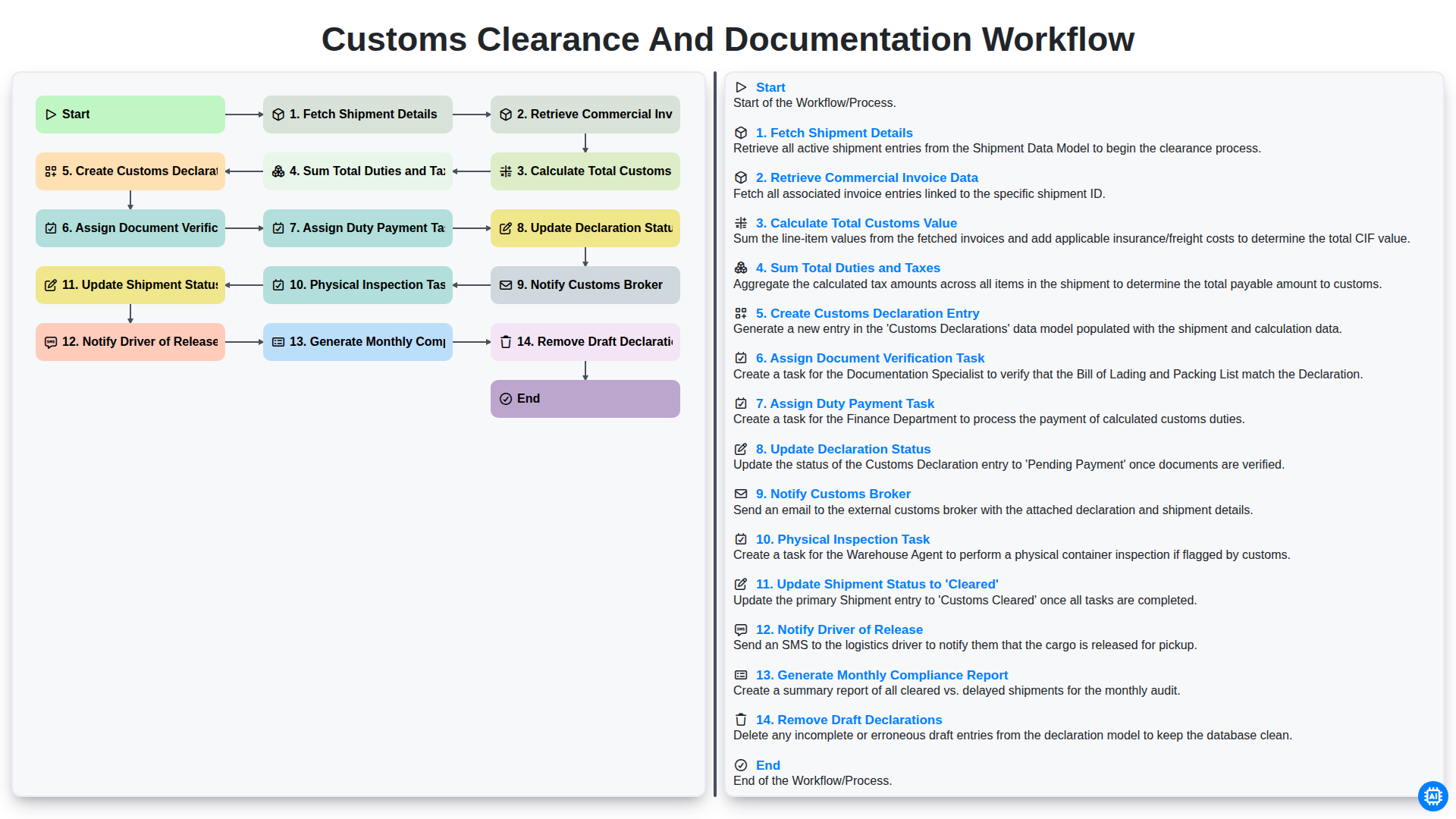
Table of Contents
- Introduction: The Critical Role of Streamlined Customs Workflows
- Phase 1: Data Retrieval and Information Gathering
- Step 1: Fetching Shipment Details and Invoice Integration
- Step 2: Accurate Valuation and Financial Calculations
- Phase 2: Documentation Generation and Declaration Setup
- Step 3: Creating the Customs Declaration Entry
- Phase 3: Task Assignment and Verification Protocols
- Step 4: Managing Document Verification and Duty Payments
- Phase 4: Communication and Stakeholder Notification
- Step 5: Real-time Status Updates and Broker Coordination
- Phase 5: Handling Inspections and Final Release
- Step 6: Finalizing Shipment Clearance and Driver Notification
- Phase 6: Post-Clearance Auditing and Compliance Reporting
- Conclusion: Maintaining Data Integrity and Workflow Optimization
- Resources & Links
TLDR: Learn how to streamline your logistics operations using our automated Customs Clearance and Documentation Workflow, designed to guide you through every critical step-from fetching shipment details and calculating duties to managing inspections and generating compliance reports-ensuring faster processing and error-free documentation.
Introduction: The Critical Role of Streamlined Customs Workflows
In the complex world of international trade, the movement of goods across borders is rarely a simple matter of transportation. Behind every successful delivery lies a sophisticated web of regulatory compliance,-sensitive data, and high-stakes-documentation. Navigating the labyrinth of international customs regulations requires more than just good logistics; it requires a precision-engineered workflow.
A breakdown in the customs clearance process-whether it be a missing commercial invoice, an incorrect valuation, or a delayed duty payment-does not just result in paperwork errors; it leads to costly port demurrage, disrupted supply chains, and strained relationships with stakeholders. As global trade volumes increase and regulatory scrutiny intensifies, the ability to manage the lifecycle of a declaration with accuracy and speed has become a competitive necessity.
A streamlined customs clearance workflow acts as the backbone of efficient logistics, transforming a chaotic collection of manual tasks into a predictable, automated, and auditable process. By mastering the sequence of events from initial shipment retrieval to final driver notification, businesses can mitigate risk, reduce overhead costs, and ensure that their cargo moves through borders with minimal friction.
Phase 1: Data Retrieval and Information Gathering
The foundation of a seamless customs process lies in the precision of the initial data collection. Before any regulatory filings can occur, the workflow must begin by fetching shipment details to establish the baseline parameters of the movement. This involves identifying critical information such as the mode of transport, origin, and destination.
Once the shipment identity is established, the system must retrieve commercial invoice data to ensure that the contents, quantities, and unit values are accurately captured. This step is vital for maintaining a transparent audit trail. Following this, the workflow moves into the quantitative analysis phase, where the system must calculate the total customs value-the fundamental figure upon which all regulatory fees are based. By automating the process to sum total duties and taxes, the workflow eliminates the manual calculation errors that frequently lead to costly delays or compliance penalties at the border. This phase ensures that when the documentation process moves forward, the financial and descriptive data is both verified and complete.
Step 1: Fetching Shipment Details and Invoice Integration
The foundation of an efficient customs clearance process lies in the accuracy of the initial data intake. The workflow begins with Fetching Shipment Details, a critical step where the system pulls essential logistics data-such as origin, destination, weight, and cargo type-directly from the shipping manifest or ERP system. This ensures that the digital record matches the physical movement of the goods.
Once the shipment parameters are established, the process moves seamlessly into Retrieving Commercial Invoice Data. This step involves parsing the commercial invoice to extract line-item specifics, including descriptions, quantities, and unit prices. By automating the extraction of this data, companies can eliminate the manual entry errors that often lead to costly delays and customs discrepancies. Integrating these two steps ensures that the customs declaration is built upon a single, verified source of truth, setting the stage for precise valuation and compliance.
Step 2: Accurate Valuation and Financial Calculations
Once the shipment details and commercial invoice data have been retrieved, the workflow shifts from data collection to critical financial assessment. This stage is the backbone of a compliant customs entry, as it involves calculating the total customs value by accurately aggregating the transaction value, freight, and insurance costs.
Precision here is non-negotiable; even a minor error in valuation can lead to incorrect tariff application, resulting in significant fines or shipment delays. Once the total value is established, the system moves to summing the total duties and taxes applicable to the specific Harmonized System (HS) codes. By automating the calculation of these levies, the workflow ensures that the financial obligations are transparent and predetermined, allowing for seamless budget forecasting and preventing unexpected costs during the final clearance stages.
Phase 2: Documentation Generation and Declaration Setup
Once the shipment details and commercial invoice data have been successfully retrieved, the workflow moves into the critical stage of data synthesis and formal entry creation. This phase is where raw shipment information is transformed into actionable customs documentation.
The process begins by automatically calculating the Total Customs Value, a precise figure derived from the retrieved invoice data. Once this value is established, the system proceeds to Sum Total Duties and Taxes, ensuring that all financial liabilities are accounted for before any formal filings occur. With these calculations finalized, the system proceeds to Create the Customs Declaration Entry, generating the official record required by regulatory authorities.
To ensure accuracy and regulatory compliance, the workflow then triggers a series of automated sub-tasks. This includes Assigning a Document Verification Task to ensure all supporting paperwork is in order, and Assigning a Duty Payment Task to ensure the necessary funds are allocated for clearance. Throughout this setup, the system maintains full transparency by continuously Updating the Declaration Status, allowing stakeholders to track the transition from a draft entry to a formal submission.
Step 3: Creating the Customs Declaration Entry
Once the system has successfully calculated the total customs value and aggregated all applicable duties and taxes, the workflow moves into the critical phase of formalizing the shipment's legal identity: Creating the Customs Declaration Entry.
During this step, the automated system synthesizes the previously fetched shipment details, commercial invoice data, and calculated tax amounts into a standardized digital format required by customs authorities. This is not merely a data-entry task; it is the generation of the official record that serves as the foundation for the entire import or export process.
By automating this step, the workflow ensures that the data mapping-linking the Harmonized System (HS) codes to the specific valuation and tax figures-is executed with precision. This eliminates the risk of manual transcription errors that often lead to costly discrepancies, shipment delays, or even regulatory penalties. A perfectly formed declaration entry ensures that when the data reaches the customs authorities, it is comprehensive, accurate, and ready for immediate processing.
Phase 3: Task Assignment and Verification Protocols
Once the customs declaration entry has been successfully created, the workflow transitions from automated data processing to critical human-in-the-loop oversight. This phase is defined by a series of interdependent task assignments designed to ensure both regulatory compliance and financial accuracy.
The process begins with the simultaneous assignment of two pivotal responsibilities: the Document Verification Task and the Duty Payment Task. The verification task requires a compliance officer to scrutinize the digitized commercial invoice data against the declaration entry to identify any discrepancies in HS codes or valuations. Concurrently, the duty payment task triggers the financial workflow, ensuring that the calculated sums of all duties and taxes are queued for settlement to prevent costly port delays.
As these tasks progress, the system maintains real-time visibility by constantly updating the Declaration Status. To ensure seamless communication between the importer and the logistics provider, the workflow automatically triggers a Notify Customs Broker action, providing them with the necessary digital documentation to act on the filing.
In cases where high-risk indicators are flagged, the system can escalate the workflow to include a Physical Inspection Task, alerting warehouse or customs personnel to prepare for cargo examination. This layered approach to task assignment ensures that no shipment moves forward without meeting rigorous verification standards, effectively minimizing the risk of customs penalties and ensuring a smooth transition to the final stages of the clearance lifecycle.
Step 4: Managing Document Verification and Duty Payments
Once the customs declaration entry has been created, the workflow transitions from data processing to active compliance management. At this stage, the system automatically triggers two critical parallel processes: Assign Document Verification Task and Assign Duty Payment Task.
The verification task ensures that all uploaded paperwork-such as the commercial invoice and certificates of origin-aligns perfectly with the digital declaration, minimizing the risk of discrepancies that lead to costly delays. Simultaneously, the duty payment task initiates the financial workflow, ensuring that the calculated total duties and taxes are queued for settlement. By automating these assignments, the workflow eliminates the bottleneck of manual oversight, ensuring that the financial and regulatory requirements are addressed the moment the declaration is drafted.
Phase 4: Communication and Stakeholder Notification
Once the technical processing of the customs entry is complete, the workflow shifts from data management to active communication. This phase is critical for ensuring that all parties involved in the supply chain are aligned, preventing bottlenecks at the border, and maintaining visibility across the logistics network.
The final stages of the workflow focus on three key communication pillars:
- Broker Coordination: The system automatically triggers a Notify Customs Broker action. This ensures that the brokerage team receives all necessary documentation and declaration details instantly, allowing them to act on the filing without manual follow-ups.
- Operational Readiness: Once the shipment is officially cleared, the workflow executes a Notify Driver of Release command. This real-time alert is vital for transportation management, as it informs the carrier that the cargo is ready for pickup, minimizing terminal dwell time and reducing potential demurrage costs.
- Internal Visibility: To maintain a high standard of audit readiness, the process concludes with the generation of a Monthly Compliance Report. This automated summary allows logistics managers to review customs performance, monitor tax accuracy, and ensure that all entries align with international trade regulations.
By automating these notification layers, the workflow ensures that information flows seamlessly from the digital declaration to the physical movement of goods.
Step 5: Real-time Status Updates and Broker Coordination
Once the declaration entry is created, the workflow shifts from data processing to active coordination. To ensure transparency and prevent bottlenecks at the border, the system automatically triggers an Update Declaration Status action, providing real-time visibility into where the shipment sits within the customs lifecycle.
A critical component of this stage is the Notify Customs Broker step. By instantly alerting your broker as soon as the declaration is ready, you eliminate manual communication delays and ensure they can act immediately on the submitted data. This seamless handoff ensures that the broker can move straight into the Assign Document Verification Task and Assign Duty Payment Task phases without waiting for manual email follow-ups. By automating these notifications, you transform a traditionally fragmented process into a synchronized stream of information, ensuring that all stakeholders are aligned and that your cargo remains in motion.
Phase 5: Handling Inspections and Final Release
Even after the documentation is verified and duties are settled, the workflow may encounter a critical checkpoint: the Physical Inspection Task. In certain scenarios, customs authorities may flag a shipment for manual examination to ensure the physical contents match the provided paperwork. During this phase, the system monitors the shipment's progress through the inspection terminal, ensuring that any discrepancies found are immediately flagged for resolution.
Once the inspection is successfully completed and the customs authorities grant formal approval, the workflow automatically triggers the Update Shipment Status to 'Cleared' step. This transition is vital, as it signifies the official end of the regulatory process. To ensure seamless logistics continuity, the system then executes the Notify Driver of Release task, providing the transport team with the necessary authorization to proceed. This seamless transition from inspection to release minimizes dwell time at the border and keeps the supply chain moving without unnecessary delays.
Step 6: Finalizing Shipment Clearance and Driver Notification
Once the customs declaration has been successfully updated and the duties and taxes are settled, the workflow moves into the critical final phase: transitioning from documentation to physical movement. After the system updates the declaration status and notifies the customs broker, the process triggers a Physical Inspection Task if required by customs authorities. This step ensures that the physical cargo matches the digital documentation perfectly.
Upon successful inspection and final approval, the system automatically updates the shipment status to 'Cleared'. The final automated action in this stage is the Notify Driver of Release step. This ensures that the logistics team and the driver are instantly alerted that the cargo is free to move, preventing unnecessary delays at the terminal or warehouse. By automating this handoff, you eliminate the communication gap between customs compliance and transportation, ensuring a seamless transition from a held status to in transit.
Phase 6: Post-Clearance Auditing and Compliance Reporting
Once the shipment has been successfully released, the workflow transitions from active logistics management to long-term regulatory oversight. The final stages of the process focus on two critical administrative actions: Generating Monthly Compliance Reports and Removing Draft Declarations.
The generation of a monthly compliance report is essential for maintaining an audit-ready paper trail. This report aggregates all cleared shipments, total duties paid, and any discrepancies encountered during the verification phase, providing a high-level overview of your supply chain's fiscal health and regulatory adherence. Simultaneously, the system performs a cleanup by removing draft declarations that were not progressed to completion. This ensures that your dashboard remains uncluttered and that your data analytics are based solely on finalized, legally binding transactions. By automating these concluding steps, the workflow ensures that your documentation remains precise, transparent, and prepared for any future customs audits.
Conclusion: Maintaining Data Integrity and Workflow Optimization
Optimizing a customs clearance workflow is not merely about moving cargo from point A to point B; it is about ensuring that every digital and physical touchpoint is synchronized with precision. As demonstrated by the end-to-end process-from the initial fetching of shipment details to the final generation of monthly compliance reports-the strength of your supply chain lies in the seamless integration of data and action.
To achieve true operational excellence, organizations must focus on two critical pillars: data integrity and continuous optimization. When steps like retrieving commercial invoice data and calculating total customs value are automated, the margin for human error shrinks, significantly reducing the risk of costly penalties or shipment delays. However, automation alone is not enough. True optimization requires a commitment to auditing the workflow-identifying bottlenecks in task assignments, such as document verification or duty payment, and refining the logic used to update declaration statuses.
By treating your customs workflow as a living ecosystem rather than a static checklist, you can transition from reactive troubleshooting to proactive management. Maintaining a clean, automated, and highly visible workflow ensures that your customs broker, drivers, and compliance teams are always aligned, ultimately transforming customs clearance from a logistical hurdle into a competitive advantage.
Resources & Links
- World Customs Organization (WCO): The primary intergovernmental organization for customs standardization, essential for understanding global compliance and documentation standards.
- U.S. Customs and Border Protection: Official resource for regulatory requirements, import procedures, and understanding the legalities of customs declarations and inspections.
- International Trade Administration: Comprehensive guides on managing international logistics, valuation, and navigating the complexities of global supply chain documentation.
- Incoterms® Reference Guide: Crucial for Step 1 and Step 2 of the workflow, providing the framework for determining responsibilities and calculating customs values.
- Logistics Workflow Automation Tools: Resources for implementing digital solutions to automate task assignments, duty calculations, and real-time shipment tracking.
- Association for Supply Chain Management (ASCM): Best practices for managing end-to-end supply chain workflows, focus on audit readiness, and compliance reporting optimization.
Frequently Asked Questions
What is the primary goal of optimizing the customs clearance workflow?
The primary goal is to reduce delays, minimize errors in documentation, and lower operational costs by ensuring a seamless flow of goods through regulatory checkpoints.
What are the most critical documents required for customs clearance?
Essential documents typically include the Commercial Invoice, Packing List, Bill of Lading or Air Waybill, Certificate of Origin, and any required import/export licenses or permits.
How can automation improve customs documentation efficiency?
Automation reduces manual data entry errors, accelerates the preparation of shipping documents, and allows for real-time tracking and compliance monitoring, which significantly speeds up the clearance process.
What are the common causes of delays in the customs clearance process?
Common delays include inaccurate or incomplete documentation, incorrect commodity classification (HS Codes), unexpected inspections, and failure to comply with local regulatory requirements.
Why is correct HS Code classification vital to the workflow?
Correct HS Code classification is crucial because it determines the applicable duty rates, taxes, and any specific regulatory controls or restrictions applied to the goods.
How can businesses prepare for unexpected customs inspections?
Businesses can prepare by maintaining high standards of data accuracy, ensuring all supporting documents are easily accessible, and conducting regular internal audits of their compliance procedures.
Comments
There are no comments yet. Be the first to add one!
Logistics Management Solution Demo
Tired of shipping delays, lost packages, and inefficient routes? ChecklistGuro's Work OS platform streamlines your entire logistics operation, from warehouse management and order fulfillment to route optimization and delivery tracking. Gain real-time visibility, reduce costs, and improve customer satisfaction. Learn how ChecklistGuro can transform your logistics business!
Related Articles
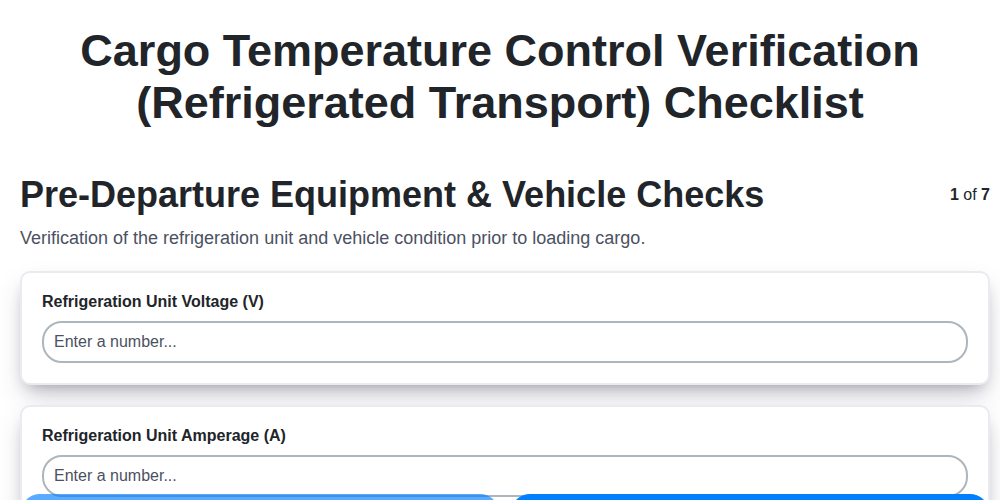
The Ultimate Refrigerated Cargo Temperature Control Checklist Template
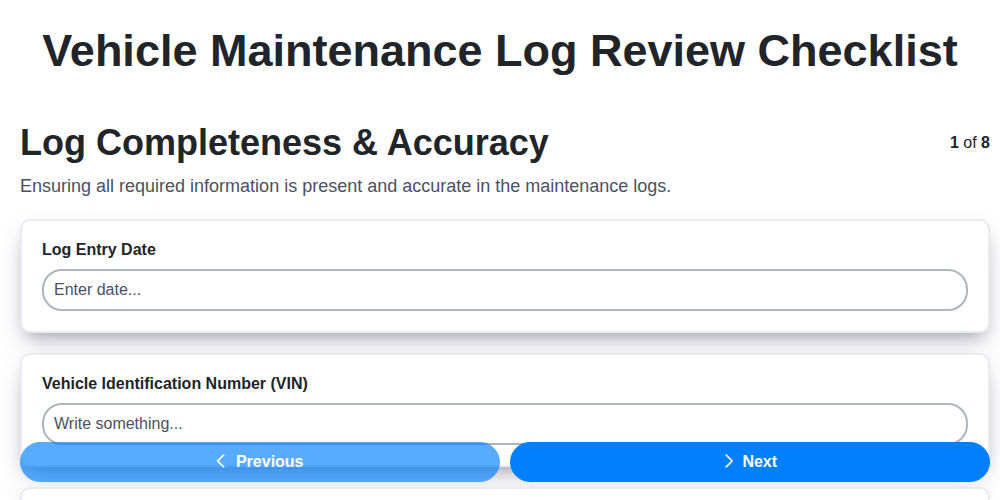
Mastering Your Fleet: A Vehicle Maintenance Log Review Template
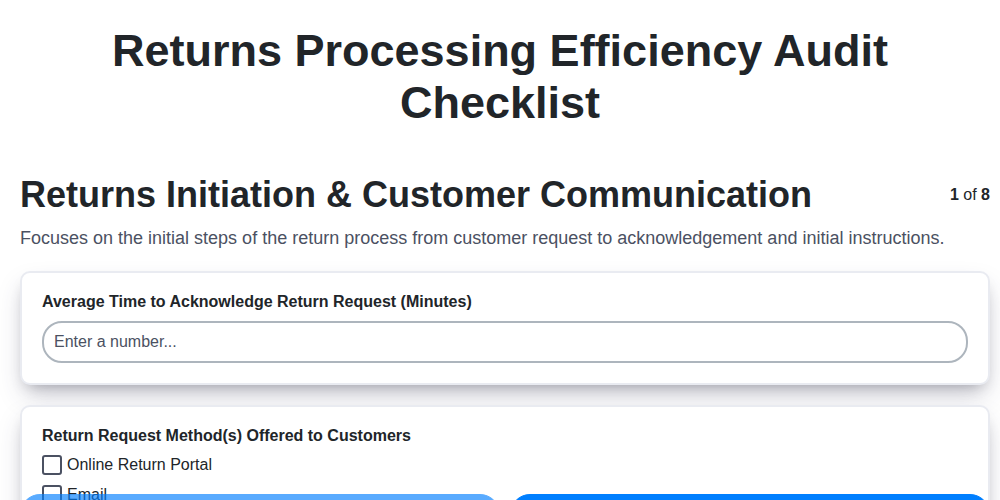
Master Your Returns: The Ultimate Returns Processing Efficiency Audit Checklist
Data Privacy Policy Compliance: Your Essential Checklist Template
Delivery Confirmation Audit: Your Checklist Template for Process Excellence
Your Pallet Inspection & Maintenance Checklist Template
Fuel Efficiency Monitoring: Your Checklist Template for Savings
Supply Chain Risk Assessment: Your Essential Checklist Template
Need help with
Checklists?
Have a question? We're here to help. Please submit your inquiry, and we'll respond promptly.