Mastering the Chaos: A Step-by-Step Workflow for Disaster Recovery and Emergency Response Plans
Published: 06/04/2026 Updated: 10/05/2026
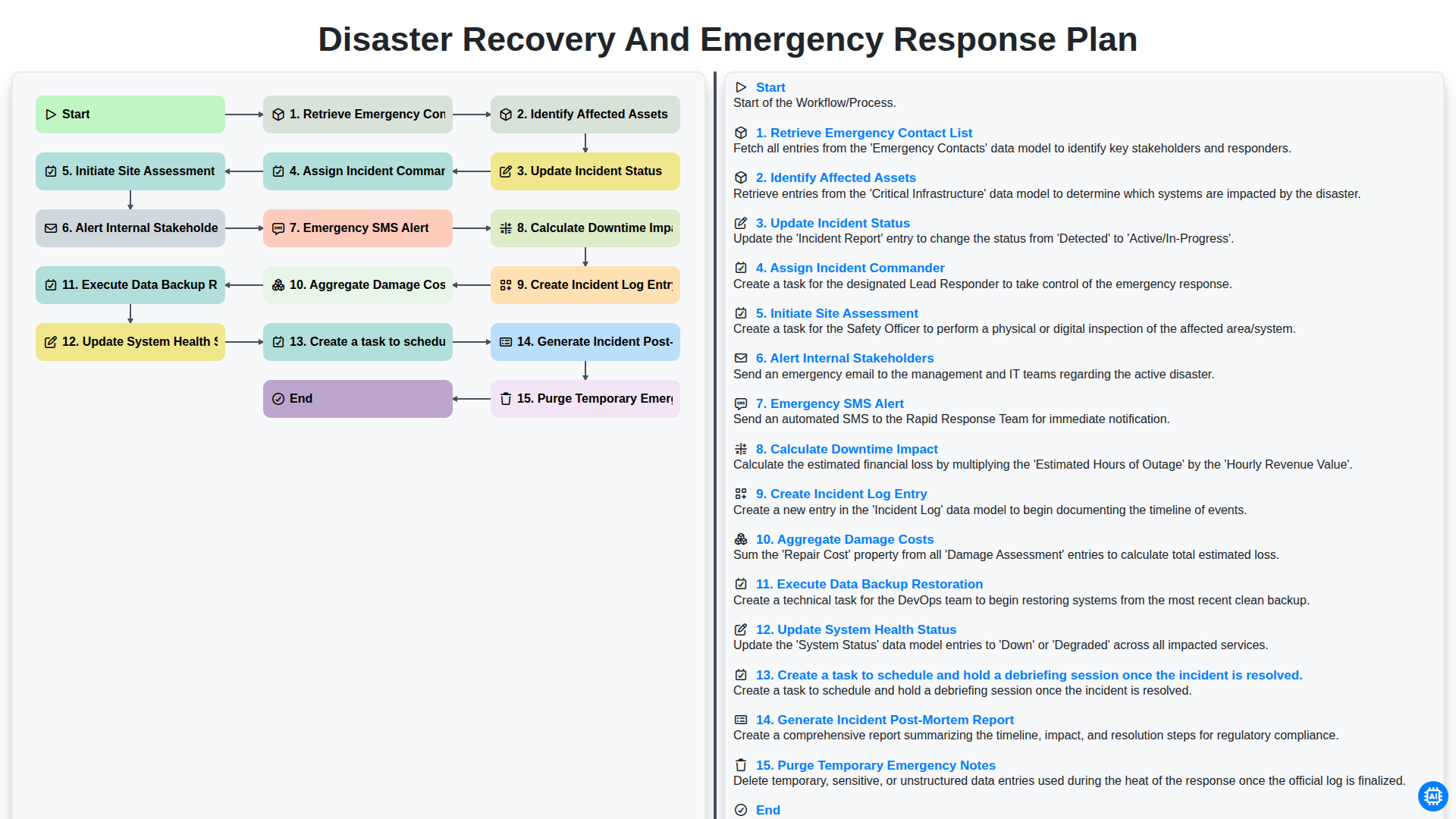
Table of Contents
- Phase 1: Immediate Response and Mobilization
- Step 1: Activating the Communication Chain
- Step 2: Rapid Resource Identification and Command Assignment
- Step 3: Initial Site Assessment and Stakeholder Notification
- Phase 2: Impact Assessment and Real-Time Tracking
- Step 4: Quantifying Damage and Downtime Impact
- Step 5: Maintaining Continuous Incident Documentation
- Phase 3: Recovery and Systems Restoration
- Step 6: Executing Data Backup and System Reconstitution
- Step 7: Verifying System Health and Operational Integrity
- Phase 4: Post-Incident Analysis and Process Improvement
- Step 8: Conducting the Post-Mortem Debriefing
- Step 9: Finalizing the Incident Report and Data Cleanup
- Resources & Links
TLDR: Learn how to streamline your crisis management with a comprehensive, automated workflow designed to guide teams through every stage of an emergency-from initial contact retrieval and asset identification to data restoration and post-incident analysis-ensuring a structured, efficient, and rapid response to any disaster.
Phase 1: Immediate Response and Mobilization
When a crisis strikes, the first few minutes are critical to preventing a localized issue from becoming a total system failure. The primary objective during this phase is rapid mobilization-moving from a state of detection to a state of organized action. This stage is characterized by high-pressure decision-making and the deployment of communication channels to ensure that the right people are notified and the scale of the disaster is understood.
The mobilization process begins with the retrieval of the Emergency Contact List to ensure that the core response team is reachable. Once the team is assembled, the immediate priority shifts to identifying affected assets to determine the scope of the damage. To maintain clarity amidst the chaos, the first act of leadership is to assign an Incident Commander, a single point of authority responsible for directing all subsequent efforts.
Communication is the lifeline of this phase. The Incident Commander must alert internal stakeholders to prepare them for potential disruptions, while simultaneously triggering an emergency SMS alert to provide real-time, high-urgency updates to all essential personnel. As the response unfolds, the team must initiate a site assessment to evaluate physical or digital damage and concurrently update the incident status in real-time. This ensures that everyone involved is working from a single version of the truth, preventing the spread of misinformation during the height of the emergency.
Step 1: Activating the Communication Chain
The moment a crisis is detected, the clock begins to tick. The first critical phase of a Disaster Recovery and Emergency Response Plan is not about fixing the technical issue, but about establishing a clear line of command and ensuring no critical stakeholder is left in the dark.
The process begins by immediately retrieving the Emergency Contact List. This document serves as your single source of truth, containing the necessary phone numbers, email addresses, and escalation paths for key personnel. Once the list is in hand, the next priority is to identify affected assets. You cannot defend what you haven't mapped; you must quickly determine which servers, databases, or physical infrastructure are compromised to understand the scope of the disaster.
With the scope defined, the leadership structure must be solidified by assigning an Incident Commander. This individual takes total control of the response, centralizing decision-making to prevent chaos. Once the commander is in place, the workflow moves into high-gear notification: you must alert internal stakeholders to ensure leadership is aware of the situation, and simultaneously issue an emergency SMS alert to the technical response teams. Rapid, automated communication ensures that the right people are mobilized instantly, reducing the latency between detection and action.
Step 2: Rapid Resource Identification and Command Assignment
Once the initial alarm is triggered, the priority shifts from detection to mobilization. This phase is critical because the speed at which you identify what is at risk and who is leading the charge determines the scale of the eventual recovery.
The process begins by immediately retrieving the Emergency Contact List to ensure all key personnel are reachable. Simultaneously, the response team must move to identify affected assets, distinguishing between critical infrastructure, compromised data, and physical hardware to understand the scope of the crisis.
To maintain clarity and prevent chaotic, uncoordinated efforts, the workflow transitions into structural command. An Incident Commander is assigned to take centralized control of the situation, providing a single point of decision-making. As the commander takes the helm, the team must update the incident status to provide a real-time snapshot of the situation, ensuring that no effort is duplicated and that every responder knows the current state of the emergency.
Step 3: Initial Site Assessment and Stakeholder Notification
Once the initial impact has been identified and the Incident Commander has been formally assigned, the focus shifts from identification to active investigation and communication. This phase is critical for establishing the scope of the crisis and ensuring that all necessary parties are informed of the unfolding situation.
The process begins with the Initiation of a Site Assessment. During this step, the technical and operational teams perform a deep dive into the physical or digital environment to determine the extent of the damage. This assessment provides the raw data needed to understand whether the incident is localized or widespread.
Simultaneously, communication must flow on two parallel tracks:
- Internal Stakeholder Alerting: To maintain organizational transparency, all relevant internal stakeholders-including leadership, legal, and department heads-must be notified of the incident. This ensures that decision-makers are not caught off guard and can prepare for potential operational shifts.
- Emergency SMS Alerting: For immediate, high-priority updates, the deployment of an Emergency SMS Alert system is vital. This provides a direct, real-time channel to reach essential personnel instantly, ensuring that the response team can mobilize even if email or standard communication channels are compromised.
By executing these steps in tandem, the organization transitions from a state of reactive confusion to a structured, informed response, laying the groundwork for the subsequent impact analysis and recovery efforts.
Phase 2: Impact Assessment and Real-Time Tracking
Once the initial emergency contacts have been reached and the incident commander is officially assigned, the focus shifts from immediate containment to a detailed evaluation of the damage. This phase is critical for understanding the scope of the crisis and maintaining transparency across the organization.
The process begins with an immediate site assessment to visually and technically evaluate the physical or digital environment. Simultaneously, the incident commander must identify all affected assets, ranging from critical hardware and data repositories to essential personnel and infrastructure. To ensure the organization remains synchronized, the commander must update the incident status and alert internal stakeholders through formal communication channels. For high-priority threats, an emergency SMS alert is triggered to ensure rapid dissemination of information to key decision-makers.
As the situation stabilizes, the workflow moves into quantitative analysis to determine the severity of the disruption. This involves a dual-track evaluation: calculating the downtime impact on business operations and aggregating damage costs to understand the financial implications of the event. Every action taken during this period must be meticulously documented by creating a new incident log entry, ensuring a continuous and unalterable audit trail. By tracking these metrics in real-time, the leadership team can make informed decisions regarding resource allocation and the necessity of large-scale recovery operations.
Step 4: Quantifying Damage and Downtime Impact
Once the initial site assessment is complete and stakeholders have been notified, the focus shifts from immediate containment to technical and financial evaluation. This stage is critical for understanding the true scale of the disruption and informing long-term recovery strategies.
The process involves two critical analytical tasks:
- Calculating Downtime Impact: This involves measuring the total duration of service unavailability. By analyzing the window between the initial incident detection and the restoration of services, the organization can quantify the cost of inactivity, which includes lost productivity, missed SLAs, and operational bottlenecks.
- Aggregating Damage Costs: Beyond just lost time, a comprehensive recovery plan requires a granular look at the financial fallout. This includes tallying the costs of hardware replacement, emergency labor, third-party vendor fees, and any potential regulatory fines or lost revenue.
Accurately quantifying these metrics ensures that the incident is not just documented, but used as a data-driven foundation for justifying future security investments and infrastructure upgrades.
Step 5: Maintaining Continuous Incident Documentation
Effective incident management relies on more than just immediate action; it requires a rigorous commitment to maintaining a real-time, accurate record of the crisis as it unfolds. As the response progresses, the Create Incident Log Entry step becomes the backbone of your recovery efforts. This log serves as the single source of truth, capturing every decision made, every milestone reached, and every change in the operational landscape.
Continuous documentation ensures that there are no gaps in the timeline, which is critical when you need to Update Incident Status for leadership or later perform a forensic audit. By documenting actions in real-time, you prevent the loss of vital information that often occurs during the high-pressure moments of an emergency. This practice not only keeps all responders aligned but also provides the necessary raw data required to Generate Incident Post-Mortem Reports later, ensuring that the lessons learned from this disaster are captured accurately to prevent future recurrences.
Phase 3: Recovery and Systems Restoration
Once the immediate threat has been neutralized and the initial site assessments are complete, the focus shifts from containment to the critical stage of operational restoration. This phase is where the primary goal is to bridge the gap between disruption and normalcy by leveraging your pre-established backup protocols and assessing the long-term implications of the event.
The recovery process begins with the technical execution of executing data backup restoration. This is a high-precision step where IT teams work to revert systems to their last known healthy state, followed immediately by a rigorous process to update system health status. It is vital to ensure that all services are not only running but are performing within expected parameters before declaring a system recovered.
Simultaneously, the business must quantify the true cost of the disruption. During this stage, the workflow requires leadership to calculate downtime impact and aggregate damage costs. These metrics are essential for understanding the financial and operational toll the incident has taken.
As the technical landscape stabilizes, the administrative integrity of the incident must be finalized. This involves ensuring that every action taken is documented by performing a create incident log entry task, ensuring that the timeline of the response is indisputable. Finally, as the systems return to a steady state, the focus shifts toward the transition into the post-incident analysis phase, ensuring all data is preserved for the upcoming post-mortem.
Step 6: Executing Data Backup and System Reconstitution
Once the initial site assessment is complete and stakeholders have been notified, the focus shifts from assessment to active recovery. The core of the recovery phase lies in the execution of Data Backup Restoration. This step is the technical heartbeat of your disaster recovery plan; it involves identifying the most recent clean, uncorrupted backups and initiating the restoration process to bring critical data back to a functional state.
During this stage, it is not enough to simply restore files; you must also Update System Health Status in real-time. As different modules, servers, or databases come back online, the technical team must provide continuous updates to ensure that the restored environment is stable and that dependencies between systems are being correctly re-established. This ensures that as systems are reconstituted, everyone involved has an accurate view of what is operational and what remains offline.
Step 7: Verifying System Health and Operational Integrity
Once the critical phase of data backup restoration is complete, the focus shifts from immediate recovery to verification. The primary objective of this stage is to Update System Health Status, ensuring that all restored services are not only functional but operating within their optimal performance parameters. It is not enough to simply bring systems back online; technical teams must perform rigorous smoke testing and integrity checks to ensure that no data corruption occurred during the restoration process and that all dependencies are communicating correctly.
This step serves as the final gateway before declaring the incident closed. By systematically validating the stability of the infrastructure, you mitigate the risk of secondary outages-incidents caused by poorly executed recovery efforts. Only after the system health status is officially updated to Healthy can the focus transition from technical remediation to the post-incident analysis and long-term structural improvements.
Phase 4: Post-Incident Analysis and Process Improvement
Once the immediate threat has been neutralized and systems are back online, the final and most critical phase of your Disaster Recovery and Emergency Response Plan begins. This stage is not merely about closing the ticket; it is about transforming a period of crisis into an opportunity for organizational growth.
The post-incident workflow follows a structured path to ensure that mistakes are never repeated and that your recovery procedures become increasingly resilient over time.
1. Closing the Loop on Documentation
As soon as the incident is resolved, the focus shifts from action to record-keeping. The first step is to create an incident log entry that captures the timeline of events, and aggregate damage costs to understand the true financial impact of the disruption. Once the data is finalized, you must purge temporary emergency notes-the chaotic, real-time notes taken during the heat of the crisis-to ensure your permanent records remain clean, professional, and accurate.
2. Generating the Post-Mortem Report
The cornerstone of this phase is to generate an incident post-mortem report. This document serves as a comprehensive autopsy of the event, detailing the root cause, the effectiveness of the response, and any gaps identified in the initial workflow. This report is the primary tool for long-term learning, providing a single source of truth for why the failure occurred and how the response performed.
3. Continuous Improvement Through Debriefing
Data alone cannot capture the human element of a crisis. To complement the written report, you must create a task to schedule and hold a debriefing session. This meeting brings together the incident responders and stakeholders to discuss the human side of the recovery: Where did communication break down? Were the tools sufficient? Did the incident commander have the necessary authority?
By treating the post-incident phase as a formal part of your workflow, you ensure that your Disaster Recovery Plan is a living, evolving document that grows stronger with every challenge encountered.
Step 8: Conducting the Post-Mortem Debriefing
Once the immediate crisis has passed and systems are stabilized, the recovery process transitions from reactive firefighting to proactive learning. The final critical step in the workflow is the creation of a task to schedule and hold a formal debriefing session.
A debriefing session should never be skipped or treated as an afterthought. This meeting brings together the Incident Commander, key stakeholders, and the technical teams involved to dissect the event in a blameless environment. The primary objective is not to assign fault, but to analyze the efficacy of the Disaster Recovery plan. During this session, the team should review the timeline of the incident, evaluate how quickly the emergency contact list was utilized, and determine if the communication channels-such as the emergency SMS alerts-functioned as intended.
By institutionalizing this review process, you transform a high-stress failure into a strategic opportunity. The insights gained during the debriefing serve as the raw material for the subsequent Incident Post-Mortem Report, ensuring that the organization does not just recover from a disaster, but evolves to prevent its recurrence.
Step 9: Finalizing the Incident Report and Data Cleanup
Once the immediate crisis has subsided and systems are back online, the final phase of your disaster recovery workflow focuses on closure, accountability, and long-term prevention. This stage is critical for transforming a chaotic event into a learning opportunity for your organization.
The process begins with the critical task of generating an Incident Post-Mortem Report. This document serves as the definitive record of the event, detailing the timeline of the disaster, the effectiveness of the response, and the root cause of the failure. It should be shared with all key stakeholders to ensure transparency and to facilitate a culture of continuous improvement.
To support this, you must create a task to schedule and hold a debriefing session once the incident is resolved. Bringing the response team together to discuss what went well and where the workflow broke down is the only way to refine your emergency protocols for future use.
Finally, as the recovery transitions back into standard operations, perform a thorough purge of temporary emergency notes. During a disaster, high volumes of fragmented data, screenshots, and transient communications are often generated. Cleaning up these temporary files ensures that your official incident logs remain the single source of truth and prevents information clutter from obscuring your permanent documentation.
Resources & Links
- NIST Computer Security Incident Handling Guide: A foundational resource for establishing standardized incident response procedures and best practices in disaster recovery.
- ISO 22301: Business Continuity Management: The international standard for implementing a robust business continuity management system to ensure organizational resilience.
- FEMA Emergency Management Framework: Essential guides for developing comprehensive emergency response plans and managing large-scale disaster communications.
- CISA Incident Response Resources: Comprehensive tools and technical resources for identifying vulnerabilities and managing cyber-related disaster recovery workflows.
- Incident Management Templates & Workflows: Practical tools for creating incident logs, task tracking, and managing post-mortem documentation during recovery phases.
- Disaster Recovery & Data Backup Strategies: Technical insights into executing effective data restoration and maintaining system integrity during a crisis.
Frequently Asked Questions
What is the main difference between a Disaster Recovery (DR) plan and an Emergency Response Plan (ERP)?
An Emergency Response Plan focuses on immediate actions to protect lives and property during an active crisis (e.g., evacuations, first aid), while a Disaster Recovery plan focuses on the long-term technical and operational processes required to restore systems and business functions after the incident has passed.
What is the first step in creating a disaster recovery workflow?
The first step is conducting a Business Impact Analysis (BIA) to identify critical assets, assess potential risks, and determine the Recovery Time Objective (RTO) and Recovery Point Objective (RPO) for your organization.
What are RTO and RPO, and why are they important?
RTO (Recovery Time Objective) is the maximum tolerable duration of downtime, and RPO (Recovery Point Objective) is the maximum amount of data loss an organization can sustain. Defining these helps determine the necessary backup frequency and recovery speed of your infrastructure.
How often should an emergency response plan be reviewed and updated?
Emergency response plans should be reviewed at least annually or whenever significant changes occur in your organizational structure, physical office locations, or technological landscape to ensure all contact lists and procedures remain accurate.
Why is regular testing of the disaster recovery plan essential?
Regular testing-such as tabletop exercises or full-scale simulations-identifies gaps in the workflow, ensures team members know their roles, and verifies that backup systems are functional before a real disaster occurs.
Who should be involved in the development of a disaster recovery plan?
A successful plan requires a cross-functional team, including IT professionals, department heads, HR, legal counsel, and physical security personnel, to ensure all aspects of the business are covered.
Comments
There are no comments yet. Be the first to add one!
Healthcare Management Solution Demo
Streamlining healthcare operations and improving patient care? ChecklistGuro's Work OS platform simplifies everything from patient scheduling and billing to compliance and staff management. Enhance efficiency, reduce administrative burden, and focus on what matters most: your patients. Learn how ChecklistGuro can transform your healthcare organization!
Related Articles

The Ultimate Healthcare Patient Satisfaction Survey Checklist Template
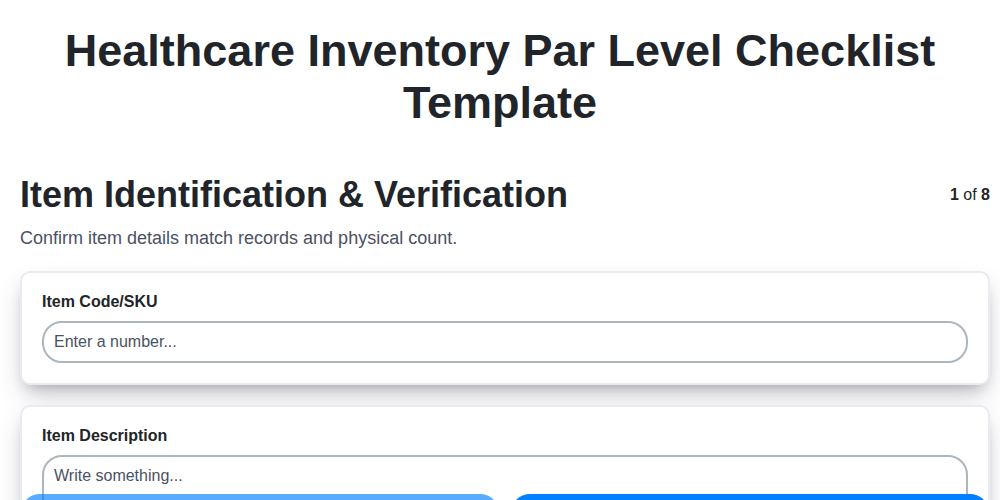
Mastering Healthcare Inventory: Your Par Level Checklist Template
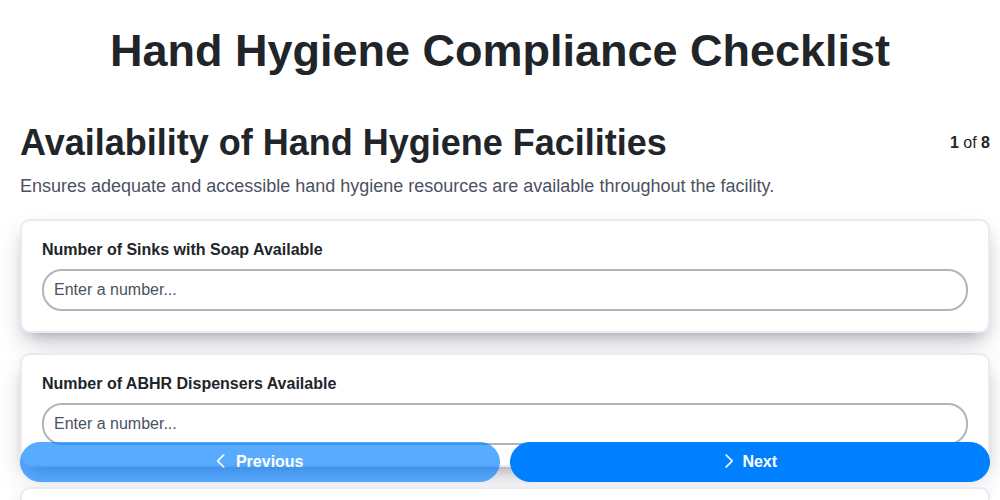
Mastering Hand Hygiene: Your Compliance Checklist Template
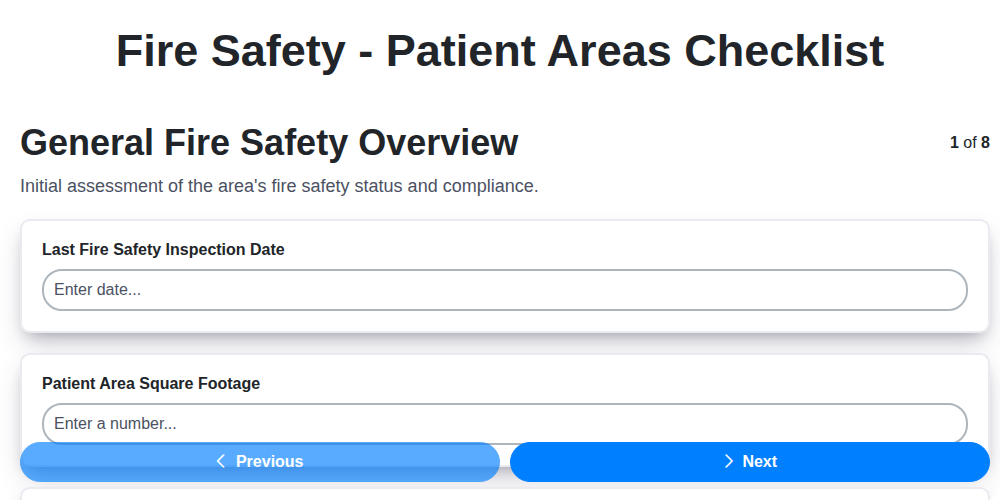
Protecting Patients: Your Fire Safety Checklist for Patient Areas
Your Ultimate Healthcare Construction Checklist Template
Mastering Hand Hygiene: Your Compliance Checklist Template
Your Radiology Equipment Maintenance Checklist Template

Your Ultimate Guide to Healthcare Waste Management: A Checklist Template
Need help with
Checklists?
Have a question? We're here to help. Please submit your inquiry, and we'll respond promptly.